
 ЖИ көмекші


 Қауіпсіз төлем




1 жыл бойы шексіз жүктеңіз
CLIL. Geography Reading a map

#1 слайд
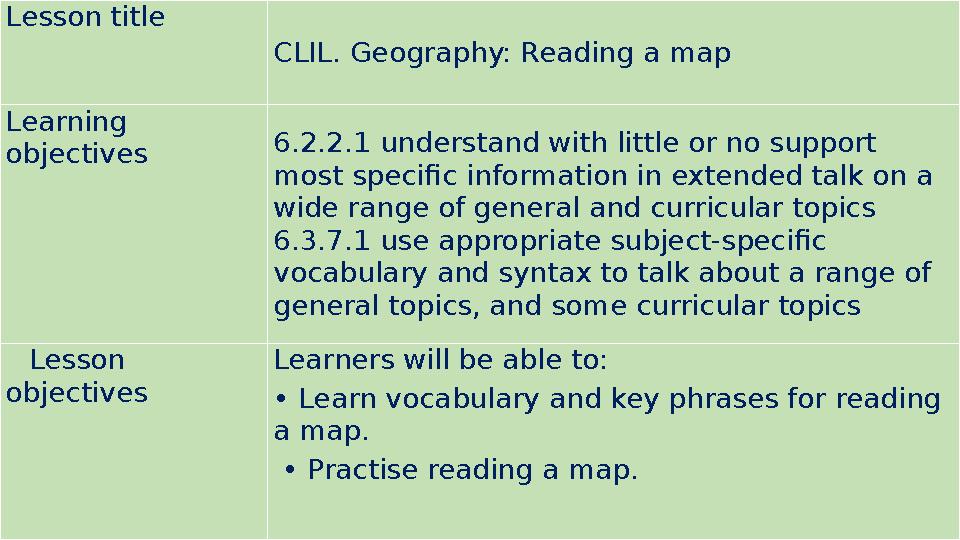
Lesson title
CLIL. Geography: Reading a map
Learning
objectives
6.2.2.1 understand with little or no support
most specific information in extended talk on a
wide range of general and curricular topics
6.3.7.1 use appropriate subject-specific
vocabulary and syntax to talk about a range of
general topics, and some curricular topics
Lesson
objectives
Learners will be able to:
• Learn vocabulary and key phrases for reading
a map.
• Practise reading a map.
1 слайд
Lesson title CLIL. Geography: Reading a map Learning objectives 6.2.2.1 understand with little or no support most specific information in extended talk on a wide range of general and curricular topics 6.3.7.1 use appropriate subject-specific vocabulary and syntax to talk about a range of general topics, and some curricular topics Lesson objectives Learners will be able to: • Learn vocabulary and key phrases for reading a map. • Practise reading a map.
#2 слайд
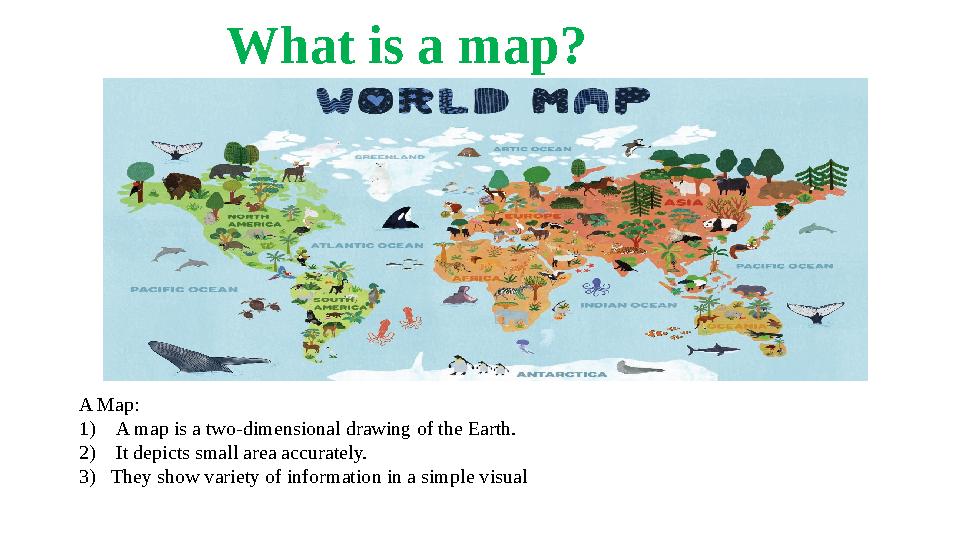
What is a map?
A Map:
1) A map is a two-dimensional drawing of the Earth.
2) It depicts small area accurately.
3) They show variety of information in a simple visual
2 слайд
What is a map? A Map: 1) A map is a two-dimensional drawing of the Earth. 2) It depicts small area accurately. 3) They show variety of information in a simple visual
#3 слайд
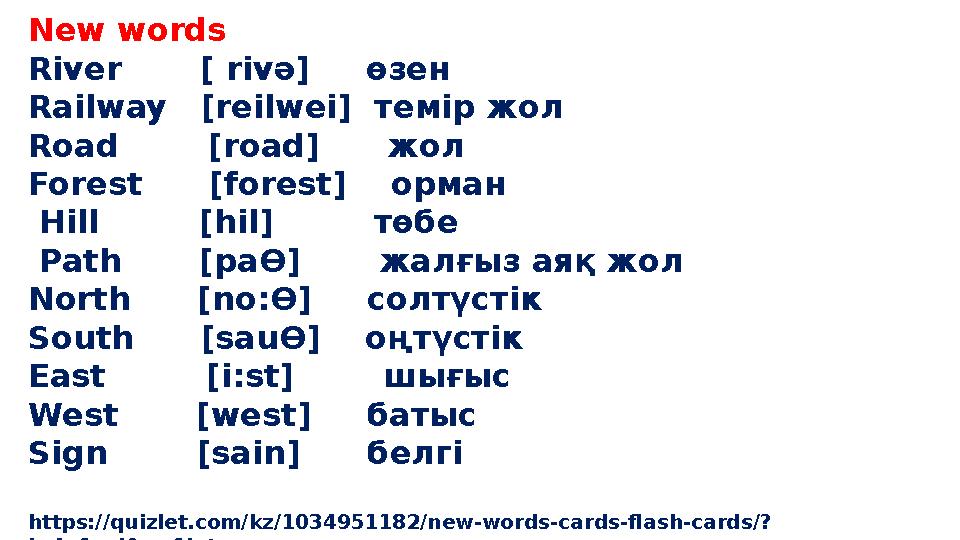
New words
River [ rivә] өзен
Railway [reilwei] темір жол
Road [road] жол
Forest [forest] орман
Hill [hil] төбе
Path [paӨ] жалғыз аяқ жол
North [no:Ө] солтүстік
South [sauӨ] оңтүстік
East [i:st] шығыс
West [west] батыс
Sign [sain] белгі
https://quizlet.com/kz/1034951182/new-words-cards-flash-cards/?
i=4x1xvi&x=1jqt
3 слайд
New words River [ rivә] өзен Railway [reilwei] темір жол Road [road] жол Forest [forest] орман Hill [hil] төбе Path [paӨ] жалғыз аяқ жол North [no:Ө] солтүстік South [sauӨ] оңтүстік East [i:st] шығыс West [west] батыс Sign [sain] белгі https://quizlet.com/kz/1034951182/new-words-cards-flash-cards/? i=4x1xvi&x=1jqt
#4 слайд
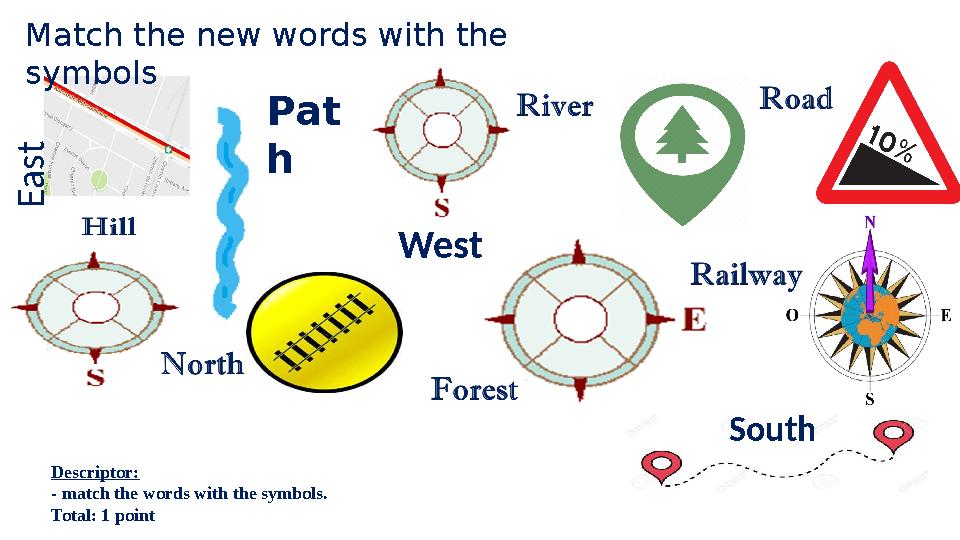
Pat
h
South
E
a
s
t
West
Match the new words with the
symbols
Descriptor:
- match the words with the symbols.
Total: 1 point
4 слайд
Pat h South E a s t West Match the new words with the symbols Descriptor: - match the words with the symbols. Total: 1 point
#5 слайд
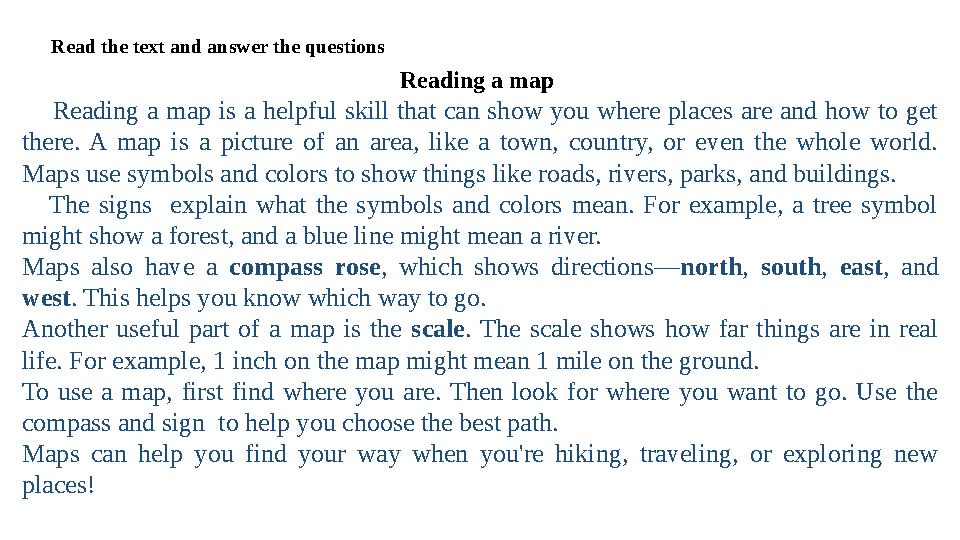
Reading a map
Reading a map is a helpful skill that can show you where places are and how to get
there. A map is a picture of an area, like a town, country, or even the whole world.
Maps use symbols and colors to show things like roads, rivers, parks, and buildings.
The signs explain what the symbols and colors mean. For example, a tree symbol
might show a forest, and a blue line might mean a river.
Maps also have a compass rose, which shows directions—north, south, east, and
west. This helps you know which way to go.
Another useful part of a map is the scale. The scale shows how far things are in real
life. For example, 1 inch on the map might mean 1 mile on the ground.
To use a map, first find where you are. Then look for where you want to go. Use the
compass and sign to help you choose the best path.
Maps can help you find your way when you're hiking, traveling, or exploring new
places!
Read the text and answer the questions
5 слайд
Reading a map Reading a map is a helpful skill that can show you where places are and how to get there. A map is a picture of an area, like a town, country, or even the whole world. Maps use symbols and colors to show things like roads, rivers, parks, and buildings. The signs explain what the symbols and colors mean. For example, a tree symbol might show a forest, and a blue line might mean a river. Maps also have a compass rose, which shows directions—north, south, east, and west. This helps you know which way to go. Another useful part of a map is the scale. The scale shows how far things are in real life. For example, 1 inch on the map might mean 1 mile on the ground. To use a map, first find where you are. Then look for where you want to go. Use the compass and sign to help you choose the best path. Maps can help you find your way when you're hiking, traveling, or exploring new places! Read the text and answer the questions
#6 слайд
Descriptor:
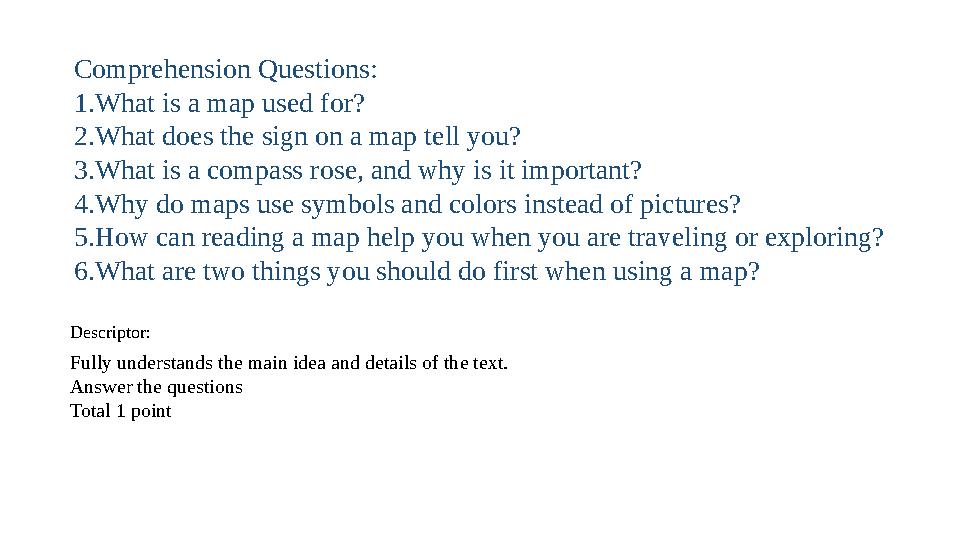
Comprehension Questions:
1.What is a map used for?
2.What does the sign on a map tell you?
3.What is a compass rose, and why is it important?
4.Why do maps use symbols and colors instead of pictures?
5.How can reading a map help you when you are traveling or exploring?
6.What are two things you should do first when using a map?
Fully understands the main idea and details of the text.
Answer the questions
Total 1 point
6 слайд
Descriptor: Comprehension Questions: 1.What is a map used for? 2.What does the sign on a map tell you? 3.What is a compass rose, and why is it important? 4.Why do maps use symbols and colors instead of pictures? 5.How can reading a map help you when you are traveling or exploring? 6.What are two things you should do first when using a map? Fully understands the main idea and details of the text. Answer the questions Total 1 point
#7 слайд
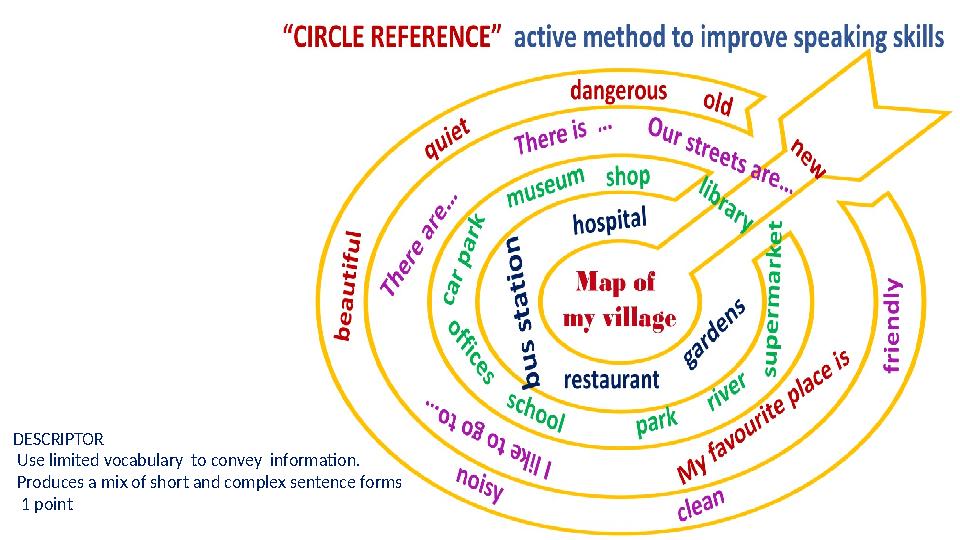
DESCRIPTOR
Use limited vocabulary to convey information.
Produces a mix of short and complex sentence forms
1 point
7 слайд
DESCRIPTOR Use limited vocabulary to convey information. Produces a mix of short and complex sentence forms 1 point
#8 слайд
Grade: 6 Number present:
absent:
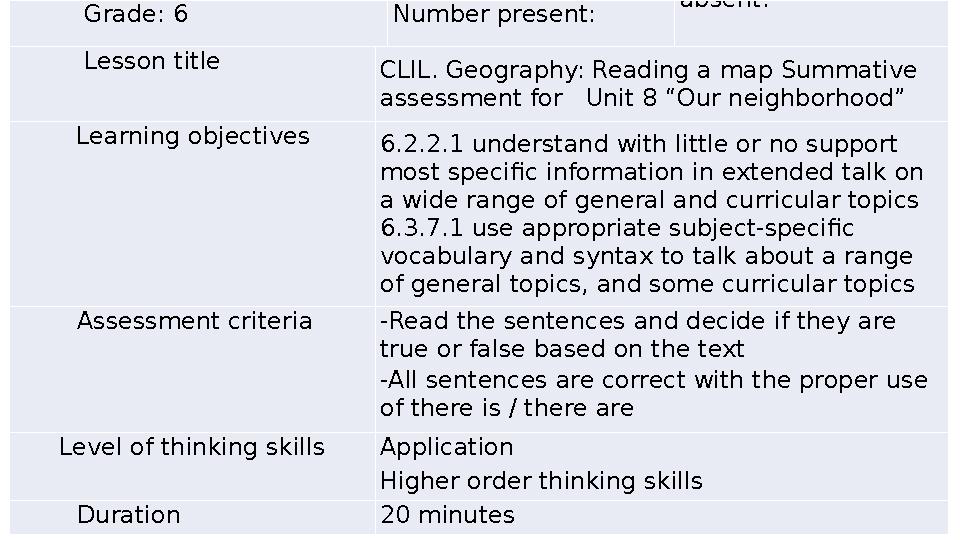
Lesson title
CLIL. Geography: Reading a map Summative
assessment for Unit 8 “Our neighborhood”
Learning objectives
6.2.2.1 understand with little or no support
most specific information in extended talk on
a wide range of general and curricular topics
6.3.7.1 use appropriate subject-specific
vocabulary and syntax to talk about a range
of general topics, and some curricular topics
Assessment criteria -Read the sentences and decide if they are
true or false based on the text
-All sentences are correct with the proper use
of there is / there are
Level of thinking skillsApplication
Higher order thinking skills
Duration 20 minutes
8 слайд
Grade: 6 Number present: absent: Lesson title CLIL. Geography: Reading a map Summative assessment for Unit 8 “Our neighborhood” Learning objectives 6.2.2.1 understand with little or no support most specific information in extended talk on a wide range of general and curricular topics 6.3.7.1 use appropriate subject-specific vocabulary and syntax to talk about a range of general topics, and some curricular topics Assessment criteria -Read the sentences and decide if they are true or false based on the text -All sentences are correct with the proper use of there is / there are Level of thinking skillsApplication Higher order thinking skills Duration 20 minutes
#9 слайд
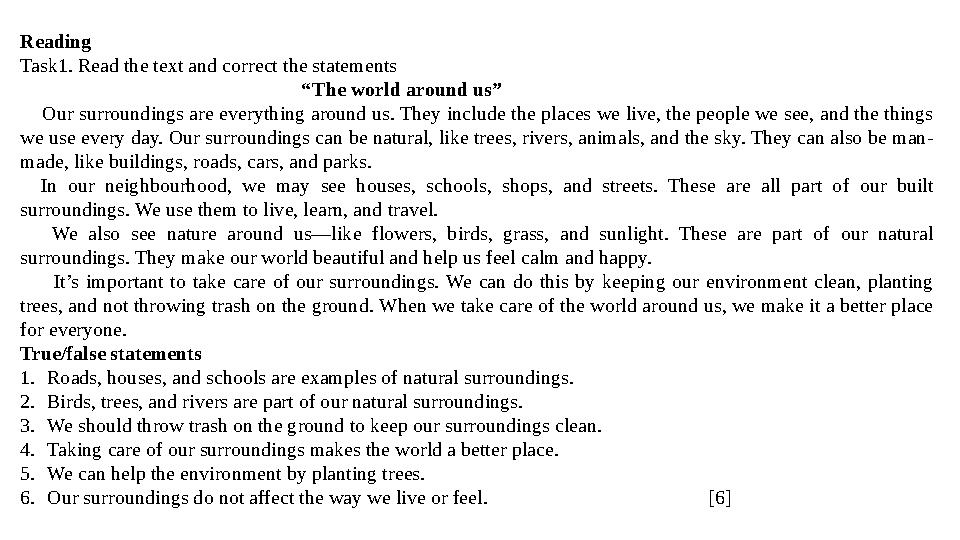
Reading
Task1. Read the text and correct the statements
“The world around us”
Our surroundings are everything around us. They include the places we live, the people we see, and the things
we use every day. Our surroundings can be natural, like trees, rivers, animals, and the sky. They can also be man-
made, like buildings, roads, cars, and parks.
In our neighbourhood, we may see houses, schools, shops, and streets. These are all part of our built
surroundings. We use them to live, learn, and travel.
We also see nature around us—like flowers, birds, grass, and sunlight. These are part of our natural
surroundings. They make our world beautiful and help us feel calm and happy.
It’s important to take care of our surroundings. We can do this by keeping our environment clean, planting
trees, and not throwing trash on the ground. When we take care of the world around us, we make it a better place
for everyone.
True/false statements
1.Roads, houses, and schools are examples of natural surroundings.
2.Birds, trees, and rivers are part of our natural surroundings.
3.We should throw trash on the ground to keep our surroundings clean.
4.Taking care of our surroundings makes the world a better place.
5.We can help the environment by planting trees.
6.Our surroundings do not affect the way we live or feel. [6]
9 слайд
Reading Task1. Read the text and correct the statements “The world around us” Our surroundings are everything around us. They include the places we live, the people we see, and the things we use every day. Our surroundings can be natural, like trees, rivers, animals, and the sky. They can also be man- made, like buildings, roads, cars, and parks. In our neighbourhood, we may see houses, schools, shops, and streets. These are all part of our built surroundings. We use them to live, learn, and travel. We also see nature around us—like flowers, birds, grass, and sunlight. These are part of our natural surroundings. They make our world beautiful and help us feel calm and happy. It’s important to take care of our surroundings. We can do this by keeping our environment clean, planting trees, and not throwing trash on the ground. When we take care of the world around us, we make it a better place for everyone. True/false statements 1.Roads, houses, and schools are examples of natural surroundings. 2.Birds, trees, and rivers are part of our natural surroundings. 3.We should throw trash on the ground to keep our surroundings clean. 4.Taking care of our surroundings makes the world a better place. 5.We can help the environment by planting trees. 6.Our surroundings do not affect the way we live or feel. [6]
#10 слайд
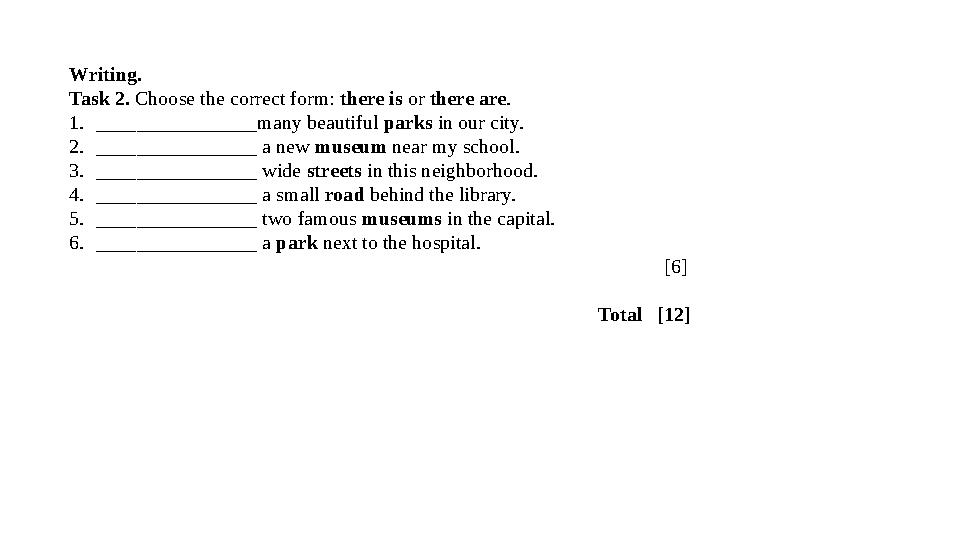
Writing.
Task 2. Choose the correct form: there is or there are.
1.________________many beautiful parks in our city.
2.________________ a new museum near my school.
3.________________ wide streets in this neighborhood.
4.________________ a small road behind the library.
5.________________ two famous museums in the capital.
6.________________ a park next to the hospital.
[6]
Total [12]
10 слайд
Writing. Task 2. Choose the correct form: there is or there are. 1.________________many beautiful parks in our city. 2.________________ a new museum near my school. 3.________________ wide streets in this neighborhood. 4.________________ a small road behind the library. 5.________________ two famous museums in the capital. 6.________________ a park next to the hospital. [6] Total [12]
#11 слайд
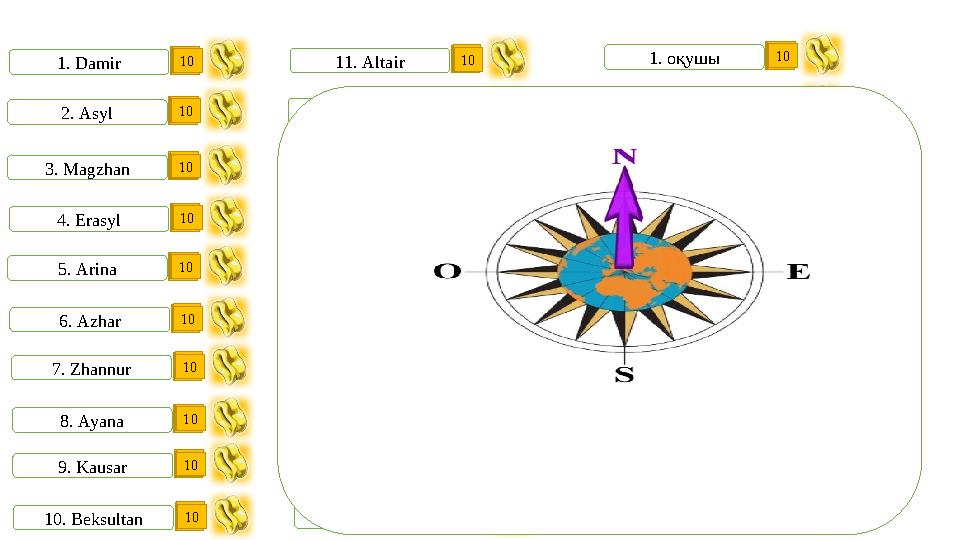
1. Damir
Assessment list
12345678910
2. Asyl 12345678910
3. Magzhan 12345678910
4. Erasyl 12345678910
5. Arina 12345678910
6. Azhar 12345678910
7. Zhannur 12345678910
8. Ayana 12345678910
9. Kausar 12345678910
10. Beksultan12345678910
11. Altair 12345678910
1. оқушы 12345678910
1. оқушы 12345678910
1. оқушы 12345678910
1. оқушы 12345678910
1. оқушы 12345678910
1. оқушы 12345678910
1. оқушы 12345678910
1. оқушы 12345678910
1. оқушы 12345678910
1. оқушы 12345678910
1. оқушы 12345678910
1. оқушы 12345678910
1. оқушы 12345678910
1. оқушы 12345678910
1. оқушы 12345678910
1. оқушы 12345678910
1. оқушы 12345678910
1. оқушы 12345678910
1. оқушы 12345678910
11 слайд
1. Damir Assessment list 12345678910 2. Asyl 12345678910 3. Magzhan 12345678910 4. Erasyl 12345678910 5. Arina 12345678910 6. Azhar 12345678910 7. Zhannur 12345678910 8. Ayana 12345678910 9. Kausar 12345678910 10. Beksultan12345678910 11. Altair 12345678910 1. оқушы 12345678910 1. оқушы 12345678910 1. оқушы 12345678910 1. оқушы 12345678910 1. оқушы 12345678910 1. оқушы 12345678910 1. оқушы 12345678910 1. оқушы 12345678910 1. оқушы 12345678910 1. оқушы 12345678910 1. оқушы 12345678910 1. оқушы 12345678910 1. оқушы 12345678910 1. оқушы 12345678910 1. оқушы 12345678910 1. оқушы 12345678910 1. оқушы 12345678910 1. оқушы 12345678910 1. оқушы 12345678910
#12 слайд
I need
help
I understoodI didn’t
understand
12 слайд
I need help I understoodI didn’t understand
#13 слайд
Thank you for
your
attention!
13 слайд
Thank you for your attention!









 Бұл курс Қазақстан Республикасы Оқу-ағарту министрлігімен келісілген










