ЖИ көмекші


 Қауіпсіз төлем

жүктеу мүмкіндігіне ие боласыз
Бұл материал сайт қолданушысы жариялаған. Материалдың ішінде жазылған барлық ақпаратқа жауапкершілікті жариялаған қолданушы жауап береді. Ұстаз тілегі тек ақпаратты таратуға қолдау көрсетеді. Егер материал сіздің авторлық құқығыңызды бұзған болса немесе басқа да себептермен сайттан өшіру керек деп ойласаңыз осында жазыңыз
 06 Қаңтар 2024
 482
482
1 жыл бойы шексіз жүктеңіз
10 сынып Action 3 тоқсан ҚМЖ
Құрметті әріптес!
Қазақстан Республикасының «Авторлық құқық және сабақтас құқықтар туралы» заңына сәйкес авторлық құқық заңмен қорғаланатынын ескертеміз. Сатып алған ҚМЖ – ны тарату туралы факт анықталған жағдайда әкімшілік айыппұл салынады.
«USTAZ tilegi» ғылыми әдістемелік орталығының әкімшілігі
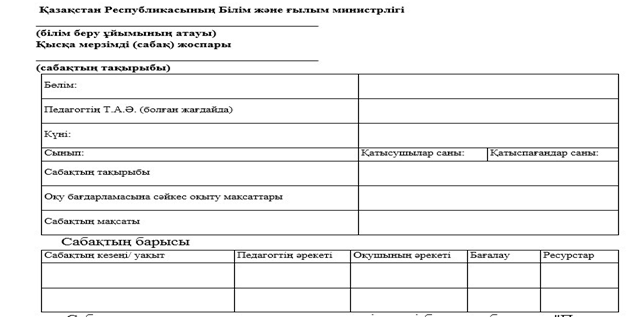
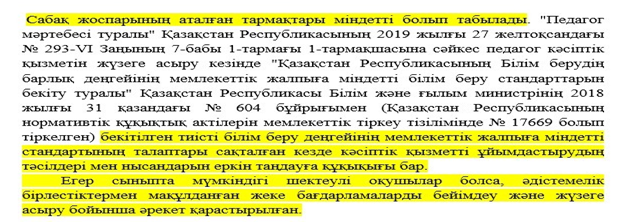
№472 бұйрығы бойынша жасалған ҚМЖ келесі бетте
Бұл ҚМЖ ust.kz сайтында жасалынған. «USTAZ tilegi» ғылыми-әдістемелік орталығының сайтынының ҚМЖ бөлімінде кез-келген пән, кез-келген сынып бойынша ҚМЖ және презентацияны жүктеп ала аласыз. Ол үшін сілтеме арқылы өтіңіз.
Lesson Plan 1
|
Unit:5 |
Reading for pleasure |
|
Teacher’s name: |
|
|
Date: |
|
|
Grade:10 |
Number present: absent: |
|
Theme of the lesson: |
Types of literature |
|
Learning objectives(s) that this lesson is contributing to: |
10.1.3 -respect differing points of view;; |
|
Lesson objectives: |
All learners will be able to: know and identify types of books Most learners will be able to:answer the questions Some learners will be able to: tell about books |
|
Value links: |
Respect each other. |
Plan:
|
Part of the lesson/Time |
Teacher’s activity |
Student’s activity |
Assessment |
Resources |
|
Beginning of the lesson Pre-learning «Brainstorming» method 8 min. |
Revision of previous lessons materials with the help of the teacher. Differentiation: «Verbal support» T asks different questions connected with the theme and tries to help Ss to give the correct answer. T asks leading questions to clarify the theme to the Ss who needs T support. Ss give their possible answers. After that T introduces the aim and theme of the lesson. |
Questions: 1.Which products are organic and non-organic? 2. What is GMO? 3. How often do you buy organic food? Aim: Revise the previous lessons material. Efficiency: Ss refresh their mind before starting new theme. |
Descriptor: -answer the 1st-question - answer the 2 nd-question. - answer the 3 rd-question. Total: 3points Encourage Ss who can name object that is connected with new lesson. |
Whiteboard Cards Students Book |
|
Middle of the lesson Presentation part. 10min. |
Direct student to the pictures. Explain that they show book covers for different types of literature. Elicit which ones are fiction and which ones are non-fiction from Ss around the class. Aim: to present vocabulary for types of literature, to introduce the topic Efficiency: Ss develop their reading skills. |
Exercise 1: Look at the pictures. Which books are non-fiction (based on facts) ? fiction (created from the imagination)? |
-assign words to the correct group - read the without mistakes 2points |
Whiteboard Pupils Book Poster |
|
10 min. |
Read out the types of books and explain/elicit their meanings. Match the words with their meaning Aim: to practice the language of the lesson Differentiation: «Librarian» method is used to develop their vocabulary knowledge. |
|
Descriptor: - say definitions corectly - pronounce the words correctly. Total: 2point |
Whiteboard Students Book Poster |
|
10 min
|
Ask Ss to read the example and elicit similar sentences from Ss around the class about which books they like to read and why. Aim: to talk about types of books Efficiency: To develop their speaking skills and consolidate adjectives Differentiation: “Verbal support” This technique relies on T-S interaction and an ability in the educator to engage Ss in both simple and complex dialogue according to their learning needs. |
Exercise 2 ‘ Answer the questions: 1.Which type of books do you like reading? Why? |
Descriptor: -spelling words correctly 1point. - answer questions correctly and competently1point. - 3point |
Whiteboard Students Book |
|
End of the lesson. Reflection 7 min |
The Ladder method was used as a reflection. T asks Ss to stick their stickers to the Success Ladder |
Ss use their stickers to show their knowledge according to the lesson Green- I understood Yellow-I have some questions Red-I need a help. Aim: To know how many Ss got the theme. Efficiency: Ss can use colors to show how much do they remember. Differentiation: «Conclusion» method is used to finish the lesson. |
Ss evaluate each other and encourage classmate with phrases like: Well done! Brilliant! Good job! I like it! |
Whiteboard Poster. |
|
Additional information |
||
|
Differentiation – how do you plan to give more support? How do you plan to challenge the more able learners? |
Assessment – how are you planning to check learners’ learning? |
Health and safety check |
|
By individual support, peer support and tasks |
Success criteria for reading task Feedback on language |
ICT
links |
|
Reflection Were the lesson objectives/learning objectives realistic? Did all learners achieve the LO? If not, why? Did my planned differentiation work well? Did I stick to timings? What changes did I make from my plan and why? |
Use the space below to reflect on your lesson. Answer the most relevant questions from the box on the left about your lesson. |
|
|
|
||
Lesson Plan 2
|
Unit:5 |
Reading for pleasure |
|
Teacher’s name: |
|
|
Date: |
|
|
Grade:10 |
Number present: absent: |
|
Theme of the lesson: |
The War of the Worlds |
|
Learning objectives(s) that this lesson is contributing to: |
10.3.1 - use formal and informal language registers in talk on a wide range of general and curricular topics; 10.3.2 - ask and respond to complex questions to get information about a wide range of general and curricular topics 10.4.4 - read a wide range of extended fiction and non-fiction texts on familiar and unfamiliar general and curricular topics;
|









 Бұл курс Қазақстан Республикасы Оқу-ағарту министрлігімен келісілген