
 ЖИ көмекші


 Қауіпсіз төлем

жүктеу мүмкіндігіне ие боласыз
Бұл материал сайт қолданушысы жариялаған. Материалдың ішінде жазылған барлық ақпаратқа жауапкершілікті жариялаған қолданушы жауап береді. Ұстаз тілегі тек ақпаратты таратуға қолдау көрсетеді. Егер материал сіздің авторлық құқығыңызды бұзған болса немесе басқа да себептермен сайттан өшіру керек деп ойласаңыз осында жазыңыз
 24 Желтоқсан 2019
 3064

1 жыл бойы шексіз жүктеңіз
3 сыныпқа арналған сабақ жоспары ағылшын тілінде
Unit of a long term plan |
school – lyceum 89 |
|||||||
Date:25.11,26.11 |
Teacher’s name: Nurgalieva F. |
|||||||
Grade: 3д, е, ж |
Number present: |
absent: |
||||||
Lesson title |
At the right time |
|||||||
Learning objectives(s) that this lesson is contributing to (link to the Subject programme) |
3.1.7.1 use contextual clues to predict content in short, supported talk on a limited range of general and some curricular topics 3.3.4.1 use with some support a simple picture dictionary |
|||||||
Lesson objectives |
All learners will be able ask questions and respond using visuals; practice learned vocabulary with support. Most learners will be able to able use most of the words in the speech; answer questions through multiple choice with some support Some learners will be able to able ask questions and answer questions with basic words, phrases and short; sentences using visuals without support
|
|||||||
Assessment criteria |
|
|||||||
Values links |
science |
|||||||
Cross-curricular links |
Biology |
|||||||
Previous learning |
Present Simple Tense |
|||||||
Plan |
||||||||
Planned timings |
Planned activities (replace the notes below with your planned activities) |
Resources |
||||||
Start 5min |
Ask some pupils to present their portfolio activities from the previous lesson. Play the song from the previous lesson. Invite the pupils to sing along. |
activity chart |
||||||
Middle 30 min |
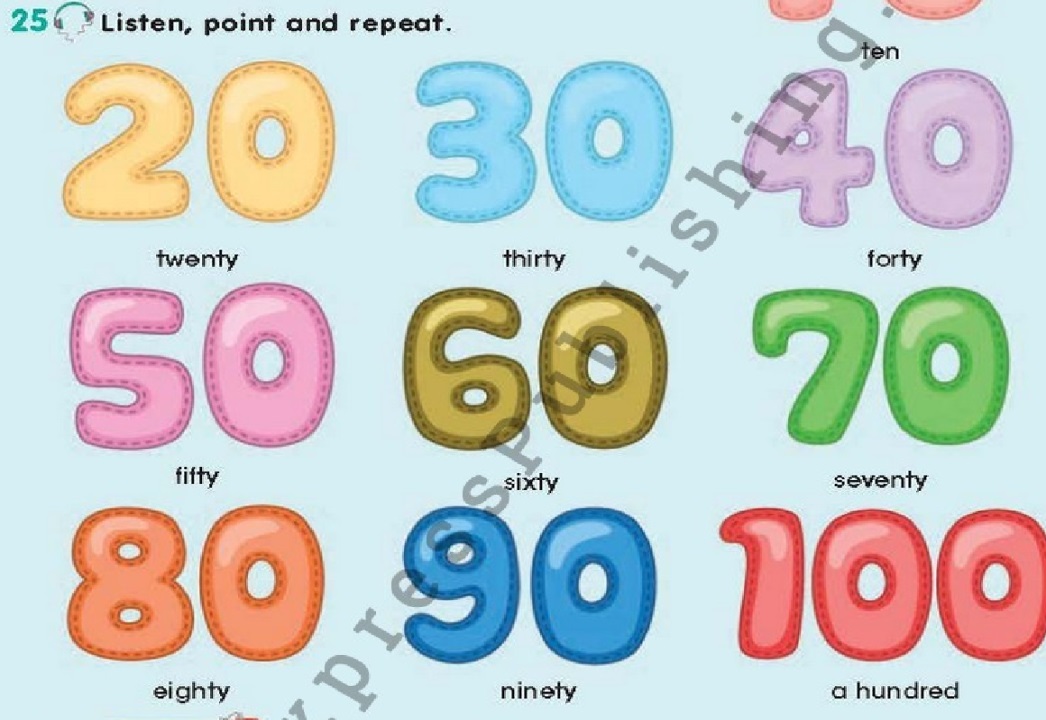
• Listen, point and repeat. Pupils’ books closed. Write the numbers 10-100 on the board. Point to the items, one at a time, and say the corresponding words. The pupils repeat, chorally/ individually. Point to the items in random order. Ask individual pupils to name them. Ask the rest of the class for verification. Pupils’ books open. Play the CD. The pupils listen, point to the words and repeat. If you wish, play the CD again pausing after each word. The pupils repeat, chorally and/or individually.
Descriptor: • Learners can count 1-100
• Write the numbers. Then, in pairs, decide if the sentences are True or False. Explain the activity. Allow the pupils some time to read the sentences silently and complete the activity. Check the pupils’ answers. Answer key: 1 False; 2 ninety, False; 3 fifty-two, True; 4 twenty-four, True; 5 ten, False; 6 thirty-one, False
Descriptor: Explain the specific information without support
• Read and answer. Refer the pupils to the reminder about how many minutes are in an hour as well as how many seconds are in a minute. - For stronger classes: The pupils read the texts silently and answer the questions in their notebooks. Allow the pupils some time to complete the activity. Check their answers. - For weaker classes: Read the text about Berik. Explain any uknown words. Say: There are seven days in a week. Berik plays guitar for 2 hours every day. Then write on the board: 7x2=? Ask pupils to say how many hours Berik plays the guitar in a week. Follow the same procedure with the rest of the children. Answer key: 1 fourteen hours, 2 sixty minutes, 3 thirty- five minutes, 4 one and a half hours, 5 one minute and forty seconds
Descriptor: Apply contextual clues to predict content in short
|
Flash cards pictures
pictures flashcards
pictures, flashcards |
||||||
End 5 min |
Say a time. Individual pupils say what they do at that time. e.g. Teacher: seven o’clock Pupil 1: I get up at seven o’clock. etc
ACTIVITY BOOK (Optional) If you wish, you can assign some or all of the corresponding exercises from the Activity Book for homework. If this is the case, make sure you explain them first in class. |
|
||||||
Additional information |
||||||||
Differentiation – how do you plan to give more support? How do you plan to challenge the more able learners? |
Assessment – how are you planning to check learners’ learning? |
Health
and safety check |
||||||
I’ll support pupils in pronouncing the new words after doing various activities I’ll explain them the unknown words by gestures and mime.
|
Formative assessment Oral comments Hand signals |
Control them during doing some activities |
||||||
Reflection
Were the lesson objectives/learning objectives realistic? Did all the learners achieve the lesson objectives/ learning objectives? If not, why? Did my planned differentiation work well? Did I stick to timings? What changes did I make from my plan and why?
|
Use the space below to reflect on your lesson. Answer the most relevant questions from the box on the left about your lesson. |
|||||||
|
||||||||
Unit of a long term plan |
school – lyceum 89 |
|||||||
Date:28.11,29.11 |
Teacher’s name: Nurgalieva F. |
|||||||
Grade: 3д, е, ж |
Number present: |
absent: |
||||||
Lesson title |
Our world |
|||||||
Learning objectives(s) that this lesson is contributing to (link to the Subject programme) |
3.3.1.1 recognise, identify and sound with support a limited range of familiar words in simple sentences 3.4.1.1 plan, write and check short sentences with considerable support on a limited range of personal, general and some curricular topics |
|||||||
Lesson objectives |
All learners will be able ask questions and respond using visuals; practice learned vocabulary with support. Most learners will be able to able use most of the words in the speech; answer questions through multiple choice with some support Some learners will be able to able ask questions and answer questions with basic words, phrases and short; sentences using visuals without support
|
|||||||
Assessment criteria |
|
|||||||
Values links |
science |
|||||||
Cross-curricular links |
Biology |
|||||||
Previous learning |
Present Simple Tense |
|||||||
Plan |
||||||||
Planned timings |
Planned activities (replace the notes below with your planned activities) |
Resources |
||||||
Start 5min |
Write the following on the board: 20 – 18 = ? Ask pupils to come to the board and write the right number (two). Ask the rest of the class for verification. Repeat with more calculations and other pupils. |
activity chart |
||||||
Middle 30 min |
• Listen and read. Pupils’ books closed. Write the word Teatime on the board. If you wish draw a simple sketch of a teacup and a teapot and elicit the words. Ask the pupils, in L1 if necessary, to tell you if they like tea, what time they drink tea in their country, if they drink it hot or cold etc. Pupils’ books open. Ask the pupils to look at the pictures. Point to the flags and elicit the countries. Then ask the pupils to tell you what they see in the pictures. e.g. Teacher: (pointing to the sandwiches) What are these? Pupil 1: They are sandwiches. Play the CD and ask the pupils to listen and follow along in their books.
Descriptor: talk about teatime in the UK and in their country
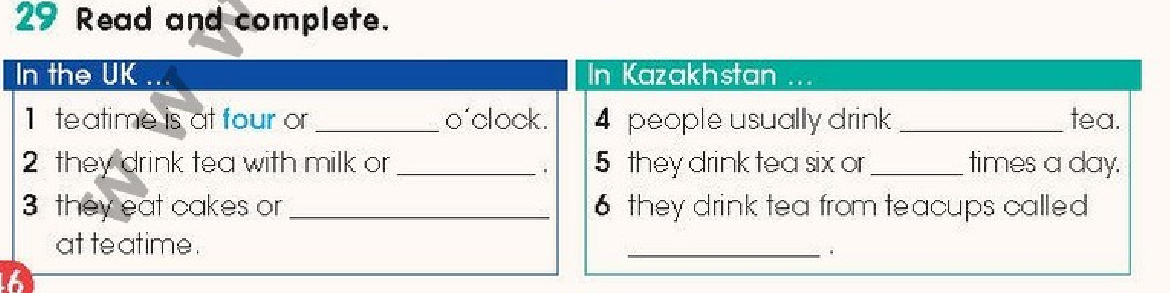
• Read and complete. Explain the activity. Allow the pupils some time to read the sentences silently and complete the activity. Check their answers. Answer key: 1 five 2 sugar 3 sandwiches 4 black 5 seven 6 kasirs
Descriptor: write and check short sentences with considerable support
Descriptor: consolidate the language of the module.
|
Flash cards pictures
pictures flashcards
pictures, flashcards |
||||||
End 5 min |
Say a time. Individual pupils say what they do at that time. e.g. Teacher: seven o’clock Pupil 1: I get up at seven o’clock. etc
ACTIVITY BOOK (Optional) If you wish, you can assign some or all of the corresponding exercises from the Activity Book for homework. If this is the case, make sure you explain them first in class. |
|
||||||
Additional information |
||||||||
Differentiation – how do you plan to give more support? How do you plan to challenge the more able learners? |
Assessment – how are you planning to check learners’ learning? |
Health
and safety check |
||||||
I’ll support pupils in pronouncing the new words after doing various activities I’ll explain them the unknown words by gestures and mime.
|
Formative assessment Oral comments Hand signals |
Control them during doing some activities |
||||||
Reflection
Were the lesson objectives/learning objectives realistic? Did all the learners achieve the lesson objectives/ learning objectives? If not, why? Did my planned differentiation work well? Did I stick to timings? What changes did I make from my plan and why?
|
Use the space below to reflect on your lesson. Answer the most relevant questions from the box on the left about your lesson. |
|||||||
|
||||||||
Summary evaluation What two things went really well (consider both teaching and learning)? 1: 2: What two things would have improved the lesson (consider both teaching and learning)? 1: 2: What have I learned from this lesson about the class or individuals that will inform my next lesson?
|
Unit of a long term plan |
school – lyceum 89 |
||||||||||||||||||||||||||||||||||||||||||||||||||||||||||||||||||||||||||||||||||||||||||||||||||||||||||||||||||||||||||||||||
Date: |
Teacher’s name: Nurgalieva F. |
||||||||||||||||||||||||||||||||||||||||||||||||||||||||||||||||||||||||||||||||||||||||||||||||||||||||||||||||||||||||||||||||
Grade: 3 |
Number present: |
absent: |
|||||||||||||||||||||||||||||||||||||||||||||||||||||||||||||||||||||||||||||||||||||||||||||||||||||||||||||||||||||||||||||||
Lesson title |
SAU for Unit 3 Check point 3 |
||||||||||||||||||||||||||||||||||||||||||||||||||||||||||||||||||||||||||||||||||||||||||||||||||||||||||||||||||||||||||||||||
Learning objectives(s) that this lesson is contributing to (link to the Subject programme) |
3.4.4.1 write with support short basic sentences with appropriate spaces between words
|
||||||||||||||||||||||||||||||||||||||||||||||||||||||||||||||||||||||||||||||||||||||||||||||||||||||||||||||||||||||||||||||||
Lesson objectives |
All learners will be able write with support short basic sentences with support. Most learners will be able to able write with support short basic sentences with some support Some learners will be able to able write with support short basic sentences without support
|
||||||||||||||||||||||||||||||||||||||||||||||||||||||||||||||||||||||||||||||||||||||||||||||||||||||||||||||||||||||||||||||||
Assessment criteria |
|
||||||||||||||||||||||||||||||||||||||||||||||||||||||||||||||||||||||||||||||||||||||||||||||||||||||||||||||||||||||||||||||||
Values links |
science |
||||||||||||||||||||||||||||||||||||||||||||||||||||||||||||||||||||||||||||||||||||||||||||||||||||||||||||||||||||||||||||||||
Cross-curricular links |
Biology |
||||||||||||||||||||||||||||||||||||||||||||||||||||||||||||||||||||||||||||||||||||||||||||||||||||||||||||||||||||||||||||||||
Previous learning |
Present Simple Tense |
||||||||||||||||||||||||||||||||||||||||||||||||||||||||||||||||||||||||||||||||||||||||||||||||||||||||||||||||||||||||||||||||
Plan |
|||||||||||||||||||||||||||||||||||||||||||||||||||||||||||||||||||||||||||||||||||||||||||||||||||||||||||||||||||||||||||||||||
Planned timings |
Planned activities (replace the notes below with your planned activities) |
Resources |
|||||||||||||||||||||||||||||||||||||||||||||||||||||||||||||||||||||||||||||||||||||||||||||||||||||||||||||||||||||||||||||||
Start 5min |
Write the following on the board: 20 – 18 = ? Ask pupils to come to the board and write the right number (two). Ask the rest of the class for verification. Repeat with more calculations and other pupils. |
activity chart |
|||||||||||||||||||||||||||||||||||||||||||||||||||||||||||||||||||||||||||||||||||||||||||||||||||||||||||||||||||||||||||||||
Middle 30 min |
CHECKPOINT 3 • Read and match. The pupils read the words and match to make phrases. Answer key: 1 d 2 3 3 c 4 b 5 a
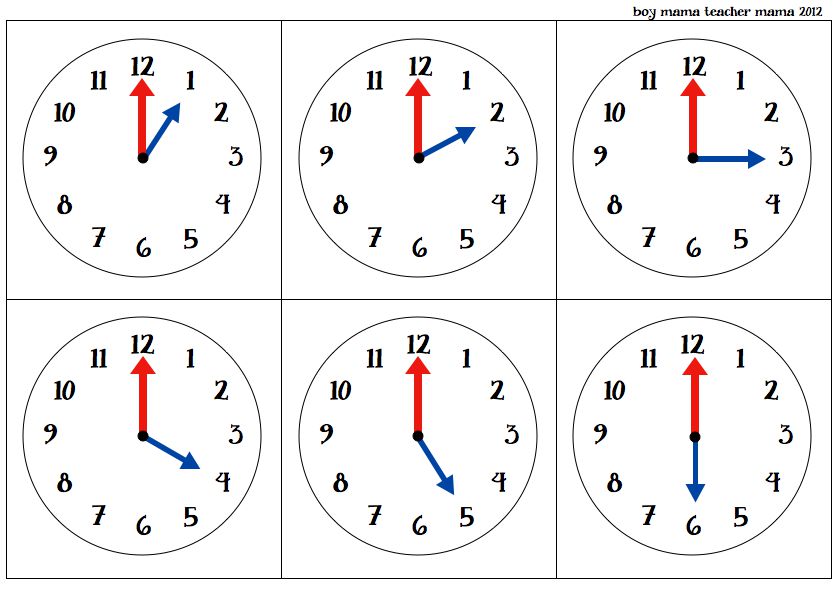
• Read and draw the times. The pupils read the sentences and draw the times on the clocks.
• Write the numbers. The pupils look at the numbers and write the correct word. Answer key: B forty-three, C sixty, D seventy- eight, E ninety, F a hundred
• Underline. The pupils read the sentences and underline the correct word in bold. Answer key: 1 don’t 2 brushes 3 listen 4 tidies 5 Does • Read and complete. The pupils read the text and complete with the correct word. Answer key:1 get 2 breakfast 3 ride 4 play 5 afternoon
Extra Check: The pupils are now ready to do page 34 in the Activity Book.
Descriptor: consolidate the language of the module.
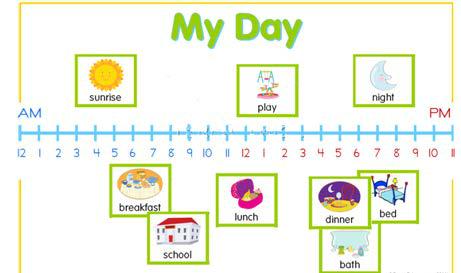
Summative assessment for the cross curricular unit «Time»
Speaking
Task 1. Work in pairs. Talk with a partner about your day and what you do during the day. Use the ideas to make up sentences.
Writing
Task 2.Make up sentences about the time. Use the words from the boxes and pictures. Write 4 sentences.
Descriptor: Interact with others in short basic conversation Write with support short sentences by applying spaces between words
|
Flash cards pictures
pictures flashcards
pictures, flashcards |
|||||||||||||||||||||||||||||||||||||||||||||||||||||||||||||||||||||||||||||||||||||||||||||||||||||||||||||||||||||||||||||||
End 5 min |
ACTIVITY BOOK (Optional) If you wish, you can assign some or all of the corresponding exercises from the Activity Book for homework. If this is the case, make sure you explain them first in class. |
|
|||||||||||||||||||||||||||||||||||||||||||||||||||||||||||||||||||||||||||||||||||||||||||||||||||||||||||||||||||||||||||||||
Additional information |
|||||||||||||||||||||||||||||||||||||||||||||||||||||||||||||||||||||||||||||||||||||||||||||||||||||||||||||||||||||||||||||||||
Differentiation – how do you plan to give more support? How do you plan to challenge the more able learners? |
Assessment – how are you planning to check learners’ learning? |
Health
and safety check |
|||||||||||||||||||||||||||||||||||||||||||||||||||||||||||||||||||||||||||||||||||||||||||||||||||||||||||||||||||||||||||||||
I’ll support pupils in pronouncing the new words after doing various activities I’ll explain them the unknown words by gestures and mime.
|
Formative assessment Oral comments Hand signals |
Control them during doing some activities |
|||||||||||||||||||||||||||||||||||||||||||||||||||||||||||||||||||||||||||||||||||||||||||||||||||||||||||||||||||||||||||||||
Reflection
Were the lesson objectives/learning objectives realistic? Did all the learners achieve the lesson objectives/ learning objectives? If not, why? Did my planned differentiation work well? Did I stick to timings? What changes did I make from my plan and why?
|
Use the space below to reflect on your lesson. Answer the most relevant questions from the box on the left about your lesson. |
||||||||||||||||||||||||||||||||||||||||||||||||||||||||||||||||||||||||||||||||||||||||||||||||||||||||||||||||||||||||||||||||
|
|||||||||||||||||||||||||||||||||||||||||||||||||||||||||||||||||||||||||||||||||||||||||||||||||||||||||||||||||||||||||||||||||
Тексерілді:
ДОІЖО Файзиева Қ.Ж.
Unit of a long term plan |
school – lyceum 89 |
|||||||
Date: |
Teacher’s name: Nurgalieva F. |
|||||||
Grade: 3 |
Number present: |
absent: |
||||||
Lesson title |
Buildings. Four walls |
|||||||
Learning objectives(s) that this lesson is contributing to (link to the Subject programme) |
3.1.6.1 understand some specific information and detail of short, supported information or talk on a limited range of general and some curricular topics 3.3.3.1 give short, basic description of people and objects; begin to describe past experiences on a limited range of general and some curricular topics |
|||||||
Lesson objectives |
All learners will be able understand some specific information and detail of short with support. Most learners will be able to able understand some specific information and detail of short with some support Some learners will be able to able give short, basic description of people and objects; begin to describe past experiences without support
|
|||||||
Assessment criteria |
|
|||||||
Values links |
science |
|||||||
Cross-curricular links |
Biology |
|||||||
Previous learning |
Present Simple Tense |
|||||||
Plan |
||||||||
Planned timings |
Planned activities (replace the notes below with your planned activities) |
Resources |
||||||
Start 5min |
Hand out the completed Progress Report Cards for the previous module and ask the pupils to file them in their Language Portfolios. |
activity chart |
||||||
Middle 30 min |
Teacher introduces new words according the new theme:
Descriptor: understand some specific information
Pupils’ books closed. Draw a simple sketch of a house on the board with two floors. The house should have a kitchen on the ground floor, a living room on the first floor and a bedroom on the second floor. Point to the kitchen and ask: Which room is this? Elicit: kitchen. Then say: There’s a kitchen on the ground floor. Explain the meaning of ground floor. Follow the same procedure and present the first and second floor. Pupils’ books open. Refer the pupils to the picture. Ask: Where’s the kitchen? Help the pupils answer: On the ground floor. Ask: What else is there on the ground floor? Help the pupils answer: the garage. Repeat the activity for the other parts of the house. Then ask individual to say on which floor each room is. Answer key: ground floor: kitchen, garage; first floor: hall, living room; second floor: bathroom, bedroom.
Descriptor: To talk about parts of a house
• Look at the picture again and match. Say. Go through and present the items 1-10. Explain the activity. Allow the pupils time to write the corresponding letter. Check their answers. Answer key: 3 b 4 d 5 a 6 c 7 g 8 g 9 c10 c
Read the examples. Remind the pupils that we use There’s before nouns in the singular form and There are before nouns in the plural form. The pupils then look at the picture and make sentences as in the example. Check their answers. Answer key: 3 There are two trees in the garden. 4 There’s a mirror in the hall. 5 There’s a bath in the bathroom. 6 There are two bookcases in the living room. 7 There’s a fridge in the kitchen. 8 There’s a cooker in the kitchen. 9 There’s a sofa in the living room. 10 There are two armchairs in the living room
• What did the Omarovs buy for their new house yesterday? Listen and tick (✓). Then say. Explain the activity. Tell pupils that bought is the verb buy in the past simple. Play the CD twice, if necessary. The pupils listen and tick the correct boxes. Check their answers. Answer key: phrases to be ticked: four chairs for the kitchen; a table for the garden.
Descriptor: talk about what we can find in each part of a house.
AUDIOSCRIPT The Omarovs bought some things for their new house yesterday. They bought a lamp for the bedroom. They bought four chairs for the kitchen. They bought a table for the garden, too |
Flash cards pictures
pictures flashcards
pictures, flashcards |
||||||
End 5 min |
Ask a pupil to begin sketching one of the items in Ex. 2 on the board. The rest of the class tries to guess what it is and in which room it can be found. Whoever guesses correctly comes to the board and the game continues. Suggested answer key: Pupil 1: (Begins to draw a fridge.) Pupil 2: It’s a fridge. There’s a fridge in the kitchen.
ACTIVITY BOOK (Optional) If you wish, you can assign some or all of the corresponding exercises from the Activity Book for homework. If this is the case, make sure you explain them first in class. |
|
||||||
Additional information |
||||||||
Differentiation – how do you plan to give more support? How do you plan to challenge the more able learners? |
Assessment – how are you planning to check learners’ learning? |
Health
and safety check |
||||||
I’ll support pupils in pronouncing the new words after doing various activities I’ll explain them the unknown words by gestures and mime.
|
Formative assessment Oral comments Hand signals |
Control them during doing some activities |
||||||
Reflection
Were the lesson objectives/learning objectives realistic? Did all the learners achieve the lesson objectives/ learning objectives? If not, why? Did my planned differentiation work well? Did I stick to timings? What changes did I make from my plan and why?
|
Use the space below to reflect on your lesson. Answer the most relevant questions from the box on the left about your lesson. |
|||||||
|
||||||||
Тексерілді:
ДОІЖО Файзиева Қ.Ж.
Unit of a long term plan |
school – lyceum 89 |
|||||||
Date: |
Teacher’s name: |
|||||||
Grade: 3 |
Number present: |
absent: |
||||||
Lesson title |
Our town |
|||||||
Learning objectives(s) that this lesson is contributing to (link to the Subject programme) |
3.3.5.1 understand the main points of short simple texts on a limited range of familiar general and some curricular topics by using contextual clues 3.5.1.1 use singular nouns, plural nouns – including some common irregular plural forms; use possessive forms ‘s/s’ with proper names and nouns to talk about ownership |
|||||||
Lesson objectives |
All learners will be able understand the main points of short simple texts with support. Most learners will be able to able use singular nouns, plural nouns – including some common irregular plural forms with some support Some learners will be able to able use singular nouns, plural nouns – including some common irregular plural forms; use possessive forms ‘s/s’ with proper names and nouns to talk about ownership without support
|
|||||||
Assessment criteria |
|
|||||||
Values links |
science |
|||||||
Cross-curricular links |
Biology |
|||||||
Previous learning |
Present Simple Tense |
|||||||
Plan |
||||||||
Planned timings |
Planned activities (replace the notes below with your planned activities) |
Resources |
||||||
Start 5min |
Write some of the words from the previous lesson with some letters missing, e.g. b _ _ kc _ s _ . Ask a pupil to come to the board and complete the word. Ask the rest of the class for verification. Repeat with some other words and pupils. |
activity chart |
||||||
Middle 30 min |
Teacher introduces new words according the new theme:
Descriptor: understand the main points of short simple texts
Put up the picture flashcards on the board. Point to them, one at a time, and name them. The pupils repeat, chorally and/or individually. Repeat the procedure with the remaining flashcards. Then point to each flashcard in random order. Ask individual pupils to name them. Pupils’ books open. Play the CD. The pupils listen, point to the pictures, and repeat the words. If you wish, play the CD again pausing after each word. The pupils repeat, chorally and/or individually. The pupils read the words and match them to the pictures. Allow the pupils some time to complete the activity. Check their answers. Answer key: 1 d 2 f 3 a 4 g 5 c 6 b 7 e8 h
Explain the activity. The pupils complete the sentences with the correct answers (a-d). Check the pupils’ answers. Answer key: 2 c 3 d 4 a
Descriptor: use possessive forms ‘s/s’ with proper names
Allow the pupils some time to read the story silently and complete the activity. Check the pupils’ answers. Answer key: 1 baker’s 2 greengrocer’s 3 butcher’s 4 sweet shop
Allow the pupils some time to look at the items and the story again. They complete the activity. Check the pupils’ answers. Answer key: 1 Picture 6; 2 Picture 3; 3 Pictures 1, 2; 4 Picture 5 Play the CD again with pauses for the pupils to repeat, chorally and/or individually.
Refer the pupils to the picture and the dialogue. Play the CD. The pupils listen and follow along. Pause the CD for the pupils to repeat, chorally and/or individually. The pupils, in pairs, act out similar dialogues about themselves. Go around the classroom providing any necessary help. Ask some pairs to come to the front of the classroom and act out the dialogue. If you wish, write the following on the board so the pupils can refer to it while they are completing the activity. A: ... , can you get some … from the … , please? B: Yes, of course. Where’s the … ? A: It’s on … . It’s … . B: OK. Anything else? A: Get … and … , too. Suggested answer key: Saule: Ulan, can you get some apples from the greengrocer’s, please? Ulan: Yes, of course. Where’s the greengrocer’s? Saule: It’s on Gogol Street. It’s next to the post office. Ulan: OK. Anything else? Saule: Get some bananas and some oranges, too.
Descriptor: develop speaking activities.
|
Flash cards pictures
pictures flashcards
pictures, flashcards |
||||||
End 5 min |
Ask the pupils to draw a simple sketch of a town and give it a name. Tell them to draw the following buildings wherever they like in their town: a baker’s, a butcher’s, a greengrocer’s, a sweet shop, a supermarket, a bank, a post office, and a hospital. Then the pupils, in pairs, talk about their drawings. e.g. Pupil 1: Where’s the bank in your town? Pupil 2: It’s behind the post office. Etc
ACTIVITY BOOK (Optional) If you wish, you can assign some or all of the corresponding exercises from the Activity Book for homework. If this is the case, make sure you explain them first in class. |
|
||||||
Additional information |
||||||||
Differentiation – how do you plan to give more support? How do you plan to challenge the more able learners? |
Assessment – how are you planning to check learners’ learning? |
Health
and safety check |
||||||
I’ll support pupils in pronouncing the new words after doing various activities I’ll explain them the unknown words by gestures and mime.
|
Formative assessment Oral comments Hand signals |
Control them during doing some activities |
||||||
Reflection
Were the lesson objectives/learning objectives realistic? Did all the learners achieve the lesson objectives/ learning objectives? If not, why? Did my planned differentiation work well? Did I stick to timings? What changes did I make from my plan and why?
|
Use the space below to reflect on your lesson. Answer the most relevant questions from the box on the left about your lesson. |
|||||||
|
||||||||
Summary evaluation What two things went really well (consider both teaching and learning)? 1: 2: What two things would have improved the lesson (consider both teaching and learning)? 1: 2: What have I learned from this lesson about the class or individuals that will inform my next lesson?
|
Тексерілді:
ДОІЖО Файзиева Қ.Ж.
Unit of a long term plan |
school – lyceum 89 |
|
|||||||
Date: |
Teacher’s name: |
|
|||||||
Grade: 3 |
Number present: |
absent: |
|
||||||
Lesson title |
Study Spot |
|
|||||||
Learning objectives(s) that this lesson is contributing to (link to the Subject programme) |
3.3.4.1 use with some support a simple picture dictionary 3.5.14.1 use prepositions of location and position: at, behind, between, in, in front of, near, next to, on, under, above to describe where people and things are; use prepositions of time: on, in, at to talk about days and times and no preposition last week etc. |
|
|||||||
Lesson objectives |
All learners will be able use with some support a simple picture dictionary Most learners will be able to able use with some support a simple picture dictionary Some learners will be able to able use prepositions of location and position: at, behind, between, in, in front of, near, next to, on, under, above to describe where people and things are; use prepositions of time: on, in, at to talk about days and times and no preposition last week etc. |
|
|||||||
Assessment criteria |
|
|
|||||||
Values links |
science |
|
|||||||
Cross-curricular links |
Biology |
|
|||||||
Previous learning |
Our town |
|
|||||||
Plan |
|
||||||||
Planned timings |
Planned activities (replace the notes below with your planned activities) |
Resources |
|
||||||
Start 5min |
Ask a pupil to mime an action associated with one of the places from the previous lesson. Ask the rest of the class to guess which place it is. Demonstrate this yourself first. e.g. Teacher: (mimes posting a letter) Pupil 1: Post office! etc |
activity chart |
|
||||||
Middle 30 min |
Teacher introduces new words according the new theme:
Study Spot
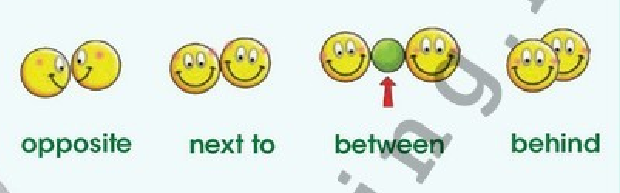
Pupils’ books closed. Put your pencil behind a book, show it to the class and ask: Where is the pencil? Answer: It’s behind the book. Write the exchange on the board and underline the word in bold. The pupils repeat, chorally and/or individually. Follow the same procedure and present the prepositions next to, opposite and between. Drill your pupils: e.g. Teacher: (putting a pencil case between two books) Pupil 1: Between. etc Pupils’ books open. Go through the Study spot section briefly. Read the instructions and explain the activity. Allow the pupils some time to complete the activity. Check their answers. Answer key: 2 a 3 b 4 b 5 a
Descriptor: use simple picture dictionary
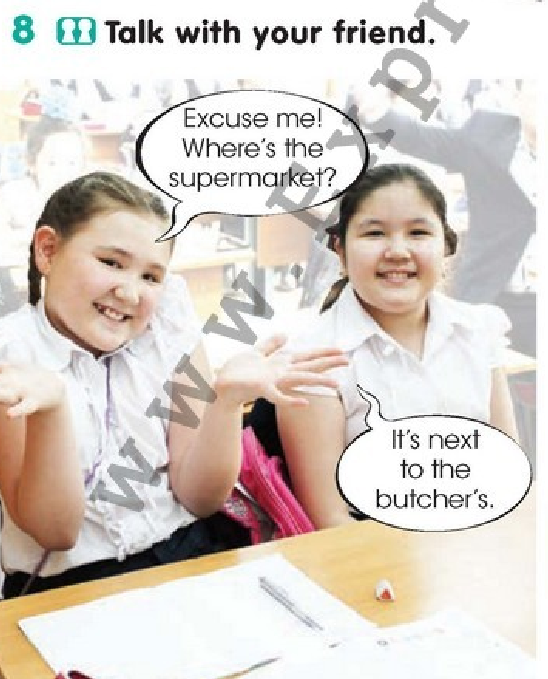
Refer the pupils to the speech bubbles. The pupils, in pairs, look at the picture in Ex. 7 and ask and answer questions. Go around the classroom providing any necessary help. Ask some pairs to report back to the class. Suggested answer key:
A: Excuse me! Where’s the supermarket? B: It’s next to the baker’s. A: Excuse me! Where’s the butcher’s? B: It’s opposite the hospital. A: Excuse me! Where’s the greengrocer’s? B: It’s between the post office and the hospital. A: Excuse me! Where’s the hospital? B: It’s opposite the butcher’s. A: Excuse me! Where’s the baker’s? B: It’s next to the supermarket.
Allow the pupils some time to read the sentences and complete the activity. Check the pupils’ answers. Answer key: 1 greengrocer’s 2 baker’s 3 butcher’s 4 post office 5 supermarket
Descriptor: use prepositions of location and position: at, behind, between, in, in front of, near, next to, on, under
Descriptor: develop speaking activities.
|
Flash cards pictures
pictures flashcards
pictures, flashcards |
|
||||||
End 5 min |
Ask the pupils to draw a simple sketch of a town and give it a name. Tell them to draw the following buildings wherever they like in their town: a baker’s, a butcher’s, a greengrocer’s, a sweet shop, a supermarket, a bank, a post office, and a hospital. Then the pupils, in pairs, talk about their drawings. e.g. Pupil 1: Where’s the bank in your town? Pupil 2: It’s behind the post office. Etc
ACTIVITY BOOK (Optional) If you wish, you can assign some or all of the corresponding exercises from the Activity Book for homework. If this is the case, make sure you explain them first in class. |
|
|
||||||
Additional information |
|
||||||||
Differentiation – how do you plan to give more support? How do you plan to challenge the more able learners? |
Assessment – how are you planning to check learners’ learning? |
Health
and safety check |
|
||||||
I’ll support pupils in pronouncing the new words after doing various activities I’ll explain them the unknown words by gestures and mime.
|
Formative assessment Oral comments Hand signals |
Control them during doing some activities |
|
||||||
Reflection
Were the lesson objectives/learning objectives realistic? Did all the learners achieve the lesson objectives/ learning objectives? If not, why? Did my planned differentiation work well? Did I stick to timings? What changes did I make from my plan and why?
|
Use the space below to reflect on your lesson. Answer the most relevant questions from the box on the left about your lesson. |
|
|||||||
|
|
||||||||
Summary evaluation What two things went really well (consider both teaching and learning)? 1:
2:
What two things would have improved the lesson (consider both teaching and learning)? 1:
2:
What have I learned from this lesson about the class or individuals that will inform my next lesson?
|
|||||||||
Тексерілді:
ДОІЖО Файзиева Қ.Ж.
Unit of a long term plan |
school – lyceum 89 |
|
|||||||
Date: |
Teacher’s name: |
|
|||||||
Grade: 3 |
Number present: |
absent: |
|
||||||
Lesson title |
Around the house |
|
|||||||
Learning objectives(s) that this lesson is contributing to (link to the Subject programme) |
3.1.4.1 understand a limited range of short supported questions on general and some curricular 3.5.4.1 use determiners a, an, the, some, any, this, these, that, those to refer to things on a limited range general and some curricular topics |
|
|||||||
Lesson objectives |
Most learners will be able to use determiners a, an, the, some, any, this, these, that, those to refer to things Some learners will be able to able use determiners a, an, the, some, any, this, these, that, those to refer to things |
|
|||||||
Assessment criteria |
|
|
|||||||
Values links |
science |
|
|||||||
Cross-curricular links |
Biology |
|
|||||||
Previous learning |
Our town, study spot |
|
|||||||
Plan |
|
||||||||
Planned timings |
Planned activities (replace the notes below with your planned activities) |
Resources |
|
||||||
Start 5min |
Ask a pupil to mime an action associated with one of the places from the previous lesson. Ask the rest of the class to guess which place it is. Demonstrate this yourself first. e.g. Teacher: (mimes posting a letter) Pupil 1: Post office! etc |
activity chart |
|
||||||
Middle 30 min |
Listen, point and read. Teacher introduces new words according the new theme:
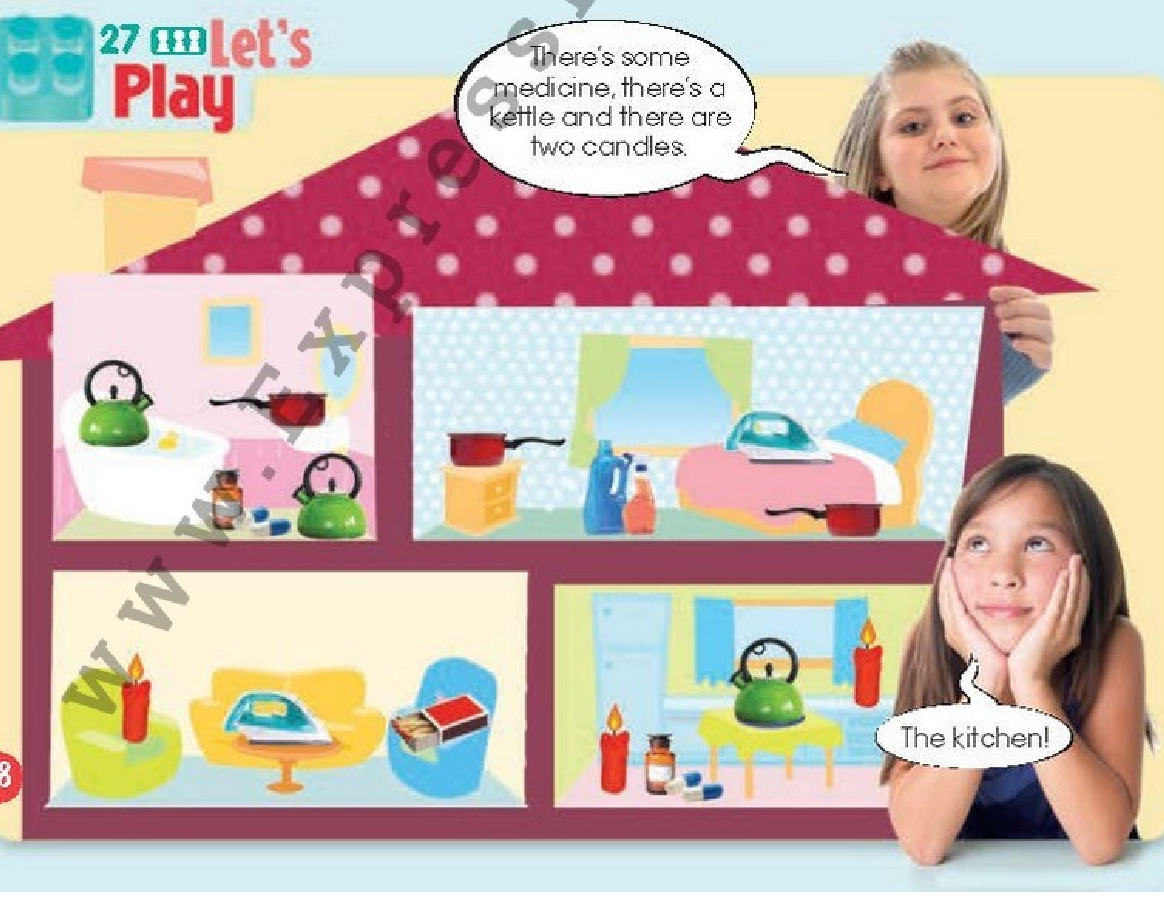
Let`s play. There`s some medicine, there`s a kettle and there are two candles
Descriptor: use most of the words in the speech;
Refer the pupils to the speech bubbles. The pupils, in pairs, look at the picture in Ex. 28 and ask and answer questions. Go around the classroom providing any necessary help. Ask some pairs to report back to the class. Suggested answer key:
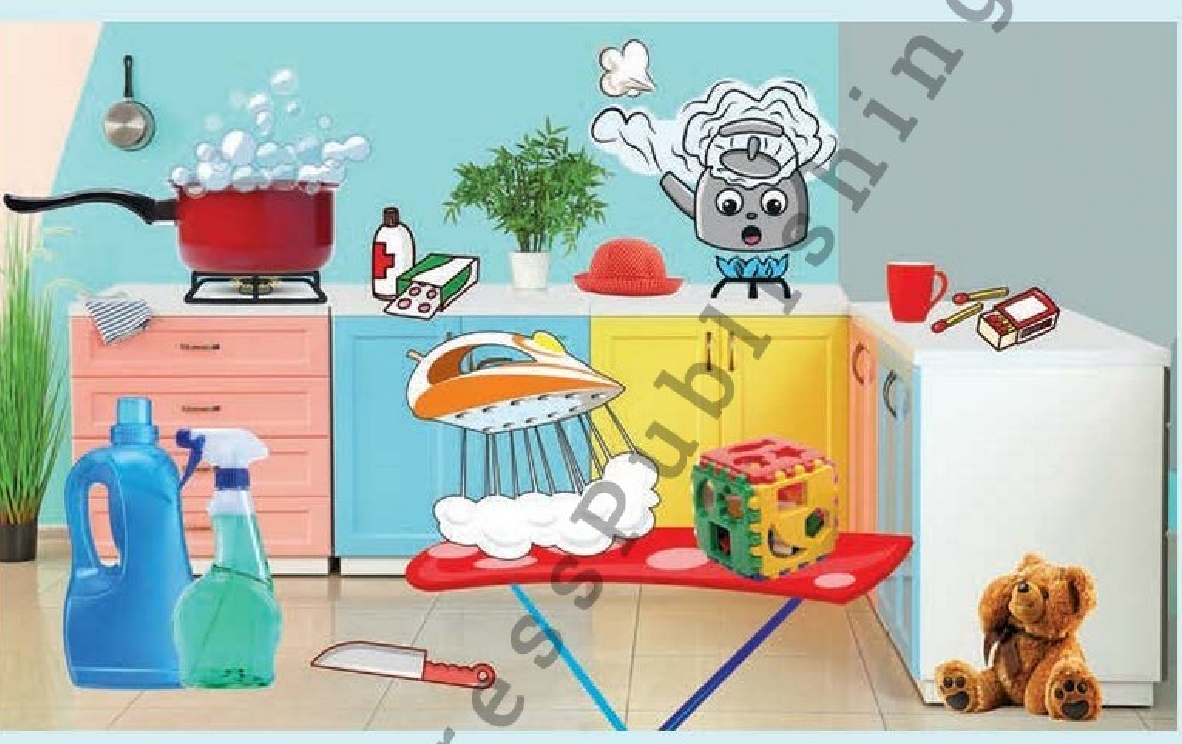
There is an iron. There are medicines. This is a knife and etc.
Descriptor: write basic sentences determiners a, an, the, this, these, that, those
III. Draw your own picture of other dangerous things around the house. Present your poster to your class.
|
Flash cards pictures
pictures flashcards
pictures, flashcards |
|
||||||
End 5 min |
Ask the pupils to draw a simple sketch of a town and give it a name. Tell them to draw the following buildings wherever they like in their town: a baker’s, a butcher’s, a greengrocer’s, a sweet shop, a supermarket, a bank, a post office, and a hospital. Then the pupils, in pairs, talk about their drawings. e.g. Pupil 1: Where’s the bank in your town? Pupil 2: It’s behind the post office. Etc
ACTIVITY BOOK (Optional) If you wish, you can assign some or all of the corresponding exercises from the Activity Book for homework. If this is the case, make sure you explain them first in class. |
|
|
||||||
Additional information |
|
||||||||
Differentiation – how do you plan to give more support? How do you plan to challenge the more able learners? |
Assessment – how are you planning to check learners’ learning? |
Health
and safety check |
|
||||||
I’ll support pupils in pronouncing the new words after doing various activities I’ll explain them the unknown words by gestures and mime.
|
Formative assessment Oral comments Hand signals |
Control them during doing some activities |
|
||||||
Reflection
Were the lesson objectives/learning objectives realistic? Did all the learners achieve the lesson objectives/ learning objectives? If not, why? Did my planned differentiation work well? Did I stick to timings? What changes did I make from my plan and why?
|
Use the space below to reflect on your lesson. Answer the most relevant questions from the box on the left about your lesson. |
|
|||||||
|
|
||||||||
Summary evaluation What two things went really well (consider both teaching and learning)? 1:
2:
What two things would have improved the lesson (consider both teaching and learning)? 1:
2:
What have I learned from this lesson about the class or individuals that will inform my next lesson?
|
|||||||||
Тексерілді:
ДОІЖО Файзиева Қ.Ж.
LESSON THEME: Unit 3. My family and friends Lesson 29. Jobs. Study spot Study Spot Study Spot |
School: 89 school-lyceum |
||||||||
Date: |
Teacher name: Khalmirzaeva Saule |
||||||||
Grade: |
Number present: |
absent: |
|||||||
Learning objectives(s) that this lesson is contributing to |
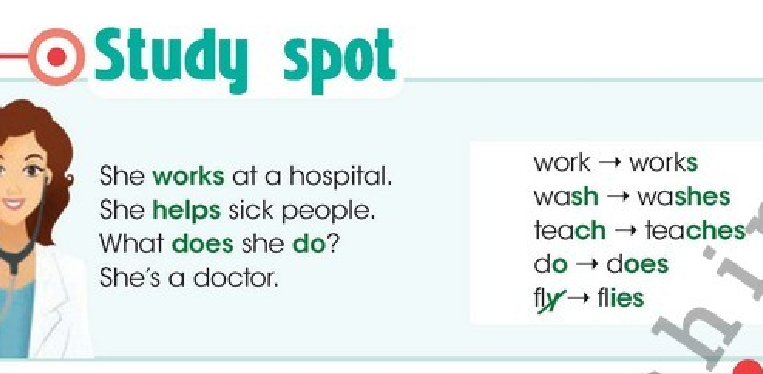
3.1.6.1 understand some specific information and detail of short, supported information or talk on a limited range of general and some curricular topics 3.5.9.1 use common present simple forms [positive, negative, question] and contractions to talk about what you want and like ,habits and facts, simple future timetabled events |
||||||||
Lesson objectives |
All learners will be able to:
|
||||||||
use common present simple forms [positive, negative, question] and contractions to talk about what you want and like ,habits and facts, simple future timetabled events with support |
|||||||||
Most learners will be able to: |
|||||||||
use common present simple forms [positive, negative, question] and contractions to talk about what you want and like ,habits and facts, simple future timetabled events with some support |
|||||||||
Some learners will be able to: use common present simple forms [positive, negative, question] and contractions to talk about what you want and like ,habits and facts, simple future timetabled events without support |
|||||||||
|
|
|
|
|
|
||||
Value links |
Respect and love each other |
||||||||
Assessment criteria |
|
||||||||
ICT skills |
a sound track |
||||||||
Previous learning |
Study Spot |
||||||||
Plan |
|||||||||
Planned timings |
Planned activities (replace the notes below with your planned activities) |
Resources |
|||||||
10 min |
.Warm up
|
Flashcards |
|||||||
Middle 20 min
|
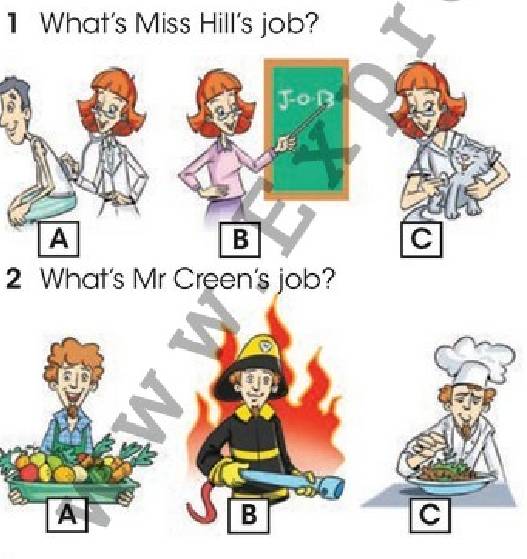
Teacher explains the lesson objectives. Our theme today is Jobs(мамандықтар) Main: Task 1 Activity. Listening • T. shows PPT to present jobs. Professions are presented by speaking
Descriptor: A learner listen and repeat the words according to the topic Jobs
Task 2.Listening
1)A: She is a doctor 2)A: He is a salesman B:She is a teacher B: He is a firefighter C: She is a vet C: He is a chef
Task 3. Speaking. Let`s play. Say what you want to be
Descriptor: recognize and name some words according to the topic Jobs
Do exercise 20.Read and complete 2 drives, driver 3 flies, pilot 4 makes, baker 5 works, chef 6 helps, vet
Descriptor: use common present simple forms [positive, negative, question] and contractions to talk about what you want and like |
PPT Track 1 CD
|
|||||||
End |
REFLECTION Teacher gives comments about learners work and awards learners. |
|
|||||||
Additional information |
|||||||||
Differentiation – how do you plan to give more support? How do you plan to challenge the more able learners? |
Assessment – how are you planning to check learners’ learning? |
Cross-curricular
links |
|||||||
Activity 2. I`ll give worksheets for the more able learners |
|
|
|||||||
Reflection Were the lesson objectives/learning objectives realistic? Did all the learners achieve the lesson objectives/ learning objectives? If not, why? Did my planned differentiation work well? Did I stick to timings? What changes did I make from my plan and why?
|
Use the space below to reflect on your lesson. Answer the most relevant questions from the box on the left about your lesson. |
||||||||
|
|||||||||
Summary evaluation What two things went really well (consider both teaching and learning)? 1:
2:
What two things would have improved the lesson (consider both teaching and learning)? 1:
2:
What have I learned from this lesson about the class or individuals that will inform my next lesson?
|
|||||||||
Тексерілді:
ДОІЖО Файзиева Қ.Ж.
Unit of a long term plan |
school – lyceum 89 |
|
||||||||||||||||||||||||||||||||||||||||||||||||||||||||||||||||||||||||||||||||||||||||||||||||||||
Date: |
Teacher’s name: |
|
||||||||||||||||||||||||||||||||||||||||||||||||||||||||||||||||||||||||||||||||||||||||||||||||||||
Grade: 3 |
Number present: |
absent: |
|
|||||||||||||||||||||||||||||||||||||||||||||||||||||||||||||||||||||||||||||||||||||||||||||||||||
Lesson title |
SAU for Unit 4. Our world |
|
||||||||||||||||||||||||||||||||||||||||||||||||||||||||||||||||||||||||||||||||||||||||||||||||||||
Learning objectives(s) that this lesson is contributing to (link to the Subject programme) |
3.4.1.1 plan, write and check short sentences with considerable support on a limited range of personal, general and some curricular topics 3.1.2.1. Understand a limited range of short supported questions on general and some curricular topics 3.5.14.1 Use prepositions of location and position: at, behind, between, in, in front of, near, next to, on, under, above to describe where people and things are; use prepositions of time: on, in, at to talk about days and times and no preposition last week etc. |
|
||||||||||||||||||||||||||||||||||||||||||||||||||||||||||||||||||||||||||||||||||||||||||||||||||||
Lesson objectives |
Most learners will be able to plan, write and check short sentences with considerable support Some learners will be able to able plan, write and check short sentences with considerable support |
|
||||||||||||||||||||||||||||||||||||||||||||||||||||||||||||||||||||||||||||||||||||||||||||||||||||
Assessment criteria |
|
|
||||||||||||||||||||||||||||||||||||||||||||||||||||||||||||||||||||||||||||||||||||||||||||||||||||
Values links |
science |
|
||||||||||||||||||||||||||||||||||||||||||||||||||||||||||||||||||||||||||||||||||||||||||||||||||||
Cross-curricular links |
Biology |
|
||||||||||||||||||||||||||||||||||||||||||||||||||||||||||||||||||||||||||||||||||||||||||||||||||||
Previous learning |
Our town, study spot |
|
||||||||||||||||||||||||||||||||||||||||||||||||||||||||||||||||||||||||||||||||||||||||||||||||||||
Plan |
|
|||||||||||||||||||||||||||||||||||||||||||||||||||||||||||||||||||||||||||||||||||||||||||||||||||||
Planned timings |
Planned activities (replace the notes below with your planned activities) |
Resources |
|
|||||||||||||||||||||||||||||||||||||||||||||||||||||||||||||||||||||||||||||||||||||||||||||||||||
Start 5min |
Ask a pupil to mime an action associated with one of the places from the previous lesson. Ask the rest of the class to guess which place it is. Demonstrate this yourself first. e.g. Teacher: (mimes posting a letter) Pupil 1: Post office! etc |
activity chart |
|
|||||||||||||||||||||||||||||||||||||||||||||||||||||||||||||||||||||||||||||||||||||||||||||||||||
Middle 30 min |
Listen, point and read.
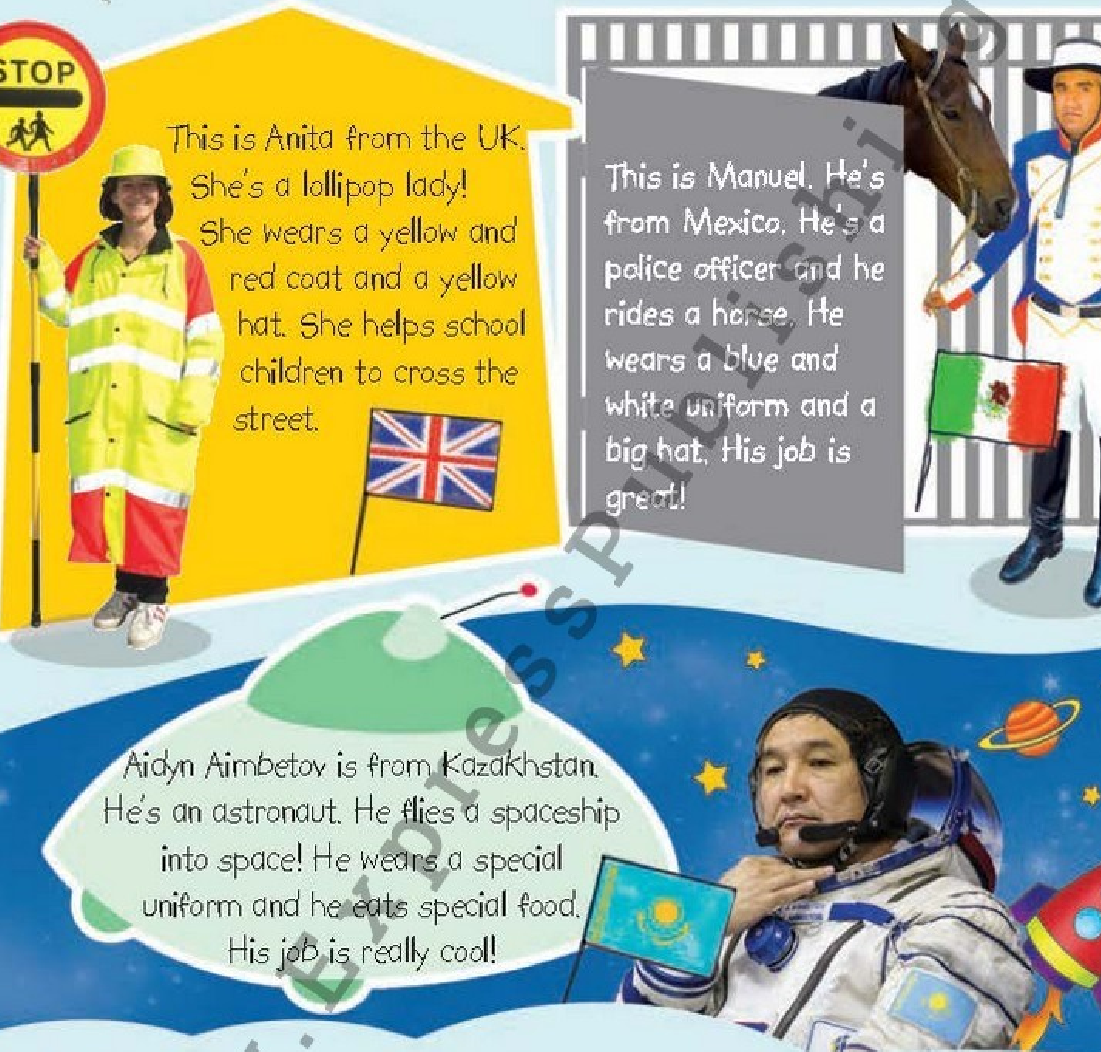
Read and choose. 1.Anita is a lollypop lady 2.Manuel rides a horse 3.Aidyn Aimbetov is an astronaut 4. Aidyn Aimbetov flies a spaceship
Descriptor: use most of the words in the speech;
Summative assessment for the cross curricular unit «Buildings»
Grade_ Surname___
Reading Task 1. Read the text about rooms and identify each room. Write names of rooms in brakets
There are three rooms in this house. There is a bed in the center of this room .We have a rest in this room. 1( __________________ ) There is a bath in this room .We take a shower in this room. 2( _________________ ) There are a cooker and a refrigerator in this room. We cook in this room 3( ______________________ ).
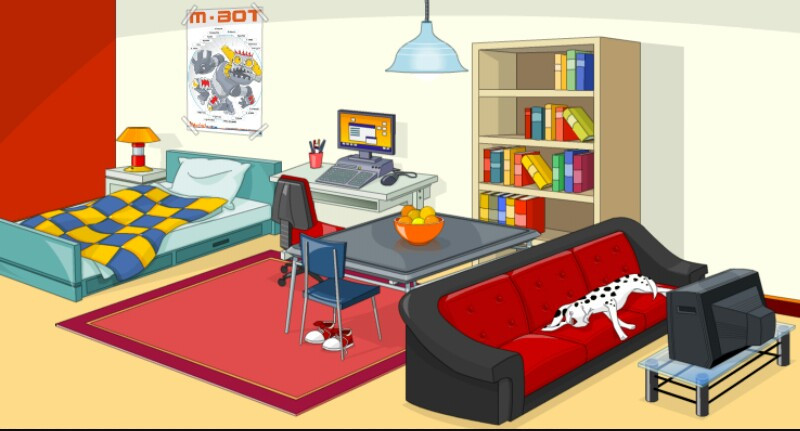
Listening Task 2.Listen to the text and answer the questions. Teacher reads the text I like my room very much. My room is very comfortable and light .There are furniture in my room. There is a table in the center of the room. There is a TV ,a sofa, a bed, a carpet and a bookcase in my room .There is a sofa between the table and the TV .There is a TV behind of the sofa. There is a table opposite the bookcase. There is a desk next to the bed.
Answer the question
|
Flash cards pictures
pictures flashcards
pictures, flashcards |
|
|||||||||||||||||||||||||||||||||||||||||||||||||||||||||||||||||||||||||||||||||||||||||||||||||||
End 5 min |
ACTIVITY BOOK (Optional) If you wish, you can assign some or all of the corresponding exercises from the Activity Book for homework. If this is the case, make sure you explain them first in class. |
|
|
|||||||||||||||||||||||||||||||||||||||||||||||||||||||||||||||||||||||||||||||||||||||||||||||||||
Additional information |
|
|||||||||||||||||||||||||||||||||||||||||||||||||||||||||||||||||||||||||||||||||||||||||||||||||||||
Differentiation – how do you plan to give more support? How do you plan to challenge the more able learners? |
Assessment – how are you planning to check learners’ learning? |
Health
and safety check |
|
|||||||||||||||||||||||||||||||||||||||||||||||||||||||||||||||||||||||||||||||||||||||||||||||||||
I’ll support pupils in pronouncing the new words after doing various activities I’ll explain them the unknown words by gestures and mime.
|
Formative assessment Oral comments Hand signals |
Control them during doing some activities |
|
|||||||||||||||||||||||||||||||||||||||||||||||||||||||||||||||||||||||||||||||||||||||||||||||||||
Reflection
Were the lesson objectives/learning objectives realistic? Did all the learners achieve the lesson objectives/ learning objectives? If not, why? Did my planned differentiation work well? Did I stick to timings? What changes did I make from my plan and why?
|
Use the space below to reflect on your lesson. Answer the most relevant questions from the box on the left about your lesson. |
|
||||||||||||||||||||||||||||||||||||||||||||||||||||||||||||||||||||||||||||||||||||||||||||||||||||
|
|
|||||||||||||||||||||||||||||||||||||||||||||||||||||||||||||||||||||||||||||||||||||||||||||||||||||
Summary evaluation What two things went really well (consider both teaching and learning)? 1:
2:
What two things would have improved the lesson (consider both teaching and learning)? 1:
2:
What have I learned from this lesson about the class or individuals that will inform my next lesson?
|
||||||||||||||||||||||||||||||||||||||||||||||||||||||||||||||||||||||||||||||||||||||||||||||||||||||
Тексерілді:
ДОІЖО Файзиева Қ.Ж.









 Бұл курс Қазақстан Республикасы Оқу-ағарту министрлігімен келісілген










