
 ЖИ көмекші


 Қауіпсіз төлем

жүктеу мүмкіндігіне ие боласыз
Бұл материал сайт қолданушысы жариялаған. Материалдың ішінде жазылған барлық ақпаратқа жауапкершілікті жариялаған қолданушы жауап береді. Ұстаз тілегі тек ақпаратты таратуға қолдау көрсетеді. Егер материал сіздің авторлық құқығыңызды бұзған болса немесе басқа да себептермен сайттан өшіру керек деп ойласаңыз осында жазыңыз
 03 Шілде 2026
 29
29
1 жыл бойы шексіз жүктеңіз
5 сынып қмж
Short term plan
Unit: 8 Sports
|
lesson 79 |
||
School |
|
||
Teacher name |
|
||
Date: |
|
||
Grade: 5 |
Number present: |
absent: |
|
Lesson title |
Sport activities |
||
Learning objectives |
5. 2. 2. 1 understand simple questions about providing personal information; 5. 3. 4. 1 respond in sentences with some flexibility to unexpected comments on a variety of general and academic topics; |
||
Lesson objectives (assessment criteria) (Негіздеме: Мемлекет басшысы Қ.Тоқаевтың Ұлттық құрылтайдың ІІ,ІІІ, ІV отырыстарында берген тапсырмасы, ҚР Оқу-ағарту министрлігінің №123 бұйрығы) |
Learners will be able to: - present vocabulary about sports - present adverbs of frequency
Instilling values of the program “Birtutas tarbiye” being Adal Azamat for Month March “Independence and patriotism” Quote of the week 4: “A nation without patriotism is like a body without a soul.”/ 4-апта дәйек сөз/ |
||
Stages/ Time |
Teachers actions |
Students actions |
Assessment |
Resources |
Beginning 5 min |
Greeting. Asking dates and weather Warm up: Books closed. Ask the class to think about their town or city. In pairs, students should think of three words to describe it, e.g. big, small, etc. Allow them about 1 minute for this. Get feedback from the class and write their suggestions on the board. Setting the aim of the lesson.
Teacher tells values of this month. The value of creativity and innovation. Personal safety, life safety: - Risk recognition: being able to distinguish between threats such as bullying, drugs, violence, and fraud; - Making conscious decisions: avoiding actions that are harmful to one's life and health; |
Learners read the given sentences on the board and guess the topic and share with their ideas.
Learners do the home task
|
Teacher controles the process, gives feedback. The teacher to assess learners for their ability. “Good job! Well done!” Formative Assessment
|
Flashcards
|
Middle 20 min |
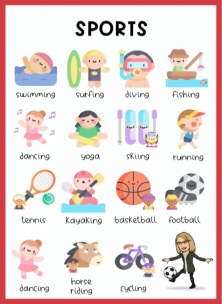
Ex: 1 P: 97 Teacher asks Ss check pronunciation and intonation. Explain to students that with some sports we use play (I play tennis, you play football, etc.). With other sports we use go (I go swimming, you go cycling, etc). Students say the names of the sports in Kazakhstani and say if the words are similar to English Differentiation: Less motivated learners carefully review the example together. With teacher support, they work through the second clue as a class before continuing in pairs. |
Students listen and repeat. Answer the question. Answers: Student’s own answer
|
Descriptor: A learner - repeats chorally and/or individually - answers the question Point-5
Well done |
Assessment sheet Kazakh yurt
|
15 min |
Ex: 2 P:97 Teacher explain how the percentages on the graph represent how often a thing happens or is done. Read the example to the class. Explain that this means that around 25% of your sporting activity is football. Ask Ss to get into pairs and make similar statements. Monitor the activity. Elicit answers from around the class.
Functional literacy Choose the correct answer
|
Students tell your partner. Use adverb of frequency. Answers: I never go swimming. I usually play cricket. I always go cycling. I often play basketball, etc
|
Descriptor: A learner - reads the example - uses adverb of frequency Point -5
Excellent Total points -10 |
Stickers
https://wordwall.net/ru/resource/82773151
|
End 5 min |
Learners provide feedback on what they have learned at the lesson and draw it on the face of students prototype. Ex: Home task: |
Ss evaluate each other and encourage classmate with phrases like: Well done! Brilliant! Good job! I like it!
|
Poster |
|


Short term plan
Unit: 8 Sports
|
lesson 80 |
||
School |
|
||
Teacher name |
|
||
Date: |
|
||
Grade: 5 |
Number present: |
absent: |
|
Lesson title |
Glasgow school of sport |
||
Learning objectives |
5. 4. 1. 1 understand the main idea of some simple short texts on general and educational topics; 5.5.3.1 write with support factual descriptions at text level which describe people, places and objects; |
||
Lesson objectives (assessment criteria) (Негіздеме: Мемлекет басшысы Қ.Тоқаевтың Ұлттық құрылтайдың ІІ,ІІІ, ІV отырыстарында берген тапсырмасы, ҚР Оқу-ағарту министрлігінің №123 бұйрығы) |
Learners will be able to: - present a school of sport; predicting the content of a text - read for specific information; comprehension - consolidate information learned from a text
Instilling values of the program “Birtutas tarbiye” being Adal Azamat for Month April “Labor and Professional qualifIictions month” Quote of the week 1: Work, joy, laziness - inseparable suffering (Abai)/ 1-апта дәйек сөз/ |
||
Stages/ Time |
Teachers actions |
Students actions |
Assessment |
Resources |
Beginning 5 min |
Greeting. Asking dates and weather Warm up: Do the same for three more hobbies, e.g. running, photography and listening to music. Write the activity on the board each time and model for pronunciation. Elicit from the class that these are all hobbies, and write Hobbies as a heading on the board
Teacher tells values of this month. The value of creativity and innovation. Understanding the importance of health: - Understanding the need for a healthy lifestyle (sports, proper nutrition, rest); - Avoid harmful habits (smoking, alcohol, drugs); |
Learners read the given sentences on the board and guess the topic and share with their ideas.
|
Teacher controles the process, gives feedback The teacher to assess learners for their ability. “Good job! Well done!” Formative Assessment
|
Flashcards
|
Middle 7 min |
Ex: 1 P:98 Teacher asks Ss read the Study Skills box to the class. Ask Ss to read the title and the subheadings. Direct their attention to the picture. Elicit suggestions as to the content of the text. Play the recording and read the text. Differentiation: Learners will be supported by teacher and by helpers from his class. |
Students read the title and the subheading, and look at the picture. Answer the question. Answers: I think the text is about a school where pupils play a lot of sports. One of the sports is swimming.
|
Descriptor: A learner - reads the title and the subheadings Point-1
Good job
|
Assessment sheet Kazakh yurt
|
10 min |
Ex: 2 aP:98 Teacher asks students read the questions. Ss read the text again to find the answers. Give Ss time to complete the exercise. Elicit answers from around the class. Differentiation: Less motivated students complete the first one together as an example before continuing in pairs. |
Students read again and answer the question. Answers: 1 The Glasgow School of Sport is in Glasgow, Scotland. 2 The subjects are Maths, English, Science and Geography. 3 The sports students can do are badminton, hockey,swimming, athletics and gymnastics. 4 There are 1,100 students in the school. 5 The students win competitions for their school and for Scotland. 6 They become athletes. 7 They take part in the Commonwealth Games, the Youth Olympics, and the Olympics. 8 Michael Jamieson |
Descriptor: A learner - reads the questions - answers the question Point -3
Well done
|
Stickers
|
10 min |
Ex: 3 P:98 Teacher explain the task to the Ss. Give Ss time to complete the exercise. Check answers around the class.
|
Students write three things you remember about the Glasgow School of sport. Answers: The Glasgow School of Sport has normal school subjects. The students also do many sports, including badminton. One student won a silver medal at the 2012 Olympics in London. |
Descriptor: A learner - writes three things - completes the exercise Point -3
Good job
|
|
8 min |
Ex: 4 P:98 Teacher asks Ss read out the questions to the Ss. Elicit answers from around the class.
Functional literacy Discuss the questions.
Example: |
Students answer the question. Answers: 1 Yes, there are a lot. They're in Shymkent. 2 My favourite sport is swimming. 3 My favourite school subjects are Maths and Science. |
Descriptor: A learner - reads out the questions - answers the question Point -2 Total points -10 |
|
End 5 min |
Learners provide feedback on what they have learned at the lesson and draw it on the face of students prototype. Ex: Home task: |
Ss evaluate each other and encourage classmate with phrases like: Well done! Brilliant! Good job! I like it! |
Poster |
|
Short term plan
Unit: 8 Sports
|
lesson 81 |
||
School |
|
||
Teacher name |
|
||
Date: |
|
||
Grade: 5 |
Number present: |
absent: |
|
Lesson title |
Sports and equipment |
||
Learning objectives |
5. 5. 1. 1 plan, write, correct and check text-level works on some general and academic topics; 5. 6. 3. 1 The use of adjectives, including dependent adjectives, in the description of objects in general and educational topics, the use of simple one-syllable and two-syllable adjectives (adjectives and selective adjectives) for comparison |
||
Lesson objectives (assessment criteria) (Негіздеме: Мемлекет басшысы Қ.Тоқаевтың Ұлттық құрылтайдың ІІ,ІІІ, ІV отырыстарында берген тапсырмасы, ҚР Оқу-ағарту министрлігінің №123 бұйрығы) |
Learners will be able to: - personalise the topic; to think about a school of sport - introduce use of go, play and do with sports - present adjectives; to express likes and dislikes
Instilling values of the program “Birtutas tarbiye” being Adal Azamat for Month April “Labor and Professional qualifIictions month” Quote of the week 1: Work, joy, laziness - inseparable suffering (Abai)/ 1-апта дәйек сөз/ |
||
Stages/ Time |
Teachers actions |
Students actions |
Assessment |
Resources |
Beginning 5 min |
Greeting Asking dates and weather Warm up: Books closed. Say to the class I am. Point to a stronger student and say You are. Gesture for this student to continue with I am and that he / she should point to another student in turn and continue with you are, and so on. Continue around the class, adding he is, she is, we are and they are. Teacher tells values of this month. The value of creativity and innovation. Understand responsibility for one's own life: - Demonstrate a sense of responsibility for one's own life and health; - To show conscious responsibility for one's actions and life choices. |
Learners read the given sentences on the board and guess the topic and share with their ideas.
|
The teacher to assess learners for their ability. “Good job! Well done!” Formative Assessment
|
Flashcards
|
Middle 10 min |
Ex: 5 P:99 Teacher asks Ss think about the idea of going to a school of sport. Are they sporty? Or are there other things they would rather do? Ss get into pairs and discuss with each other. Differentiation: Learners will be supported by teacher and by helpers from his class. |
Students tell your partner. Answer the question. Answers: Yes, I would like to attend this school. I love swimming and I would like to compete in international competitions / No, I would not like to attend the Glasgow School of Sport. I don't like sport and don't want to have to do it, etc |
Descriptor: A learner -discusses with your prtner - answers the question Point-3
Good job
|
Assessment sheet Kazakh yurt
|
7 min |
Ex: 6 P:99 Teacher remind Ss of the first page of the module, that some sports take the word play and others go. Explain that some also take do. Read the box aloud. Remind Ss that the rules are true for most sports but not all. Ask Ss to get into pairs. Give Ss time to complete the exercise. Check answers around the class. Differentiation: Less confident learners work with a stronger partner and use the examples in the box to help them choose the correct verb (play, go, do). |
Students read the theory box, then in pairs complete the gaps. Do, play or go? Answers: 1 do 2 play 3 go 4 play 5 do 6 go
|
Descriptor: A learner - reads the theory box - completes the gaps Point -2
Well done |
Stickers
|
10 min |
Ex: 7 P:99 Teacher tell students to get into pairs.Read out the adjectives, and then the example. Ss tell each other the sports they like and don't like, giving reasons using the adjectives in the box. Monitor the activity. Differentiation: A less motivated student complete the sentences with support. |
Students work in pairs discuss which of the sports in ex 6 you like/ don’t like. Use these adjectives. Answers: A: I think playing golf is boring. I like playing baseball. It's exciting. B: Yes, it is. I like it too. What about doing karate? I like it because it's fast and fun. A: I don't agree. I think doing karate is dangerous. I prefer doing wrestling. B: I don't think so. It's difficult. I like going bowling. It's relaxing. |
Descriptor: A learner - identifies the sports they like and don't like, - uses these adjectives. Point -3
Excellent |
Pictures
|
8 min |
Ex: 8 P:99 Teacher asks Ss to get into pairs. Direct their attention to the pictures. Ask a S to read out the example. Ss tell their partners what equipment is needed for each sport. Monitor the activity and elicit answers from around the class. Differentiation: The teacher provides vocabulary prompts if needed.
Functional literacy Choose the correct answer
|
Students look at the pictures. Answer the question. Answers: B: To go skiing, we need skis, poles and goggles. A: We need a racquet (and a ball) to play tennis. B: To play basketball we need a hoop (and a ball). A: To play cricket we need a helmet and a bat (and a ball) |
Descriptor: A learner -discusses the pictures - answers the question. Point -2
Good job Total points - 10 |
|
End 5 min |
Learners provide feedback on what they have learned at the lesson and draw it on the face of students prototype. Ex: Home task: |
Ss evaluate each other and encourage classmate with phrases like: Well done! Brilliant! Good job! I like it! |
Poster |
|


Short term plan
Unit: 8 Sports
|
lesson 82 |
||
School |
|
||
Teacher name |
|
||
Date: |
|
||
Grade: 5 |
Number present: |
absent: |
|
Lesson title |
Use of English: a /an – some / any |
||
Learning objectives |
5. 5. 1. 1 plan, write, correct and check text-level works on some general and academic topics; 5. 6. 6. 1 The use of the main adjective pronouns, adjectives and numerical pronouns some, any, something, nothing anything on common and educational topics |
||
Lesson objectives (assessment criteria) (Негіздеме: Мемлекет басшысы Қ.Тоқаевтың Ұлттық құрылтайдың ІІ,ІІІ, ІV отырыстарында берген тапсырмасы, ҚР Оқу-ағарту министрлігінің №123 бұйрығы) |
Learners will be able to: - present the indefinite article a/an and some/any - present and practise (how) much/(how) many a lot of - complete sentences with (how) much or (how) many
Instilling values of the program “Birtutas tarbiye” being Adal Azamat for Month April “Labor and Professional qualifIictions month” Quote of the week 2: “Happiness comes to those who work hard” - Leonardo da Vinci/ 2-апта дәйек сөз/ |
||
Stages/ Time |
Teachers actions |
Students actions |
Assessment |
Resources |
Beginning 5 min |
Greeting. Asking dates and weather Warm up: Books closed. Write the following words on the board: chocolate, cake, ice-cream. Ask the class if they know what these words are and get some feedback. Write the question What is your favourite? on the board and explain what it means. Say: My favourite thing is chocolate. Teacher tells values of this month. The value of unity and solidarity. Respect and mutual respect: - Respect for the rights and individuality of each person; - Not to have a negative impact on others with one's actions; |
Learners read the given sentences on the board and guess the topic and share with their ideas.
|
Teacher controles the process, gives feedback The teacher to assess learners for their ability. “Good job! Well done!” Formative Assessment
|
Flashcards
|
Middle 7 min |
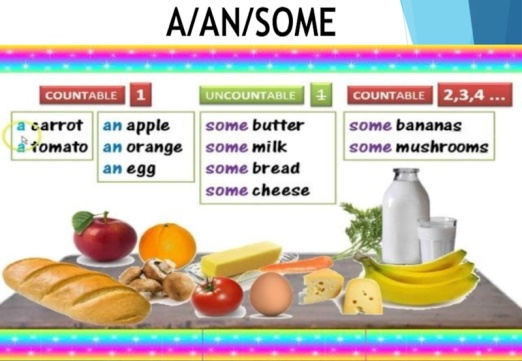
Ex: 1 P:100 Teacher asks Ss read the theory box. Remind Ss of the difference between countable and uncountable nouns. Ensure Ss understand that any is only used in interrogative and negative contexts. Ask them to say the examples in their language Differentiation: Learners will receive support from the teacher and classmates who assist them. |
Students read the theory. Say the examples in your language. Answers: Student’s own answer |
Descriptor: A learner - reads the theory -identifies difference between countable and uncountable Point-2
|
Assessment sheet Kazakh dombra
|
8 min |
Ex: 2 P:100 Teacher explain the task. Allow Ss time to complete the task. Check answers. Differentiation: Learners will receive support from the teacher and classmates who assist them. |
Students fill in a or an Answers: 1a 2 an 3 a 4 an 5 a
|
Descriptor: A learner - completes the sentences -fills the gaps Point -2
Well done |
Stickers
|
10 min |
Ex: 3 P:100 Teacher explain the task. Give Ss time to complete the task. Check answers around the class Differentiation: Less confident learners complete the task with a partner |
Students fill some or any Answers: 1 some 2 any. 3 any 4 some 5 some 6 any |
Descriptor: A Learner - completes the sentences -fills the gaps Point -3
Excellent |
|
10 min |
Ex: 4 P:100 Teacher asks Ss read the examples to the Ss. Explain that they have to work out the theory from the examples. Give Ss time to complete the task. Check answers around the class. Ss say the examples in Kazakhstani. Differentiation: The teacher provides guiding questions and allows them to translate the examples into Kazakhstani to support understanding. |
Students read the examples and complete the rules. Use how much, how many, a lot of. Say the examples in your language. Answers: 1 How many 2 How much 3. A lot of
|
Descriptor: A learner - reads the examples - completes the rules Point -3
Good job |
|
End 5 min |
Learners provide feedback on what they have learned at the lesson and draw it on the face of students prototype. Ex: Home task: |
Ss evaluate each other and encourage classmate with phrases like: Well done! Brilliant! Good job! I like it!
|
Poster |
|
Short term plan
Unit: 8 Sports
|
lesson 83 |
||
School |
|
||
Teacher name |
|
||
Date: |
|
||
Grade: 5 |
Number present: |
absent: |
|
Lesson title |
People’s ability/ Use of English: can (ability) |
||
Learning objectives |
5.5.2.1 write with support a sequence of short sentences in a paragraph on a limited range of familiar general topics; 5. 6. 13. 1 Might may use it to demonstrate the possibility of some familiar general and study topics |
||
Lesson objectives (assessment criteria) (Негіздеме: Мемлекет басшысы Қ.Тоқаевтың Ұлттық құрылтайдың ІІ,ІІІ, ІV отырыстарында берген тапсырмасы, ҚР Оқу-ағарту министрлігінің №123 бұйрығы) |
Learners will be able to: - practise the -ing form - present the definite article the and zero article, practise a, an, the and zero article - present can (ability), practise using can (ability)
Instilling values of the program “Birtutas tarbiye” being Adal Azamat for Month April “Labor and Professional qualifIictions month” Quote of the week 2: “Happiness comes to those who work hard” - Leonardo da Vinci/ 2-апта дәйек сөз/ |
||
Stages/ Time |
Teachers actions |
Students actions |
Assessment |
Resources |
Beginning 5 min |
Greeting. Asking dates and weather Warm up: Books closed. Tell students to work in pairs. They imagine that they have one chance to ask one question from their favourite celebrity. In pairs, students decide on their question and which celebrity they would ask. Get feedback from each pair, writing their question and any new vocabulary on the board. Teacher tells values of this month. The value of unity and solidarity. Openness in communication: - Express your opinion confidently but politely; - Avoiding ulterior motives or lies; |
Learners read the given sentences on the board and guess the topic and share with their ideas.
|
Teacher controles the process, gives feedback The teacher to assess learners for their ability. “Good job! Well done!” Formative Assessment
|
Flashcards
|
Middle 35 min |
Ex: 7 P:101 Teacher explain the task to the Ss. Suggest they find if there is a subject in the sentence (I, you, a name). If there is not, the verb is probably in the -ing form, and is itself the noun/subject of the sentence. Give Ss time to complete the task. Check answers around the class. Differentiation: Learners will receive support from the teacher and classmates who assist them. |
Students choose the correct item Answers: 1 Swimming 2 dance 3 Diving 4 Climbing 5 sail 6 play
|
Descriptor: A learner - completes the sentences - chooses the correct item Point-2
Good job |
Assessment sheet Kazakh dombra
|
|
Ex: 8 P:101 Teacher asks Ss to read the theory box with the Ss. Ask Ss if it is the same in their language. Differentiation: Learners will receive support from the teacher and classmates who assist them. |
Students read the theory box. Answers: Student’s own answer
|
Descriptor: A learner - reads the theory box Point -2
Well done |
Stickers
|
|
Ex: 9 P:101 Teacher aks Ss explain the task. Give Ss time to complete the task. Check answers around the class. Ask Ss to justify their answers. Differentiation: Learners will receive support from the teacher and classmates who assist them. |
Students fill a, an, the or zero article. Answers: 1 an, - 2- 3 the,, 4 a, the, an
|
Descriptor: A Learner -completes the sentences - uses a, an, the or zero article. Point -2
|
|
|
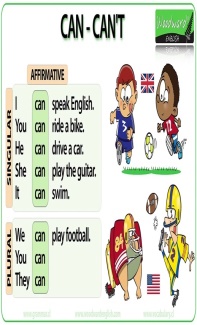
Ex: 11 P:101 Teacher asks Ss to get into pairs. Have Ss read the phrases in the pictures and explain any unknown words. Explain the task and read the example. Ss ask and answer each other questions, based on the pictures. |
Students ask and answer as in the example Answers: A: can you drive a car? B: No, I can't. Can you jump? A: Yes, I can. Can you play the guitar? B: No, I can't. Can you ski? A: Yes, I can. Can you run fast? B: Yes, I can. Can you fly a plane? A: No, I can't. Can you dive? B: No, I can't. Can you swim? A: Yes, I can. Can you balance on a ball? B: No, I can't. Can you spin a ball? A: No, I can't. Can you climb a mountain? B: Yes, I can. |
Descriptor: - reads the phrases - asks and answer Point -2
Total points -10 |
|
End 5 min |
Learners provide feedback on what they have learned at the lesson and draw it on the face of students prototype. Ex: Home task: |
Ss evaluate each other and encourage classmate with phrases like: Well done! Brilliant! Good job! I like it! |
Poster |
|
Short term plan
Unit: 8 Sports
|
lesson 84 |
||
School |
|
||
Teacher name |
|
||
Date: |
|
||
Grade: 5 |
Number present: |
absent: |
|
Lesson title |
Sports in Kazakhstan |
||
Learning objectives |
5. 4. 1. 1 understand the main idea of some simple short texts on general and educational topics; 5.5.2.1 write with support a sequence of short sentences in a paragraph on a limited range of familiar general topics; |
||
Lesson objectives (assessment criteria) (Негіздеме: Мемлекет басшысы Қ.Тоқаевтың Ұлттық құрылтайдың ІІ,ІІІ, ІV отырыстарында берген тапсырмасы, ҚР Оқу-ағарту министрлігінің №123 бұйрығы) |
Learners will be able to: - personalise the topic; to elicit various sports - identify sports; to personalise the topic - read for specific information; comprehension
Instilling values of the program “Birtutas tarbiye” being Adal Azamat for Month April “Labor and Professional qualifIictions month” Quote of the week 2: “Happiness comes to those who work hard” - Leonardo da Vinci/ 2-апта дәйек сөз/ |
||
Stages/ Time |
Teachers actions |
Students actions |
Assessment |
Resources |
Beginning 5 min |
Greeting. Asking dates and weather Warm up: Teacher asks close the books. Say to the class: My name’s (your name). Then turn to the student closest to you and say What’s your name? That student says My name’s (name) and then turns to the next student asking What’s your name? Students continue around the classroom saying their name and asking the next student what their name is. Teacher tells values of this month. The value of unity and solidarity. Resolve disputes peacefully: - Control emotions during an argument and avoid hasty actions; - Solving problems through non-violent, civilized language; |
Learners read the given sentences on the board and guess the topic and share with their ideas.
|
Teacher controles the process, gives feedback The teacher to assess learners for their ability. “Good job! Well done!” Formative Assessment
|
|
Middle 7 min |
Ex: 1 P:102 Teacher asks Ss read out the questions to the Ss. Elicit answers from around the class. Differentiation: Learners will receive support from the teacher and classmates who assist them. |
Students answer the question. Answers: Yes, I play sport. Basketball is my favourite. / No, I don't play much sport, etc. |
Descriptor: A learner - reads the questions - answers the question Point-2 |
Assessment sheet Kazakh dombra
|
10 min |
Ex: 2 P:102 Teacher asks Ss to get into pairs. Ss look at the pictures. Ss discuss what sports are represented and if they play/do them. Monitor the activity around the class. Differentiation: The teacher provides vocabulary support for sports if needed. |
Students look at the pictures in the text. Answer the question Answers: The pictures show cycling (a bike and a helmet), boxing (a pair of boxing gloves) and football (a ball). I play football and go cycling.
|
Descriptor: A learner -discusses the pictures - answers the question Point -3
Well done |
|
8 min |
Ex: 3 P:102 Teacher explain how a sport can make a nation famous (people from that country winning Olympic medals, international championships, etc.) Play the recording. Ss listen and read the text. Differentiation: A learner with less motivated go through the key phrases together and translate with support. |
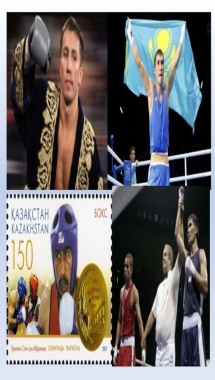
Students listen to and read the text to find out. Answers: The sport that makes Kazakhstan world famous is boxing.
|
Descriptor: A Learner - reads the text -answers the question Point -2
Excellent |
|
10 min |
Ex: 4 P:102 Teacher explain the task to the Ss. Ask Ss to read the text again and write answers. Give Ss time to complete the task. Functional literacy Choose the correct answer
|
Students read the text and complete the sentences. Answers: 1 Petropavi, Kazakhstan. 2 a wolf 3 Bauyrzhan Islamkhan 4 They are the colours of the flag of Kazakhstan. 5 Because he is a great boxer and never loses a fight. |
Descriptor: - reads the text - completes the sentences Point -3
Good job Total points -10 |
|
End 5 min |
Learners provide feedback on what they have learned at the lesson and draw it on the face of students prototype. Ex: Home task: |
Ss evaluate each other and encourage classmate with phrases like: Well done! Brilliant! Good job! I like it! |
Poster |
|
Short term plan
Unit: 8 Sports
|
lesson 85 |
||
School |
|
||
Teacher name |
|
||
Date: |
|
||
Grade: 5 |
Number present: |
absent: |
|
Lesson title |
World series boxing final |
||
Learning objectives |
5. 2. 3. 1 unaided understanding of simple questions of general and study topics; 5. 3. 6. 1 to express one's thoughts clearly and concretely in sentences in pairs, groups and with the whole class; |
||
Lesson objectives (assessment criteria) (Негіздеме: Мемлекет басшысы Қ.Тоқаевтың Ұлттық құрылтайдың ІІ,ІІІ, ІV отырыстарында берген тапсырмасы, ҚР Оқу-ағарту министрлігінің №123 бұйрығы) |
Learners will be able to: - consolidate information learned THI from a text - identify missing information
Instilling values of the program “Birtutas tarbiye” being Adal Azamat for Month April “Labor and Professional qualifIictions month” Quote of the week 3: “There are no promising professions, there are only promising specialists.” / 3-апта дәйек сөз/ |
||
Stages/ Time |
Teachers actions |
Students actions |
Assessment |
Resources |
Beginning 5 min |
Greeting. Asking dates and weather Warm up: Teacher asks close the books. Ask the class: Do you like to email or do you like to send text messages? Repeat the question if necessary and check for understanding. Ask a stronger student to answer the question, e.g. I like to send text messages. Encourage other students in the class to answer the questions for themselves too. Teacher tells values of this month. The value of hard work and professional qualifications. Responsibility for work - A sense of full responsibility for the results of actions; - Maintain order and consistency in performing tasks; |
Learners read the given sentences on the board and guess the topic and share with their ideas.
|
Teacher controles the process, gives feedback The teacher to assess learners for their ability. “Good job! Well done!” Formative Assessment
|
|
Middle 10 min |
Ex: 5 P:103 Teacher asks Ss brainstorm what it means to 'make Kazakhstan proud' (winning, setting a good example on the world stage, etc) Ask Ss to look through the text again. Give Ss time to complete the task. Check answers around the class
Differentiation: Less confident learners work with a partner and use key words from the text to help them understand the idea of “making Kazakhstan proud.”
|
Students answer the question. Tell the class Answers: Oleg Zemlyakov makes Kazakhstan proud of him by winning the 2016 Le Tour de Filipinas. Gennady Golovkin makes Kazakhstan proud of him by being a great boxer and never losing a fight. Bauyrzhan Islamkhan makes Kazakhstan proud of him by playing football very well and being the captain of Kairat. Also because his team plays in the Kazakhstan Premier League |
Descriptor: A learner - discusses about Kazakhstan’s champion people - answesr the question Point-3
Good job |
Assessment sheet Kazakh dombra
|
8 min |
Ex: 6a P:103 Teacher explain to Ss that information is missing from the advert. Explain that if they can identify what to listen for, the exercise will be easier. Clues to look for are dates, places (addresses), times (am/pm), names (often with another name) etc. For each space, Ss identify the gap as missing a name, noun or number. Ss check with a partner. Differentiation: A learner with less motivated translate the key phrases together with support
|
Students look at the gaps in the advert. Answer the question Answers: 1 name (of a team) 2 name (of a place) 3 noun (month) 4 number (time) 5 noun (other communications)
|
Descriptor: A learner - completes the advert - answers the question Point -2
Well done |
Stickers
|
7 min |
Ex: 6 b P:103 Teacher give Ss time to complete the task. Direct their attention to the title and the picture. Check answers around the class.
|
Students are going to listen to a radio advertisement. Look at the advert. What is the advertisement about? Answers: I think this is an advertisement for a boxing match. There are dates and times and a venue. |
Descriptor: A learner - answers the question Point -2 |
|
10 min |
Ex: 7 P:107 Teacher explain the task. Ss copy the table into notebooks. Give Ss time to write answers. Ask Ss to get into pairs. Ss ask and answer questions with their partner, as in the example. Monitor the activity. Differentiation: Less confident learners work with a stronger partner and use the example as a model when asking and answering questions.
Functional literacy Choose the correct answer
|
Students find out about your partner's favourite sports activities. Tell the class. Answers: B: I sometimes play football. How often do you play football? A: I often play football. How often do you go cycling? B: I never go cycling. How often do you go cycling? A: I sometimes go cycling. How often do you play tennis? B: I play tennis every day. How often do you play tennis? A: I often play tennis. How often do you do gymnastics? B: I never do gymnastics. How often do you do gymnastics? A: I sometimes do gymnastics. How often do you play volleyball? B: I often play volleyball. How often do you play volleyball? A: I never play volleyball. How often do you do boxing? B: I sometimes do boxing. How often do boxing? A: I never do boxing. How often do you play badminton? B: I often play badminton. How often do you play badminton? A: I play badminton every day |
Descriptor: A Learner -identifies your partner's favourite sports activities Point -3
Excellent
Total points 10 |
|
End 5 min |
Learners provide feedback on what they have learned at the lesson and draw it on the face of students prototype. Ex: Home task: |
Ss evaluate each other and encourage classmate with phrases like: Well done! Brilliant! Good job! I like it!
|
Poster |
|

Short term plan
Unit: 8 Sports
|
lesson 86 |
||
School |
|
||
Teacher name |
|
||
Date: |
|
||
Grade: 5 |
Number present: |
absent: |
|
Lesson title |
Making arrangement |
||
Learning objectives |
5.2.4.1 understand the main points of supported extended talk on a range of general and curricular topics; 5. 3. 7. 1 using subject-specific vocabulary and syntax within a range of general topics |
||
Lesson objectives (assessment criteria) (Негіздеме: Мемлекет басшысы Қ.Тоқаевтың Ұлттық құрылтайдың ІІ,ІІІ, ІV отырыстарында берген тапсырмасы, ҚР Оқу-ағарту министрлігінің №123 бұйрығы) |
Learners will be able to: - predict the content of a dialogue (making arrangements) - identify stressed all ables and practise intonation - read for specific information
Instilling values of the program “Birtutas tarbiye” being Adal Azamat for Month April “Labor and Professional qualifIictions month” Quote of the week 3: “There are no promising professions, there are only promising specialists.” / 3-апта дәйек сөз/ |
||
Stages/ Time |
Teachers actions |
Students actions |
Assessment |
Resources |
Beginning 5 min |
Greeting. Asking dates and weather Warm up: Teacher asks close the books. Divide students into pairs and write sports on the board. Allow students about 2 minutes to tell each other about their favourite sport. Get feedback from the class by asking a few students to say what sport their partner likes best and why. Teacher tells values of this month. The value of hard work and professional qualifications. Self-development and professional growth: - Striving to acquire new professional knowledge and skills; - Effective use of experience and knowledge in the workplace; |
Learners read the given sentences on the board and guess the topic and share with their ideas.
|
Teacher controles the process, gives feedback The teacher to assess learners for their ability. “Good job! Well done!” Formative Assessment
|
|
Middle 7 min |
Ex: 1 P:104 Teacher asks Ss read the phrases out to the class. Draw Ss attention to the fact that they are questions, and also references to times. Elicit answers from around the class. Differentiation: Less confident learners read the phrases with a partner and receive support from the teacher |
Students read the following sentences in a dialogue. What is the dialogue about? Answers: The dialogue is about inviting another person to an event.
|
Descriptor: A learner - reads the phrases Point-2
Good job
|
Assessment sheet Kazakh dombra
|
8 min |
Ex: 2 P:104 Teacher plays the recording. Ss listen and identify the stressed syllables. Differentiation: A learner with less motivated will receive support from the teacher and classmates who assist them |
Students listen, read and check. Which syllables are stressed? Answers: 1 Have you got any plans for Saturday? 2 Do you want to come with me? 3 When is it? 4 It starts at 5:30 5 See you then!
|
Descriptor: A learner -listens and read - identifies the stressed syllables Point -2
Well done |
|
10 min |
Ex: 3 P104 Teacher asks students read the questions in the rubric. Explain that the Ss should listen for the name of a sport and its venue and a time. Read the dialogue with the class. As the information is discovered, write it up on the board. Differentiation: A learner with less motivated choose the correct words to complete the rules with support. |
Students read the dialogue. Where do they want to go? What time are they going to meet? Answers: They want to go to a football match at the Astana Arena. They are going to meet at four o'clock.
|
Descriptor: A Learner - reads the dialogue - answers the question Point -3
Excellent |
|
10 min |
Ex: 4 P:104 Teacher asks Ss read the sentences out to the class. Read the dialogue again. Give Ss time to complete the task. Check Ss' answers. Ss say the same phrases in Kazakhstani. Differentiation: Less confident learners work with a partner and use the dialogue to help them understand the sentences.
|
Students find sentences in the dialogue which mean: Answers: 1 Would you like to come too? - Do you want to come with me? 2 What time is it? - When is it? 3 What plans have you got for Saturday? - Have you got any plans for Saturday? |
Descriptor: - reads the sentences - finds sentences in the dialogue Point -3
Good job Total points -10 |
|
End 5 min |
Learners provide feedback on what they have learned at the lesson and draw it on the face of students prototype. Ex: Home task: |
Ss evaluate each other and encourage classmate with phrases like: Well done! Brilliant! Good job! I like it! |
Poster |
|

Short term plan
Unit: 8 Sports
|
lesson 87 |
||
School |
|
||
Teacher name |
|
||
Date: |
|
||
Grade: 5 |
Number present: |
absent: |
|
Lesson title |
Across culture: Sports day |
||
Learning objectives |
5. 4. 1. 1 understand the main idea of some simple short texts on general and educational topics; 5. 5. 4. 1 write long sentences in paragraph size with the teacher's support to provide personal information; |
||
Lesson objectives (assessment criteria) (Негіздеме: Мемлекет басшысы Қ.Тоқаевтың Ұлттық құрылтайдың ІІ,ІІІ, ІV отырыстарында берген тапсырмасы, ҚР Оқу-ағарту министрлігінің №123 бұйрығы) |
Learners will be able to: - learn about sports events in the UK and Kazakhstan; - predict the content of a text - read for specific information/ comprehension.
Instilling values of the program “Birtutas tarbiye” being Adal Azamat for Month April “Labor and Professional qualifIictions month” Quote of the week 3: “There are no promising professions, there are only promising specialists.” / 3-апта дәйек сөз/ |
||
Stages/ Time |
Teachers actions |
Students actions |
Assessment |
Resources |
Beginning 5 min |
Greeting. Asking dates and weather Warm up: Teacher writes some times on the board in digital format, e.g. 11:35, 14:05, 12:00, 16:30, 20:20. Ask students to decide which are in the afternoon (p.m.) and which are in the morning (a.m.). Ask students to work in pairs and draw the times as they would appear on a clock face. Teacher tells values of this month. The value of hard work and professional qualifications. Discipline and organizational skills: - Effective planning of work schedules and tasks; - Complete difficult or complex tasks in stages; |
Learners read the given sentences on the board and guess the topic and share with their ideas.
|
Teacher controles the process, gives feedback The teacher to assess learners for their ability. “Good job! Well done!” Formative Assessment
|
|
Middle 13 min |
Ex: 1 P:105 Teacher direct Ss' attention to the pictures, the titles and the subheadings. Ask Ss what they know about the events. Ss think of questions they have about Wimbledon and the President's Cup. Play the recording and read the texts with the class. Elicit answers around the class.
|
Students look at the pictures and read the title and the headings. Answer the question. Think of three questions. Answers: I know that Wimbledon is a tennis competition in the UK. I know that the Kazakhstan President Cup is for young players. I would like to know where Wimbledon is, how old you have to be to play in the Kazakhstan President Cup, and where players come from. (Wimbledon is in London. You have to be under 17 years old to play in the Kazakhstan President Cup. Players in the Kazakhstan President Cup come from all over the world.) |
Descriptor: A learner -discusses the pictures - answer the question Point-4
Good job
|
Assessment sheet Kazakh dombra
|
12 min |
Ex: 2 P:105 Teacher explain the task to the Ss. Ask Ss to read the text again to find answers to the questions. Give them time to complete the exercise, then check their answers. Differentiation: A learner with less motivated write the correct number empty clock with support |
Students read again and answer the questions. Answers: 1 Wimbledon is in London, UK. 2 Very famous players play on Centre Court. 3 You can buy food and drink from coffee shops and restaurants. 4 It takes place every year in June. 5 They are all under 17 years old. |
Descriptor: A learner - read the text - answer the questions Point -3
Well done |
|
10 min |
Ex: 3 P105 Teacher asks Ss to think of a sports event in Kazakhstan. Ss make notes, answering the four questions. Choose Ss to come to the front of the class and present the sports event. Differentiation: A learner with less motivated will receive support from the teacher and classmates who assist them |
Students think of a sports event in your country. Answers: When is it? Every winter; speed skating championship (November-January) Where is it? At the Alau Ice Palace in Astana Who takes part? Racers from all over Kazakhstan, Asia and the world Why is it fun? Very fast and exciting races; also, you can use the ice yourself after the competition! |
Descriptor: A Learner -discusses sports event in your country -answer the question Point -3
Excellent |
|
End 5 min |
Learners provide feedback on what they have learned at the lesson and draw it on the face of students prototype. Ex: Home task: |
Ss evaluate each other and encourage classmate with phrases like: Well done! Brilliant! Good job! I like it! |
Poster |
|

Short term plan
Unit: 8 Sports
|
lesson 88 |
||
School |
|
||
Teacher name |
|
||
Date: |
|
||
Grade: 5 |
Number present: |
absent: |
|
Lesson title |
Across curriculum: PSHE |
||
Learning objectives |
5. 4. 6. 1 identify the author's opinion or point of view in short texts on some general and educational topics; 5. 5. 1. 1 plan, write, correct and check text-level works on some general and academic topics; |
||
Lesson objectives (assessment criteria) (Негіздеме: Мемлекет басшысы Қ.Тоқаевтың Ұлттық құрылтайдың ІІ,ІІІ, ІV отырыстарында берген тапсырмасы, ҚР Оқу-ағарту министрлігінің №123 бұйрығы) |
Learners will be able to: - stimulate discussion about rules in a swimming pool - read for specific information main ideas - present and practise using must/mustn't Instilling values of the program “Birtutas tarbiye” being Adal Azamat for Month April “Labor and Professional qualifIictions month” Quote of the week 4:
“By
gaining deep knowledge, one will build a profession; 4-апта дәйек сөз/ |
||
Stages/ Time |
Teachers actions |
Students actions |
Assessment |
Resources |
Beginning 5 min |
Greeting. Asking dates and weather Warm up: Teacher asks close the books. Tell students to work in pairs and tell each other what club they would join if they could choose one. After about 1–2 minutes, get some feedback from the class by asking a few students to tell you about their partner’s chosen club. Teacher tells values of this month. The value of independence and patriotism. Respect, self-respect: - Maintaining personal dignity, not degrading oneself; - To cultivate the ability to treat oneself and others fairly. |
Learners read the given sentences on the board and guess the topic and share with their ideas.
|
Teacher controles the process, gives feedback The teacher to assess learners for their ability. “Good job! Well done!” Formative Assessment
|
|
Middle 8 min |
Ex: 1 P: 106 Teacher asks Ss to get into pairs. Read statements 1-5. Explain the words 'lifeguard' and 'dive'. Ask Ss to tell each other which rules they think are true. Monitor the activity around the class. Play the recording. Elicit answers around the class. Differentiation: Less confident learners work with a supportive partner
|
Students answer the question. Decide in pairs. Answers: 1 Not true (don't run by the pool) 2 Not true (don't eat before swimming) 3 True 4 False (don't dive) 5 True
|
Descriptor: A learner -identifies the words 'lifeguard' and 'dive' -writes true or false Point-2
|
Assessment sheet Kazakh dombra
|
7 min |
Ex: 2 P: 106 Teacher asks Ss read the text with the Ss. Go through the Check these words box. Explain that rules 1-5 are illustrated by pics A-E. Explain what ticks and crosses mean. Ask Ss to match the rules with the pictures. Check answers around the class. Differentiation: A learner with less motivated find the information on the poster with support |
Students read the text. Match the instructions to the pictures. Answers: 1 B 2 C 3 A 4 D 5 E
|
Descriptor: A learner - read the text - match the rules Point -2
Well done |
https://wordwall.net/ru/resource/18839307
|
10 min |
Ex: 3 P: 106 Teacher asks Ss read the Note! box with the Ss. Use a tick to illustrate must and a cross to show mustn't. Explain Ss must arrange the sentence and add a must or mustn't. Remind them this normally comes after the subject and is followed by an infinitive without to. Give them time to complete the task. Differentiation: A learner with less motivated will receive support from the teacher and classmates who assist them |
Students use the words and must/mustn’t to write complete the sentences. Answers: 2 You mustn't use your hands when playing football. 3 Each team must have eleven players. 4 The ball must go into the opponent's goal to score. 5 The players mustn't fight with other players |
Descriptor: A Learner - completes the sentences - uses and must/mustn’t Point -3
Excellent
|
|
10 min |
Ex: 4 P: 106 Teacher explain to the Ss that do = you must and don't = you mustn't. This is the imperative, which we use when giving orders or warnings. Ss make two columns in their textbooks under these headings. Ss write down the activities in Ex. 1 in the correct columns. Ss make sentences using must and mustn't |
Students list the information in the text under the headings. Dos-Don’ts Answers: 1 You mustn't run around the pool. 2 You mustn't eat before swimming. 3 You must find/call the lifeguards to help you. 4 You mustn't dive where there are 'No Diving' signs. 5 You must read the signs around the pool |
Descriptor: A Learner - makes sentences - uses and must/mustn’t Point -3 Total points10 |
|
End 5 min |
Learners provide feedback on what they have learned at the lesson and draw it on the face of students prototype. Ex: Home task: |
Ss evaluate each other and encourage classmate with phrases like: Well done! Brilliant! Good job! I like it!
|
Poster |
|
Short term plan
Unit: 8 Sports
|
lesson 89 |
||
School |
|
||
Teacher name |
|
||
Date: |
|
||
Grade: 5 |
Number present: |
absent: |
|
Lesson title |
An article about your favourite sport |
||
Learning objectives
|
5. 4. 6. 1 identify the author's opinion or point of view in short texts on some general and educational topics; 5. 5. 1. 1 plan, write, correct and check text-level works on some general and academic topics; 5.
6. 16.1 Use of the conjunctions so, if, when, where, before, after
in small texts within the framework of 1 |
||
Lesson objectives (assessment criteria) (Негіздеме: Мемлекет басшысы Қ.Тоқаевтың Ұлттық құрылтайдың ІІ,ІІІ, ІV отырыстарында берген тапсырмасы, ҚР Оқу-ағарту министрлігінің №123 бұйрығы) |
Learners will be able to: - predict the content of a text - read for gist - present and practise linkers
Instilling values of the program “Birtutas tarbiye” being Adal Azamat for Month April “Labor and Professional qualifIictions month” Quote of the week 4:
“By
gaining deep knowledge, one will build a profession; 4-апта дәйек сөз/ |
||
Stages/ Time |
Teachers actions |
Students actions |
Assessment |
Resources |
Beginning 5 min |
Greeting. Asking dates and weather Warm up: Teacher asks close the books. Tell students to work in pairs and tell each other what club they would join if they could choose one.
Teacher tells values of this month. The value of independence and patriotism. Being able to speak well: - Maintaining polite and cultured language standards; - Avoid using rude and unpleasant words in communication; |
Learners read the given sentences on the board and guess the topic and share with their ideas.
|
Teacher controles the process, gives feedback The teacher to assess learners for their ability. “Good job! Well done!” Formative Assessment
|
|
Middle 10 min |
Ex: 1 P: 107 Teacher ask Ss read the words with Ss. Elicit suggestions from Ss as to the subject of the text. Differentiation: Less confident learners read the words with the teacher and use the vocabulary to guess the topic with support from a partner.
|
Students read the words. Answer the question. Answers: I think the text will be about lessons in a winter sport, perhaps skiing or snowboarding.
|
Descriptor: A learner - reads the words - answers the question Point-3
|
Assessment sheet Kazakh dombra
|
7 min |
Ex: 2 P:107 Teacher direct Ss' attention to the picture. Ask them to guess the sport. Read the text with Ss. Differentiation: Less confident learners use the picture as a visual clue to guess the sport |
Students read the article to find out. Answer the question Answers: I think Raisa's favourite sport is skiing. (Rosa's favourite sport is skiing.)
|
Descriptor: A learner - reads the article - guesses the sport Point -2
Well done |
|
8 min |
Ex: 3 P 107 Teacher asks Ss look at the Study Skills box. Read it with Ss. Ensure Ss understand the differences between similar, opposing and alternative. Ss fill in the correct linker in the sentences 1-6. Check answers round the class Differentiation: A learner with less motivated will receive support from the teacher and classmates who assist them |
Students join the sentences. Use the linkers Answers: 1 and 2 but 3 or 4 but 5 or 6 and
|
Descriptor: A Learner - joins the sentences - uses the linker Point -2
Excellent
|
|
10 min |
Ex: 4 P 107 Teacher explain the task to Ss. Give them time to complete the exercise. Check answers around the class. Differentiation: Less confident learners complete the exercise with a partner
Functional literacy True or False
|
Students answer the questions. Answers: 1 My favourite sport is cycling. 2 I go to the Saryarka Velodrome every week. 3I cycle fast around the track. 4 I need a bicycle, a helmet and a cycling suit. 5 I love it because it's very exciting and keeps me fit. |
Descriptor: A Learner - completes the exercise Point -3
Total points 10 |
|
End 5 min |
Learners provide feedback on what they have learned at the lesson and draw it on the face of students prototype. Ex: Home task: |
Ss evaluate each other and encourage classmate with phrases like: Well done! Brilliant! Good job! I like it!
|
Poster |
|

Short term plan
Unit: 8 Sports
|
lesson 90 |
||
School |
|
||
Teacher name |
|
||
Date: |
|
||
Grade: 5 |
Number present: |
absent: |
|
Lesson title |
Edutainment: What do sports teach us p108 Summative assessment for the unit “Sports” |
||
Learning objectives |
5. 4. 4. 1 reading some short texts in fiction and non-fiction with little help from the teacher; 5.5.3.1 write with support factual descriptions at text level which describe people, places and objects; |
||
Lesson objectives (assessment criteria) (Негіздеме: Мемлекет басшысы Қ.Тоқаевтың Ұлттық құрылтайдың ІІ,ІІІ, ІV отырыстарында берген тапсырмасы, ҚР Оқу-ағарту министрлігінің №123 бұйрығы) |
Learners will be able to: - personalise the topic - consolidate knowledge from the module Instilling values of the program “Birtutas tarbiye” being Adal Azamat for Month April “Labor and Professional qualifIictions month” Quote of the week 4:
“By
gaining deep knowledge, one will build a profession; 4-апта дәйек сөз/ |
||
Stages/ Time |
Teachers actions |
Students actions |
Assessment |
Resources |
Beginning 5 min |
Greeting. Asking dates and weather Warm up: Teacher says to the class I am. Point to a stronger student and say You are. Gesture for this student to continue with I am and that he / she should point to another student in turn and continue with you are, and so on. Continue around the class, adding he is, she is, we are and they are. Get students in turn to point to appropriate individuals or groups and say the correct form of the verb be Teacher tells values of this month. The value of independence and patriotism. Ability to communicate warmly: - Maintaining personal dignity, not degrading oneself; - Maintain decency and courtesy; |
Learners read the given sentences on the board and guess the topic and share with their ideas.
|
Teacher controles the process, gives feedback The teacher to assess learners for their ability. “Good job! Well done!” Formative Assessment
|
|
Middle 5 min |
Ex: 1 P: 108 Teacher asks Ss read out statements to the class. Ask Ss to get into pairs. Ask them to debate the sentences. Monitor the activity around the class Differentiation: Less confident learners work with a supportive partner and use simple sentence starters
|
Students read what various people say. Answer the question. Answers: A: So, some people say that sports are good for our health, body and mind. B: That's certainly true. Though sometimes people are injured while playing sport. But I suppose it's part of the risk. There's no success without hard work, as they say. A: Yes. And sports can teach us to keep going, even when things are difficult. As one of the people says: "Doing sports I learnt not to give up hope." B: However, I don't agree with the person who says that "we need to try hard to succeed". I think that's true in sports, but not so much in life! Some people are born to rich parents and their success comes without having to earn it for themselves. Meanwhile, others try hard in life and get nowhere. |
Descriptor: A learner - read out statements - answer the question Point-3
Good job |
Assessment sheet Kazakh dombra
|
5 min |
Ex: 2 P: 108 Teacher asks Ss why they love sports. Remind them they can use the quotations if they want, or use their own ideas. If Ss do not enjoy sport, they can explain why they like watching it, etc. Check answers around the class Differentiation: Less confident learners use sentence starters (e.g., I love sports because…, I like watching sports because…) |
Students do the quiz. Mark the sentences. Correct the false sentences. Answers: I love sports because they give me a sense of purpose, keep me healthy and allow me to meet new friends
|
Descriptor: A learner - do the quiz - correct the false sentences Point -2
Well done |
|
5 min
20 min |
Ex: 3 P108 Teacher explain the task to the Ss. Give them time to complete it. Check answers around the class. Differentiation: A learner with less motivated will receive support from the teacher and classmates who assist them
Summative assessment for the unit “Sports” |
Students look at the module 8 and write a T/F quiz of your own. Answers: 1 F (for swimming) 2 T 3 T 4 F (he is a great boxer) 5T 6 F (it takes place in June |
Descriptor: A Learner - completes the sentences - writes true or false Point -3
Excellent |
|
End 5 min |
Learners provide feedback on what they have learned at the lesson and draw it on the face of students prototype. Ex: Home task: |
Ss evaluate each other and encourage classmate with phrases like: Well done! Brilliant! Good job! I like it! |
Poster |
|


Short term plan
Unit: 9 Holidays
|
lesson 91 |
||
School |
|
||
Teacher name |
|
||
Date: |
|
||
Grade: 5 |
Number present: |
absent: |
|
Lesson title |
Seasons and months |
||
Learning objectives |
5. 2. 3. 1 unaided understanding of simple questions of general and study topics; 5.3.2.1 ask simple questions to get information about a limited range of general topics; |
||
Lesson objectives (assessment criteria) (Негіздеме: Мемлекет басшысы Қ.Тоқаевтың Ұлттық құрылтайдың ІІ,ІІІ, ІV отырыстарында берген тапсырмасы, ҚР Оқу-ағарту министрлігінің №123 бұйрығы) |
Learners will be able to: - present the seasons and months - present types of weather - relate the topic to the real world Instilling values of the program “Birtutas tarbiye” being Adal Azamat for Month May “The value of creativity and innovation” Quote of the week 1: “The sunlight is shared by all, just like the wise words of a good person.” / 1-апта дәйек сөз/ |
||
Stages/ Time |
Teachers actions |
Students actions |
Assessment |
Resources |
Beginning 5 min |
Greeting. Asking dates and weather Warm up: Teacher asks Ss write zebra on the board. Ask the class what it is. Elicit A zebra is an animal. In pairs, students have two minutes to prepare a very short description of a zebra. When they have finished, ask a few students to read out their descriptions, e.g. A zebra is an animal. It is black and white. It lives in Africa Teacher tells values of this month. The value of justice and responsibility. Understanding responsibility: - Know and respect their duties and rights; - Ability to admit one's mistakes and strive to correct them; |
Learners read the given sentences on the board and guess the topic and share with their ideas.
|
Teacher controles the process, gives feedback The teacher to assess learners for their ability. “Good job! Well done!” Formative Assessment
|
|
Middle 10 min |
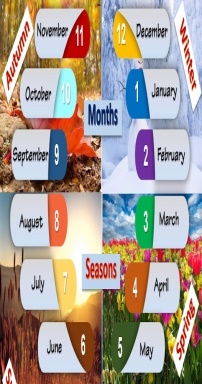
Ex: 1 P: 109 Teacher asks students play the recording. Ss listen and repeat chorally or individually. Elicit the L1 equivalents from Ss around the class and then ask various Ss to say which month their birthday is in. Differentiation: Less confident learners repeat the months chorally with the class and receive pronunciation support from the teacher
|
Students listen and repeat. Answer the question. Answers: Student’s own answers
|
Descriptor: A learner - listen and repeat - answer the question Point-3
Good job |
Assessment sheet Kazakh dombra
|
13 min |
Ex: 2 P: 109 Teacher direct Ss' attention to the drawings and then ask Ss to read the phrases 1-10. Ss do the task. Play the recording. Ss listen and check their answers. Differentiation: Less confident learners work with a partner and use the drawings as visual clues to help match the phrases |
Students match the sentences to the drawings. Answers: 1 d 2 i 3 c 4 a 5 f 6 j 7 9 8 h 9 e 10 b |
Descriptor: A learner - read the phrases - match the sentences Point -4
Well done |
|
12 min
|
Ex: 3 P 109 Teacher asks Ss talk about the weather in your country with the class by asking questions (e.g., What is the weather like outside? Is it usually like this in spring/summer, etc?) and then ask various Ss around the class to complete the sentences Differentiation: A learner with less motivated will receive support from the teacher and classmates who assist them
Fuctional literacy Answer the questions.
Example: |
Students complete the sentences. Answers: 2 warm and sunny 3 hot 4 cloudy
|
Descriptor: A Learner -discusses about the weather - complete the sentences Point -3
Excellent
|
|
End 5 min |
Learners provide feedback on what they have learned at the lesson and draw it on the face of students prototype. Ex: Home task: |
Ss evaluate each other and encourage classmate with phrases like: Well done! Brilliant! Good job! I like it!
|
Poster |
|
Short term plan
Unit: 9 Holidays
|
lesson 92 |
||
School |
|
||
Teacher name |
|
||
Date: |
|
||
Grade: 5 |
Number present: |
absent: |
|
Lesson title |
Reading in all weather |
||
Learning objectives |
5. 4. 2. 1 understand specific information in simple, short texts on a number of general and educational topics with little help from the teacher; 5.5.4.1 write with support a sequence of extended sentences in a paragraph to give basic personal information; |
||
Lesson objectives (assessment criteria) (Негіздеме: Мемлекет басшысы Қ.Тоқаевтың Ұлттық құрылтайдың ІІ,ІІІ, ІV отырыстарында берген тапсырмасы, ҚР Оқу-ағарту министрлігінің №123 бұйрығы) |
Learners will be able to: - introduce the topic and predict the content of the text - read for specific information
Instilling values of the program “Birtutas tarbiye” being Adal Azamat for Month May “The value of creativity and innovation” Quote of the week 1: “The sunlight is shared by all, just like the wise words of a good person.” / 1-апта дәйек сөз/ |
||
Stages/ Time |
Teachers actions |
Students actions |
Assessment |
Resources |
Beginning 5 min |
Greeting. Asking dates and weather Warm up: Teacher tells students to imagine they are going on holiday near the beach for one week. In pairs, they have 2 minutes to make a list of as many things they can think that they will need. After about 2 minutes, stop the students. Teacher tells values of this month. The value of justice and responsibility. Being fair to oneself: - Be able to critically and honestly assess one's own actions, be able to admit mistakes and be ready to correct them; |
Learners read the given sentences on the board and guess the topic and share with their ideas.
|
Teacher controles the process, gives feedback The teacher to assess learners for their ability. “Good job! Well done!” Formative Assessment
|
Flashcards
|
Middle 10 min |
Ex: 1 P: 110 Teacher draw Ss' attention to the texts and ask three Ss to read the first sentence in each one aloud. Elicit the text type and then ask Ss to read the first sentence in each text and say where each person is. Differentiation: Less confident learners read the sentences with support from the teacher |
Students look at the texts. Read the first sentence in each text. Where is each person Answers: They are postcards. Lena is in Australia, Berik is in Kazakhstan and Ruslan is in Thailand |
Descriptor: A learner - read the first sentence -identifies where each person is. Point-3
Good job |
Assessment sheet Kazakh map
|
12 min |
Ex: 2 P: 110 Teacher asks Ss to skim through each text again and elicit which text matches which postcard and then ask Ss to say the sentence from each text which best describes each picture. Differentiation: The teacher guides them to find the sentence that best describes each picture. |
Students listen, read and match the pictures to the postcards Answers: 1 B Assel and Sanzhar are skiing at the moment. 2 C Saule and Nurlan are visiting the floating market. 3 A Dad and Meruert are windsurfing |
Descriptor: A learner - listen and read - match the pictures Point -3
Well done |
|
13 min |
Ex: 3 P110 Teacher allow Ss some time to read the texts and answer the questions. Direct Ss to the Word List to look up the meanings of the words in the Check these words box. Check Ss' answers. Differentiation: Less confident learners work with a partner
Functional literacy Discuss the questions.
Example: |
Students read the texts again and answer the questions. Answers: 1 Lena is in Australia, 2 Meruert is windsurfing. 3 Lena is sunbathing. 4 Berik is in Shymbulak. 5 It's freezing cold, but the sky is blue and the sun is shining. 6 It's strange; sometimes it's warm and sunny, but it's often cloudy and rainy. 7 Assel and Sanzhar are skiing. 8 Yes, he is. |
Descriptor: A Learner - read the texts - answer the questions Point -4
Excellent ! |
|
End 5 min |
Learners provide feedback on what they have learned at the lesson and draw it on the face of students prototype. Ex: Home task: |
Ss evaluate each other and encourage classmate with phrases like: Well done! Brilliant! Good job! I like it! |
Poster |
|

Short term plan
Unit: 9 Holidays
|
lesson 93 |
||
School |
|
||
Teacher name |
|
||
Date: |
|
||
Grade: 5 |
Number present: |
absent: |
|
Lesson title |
Making suggestions |
||
Learning objectives |
5. 2. 3. 1 unaided understanding of simple questions of general and study topics; 5. 3. 6.1 Express your thoughts clearly and clearly in sentences in pairs, groups, and with the whole class. |
||
Lesson objectives (assessment criteria) (Негіздеме: Мемлекет басшысы Қ.Тоқаевтың Ұлттық құрылтайдың ІІ,ІІІ, ІV отырыстарында берген тапсырмасы, ҚР Оқу-ағарту министрлігінің №123 бұйрығы) |
Learners will be able to: - take notes and use them to talk about - learn the vocabulary for seasonal activities
Instilling values of the program “Birtutas tarbiye” being Adal Azamat for Month May “The value of creativity and innovation” Quote of the week 1: “The sunlight is shared by all, just like the wise words of a good person.” / 1-апта дәйек сөз/ |
||
Stages/ Time |
Teachers actions |
Students actions |
Assessment |
Resources |
Beginning 5 min |
Greeting. Asking dates and weather Warm up: Teacher tells students to imagine that they are going on a holiday. Ask them to brainstorm ideas for things that they can do in order to always remember the holiday. Put students’ suggestions on the board, e.g. take photographs, buy souvenirs, write a travel journal, make a video diary, etc Teacher tells values of this month. The value of justice and responsibility. Self-control, accountability: - Monitor your own behavior and emotions; - Identify and strive to correct reported deficiencies; |
Learners read the given sentences on the board and guess the topic and share with their ideas.
|
Teacher controles the process, gives feedback The teacher to assess learners for their ability. “Good job! Well done!” Formative Assessment
|
Flashcards
|
Middle 10 min |
Ex: 4 P:111 Teacher explain the task and go through the example. Ss copy the table into their notebooks, read the texts again and complete the table. Choose various Ss to talk about each person using their notes as in the example. Differentiation: Less confident learners work with a partner and focus on finding key information in the texts to complete the table |
Students copy and complete the table. Talk about each person to the class. Answers: Lena is in Australia. It is hot and sunny. She's sunbathing now. Berik is in Shymbulak in Kazakhstan. It's freezing cold but there is a blue sky and the sun is shining. He's having a hot chocolate
|
Descriptor: A learner - completes the table Point-3
Good job |
Assessment sheet Kazakh map
|
7 min |
Ex: 5 P: 111 Teacher draws students’ attention to the incomplete sentences and explain the task. In a stronger class, ask students to go ahead and complete the activity individually before checking answers in pairs. In a weaker class, students can work in pairs. Differentiation: The teacher provides prompts or guiding questions if needed. |
Students read the texts again and complete the sentences with one, two or three words. Answers: 1 aren’t 2 is not at 3 cooks; on 4 the mountains 5 black chicken 6 flamenco; stay |
Descriptor: A learner - reads the texts again - completes the sentences Point -2
Well done |
|
10 min |
Ex: 6 P 111 Teacher elicit the names of these activities in L1. Then explain the task. Allow Ss some time to complete the task in closed pairs. Check Ss' answers by asking various Ss to read their answers aloud. Differentiation: Less confident learners work with a supportive partner and use L1 equivalents to help understand the activities
|
Students ask and answer the questions. Answers: go play computer games go camping go kitesurfing go bowling do gymnastics go swimming make a snowman play basketball go windsurfing |
Descriptor: A Learner - completes the task - answers the questions Point -3
Excellent ! |
|
8 min |
Ex: 7 P 111 Teacher draw Ss' attention to the chart. Explain the symbols and ask two Ss to read the example exchange aloud. Ask Ss to look up the various temperatures on the thermometer to see the weather conditions. Explain the example exchange (e.g., 25° means it is warm according to the thermometer and the symbol means it is sunny so we know it is warm and sunny in Athens.) Differentiation: The teacher provides additional vocabulary support if needed.
|
Students look at the international weather. Listen and complete. Answers: A: Let's go camping. A: Let's go kitesurfing. B: I'm sorry, I can't. B: Great! A: Shall we play basketball? A: Shall we go windsurfing? B: That's a good idea. B: I'm afraid I can't. et |
Descriptor: A Learner -discusses international weather - answers the question Point -2
Good job! Total points-10 |
|
End 5 min |
Learners provide feedback on what they have learned at the lesson and draw it on the face of students prototype. Ex: Home task: |
Ss evaluate each other and encourage classmate with phrases like: Well done! Brilliant! Good job! I like it! |
Poster |
|
Short term plan
Unit: 9 Holidays
|
lesson 94 |
||
School |
|
||
Teacher name |
|
||
Date: |
|
||
Grade: 5 |
Number present: |
absent: |
|
Lesson title |
Use of English: Present continuous |
||
Learning objectives |
5. 5. 3. 1 write specific details with the support of the teacher, describing people, places and objects at the text level; 5. 6. 10.1 Use of chronic tense forms in the sense of the present and future tense on 1 familiar general and educational topics |
||
Lesson objectives (assessment criteria) (Негіздеме: Мемлекет басшысы Қ.Тоқаевтың Ұлттық құрылтайдың ІІ,ІІІ, ІV отырыстарында берген тапсырмасы, ҚР Оқу-ағарту министрлігінің №123 бұйрығы) |
Learners will be able to: - present the present continuous - present the present continuous negative - practise the present continuous negative and affirmative Instilling values of the program “Birtutas tarbiye” being Adal Azamat for Month May “The value of creativity and innovation” Quote of the week 2: “If there is no unity, there is no organization; if there is no organization, there is no future.” / 2-апта дәйек сөз/ |
||
Stages/ Time |
Teachers actions |
Students actions |
Assessment |
Resources |
Beginning 5 min |
Greeting. Asking dates and weather Warm up: Teacher asks students to think about their weeks. In pairs, they tell each other one different thing that they do each day. Get some feedback from each pair by asking students to tell you about their partner’s week. Teacher tells values of this month. The value of law and order. Being able to distinguish between discipline and subordination: - Obey the rules of conduct, understanding their meaning; - Be able to distinguish between a legitimate, fair claim and an unreasonable, unfounded claim; |
Learners read the given sentences on the board and guess the topic and share with their ideas.
|
Teacher controles the process, gives feedback The teacher to assess learners for their ability. “Good job! Well done!” Formative Assessment
|
|
Middle 7 min |
Ex: 1 P: 112 Teacher say: I am reading now. Write it on the board. Underline I am reading. Explain that this is the present continuous tense. Explain that we use the verb to be and the main verb + ing to form the affirmative. Explain that we use this tense to talk about actions which are happening now. Ss open their books. Ask Ss to read the table and say how we form the present continuous. Differentiation: Less confident learners read the table with a partner and focus on identifying the verb to be and the verb + -ing form |
Students read the table. How do we form the present continuous? Answers: We form the present continuous with: subject pronoun/ noun + am/is/are + main verb + -ing
|
Descriptor: A learner - reads the table - says how they form the present continuous Point-2
Good job! |
Assessment sheet Kazakh map
|
10 min |
Ex: 2 P: 112 Teacher explain the task and read the example aloud. Allow Ss time to complete the task and then check Ss' answers. Elicit which season the sentences best describe (summer). Differentiation: The teacher provides additional examples and simple prompts to support understanding.
|
Students complete sentences. Use the present continuous. Answers: 2 They're sunbathing. 3 Erbol's reading a book. 4 Nurgul's taking photographs. 5 Mum's eating an ice cream. 6 Aida and Azat are playing football. 7 Nurlan's shopping for souvenirs. 8 I'm making a sandcastle |
Descriptor: A learner - completes sentences - uses the present continuous Point -3
Well done |
|
10 min |
Ex: 4 P 112 Teacher explain the task and read the example aloud. Ss complete the task. Check Ss' answers around the class. Differentiation: Less confident learners complete the task with a partner and use the example as a model. |
Students write sentences, as in the example Answers: 2 Nurgazy isn't eating. He's sunbathing. 3 Kanat and Saule aren't sleeping. They're swimming. 4 Mum isn't watching TV. She's making a cake. 5 Dad isn't reading his newspaper. He's cooking |
Descriptor: A Learner - reads the example - writes sentences Point -3
Good job! |
|
8 min |
Ex: 5 P 112 Teacher explain the task and elicit answers from Ss around the class.
|
Students look at the picture. Write as in the example. Use the present continuous affirmative/negative. Answers: 2 isn't running. She's reading. 3 aren't swimming. They're making sandcastles. 4 isn't reading a book. He's sleeping/sunbathing. 5 aren't making a sandcastle. They're eating sandwiches |
Descriptor: A Learner - discusses the pictures - uses present continuous Point -2
Good job! Total points-10 |
|
End 5 min |
Learners provide feedback on what they have learned at the lesson and draw it on the face of students prototype. Ex: Home task: |
Ss evaluate each other and encourage classmate with phrases like: Well done! Brilliant! Good job! I like it! |
Poster |
|
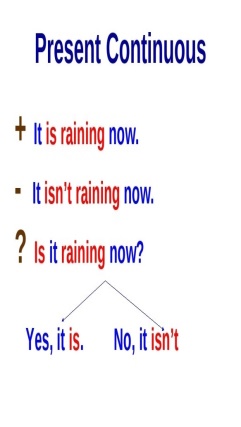

Short term plan
Unit:9 Holidays
|
lesson 95 |
||
School |
|
||
Teacher name |
|
||
Date: |
|
||
Grade: 5 |
Number present: |
absent: |
|
Lesson title |
Use of English: Present simple or present continuous |
||
Learning objectives |
5. 5. 4. 1 write long sentences in paragraph size with the teacher's support to provide personal information; 5. 6. 10.1 Use of chronic tense forms in the sense of the present and future tense on 1 familiar general and educational topics |
||
Lesson objectives (assessment criteria) (Негіздеме: Мемлекет басшысы Қ.Тоқаевтың Ұлттық құрылтайдың ІІ,ІІІ, ІV отырыстарында берген тапсырмасы, ҚР Оқу-ағарту министрлігінің №123 бұйрығы) |
Learners will be able to: -present the present continuous interrogative -practise asking and answering questions using the present continuous -compare the present simple and the present continuous
Instilling values of the program “Birtutas tarbiye” being Adal Azamat for Month May “The value of creativity and innovation” Quote of the week 2: “If there is no unity, there is no organization; if there is no organization, there is no future.” / 2-апта дәйек сөз/ |
||
Stages/ Time |
Teachers actions |
Students actions |
Assessment |
Resources |
Beginning 5 min |
Greeting. Asking dates and weather Warm up: Teacher write the following question on the board: What is your favourite way to travel? In pairs, students discuss the question and think of two reasons to support their favourite way to travel. Teacher tells values of this month. The value of law and order. Principled, able to keep one's word, able to understand the meaning of authority: - express one's position based on specific principles; - distinguish between influence and dominance through argument; |
Learners read the given sentences on the board and guess the topic and share with their ideas.
|
The teacher to assess learners for their ability. “Good job! Well done!” Formative Assessment
|
|
Middle 7 min |
Ex: 7 P: 113 Teacher say then write on the board: Am I sleeping now? Explain that this is the interrogative form of the present continuous. Tell Ss that we answer in short form with Yes/No, I am/am not. Ss open their books. Go through the table with Ss and elicit how we form the present continuous interrogative. Differentiation: Less confident learners read the table with a partner |
Students read the table. How do we form the interrogative form of the present continuous? Answers: We form the interrogative form of the present continuous with: Am/Is/Are + subject pronoun/noun + main verb + -ing?
|
Descriptor: A learner - reads the table -identifies how Ss form the present continuous interrogative Point-2
|
Assessment sheet Kazakh map
|
10 min |
Ex: 8 P: 113 Teacher draw Ss' attention to the picture and read the example sentence aloud. Ss complete the task. Check Ss' answers. Differentiation: Less confident learners work with a partner and use the example sentence as a model to complete the task
|
Students look at the picture. Write questions, then answer them Answers: 2 Are Bill and Tom making a snowman? Yes, they are. 3 Is Mr Jones playing in the snow? No, he isn't. 4 Is Mrs Jones talking to Bill? No, she isn't. 5 Are Bill and Tom eating sandwiches? No, they aren't. 6 Is Molly taking photographs? No, she isn't. 7 Is Tim eating a sandwich? Yes, he is. |
Descriptor: A learner - discusses the picture - answers the question Point -3
Well done |
|
10 min |
Ex: 9 P 113 Teacher explain the task and read the example aloud. Ss complete the task. Check Ss' answers. Differentiation: The teacher provides vocabulary support if needed.
|
Students write the questions. Use the present continuous. Answer them about yourself Answers: 2 Is your teacher talking right now? Yes, he is. 3 Are your parents working now? Yes, they are. 4 Are you having an English lesson now? Yes, I am./Yes, we are. 5 Are your friends playing football now? No, they aren't. 6 Are you wearing shorts now? No, I'm not. |
Descriptor: A Learner - writes the questions - uses the present continuous Point -3
Excellent ! |
|
8 min |
Ex: 11 P 113 Teacher explain the task and allow Ss some time to complete the postcard. Check Ss' answers. Differentiation: Less confident learners complete the postcard with a partner and use the example as a guide. |
Students put the verbs in brackets into the present simple or the present continuous Answers: 1 are having 2 celebrate 3 lasts 4 is 5 wear 6 dance 7 go 8 is raining 9 are sitting 10 are waiting 11 is singing 12 is playing 13 is |
Descriptor: A Learner - completes the postcard -uses present simple or the present continuous Point -2
Good job
Total points 10 |
|
End 5 min |
Learners provide feedback on what they have learned at the lesson and draw it on the face of students prototype. Ex: Home task: |
Ss evaluate each other and encourage classmate with phrases like: Well done! Brilliant! Good job! I like it! |
Poster |
|
Short term plan
Unit:9 Holidays
|
lesson 96 |
||
School |
|
||
Teacher name |
|
||
Date: |
|
||
Grade: 5 |
Number present: |
absent: |
|
Lesson title |
Holiday in Kazakhstan |
||
Learning objectives |
5. 4. 1. 1 understand the main idea of some simple short texts on general and educational topics; 5.5.4.1 write with support a sequence of extended sentences in a paragraph to give basic personal information; |
||
Lesson objectives (assessment criteria) (Негіздеме: Мемлекет басшысы Қ.Тоқаевтың Ұлттық құрылтайдың ІІ,ІІІ, ІV отырыстарында берген тапсырмасы, ҚР Оқу-ағарту министрлігінің №123 бұйрығы) |
Learners will be able to: - present new vocabulary - check comprehension of a text
Instilling values of the program “Birtutas tarbiye” being Adal Azamat for Month May “The value of creativity and innovation” Quote of the week 2: “If there is no unity, there is no organization; if there is no organization, there is no future.” / 2-апта дәйек сөз/ |
||
Stages/ Time |
Teachers actions |
Students actions |
Assessment |
Resources |
Beginning 5 min |
Greeting. Asking dates and weather Warm up: Teacher ask students to make two affirmative and two negative sentences in the present continuous. Students compare their sentences in pairs. Get feedback by asking each pair to tell you some of their sentences. Teacher tells values of this month. The value of law and order. Understanding the importance of the principle of honor: - Accepting conscience as the main criterion of behavior; - To prevent injustice and unfair practices; |
Learners read the given sentences on the board and guess the topic and share with their ideas.
|
Teacher controles the process, gives feedback The teacher to assess learners for their ability. “Good job! Well done!” Formative Assessment
|
|
Middle 35 min |
Ex: 1 P: 114 Teacher direct Ss' attention to the pictures. Play the recording. Ss listen and repeat chorally or individually. Elicit the L1 equivalents. Differentiation: Less confident learners repeat the words chorally with the class and use the pictures
|
Students look at the pictures. Listen and repeat. What are the words in your language Answers: Student’s own answer
|
Descriptor: A learner - discuss the pictures - listen and repeat the words Point-2
|
Assessment sheet Kazakh map
|
|
Ex: 2 P: 114 Teacher explain the task. Play the recording. Ss listen and follow the text in their books. Elicit and check Ss' answers. Differentiation: Less confident learners follow the text with a partner while listening to the recording
|
Students answer the question. Where in Kazakhstan can you see all these things? Listen and read to find out Answers: You can see all these things in Burabai National Park in Kazakhstan |
Descriptor: A learner - listen and read - answer the question Point -2
Well done |
|
|
Ex: 3 P 114 Teacher draw Ss' attention to the Check these words box. Elicit meaning of the words or allow Ss time to look them up. Explain the task. Ss go through the text again and answer the question. Check answers around the class. Differentiation: Receive help from the teacher to identify the correct answers. |
Students read Serik's blog post again and answer the questions Answers: 1 It is in the north of Kazakhstan. 2 There are 14 large lakes. 3 The highest mountain is Mount Kokshetau. 4 He is setting up his tent on the shore of Lake Burabai tonight. 5 You can find deer, foxes, and wild boar. |
Descriptor: A Learner - read Serik's blog post - answer the questions Point -3
Excellent ! |
|
|
Ex: 4 P 114 Teacher says Burabai National Park is a beautiful place with amazing scenery and interesting wildlife. It is a treasure for the country, so people call it 'The Pearl of Kazakhstan'. Differentiation: A learner with less motivated will receive support from the teacher and classmates who assist them
Functional literacy Choose the correct answer
|
Students answer the question. Why do people call Burabai National Park 'The Pearl of Kazakhstan'? Tell the class. Answers: 1 What is the woman doing? She is sleeping. 2 Is the car moving? Yes, it is. 3 Are the dogs eating sandwiches? No, they aren’t. 4 Is the man in blue driving the car? No, he isn’t. 5 Who is taking a photo of the car? The boy in red. |
Descriptor: A Learner - answer the question-2 Point -2
Good job!
Total points 10 |
|
End 5 min |
Learners provide feedback on what they have learned at the lesson and draw it on the face of students prototype. Ex: Home task: |
Ss evaluate each other and encourage classmate with phrases like: Well done! Brilliant! Good job! I like it! |
Poster |
|

Short term plan
Unit:9 Holidays
|
lesson 97 |
||
School |
|
||
Teacher name |
|
||
Date: |
|
||
Grade: 5 |
Number present: |
absent: |
|
Lesson title |
Burabai National Park |
||
Learning objectives |
5. 2. 8. 1 supported understanding of general and academic topics in a range of longer conversations, including stories 5. 3. 3. 1 express an opinion in a sentence within the framework of a number of general and educational topics; |
||
Lesson objectives (assessment criteria) (Негіздеме: Мемлекет басшысы Қ.Тоқаевтың Ұлттық құрылтайдың ІІ,ІІІ, ІV отырыстарында берген тапсырмасы, ҚР Оқу-ағарту министрлігінің №123 бұйрығы) |
Learners will be able to: - listen for specific information -present 'Exclamations' and practise using them -Presenting expressions for likes and dislikes
Instilling values of the program “Birtutas tarbiye” being Adal Azamat for Month May “The value of creativity and innovation” Quote
of the week 3: “In this world, if you think deeply, unity is
needed; |
||
Stages/ Time |
Teachers actions |
Students actions |
Assessment |
Resources |
Beginning 5 min |
Greeting. Asking dates and weather Warm up: Teacher asks students to work in pairs. Tell them to tell each other how often they speak on the phone and whom they speak to on the phone most often. Get feedback from a few pairs by asking a few students to tell the rest of the classes whom their partner speaks to on the phone most often
Teacher tells values of this month. The value of creativity and innovation. Personal safety, life safety: - Risk recognition: being able to distinguish between threats such as bullying, drugs, violence, and fraud; - Safe behavior: obeying traffic rules, acting safely in public places; |
Learners read the given sentences on the board and guess the topic and share with their ideas.
|
Teacher controles the process, gives feedback The teacher to assess learners for their ability. “Good job! Well done!” Formative Assessment
|
|
Middle 10 min |
Ex: 5 P: 115 Teacher explain the task. Play the recording Allow Ss time to fill in the missing information. Check answers around the class Differentiation: Less confident learners listen to the recording with a partner
|
Students say Aruzhan and her friend Emily are visiting Burabai Park. National Listen to them and complete the sentences Answers: 1 hiking (through the forest) 2 really hot 3 Lake Burabai 4 deer
|
Descriptor: A learner - complete the sentences - fill in the missing information Point-3
Good job!
|
Assessment sheet Kazakh map
|
8 min |
Ex: 6 P: 115 Teacher draw Ss' attention to the Note! box on the side of the page. Read the information to the class. Elicit further examples from the Ss. Explain the task. Allow Ss time to complete the exercise. Check answers around the class Differentiation: The teacher provides additional prompts if needed. |
Students read the theory. Then, fill the gaps Answers: 1 What 2 What a 3 What an 4 What a 5 What 6 What a |
Descriptor: A learner - read the theory - fill the gaps Point -2
Well done |
|
7 min |
Ex: 7 P 115 Teacher explain the task. Allow Ss time to complete the task. Check Ss' answers
|
Students list the phrases under the headings Answers:
|
Descriptor: A Learner -identifies the phrases under the headings Point -2
Excellent ! |
|
10 min |
Ex:8 P 115 Teacher explain the task. Ask some Ss to read the examples aloud for the class. Allow Ss time to act out dialogues in closed pairs. Monitor the activity around the class. Check answers by asking some pairs to present the dialogues to the class. Differentiation: A learner with less motivated will receive support from the teacher and classmates who assist them Functional literacy True or False
|
Students are on holiday in Burabai National Park. Use the phrases in Ex. 7 to act out dialogues, as in the example Answers: A: How do you like being out in the hills? B: I like it. I like the outdoors. A: What do you think of the hot weather today? B: I don't really like it. I prefer cooler weather. A: Do you enjoy hiking here in Burabai National Park? B: It's great. The scenery is amazing. A: Do you like swimming in the lake? B: It's OK. It's a bit cold. |
Descriptor: A Learner - read the examples -use the phrases in ex 7 Point -3
Good job! |
|
End 5 min |
Learners provide feedback on what they have learned at the lesson and draw it on the face of students prototype. Ex: Home task: |
Ss evaluate each other and encourage classmate with phrases like: Well done! Brilliant! Good job! I like it! |
Poster |
|

Short term plan
Unit: 9 Holidays
|
lesson 98 |
||
School |
|
||
Teacher name |
|
||
Date: |
|
||
Grade: 5 |
Number present: |
absent: |
|
Lesson title |
Buying souvenirs |
||
Learning objectives |
5. 3. 6. 1 Express your thoughts clearly and clearly in sentences in pairs, groups, and with the whole class. 5. 4. 1. 1 understand the main idea of some simple short texts on general and educational topics; |
||
Lesson objectives (assessment criteria) (Негіздеме: Мемлекет басшысы Қ.Тоқаевтың Ұлттық құрылтайдың ІІ,ІІІ, ІV отырыстарында берген тапсырмасы, ҚР Оқу-ағарту министрлігінің №123 бұйрығы)
|
Learners will be able to: - present the situational language of buying things - read for specific information - consolidate situational language through translation
Instilling values of the program “Birtutas tarbiye” being Adal Azamat for Month May “The value of creativity and innovation” Quote
of the week 3: “In
this world, if you think deeply, unity is needed; |
||
Stages/ Time |
Teachers actions |
Students actions |
Assessment |
Resources |
Beginning 5 min |
Greeting. Asking dates and weather Warm up: Teacher write the following types of holidays on the board: beach, cycling, skiing, city, camping. Check for understanding. Allow students 2 minutes to work in pairs to rank these types of holidays from 1 to 5, with 1 being their favourite type of holiday. Teacher tells values of this month. The value of creativity and innovation. Understanding the importance of health: - Understanding cultural, ethical, and legal norms in society; - Showing respect for others and recognizing mutual respect; |
Learners read the given sentences on the board and guess the topic and share with their ideas.
|
Teacher controles the process, gives feedback The teacher to assess learners for their ability. “Good job! Well done!” Formative Assessment
|
Flashcards |
Middle 10 min |
Ex: 1a P:116 Teacher play the recording with pauses. Ss listen and repeat chorally or individually. Focus Ss' attention on the stressed words/syllables. Check Ss' pronunciation and intonation. Differentiation: Less confident learners repeat the words or sentences chorally with the class
|
Students listen and repeat. Which words are stressed Answers: What can I do for you? I want to buy a souvenir. What about this cop? How much is it? It's $15.00. Here you are
|
Descriptor: A learner - listens and repeat - identifies the stressed words/ syllables Point-3
Good job! |
Assessment sheet Kazakh map
|
10 min |
Ex: 1 b P: 116 Teacher asks Ss read the rubric aloud and elicit who says what. Play the recording. Ss listen and follow the dialogue in their books and check. Differentiation: Less confident learners follow the dialogue with a partner
|
Students read sentences above are from a dialogue at a shop. Who says each sentence: the shop assistant? or the customer? Answers: Shop assistant: What can I do for you? - What about this cap? - It's $15.00. Customer: I want to buy a souvenir. - How much is it? - Here you are |
Descriptor: A learner - read the dialogue - answer the question Point -3
Well done |
|
7 min |
Ex: 2 P 116 Teacher allow Ss some time to read the dialogue again and find the answer. Check Ss' answers. Differentiation: Less confident learners read the dialogue with a partner and look for key words to help them find the answer
|
Students read again. Answer the question Answers: A cap
|
Descriptor: A Learner - read the dialogue - answer the question Point -2
Excellent ! |
|
8 min |
Ex: 4 P 116 Teacher asks Ss Read out the phrases. Refer Ss back to the dialogue and elicit the synonymous ones from various Ss around the class. Differentiation: The teacher provides hints or directs them to the relevant lines.
Functional literacy Discuss the questions. Do you like buying souvenirs when you travel? What souvenirs would you buy from Kazakhstan? Example: |
Students find phrases in the dialogue which mean: Answers: 1 How can I help you? - What can I do for you? 2 How much does it cost? - How much is it? 3 How about this cap? - What about this cap? 4 Of course. - Sure |
Descriptor: A Learner - reads the phrases - finds phrases in the dialogue Point -2
Excellent ! Total points-10 |
|
End 5 min |
Learners provide feedback on what they have learned at the lesson and draw it on the face of students prototype. Ex: Home task: |
Ss evaluate each other and encourage classmate with phrases like: Well done! Brilliant! Good job! I like it! |
Poster |
|
Short term plan
Unit: 9 Holidays
|
lesson 99 |
||
School |
|
||
Teacher name |
|
||
Date: |
|
||
Grade: 5 |
Number present: |
absent: |
|
Lesson title |
Across culture Summative assessment for the unit “Holidays” |
||
Learning objectives |
5. 4. 6. 1 identify the author's opinion or point of view in short texts on some general and educational topics 5. 5. 4. 1 write long sentences in paragraph size with the teacher's support to provide personal information; |
||
Lesson objectives (assessment criteria) (Негіздеме: Мемлекет басшысы Қ.Тоқаевтың Ұлттық құрылтайдың ІІ,ІІІ, ІV отырыстарында берген тапсырмасы, ҚР Оқу-ағарту министрлігінің №123 бұйрығы)
|
Learners will be able to: - listen and read for specific information - read for specific information - write sentences about the origin of things (i.e., nationality) Instilling values of the program “Birtutas tarbiye” being Adal Azamat for Month May “The value of creativity and innovation” Quote
of the week 3: “In
this world, if you think deeply, unity is needed; |
||
Stages/ Time |
Teachers actions |
Students actions |
Assessment |
Resources |
Beginning 5 min |
Greeting. Asking dates and weather Warm up: Teacher write the jobs on the board as students shout them out. Stop when you have more than 10 jobs on the board. Ask students to think of different ways to categorize the jobs. For example, in alphabetical order, or jobs that can be done outdoors and jobs that are done in the office. Point out that arranging words in groups helps to memorize them. Teacher tells values of this month. The value of creativity and innovation. Fairness in the use and acquisition of necessary information: - Be able to select reliable and correct sources of information; - Be able to draw logical and objective conclusions. |
Learners read the given sentences on the board and guess the topic and share with their ideas.
|
Teacher controles the process, gives feedback The teacher to assess learners for their ability. “Good job! Well done!” Formative Assessment
|
Flashcards |
Middle 10 min |
Ex: 1 P: 117 Teacher direct Ss' attention to the pictures and read out the countries in the list. Play the recording. Ss listen and follow the text in their books and find out which souvenirs are from which countries. Differentiation: Less confident learners work with a partner and use the pictures as visual clues to help match the souvenirs with the countries |
Students look at the souvenirs in the pictures. Which of these countries are they from? Answers: hat - Mexico toy dolls - Russia stuffed toy - Scotland mug - the USA key ring - the UK yurt box - Kazakhstan |
Descriptor: A learner - discusses the pictures - answers the question Point-3
Good job!
|
Assessment sheet Kazakh map
|
12 min |
Ex: 2 P: 117 Teacher refer Ss to the Check these words box, and ask them to look up any unknown word. Elicit and check meanings. Allow Ss time to read the text again and answer the questions. Check Ss' answers. Differentiation: Less confident learners work with a partner and use dictionaries to check unknown words |
Students read the text and answer questions Answers: 1 You can see sombreros in Mexico. 2 Matryoshka dolls are a set of dolls one inside the other. 3 Tartan cloth is popular in Scotland. 4 The US flag has got stars and stripes on it. 5 Big Ben is in London. 6 You can buy a leather box like a yurt as a souvenir in Kazakhstan |
Descriptor: A learner - reads the text - answers thequestions Point -3
Well done |
|
13 min |
Ex: 3 P 117 Teacher explain the task and read the example aloud. Allow Ss time to complete the task, then check Ss' answers. Differentiation: The teacher provides guiding questions to help them find the answers in the text. |
Students make sentences like these about the souvenirs Answers: The stuffed toy is from Scotland. It's Scottish. The key ring is from the UK. It's British. The mug is from the USA. It's American. The toy dolls are from Russia. They're Russian. The leather boxes like yurts are from Kazakhstan. They are Kazakhstani. |
Descriptor: A Learner - reads the example - makes sentences Point -4
Excellent ! Total points-10 |
|
End 5 min |
Learners provide feedback on what they have learned at the lesson and draw it on the face of students prototype. Ex: Home task: |
Ss evaluate each other and encourage classmate with phrases like: Well done! Brilliant! Good job! I like it!
|
Poster |
|
Short term plan
Unit: 9 Holidays
|
lesson 100 |
||
School |
|
||
Teacher name |
|
||
Date: |
|
||
Grade: 5 |
Number present: |
absent: |
|
Lesson title |
Across curriculum: Literature |
||
Learning objectives |
5. 4. 2. 1 understand specific information in simple, short texts on a number of general and educational topics with little help from the teacher; 5. 5. 3. 1 write specific details with the support of the teacher, describing people, places and objects at the text level; |
||
Lesson objectives (assessment criteria) (Негіздеме: Мемлекет басшысы Қ.Тоқаевтың Ұлттық құрылтайдың ІІ,ІІІ, ІV отырыстарында берген тапсырмасы, ҚР Оқу-ағарту министрлігінің №123 бұйрығы) |
Learners will be able to: - relate a piece of music to a mood - read for cohesion and coherence and listen for clarification
Instilling values of the program “Birtutas tarbiye” being Adal Azamat for Month May “The value of creativity and innovation” Quote of the week 4: “A harmonious nation is blessed with peace and prosperity” / 4-апта дәйек сөз/ |
||
Stages/ Time |
Teachers actions |
Students actions |
Assessment |
Resources |
Beginning 5 min |
Greeting. Asking dates and weather Warm up: Teacher write Britain on the board. Ask students to brainstorm different things they think about when they think about Britain, e.g. The Queen, Big Ben, Stonehenge, etc. Put their ideas on the board and check for pronunciation.
Teacher tells values of this month. The value of unity and solidarity. Respect and mutual respect: - Respect for the rights and individuality of each person; - Recognize and support the successes of colleagues and friends. |
Learners read the given sentences on the board and guess the topic and share with their ideas.
|
Teacher controles the process, gives feedback The teacher to assess learners for their ability. “Good job! Well done!” Formative Assessment
|
Flashcards |
Middle 35 min |
Ex: 1 P: 118 Teacher explain the task and explain/elicit the meanings of the adjectives next to the faces. Play the recording. Ss listen and answer the questions in the rubric Differentiation: Less confident learners work with a partner and focus on understanding the adjectives with the help of the faces and teacher explanations |
Students listen to the music extract. What images come to mind? What is the weather like? How does it make you feel Answers: It is winter. Children are making snowmen. There is snow everywhere. It's freezing cold. I feel happy |
Descriptor: A learner - answers the question Point-2
Good job!
|
Assessment sheet Kazakh map
|
|
Ex: 2a P: 118 Teacher asks Ss read the words aloud. Ask Ss to read through the poem quickly and elicit what the poem is about Differentiation: Less confident learners read the words with the teacher |
Students read the words in the pictures are from the poem. What poem about? Read quickly to find out. is the Answers: The poem is about the four seasons and what happens during each season
|
Descriptor: A learner - reads the words in the pictures - answers the question Point -3
Well done |
|
|
Ex: 2 b P118 Teacher explain the task and allow Ss some time to read the poem carefully and choose the correct word to fill each gap. Play the recording for Ss to listen and check their answers. Direct Ss to the Word List to look up the meanings of the words in the Check these words box. Differentiation: Work with a partner to understand the vocabulary before skimming the poem. |
Students use the words in the pictures to complete the gaps in the poem. Answers: 1 sky 2 insects 3 leaves 4 wind 5 snow
|
Descriptor: A Learner - completes the gaps - uses the words in the pictures Point -3
Excellent ! |
|
|
Ex: 3 P118 Teacher explain the task. Write the words here and clear on the board. Elicit that two words rhyme as some part of them is pronounced the same way even though they are spelt differently and have a completely different meaning. Point out that usually rhyming words are placed at the end of a line in a poem. Allow some time for Ss to complete the task and then check Ss' answers Differentiation: Less confident learners work with a partner and say the words aloud to help them hear which ones rhyme. |
Students find the words in the poem that rhyme Answers: here/clear, rain/again, comes/hum, now/brown, around/ground, hooray/play |
Descriptor: A Learner - finds the words in the poem Point Excellent !
Total points 10 |
|
End 5 min |
Learners provide feedback on what they have learned at the lesson and draw it on the face of students prototype. Ex: Home task: |
Ss evaluate each other and encourage classmate with phrases like: Well done! Brilliant! Good job! I like it! |
Poster |
|
Short term plan
Unit:9 Holidays
|
lesson 101 |
||
School |
|
||
Teacher name |
|
||
Date: |
|
||
Grade: 5 |
Number present: |
absent: |
|
Lesson title |
Summative control work for the 4th term |
||
Learning objectives |
5.2.8.1 Understand supported narratives, including some extended talk, on an increasing range of general and curricular topics. 5.3.2.1 Ask simple questions to get information about a limited range of general topics 5.4.3.1 Understand the detail of an argument on a limited range of familiar general and curricular topics 5. 5. 4. 1 write long sentences in paragraph size with the teacher's support to provide personal information; |
||
Lesson objectives (assessment criteria) (Негіздеме: Мемлекет басшысы Қ.Тоқаевтың Ұлттық құрылтайдың ІІ,ІІІ, ІV отырыстарында берген тапсырмасы, ҚР Оқу-ағарту министрлігінің №123 бұйрығы) |
Learners will be able to: -recognize and interpret the narrative by timeline, by drawing, by retelling, summarizing of events - formulate closed and some open questions - identify supporting details in a paragraph or text
Instilling values of the program “Birtutas tarbiye” being Adal Azamat for Month May “The value of creativity and innovation” Quote of the week 4: “A harmonious nation is blessed with peace and prosperity” / 4-апта дәйек сөз/ |
||
Short term plan
Unit: 9 Holidays
|
lesson 102 |
||
School |
|
||
Teacher name |
|
||
Date: |
|
||
Grade: 5 |
Number present: |
absent: |
|
Lesson title |
A postcard |
||
Learning objectives |
5. 5. 3. 1 write specific details with the support of the teacher, describing people, places and objects at the text level; 5. 6. 14. 1 Use auxiliary words to talk about time and location on some familiar general and educational topics, use auxiliary words to mark the topic, help words to describe things, help words to, into, out of, from, towards to indicate the mood of movement |
||
Lesson objectives (assessment criteria) (Негіздеме: Мемлекет басшысы Қ.Тоқаевтың Ұлттық құрылтайдың ІІ,ІІІ, ІV отырыстарында берген тапсырмасы, ҚР Оқу-ағарту министрлігінің №123 бұйрығы) |
Learners will be able to: - identify the author/recipient and location of each in a postcard - read for specific information - practise the writing style of postcards
Instilling values of the program “Birtutas tarbiye” being Adal Azamat for Month May “The value of creativity and innovation” Quote of the week 4: “A harmonious nation is blessed with peace and prosperity” / 4-апта дәйек сөз/ |
||
Stages/ Time |
Teachers actions |
Students actions |
Assessment |
Resources |
Beginning 5 min |
Greeting. Asking dates and weather Warm up: Teacher tell students to imagine that they are going on a holiday. Ask them to brainstorm ideas for things that they can do in order to always remember the holiday.
Teacher tells values of this month. The value of unity and solidarity. Prioritizing the public interest: - Temporarily putting personal interests aside and putting the collective interest first; - Focusing on group or public benefit in decision-making; |
Learners read the given sentences on the board and guess the topic and share with their ideas.
|
Teacher controles the process, gives feedback The teacher to assess learners for their ability. “Good job! Well done!” Formative Assessment |
Flashcards |
Middle 10 min |
Ex: 1 P: 119 Teacher direct Ss' attention to the postcard and read the first sentence aloud. Elicit answers to the questions and then play the recording for Ss to check their answers. Differentiation: A learner with less motivated will receive support from the teacher and classmates who assist them |
Students look at the postcard and read the first sentence in Answers: 1 Fred 2 His auntie May and his uncle Joe 3 Fred is in Capri, in Italy. His aunt and uncle are in Brighton, England
|
Descriptor: A learner - discusses the postcard - reads the first sentence in Point-3
Good job!
|
Assessment sheet Kazakh map
|
13 min |
Ex: 2 P: 119 Teacher draw Ss' attention to the Notel box at the side of the text. Read the text in the box. Remind Ss of future use of present continuous. Elicit further examples around the class. Explain the task. Allow Ss some time to read the text and answer the questions. Check Ss' answers. Differentiation: The teacher provides guiding questions and examples. |
Students read the postcard and answer the questions. Then list all the present continuous forms. Which one has a future meaning? Answers: 1 It's warm and the sun is shining. 2 They are staying at a hotel near the sea. 3 His mum, dad, Alex and Connie. 4 He's sunbathing with Alex and Fred. 5 She is shopping for souvenirs with Connie. 6 He's having a fantastic time there |
Descriptor: A learner - answers the questions - uses of present continuous Point -4
Well done |
|
12 min |
Ex: 3 P 119 Teacher draw Ss' attention to the Notel box at the side of the text. Read the text in the box. Remind Ss of future use of present continuous. Elicit further examples around the class. Explain the task. Allow Ss some time to read the text and answer the questions. Check Ss' answers Differentiation: Less confident learners read the Note! box with the teacher and work with a partner |
Students rewrite the sentences. Put the verbs in their short forms or omit subject pronouns Answers: 1 We're staying on the first floor. 2 We don't like it here. 3 The weather's lovely. 4 Mum's swimming now. 5 Back in a week. 6 Miss you. |
Descriptor: A Learner - rewrites the sentences - puts the verbs in their short forms Point -3
Excellent ! Total points10 |
|
End 5 min |
Learners provide feedback on what they have learned at the lesson and draw it on the face of students prototype. Ex: Home task: |
Ss evaluate each other and encourage classmate with phrases like: Well done! Brilliant! Good job! I like it!
|
Poster |
|









 Бұл курс Қазақстан Республикасы Оқу-ағарту министрлігімен келісілген










