ЖИ көмекші


жүктеу мүмкіндігіне ие боласыз
Бұл материал сайт қолданушысы жариялаған. Материалдың ішінде жазылған барлық ақпаратқа жауапкершілікті жариялаған қолданушы жауап береді. Ұстаз тілегі тек ақпаратты таратуға қолдау көрсетеді. Егер материал сіздің авторлық құқығыңызды бұзған болса немесе басқа да себептермен сайттан өшіру керек деп ойласаңыз осында жазыңыз
 14 Қаңтар 2025
 317
317
6 сынып Excell 3 токсан КМЖ
Short term plan: term 3
|
Unit: 5 Our Health |
Lesson 49 |
||
|
Teacher name: |
|
||
|
Date: |
|
||
|
Grade: 6 |
Number present: |
absent: |
|
|
Lesson title |
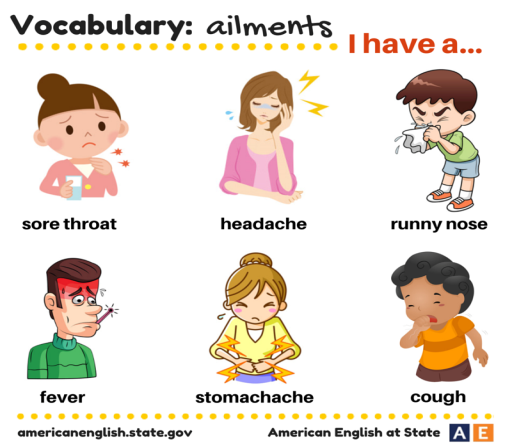
Vocabulary: illnesses / ailments |
||
|
Learning objectives |
6.1.9.1 use imagination to express thoughts, ideas, experiences and feelings 6.2.1.1 understand a sequence of supported classroom instructions 6.3.1.1 provide basic information about themselves and others at sentence level on an increasing range of general topics |
||
|
Lesson objectives |
Learners will be able to: - present illnesses/ailments - discuss illnesses/ailments |
||
|
Value links |
Family – Family values are moral and ethical principles of typical family life, including sacrificing for loved ones, putting your loved ones first, and keeping your loved ones at the centre of your thoughts and actions. |
||
|
Plan |
|||
|
Stages / Time |
Teachers actions |
Students actions |
Assessment criteria |
Resources |
|
Beginning of the lesson Warming-up
3 min. Pre-learning «Brainstorming» method 7 min. |
Organization moment : 1.Greeting. Ask about the weather. The teacher sets the lesson objectives, letting students know what to anticipate from the lesson. Warming up Where are you from? How old are you? What color is it? How many students are there in class? What day of the week today? Lead – In
|
The aim: To develop pupils speaking skills and create friendly atmosphere Efficiency: By wishing each other they feel better and feel the support of others Students of the class are listed. Students' attention is drawn to the lesson. Students say different words from the picture •Learners remember previous lesson vocabulary •Learners answer the questions |
The teacher to assess learners for their ability. “Good job! Well done!” Formative Assessment
Good job! Assessment criteria make basic statements related to personal information, match places to continents |
Pictures worksheet Picture |
|
Middle of the lesson Presentation part. 30 min |
Ex:1 P:53 • Draw Ss' attention to the pictures. Play the recording. Ss listen and repeat chorally or individually. Elicit the L1 equivalents. DR Ex: 2 P: 53 • Explain/Elicit the meanings of any unknown words and read out the example exchange, then Ss talk in pairs about the illnesses/ailments referring to the pictures and using the phrases. Monitor the activity around the class and then ask some pairs to report back to the class. Conclusion during the lesson some tasks differentiated by outcomes of the students and by their abilities. |
• Learners listen and repeat. Say these words in your language ANSWERS Students own answer • Learners discuss in pairs, as in the example. Answer the question ANSWERS 2 A: What's wrong with Damir? B: He's got a stomach ache. 3 A: What's wrong with Sanzhar? B: He's got a cough. 4 A: What's wrong with Nurgul? B: She's got a headache. 5 A: What's wrong with Ulan? B: He's got a cold. A: What's with Akbota? B: She's got a temperature. 7 A: What's wrong with Kenje? B: She's got a rash. 8 A: What's wrong with Mira? B: She's got an earache. |
Descriptor: -Listen and repeat - . Say the words in your language Total: 2 point
Differentiation: «Verbal support» method is used to help Ss use new words in the sentences. Descriptor: - discuss in pairs, - complete the task Total: 6 point -Make CCQ questions Yes / No |
Card Worksheet Students book |
|
End of the lesson 5 min |
FEEDBACK Learners provide feedback on what they have learned at the lesson. Ex: P: Home task: Write the days |
|
Poster Success
|
|




Short term plan: term 3
|
Unit 5 Our Health |
Lesson 50 |
||
|
Teacher name: |
|
||
|
Date: |
|
||
|
Grade: 6 |
Number present: |
absent: |
|
|
Lesson title |
Reading: Home remedies |
||
|
Learning objectives |
6.2.4.1 understand the main points of supported extended talk on a range of general and curricular topics 6.4.5.1 deduce meaning from context in short texts on a limited range of familiar general and curricular topics 6.5.5.1 link without support sentences using basic coordinating connectors |
||
|
Value links |
Loyalty – Loyalty might be a core personal value to you if you highly prize friends that are reliable and trustworthy. You might put your friends or chosen family first, always being there for them when they need you. |
||
|
Lesson objectives |
Learners will be able to: - introduce the topic, to listen and read for gist - read for specific information |
||
|
Plan |
|||
|
Stages / Time |
Teachers actions |
Students actions |
Assessment criteria |
Resources |
|
Beginning of the lesson Warming-up
3 min Pre-learning «Brainstorming» method 7 min. |
Organization moment : 1.Greeting. Ask about the weather. The teacher sets the lesson objectives, letting students know what to anticipate from the lesson. Warming up Where are you from? How old are you? What color is it? How many students are there in class? What day of the week today? Ask a few pupils to stand up and stand in a row. Ask the rest of the class questions to revise the ordinals. Lead – In
|
The aim: To develop pupils speaking skills and create friendly atmosphere Efficiency: By wishing each other they feel better and feel the support of others Students of the class are listed. Students' attention is drawn to the lesson. Determines the topic and purpose of the lesson •Learners remember previous lesson vocabulary Students say different words from the picture Answer the question. |
The teacher to assess learners for their ability. “Good job! Well done!” Formative Assessment
Good job! Descriptor: - know daily routines vocabulary Point 1 Assessment criteria - Learners have met the learning objectives if they can talk about home remedies |
Pictures worksheet Student’s book |
|
Middle of the lesson Presentation part. 30 min |
Ex:1 P:54 • Direct Ss to the title of the article and the pictures. Elicit what remedies Ss think someone might find at home. Play the recording. Ss listen and follow the text in their books to find out. Ex: 2 P: 54 • Give Ss time to read the text again and complete the task. Check Ss' answers. Tell Ss to check any words they are unsure of in their dictionaries. Ex: 3 P: 55 • Explain the task. Ss complete it. Check Ss' answers. Ex: 4 P: 55 • Ask Ss to read the text again and make notes about the home remedies. Give Ss time to use their notes to prepare a PowerPoint or other format of digital presentation with images and a short text about each one. Ask Ss to give their presentations in front of the class. Conclusion during the lesson some tasks differentiated by outcomes of the students and by their abilities. |
• Pupils read the title of the article and look at the pictures ANSWERS People can find remedies for a headache, a toothache, a stomach ache, sore throats and a cough at home. • Pupils read again and choose the correct word. ANSWERS 1 relieve 2 toothache 3 teaspoonful 4 ingredient • Pupils fill the gaps. ANSWERS 1 cough 2 lemon 3 stomach 4 sore 5 good 6 nasty •Pupils create a digital presentation ANSWERS Ss' own answers |
Descriptor: - read the title - look at the pictures Total: 2 point
Descriptor: - read again - choose the correct Total: 2 point Differentiation: «Verbal support» method is used to help Ss use new words in the Descriptor: - fill the gaps Total: 1 point Descriptor: - read the text again - create a digital presentation Total: 2 point -Make CCQ questions Yes / No Total: 1 point Total: 10 point |
Card Worksheet Students book |
|
End of the lesson 5 min |
FEEDBACK Learners provide feedback on what they have learned at the lesson. Ex: P: Home task: Write the days |
|
Poster Success
|
|

Short term plan: term 3
|
Unit 5 Our Health |
Lesson 51 |
||
|
Teacher name: |
|
||
|
Date: |
|
||
|
Grade: 6 |
Number present: |
absent: |
|
|
Lesson title |
Vocabulary: health |
||
|
Learning objectives |
6.6.13.1 use might may could to express possibility on a limited range of familiar general and curricular topics 6.3.7.1 use appropriate subject-specific vocabulary and syntax to talk about a limited range of general topics 6.5.8.1 spell most high-frequency words accurately for a limited range of general topics |
||
|
Lesson objectives |
Learners will be able to: - prepare a digital presentation summarising the text - consolidate new vocabulary - listen and read for specific information |
||
|
Value links |
Fairness – If you value fairness, you might be highly sensitive to situations at school or in the workplace where a teacher or a peer has exhibited favoritism or allowed someone to get away with living by a different set of rules to everyone else. |
||
|
Plan |
|||
|
Stages / Time |
Teachers actions |
Students actions |
Assessment criteria |
Resources |
|
Beginning of the lesson Warming-up
3 min Pre-learning «Brainstorming» method 7 min. |
Organization moment : 1.Greeting. Ask about the weather. The teacher sets the lesson objectives, letting students know what to anticipate from the lesson. Warming up Where are you from? How old are you? What color is it? How many students are there in class? What day of the week today? revise the vocabulary from the previous Lead – In
|
. The aim: To develop pupils speaking skills and create friendly atmosphere Efficiency: By wishing each other they feel better and feel the support of others Students of the class are listed. Students' attention is drawn to the lesson. • Learners remember previous lesson vocabulary Determines the topic and purpose of the lesson Students say different words from the picture |
The teacher to assess learners for their ability. “Good job! Well done!” Formative Assessment
Good job! Descriptor: - can tell the time Point 1 Assessment criteria - Learners have met the learning objectives if they can talk about persons character |
Pictures worksheet Picture |
|
Middle of the lesson Presentation part. 30 min |
Ex:5 P: 55 • Explain the task and go through the words in the list. Explain the meanings of any unknown words or ask Ss to look them up in their dictionaries and then give Ss time to complete the task. Ex: 6 P: 55 • Explain the task and give Ss time to complete it. Check Ss' answers. Ex: 7 a P: 55 • Read out the questions in the rubric. Play the recording. Ss listen and read the dialogue to find out the answers. Check Ss' answers. Ex: 7 b P: 55 • Explain the task. Remind Ss that they can use the dialogue in Ex. 7a as a model. Ss complete the task in closed pairs. Monitor the activity around the class and then ask some pairs to act out their dialogues in front of the class. Ex: 8 P: 55 • Explain the task and give Ss time to complete it. Remind Ss to include the points in the list and then check Ss' answers around the class. Conclusion during the lesson some tasks differentiated by outcomes of the students and by their abilities. |
•Pupils complete the sentences with the words. ANSWERS 1 exercise 2 balanced 3 lose 4 take 5 sugary 6 stay 7 junk •Pupils complete the text message ANSWERS 1 cold 2 hot 3 get rid 4 sore 5 help 6 drink 7 better •Pupils listen and read to find out. Answer the question ANSWERS Sam has a headache. Ann advises him to drink some lemon juice with warm water. •Pupils in pairs use the ideas below to act out. ANSWERS A: Hi, Nurlan. Are you OK? B: Hello, Dina. I don't feel very well. A: What's wrong? B: I have a terrible cough. A: Poor you! Why don't you take some cough syrup? A: Hi, Nurlan. Are you OK? B: Hello, Dina. I don't feel very well. A: What's wrong? B: I have a terrible sore throat. •Pupils write a message to your English friend ANSWERS Hi Dilnaz, I'm sorry to hear that you have a stomach ache. Why don't you try drinking some ginger tea? Can I come and visit you at your house |
Descriptor: - complete the sentences Total: 1 point
Descriptor: - complete the text message Total: 1 point
Descriptor: - listen and read - answer the question Total: 2 point Descriptor: - in pairs use the ideas below - act out Total: 3 point Descriptor: - write a message to your English friend Total: 3 point -Make CCQ questions Yes / No Total: 10 point |
Card Worksheet |
|
End of the lesson 5 min |
FEEDBACK Learners provide feedback on what they have learned at the lesson. Ex: Home task: |
|
Poster Success
|
|

Short term plan: term 3
|
Stages / Time |
Teachers actions |
Students actions |
Assessment criteria |
Resources |
|
Beginning of the lesson Warming-up
3 min Pre-learning «Brainstorming» method 7 min. |
Organization moment : 1.Greeting. Ask about the weather. The teacher sets the lesson objectives, letting students know what to anticipate from the lesson. Warming up Where are you from? How old are you? What color is it? How many students are there in class? What day of the week today? revise the language from the previous lesson Lead – In
|
The aim: To develop pupils speaking skills and create friendly atmosphere Efficiency: By wishing each other they feel better and feel the support of others Students of the class are listed. Students' attention is drawn to the lesson. • Learners talk about daily routines previous lesson vocabulary Determines the topic and purpose of the lesson Students say different words from the picture |
The teacher to assess learners for their ability. “Good job! Well done!” Formative Assessment
Good job! Descriptor: - talk about daily routines Point 1 Assessment criteria - Learners have met the learning objectives if they can talk about natural features |
Pictures worksheet Student’s book |
|
Middle of the lesson Presentation part. 30 min |
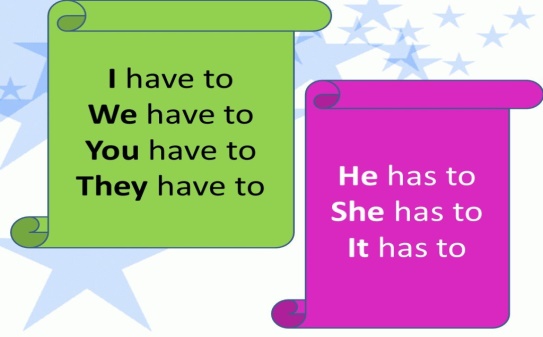
Ex:1 P:56 • Ss close their books. Present have to. Say, then write on the board: I have to go early today. Explain that this modal verb is in the affirmative. Point to a S and say: You have to wear a uniform at school. Point to a male S and say: He has to wear a uniform at school. Present all persons in the same way. Say then write on the board: I don't have to work on Sundays. Explain that this is the negative form. Point to a S and say: You don't have to go to school on Sundays. Present all persons in the same way. Ex: 2 P: 56 • Explain the task. Ss complete the task. Check Ss' answers, Ex: 3 P: 56 • Ss close their books. Say then write on the board: Do I have to work? Yes, I do./Do you have to work? No, you don't./Does he have to work? No, he doesn't. Explain that we use Do I/you we/you/they and Does he/she/it to form questions with have to. Focus Ss' attention on the position of Do/Does (before the personal pronoun). We answer in the short form with Yes/No, I/you/we/they/do/don't and Yes/No, he/she/it/does/doesn't. Ask questions to check Ss' understanding. Ex: 4 P: 56 • Explain the task and read out the prompts and the example. Ss complete the task in pairs. Monitor the activity around the class. Ex: 6 P: 56 •Explain the task. Ss complete the task. Check Ss' answers, Ex: 7 P: 56 •Explain the task. Ss complete the task. Check Ss' answe |
•Pupils read the table and the rules. ANSWERS Students own answer •Pupils put the verbs in brackets into the correct form ANSWERS 2 don't have to meet 3 have to eat 4 doesn't have to go 5 have to cook •Pupils read the table. Answer the question ANSWERS T: Do you have to make your bed every morning? S1: Yes, I do./No, I don't. T: Does your mum have to go to work? S2: Yes, she does./No she doesn't. etc •Pupils ask and answer. Use the prompts. ANSWERS A: Do you have to tidy your room? B: Yes, I do./No, I don't. A: Do you have to cook dinner? B: Yes, I do./No, I don't. A: Do you have to iron the clothes? B: Yes, I do./No, I don't. •Pupils complete with must or mustn’t ANSWERS 1 mustn't 2 mustn't 3 must 4 must 5 must •Pupils choose the correct item ANSWERS 1 have to 2 must 3 have to 4 must |
Descriptor: - read the table - use the rules. Total: 2 point
Descriptor: - put the verbs in brackets - put the verbs in brackets Total: 2 point Descriptor: - read the table - answer the question Total: 2 point
Descriptor: - ask and answer - use the prompts Total: 2 point Descriptor: - complete with must or mustn’t - choose the correct item Total: 1 point -Make CCQ questions Yes / No Total: 1 point Total: 10 point |
Card Worksheet Students book |
|
End of the lesson 5 min |
FEEDBACK Learners provide feedback on what they have learned at the lesson. Ex: Home task: |
|
Poster Success
|
|

 Жүктеу


 Жүктеу
шағым қалдыра аласыз

 Бұл курс Қазақстан Республикасы Оқу-ағарту министрлігімен келісілген