
 ЖИ көмекші


 Қауіпсіз төлем

жүктеу мүмкіндігіне ие боласыз
Бұл материал сайт қолданушысы жариялаған. Материалдың ішінде жазылған барлық ақпаратқа жауапкершілікті жариялаған қолданушы жауап береді. Ұстаз тілегі тек ақпаратты таратуға қолдау көрсетеді. Егер материал сіздің авторлық құқығыңызды бұзған болса немесе басқа да себептермен сайттан өшіру керек деп ойласаңыз осында жазыңыз
 03 Шілде 2026
 22
22
1 жыл бойы шексіз жүктеңіз
6 сынып Қмж
Short term plan
Unit: 8 Our neighbourhood
|
lesson 79 |
||
School |
|
||
Teacher name |
|
||
Date: |
|
||
Grade: 6 |
Number present: |
absent: |
|
Lesson title |
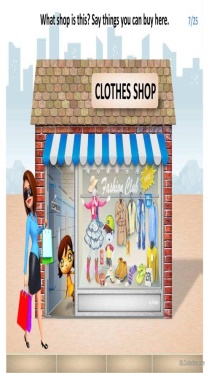
Vocabulary: shops |
||
Learning objectives |
6. 2. 5. 1 understand with support most of the specific information and sections in a long conversation on general and academic topics; 6. 3. 2. 1 asking simple questions to get information on general topics; |
||
Lesson objectives (assessment criteria) (Негіздеме: Мемлекет басшысы Қ.Тоқаевтың Ұлттық құрылтайдың ІІ,ІІІ, ІV отырыстарында берген тапсырмасы, ҚР Оқу-ағарту министрлігінің №123 бұйрығы) |
Learners will be able to: - present shops - revise/practise prepositions of place
Instilling values of the program “Birtutas tarbiye” being Adal Azamat for Month March “Independence and patriotism” Quote of the week 4: “A nation without patriotism is like a body without a soul.”/ 4-апта дәйек сөз/ |
||
Stages/ Time |
Teachers actions |
Students actions |
Assessment |
Resources |
Beginning 5 min |
Greeting. Asking dates and weather Warm up: Teacher asks students: Do you live in a town or in the country? Ask: What can you find in a town? Try to elicit some words for places in a town, e.g. shops, cinema
Teacher tells values of this month. The value of creativity and innovation. Personal safety, life safety: - Risk recognition: being able to distinguish between threats such as bullying, drugs, violence, and fraud; - Making conscious decisions: avoiding actions that are harmful to one's life and health; |
Learners read the given sentences on the board and guess the topic and share with their ideas.
|
Teacher controles the process, gives feedback. The teacher to assess learners for their ability. “Good job! Well done!” Formative Assessment
|
Assessment sheet Kazakh yurt
|
Middle 15 min |
Ex: 1 P:87 Teacher draw Ss' attention to the street map and the names of the shops in it. Play the recording. Ss listen and repeat chorally eat chora or individually. Ask various Ss to give the L1 equivalents. (Ss' own answers) Elicit what sort of things we can buy/do in each shop and then ask various Ss around the class to say one thing for each shop. Encourage Ss to say different things and continue until all ideas have been exhausted. Differentiation: The teacher provides L1 equivalents and simple prompts (e.g., You can buy bread in the bakery).
|
Students listen and repeat. Answer the question. Name one thing you can buy/do in each shop. Answers: You can buy bread at a bakery. You can buy flowers at a florist's. You can buy stamps at a post office. You can buy foreign currency at a bank. You can buy trousers at a clothes shop. You can buy football shoes at a sports shop. You can buy glasses at an optician's. You can buy books at a bookshop. You can buy magazines at a newsagent's. You can buy musical instruments at a music shop. You can buy food at a supermarket. You can buy a (gold) ring at a jeweller's. |
Descriptor: A learner - listens and repeat - answers the question Point-5
Well done |
Pictures
|
20 min |
Ex: 2 P: 87 Teacher revise prepositions of place with Ss and explain/ elicit the meanings of the ones presented through translation into Ss' L1 or by demonstrating them with objects in the classroom. Explain the task and read out the example. Then, Ss ask and answer in pairs. Monitor the activity around the class and then ask some pairs to ask and answer in front of the class. Differentiation: Provide a visual support sheet with pictures of prepositions of place (in, on, under, next to, behind, between, etc.)
Functional literacy Choose the correct shop Read the situation and choose the correct shop.
|
Students use these prepositions to ask for and give directions, as in the example. Answers: A: Excuse me. Where is the clothes shop? B: It's on Apple Street next to the jeweller's. A: Excuse me. Where is the optician's? B: It's on Milton Street in front of the sports shop. A: Excuse me. Where is the newsagent's? B: It's on Apple Street behind the music shop. A: Excuse me. Where is the music shop? B: It's on Apple Street between the supermarket and the newsagent's. Excuse me. Where's the bank? B: It's on AFT Harper Street opposite the jeweller's. etc . |
Descriptor: A learner - completes the sentences - uses these prepositions Point -5
Excellent
Total points 10 |
|
End 5 min |
Learners provide feedback on what they have learned at the lesson and draw it on the face of students prototype. Ex: Home task: |
Ss evaluate each other and encourage classmate with phrases like: Well done! Brilliant! Good job! I like it! |
Poster |
|

Short term plan
Unit: 8 Our neighbourhood
|
lesson 80 |
||
School |
|
||
Teacher name |
|
||
Date: |
|
||
Grade: 6 |
Number present: |
absent: |
|
Lesson title |
Reading: the Twins cities |
||
Learning objectives |
6. 4. 5. 1 identify the main idea from the context within some familiar general and reading topics, including long texts; 6.5.3.1 write with some support about personal feelings and opinions on a limited range of familiar general and curricular topics; |
||
Lesson objectives (assessment criteria) (Негіздеме: Мемлекет басшысы Қ.Тоқаевтың Ұлттық құрылтайдың ІІ,ІІІ, ІV отырыстарында берген тапсырмасы, ҚР Оқу-ағарту министрлігінің №123 бұйрығы)
|
Learners will be able to: - predict the content of the text - read for specific information - consolidate new vocabulary Instilling values of the program “Birtutas tarbiye” being Adal Azamat for Month April “Labor and Professional qualifIictions month” Quote of the week 1: Work, joy, laziness - inseparable suffering (Abai)/ 1-апта дәйек сөз/ |
||
Stages/ Time |
Teachers actions |
Students actions |
Assessment |
Resources |
Beginning 5 min |
Greeting. Asking dates and weather Warm up: Teacher asks students to look at the photo on page 20 and the title of the text. Ask students to try to guess where this city is, but do not tell them whether they are right or not. Elicit some ideas and write them on the board. Pre-teach the words floor (a building with three floors), gym and lake. Teacher tells values of this month. The value of creativity and innovation. Understanding the importance of health: - Understanding the need for a healthy lifestyle (sports, proper nutrition, rest); - Avoid harmful habits (smoking, alcohol, drugs); |
Learners read the given sentences on the board and guess the topic and share with their ideas.
|
Teacher controles the process, gives feedback. The teacher to assess learners for their ability. “Good job! Well done!” Formative Assessment
|
Assessment sheet Kazakh yurt
|
Middle 10 min |
Ex: 1 P: 88 Teacher direct Ss' attention to the pictures and the title and allow them one minute to read the introduction. Elicit Ss' guesses in answer to the questions in the rubric. Play the recording. Ss listen and follow the text in their books and check their guesses. Differentiation: Allow students to work in pairs to discuss their predictions before sharing with the class
|
Students look at the pictures and read the title and the introduction. Answer the question. Discuss in pairs. Answers: look at the pictures and read the title and the introduction. Answer the question. Discuss in pairs.
|
Descriptor: A learner -discuss the pictures - answer the question Point-3
Well done |
|
13 min |
Ex: 2a P: 88 Teacher allow Ss some time to read the text and mark the statements. Ask Ss to use the Word List to look up the meanings of the words in the Check these words box. Check Ss' answers. As an extension Ss can correct the false statements. Differentiation: Provide guiding questions and encourage them to use the Word List to check unfamiliar vocabulary.
|
Students mark the statements. Answers: 1 F It is a small city in the USA. 2T 3T 4 DS ST 6 F Thousands of tourists visit every summer. 7F Restaurants serve local and international dishes. 8 F The |
Descriptor: A learner - read the text - write true or false Point -4
Excellent |
|
12 min |
Ex: 2 b P: 88 Teacher explain the task. Give Ss time to complete it, then check Ss' answers Differentiation: Learners will be supported by teacher and by helpers from his class. |
Students fill the gaps Answers: 1 tree-lined 2 clothes 3 local 4 cosy 5 cosmopolitan 6 ancient
|
Descriptor: A learner - complete the sentences -fill the gaps Point -3
Excellent Total points 10 |
Pictures
|
End 5 min |
Learners provide feedback on what they have learned at the lesson and draw it on the face of students prototype. Ex: Home task: |
Ss evaluate each other and encourage classmate with phrases like: Well done! Brilliant! Good job! I like it! |
Poster |
|
Short term plan
Unit: 8 Our neighbourhood
|
lesson 81 |
||
School |
|
||
Teacher name |
|
||
Date: |
|
||
Grade: 6 |
Number present: |
absent: |
|
Lesson title |
Vocabulary: places in a city |
||
Learning objectives |
6. 2. 5. 1 understand with support most of the specific information and sections in a long conversation on general and academic topics; 6. 3. 2. 1 asking simple questions to get information on general topics; |
||
Lesson objectives (assessment criteria) (Негіздеме: Мемлекет басшысы Қ.Тоқаевтың Ұлттық құрылтайдың ІІ,ІІІ, ІV отырыстарында берген тапсырмасы, ҚР Оқу-ағарту министрлігінің №123 бұйрығы) |
Learners will be able to: - read for gist - listen for specific information Instilling values of the program “Birtutas tarbiye” being Adal Azamat for Month April “Labor and Professional qualifIictions month” Quote of the week 1: Work, joy, laziness - inseparable suffering (Abai)/ 1-апта дәйек сөз/ |
||
Stages/ Time |
Teachers actions |
Students actions |
Assessment |
Resources |
Beginning 5 min |
Greeting. Asking dates and weather Warm up: Teacher tell students to imagine they are visiting a new town or city. Tell them that they need to find out whether there is a cinema in the town. Elicit the question they would ask, and write it on the board: Is there a cinema in this town? Teacher tells values of this month. The value of creativity and innovation. Understand responsibility for one's own life: - Demonstrate a sense of responsibility for one's own life and health; - To show conscious responsibility for one's actions and life choices. |
Learners read the given sentences on the board and guess the topic and share with their ideas.
|
Teacher controles the process, gives feedback. The teacher to assess learners for their ability. “Good job! Well done!” Formative Assessment
|
Assessment sheet Kazakh yurt
|
Middle 10 min |
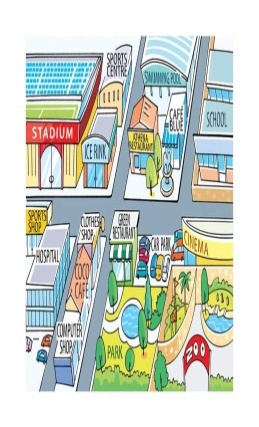
Ex: 3 P: 89 Teacher sks Ss read the signs and match them to the places they can be seen. Check Ss' answers. Ask Ss to say which words helped them decide Differentiation: Allow students to work in pairs and underline key words in the signs that help them choose the correct place
|
Students match the places to the sings. Answers: 1 C 2 A 3 D 4 E 5 B
|
Descriptor: A learner - reads the signs - matches the places Point-3
Well done |
|
10 min |
Ex: 4 P: 89 Teacher explain the task and allow Ss some time to read the sentences and match them to the shops. Check Ss' answers. Differentiation: Provide a list of shop names with pictures or translations in L1.
|
Students read the sentences and match them to the shops. Answers: 1 g 2 f 3 d 4 c 5 h 6 e 7 a 8 b
|
Descriptor: A learner - reads the sentences - matches the shops Point -3
Excellent |
|
7 min |
Ex: 5 P: 89 Teacher explain the task. Ask Ss to identify the places in the photographs. Play the recording. Ss listen and complete the task. Check Ss' answers. Differentiation: Learners will be supported by teacher and by helpers from his class. |
Students name the places in the pictures Answers: A butcher's B clothes shop C chemist's |
Descriptor: A learner -discuss the pictures - name the places Point -2
|
|
8 min |
Ex: 6 P: 89 Teacher explain the task and allow Ss some time to think of DR another shop and what they will say. Ss then act out their dialogues in closed pairs. Monitor the activity around the class and then ask some pairs to act out their dialogues in front of the class. Differentiation: Learners will receive support from the teacher and classmates who assist them Functional literacy Choose the correct place
You
want to watch a movie. Where do you go?
You
want to borrow a book. Where do you go? You
want to send a letter. Where do you go? |
Students work in pairs, act out a similar dialogue for another shop. Answers: A: How can I help you? B: Do you have these shoes in a size 6? A: Yes, here you are |
Descriptor: A learner -read the dialogue - act out in closed pairs Point -2
Well done Total points-10 |
|
End 5 min |
Learners provide feedback on what they have learned at the lesson and draw it on the face of students prototype. Ex: Home task: |
Ss evaluate each other and encourage classmate with phrases like: Well done! Brilliant! Good job! I like it! |
Poster |
|
Short term plan
Unit: 8 Our neighbourhood
|
lesson 82 |
||
School |
|
||
Teacher name |
|
||
Date: |
|
||
Grade: 6 |
Number present: |
absent: |
|
Lesson title |
Use of English; a / an some / any |
||
Learning objectives |
6. 5. 6. 1 logically combine sentences into paragraphs with little support using basic connectives on various familiar topics; 6. 6. 6. 1 use of basic participle, referential and numerical pronouns someone somebody, everybody, no-one on many general familiar and educational topics; |
||
Lesson objectives (assessment criteria) (Негіздеме: Мемлекет басшысы Қ.Тоқаевтың Ұлттық құрылтайдың ІІ,ІІІ, ІV отырыстарында берген тапсырмасы, ҚР Оқу-ағарту министрлігінің №123 бұйрығы) |
Learners will be able to: - present a/an, and some/any/every/no and their compounds -practise a/an and some/any/no -practise some/every/any and their compounds
Instilling values of the program “Birtutas tarbiye” being Adal Azamat for Month April “Labor and Professional qualifIictions month” Quote of the week 2: “Happiness comes to those who work hard” - Leonardo da Vinci/ 2-апта дәйек сөз/ |
||
Stages/ Time |
Teachers actions |
Students actions |
Assessment |
Resources |
Beginning 5 min |
Greeting. Asking dates and weather Warm up: Teacher write the heading My town on the board. Ask students to describe their town. Elicit some adjectives, for example big, small, nice, and write them on the board. Teacher tells values of this month. The value of unity and solidarity. Respect and mutual respect: - Respect for the rights and individuality of each person; - Not to have a negative impact on others with one's actions; |
Learners read the given sentences on the board and guess the topic and share with their ideas.
|
The teacher to assess learners for their ability. “Good job! Well done!” Formative Assessment
|
Assessment sheet Kazakh yurt
|
Middle 7 min |
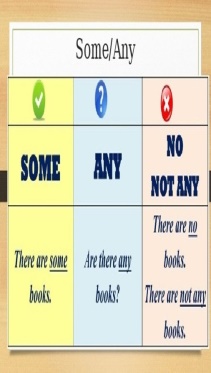
Ex: 1 P:90 Teacher asks Ss go through the table with Ss and elicit the L1 equivalents for the examples Differentiation: The teacher can model pronunciation and meaning and provide additional explanations if needed. |
Students read the table. Say the examples in your language. Answers: Student’s own answer
|
Descriptor: A learner - reads the table - says the examples in L1 Point-2
|
|
10 min |
Ex: 2 P:90 Teacher explain the task. Ss do the task in closed
|
Students use some, every any and their compound to complete the postcard. Answers: A 1 some 2 a 3 any B 1 a 2 some 3 an C 1 any 2 any 3 some D 1 no 2 some 3 any |
Descriptor: A learner - complete the postcard - use some, a and any Point -3
Excellent |
|
10 min |
Ex: 3P:90 Teacher explain the task. Ss complete the task. Check S answers. Differentiation: Learners will be supported by teacher and by helpers from his class. |
Students choose the correct word. Answers: 1 Everything 2 something 3 every 4 everyone
|
Descriptor: A leaarner - complete the sentences - choose the correct word Point -3
Excellent |
|
8 min |
Ex: 4 P:90 Teacher present the passive. Explain that we use the passive to talk about an action when we don't know who performed it or when it is obvious who performed it from the context or when the action is more important than the person who performed it. Read out the theory box and explain/elicit that we form the passive tense with the verb to be + the past participle. Differentiation: Learners will receive support from the teacher and classmates who assist them |
Students read the theory. Answer the question. Answers: Student’s own answer |
Descriptor: - read the theory - answer the question Point -2
Well done Total points-10 |
|
End 5 min |
Learners provide feedback on what they have learned at the lesson and draw it on the face of students prototype. Ex: Home task: |
Ss evaluate each other and encourage classmate with phrases like: Well done! Brilliant! Good job! I like it!
|
Poster |
|
Short term plan
Unit: 8 Our neighbourhood
|
lesson 83 |
||
School |
|
||
Teacher name |
|
||
Date: |
|
||
Grade: 6 |
Number present: |
absent: |
|
Lesson title |
Use of English: Present or past continuous |
||
Learning objectives |
6.5.6.1 link, with minimal support, sentences into coherent paragraphs using basic connectors on a growing range of familiar general topics; 6. 6. 9. 1 correct use of active and some passive forms of simple present and past tenses on many familiar general and academic topics; |
||
Lesson objectives (assessment criteria) (Негіздеме: Мемлекет басшысы Қ.Тоқаевтың Ұлттық құрылтайдың ІІ,ІІІ, ІV отырыстарында берген тапсырмасы, ҚР Оқу-ағарту министрлігінің №123 бұйрығы) |
Learners will be able to: - practise the passive -practise the passive with an agent - practise changing active sentences to passive sentences Instilling values of the program “Birtutas tarbiye” being Adal Azamat for Month April “Labor and Professional qualifIictions month” Quote of the week 2: “Happiness comes to those who work hard” - Leonardo da Vinci/ 2-апта дәйек сөз/ |
||
Stages/ Time |
Teachers actions |
Students actions |
Assessment |
Resources |
Beginning 5 min |
Greeting. Asking dates and weather Warm up: Teacher write on the board the names of two cities, for example Brighton and Tokyo. Ask students what they think the differences are between the two cites. Elicit some examples of comparative adjectives and write them on the board, for example: Brighton is smaller than Tokyo. Tokyo is more modern Teacher tells values of this month. The value of unity and solidarity. Openness in communication: - Express your opinion confidently but politely; - Avoiding ulterior motives or lies; |
Learners read the given sentences on the board and guess the topic and share with their ideas.
|
Teacher controles the process, gives feedback. The teacher to assess learners for their ability. “Good job! Well done!” Formative Assessment
|
Assessment sheet Kazakh yurt
|
Middle 7 min |
Ex: 5 P:91 Teacher explain the task and give Ss time to complete it. Check Ss' answers around the class. . Differentiation: Provide a short reminder of the verb “to be” forms on the board (is, are, was, were) with examples.
|
Students fill the gaps: is, are, was or were Answers: 1 is 2 were 3 were 4 was 5 are
|
Descriptor: A learner - complete the sentences Point-2
Well done |
|
8 min |
Ex: 6 P:91 Teacher explain the task and give Ss time to complete it. Check Ss' answers around the class. Remind Ss that if the agent is a person we use by and if the agent is an object we use with. Differentiation: Allow students to work in pairs and identify the agent in each sentence before choosing the correct preposition |
Students fill in by or with Answers: 1 by 2 with 3 with 4 by 5 by 6 by
|
Descriptor: A learner - complete the sentences - fill the gaps Point -2
Excellent |
|
10 min |
Ex: 7 P:91 Teacher explain that to change an active sentence to a passive sentence the object of the active verb becomes the subject of the passive verb and the active form changes to a passive form while the subject becomes the agent. Do the first item with the class as an example and the give Ss time to complete the task alone. Check Ss' answers Differentiation: Learners will be supported by teacher and by helpers from his class. |
Students rewrite the sentences in the present simple passive. Answers: 1 Astana is visited by millions of tourists every year. 2 The Saryarka Velodrome is used mainly for track cycling events. 3 The President's Cup tennis tournament is held at the Daulet National Tennis Centre every year. 4 30,000 spectators are held by the Astana Arena stadium
|
Descriptor: A learner - rewrite the sentences - use present simple passive Point -3
Excellent |
|
10 min |
Ex: 8 P:91 Teacher explain the task and give Ss time to complete it and then check their answers around the class. Differentiation: Provide additional guidance if necessary. |
Students put the verb in bracket into the correct form of the present or past continuous. Answers: 1 The Astana Arena was designed by Populous and Tabanlioglu Architects. 2 The masterplan of Astana was made by Kisho Kurokawa. 3 Astana's new university was opened in 2010. 4 Khan Satyr was named one of the world's top 10 eco- buildings by Forbes style magazine |
Descriptor: A learner - complete the table - write questions with comparative adjectives Point -3
Well done
|
|
End 5 min |
Learners provide feedback on what they have learned at the lesson and draw it on the face of students prototype. Ex: Home task: |
Ss evaluate each other and encourage classmate with phrases like: Well done! Brilliant! Good job! I like it!
|
Poster |
|
Short term plan
Unit: 8 Our neighbourhood
|
lesson 84 |
||
School |
|
||
Teacher name |
|
||
Date: |
|
||
Grade: 6 |
Number present: |
absent: |
|
Lesson title |
Reading: Buildings above the clouds |
||
Learning objectives |
6.4.7.1 recognise typical features at word, sentence and text level in a range of written genres 6. 5. 1. 1 planning, writing, correcting and checking text-level works on various general and academic topics with the support of the teacher; |
||
Lesson objectives (assessment criteria) (Негіздеме: Мемлекет басшысы Қ.Тоқаевтың Ұлттық құрылтайдың ІІ,ІІІ, ІV отырыстарында берген тапсырмасы, ҚР Оқу-ағарту министрлігінің №123 бұйрығы) |
Learners will be able to: - introduce the topic - predict the content of the text. - read for specific information. Instilling values of the program “Birtutas tarbiye” being Adal Azamat for Month April “Labor and Professional qualifIictions month” Quote of the week 2: “Happiness comes to those who work hard” - Leonardo da Vinci/ 2-апта дәйек сөз/ |
||
Stages/ Time |
Teachers actions |
Students actions |
Assessment |
Resources |
Beginning 5 min |
Greeting. Asking dates and weather Warm up: Teacher asks students how often they use trains, and how often they use coaches. Ask when they last travelled by one of these methods. Was it cheap or expensive? Did they travel a long way? Teacher tells values of this month. The value of unity and solidarity. Resolve disputes peacefully: - Control emotions during an argument and avoid hasty actions; - Solving problems through non-violent, civilized language; |
Learners read the given sentences on the board and guess the topic and share with their ideas.
|
Teacher controles the process, gives feedback. The teacher to assess learners for their ability. “Good job! Well done!” Formative Assessment
|
Assessment sheet Kazakh dombra
|
Middle 10 min |
Ex: 1 P:92 Teacher play the recording and tell Ss to imagine they are in one of the tall buildings in the pictures. Ask various Ss around the class to say how they feel Differentiation: The teacher can model a sentence: “I feel ___ because ___.” |
Students listen to music. Answer the question. Answers: I can see other tall buildings below me, but all around I can see only the sky and some cloud I feel scared to be so high up./I feel excited. It's like I'm on top of the world
|
Descriptor: A learner -discuss the tall buildings in the pictures -answer the question Point-3
Well done |
|
12 min |
Ex: 2 P:92 Teacher elicit what, if anything, Ss know about skyscrapers, and where the term came from. Play the recording. Ss listen and follow the text in their books and find out Differentiation: Allow students to share ideas in pairs before answering |
Students listen and complete the dialogue Answers: Skyscrapers are tall buildings made from steel. The word 'skyscraper' comes from the name sailors gave to the tallest mast on a ship.
|
Descriptor: A learner -read the dialogue - answer the question Point -3
Excellent |
|
13 min |
Ex: 3 P:92 Teacher asks Ss to use the Word List to look up the meanings of the words in the Check these words box, then allow Ss some time to read the text and answer the questions. Read out the Did you know? box. Check Ss' answers around the class. Differentiation: Learners will be supported by teacher and by helpers from his class.
Functional literacy True or False
|
Students read the text answer the question Answers: 1 Bricks weren't strong enough and they didn't have steel or elevators. 2 From the 1880s. 3 People could build tall buildings without worrying how to get to the top. 4 They needed living space and offices for business. 5 Because many ex-sailors worked on them and it is their word for the tallest mast on a ship. 6 One floor a day. 7 You can find shops, offices, apartments and a hotel |
Descriptor: A learner -read the text - answer the question Point -4
Excellent
Total points 10 |
|
End 5 min |
Learners provide feedback on what they have learned at the lesson and draw it on the face of students prototype. Ex: Home task: |
Ss evaluate each other and encourage classmate with phrases like: Well done! Brilliant! Good job! I like it!
|
Poster |
|
Short term plan
Unit: 8 Our neighbourhood
|
lesson 85 |
||
School |
|
||
Teacher name |
|
||
Date: |
|
||
Grade: 6 |
Number present: |
absent: |
|
Lesson title |
Listening. Expressing likes dislikes |
||
Learning objectives |
6. 2. 5. 1 understand with support most of the specific information and sections in a long conversation on general and academic topics; 6.3.1.1 provide basic information about themselves and others at discourse level on a range of general topics; |
||
Lesson objectives (assessment criteria) (Негіздеме: Мемлекет басшысы Қ.Тоқаевтың Ұлттық құрылтайдың ІІ,ІІІ, ІV отырыстарында берген тапсырмасы, ҚР Оқу-ағарту министрлігінің №123 бұйрығы) |
Learners will be able to: - Study a model text. - Learn key phrases for describing a town or city. - Learn about the position of adjectives. - Write about a town you like Instilling values of the program “Birtutas tarbiye” being Adal Azamat for Month April “Labor and Professional qualifIictions month” Quote of the week 3: “There are no promising professions, there are only promising specialists.” / 3-апта дәйек сөз/ |
||
Stages/ Time |
Teachers actions |
Students actions |
Assessment |
Resources |
Beginning 5 min |
Greeting. Asking dates and weather Warm up: Teacher asks students : Do you like your town? Why? What’s your favourite place in the town? Why? Elicit some ideas from students and then ask: What’s your favourite town? Why? Teacher tells values of this month. The value of hard work and professional qualifications. Responsibility for work - A sense of full responsibility for the results of actions; - Maintain order and consistency in performing tasks; |
Learners read the given sentences on the board and guess the topic and share with their ideas.
|
Teacher controles the process, gives feedback. The teacher to assess learners for their ability. “Good job! Well done!” Formative Assessment
|
Assessment sheet Kazakh dombra
|
Middle 7 min |
Ex: 4 P:93 Teacher explain the task and give Ss time to complete the gaps, then check Ss' answers. Differentiation: Allow students to work in pairs |
Students fill the gaps. Answers: 1 elevators 2 steel 3 living 4 skyscraper 5 skyline
|
Descriptor: A learner - completes the gaps - uses the words Point-2
Well done |
|
8 min |
Ex: 5 P:93 Teacher explain the task and play the recording. Ss listen and choose the correct answers. Check Ss' answers around the class. Differentiation: Allow students to read the questions and answer options before listening.
|
Students listen to Jane Sam talking in a department store. For questions choose the correct item. Answers: 1 baseball cap 2 £15 3 electrical department 4 3030 BC 5 in an hour |
Descriptor: A learner - listen to Jane Sam talking - choose the correct item Point -2
Excellent |
|
10 min |
Ex: 6 P:93 Teacher asks Ss read the Note box and the examples. Elicit further examples from Ss. Go through the phrases and the activities in the boxes and read out the examples. Give Ss some time to complete the task. Check Ss' answers around the class Differentiation: Learners will be supported by teacher and by helpers from his class. |
Students use the phrases in the list to make five sentences about yourself. Answers: I love playing football. I hate eating out. I want to go to the pool. I enjoy going to the cinema. I like buying books. I don't like visiting the theme park. I don't mind going shopping |
Descriptor: A learner -read the examples - the examples Point -3
Excellent |
|
10 min |
Ex: 7 P:93 Teacher explain the task and ask Ss to work in small groups and look on the Internet or in other resources for photos and videos of the skyscrapers in the text. Give Ss some time to prepare a presentation or write a fact about each one and present them to the class. Differentiation: Lees motivated learner work in pairs to compare answers before checking with the class.
Functional literacy Complete the sentences
|
Students find videos/photos about the building in your country Answers: The Empire State Building is located on Fifth Avenue. It is 443 metres tall. The Triumph of Astana is 142 metres tall and was designed by SIASK |
Descriptor: A learner - find videos /photos - write a fact about each one Point -3
Well done Total points 10 |
|
End 5 min |
Learners provide feedback on what they have learned at the lesson and draw it on the face of students prototype. Ex: Home task: |
Ss evaluate each other and encourage classmate with phrases like: Well done! Brilliant! Good job! I like it! |
Poster |
|
Short term plan
Unit: 8 Our neighbourhood
|
lesson 86 |
||
School |
|
||
Teacher name |
|
||
Date: |
|
||
Grade: 6 |
Number present: |
absent: |
|
Lesson title |
Everyday English: Asking for / giving directions |
||
Learning objectives |
6. 2. 5. 1 understand with support most of the specific information and sections in a long conversation on general and academic topics 6. 3. 1. 1 providing basic information about oneself and others at the discussion level within the framework of general topics; |
||
Lesson objectives (assessment criteria) (Негіздеме: Мемлекет басшысы Қ.Тоқаевтың Ұлттық құрылтайдың ІІ,ІІІ, ІV отырыстарында берген тапсырмасы, ҚР Оқу-ағарту министрлігінің №123 бұйрығы) |
Learners will be able to: - present situational language and practise pronunciation and intonation - identify the context of a dialogue, listen and read for specific
Instilling values of the program “Birtutas tarbiye” being Adal Azamat for Month April “Labor and Professional qualifIictions month” Quote of the week 3: “There are no promising professions, there are only promising specialists.” / 3-апта дәйек сөз/ |
||
Stages/ Time |
Teachers actions |
Students actions |
Assessment |
Resources |
Beginning 5 min |
Greeting. Asking dates and weather Warm up: Teacher asks students work in pairs, students think of a park they like and write a list of the things they like about it, for example beautiful trees, café, flowers, etc. Get feedback from the class by asking a few pairs to read their lists. Go through any words students use that other members of the class might have difficulty with. Teacher tells values of this month. The value of hard work and professional qualifications. Self-development and professional growth: - Striving to acquire new professional knowledge and skills; - Effective use of experience and knowledge in the workplace; |
Learners read the given sentences on the board and guess the topic and share with their ideas.
|
Teacher controles the process, gives feedback. The teacher to assess learners for their ability. “Good job! Well done!” Formative Assessment
|
s
Assessment sheet Kazakh dombra
|
Middle112 min |
Ex: 1 P: 94 Teacher play the recording with pauses for Ss to repeat chorally or individually. Repeat if necessary, then elicit which syllables are stressed.
|
Students listen and repeat. Find the stressed syllables. Answers: Excuse me Could you tell me how to get to the hospital? I'm sorry, what road was that? On the right, did you say? Thank you very much
|
Descriptor: A learner - repeat chorally or individually -find the stressed syllables Point-3
|
|
10 min |
Ex: 2 P: 94 Teacher explain the task and read out the question. Play the recording. Ss listen and follow the dialogue in their books and find out the answer. Differentiation Learners will be supported by teacher will support students each other in difficult moments. |
Students read the sentences in ex 1 appear in the dialogue below. Answer the question. Answers: Kairat wants to go to the hospital.
|
Descriptor: A learner - read the sentences - answer the question Point -3
Excellent |
|
13 min |
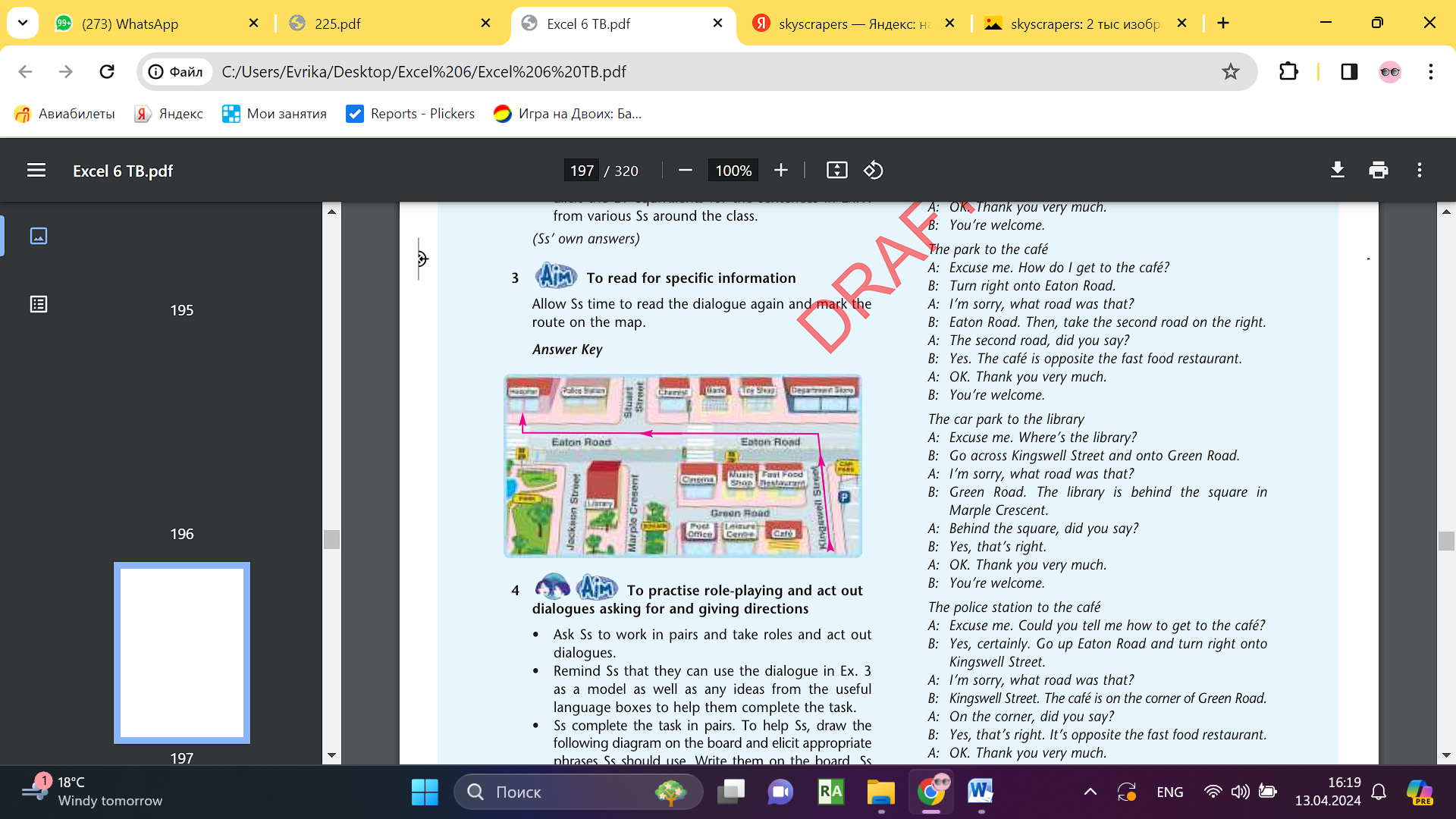
Ex: 3 P: 94 Teacher allow Ss time to read the dialogue again and mark the route on the map. Differentiation: Learners will be supported by teacher and by helpers from his class.
Functional literacy Choose the correct answer
|
Students read the dialogue. Show the route on the map Answers:
|
Descriptor: A learner - read the dialogue - mark the route on the map Point -4
Excellent Total points 10 |
|
End 5 min |
Learners provide feedback on what they have learned at the lesson and draw it on the face of students prototype. Ex: Home task: |
Ss evaluate each other and encourage classmate with phrases like: Well done! Brilliant! Good job! I like it!
|
Poster |
|
Short term plan
Unit: 8 Our neighbourhood
|
lesson 87 |
||
School |
|
||
Teacher name |
|
||
Date: |
|
||
Grade: 6 |
Number present: |
absent: |
|
Lesson title |
Across cultures: Markets around the world |
||
Learning objectives |
6.4.7.1 recognise typical features at word, sentence and text level in a range of written genres 6.6.1.1 begin to use basic abstract nouns and compound nouns and noun phrases describing times and location on a growing range of familiar general and curricular topics; |
||
Lesson objectives (assessment criteria) (Негіздеме: Мемлекет басшысы Қ.Тоқаевтың Ұлттық құрылтайдың ІІ,ІІІ, ІV отырыстарында берген тапсырмасы, ҚР Оқу-ағарту министрлігінің №123 бұйрығы) |
Learners will be able to: - describe pictures and predict the content of a text - consolidate new vocabulary - personalise the topic and write about a local market Instilling values of the program “Birtutas tarbiye” being Adal Azamat for Month April “Labor and Professional qualifIictions month” Quote of the week 3: “There are no promising professions, there are only promising specialists.” / 3-апта дәйек сөз/ |
||
Stages/ Time |
Teachers actions |
Students actions |
Assessment |
Resources |
Beginning 5 min |
Greeting. Asking dates and weather Warm up: Teacher writes the word map on the board and elicit the meaning. Ask students what information we can find on maps, and elicit some ideas. Ask students when they use maps. Tell students they are going to practise reading maps in English Teacher tells values of this month. The value of hard work and professional qualifications. Discipline and organizational skills: - Effective planning of work schedules and tasks; - Complete difficult or complex tasks in stages; |
Learners read the given sentences on the board and guess the topic and share with their ideas.
|
Teacher controles the process, gives feedback. The teacher to assess learners for their ability. “Good job! Well done!” Formative Assessment
|
Assessment sheet Kazakh dombra
|
Middle 10 min |
Ex: 1 P:95 Teacher direct Ss' attention to the pictures and ask various Ss around the class to describe them. Elicit how many Ss have been to a street market. Read out the words in the list. Explain/Elicit the meanings of any unknown words and then elicit which of them Ss think Differentiation: Provide picture clues and simple explanations for the words in the list |
Students describe the markets in the picture. Listen, read and check Answers: The market at the top of the page is indoors. There are two levels and lots of stalls. I can see fruit and vegetables downstairs and it looks like a café upstairs. I think you can find vegetables, meat and fish here. The market at the bottom of the page has a lot of nuts and dried fruit. It seems quite exotic. I think it is indoors too. I think you can find tea, nuts, dried fruit and chocolate here |
Descriptor: A learner - describe the markets in the picture - answer the question Point-3
Well done |
|
8 min |
Ex: 2 P: 95 Teacher asks Ss read out the example. Allow Ss some time to fill the gaps and make sentences. DRA Ask Ss to use the Word List to look up the meanings of the words in the Check these words box, then check Ss' answers. Differentiation: Learners will be supported by teacher and by helpers from his class. |
Students use the phrases to make sentences about the markets in the texts Answers: 2 local 3 meeting 4 selection
|
Descriptor: A learner - read the examples - fill the gap Point -2
Excellent |
|
10 min |
Ex: 3 P: 95 Teacher explain the task. Refer Ss to the Internet, encyclopaedias or other reference books to find information about a local market and complete the task. Ask various Ss to present their market to the class Differentiation: Provide guiding questions or a simple template (e.g., Where is the market? What can people buy there? When is it open?).
|
Students think of a popular markets or shopping centre in your town/city. Collect information, then write a paragraph about it. Answers: name: Artem Market where it is: in the middle of Astana what it is like: covered market, two levels what you can buy there: downstairs - fresh fruit and vegetables, dried fruit and nuts, meat, fish, homemade sauces; upstairs clothes, toiletries, furniture, nail bars, barber's shops, souvenirs |
Descriptor: A learner - find information about a local market - write a paragraph about it. Point -3
Excellent |
|
7 min |
Ex: 4 P: 95 Teacher explain that in multisyllabic words sometimes more than one syllable is stressed. Play the recording. Ss listen and repeat chorally or individually. Pay special attention to Ss' pronunciation and intonation and correct as necessary. Elicit how
Functional literacy Ask students:
|
Students list the three syllables words as in the box. Answers: balconies – 3 tropical - 3 tradition – 3 expensive - 3 souvenirs – 3 selection - 3 vegetables – 3 together - 3 popular – 3 exciting - 3 |
Descriptor: A learner - listen and repea - identify the three syllables words Point -2 Well done Total point 10 |
|
End 5 min |
Learners provide feedback on what they have learned at the lesson and draw it on the face of students prototype. Ex: Home task: |
Ss evaluate each other and encourage classmate with phrases like: Well done! Brilliant! Good job! I like it! |
Poster |
|
Short term plan
Unit: 8 Our neighbourhood
|
lesson 88 |
||
School |
|
||
Teacher name |
|
||
Date: |
|
||
Grade: 6 |
Number present: |
absent: |
|
Lesson title |
Across Curriculum, Citizenship |
||
Learning objectives |
6. 4. 5. 1 identify the main idea from the context within some familiar general and reading topics, including long texts; 6.5.6.1 link, with some support, sentences into a coherent paragraph using basic connectors on a limited range of familiar general topics |
||
Lesson objectives (assessment criteria) (Негіздеме: Мемлекет басшысы Қ.Тоқаевтың Ұлттық құрылтайдың ІІ,ІІІ, ІV отырыстарында берген тапсырмасы, ҚР Оқу-ағарту министрлігінің №123 бұйрығы) |
Learners will be able to: - present new vocabulary - introduce and discuss the topic - consolidate information in a text Instilling values of the program “Birtutas tarbiye” being Adal Azamat for Month April “Labor and Professional qualifIictions month” Quote of the week 4:
“By
gaining deep knowledge, one will build a profession; 4-апта дәйек сөз/ |
||
Stages/ Time |
Teachers actions |
Students actions |
Assessment |
Resources |
Beginning 5 min |
Greeting. Asking dates and weather Warm up: Teacher writes the word map on the board and elicit the meaning. Ask students what information we can find on maps, and elicit some ideas. Ask students when they use maps. Tell students they are going to practise reading maps in English Teacher tells values of this month. The value of independence and patriotism. Respect, self-respect: - Maintaining personal dignity, not degrading oneself; - To cultivate the ability to treat oneself and others fairly. |
Learners read the given sentences on the board and guess the topic and share with their ideas.
|
Teacher controles the process, gives feedback. The teacher to assess learners for their ability. “Good job! Well done!” Formative Assessment
|
Assessment sheet Kazakh dombra
|
Middle 7 min |
Ex: 1a P:96 Teacher asks Ss read the list of public facilities aloud and explain/elicit their meanings, Elicit which ones Ss' towns/cities have. Then, draw Ss' attention to the pictures and elicit which facilities they show. |
Students read the list of public facilities and say which ones your town/city has. Answers: 1 playground 2 library 3 wildlife reserve/national park 4 swimming pool 5 skate park |
Descriptor: A learner - read the list - complete the sentences Point-2
Well done |
|
8 min |
Ex: 1 b P: 96 Teacher asks various Ss around the class to tell the class what their free-time activities are and which public facilities they use to do them. Differentiation: Learners will be supported by teacher and by helpers from his class. |
Students ask and answer the question. Tell your partner. Answers: I like rollerblading, so I go to the skate park every weekend. I like reading, so I go to the library every week. I like running, so I go to the park every afternoon. etc
|
Descriptor: A learner - ask and answer the question - discuss with your partner Point -2
Excellent |
|
10 min |
Ex: 2 P: 96 Teacher read the rubric aloud and elicit a variety of answers from Ss around the class. Write the two b
|
Students answer the question. In pairs, think of two ways. Answers: Leisure and sport facilities in a town can help to reduce crime such as vandalism and graffiti because young people have a place to go and use their energy positively. They can also help to develop young people's skills and abilities and give them a healthy hobby. |
Descriptor: A learner - read the rubric - answer the question Point -3
Excellent |
|
10 min |
Ex: 3 P: 96 Teacher asks Ss read the rubric aloud and elicit a variety of answers from Ss around the class referring
|
Students write three ways local town councils can improve the local community. Answers: 1 They can encourage people to do sports and create places where they can play. 2 They can use sports centres to create more job opportunities and reduce unemployment. 3 They can use sport to reduce crime |
Descriptor: A learner - read the rubric - write three ways local town Point -3 Well done
Total point 10 |
|
End 5 min |
Learners provide feedback on what they have learned at the lesson and draw it on the face of students prototype. Ex: Home task: |
Ss evaluate each other and encourage classmate with phrases like: Well done! Brilliant! Good job! I like it! |
Poster |
|

Short term plan
Unit: 8 Our neighbourhood
|
lesson 88 |
||
School |
|
||
Teacher name |
|
||
Date: |
|
||
Grade: 6 |
Number present: |
absent: |
|
Lesson title |
Writing: an email about your new house Summative Assessment for Unit 7. |
||
Learning objectives |
6. 4. 5. 1 identify the main idea from the context within some familiar general and reading topics, including long texts; 6.5.6.1 link, with some support, sentences into a coherent paragraph using basic connectors on a limited range of familiar general topics |
||
Lesson objectives (assessment criteria) (Негіздеме: Мемлекет басшысы Қ.Тоқаевтың Ұлттық құрылтайдың ІІ,ІІІ, ІV отырыстарында берген тапсырмасы, ҚР Оқу-ағарту министрлігінің №123 бұйрығы) |
Learners will be able to: - read for cohesion and coherence - brainstorm for ideas and write about your neighbourhood Instilling values of the program “Birtutas tarbiye” being Adal Azamat for Month April “Labor and Professional qualifIictions month” Quote of the week 4:
“By
gaining deep knowledge, one will build a profession; 4-апта дәйек сөз/ |
||
Stages/ Time |
Teachers actions |
Students actions |
Assessment |
Resources |
Beginning 5 min |
Greeting. Asking dates and weather Warm up: Teacher write the word map on the board and elicit the meaning. Ask students what information we can find on maps, and elicit some ideas. Ask students when they use maps. Tell students they are going to practise reading maps in English
Teacher tells values of this month. The value of independence and patriotism. Respect, self-respect: - Maintaining personal dignity, not degrading oneself; - To cultivate the ability to treat oneself and others fairly. |
Learners read the given sentences on the board and guess the topic and share with their ideas.
|
Teacher controles the process, gives feedback. The teacher to assess learners for their ability. “Good job! Well done!” Formative Assessment
|
s
Assessment sheet Kazakh yurt
|
Middle 10 min |
Ex: 1 P:97 Teacher direct Ss' attention to the sentences (A-D) and then ask Ss to use them to fill the gaps (1-4). Check Ss answers. Then ask Ss to use the Word List to look up the meanings of the words Differentiation: Provide less motivated learner help with vocabulary using the Word List.
|
Students read the email and complete the gaps with the sentences in the list. Look at the underlined sentences. Answers: 1 C 2 A 3 D 4 B
|
Descriptor: A learner - read the email - complete the gaps Point-3
Well done |
|
12 min |
Ex: 2 P:97 Teacher asks Ss read the Study Skills box aloud and explain/elicit what brainstorming is (thinking of various ideas related to a theme/topic and writing down whatever comes to mind). Explain the task and allow Ss some time to brainstorm for ideas and complete the sentences. Check Ss' answers around the class. Differentiation: Learners will be supported by teacher and by helpers from his class. |
Students think of your neighbourhood. Brainstorm for ideas. Then complete the sentences below about it. Answers: 1 I live in a flat. 2 My neighbourhood is busy and noisy. 3 It has a great view of the city. 4 There are a lot of shops and cafés nearby. 5 There isn't a cinema in my neighbourhood. 6 The people here are very friendly. 7 I really like my neighbourhood because it is a nice place to live with everything we need nearby |
Descriptor: A learner - read the Study Skills box - complete the sentences Point -3
Excellent |
Stickers
|
13 min |
Ex: 3 P:97 Teacher allow Ss time to complete the task in class. Remind Ss to use their answers to Ex. 2 to help them and the text in Ex. 1 as a model. Ask various Ss to read out their emails to the class. Alternatively, assign the task as HW and check Ss' answers in the next lesson. Differentiation: Allow students to refer to their answers from Ex. 2 and the text in Ex. 1 as a model while writing
|
Students use your answers from ex2 to write an email to your pen- friend about your house and your neighbourhood. Answers: Hi Keith, How are you? Sorry I didn't write earlier, but we were busy moving house. Our new flat is really nice. It's on the 5th floor of a block of flats and it has a great view of the city. The neighbourhood is nice, too. There are a lot of shops and cafés nearby, although there isn't a cinema. I really like the neighbourhood and the people here are really friendly. Well, I've got to go now. Write back soon. Yours, |
Descriptor: A learner - write an email to your pen- friend - write an email to your pen- friend Point -4
Excellent
Total points 10 |
Pictures
|
End 5 min |
Learners provide feedback on what they have learned at the lesson and draw it on the face of students prototype. Ex: Home task: |
Ss evaluate each other and encourage classmate with phrases like: Well done! Brilliant! Good job! I like it!
|
Poster |
|
Short term plan
Unit: 8 Our neighbourhood
|
lesson 89 |
||
School |
|
||
Teacher name |
|
||
Date: |
|
||
Grade: 6 |
Number present: |
absent: |
|
Lesson title |
Edutainment |
||
Learning objectives |
6.5.3.1 write with some support about personal feelings and opinions on a limited range of familiar general and curricular topics; 6.6.13.1 use modal forms including, mustn’t (prohibition), need (necessity), should (for advice) on a range of familiar general and curricular |
||
Lesson objectives (assessment criteria) (Негіздеме: Мемлекет басшысы Қ.Тоқаевтың Ұлттық құрылтайдың ІІ,ІІІ, ІV отырыстарында берген тапсырмасы, ҚР Оқу-ағарту министрлігінің №123 бұйрығы) |
Learners will be able to: - give an opinion on the value of being a good neighbour - discuss the value of being QRE - test knowledge learnt in this module/ to do a quiz Instilling values of the program “Birtutas tarbiye” being Adal Azamat for Month April “Labor and Professional qualifIictions month” Quote of the week 4:
“By
gaining deep knowledge, one will build a profession; 4-апта дәйек сөз/ |
||
Stages/ Time |
Teachers actions |
Students actions |
Assessment |
Resources |
Beginning 5 min |
Greeting. Asking dates and weather Warm up: Teacher asks students: Do you like your town? Why? What’s your favourite place in the town? Why? Elicit some ideas from students and then ask: What’s your favourite town? Why?
Teacher tells values of this month. The value of independence and patriotism. Being able to speak well: - Maintaining polite and cultured language standards; - Avoid using rude and unpleasant words in communication; |
Learners read the given sentences on the board and guess the topic and share with their ideas.
|
Teacher controles the process, gives feedback. The teacher to assess learners for their ability. “Good job! Well done!” Formative Assessment
|
Assessment sheet Kazakh yurt
|
Middle 8 min |
Ex: 1 P: 98 Teacher asks Ss to read the list of sentences about what makes a good neighbour and tick '' the ones that they agree with and put an 'X' next to the ones they disagree with. Check Ss' answers Differentiation: Allow students to discuss their answers in pairs before ticking or marking the statements.
|
Students read and mark the sentences. Answers: 1x 2√ 3√ 4x 5√ 6x 7√ 8√ |
Descriptor: A learner - read the list - complete the sentences Point-2
Well done |
|
10 min |
Ex: 2 P: 98 Teacher give Ss time to use the modals in the list and their answers from Ex. 1 to make sentences. Elicit answers from Ss around the class. Differentiation: Allow students to work in pairs and refer to their answers from Ex. 1 while forming sentences.
|
Students use must/mustn’t or should/shouldn’t to tell the class what makes a good neighbour. Answers: A good neighbour mustn't play loud music at night. A good neighbour should know his/her neighbour's name. A good neighbour should greet his/her neighbour when he/she meets them. A good neighbour shouldn't let his/her pet play freely in the neighbourhood. A good neighbour must clean up after his/her pet. A good neighbour mustn't leave rubbish on the street. A good neighbour should invite neighbours to dinner |
Descriptor: A learner - complete the sentences - use must/ mustn’t or should/ shouldn’t Point -3
Excellent |
Stickers
|
10 min |
Ex: 3 P: 98 Teacher asks Ss to work in small groups and discuss the value of being a good neighbour. Give Ss some time to discuss their ideas and then ask some Ss to tell the class. Differentiation: Learners will be supported by teacher and by helpers from his class.
|
Students answer the question. Discuss in groups. Answers: We need to be good neighbours and help each other because if we do, life will be easier and happier for everyone. If we help one another then we can make our neighbourhood an amazing place to live |
Descriptor: A learner - Discuss in groups - answer the question Point -3
Excellent |
|
7 min |
Ex: 4 P:98 Teacher explain the task. Allow Ss some time to read the questions and mark the statements correctly. Tell Ss they can review the module and find the relevant information to help them if necessary. Check Ss' answers. . |
Students do the quiz. Mark the sentences Answers: 1 F 2 F 3 F 4 F 5 T 6 T
|
Descriptor: A learner - do the quiz Point -2
Well done |
|
End 5 min |
Learners provide feedback on what they have learned at the lesson and draw it on the face of students prototype. Ex: Home task: |
Ss evaluate each other and encourage classmate with phrases like: Well done! Brilliant! Good job! I like it! |
Poster |
|
Short term plan
Unit:9 Transport.
|
lesson 90 |
||
School |
|
||
Teacher name |
|
||
Date: |
|
||
Grade: 6 |
Number present: |
absent: |
|
Lesson title |
Vocabulary: means of transport |
||
Learning objectives |
6. 2. 2. 1 to understand more complex questions about the presentation of personal information with the support of the teacher; 6. 3. 1. 1 providing basic information about oneself and others at the discussion level within the framework of general topics; |
||
Lesson objectives (assessment criteria) (Негіздеме: Мемлекет басшысы Қ.Тоқаевтың Ұлттық құрылтайдың ІІ,ІІІ, ІV отырыстарында берген тапсырмасы, ҚР Оқу-ағарту министрлігінің №123 бұйрығы) |
Learners will be able to: - present new vocabulary - categorise means of transport Instilling values of the program “Birtutas tarbiye” being Adal Azamat for Month April “Labor and Professional qualifIictions month” Quote of the week 4:
“By
gaining deep knowledge, one will build a profession; 4-апта дәйек сөз/ |
||
Stages/ Time |
Teachers actions |
Students actions |
Assessment |
Resources |
Beginning 5 min |
Greeting. Asking dates and weather Warm up: Teacher asks students to think of some famous cities. Write these on the board, and ask them to say which country each city is in Teacher tells values of this month. The value of independence and patriotism. Ability to communicate warmly: - Maintaining personal dignity, not degrading oneself; - Maintain decency and courtesy; |
Learners read the given sentences on the board and guess the topic and share with their ideas.
|
Teacher controles the process, gives feedback. The teacher to assess learners for their ability. “Good job! Well done!” Formative Assessment |
Assessment sheet Kazakh dombr
|
Middle 10 min |
Ex: 1 P: 99 Teacher draw Ss' attention to the pictures. Play the record Ss listen and repeat chorally and/or individually the L1 equivalents. Differentiation Less motivated learner repeat chorally several times before asking for individual repetition.
|
Students listen and repeat. Answers: Students own answers
|
Descriptor: A learner - listen and repeat -answer the question Point-3
Well done |
|
12 min |
Ex: 2 P: 99 Teacher asks Ss to write the headings into their notebooks and then give them time to complete the task and categorise the means of transport under the correct headings. Differentiation Learners will be supported by teacher will support students each other in difficult moments |
Students look at the means of transport. List them under the correct heading. Answers: Land: lorry, motorbike, snowmobile, tram Air: helicopter, aero plane Sea: ferry, hovercraf
|
Descriptor: A learner -discuss the means of transport - write under the correct heading Point -3
Excellent |
Stickers
|
13 min |
Ex: 3 P: 99 Teacher asks Ss go through the adjectives and explain/elicit the meanings of any unknown words. Explain the task and read out the example. Elicit answers for the remaining sentences from Ss around the class. Differentiation Provide simple definitions, pictures, or L1 translations for unfamiliar adjectives
Functional literacy Choose the correct answer
|
Students use the adjectives to complete the sentences Answers: 2 I don't enjoy travelling by ferry. It's slow. 3 I'd like to travel by snowmobile. It's exciting. 4 I think travelling by motorbike is dangerous.
|
Descriptor: A learner - complete the sentences - use the adjectives Point -4
Excellent Total point 10 |
Pictures
|
End 5 min |
Learners provide feedback on what they have learned at the lesson and draw it on the face of students prototype. Ex: Home task: |
Ss evaluate each other and encourage classmate with phrases like: Well done! Brilliant! Good job! I like it! |
Poster |
|
Short term plan
Unit: 9 Transport
|
lesson 91 |
||
School |
|
||
Teacher name |
|
||
Date: |
|
||
Grade: 6 |
Number present: |
absent: |
|
Lesson title |
Reading: Exploring the world |
||
Learning objectives |
6. 4. 2. 1 understand special information in simple, short texts within a number of general and educational topics without the help of a teacher 6. 6. 3. 1 use of a variety of adjectives and adjectives subject to the rules and not subject to the rules in a limited set in the general familiar and educational topics; |
||
Lesson objectives (assessment criteria) (Негіздеме: Мемлекет басшысы Қ.Тоқаевтың Ұлттық құрылтайдың ІІ,ІІІ, ІV отырыстарында берген тапсырмасы, ҚР Оқу-ағарту министрлігінің №123 бұйрығы) |
Learners will be able to: - predict the content of the text - read for specific information Instilling values of the program “Birtutas tarbiye” being Adal Azamat for Month May “The value of creativity and innovation” Quote of the week 1: “The sunlight is shared by all, just like the wise words of a good person.” / 1-апта дәйек сөз/ |
||
Stages/ Time |
Teachers actions |
Students actions |
Assessment |
Resources |
Beginning 5 min |
Greeting. Asking dates and weather Warm up: Teacher asks Ss what famous people they know. Students will probably give the names of current celebrities. Accept a few names, then ask students if they know any famous people from the past. Elicit a few names and write them on the board. Tell students they are going to do a quiz about famous people from the past. Teacher tells values of this month. The value of justice and responsibility. Understanding responsibility: - Know and respect their duties and rights; - Ability to admit one's mistakes and strive to correct them; |
Learners read the given sentences on the board and guess the topic and share with their ideas.
|
Teacher controles the process, gives feedback. The teacher to assess learners for their ability. “Good job! Well done!” Formative Assessment
|
Assessment sheet Kazakh map
|
Middle 10 min |
Ex: 1 P:100 Teacher direct Ss' attention to the pictures and elicit guesses to the question in the rubric. Play the recording. Ss listen and follow the texts in their books and check if their guesses are correct.
|
Students look at the pictures. Answer the question. Listen and read to find out. Answers: You can see a gondola in Italy. You can see a longtail boat in Thailand. You can see a rickshaw in China. |
Descriptor: A learner - discuss the pictures - answer the question Point-3
|
|
10 min |
Ex: 2 P:100 Teacher give Ss time to read the text again and then answer the questions. Check Ss' answers around the class. Differentiation Learners will be supported by teacher will support students each other in difficult moments |
Students read the text again and answer the question. Answers: 1 The best way to see Venice is on a gondola. 2 They sing traditional Italian songs. 3 A longtail boat looks like a banana in shape. 4 They use them to travel around the island. 5 No, it isn't expensive. Prices are not too high |
Descriptor: A learner - read the text - answer the question Point -3
Excellent |
|
8 min |
Ex: 3 P:100 Teacher asks Ss read out the question and elicit answers from various Ss around the class.
|
Students answer the question. Answers: I would like to go on a gondola tour of Venice because the city is beautiful and I really like Italian music too. |
Descriptor: A learner - read the question - answer the question Point -2
Excellent
|
|
7 min |
Ex: 4 P:100 Teacher read out the Study Skills box and point out that this information will help Ss to complete the task successfully. Explain the task and give Ss time to complete it. Check Ss' answers. Differentiation: Learners will be supported by teacher and by helpers from his class. |
Students fill in the correct preposition Answers: 1 by 2 on 3 by 4 in |
Descriptor: A learner - fill the gaps - use correct preposition Point -2
Good job! Total points 10 |
|
End 5 min |
Learners provide feedback on what they have learned at the lesson and draw it on the face of students prototype. Ex: Home task: |
Ss evaluate each other and encourage classmate with phrases like: Well done! Brilliant! Good job! I like it! |
Poster |
|

Short term plan
Unit: 9 Transport
|
lesson 92 |
||
School |
|
||
Teacher name |
|
||
Date: |
|
||
Grade: 6 |
Number present: |
absent: |
|
Lesson title |
Vocabulary: |
||
Learning objectives |
6.2.3.1 understand an increasing range of unsupported basic questions on general and curricular topics 6. 3. 2. 1 asking simple questions to get information on general topics; |
||
Lesson objectives (assessment criteria) (Негіздеме: Мемлекет басшысы Қ.Тоқаевтың Ұлттық құрылтайдың ІІ,ІІІ, ІV отырыстарында берген тапсырмасы, ҚР Оқу-ағарту министрлігінің №123 бұйрығы) |
Learners will be able to: - present and practise verbs relating to transport - listen for specific information Instilling values of the program “Birtutas tarbiye” being Adal Azamat for Month May “The value of creativity and innovation” Quote of the week 1: “The sunlight is shared by all, just like the wise words of a good person.” / 1-апта дәйек сөз/ |
||
Stages/ Time |
Teachers actions |
Students actions |
Assessment |
Resources |
Beginning 5 min |
Greeting. Asking dates and weather Warm up: Teacher asks Ss do a name survey in the class. Does anyone share a name? Do most people like their names, or would they like to change them? Teacher tells values of this month. The value of justice and responsibility. Being fair to oneself: - Be able to critically and honestly assess one's own actions, be able to admit mistakes and be ready to correct them; |
Learners read the given sentences on the board and guess the topic and share with their ideas.
|
Teacher controles the process, gives feedback. The teacher to assess learners for their ability. “Good job! Well done!” Formative Assessment
|
Assessment sheet Kazakh map
|
Middle 10 min |
Ex: 5 P:101 Teacher asks students go through the verbs in the list and then give Ss time to use them to complete the sentences. Ask Ss to check the meanings of the verbs in their dictionaries and then check Ss' answers around the class
|
Students choose the correct item. Answers: 1 catch 2 rides 3 drives 5 Get 4 takes 6 travel
|
Descriptor: A learner - complete the sentences - choose the correct item Point-3
Well done |
|
10 min |
Ex: 6 P:101 Teacher asks Ss read the examples aloud and explain that we use both... and to show that two things or people share a quality, neither... nor (negative statement) to show that two things or people do not share a specific quality and either ... or (affirmative sentence) to refer to a choice between two possibilities. Give Ss time to complete the task, then check Ss answers. Differentiation Learners will be supported by teacher will support students each other in difficult moments |
Students fill in the gaps. Answers: 1 Both, and 2 Neither, nor 3 either, or 4 Both, and 5 both, and
|
Descriptor: A learner - read the examples - fill in the gaps Point -3
Excellent |
|
8 min |
Ex: 7 P:101 Teacher Explain the task. Play the recording twice Ss listen and answer the questions in the rubric. Check Ss' answers Differentiation: Learners will be supported by teacher and by helpers from his class.
|
Students listen again and answer the question. Answers: James goes to school by bike. It takes him 20 minutes to go to school. Stella goes to school by train. It takes her an |
Descriptor: A learner -listen and read - answer the question Point -2
Excellent
|
Pictures
|
7 min |
Ex: 8 P:101 Teacher asks students talk in pairs for a minute about their journey to school. Monitor the activity around the class and then ask some pairs to report back to the rest of the class
|
Students describe your journey to school to your partner. Answers: A: I go to school by bus. How about you? B: My mum drives me to school in her car |
Descriptor: A learner - talk in pairs - describe your journey to school Point -2
Good job! Total points 10 |
|
End 5 min |
Learners provide feedback on what they have learned at the lesson and draw it on the face of students prototype. Ex: Home task: |
Ss evaluate each other and encourage classmate with phrases like: Well done! Brilliant! Good job! I like it!
|
Poster |
|
Short term plan
Unit: 9 Transport
|
lesson 93 |
||
School |
|
||
Teacher name |
|
||
Date: |
|
||
Grade: 6 |
Number present: |
absent: |
|
Lesson title |
Use of English: Comparative / Superlative |
||
Learning objectives |
6.5.6.1 link, with minimal support, sentences into coherent paragraphs using basic connectors on a growing range of familiar general topics; 6. 6. 9. 1 correct use of active and some passive forms of simple present and past tenses on many familiar general and academic topics; |
||
Lesson objectives (assessment criteria) (Негіздеме: Мемлекет басшысы Қ.Тоқаевтың Ұлттық құрылтайдың ІІ,ІІІ, ІV отырыстарында берген тапсырмасы, ҚР Оқу-ағарту министрлігінің №123 бұйрығы) |
Learners will be able to: - present comparatives & superlatives - personalise the topic and practise comparatives - compare two means of transport using comparative forms Instilling values of the program “Birtutas tarbiye” being Adal Azamat for Month May “The value of creativity and innovation” Quote of the week 1: “The sunlight is shared by all, just like the wise words of a good person.” / 1-апта дәйек сөз/ |
||
Stages/ Time |
Teachers actions |
Students actions |
Assessment |
Resources |
Beginning 5 min |
Greeting. Asking dates and weather Warm up: Teacher write was, wasn’t, were and weren’t on the board and elicit which are affirmative and which are negative. Elicit that was and were are the past forms of is and are.
Teacher tells values of this month. The value of justice and responsibility. Self-control, accountability: - Monitor your own behavior and emotions; - Identify and strive to correct reported deficiencies; |
Learners read the given sentences on the board and guess the topic and share with their ideas.
|
Teacher controles the process, gives feedback. The teacher to assess learners for their ability. “Good job! Well done!” Formative Assessment
|
Assessment sheet Kazakh map
|
Middle 7 min |
Ex: 1 P:102 Teacher explain that we use the comparative form to compare two people, things, places, etc. We usually use than with comparative adjectives (e.g. Janet is taller than Paul.). We use the superlative form to compare one person/thing, etc with Differentiation: Provide simple definitions, pictures, or L1 translations for unfamiliar adjectives.
|
Students read the table. Say the examples in your language Answers: Student’s own answer
|
Descriptor: A learner - read the table - use the comparative form to compare two people Point-2
Well done |
|
8 min |
Ex: 2 P:102 Teacher explain the task and allow Ss some time to complete it. Check Ss' answers around the class. Differentiation: Learners will be supported by teacher and by helpers from his class.
|
Students complete the sentences with the adjectives in the comparative form Answers: 1 more expensive 2 noisier 3 bigger 4 more crowded
|
Descriptor: A learner - complete the sentences -use adjectives in the comparative Point -2
Excellent |
|
10 min |
Ex: 3 P:102 Teacher explain the task and give Ss some time to make comparative sentences about two towns/cities/ villages in their country. Elicit answers from Ss around the class. Differentiation Learners will be supported by teacher will support students each other in difficult moments |
Students compare two cities/towns/ villages in your country. Answers: Almaty is bigger than Taraz. Astana is more expensive than Shymkent. Almaty is more crowded than Astana. Shymkent is noisier than Karaganda |
Descriptor: A learner - compare two cities/towns/ villages Point -3
Excellent
|
Pictures
|
10 min |
Ex: 4 P: 102 Teacher explain the task and read out the examples. Allow Ss some time to complete the task and refer them back to the table in Ex. 1 to the conjunctions than and (not) as ...as. Check Ss' answers around the class.
|
Learners look at the pictures. Compare the two means of transport. ANSWERS Trains are more relaxing than planes./Planes aren't as relaxing as trains. Planes are more expensive than trains./Trains aren't as expensive as planes. Trains are noisier than planes./Planes aren't as noisy as trains. Trains are more comfortable than planes./Planes aren't as comfortable as trains. |
Descriptor: A learner - compare two cities/towns/ villages Point -3
Excellent |
|
End 5 min |
Learners provide feedback on what they have learned at the lesson and draw it on the face of students prototype. Ex: Home task: |
Ss evaluate each other and encourage classmate with phrases like: Well done! Brilliant! Good job! I like it!
|
Poster |
|
Short term plan
Unit: 9 Transport
|
lesson 94 |
||
School |
|
||
Teacher name |
|
||
Date: |
|
||
Grade: 6 |
Number present: |
absent: |
|
Lesson title |
Use of English: relative pronouns |
||
Learning objectives |
6.5.6.1 link, with minimal support, sentences into coherent paragraphs using basic connectors on a growing range of familiar general topics; 6. 6. 17. 1 using subordinate clauses with if (in zero conditional sentences), subordinate clauses with where, subordinate clauses with before/after (in the past tense), which, who, that , using relative clauses with where |
||
Lesson objectives (assessment criteria) (Негіздеме: Мемлекет басшысы Қ.Тоқаевтың Ұлттық құрылтайдың ІІ,ІІІ, ІV отырыстарында берген тапсырмасы, ҚР Оқу-ағарту министрлігінің №123 бұйрығы) |
Learners will be able to: - practise making comparisons - present and practise question tags - present/practise relative pronouns/defining relative clauses
Instilling values of the program “Birtutas tarbiye” being Adal Azamat for Month May “The value of creativity and innovation” Quote of the week 2: “If there is no unity, there is no organization; if there is no organization, there is no future.” / 2-апта дәйек сөз/ |
||
Stages/ Time |
Teachers actions |
Students actions |
Assessment |
Resources |
Beginning 5 min |
Greeting. Asking dates and weather Warm up: Teacher write was, wasn’t, were and weren’t on the board and elicit which are affirmative and which are negative. Elicit that was and were are the past forms of is and are. Teacher tells values of this month. The value of law and order. Being able to distinguish between discipline and subordination: - Obey the rules of conduct, understanding their meaning; - Be able to distinguish between a legitimate, fair claim and an unreasonable, unfounded claim; |
Learners read the given sentences on the board and guess the topic and share with their ideas.
|
Teacher controles the process, gives feedback. The teacher to assess learners for their ability. “Good job! Well done!” Formative Assessment
|
Assessment sheet Kazakh map
|
Middle 10 min |
Ex: 8 P:103 Teacher explain the task and read out the example. Ss complete the task. Ask various Ss to read out their answers to the class, then elicit how many Ss share the same opinions. Differentiation: Learners will be supported by teacher and by helpers from his class. |
Learners make comparisons, as in the example. ANSWERS 2 In my opinion, flying is more exciting than driving. Driving isn't as exciting as flying. 3 In my opinion, a taxi is more convenient than a coach./A coach isn't
|
Descriptor: A learner - complete the table Point-3
Well done |
|
10 min |
Ex: 9 P:103 Teacher asks Students read out the theory and explain the form and use of question tags. (We use question tags at the end of sentences to ask for/confirm information. We form them with the auxiliary/modal verb from the sentence and an appropriate subject pronoun.) Explain that when the sentence is positive the question tag is negative and when the statement is negative Differentiation Learners will be supported by teacher will support students each other in difficult moments |
Learners read the theory and complete the question tags. Then listen and mark the intonation ANSWERS 1 hasn't he 2 is he 3 can she 4 weren't they 5 can they 6 didn't he 7 were y |
Descriptor: A learner - complete the sentences -use there was/wasn’t, there were/weren’t Point -3
|
|
7 min |
Ex: 10 P:103 Teacher asks Ss read out the theory box and explain that in some sentences we use relative pronouns to give information about the subject of the sentence. Explain that we use who/that for people, which/ that for animals and things, and whose to show Differentiation Allow students to work in pairs and identify the subject in each example sentence |
Learners read the theory. Then choose the correct pronouns ANSWERS 1 that 2 who 3 whose 4 which
|
Descriptor: A learner - complete questions - use the words in the box Point -2
Excellent
|
Pictures
|
8 min |
Ex: 11 P: 103 Explain the task and read out the example. Give Ss time to complete the task and then check Ss' |
Learners join the sentences. Use who, which or whose. ANSWERS 2 Nurzhan is the mechanic who fixed my bike. 3 This is the bus which goes to the airport. 4 Serik is the man whose car is parked outside my house |
Descriptor: A learner -read the example - use who, which or whose Point -2
Excellent Total points-10 |
|
End 5 min |
Learners provide feedback on what they have learned at the lesson and draw it on the face of students prototype. Ex: Home task: |
Ss evaluate each other and encourage classmate with phrases like: Well done! Brilliant! Good job! I like it! |
Poster |
|
Short term plan
Unit: 9 Transport
|
lesson 95 |
||
School |
|
||
Teacher name |
|
||
Date: |
|
||
Grade: 6 |
Number present: |
absent: |
|
Lesson title |
Reading: smart rules |
||
Learning objectives |
6.4.2.1 understand independently specific information and detail in short, simple texts on a limited range of general and curricular topics; 6.5.8.1 spell most high-frequency vocabulary accurately for a limited range of familiar general topics and some curricular topics; |
||
Lesson objectives (assessment criteria) (Негіздеме: Мемлекет басшысы Қ.Тоқаевтың Ұлттық құрылтайдың ІІ,ІІІ, ІV отырыстарында берген тапсырмасы, ҚР Оқу-ағарту министрлігінің №123 бұйрығы) |
Learners will be able to: - predict the content of the text - read for specific information - consolidate new vocabulary
Instilling values of the program “Birtutas tarbiye” being Adal Azamat for Month May “The value of creativity and innovation” Quote of the week 2: “If there is no unity, there is no organization; if there is no organization, there is no future.” / 2-апта дәйек сөз/ |
||
Stages/ Time |
Teachers actions |
Students actions |
Assessment |
Resources |
Beginning 5 min |
Greeting. Asking dates and weather Warm up: Teacher write on the board: Christopher Columbus America. Ask students what verb should go in the gap (discover) and elicit that the verb must be in the past tense because this happened in the past. Teacher tells values of this month. The value of law and order. Principled, able to keep one's word, able to understand the meaning of authority: - express one's position based on specific principles; - distinguish between influence and dominance through argument; |
Learners read the given sentences on the board and guess the topic and share with their ideas.
|
Teacher controles the process, gives feedback. The teacher to assess learners for their ability. “Good job! Well done!” Formative Assessment
|
Assessment sheet Kazakh map
|
Middle 8 min |
Ex 1 P:104 Teacher elicit answers to the questions in the rubric from various Ss around the class. Differentiation: Learners will be supported by teacher and by helpers from his class.
|
Learners answer the question. ANSWERS Yes, I have got a bike. I like cycling because it's good exercise./No, I don't have a bike. My parents say it's dangerous to ride a bike on busy streets.
|
Descriptor: A learner - complete the sentences - answer the question Point-2
Well done |
|
10 min |
Ex: 2 P: 104 Teacher direct Ss' attention to the pictures and elicit what they know about safe cycling. Draw Ss' attention to the tip in the Study Skills box. Play the recording. Ss listen and follow the text in their books and check. Differentiation Learners will be supported by teacher will support students each other in difficult moments |
Learners answer the question. Look at the pictures and know discuss. Listen, read and check. ANSWERS To cycle safely you must wear a helmet, gloves, knee pads and reflective clothing. You must give clear hand signals to drivers. You must look after your bike and check it regularly and you mustn't listen to music while cycling |
Descriptor: A learner -discuss the pictures - answer the question Point -3
|
|
7 min |
Ex: 3 P: 104 Teacher allow Ss some time to read the text and mark the sentences. Ask Ss to use the Word List to look up the meanings of the words in the Check these words box. Check Differentiation Allow students to work in pairs while reading the text and marking the sentences |
Learners read the text and mark the sentences T (true), F (false) or DS (doesn't say). ANSWERS 1 T 2 F 3 T 4 T |
Descriptor: A learner - write true or false Point -2
Excellent |
|
10 min |
Ex: 4 P: 104 Teacher explain the task and allow Ss some time to scan the text and find suitable sentences to match the pictures. Check Ss' answers. Then ask various Ss to say how to cycle safely using only the pictures Differentiation The teacher can guide them to the relevant parts of the text and provide vocabulary support if necessary. |
Learners use the pictures. Tell the class how you can cycle safely. ANSWERS A: The most important thing to remember is that you must wear a helmet. B: You must put reflectors on your bike and wear something bright such as a reflective belt. C: You shouldn't wear loose clothes or headphones. D: Gloves and knee pads are a good idea. E: Check the brakes, tyres and chain regularly. F: You must respect road signs and use hand signals to tell drivers that you want to change direction. |
Descriptor: A learner - scan the text - match the pictures Point -3
Excellent
|
|
End 5 min |
Learners provide feedback on what they have learned at the lesson and draw it on the face of students prototype. Ex: Home task: |
Ss evaluate each other and encourage classmate with phrases like: Well done! Brilliant! Good job! I like it!
|
Poster |
|
Short term plan
Unit: 9 Transport
|
lesson 96 |
||
School |
|
||
Teacher name |
|
||
Date: |
|
||
Grade: 6 |
Number present: |
absent: |
|
Lesson title |
Listening |
||
Learning objectives |
6.2.4.1 understand the main points of supported extended talk on a range of general and curricular topics 6.3.7.1 use appropriate subject-specific vocabulary and syntax to talk about a limited range of general topics, and some curricular topics; |
||
Lesson objectives (assessment criteria) (Негіздеме: Мемлекет басшысы Қ.Тоқаевтың Ұлттық құрылтайдың ІІ,ІІІ, ІV отырыстарында берген тапсырмасы, ҚР Оқу-ағарту министрлігінің №123 бұйрығы) |
Learners will be able to: - predict the content of the text - read for specific information Instilling values of the program “Birtutas tarbiye” being Adal Azamat for Month May “The value of creativity and innovation” Quote of the week 2: “If there is no unity, there is no organization; if there is no organization, there is no future.” / 2-апта дәйек сөз/ |
||
Stages/ Time |
Teachers actions |
Students actions |
Assessment |
Resources |
Beginning 5 min |
Greeting. Asking dates and weather Warm up: Teacher write on the board: Lions eat grass. Elicit that the sentence is not true, and elicit the negative form: Lions don’t eat grass. Write on the board: Columbus discovered Australia. Elicit that the sentence is not true, and ask students how they would make this verb negative. Elicit some ideas, but do not give students the answer. Teacher tells values of this month. The value of law and order. Understanding the importance of the principle of honor: - Accepting conscience as the main criterion of behavior; - To prevent injustice and unfair practices; |
Learners read the given sentences on the board and guess the topic and share with their ideas.
|
Teacher controles the process, gives feedback. The teacher to assess learners for their ability. “Good job! Well done!” Formative Assessment
|
Assessment sheet Kazakh map
|
Middle 10 min |
Ex 6 P:105 Teacher explain the task and read out the example exchange. Give Ss some time to complete the gaps and then have Ss ask and answer in closed pairs. Remind Ss to use the past participle of the verbs in the present perfect tense. Monitor the activity around the class and then ask some Ss to ask and answer in front of the class. Differentiation Allow students to work in pairs to complete the gaps before practising the dialogue.
|
Learners put the verbs in brackets into the (to-)infinitive or -ing form. ANSWERS 1 ride 2 drive 3 catch 4 fly 5 sail
|
Descriptor: A learner - read out the example exchange - complete the gaps Point-3
Well done |
|
12 min |
Ex: 7 P: 105 Teacher explain the task. Ask Ss to read the stem sentence and the possible answers to familiarise themselves with the content of the recording. Play the recording. Ss listen and complete the task. Check Ss' answers. Differentiation Pre-teach key vocabulary if necessary and allow them to compare answers with a partner after listening |
Learners listen to Steve talking to Jane about buying a new bike. For questions ANSWERS 1 a BX20 2 black 3 Bingley 4 38 Station Street 5 £100 6 a helmet |
Descriptor: A learner - listen to Steve talking to Jane - complete the task Point -3 Excellent |
|
13 min |
Ex: 8 P: 105 Teacher divide the class into pairs and ask Student B in each pair to close their books. Ask Student A to read the rules about motorcycle riding in the UK. Brainstorm with all the Student Bs for questions to ask (e.g. How old do you have to be to ride a motorcycle in the UK? What safety equipment Differentiation Pair weaker students with supportive peers. |
Learners read the following information and be ready to answer Student B's questions. ANSWERS SB: How old do you have to be to ride a motorcycle in the UK? SA: You have to be at least 17 years old. SB: Do you need a licence? SA: Yes, you have to have a licence. SB: What other rules are there? SA: You must display 'L' plates as a learner. |
Descriptor: A learner - read the following information - answer Student B's question Point -4
Excellent Total points 10
|
Pictures
|
End 5 min |
Learners provide feedback on what they have learned at the lesson and draw it on the face of students prototype. Ex: Home task: |
Ss evaluate each other and encourage classmate with phrases like: Well done! Brilliant! Good job! I like it! |
Poster |
|
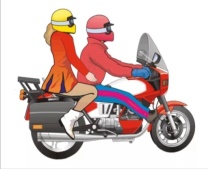
Short term plan
Unit: 9 Transport
|
lesson 97 |
||
School |
|
||
Teacher name |
|
||
Date: |
|
||
Grade: 6 |
Number present: |
absent: |
|
Lesson title |
Everyday English: buying a train ticket |
||
Learning objectives |
6.4.2.1 understand independently specific information and detail in short, simple texts on a limited range of general and curricular topics; 6. 5. 5. 1 use of arguments supported by examples and justification in some familiar general and academic topics; |
||
Lesson objectives (assessment criteria) (Негіздеме: Мемлекет басшысы Қ.Тоқаевтың Ұлттық құрылтайдың ІІ,ІІІ, ІV отырыстарында берген тапсырмасы, ҚР Оқу-ағарту министрлігінің №123 бұйрығы) |
Learners will be able to: - practise pronunciation of situational language - read for specific information - act out a dialogue and consolidate situational language through translation
Instilling values of the program “Birtutas tarbiye” being Adal Azamat for Month May “The value of creativity and innovation” Quote
of the week 3: “In
this world, if you think deeply, unity is needed; |
||
Stages/ Time |
Teachers actions |
Students actions |
Assessment |
Resources |
Beginning 5 min |
Greeting. Asking dates and weather Warm up: Teacher asks students about the last time they visited a new town / city. Ask what they took with them, and how they prepared before they left. Write some ideas on the board. Teacher tells values of this month. The value of creativity and innovation. Personal safety, life safety: - Risk recognition: being able to distinguish between threats such as bullying, drugs, violence, and fraud; - Safe behavior: obeying traffic rules, acting safely in public places; |
Learners read the given sentences on the board and guess the topic and share with their ideas.
|
Teacher controles the process, gives feedback. The teacher to assess learners for their ability. “Good job! Well done!” Formative Assessment |
Assessment sheet Kazakh map
|
Middle 7 min |
Ex: 1b P: 106 Teacher asks Ss read the rubric aloud. Play the recording. Ss listen and follow the text in their books and find out where Mr Omarov wants to go. Differentiation: Pre-teach difficult vocabulary if necessary and allow them to work in pairs to compare answers after listening |
Learners the sentences are from a dialogue between Mr Omarov and a ticket clerk. Where does Mr Omarov want to go? Listen to find out ANSWERS Mr Omarov wants to go to Brighton
|
Descriptor: A learner - read the rubric -answer the question Point -2 Excellent |
|
10 min |
Ex: 2 P: 106 Teacher allow Ss time to read the dialogue again and complete the task. Check Ss' answers. Differentiation Learners will be supported by teacher will support students each other in difficult moments |
Learners read the dialogue and mark the sentences T T (true), F (false) or DS (doesn't say). ANSWERS 1 F 2 DS 3 DS 4 T
|
Descriptor: A learner - read the dialogue - mark the sentences Point -3
Excellent |
Pictures
|
10 min |
Ex: 3 P: 106 Teacher asks Ss read out the phrases. Refer Ss back to the dialogue and elicit the synonymous ones from various Ss around the class. Differentiation: Allow students to work in pairs and scan the dialogue to locate similar phrases |
Learners find sentences in the dialogue which mean: May I help you? ANSWERS May I help you? - Can I help you? The cost is £54. That's £54. My pleasure. - You're welcome. Enjoy your trip. - Have a nice trip
|
Descriptor: A learner - read the dialogue - find sentences in the dialogue Point -3
|
|
8 min |
Ex: 4 P: 106 Teacher play the recording again. Then, ask Ss to work in pairs and take roles and read out the dialogue. Monitor the activity around the class and ask some groups to read out Differentiation: Provide L1 explanations or examples if needed.
Functional literacy Complete the dialogue
Passenger:
I would like a ______ to Astana, please. |
Learners look at the dialogue in Ex. 2. Take roles and read it aloud. ANSWERS Student’s own answe |
Descriptor: A learner - read the dialogue Point -2 Total points 10
|
|
End 5 min |
Learners provide feedback on what they have learned at the lesson and draw it on the face of students prototype. Ex: Home task: |
Ss evaluate each other and encourage classmate with phrases like: Well done! Brilliant! Good job! I like it! |
Poster |
|
Short term plan
Unit: 9 Transport
|
lesson 98 |
||
School |
|
||
Teacher name |
|
||
Date: |
|
||
Grade: 6 |
Number present: |
absent: |
|
Lesson title |
Across cultures: Transportation around the world |
||
Learning objectives |
6.4.4.1 read independently a limited range of short simple fiction and non-fiction texts; 6.5.6.1 link, with minimal support, sentences into coherent paragraphs using basic connectors on a growing range of familiar general topics; |
||
Lesson objectives (assessment criteria) (Негіздеме: Мемлекет басшысы Қ.Тоқаевтың Ұлттық құрылтайдың ІІ,ІІІ, ІV отырыстарында берген тапсырмасы, ҚР Оқу-ағарту министрлігінің №123 бұйрығы) |
Learners will be able to: - introduce the topic and predict the content of a text - read for lexico-grammatical structure (missing words) - compare two forms of transport
Instilling values of the program “Birtutas tarbiye” being Adal Azamat for Month May “The value of creativity and innovation” Quote
of the week 3: “In this world, if you think deeply, unity is
needed; |
||
Stages/ Time |
Teachers actions |
Students actions |
Assessment |
Resources |
Beginning 5 min |
Greeting. Asking dates and weather Warm up: Teacher refer students to the photo and ask: Where is Liverpool? (In the north of England.) Ask students what they know about Liverpool. They will probably know about the football team, and may know that The Beatles came from there. Ask if they know anything about its history Teacher tells values of this month. The value of creativity and innovation. Understanding the importance of health: - Understanding cultural, ethical, and legal norms in society; - Showing respect for others and recognizing mutual respect; |
Learners read the given sentences on the board and guess the topic and share with their ideas.
|
Teacher controles the process, gives feedback. The teacher to assess learners for their ability. “Good job! Well done!” Formative Assessment
|
Assessment sheet Kazakh map
|
Middle 10 min |
Ex 1 P:107 Teacher direct Ss' attention to the pictures and the title and elicit guesses to the questions in the rubric. Give Ss time to read through the text and find out. Differentiation: Learners will be supported by teacher and by helpers from his class.
|
Learners answer the question. What can you see in the pictures? What would you like to know about these means of transport? Read through and check. ANSWERS I would like to know where can someone see black cabs? Is the metro a cheap way to travel around the city? Do you need to pass any special test to drive a black cab? |
Descriptor: A learner - read the text - answer the question Point-3
Well done |
|
8 min |
Ex: 2 P: 107 teacher explain the task. Allow Ss time to complete the gaps with the missing words to make a cohesive and grammatical correct text. Ask Ss to use the Word List to look up the meanings of the words in the Check these words box. Play the recording. Ss listen and check their answers. Play the video for Ss and elicit their comments.
|
Learners read the texts and complete the gaps with the correct word. Listen and check ANSWERS 1 It 2 to 3 the 4 the 5 for 6 in 7 than 8 as
|
Descriptor: A learner - read the text again - complete the gaps Point -2 Excellent |
|
10 min |
Ex: 3 P: 107 Teacher elicit comparisons from various Ss around the class between the metro and the cab. Differentiation Learners will be supported by teacher will support students each other in difficult moments |
Learners compare and contrast the means of transport in the texts in Ex. 2 ANSWERS The metro is cheap but the black cab is expensive. The black cab is more expensive than the metro. The metro is the cheapest way to travel around the city. Both the metro and the black cab are fast. The metro is more convenient than |
Descriptor: A learner - read the text -identify the means of transport in the texts Point -3
Excellent |
Pictures
|
7 min |
Ex: 4 P: 107 Teacher play the recording and ask Ss to find and underline the /er/ sound in the sentences. Play the recording again with pauses for Ss to repeat chorally and/or individually. Pay attention to Ss' pronunciation and correct as necessary |
Learners find the /e/ sound in the following sentences. Then listen and repeat ANSWERS 1 We will soon arrive at our destination. 2 Are we on Friday Street already? 3 I like taking the bus. 4 The metro station |
Descriptor: A learner - find the /e/ sound - underline the /er/ sound Point -2 Total points 10 |
|
End 5 min |
Learners provide feedback on what they have learned at the lesson and draw it on the face of students prototype. Ex: Home task: |
Ss evaluate each other and encourage classmate with phrases like: Well done! Brilliant! Good job! I like it!
|
Poster |
|

Short term plan
Unit: 9 Transport
|
lesson 99 |
||
School |
|
||
Teacher name |
|
||
Date: |
|
||
Grade: 6 |
Number present: |
absent: |
|
Lesson title |
Across curriculum: Citizenship Summative Assessment for the unit 8. |
||
Learning objectives |
6.4.7.1 recognize typical features at word, sentence and text level in a limited range of written genres 6.5.6.1 link, with minimal support, sentences into coherent paragraphs using basic connectors on a growing range of familiar general topics; |
||
Lesson objectives (assessment criteria) (Негіздеме: Мемлекет басшысы Қ.Тоқаевтың Ұлттық құрылтайдың ІІ,ІІІ, ІV отырыстарында берген тапсырмасы, ҚР Оқу-ағарту министрлігінің №123 бұйрығы) |
Learners will be able to: - introduce the topic and key vocabulary and predict the content of the text - read for specific information - collect information related to the topic and present it to the class
Instilling values of the program “Birtutas tarbiye” being Adal Azamat for Month May “The value of creativity and innovation” Quote
of the week 3: “In this world, if you think deeply, unity is
needed; |
||
Stages/ Time |
Teachers actions |
Students actions |
Assessment |
Resources |
Beginning 5 min |
Greeting. Asking dates and weather Warm up: Teacher divide students into pairs and write Transport on the board. Allow students two minutes to brainstorm how many forms of transport they can think of. Tell them to use the English words if they know them and to use Kazakh words if they don’t. Teacher tells values of this month. The value of creativity and innovation. Fairness in the use and acquisition of necessary information: - Be able to select reliable and correct sources of information; - Be able to draw logical and objective conclusions. |
Learners read the given sentences on the board and guess the topic and share with their ideas.
|
The teacher to assess learners for their ability. “Good job! Well done!” Formative Assessment
|
Assessment sheet Kazakh map
|
Middle 5 min |
Ex 1 P:108 Teacher draw Ss' attention to the pictures and elicit which ones show the actions given in the rubric. Elicit Ss' guesses as to how the pictures can be related to the text. Play the recording. Ss listen and follow the text in their books and check if their Differentiation Pre-teach or explain key vocabulary from the rubric and encourage students to use simple sentences when making predictions. |
Learners Look at the pictures. Answer the question. Listen and read to find out. ANSWERS A some people cleaning the road B someone putting rubbish in a recycling bin C someone planting a tree
|
Descriptor: A learner - discuss the pictures - answer the question Point-3
Well done |
|
5 min |
Ex: 2 P: 108 Teacher allow Ss some time to read the text and complete the task. Check Ss' answers around the class. Ask Ss to use the Word List to look up the meanings of the words in the Check these words box. Play the video for Ss and elicit their comments. Differentiation Allow students to work in pairs while reading the text and completing the task |
Learners answer the question. ANSWERS 1 We should avoid using our cars because they give out harmful gases. 2 Public transport, bicycles and walking are less harmful to the environment. 3 If we can't use an item again, we can rifcycle it. 4 Neighbours and friends can help to clean up our neighbourhood. 5 Trees are important because they give us oxygen and make our air cleaner too. 6 If we see rubbish on the ground, we should pick it up. |
Descriptor: A learner -read the text - answer the question Point -4 Excellent |
|
5 min
20 min |
Ex: 3 P: 108 teacher explain the task and ask Ss to work in groups and look up information on the Internet using the key phrase in the search bar or in encyclopaedias or other reference books. Tell Ss that they can use the website suggested on the Express Publishing website to help them. Allow Ss some time to complete the task and then ask various groups of Ss to give their presentation to the class. Differentiation The teacher can guide them to the relevant parts of the text if needed.
Summative Assessment for the unit 8.
|
Learners do you know of any other ways you can help keep the planet clean? Collect Information and present it to the class. Use the key phrase clean planet ANSWERS We should buy products with less packaging, so we create less rubbish. We should use environmentally friendly cleaning products, so we create less pollution. We should use less energy by switching off electrical items when not in use. We should use recycled products and reusable |
Descriptor: A learner - collect Information - use the key phrase Point -3
Excellent
Total points 10 |
Pictures
|
End 5 min |
Learners provide feedback on what they have learned at the lesson and draw it on the face of students prototype. Ex: Home task: |
Ss evaluate each other and encourage classmate with phrases like: Well done! Brilliant! Good job! I like it! |
Poster |
|
Short term plan
Unit: 9 Transport
|
lesson 100 |
||
School |
|
||
Teacher name |
|
||
Date: |
|
||
Grade: 6 |
Number present: |
absent: |
|
Lesson title |
Writing: A pros and cons essay |
||
Learning objectives |
6.4.5.1 deduce meaning from context in short texts on a limited range of familiar general and curricular topics 6. 5. 5. 1 use of arguments supported by examples and justification in some familiar general and academic topics; |
||
Lesson objectives (assessment criteria) (Негіздеме: Мемлекет басшысы Қ.Тоқаевтың Ұлттық құрылтайдың ІІ,ІІІ, ІV отырыстарында берген тапсырмасы, ҚР Оқу-ағарту министрлігінің №123 бұйрығы) |
Learners will be able to: - identify linkers and their uses - identify pros/cons and think of relevant justifications/examples
Instilling values of the program “Birtutas tarbiye” being Adal Azamat for Month May “The value of creativity and innovation” Quote of the week 4: “A harmonious nation is blessed with peace and prosperity” / 4-апта дәйек сөз/ |
||
Stages/ Time |
Teachers actions |
Students actions |
Assessment |
Resources |
Beginning 5 min |
Greeting. Asking dates and weather Warm up: Teacher asks Ss to name any big or important mountains in their country. Ask if they have visited or climbed any of them. Ask if anyone enjoys mountain climbing as a hobby, or whether they would like to try it Teacher tells values of this month. The value of unity and solidarity. Respect and mutual respect: - Respect for the rights and individuality of each person; - Recognize and support the successes of colleagues and friends. |
Learners read the given sentences on the board and guess the topic and share with their ideas.
|
Teacher controles the process, gives feedback. The teacher to assess learners for their ability. “Good job! Well done!” Formative Assessment
|
Assessment sheet Kazakh map
|
Middle 10 min |
Ex 1 P:109 Teacher explain the task and ask Ss to copy the table into their notebooks. Give Ss time to read the essay and then complete the table. Check Ss' answers on the board. Ask Ss to use the Word List to look up the meanings of the words Differentiation: Learners will be supported by teacher and by helpers from his class. |
Learners read the essay and complete the table. ANSWERS
|
Descriptor: A learner - read the essay - complete the table Point-3
Well done |
|
13 min |
Ex: 2 P: 109 Teacher asks Ss read the Study Skills box aloud and explain why we use linkers. Direct Ss to the linkers in bold in the essay and give Ss time to match them to their uses. Check Ss' answers.
|
Learners look at the linkers in bold in the text. Which of them: ANSWERS list points: Firstly, Also, Secondly conclude: To sum up introduce an opposing opinion: On the other hand
|
Descriptor: A learner - read linkers in bold - match them to their uses Point -4 Excellent |
|
12 min |
Ex: 3 P: 109 Teacher ask Ss to read the statements and decide which ones are pros and which ones are cons. Allow Ss time to complete the task and then check Ss' answers around the class. Differentiation Learners will be supported by teacher will support students each other in difficult moments |
Learners read the statements 1-4. Which are pros/cons of travelling by bus? In groups, think of justifications/examples ANSWERS Pros: 1, 4 Cons: 2, 3
|
Descriptor: A learner - read the statement - answer the questions Point -3
Excellent Total points 10 |
Pictures
|
End 5 min |
Learners provide feedback on what they have learned at the lesson and draw it on the face of students prototype. Ex: Home task: |
Ss evaluate each other and encourage classmate with phrases like: Well done! Brilliant! Good job! I like it!
|
Poster |
|
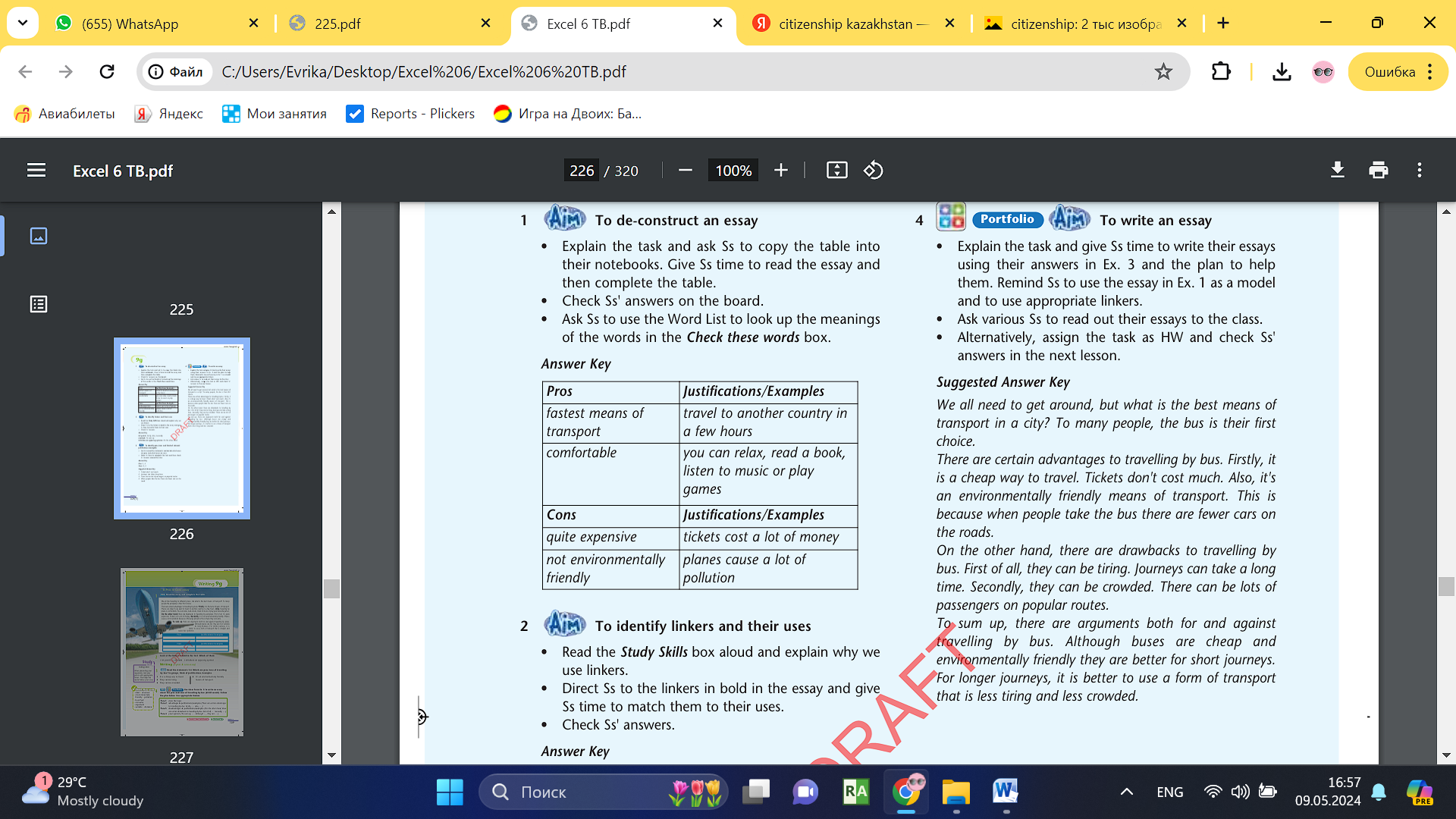
Short term plan
Unit: 9 Transport
|
lesson 101 |
||
School |
|
||
Teacher name |
|
||
Date: |
|
||
Grade: 6 |
Number present: |
absent: |
|
Lesson title |
Summative Control work for the 4th term. |
||
Learning objectives |
6.2.4.1 (6.L4) Understand with limited support the main points of extended talk on a range of general and curricular topics 6.4.2.1 (6.R2) Understand independently specific information and detail in short, simple texts on a limited range of general and curricular topics 6.5.3.1 (6.W3) Write with some support about personal feelings and opinions on a limited range of familiar general and curricular topics 6.3.7.1 (6.S7) Use appropriate subject-specific vocabulary and syntax to talk about a limited range of general topics, and some curricular topics |
||
Lesson objectives (assessment criteria) (Негіздеме: Мемлекет басшысы Қ.Тоқаевтың Ұлттық құрылтайдың ІІ,ІІІ, ІV отырыстарында берген тапсырмасы, ҚР Оқу-ағарту министрлігінің №123 бұйрығы) |
Learners will be able to: - follow the direction of the talk by tracking the key words - pronounce words and phrases correctly - identify specific information
Instilling values of the program “Birtutas tarbiye” being Adal Azamat for Month May “The value of creativity and innovation” Quote of the week 4: “A harmonious nation is blessed with peace and prosperity” / 4-апта дәйек сөз/ |
||
Stages/ Time |
Teachers actions |
Students actions |
Assessment |
Resources |
Beginning 5 min |
Greeting. Asking dates and weather Warm up: Teacher asks Ss to name any big or important mountains in their country. Ask if they have visited or climbed any of them. Ask if anyone enjoys mountain climbing as a hobby, or whether they would like to try it
Teacher tells values of this month. The value of unity and solidarity. Resolve disputes peacefully: - Willingness to compromise or reach a common solution; |
Learners read the given sentences on the board and guess the topic and share with their ideas.
|
Teacher controles the process, gives feedback. The teacher to assess learners for their ability. “Good job! Well done!” Formative Assessment
|
Assessment sheets
|
Middle 40 min |
Listening Task. Listen to the talk twice. CD3. Tapescript 3. And transcript for listening task can be found after the mark scheme
|
Students listen to the talk twice
|
Descriptor: A learner - listen to the talk twice Point-5
|
|
|
Reading Task. Read the dialogue about transportation Choose the right option. Answer the questions. Write NO MORE THAN THREE WORDS OR A NUMBER for each answer |
Students read the dialogue about transportation
|
Descriptor: A learner -read the dialogue Point -6 Excellent |
|
|
Writing Task. Choose ONE of the topics below.
|
Students choose ONE of the topics below.
|
Descriptor: A leaarner - write an essay Point -6 |
|
|
Speaking Task. Choose one of the cards and make up an individual talk. Use subject related vocabulary while talking on a given topic. You have 1 minute to prepare and 1-2 minutes to talk
|
Students choose one of the cards and make up an individual talk
|
Descriptor: A learner - choose one of the cards Point -5
Total points 22 |
|
Short term plan
Unit: 9 Transport
|
lesson 102 |
||
School |
|
||
Teacher name |
|
||
Date: |
|
||
Grade: 6 |
Number present: |
absent: |
|
Lesson title |
Edutainment |
||
Learning objectives |
6.4.6.1 recognise the attitude or opinion of the writer in short texts on a growing range of general and curricular topics; 6.5.6.1 link, with minimal support, sentences into coherent paragraphs using basic connectors on a growing range of familiar general topics; |
||
Lesson objectives (assessment criteria) (Негіздеме: Мемлекет басшысы Қ.Тоқаевтың Ұлттық құрылтайдың ІІ,ІІІ, ІV отырыстарында берген тапсырмасы, ҚР Оқу-ағарту министрлігінің №123 бұйрығы) |
Learners will be able to: - complete sentences relating to the value of green transport - identify the benefits of green travel - test knowledge learnt in this mod to do a quiz Instilling values of the program “Birtutas tarbiye” being Adal Azamat for Month May “The value of creativity and innovation” Quote of the week 4: “A harmonious nation is blessed with peace and prosperity” / 4-апта дәйек сөз/ |
||
Stages/ Time |
Teachers actions |
Students actions |
Assessment |
Resources |
Beginning 5 min |
Greeting. Asking dates and weather Warm up: Teacher asks Ss what famous people they know. Students will probably give the names of current celebrities. Accept a few names, then ask students if they know any famous people from the past. Elicit a few names and write them on the board. Tell students they are going to do a quiz about famous people Teacher tells values of this month. The value of unity and solidarity. Prioritizing the public interest: - Temporarily putting personal interests aside and putting the collective interest first; - Focusing on group or public benefit in decision-making; |
Learners read the given sentences on the board and guess the topic and share with their ideas.
|
Teacher controles the process, gives feedback. The teacher to assess learners for their ability. “Good job! Well done!” Formative Assessment
|
Assessment sheet Kazakh map
|
Middle 7 min |
Ex 1 P:110 Teacher ask Ss to read the sentences and then complete the task. Elicit answers from Ss around the class. Differentiation: Learners will be supported by teacher and by helpers from his class. |
Learners complete the sentences. Use: exercise, reduce, make, save. ANSWERS 1 make 2 exercise 3 reduce 4 save |
Descriptor: A learner - complete the sentences - use these words Point-2
|
|
10 min |
Ex: 2 P: 110 Teacher Eexplain the task. Allow Ss some time to read the questions and mark the statements correctly. Tell Ss they can review the module and find the relevant information to help them if necessary. Differentiation: Allow students to work in pairs and refer back to the module pages to find the relevant information
|
Learners do the quiz. Mark the sentences as T (true) or F (false ANSWERS 1T 2 F 3T 4 T 5 T 6 F 7 T 8 F |
Descriptor: A learner - do the quiz - write true or false Point -3 Excellent |
|
10 min |
Ex: 3 P: 110 Teacher explain the task and allow Ss some time to work in pairs, look through the module and think of Quiz questions. Tell Ss they can use the quiz in the previous task as a model. Offer an example (e.g. Gondoliers sing when they give you a tour. [T]) Ss can swap their quiz with another pair and do it and Differentiation: Allow students to look back through the module for key information |
Learners look at Module 9 and write a T/F quiz of your own. ANSWERS 1 You can ride in a longtail boat in Thailand. (T) 2 The rickshaw driver will stop wherever you want. (T) 3 You must respect road signs when cycling. (T) 4 You have to be 18 to ride a motorcycle in the UK. (F) 5 In Almaty, it often drops below-10° during the winter. (T) 6 You mustn't check your bike's brakes and tyres regularly. (F) 7 Aeroplanes consume fossil fuels. (T) 8 The 'Knowledge' is a test for metro drivers. (F) |
Descriptor: A learner - complete the sentences - write true or false Point -3
Excellent
|
Pictures
|
8 min |
Ex: 4 P: 110 teacher play the recording. Ss listen and think about the question in the rubric. Ask various Ss to discuss their thoughts with the class |
Learners song: Listen and complete the gaps, then sing along. ANSWERS 1 train 2 back 3 near 4 car 5 house 6 town 7 day 8 bike |
Descriptor: A learner - complete the gaps Point -1
Excellent Total points 10 |
|
End 5 min |
Learners provide feedback on what they have learned at the lesson and draw it on the face of students prototype. Ex: Home task: |
Ss evaluate each other and encourage classmate with phrases like: Well done! Brilliant! Good job! I like it!
|
Poster |
|









 Бұл курс Қазақстан Республикасы Оқу-ағарту министрлігімен келісілген










