
 ЖИ көмекші


 Қауіпсіз төлем

жүктеу мүмкіндігіне ие боласыз
Бұл материал сайт қолданушысы жариялаған. Материалдың ішінде жазылған барлық ақпаратқа жауапкершілікті жариялаған қолданушы жауап береді. Ұстаз тілегі тек ақпаратты таратуға қолдау көрсетеді. Егер материал сіздің авторлық құқығыңызды бұзған болса немесе басқа да себептермен сайттан өшіру керек деп ойласаңыз осында жазыңыз
 03 Шілде 2026
 56
56
1 жыл бойы шексіз жүктеңіз
7 сынып
1. Unit 1: Hobbies and Leisure |
School: «Baldauren» Republican Educational and health centre |
||||||
Date: 05. 09. 2022
|
Teacher name: Taszhanova T . A . |
||||||
Grade: 7
|
Number present: |
Number absent: |
|||||
Theme of the lesson: |
Free – time activities |
||||||
Learning objectives |
7.C4 evaluate and respond constructively to feedback from others 7.S1 use formal and informal registers in their talk on a limited range of general and curricular topics 7.L2 understand with little support most specific information in extended talk on a limited range of general and curricular topics |
||||||
Lesson objectives |
All learners will be able to:
Most learners will be able to: -talk about how they like to spend their free time. Some learners will be able to:
|
||||||
Plan |
|||||||
Planned timings |
Planned activities |
Learners’ activities |
Evaluation |
Resources |
|||
Beginning 5 min
|
Organization moment. Brainstorming. Write free time on the board. Say one true sentence about your free-time activities,e.g,I read a lot in my free time. or, In my free time I watch films on DVD. Write the names of the activity on the board: reading or films, or whatever you said. Ask: Who else likes reading/films;' .. ? Add two or three more simple names of popular activities which you think some of your students may like : football, walking, dancing, drawing. For each of them ask: Who likes... ?Then add the word activities (and the hyphen in free-time) to the board to complete the title of the lesson: free time activitis. Say: Today we're going to talk about free-time activities. |
Greeting
Learners follow the instructions
|
Verbal evaluation
|
Board, copybooks
|
|||
Middle 30 min
|
Vocabulary teaching. Students are provided with eight pictures to each and match 8 words to photos (from the box). Peer assessment. Encourage them to compare answers in pairs before checking as a class. As they finish they pronounce them with the help of the teacher.
Pair work. Learners tell about which sports and hobbies can they do:
5. His partner may express his opinion if he disagrees with him. Listening task. Less able and more able students listen to four teenagers and tick to the names of teenagers which sport or hobby is each person interested in.
Most able students give recommendations to teenagers using phrases below: Your hobby …
|
Learners match with the pictures correctly.
Learners can use modal verbs correctly. They can differentiate types of hobby.
Learners do the task
|
Individual avaluation
Mutual avaluation
Verbal evaluation
|
Handout with pictures
Handout with pictures.
Sheets with tasks |
End 5 min |
Concluding the lesson Assessment Peer and self assessment chart |
|
Selfassessment |
Copybooks Peer and self |
|
Saying goodbye |
|
|
assessment charts |
3-такырып Unit 1: Hobbies and Leisure |
School: «Baldauren» Repablican Educational and health centre |
||||||
Date: 09.09.2022 |
Teacher name: Taszhanova T.A. |
||||||
Grade: 7 |
Number present: |
Number absent: |
|||||
Theme of the lesson: |
Present Simple / Present Continuous |
||||||
Learning objectives |
7.C9 Use imagination to express thoughts, ideas, experiences and feelings. 7.S3 Give an opinion at discourse level on a growing range of general and curricular topics. 7.S7 Use appropriate subject-specific vocabulary and syntax to talk about a range of general topics, and some curricular topics. |
||||||
Lesson objectives |
All learners will be able to: use words on topic Hobbies and Leisure in; make sentences about their hobbies or leisure activities; demonstrate topic related vocabulary in sentences. Most learners will be able to: express their opinions about value of hobbies. Some learners will be able to: analyse some hobbies and leisure activities and differentiate them for groups. |
||||||
Previous learning |
Previously learned vocabulary on topic Hobbies. |
||||||
Plan |
|||||||
Planned timings |
Planned activities |
Learners’ activities |
Evaluation |
Resources |
|||
Beginning 5 min |
1.Leading-in stage Teacher wants to know the mood of learners and asks them, “What color are you today?” |
Learners tell teacher what color describes today’s mood. |
|
PPT slide 1 |
|||
Middle 30 min
|
Pre-learning “Four pictures and one word”
Learners
work in groups of three and
|
Learners should guess the topic of the lesson by looking at the four pictures
|
Verbal evaluation
|
Whiteboard
PPT S 2-3
|
|||
 four,
brainstorm the ideas about the pictures on the slide.
four,
brainstorm the ideas about the pictures on the slide.
|
one common topic for all four pictures. (hobby) The teacher introduces the objectives of the lesson. |
|
|
|
|
The main part of the lesson Vocabulary work Learners are divided into small groups with the help of colourful pictures. Task: Draw a poster with different hobbies and leisure activities all over the world and present it to the class. Teacher monitors the group work and elicits the vocabulary level of the topic. Teacher chooses the group which is going to assess the answer. Learners assess each other according to group assessment sheet. Group aassessment criteria : - Learners should name no less than 10 words for hobbies;
Teacher asks the question to the groups: -Are there any similar words in Kazakh or Russian for hobbies’ names? Differentiation: At the beginning of the school year, learners need some time to feel comfortable to work with each other. This means that they may work with different speed. Teacher gives learners some time to think over the question, before answering |
Learners present their posters to the classmates.
Learners watch a short video and write down the names of the hobbies in copybooks. Then answer the questions
|
Individual avaluation
Mutual avaluation
|
A3 papers, markers, crayons.
https://www. youtube.com /watch?v=X c - Hobbies Vocabulary - Vocabulary Chant for Kids by ELF Learning
|
End 5 min |
Plenary Learners fill in the following |
|
Selfassessment |
copybook |
|
reflective card in the copy books: 3- new words from the lesson 2- adjectives describing the lesson 1-activity from the lesson you like best Saying goodbye |
|
|
|
4-такырып Unit 1: Hobbies and Leisure |
School: «Baldauren» Repablican Educational and health centre |
||||||
|
|||||||
Date: |
Teacher name: Taszhanova T.A. |
||||||
Grade: 7 |
Number present: |
Number absent: |
|||||
Theme of the lesson:
|
The flight of the Steppe Eagle |
||||||
Learning objectives |
7.L1 Understand with little support the main points in extended talk on a limited range of general and curricular topics 7.L4 Understand with little support some of the implied meaning in extended talk on a limited range of general and curricular topics.7.S6 Begin to link comments with some flexibility to what others say at sentence and discourse level in pair, group and whole class exchanges 7.C1 Use speaking and listening skills to solve problems creatively and cooperatively in groups. 7.S4 Respond with some flexibility at both sentence and discourse level to unexpected comments on a growing range of general and curricular topics. |
||||||
Lesson objectives |
All learners will be able to: Listen to the passage and mark sentences as True or False; Listen to the passage and fill in missing words; Most learners will be able to: Provide unprepared speech to answer a variety of questions at sentence level and in conversations with some flexibility; Some learners will be able to: Discuss a problem in groups and suggest a solution for a problem; |
||||||
Previous learning |
Writing statistics on hobbies |
||||||
Plan |
|||||||
Planned timings |
Planned activities |
Learners’ activities |
Evaluation |
Resources |
|||
Beginnig 10 min
|
Warm-up Learners label the photos of different hobbies with fifteen words. While working in pairs, learners collaborate and help each other for getting better results. (Playing football, cycling, drawing, watching films, drawing, sunbathing, listening to music, dancing…) Learners are informed about the lesson objectives |
Learners write the words in the copybooks dividing hobbies into four columns.
|
Verbal evaluation
|
Whiteboard
PPP slide 3
|
|||
Middle 25 min
|
The main part of the lesson Listening Task 1 Teacher suggests listening activity to the learners. They get a sheet with the questions and mark if the sentences are True or False. They listen twice.
Listening Task 2 10. Okay, is football your … sport? (favourite)
… video games. (play) Answers: 10. Favourite 11. Long 12. Bored 13. Hang out 14. Once twice 15. Play Teacher discusses the right answers and assesses the task asking the question: Who has 15 right answers? 14? 13? Etc. Teacher should explain the right choice in listening tasks. |
Learners listen to the passage and mark true or false sentences
Learners listen to the passage for the second time and fill in the missing words
|
Individual avaluation
Mutual avaluation
|
- Listening “Talking about Hobbies in English”
Worksheet with the tasks
PPP S 4
PPT slides 4-25
Appendix 2 |
End 5 min |
Reflection “IRELANDS” technique - The map with the names of different Irelands is placed on the wall: Joy, Melancholy, Perplexity (Puzzle), |
|
Selfassessment
|
PPP |
|
Anxiety (Alarm), Anticipation (Expectation), Enlightenment, Inspiration, Pleasure, Enjoyment, Vagueness, Bermuda Triangle. The learners write their names on the sticky papers as if it is their boat; they place their boats in the appropriate Ireland, expressing spiritual, emotional state.
Saying goodbye |
|
|
|
6-такырып Unit 1: Hobbies and Leisure |
School: «Baldauren » Repablican Educational and health centre |
||||||
Date: |
Teacher name: Taszhanova T.A. |
||||||
Grade: 7 |
Number present: |
Number absent: |
|||||
Theme of the lesson: |
Are you a couch potato? |
||||||
Learning objectives: |
7.C 4 evaluate and respond constructively to feedback from others. 7.W 8 spell most high-frequency vocabulary accurately for a growing range of familiar general and curricular topics. 7.UE15 use infinitive forms after a limited number of verbs and adjectives; use gerund forms after a limited variety of verbs and prepositions on a growing range of familiar general and curricular topics. |
||||||
Lesson objectives: |
All learners will be able to:
|
||||||
Previous learning |
Holidays and hobbies. |
||||||
Plan |
|||||||
Planned timings |
Planned activities
|
Learners’ activities |
Evaluation |
Resources |
|||
Beginning 5 min
|
Warm up. Pair work. Find description and act out a dialogue using descriptions. |
Learners act out a dialogue |
Mutual avaluation
|
White board
|
|||
Middle 25min
|
Group work: Group Assessment criteria Poster of the learners had many interesting ideas. Learners spoke clearly and understandable. Learners used topical vocabulary Learners give constructive answers to feedback. Learners work in the following |
Learners present their Multi-media presentations
Learners follow the |
Individual avaluation
Verbal evaluation |
White sheet
|
|||
|
directions arrange information: Group1: Creating a survey about the hobbies/leisure pursuits of either family. Group2: Creating a survey about the hobbies/leisure pursuits of friends. Group3: Creating a survey about the hobbies/leisure pursuits of the class or the whole school.
Guide Questions:
5. Why do you think hobbies are worthwhile?
Favourite Hobby activities. Teacher orginises group work on topic from the site www.buzzle.com. Learners are divided into small groups of 3-4; and are given the instructions: surf the internet to find information on a given topic. Learners work in the following directions and arrange information: Group 1: Hobbies related to nature Group 2: Observational Hobbies Group 3: Health-related hobbies Group 4: Hobbies related to Computers and Technology |
instructions
Learners answer the questions
Learners should prepare miniresearch poster. |
Mutual avaluation
|
Teach with video httpps://ww w.youtube. com/watch ?v=8nGCR GZFuUQ
Sheet paper
|
End 5 min
|
Feedback: (2 stars and a wish) 1.positive 2.should improve 3.reccomendation Descriptor: A learner 1.uses vocabulary: hobby and leisure time. 2.interacts with peer while collecting |
|
Selfassessment
|
stickers
|
|
information; 3.works cooperatively in a group
Saying goodbye
|
|
|
|
|
|
|
|
|
7-такырып Unit 1: Hobbies and Leisure |
School: «Baldauren» Repablican Educational and health centre |
||||||
Date: |
Teacher name: Taszhanova T.A. |
||||||
Grade: 7 |
Number present: |
Number absent: |
|||||
Theme of the lesson:
|
An email describing a hobby |
||||||
Learning objectives: |
7.R5 Deduce meaning from context in short texts on a growing range of familiar general and curricular topics. 7.R4 Read a limited range of extended fiction and non-fiction texts on familiar and some unfamiliar general and curricular topics. 7.S3 Give an opinion at discourse level on a growing range of general and curricular topics. 7.C8 Develop intercultural awareness through reading and discussion. 7.C2 Use speaking and listening skills to provide sensitive feedback to peers. |
||||||
Lesson objectives: |
All learners will be able to: Surf the internet to find (or search) information about most popular hobbies in the world; Work in different directions and arrange information:; Create the design of the poster, distribute the information in the poster, make it colourful, create the poster and present it. Think about cultural awareness through reading and discussion; Give feedback to other groups’ presentations. |
||||||
Previous learning |
Holidays and hobbies. |
||||||
Plan |
|||||||
Planned timings |
Planned activities
|
Learners’ activities |
Evaluation |
Resources |
|||
Beginning 5 min
|
Pre-learning Teacher suggests singing a song as a warm-up for the lesson. Learners are informed about the lesson objectives |
Learners sing A Free Time Song (Hobbies + Pastimes) |
|
||||
Middle 30min
|
The main part of the lesson: Mini-Project Favourite Hobby activities. Teacher orginises group work on topic from the site www.buzzle.com. (G) Learners are divided into small groups; and are given the instructions: surf the internet to find information on a given topic. (if the |
Learners follow the instructions
|
Mutual avaluation
|
Laptops
http://www .buzzle.co m/articles/p opularhobbies.ht
|
|||
|
Internet connection is not available, teacher can use information from Appendix 1). They should prepare mini-research poster. Learners distribute the roles in the group Student 1 – timekeeper Student 2 – researcher Student 3 – designer Student 4 – painter
Teacher should explain the rubrics for assessment the task. Learners think over the design of the poster, distribute the information in the poster and make it colourful. Together they create the poster and present it.
Group Assessment criteria
|
Learners create the poster and present it.
|
Verbal evaluation
Individual avaluation
|
Appendix 1
|
||||||||||||||||||
End 5 min
|
Feedback: (2 stars and a wish) 1.positive 2.should improve 3.reccomendation Descriptor: A learner 1.uses vocabulary: hobby and leisure time. 2.interacts with peer while collecting |
|
Selfassessment
|
stickers
|
||||||||||||||||||
|
information; 3.works cooperatively in a group
Saying goodbye
|
|
|
|
8-такырып Unit 2: Communication and |
School: «Baldauren» Repablican Educational and health centre |
||||||
Technology Date: |
Teacher name: Taszhanova T.A. |
||||||
Grade: 7 |
Number present: |
Number absent: |
|||||
Theme of the lesson:
|
Means of Communication |
||||||
Learning objectives |
7.C3 Respect different points of view. 7.S3 Give an opinion at sentence and discourse level on an increasing range of general and curricular topics. |
||||||
Lesson objectives |
All learners will be able to: Define goals for a new study year; Most learners will be able to: Share own perspectives with others; Give examples of behavior models and wishes for study process; Some learners will be able to: |
||||||
Previous learning |
Unit Revision |
||||||
Plan |
|||||||
Planned timings |
Planned activities |
Learners’ activities |
Evaluation |
Resources |
|||
Beginning 5mins |
Leading-in stage. Game “Name Chain” Teacher greets learners and suggests playing the game to have a good mood. Teacher explains rules for this game. For instance, My name is Alina and I like apples. The things they like should begin from the same letter as their names. The teacher begins the game. Each learner should repeat information about his neighbor and add his own information. Differentiation Motivated students can introduce not only the person to the right but try to repeat all group names and adjectives from the beginning of the game.
Teacher tells the students the objectives of the lesson |
Learners stand in a circle, pass the ball to each other and tell their names and things they like. |
Verbal evaluation
|
Active board PowerPoint Presentation
|
|||
|
The objectives of the lesson is to get to know each other better, make friends and make some rules for a new learning year. |
|
|
|
Middle 30 mins
|
The main part of the lesson
3 Teacher shows the pictures of very angry teachers and asks if they want to have such teachers.
Teacher offers children to work on the classroom management and behavior on the lessons.
4 . Picturing rules and presentation Learners can work in pairs or small groups of 3-4. They are given the task to make pictures of some classroom rules. Task: Make a picture/a poster for classroom rules; Convince classmates that your rules are important; Make an agreement with others on common classroom
Differentiation Less able students who have a limited vocabulary will make up rules from separate words, which will be given by the teacher. Learners can be given some ideas for making a poster. E.g.: You should listen carefully to the teacher You should not shout when your classmates speak. Groups present their rules to |
Learners follow the instructions
Learners do the task
|
Individual avaluation
Mutual avaluation
|
|
|
classmates. |
|
|
|
End 5 min
|
6. Plenary Learners make wishes to the classmates for a new study year and put them on the board. Classmates find wishes and read them. Saying goodbye |
|
Selfassessment
|
|
 .
Defining aims for a new modul
.
Defining aims for a new modul
10-такырып Unit 2: Communication and |
School: : «Baldauren» Repablican Educational and health centre |
||||||
Technology Date: |
Teacher name: Taszhanova T.A. |
||||||
Grade: 7 |
Number present: |
Number absent: |
|||||
Theme of the lesson:
|
Can / could, be able to,used to
|
||||||
Learning objectives |
7.L1 Understand with little support the main points in extended talk on a limited range of general and curricular topics 7.W8 Spell most high-frequency vocabulary accurately for a growing range of familiar general topics and some curricular topics 7.W6 Link with little or no support, sentences into coherent paragraphs using a variety of basic connectors on a range of familiar general topics and some curricular topics |
||||||
Lesson objectives |
|
||||||
Previous learning |
Unit Revision |
||||||
Plan |
|||||||
Planned timings |
Planned activities |
Learners’ activities |
Evaluation |
Resources |
|||
Beginning 5mins |
Greeting: Teacher greets with learners; Poem Greet with a smile, bring sunshine to someone’s life and be the source of joy. learners respond to greeting and take their places. |
Greeting
|
Verbal evaluation
|
|
|||
Middle 10 mins
|
All the information elicited from the interview with the help of the personal questions should be analysed and included into the short report
Discuss the format of writing a report with the learners.
|
Learners write a report, including between 6 and 7 sentences in accordance with the level of language competences.
|
Mutual avaluation
|
|
|||
SA 20 min |
LISTENING Task1. Listen to two people talking about their free time. Are the sentences True or False? You will listen to the recording twice. Tapescript 1.
Example: Jack likes rock music. True
WRITING Task 2. Write sentences about your hobby. You should write full sentences. Use some connectors and linking words but, and, because, when, while, etc. Include the following information: Example: I like skiing because it is a healthy activity. What is your hobby? When and who do you usually do it with? Is your hobby popular among teenagers? Why do you like doing it? |
Learners listen and choose true or false sentences
Learners write sentences about your hobby.
|
Individual avaluation
|
|
|||
End 5 min
|
Plenary Learners fill in the following reflective card in the copy books: 3- new words from the lesson 2- adjectives describing the lesson 1-activity from the lesson you like best Saying goodbye |
|
Self- assessment
|
|
|||

11-такырып Unit 2: Communication and Technology |
School: «Baldauren» Repablican Educational and health centre: |
||||||
Date: |
Teacher name: Taszhanova T.A. |
||||||
Grade: 7 |
Number present: |
Number absent: |
|||||
Theme of the lesson:
|
Adjectives. Adverbs
|
||||||
Learning objectives |
7. L.2 understand with little support most specific information in extended talk on limited range of general and curricular topics. 7.S.7 use appropriate subject-specific vocabulary and syntax to talk about a growing range of general topics and some curricular topics 7.R.2 understand specific information and detail in texts on a range of general and curricular topics. 7.W.2write with minimal support about real and imaginary past events, activities and experiences on a growing range of familiar general and curricular topics |
||||||
Lesson objectives |
All learners will be able to:
Some learners will be able to:
|
||||||
Previous learning |
Computer, mobile, internet, etc. |
||||||
Plan |
|||||||
Planned timings |
Planned activities |
Learners’ activities |
Evaluation |
Resources |
|||
Beginning 5 min |
Greeting Organization moment Divide learners into two groups by cut of pictures Inner and outer circle Pupils give feedback each other’s and change their thoughts about home work |
Pupils watch the video clip and discuss it |
|
Cut of pictures |
|||
Middle 30 min
|
Task-1. Drilling activities. Vocabulary work. Choral repetition. Look at the pictures then listen and repeat |
Learners look at the pictures then listen and repeat |
Verbal evaluation
|
Photos
|
|||
|
AFL: thumbs up if your pronunciation is good, thumbs down if your pronunciation isn’t good I.Task-2. Two truth and a lie activity. Learners make sentences using the phrases with often, sometimes and never ... and pupils find the lie and two truth. I often chat on social media. I sometimes chat on skype. I never use my mobile when I’m at home
Task-3. «Five sentences advertisement» activity Learners read the text and find out what the text is about and share their minds
Task-4. «Numbers speak» Pupils read the text and answer the questions choosing the multiple answers, when teacher says the number a learner reads the question and answer it.
|
Learners make negative and question form sentences using the phrases and their ideas
Learners find the key words from the text that describes the meaning of the text
Learners reads the text chooses multiple answers
|
Individual avaluation
Mutual avaluation
|
Sheets of papers markers
posters, markers
|
|||
End
5 min |
Reflection: What did you do well in today’s lesson? What were the most interesting for you? What did you understand? What didn’t you understand? What do you want to know about this lesson? Successful stairs Learners looks at the board and puts a tick or a cross for stairs what they have learnt or not T-4 T-3 T-2 T-1 Saying goodbye |
|
Selfassessment
|
|
|||
12-такырып Unit 2: Communication and Technology |
School: «Baldauren» Repablican Educational and health centre |
|||||
Date: |
Teacher name: Taszhanova T.A. |
|||||
Grade: 7 |
Number present: |
Number absent: |
||||
Theme of the lesson: |
Computers |
|||||
Learning objectives |
7.C2 Use speaking and listening skills to provide sensitive feedback to peers. 7.L5 Recognise the opinion of the speaker(s) in supported extended talk on a range of general and curricular topics. 7.S2 Ask complex questions to get information about a limited range of general topics and some curricular topics. 7.UE6 Use a variety of possessive and reflexive pronouns including mine, yours, ours, theirs, hers, his, myself, yourself, themselves on a growing range of familiar general and curricular topics. |
|||||
Lesson objectives |
All learners will be able to:
some tips, using possessive and reflexive pronouns Most learners will be able to:
|
|||||
Previous learning |
Students have studied ‘hobby’ topic, can talk and write about their likes and dislikes |
|||||
Plan |
||||||
Planned timings |
Planned activities |
Learners’ activities |
Evaluation |
Resources |
||
Beginning 10 min |
Teacher greets students . Teacher shows the funny picture and students should guess the topic of the lesson Explain the usage of applying the technology items with the help of some tips, using possessive and reflexive pronouns |
Greeting
Learners try to guess
|
Verbal evaluation
|
|
|
Warm-up “A Five Minute Activity” Three things with a screen._______________________ Three things you can switch on.___________________ Three things that belong to a computer._____________ Three types of communication ____________________ Three types of communication in the past____________ |
Learners write three words in each category.
|
|
Board, lesson objectives PowerPoint Presentatio n (see the attached file)
|
Middle 25 min
|
Listening and Speaking tasks Task 1. Students watch a video about communication technologies and write down top five tech gifts for students they hear. Task 2 Additional questions: - Why has the author of this video decided to shoot it? -What are the top five back to school tech gifts in our country? Make a list of the five items. -Is it a good idea to use these technologies for studying at school? Why? Why not? -Would you like any of these back-toschool tech gifts? Which ones? Why? Practice to access a page/ … to browse websites/ … to click a desktop icon/ … to copy a document/… to go online/ … to paste a sentence/ … |
Learners write down top five tech gifts
Learners answer the questions
Learners get introduced to the phrases, related to technology items |
Individual avaluation
Mutual avaluation
|
Handout 1
Match the technology items
Three sets of pictures and three sets of words Board, markers |
|
to cut and paste an image/ … to send an attachment/… to surf the web/net to share a file/… |
|
|
|
End 5 min
|
Reflection I think the lesson was productive, because I was able to…… What I could not do before, and now I do not have any difficulties? What technology items have you learnt Saying goodbye |
|
Selfassessment
|
Reflective journals |
Module2. 13-такырып |
|
School: «Baldauren» Repablican Educational and health centre |
|
Date: |
|
Teacher name: Taszhanova Tursinai |
|
Grade: 7 |
|
Number present: |
Number absent: |
Theme of the lesson: |
World Forum
|
||
Learning objectives
|
7.C1 use speaking and listening skills to solve problems creatively and cooperatively in groups 7.S5 keep interaction with peers to negotiate, agree and organise priorities and plans for completing classroom tasks 7.S8 recount some extended stories and events on a growing range of general and curricular topics 7.R3 understand the detail of an argument on a growing range of familiar general and curricular topics, including some extended texts 7.R4 read a limited range of extended fiction and non-fiction texts on familiar and some unfamiliar general and curricular topics |
||
Lesson objectives
|
All learners will be able to: Read and understand the meaning of the topic Most learners will be able to: Make a conversation to each other according to the topics Some learners will be able to: Briefly describe the content of the text |
||
Criteria
|
|
||
Previous learning |
Focusing on TV programmes and films |
||||
Plan |
|||||
Planned timings |
Planned activities |
Learners’ activities |
Evaluation |
Resources |
|
Beginning 7 min |
GREETING The teacher and students greet each other. Lead-up: Look at the blackboard . You can see different pictures , different quotations by famous people. Can you guess what the subject of our today’s lesson is. What are we going to speak about? |
Learners answer |
|
. |
|
Middle 30 min |
Task 1. Work in pairs: T: How do you usually watch films: on TV, on DVD or at the cinema? How often do you go to the cinema? T; Imagine that you are going to the cinema tonight. Choose the film you and your friend would like to see. Use the phrases on your cards and act out the dialogues. Pre-reading task: Who is this boy? Do you guess whom there will be a text today? Do you like the film “Harry Potter?” Did you watch all series? Was the film interesting for you? Task 2: read and translate the text “Harry Potter and the Philosopher's Stone." Task 3: Find the right answer “True or false” The first part of the book series about the adventures of young girl Germeona. "Harry Potter and the Philosopher's Stone" - is only the first part of a great story. The film was shot by Chris Columbus. The story is about the girl Germeona. Harry Potter was invited to study at Hogwarts School of Wizardry. Potter’s friend was Volde Mort. Task 4: Answer the questions: How the school of magic was called where have invited Harry? How called the wizard who tried to kill Harry in the childhood? Who was the best Harry’s friend? Who delivered letters? what professor did help Volon de Mort? What game should they play to get to the Philosopher's Stone storage." ? |
Learners tell about their visit to the cinema.
Learners read and translate the text Learners find the right answer “True or false”
Learners answer the questions |
Verbal evaluation
Mutual avaluatio
Individual avaluation
|
Cards
Text
https:/www.y outube.com/t urtleday.com/ solar system lesson for kids
|
|
End 8 min |
REFLECTION Underline the suitable word:
Good bye song |
|
Self-assessment
|
|
|
14-такырып Module 2. Communication and Technology |
School: «Baldauren» Repablican Educational and health centre |
||
Date: |
Teacher name: Taszhanova Tursinai |
||
Grade: 7 |
Number present: |
Number absent: |
|
Theme of the lesson: |
The industrial revolution
|
||
Learning objectives
|
7.C3 Respect differing points of view 7.S5 Keep interaction with peers to negotiate, agree and organize priorities and plans for completing classroom tasks 7.UE7 Use a variety of simple perfect forms to express recent, indefinite and unfinished past on a range of familiar general and curricular topics |
||
Lesson objectives
|
All learners will be able to: Know 50 % of vocabulary related to “Entertainment and media (genres)”; Use present perfect and present simple tenses with no more than two or three mistakes; Most learners will be able to: Know 60 % of vocabulary related to “Entertainment and media (genres)”; Use present perfect and present simple tenses with no more than two mistakes; Some learners will be able to: Know 90 % of vocabulary related to “Entertainment and media (genres)”; Use present perfect and present simple tenses with no mistakes; |
||
Criteria
|
Learn new words connected with the film genres, new words “Entertainment and media (films)”; |
||
|
Describe the film genres using the new vocabulary. |
||||
Previous learning |
Film reviews
|
||||
Plan |
|||||
Planned timings |
Planned activities |
Learners’ activities |
Evaluation |
Resources |
|
Beginning 10 mins
|
GREETING Put strips or stars of coloured paper into a box. Then, learners should reach inside the box. After that, learners holding the same colours will form a group. Lead-in: Show learners the video “The industrial revolution”. After watching the video learners should try to guess the topic of the lesson. Before watching the video give learners the task to answer the questions on the video. Questions:
Elicit the genres from learners and write down them on the whiteboard. |
Learners can work in groups discussing the answers to the given questions. |
Mutual avaluation
|
. https://www.y outube.com/wa tch?v=r620iOd
PPP
|
|
Middle 30 min
|
Vocabulary practice: Give the vocabulary connected with the topic of the lesson. Learners should 1) think about the headings to the words; 2) put them in the boxes under these headings. Learners work in groups. Then, they exchange their ideas in groups (peer-assessment).
Differentiation of the tasks: More able learners make up 8 sentences with the new words. Less able learners make up 5 sentences with the new words. Formative Assessment criteria: If learners get 6 right sentences out of 8, they achieve the goal (Level 2); If learners get 3 right sentences out of 5, they achieve the goal (Level 1). Learners play “A movie genre” quiz. Learners can work in two groups. While watching the video task they should try to guess the genre they have studied before. |
Learners follow the insrtructions
|
Individual avaluation
|
/fyCmFYQJ_7 k online video “A movie genre”
|
|
End 5 mins
|
Reflection Give the learners the stickers where they can give the reflection according to the content of the lesson: 1) What did you learn during the lesson? 2) What skills did you try to develop during the lesson? Learners should write three best moments during the lesson, and one moment which was not so good.
Good bye |
|
Selfassessment
|
|
|
|
|
|
|
15-такырып Unit: 3 Holidays and travel
|
Lesson 25 |
||
Teacher name: |
|
||
Date: |
|
||
Grade: 7 |
Number present: |
absent: |
|
Lesson title |
Vocabulary: Holiday activities: Sports |
||
Learning objectives
|
7.1.2.1 use speaking and listening skills to provide sensitive feedback to peers 7.3.3.1 give an opinion at discourse level on a growing range of general and curricular topics |
||
Lesson objectives |
Learners will be able to: - present holiday activities: sports - categorise new vocabulary - talk about holiday activities: sports using adjectives - the value based on the integrated educational program is to educate students for justice and responsibility |
||
Values and its purpose: |
Justice and Responsibility For any type of service or activity take responsibility |
||
Plan |
|||
Stages / Time |
Teachers actions |
Students actions |
Assessment criteria |
Resources |
Beginning of the lesson Warming-up
3 min.
Pre-learning «Brainstorming» method 7 min.
|
Organization moment : 1.Greeting. Ask about the weather. The teacher sets the lesson objectives, letting students know what to anticipate from the lesson. Warming up Where are you from? How old are you? What color is it? How many students are there in class? What day of the week today? Hand out the completed Progress Report Cards for the previous module and ask the pupils to file them in their language. Lead – In
|
The aim: To develop pupils speaking skills and create friendly atmosphere Efficiency: By wishing each other they feel better and feel the support of others Students of the class are listed. Students' attention is drawn to the lesson. Students say different words from the picture •Learners remember previous lesson vocabulary •Learners answer the questions What time do you get up every morning? What time do you go to school? What do you do after the lesson? |
The teacher to assess learners for their ability. “Good job! Well done!” Formative Assessment
Good job! Descriptor: - remembers the lesson passed Point 1 Assessment criteria make basic statements related to holiday activities: sports |
Pictures
worksheet
Picture |
Middle of the lesson Presentation part. 30 min
|
Ex:1 P:29 • Draw Ss' attention to the pictures (1-12) and ask various Ss to read out the extreme sports (a-o). Elicit which sports match which pictures. Play the recording. Ss listen and check their answers. Play the recording again for Ss to repeat chorally or individually.
Ex: 2 P: 29 • Write the headings on the board and elicit answers from Ss around the class for which sports go under which heading. Ss copy the completed lists into their notebooks.
Ex: 3 P: 29 • Read out the adjectives in the list and ask two Ss to read out the example exchange. Then Ss discuss in pairs the sports in Ex. 1. Monitor the activity around the class and then ask some pairs to ask and answer in front of the class. Justice and Responsibility One of the most effective ways to help students take responsibility for their learning is through goal setting. When students set goals and achieve those goals, they build self-confidence and become more willing to try again.
|
• Learners match the pictures to the sport. Three sports do not match. ANSWERS 1 d 2 a 3 g 4 c 5 i 6 h 7 e 8 b 9 f 10 I 11 j 12 k • Learners list the sports under the headings. Check with your partner ANSWERS water: white-water rafting, snorkelling, canoeing, white-water kayaking air: bungee jumping, hang gliding, skydiving, base jumping land: snowboarding, rock climbing, skateboarding, motocross, mountain biking, ice climbing, sandboarding
• Learners use the adjectives to discuss. ANSWERS A: I like snorkelling. B: So do I. It's exciting./I don't. It's tiring. A: I don't like canoeing. B: Neither do I. It's very tiring./I do. It's challenging. A: I like mountain biking.. B: So do I. It's challenging./I don't. It's expensive. A: I don't like motocross. B: Neither do 1. It's very expensive./I do. It's thrilling. |
Descriptor: - match the pictures to the sport Total: 3 point
Self assessment
Differentiation: «Verbal support» method is used to help Ss use new words in the sentences.
Descriptor: - list the sports under the headings Total: 3 point
Descriptor: - use the adjectives to discuss Total: 3 point
-Make CCQ questions Yes / No
|
Card Worksheet
Students book |
End of the lesson 5 min |
FEEDBACK Learners provide feedback on what they have learned at the lesson. Ex: P: Home task: Write the days |
What worked well for you in today’s class? What could we have done differently to make today’s class better for you? What are you wondering about after today’s lesson? What did you find difficult about today’s lesson?
|
Poster Success
|
|
|
|
|
|
|

16-такырып Unit 3 Holidays and travel
|
Lesson 26 |
||
Teacher name: |
|
||
Date: |
|
||
Grade: 7 |
Number present: |
absent: |
|
Lesson title |
Reading: An Unforgettable Experience |
||
Learning objectives
|
7.3.3.1 give an opinion at discourse level on a growing range of general and curricular topics 7.4.1.1 understand the main points in texts on a limited range of unfamiliar general and curricular topics |
||
Lesson objectives |
Learners will be able to: - predict the content of a text; to listen and read for gist - read for specific information - express an opinion and develop critical thinking skills - the value based on the integrated educational program is to educate students for justice and responsibility |
||
Plan |
|||
Stages / Time |
Teachers actions |
Students actions |
Assessment criteria |
Resources |
Beginning of the lesson Warming-up
3 min
Pre-learning «Brainstorming» method 7 min.
|
Organization moment : 1.Greeting. Ask about the weather. The teacher sets the lesson objectives, letting students know what to anticipate from the lesson. Warming up Where are you from? How old are you? What color is it? How many students are there in class? What day of the week today? Ask a few pupils to stand up and stand in a row. Ask the rest of the class questions to revise the ordinals. Lead – In
|
The aim: To develop pupils speaking skills and create friendly atmosphere Efficiency: By wishing each other they feel better and feel the support of others Students of the class are listed. Students' attention is drawn to the lesson. Determines the topic and purpose of the lesson •Learners remember previous lesson vocabulary
Students say different words from the picture Answer the question.
|
The teacher to assess learners for their ability. “Good job! Well done!” Formative Assessment
Good job! Descriptor: - know daily routines vocabulary - know prepositions of place Point 1 Assessment criteria - Learners have met the learning objectives and predict the content of a text |
Pictures
worksheet
Student’s book |
Middle of the lesson Presentation part. 30 min
|
Ex:1 P:30 • Ask Ss to look at the title of the blog and the picture. Ask Ss to describe what they see. (I can see a young woman; I think she's Kate. She's on safari in the jungle. I can also see a parrot and a jaguar. She looks thrilled.) Ask Ss to guess what Kate is writing about. Elicit answers from Ss around the class. Play the recording. Ss listen and follow the text in their books and find out if their guesses were correct.
Ex: 2 P: 30 a) • Explain the task and give Ss some time to complete it. • Check Ss' answers by asking various Ss to share their sentences with the class.
Ex: 2 P: 30 b)• Allow Ss some time to read the text and answer the questions. Check Ss' answers around the class.
Justice and Responsibility To help others and to be fair, kind and willingness to take responsibility "Simple acts of kindness can go far beyond other treatments in aiding the recovery of patients with sadness and anxiety,"
|
Pupils look at the title of the blog and the picture. ANSWERS Kate is writing about an unforgettable experience she had in the jungle.
Pupils read the text and complete the sentences. ANSWERS 1 has just got back from a safari in the Amazon 2 boat 3 the riverbank 4 Bali 5 the culture and way of life in Bali 6 travel abroad
Pupils answer the question. ANSWERS 1 Kate is in Brazil. 2 Because it is the only way to get through the huge rainforest easily. 3 She saw fish, birds, monkeys and a jaguar. 4 Because he was interested after reading Kate's description. 5 Because it has changed him. He got to know a lot of people and learned about a completely different culture and way of life. |
Descriptor: - look at the title of the blog - describe the picture what they see Total: 2 point
pupils are evaluated by collecting fish
Descriptor: - read the text and complete the sentences Total: 1 point
Descriptor: - answer the question. Total: 2 point
Self assessment
-Make CCQ questions Yes / No Total: 10 point |
Card Worksheet
Students book |
End of the lesson 5 min |
FEEDBACK Learners provide feedback on what they have learned at the lesson. Ex: P: Home task: Write the days |
What worked well for you in today’s class? What could we have done differently to make today’s class better for you? What are you wondering about after today’s lesson? What did you find difficult about today’s lesson? |
Poster Success
|
|
17-такырып Unit 3: Holidays and travel |
Lesson 28 |
||
Teacher name: |
|
||
Date: |
|
||
Grade: 7 |
Number present: |
absent: |
|
Lesson title |
Use of English, Present perfect |
||
Learning objectives
|
7.5.2.1 write with minimal support about real and imaginary past events, activities and experiences on a growing range of familiar general topics and some curricular topics 7.6.7.1 use a variety of simple perfect forms to express recent, indefinite and unfinished past on a range of familiar general and curricular |
||
Lesson objectives |
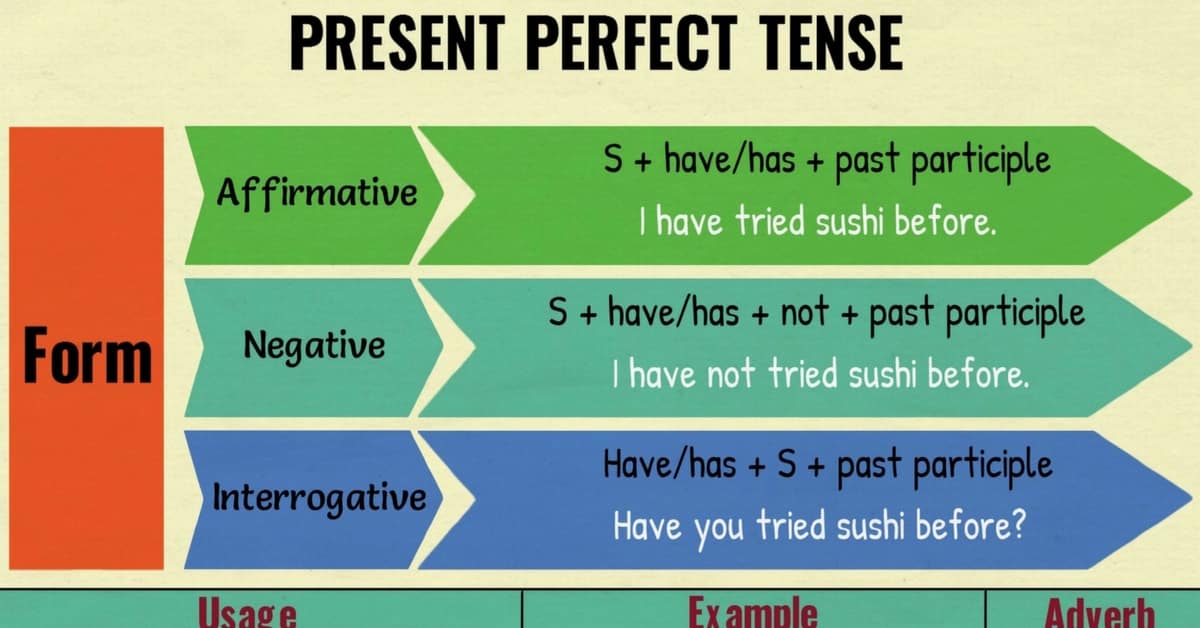
Learners will be able to: - present the present perfect (affirmative and negative) - present past participles - practise the present perfect - the value based on the integrated educational program is to educate students for justice and responsibility |
||
Plan |
|||
Stages / Time |
Teachers actions |
Students actions |
Assessment criteria |
Resources |
Beginning of the lesson Warming-up
3 min
Pre-learning «Brainstorming» method 7 min.
|
Organization moment : 1.Greeting. Ask about the weather. The teacher sets the lesson objectives, letting students know what to anticipate from the lesson. Warming up Where are you from? How old are you? What color is it? How many students are there in class? What day of the week today? revise the language from the previous lesson Lead – In
|
The aim: To develop pupils speaking skills and create friendly atmosphere Efficiency: By wishing each other they feel better and feel the support of others Students of the class are listed. Students' attention is drawn to the lesson.
• Learners talk about daily routines previous lesson vocabulary
Determines the topic and purpose of the lesson
Students say different words from the picture
|
The teacher to assess learners for their ability. “Good job! Well done!” Formative Assessment
Good job! Descriptor: - talk about daily routines Point 1
Assessment criteria - Learners have met the learning objectives. |
Pictures
worksheet
Student’s book |
Middle of the lesson Presentation part. 30 min
|
Ex:1 P:32 • Ss close their books. Present the present perfect. Say: I have travelled abroad. Write it on the board. Underline I have travelled and explain that this verb is in the present perfect. Explain that we use have/has and the past participle of the main verb to form the affirmative. Explain that we use this tense to talk about actions which started in the past and continue to the present, experiences in the past and actions which happened at an unstated time in the past.
Ex: 2 P: 32 • Explain the task. Ss match the verbs to the past participles. Check Ss' answers, then elicit which are regular and which are irregular
Ex: 3 P: 32 • Explain the task and allow Ss some time to complete it. Check Ss' answers around the class.
Ex: 4 a P: 32 • Explain the task and allow Ss some time to complete it. • Check Ss' answers around the class.
Ex: 4 b P: 32 Elicit sentences from various Ss around the class about the actions in the table.
Justice and Responsibility For any type of service or activity take responsibility Learning when to say sorry Part of learning about responsibility is knowing when to apologize for the negative consequences of our actions. Teaching kids when to say sorry through worksheets or apology wall art that you can hang around your home will reinforce how important it is to apologize and take responsibility for what we did wrong. |
•Pupils read the theory. Say the examples in your language. ANSWERS I've been here for ... I've just got back... I've visited... I've never seen... I've never felt... I've never been... I've put
•Pupils match the verbs to the past participles ANSWERS 2 g l 3 j I 4 a l 5 e R 6 b l 7 i I 8 d l 9 h R 10 f R
•Pupils use the verbs in the list in the present perfect to complete the sentences. ANSWERS 1 have visited 2 has flown 3 has learnt/learned 4 have taken 7 have gone S has won 6 have tried
•Pupils look at the table and complete the sentences. ANSWERS 2 hasn't gone 3 have run 4 haven't tried 5 hasn't run 6 have slept
•Pupils answer the question ANSWERS I've gone bungee jumping./I've never gone bungee jumping. I've run a marathon./I've never run a marathon. I've tried Indian food./I've never tried Indian food |
Descriptor: - read the theory Total: 2 point
Descriptor: - match the verbs to the past participles Total: 2 point
pupils are evaluated by collecting colour pencils
Descriptor: - use the verbs in the list in the present perfect - complete the sentences. Total: 3 point
Descriptor: - complete the sentences. Total: 3 point
-Make CCQ questions Yes / No
Total: 10 point
|
Card Worksheet
Students book |
End of the lesson 5 min |
FEEDBACK Learners provide feedback on what they have learned at the lesson. Ex: Home task:
|
What worked well for you in today’s class? What could we have done differently to make today’s class better for you? What are you wondering about after today’s lesson? What did you find difficult about today’s lesson? |
Poster Success
|
|
18-такырып Unit 3 Holidays and travel |
Lesson 30 |
||
Teacher name: |
|
||
Date: |
|
||
Grade: 7 |
Number present: |
absent: |
|
Lesson title |
Reading: Travelers’ tales |
||
Learning objectives
|
7.2.4.1 understand with little support some of the implied meaning in extended talk on a limited range of general and curricular topics 7.3.3.1 give an opinion at discourse level on a growing range of general and curricular topics 7.4.2.1 understand specific information and detail in texts on a range of familiar general and curricular topics |
||
Lesson objectives |
Learners will be able to: - predict the content of a text - read for specific information - consolidate new vocabulary - the value based on the integrated educational program is to educate students for justice and responsibility |
||
Plan |
|||
Stages / Time |
Teachers actions |
Students actions |
Assessment criteria |
Resources |
Beginning of the lesson Warming-up
3 min
Pre-learning «Brainstorming» method 7 min.
|
Organization moment : 1.Greeting. Ask about the weather. The teacher sets the lesson objectives, letting students know what to anticipate from the lesson. Warming up Where are you from? How old are you? What color is it? How many students are there in class? What day of the week today? Revise the language of the previous lesson. Lead – In
|
The aim: To develop pupils speaking skills and create friendly atmosphere Efficiency: By wishing each other they feel better and feel the support of others Students of the class are listed. Students' attention is drawn to the lesson.
Determines the topic and purpose of the lesson
• Learners talk about favourite dayprevious lesson vocabulary
Students say different words from the picture and count one to hundred
|
The teacher to assess learners for their ability. “Good job! Well done!” Formative Assessment
Good job! Descriptor: - talk about favourite day Total: 1 point
Assessment criteria - Learners have met the learning objectives |
Pictures
worksheet
Student’s book |
Middle of the lesson Presentation part. 30 min
|
Ex:1 P:34 a)• Elicit a variety of answers from Ss around the class
b)• Direct Ss' attention to the pictures. Elicit Ss' guesses as to what the story can be about and what they think happened to the traveller.
Ex: 2 P: 34 • Allow Ss some time to read the text and answer the questions. Direct Ss to the Word List to look up the meanings of the words in the Check these words box. Check Ss' answers around the class
Ex: 3 P: 35 • Explain the task. Ss complete the task and check their answers in the text
Ex: 4 P: 35 • Consolidate new vocabulary Give Ss time to complete the task, then check Ss' answers around the class. Justice and Responsibility In front of the class team for the assigned general case feel responsible In front of the class team for the assigned general case feel responsible The Character Building series aims at teaching youngsters the desired character traits and behaviour they need to learn and apply in their daily life. |
Pupils answer the question. Tell the class. ANSWERS Student’s own answer
Pupils look at the pictures. ANSWERS I see snakes and a suitcase in the pictures. I think the story is about snakes. Perhaps a traveller hid snakes in his luggage on a flight.
Pupils read the text and for questions choose the correct answers. ANSWERS 1 C 2 B 3 C 4 B 5 A
Pupils choose the correct item. Check your answer in the text. ANSWERS 1 about (para 1) 2 of (para 1) 3 in (para 3) 4 with (para 5)
Pupils fill the gaps. ANSWERS 1 missed 2 lost 3 board 4 break S import 6 take |
Descriptor: - answer the question. Tell the class Total: 2 point
Self assessment
Descriptor: - answer the question. Tell the class Total: 3 point
Descriptor: - choose the correct item. Check your answer in the text Total: 3 point
pupils are evaluated by collecting colour pencils
-Make CCQ questions Yes / No Total: 10 point |
Card Worksheet
Students book |
End of the lesson 5 min |
FEEDBACK Learners provide feedback on what they have learned at the lesson. Ex: Home task: |
What worked well for you in today’s class? What could we have done differently to make today’s class better for you? What are you wondering about after today’s lesson? What did you find difficult about today’s lesson? |
Poster Success
|
|




19-такырып Unit 3: Holidays and travel |
Lesson 32 |
||
Teacher name: |
|
||
Date: |
|
||
Grade: 7 |
Number present: |
absent: |
|
Lesson title |
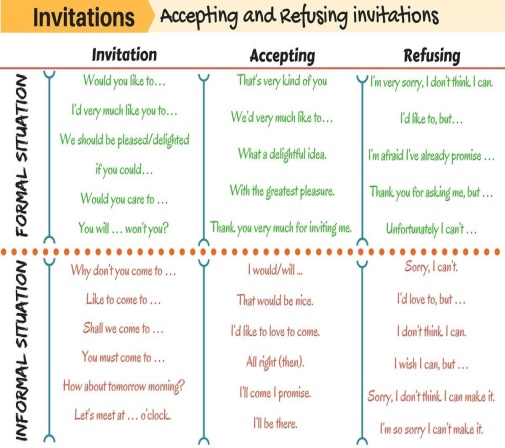
Everyday English: Inviting – Accepting / refusing |
||
Learning objectives
|
7.3.3.1 give an opinion at discourse level on a growing range of general and curricular topics 7.4.2.1 understand specific information and detail in texts on a range of familiar general and curricular topics 7.5.5.1 develop with some support coherent arguments supported when necessary by examples and reasons for a limited range of written genres in familiar general and curricular topics |
||
Lesson objectives |
Learners will be able to: - understand specific details through the keywords, style, intonation and repetition -create short conversations in routine context on topics of interest/discussed issue - the value based on the integrated educational program is to educate students for justice and responsibility |
||
Plan |
|||
Stages / Time |
Teachers actions |
Students actions |
Assessment criteria |
Resources |
Beginning of the lesson Warming-up 3 min
Pre-learning «Brainstorming» method 7 min.
|
Organization moment : 1.Greeting. Ask about the weather. The teacher sets the lesson objectives, letting students know what to anticipate from the lesson. Warming up Where are you from? How old are you? What color is it? How many students are there in class? What day of the week today?
|
The aim: To develop pupils speaking skills and create friendly atmosphere Efficiency: By wishing each other they feel better and feel the support of others Students of the class are listed.
Students' attention is drawn to the lesson.
• Learners talk about favourite day previous lesson vocabulary
Determines the topic and purpose of the lesson
Students say different words from the picture
|
The teacher to assess learners for their ability. “Good job! Well done!” Formative Assessment
Good job! Descriptor: -know key phrases - know vocabulary of previous lesson Total: 1 point
Assessment criteria - Learners have met the learning objectives if they can talk about two friends
|
Pictures
worksheet
Student’s book |
Middle of the lesson Presentation part. 30 min
|
Ex:1 P:36 • introduce the topic; to listen and read for gist Ask some Ss to read the sentences aloud. Play the recording. Ss listen and follow the text in their books and answer the question in the rubric.
Ex: 2 P: 36 • read for specific information Allow Ss time to read the dialogue again and answer the question in the rubric
Ex: 3 P: 36 • learn synonymous phrases Read out the phrases. Refer Ss back to the dialogue and elicit the synonymous ones from various Ss around the class.
Ex: 5 P: 36 • Ask Ss to work in pairs, take roles and read out the dialogue. Monitor the activity around the class and ask some groups to read out the dialogue in front of the class. Explain the situation. Justice and Responsibility Willingness to accept and correct mistakes, if to be responsible for the results of his work if they are done When you make a mistake, try to admit it as soon as you can, and apologize if necessary. Making an effort to apologize for a mistake can show that you respect the people who have been affected by the mistake. Apologizing can also show that you regret your mistake, that you are willing to take responsibility for it and that you're using it as an opportunity to improve yourself.
|
Pupils read the dialogue. Answer the question what is the dialogue about? ANSWERS The dialogue is about the two friends' plans for the weekend.
Pupils read the dialogue again. Answer the question. What is Kairat going to do next weekend? ANSWERS Kairat is going sailing with his dad in Kolsai Lakes.
Pupils find sentences in the dialogue which mean. ANSWERS Why don't you join me? - Why don't you come with me? We can ask them together. - Let's ask them together, then. That's a good idea. - That sounds great
Pupils listen and read the dialogue. Take roles and read it aloud. ANSWERS Students own answer. |
Descriptor: - read the dialogue - answer the question Total: 2 point
Descriptor: - read the dialogue again - answer the question Total: 3 point
Descriptor: - find sentences in the dialogue Total: 3 point
pupils are evaluated by collecting colour pencils
Descriptor: - listen and read the dialogue - take roles
-Make CCQ questions Yes / No
Total: 10 point
|
Card Worksheet
Students book |
End of the lesson 5 min |
FEEDBACK Learners provide feedback on what they have learned at the lesson. Ex: Home task: |
What worked well for you in today’s class? What could we have done differently to make today’s class better for you? What are you wondering about after today’s lesson? What did you find difficult about today’s lesson? |
Poster Success
|
|
|
|
|
|
|
20-такырып
Unit 3 : Holidays and travel |
Lesson 33 |
||
Teacher name: |
|
||
Date: |
|
||
Grade: 7 |
Number present: |
absent: |
|
Lesson title |
Across cultures: My amazing travels |
||
Learning objectives
|
7.3.3.1 give an opinion at discourse level on a growing range of general and curricular topics 7.4.1.1 understand the main points in texts on a limited range of unfamiliar general and curricular topics 7.5.9.1 punctuate written work at text level on a growing range of familiar general and curricular topics with some accuracy |
||
Lesson objectives |
Learners will be able to: - give a short response showing their opinion, agreement or disagreement - identify the intended audience - the value based on the integrated educational program is to educate students for justice and responsibility |
||
Plan |
|||
Stages / Time |
Teachers actions |
Students actions |
Assessment criteria |
Resources |
Beginning of the lesson Warming-up
3 min
Pre-learning «Brainstorming» method 7 min.
|
Organization moment : 1.Greeting. Ask about the weather. The teacher sets the lesson objectives, letting students know what to anticipate from the lesson. Warming up Where are you from? How old are you? What color is it? How many students are there in class? What day of the week today? Write some of the words from the previous lesson Lead – In
|
“The wish lamp” method helps to start the lesson with good wishes to each other. The aim: To develop pupils speaking skills and create friendly atmosphere Efficiency: By wishing each other they feel better and feel the support of others Students of the class are listed.
Students' attention is drawn to the lesson. • Learners talk about rooms previous lesson vocabulary
Determines the topic and purpose of the lesson
Students say different words from the picture
|
The teacher to assess learners for their ability. “Good job! Well done!” Formative Assessment
Good job! Descriptor: -know key phrases - know vocabulary of previous lesson Total: 1 point
Assessment criteria - Learners have met the learning objectives if they can: Talk about amazing travels |
Pictures
worksheet
Student’s book |
Middle of the lesson Presentation part. 30 min
|
Ex:1 P: 37 • Direct Ss' attention to the pictures and elicit Ss guesses as to what they show (a cockroach race, a Kumis alu competition). Ask Ss what, if anything, they know about these activities. Elicit a variety of questions for what Ss would like to know about them from S around the class and write three of them on the board. Play the recording. Ss listen and follow the text in their books and check if they can answer their questions.
Ex: 2 P: 37 • read for specific information Allow Ss some time to read the text and mark the statements. Direct Ss to the Word List to look up the meanings of the words in the Check these words box. Check Ss' answers and then elicit corrections for the false statements from Ss around the class.
Ex: 3 P: 37 • consolidate information in a text and express a personal opinion Ask various Ss to say which event they would like to attend and why
Ex: 4 P: 37 • write about an annual event in Kazakhstan Ss work in groups and collect information from the Internet, encyclopaedias or other reference books and write a paragraph about an annual event from Kazakhstan. Ask various groups to read their paragraphs to the class.
Justice and Responsibility Ability to finish what you started Ability to finish what you started Being able to follow through and finish the things you start is a valuable life skill. It requires you to develop a resilient mindset, retain focus, and not give in to distractions easily. Read on to understand your brain and remained focused, finish the things you start, and reach your goals. |
• Pupils look at the pictures in the blog. ANSWERS Where do people race cockroaches? (Brisbane) Where do people play kumis alu? (Kazakhstan) Why do you do these sports? (for fun)
• Pupils read the text and mark the statements true, false or doesn’t say. Correct the false sentences. ANSWERS 1 T 2 DS 3 DS 4 1 Kumis alu is still popular in Kazakhstan.
• Pupils answer the question. ANSWERS I think I would like to attend the kumis alu game because it looks like lots of fun and I don't like cockroaches at all.
• Pupils collect information about an annual event you have attended in your country. ANSWERS Name: Nauryz Place: all over Kazakhstan What people do: dress in traditional clothes, go to concerts, eat a special meal called 'Nauryz kozhe, make wishes for a happy year |
Descriptor: - look at the pictures in the blog. - answer the question Total: 2 point
Self Assessment
Descriptor: - read the text - mark the statements Total: 2 point
Descriptor: - answer the question. Total: 2 point
pupils are evaluated by collecting places where they live
Descriptor: - collect information about annual event Total: 2 point
-Make CCQ questions Yes / No Total: 10 point
|
Card Worksheet
Students book |
End of the lesson 5 min |
FEEDBACK Learners provide feedback on what they have learned at the lesson. Ex: Home task: |
What worked well for you in today’s class? What could we have done differently to make today’s class better for you? What are you wondering about after today’s lesson? What did you find difficult about today’s lesson? |
Poster Success
|
|

Short term plan: term 2
Unit 3 : Holidays and travel 21-такырып |
Lesson 34 |
||
Teacher name: |
|
||
Date: |
|
||
Grade: 7 |
Number present: |
absent: |
|
Lesson title |
Across curriculum: A lake or a sea? |
||
Learning objectives
|
7.3.6.1 begin to link comments with some flexibility to what others say at sentence and discourse level in pair, group and whole class exchanges 7.5.6.1 link with little or no support, sentences into coherent paragraphs using a variety of basic connectors on a range of familiar general topics and some curricular topics |
||
Lesson objectives |
Learners will be able to: - -recognize what the speaker(s) actually means. -- produce a text in a range of basic genres (letters, emails, postcards, basic articles, reports, movie/book reviews) - the value based on the integrated educational program is to educate students for justice and responsibility |
||
Plan |
|||
Stages / Time |
Teachers actions |
Students actions |
Assessment criteria |
Resources |
Beginning of the lesson Warming-up
3 min
Pre-learning «Brainstorming» method 7 min.
|
Organization moment : 1.Greeting. Ask about the weather. The teacher sets the lesson objectives, letting students know what to anticipate from the lesson. Warming up Where are you from? How old are you? What color is it? How many students are there in class? What day of the week today? Ask a pupil to mime an action associated with one of the places from the previous lesson. Ask the rest of the class to guess which place it is. Demonstrate this yourself first Teacher: (mimes posting a letter) Lead – In
|
The aim: To develop pupils speaking skills and create friendly atmosphere Efficiency: By wishing each other they feel better and feel the support of others Students of the class are listed.
Students' attention is drawn to the lesson.
Learners find mime an action associated with one of the places Determines the topic and purpose of the lesson
Students say different words from the picture
|
The teacher to assess learners for their ability. “Good job! Well done!” Formative Assessment
Good job! Descriptor: -know key phrases - can make sentence - know vocabulary of previous lesson Total: 1 point Assessment criteria - Learners have met the learning objectives if they can: Talk about geography |
Pictures
worksheet
Student’s book |
Middle of the lesson Presentation part. 30 min
|
Ex:1 P:38 • take a quiz; to listen and read for specific information Ask Ss to read the questions and explain/elicit the meanings of any unknown words. Give Ss time to read the quiz and guess the answers. Play the recording. Ss listen and follow the text in their books to check their answers.
Ex: 2 P: 38 • consolidate information in a text Elicit answers from Ss around the class. Justice and Responsibility By showing justice, kindness and responsibility willingness to help others By showing justice, kindness and responsibility willingness to help others
Ex: 3 P: 38 • write about a lake Ask Ss to write the headings in their notebooks. Give Ss time to research online and make notes under the headings, then use their notes to write a short text. Ask various Ss around the class to read their texts to the class. Alternatively, assign the task as HW and ask Ss to read out their text in the next lesson. |
• Pupils take the quiz. Choose the correct answer ANSWERS 1 C 2 B 3 C 4 A
• Pupils answer the question. Tell your partner. ANSWERS It is called a sea, but it is actually a lake. It is the largest enclosed body of water on Earth and it borders five countries. 130 rivers flow into it but the water is salty.
• Pupils collect information another lake. ANSWERS Name: Big Almaty Lake (or Bolshoe Almatinskoe Lake) Width: around 1 km Depth: around 40 m Borders/Location: in Zaalayskiy Alatau Mountains, En Almatinka gorge
|
Descriptor: - take the quiz - choose the correct answer Total: 2 point
Descriptor: - answer the question - tell your partner Total: 2 point
Descriptor: - collect information another lake Total: 2 point
pupils are evaluated by collecting colour pencils -Make CCQ questions Yes / No |
Card Worksheet
Students book |
End of the lesson 5 min |
FEEDBACK Learners provide feedback on what they have learned at the lesson. Ex: Home task: |
What worked well for you in today’s class? What could we have done differently to make today’s class better for you? What are you wondering about after today’s lesson? What did you find difficult about today’s lesson?
|
Poster Success
|
|

Short term plan: term 2
Unit 3 : Holidays and travel 22-такырып |
Lesson 35 |
||
Teacher name: |
|
||
Date: |
|
||
Grade:7 |
Number present: |
absent: |
|
Lesson title |
Writing: An informal email giving news Summative assessment for unit 3 |
||
Learning objectives
|
7.3.6.1 begin to link comments with some flexibility to what others say at sentence and discourse level in pair, group and whole class exchanges 7.5.6.1 link with little or no support, sentences into coherent paragraphs using a variety of basic connectors on a range of familiar general topics and some curricular topics |
||
Lesson objectives |
Learners will be able to: - compose and participate with fluency in dialogues, conversations, discussions and debates using a range of vocabulary, grammar and linking devices -write a coherent paragraph /short text stating and explaining an idea/argument - the value based on the integrated educational program is to educate students for justice and responsibility |
||
Plan |
|||
Stages / Time |
Teachers actions |
Students actions |
Assessment criteria |
Resources |
Beginning of the lesson Warming-up
3 min
Pre-learning «Brainstorming» method 7 min.
|
Organization moment : 1.Greeting. Ask about the weather. The teacher sets the lesson objectives, letting students know what to anticipate from the lesson. Warming up Where are you from? How old are you? What color is it? How many students are there in class? What day of the week today? Revise the language of the previous lesson Lead – In
|
The aim: To develop pupils speaking skills and create friendly atmosphere Efficiency: By wishing each other they feel better and feel the support of others Students of the class are listed. Students' attention is drawn to the lesson.
Learners find mime an action associated with one of the places
Determines the topic and purpose of the lesson
Students say different words from the picture
|
The teacher to assess learners for their ability. “Good job! Well done!” Formative Assessment
Good job! Assessment criteria - Learners have met the learning objectives if they can: Talk about an informal email giving news Descriptor: - know vocabulary of previous lesson Total: 1 point |
Pictures
worksheet
Student’s book |
Middle of the lesson Presentation part. 30 min
|
Ex:1 P: 39 • Scan a text for specific information Ask Ss to scan the text briefly and identify the author and recipient of the email as well as the author's location.
Ex: 2 P: 39 • Read for cohesion and coherence Explain the task and allow Ss some time to read the email and complete the task. Play the recording for Ss to listen and check their answers.
Ex: 3 P: 39 • Revise subject/object pronouns and possessive adjectives Go through the Study Skills box and explain the task. Ss complete the task. Check Ss' answers around the class.
Summative assessment for the unit «Holidays and travel»
Justice and Responsibility For any type of service or activity take responsibility For any type of service or activity take responsibility |
Pupils look at the email. Answer the question. ANSWERS Laura is sending the email to Marzhan. Laura is in London.
Pupils complete the email with phrases. ANSWERS 1 d 2 f 3 c 4 e 5 b 6 a
Pupils replace the words in bold with subject/object pronouns or possessive adjectives. ANSWERS 1 They 2 him 3 her 4 her |
Descriptor: - look at the email - answer the question Total: 2 point
pupils are evaluated by collecting fish
Descriptor: - complete the email with phrases Total: 2 point
Descriptor: - replace the words in bold Total: 2point
-Make CCQ questions Yes / No |
Card Worksheet
Students book |
End of the lesson 5 min |
FEEDBACK Learners provide feedback on what they have learned at the lesson. Ex: Home task: |
What worked well for you in today’s class? What could we have done differently to make today’s class better for you? What are you wondering about after today’s lesson? What did you find difficult about today’s lesson?
|
Poster Success
|
|

Unit 4 SPACE & EARTH 23-такырып
|
Lesson 36 |
||
Teacher name: |
|
||
Date: |
|
||
Grade: 7 |
Number present: |
absent: |
|
Lesson title |
Vocabulary: Environmental problems |
||
Learning objectives
|
7.1.5.1 use feedback to set personal learning objectives 7.2.5.1 recognise the opinion of the speakers in supported extended talk on a range of general and curricular topics 7.3.3.1 give an opinion at discourse level on a growing range of general and curricular topics |
||
Lesson objectives |
Learners will be able to: - identify the attitude of a speaker towards the topic of the talk - give a short response showing their opinion, agreement or disagreement - the value based on the integrated educational program is to educate students for justice and responsibility |
||
Plan |
|||
Stages / Time |
Teachers actions |
Students actions |
Assessment criteria |
Resources |
Beginning of the lesson Warming-up
3 min
Pre-learning «Brainstorming» method 7 min.
|
Organization moment : 1.Greeting. Ask about the weather. The teacher sets the lesson objectives, letting students know what to anticipate from the lesson. Warming up Where are you from? How old are you? What color is it? How many students are there in class? What day of the week today? Ask the pupils questions about their previous lesson . Elicit their answers Lead – In
|
The aim: To develop pupils speaking skills and create friendly atmosphere Efficiency: By wishing each other they feel better and feel the support of others Students of the class are listed.
Students' attention is drawn to the lesson.
Learners answer the question
Determines the topic and purpose of the lesson
Students say different words from the picture Do you ever see posters like this? Why do you think animals become endangered? Do you know the names and order of the planets in the solar system?
|
The teacher to assess learners for their ability. “Good job! Well done!” Formative Assessment
Good job! Assessment criteria - To revise school rules; to write about classroom rules; to develop the pupils’ listening skills through a song. Descriptor: -can speak fluently on theme -can follow the structure Total: 2point
|
Pictures
worksheet
Student’s book |
Middle of the lesson Presentation part. 30 min
|
Ex:1 P:41 • Present vocabulary about problems with our planet Play the recording with pauses for Ss to repeat chorally and/or individually. Check Ss pronunciation and intonation. Students say the phrases in Kazakhstani
Ex: 2 P: 41 • practise vocabulary about problems with our planet Explain that the phrases (1-6) show either causes or ways of solving the problems (A-F). Ask Ss to match the solution/cause to each problem. Give Ss time to complete the task. Check answers around the class.
Ex: 1 P: 28 WB • Explain the task. Allow Ss some time to match the pictures to the problems. • Alternatively, you may allow Ss to review the module and find the relevant information. Check Ss' answers.
Ex: 2 P: 28 WB • Explain the task and allow Ss time to look through the module and Complete the sentences with the verbs in the correct form.
Justice and Responsibility Ability to work in a team, opinions of others to respect their positions and achieve common goals aspire to ability to work in a team, opinions of others to respect their positions and achieve common goals aspire to the best leaders do more than just plan projects and assign tasks - they inspire their team to do great work by taking the time to build trust and show respect. |
Pupils listen and repeat. Answer the question. ANSWERS Students own answer.
Pupils match the sentences to the problems in the pictures. ANSWERS A1 B 2 C6 D 3 E 4 FS
Pupils match the pictures to the problems. ANSWERS 1c 2e 3d 4b 5a
Pupils complete the sentences with the verbs in the correct form ANSWERS 1 threaten 2 is going to clean up/is cleaning up 3 worshipped 4 to protect 5 to save 6 will survive 7 to preserve 8 will face |
Descriptor: - listen and repeat - answer the question Total: 1 point
pupils are evaluated by collecting fish
Descriptor: - match the sentences to the problems
Descriptor: - match the pictures to the problems
Descriptor: - complete the sentences with the verbs Total: 1 point
-Make CCQ questions Yes / No |
Card Worksheet
Students book |
End of the lesson 5 min |
FEEDBACK Learners provide feedback on what they have learned at the lesson. Ex: Home task: |
What worked well for you in today’s class? What could we have done differently to make today’s class better for you? What are you wondering about after today’s lesson? What did you find difficult about today’s lesson?
|
Poster Success
|
|

Unit 4 SPACE & EARTH 24-такырып |
Lesson 37 |
||
Teacher name: |
|
||
Date: |
|
||
Grade: 7 |
Number present: |
absent: |
|
Lesson title |
Reading: Monuments in danger |
||
Learning objectives
|
7.1.1.10 use talk or writing as a means of reflecting on and exploring a range of perspectives on the world 7.4.1.1 understand the main points in texts on a limited range of unfamiliar general and curricular topics 7.3.3.1 give an opinion at discourse level on a growing range of general and curricular topics |
||
Lesson objectives |
Learners will be able to: - identify the intended audience - give a short response showing their opinion, agreement or disagreement - the value based on the integrated educational program is to educate students for justice and responsibility |
||
Plan |
|||
Stages / Time |
Teachers actions |
Students actions |
Assessment criteria |
Resources |
Beginning of the lesson Warming-up
3 min
Pre-learning «Brainstorming» method 7 min.
|
Organization moment : 1.Greeting. Ask about the weather. The teacher sets the lesson objectives, letting students know what to anticipate from the lesson. Warming up Where are you from? How old are you? What color is it? How many students are there in class? What day of the week today? Revise the vocabulary of the previous lesson Lead – In
|
The aim: To develop pupils speaking skills and create friendly atmosphere Efficiency: By wishing each other they feel better and feel the support of others Students of the class are listed.
Students' attention is drawn to the lesson.
Determines the topic and purpose of the lesson
Students say different words from the picture
How old are these Stonehenge? Where are their places? |
The teacher to assess learners for their ability. “Good job! Well done!” Formative Assessment
Good job!
Assessment criteria - Learners have met the learning objectives if they can: explore other subject areas (Geography) talk about places around the world.
|
Pictures
worksheet
Student’s book |
Middle of the lesson Presentation part. 30 min
|
Ex:1 P:42 a) Introduce the topic and elicit prior knowledge Elicit any monuments Ss know of from their own country that are threatened by pollution.
b) Direct Ss' attention to the pictures and elicit questions about the places from Ss around the class and write three on the board. Play the recording. Ss listen and follow the text in their books and check if they can answer the questions
Ex: 2 P: 42 • Read for specific information Allow Ss some time to read the texts and answer the questions. Go through the Check these words box with Ss and tell them to look up the meanings of any words they don't know. Check Ss' answers
Ex: 3 P: 42 • Consolidate and expand on information in a text Allow Ss time to read the text again and prepare their answers. Elicit answers to the questions from various Ss around the class.
Justice and Responsibility For the preservation and prosperity of the state feel responsible The Republic of Kazakhstan is a unitary state with the presidential system of government. Under the Constitution, Kazakhstan is a democratic, secular, legal and social state which recognizes the man, his life, rights and freedoms as the supreme values of the country. |
Pupils answer the question ANSWERS Students own answer
Pupils look at the pictures in the text. Write three questions about these places ANSWERS old are these placesStonehenge5,000 years old Temples early 12th century many people visit them each year? Stonehenge800,000the Temples600,000 are they in danger Stonehenge visitors traffic pollution temples the weather vegetation and tourists
Pupils read the text and answer the question ANSWERS 1 5,000 years old 2 Possibly as a place for sun worship - we don't know. 3 Visitors have damaged it and the stones are threatened because of traffic pollution. 4 Wet, humid weather, vegetation and tourists are damaging the temples. 5 Yes, they are because 600,000 tourists come to see them every year. 6 Conservationists
Pupils answer the question ANSWERS 1 I didn't know how old the two places are and what is causing the damage to these places. 2 I would like to visit the temples of Angkor Wat. They look very interesting and there is a lot to see./I would like to visit Stonehenge. It looks very beautiful and mysterious |
Descriptor: - answer the question Total: 2 point
Self assessment
Descriptor: - look at the pictures - write three questions Total: 3 point
Descriptor: - Pupils read the text - answer the question Total: 3 point
Descriptor: - answer the question
-Make CCQ questions Yes / No Total: 10 point |
Card Worksheet
Students book |
End of the lesson 5 min |
FEEDBACK Learners provide feedback on what they have learned at the lesson. Ex: Home task: |
What worked well for you in today’s class? What could we have done differently to make today’s class better for you? What are you wondering about after today’s lesson? What did you find difficult about today’s lesson? |
Poster Success
|
|
|
|
|
|
|

Unit 4 SPACE & EARTH 25-такырып |
Lesson 39 |
||
Teacher name: |
|
||
Date: |
|
||
Grade: 7 |
Number present: |
absent: |
|
Lesson title |
Use of English: Will |
||
Learning objectives
|
7.5.6.1 link with little or no support, sentences into coherent paragraphs using a variety of basic connectors on a range of familiar general topics and some curricular topics 7.6.8.1 use a growing variety of future forms including present continuous with future meaning on a range of familiar general and curricular topics |
||
Lesson objectives |
Learners will be able to: - identify structures with “will” and “be going to” in the studied material - the value based on the integrated educational program is to educate students for unity and solidarity |
||
Plan |
|||
Stages / Time |
Teachers actions |
Students actions |
Assessment criteria |
Resources |
Beginning of the lesson Warming-up
3 min
Pre-learning «Brainstorming» method 7 min.
|
Organization moment : 1.Greeting. Ask about the weather. The teacher sets the lesson objectives, letting students know what to anticipate from the lesson. Warming up Where are you from? How old are you? What color is it? How many students are there in class? What day of the week today?
Lead – In
|
The aim: To develop pupils speaking skills and create friendly atmosphere Efficiency: By wishing each other they feel better and feel the support of others Students of the class are listed.
Students' attention is drawn to the lesson.
Determines the topic and purpose of the lesson
Students say different words from the picture
|
The teacher to assess learners for their ability.
“Good job! Well done!” Formative Assessment
Good job! Assessment criteria - Learners have met the learning objectives if they can: Talk about |
Pictures
worksheet
Student’s book |
Middle of the lesson Presentation part. 30 min
|
Ex:1 P:44 • Present the future simple (will) Ss close their books. Present the future simple. Say: I'm thirsty. I will drink some water, and Next summer he will go on holiday. Write them on the board. Underline I will drink and he will go and explain that these verbs are in the future simple. Explain that we use will + the base form of the main verb to form the affirmative. Explain that we use this tense to talk about on-the-spot decisions and predictions.
Ex: 2 P: 44 • Practise will for predictions about the future Explain the task and allow Ss some time to complete it. Check Ss' answers around the class.
Ex:3 P: 44 • Explain the and read out example Allow Ss two to complete various Ss read out the answers the class
Ex: 4 P: 44 • practise will for on-the-spot decisions Explain the task and allow Ss some time to complete it. Check Ss' answers around the class. Unity and Solidarity Build trusting relationships and enjoy working in a team being able to maintain the situation This will allow you to fill in any gaps for school subjects that the students might want to talk about, but don’t know the English word for Build trusting relationships and enjoy working in a team being able to maintain the situation |
Pupils read the table. Say the examples in your language. ANSWERS Student’s own answer
Pupils use the verbs to complete the sentences with predictions ANSWERS 1 will disappear 2 will dry up 3 won't lose 4 will become 5 will rise 6 won't have 7 will travel 8 will have
Pupils write sentences using the phrases in brackets as in the example ANSWERS 2 I'll take an umbrella. 3 I'll help you. 4 I'll give you a lift 5 I show you. 6 I'll explain it (to you).
Pupils look at the picture. Use the verbs to write the responses. ANSWERS 1 I'll answer it. 2 I'll lend you some. 3 I'll hoover it |
Descriptor: - read the table - Say the examples in hour language Total: 3 point
pupils are evaluated by collecting vitamins
Descriptor: - write sentences using the phrases Total: 3 point
Descriptor: - look at the picture - use the verbs to write the responses Total: 3 point
-Make CCQ questions Yes / No
Total: 10 point |
Card Worksheet
Students book |
End of the lesson 5 min |
FEEDBACK Learners provide feedback on what they have learned at the lesson. Ex: Home task: |
What worked well for you in today’s class? What could we have done differently to make today’s class better for you? What are you wondering about after today’s lesson? What did you find difficult about today’s lesson?
|
Poster Success
|
|
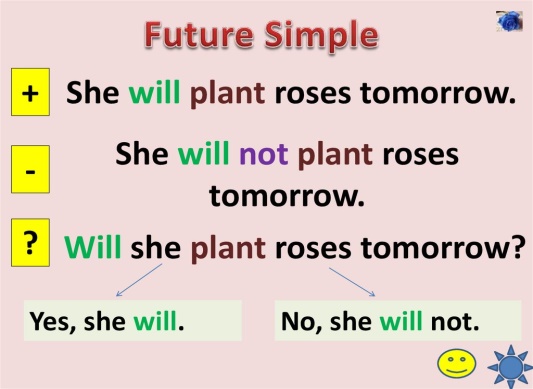
Unit 4 SPACE & EARTH 26-такырып |
Lesson 41 |
||
Teacher name: |
|
||
Date: |
|
||
Grade: 7 |
Number present: |
absent: |
|
Lesson title |
Reading: Mission to Mars |
||
Learning objectives
|
7.2.1.1 understand with little support the main points in extended talk on a limited range of general and curricular topics 7.3.6.1 begin to link comments with some flexibility to what others say at sentence and discourse level in pair, group and whole class exchanges 7.4.1.1 understand the main points in texts on a limited range of unfamiliar general and curricular topics |
||
Lesson objectives |
Learners will be able to: - compose and participate with fluency in dialogues, conversations, discussions and debates using a range of vocabulary, grammar and linking devices - create a short oral text to tell about basic information (age, hobbies, interests, family and educational background) - the value based on the integrated educational program is to educate students for unity and solidarity |
||
Plan |
|||
Stages / Time |
Teachers actions |
Students actions |
Assessment criteria |
Resources |
Beginning of the lesson Warming-up
3 min
Pre-learning «Brainstorming» method 7 min.
|
Organization moment : 1.Greeting. Ask about the weather. The teacher sets the lesson objectives, letting students know what to anticipate from the lesson. Warming up Where are you from? How old are you? What color is it? How many students are there in class? What day of the week today?
Lead – In
|
The aim: To develop pupils speaking skills and create friendly atmosphere Efficiency: By wishing each other they feel better and feel the support of others Students of the class are listed.
Students' attention is drawn to the lesson.
Determines the topic and purpose of the lesson
Students say different words from the picture
What do you know about Mars? |
The teacher to assess learners for their ability.
“Good job! Well done!” Formative Assessment
Good job! Assessment criteria
- Learners have met the learning objectives if they can: Talk about Mars |
Pictures
worksheet
Student’s book |
Middle of the lesson Presentation part. 30 min
|
Ex:1 a P:46 • Introduce the topic; to predict the content of the text Direct Ss' attention to the picture of the solar system. Play the recording with pauses for Ss to repeat chorally and/or individually. Check Ss' pronunciation and intonation.
Ex: 1b P: 46 • Discuss the solar system Read the questions aloud. Explain/Elicit the meaning of inner (closest to the centre) and outer (closest to the outside) and explain that the first four planets are part of the inner solar system and the last four planets are part of the outer solar system. Ask Ss to look at the picture and elicit the
Ex:2 P: 47 • Predict the content of a text; to read for gist Read out the title: 'Mission to Mars'. Explain the word mission - (an expedition into space.) Write the following names on the board; Yuri Gagarin, Vostok 1, Baikonur Cosmodrome, Neil Armstrong, Opportunity, Curiosity, NASA. Ask Ss if they know how these names are connected with space exploration. Play the recording. Ss listen and read to check.
Ex:3 P: 47 • Read for specific information Explain the task. Ask Ss to read the questions and the answer choice and give them time to read the text again and complete the task. Check Ss' answers around the class. Conclusion during the lesson some tasks differentiated by outcomes of the students and by their abilities.
Unity and Solidarity To know the norms of behavior and to observe them understand the meaning To know the norms of behavior and to observe them understand the meaning We would expect any future government to respect the internationally agreed norms of behaviour towards its own citizens |
Pupils look at the pictures of the solar system. Listen and repeat ANSWERS Students own answer
Pupils answer the question. ANSWERS There are eight planets in our solar system. Inner: Mercury, Venus, Earth, Mars Outer: Jupiter, Saturn, Uranus and Neptune
Pupils answer the question. Listen and read to check ANSWERS Yuri Gagarin was the first man in space. He was a Russian pilot. Vostok 1 was his spacecraft. Baikonur Cosmodrome is in Kazakhstan. It is the place where the Russians launch rockets into space. Neil Armstrong was the first man on the Moon. He was American. 'Opportunity' and 'Curiosity' are American Mars rovers. They are robots with wheels that drive around Mars, NASA is an American organisation in charge of the US space program
Pupils read the text again and for question choose the correct answer. ANSWERS 1 A 2 B 3 B 4 C |
Descriptor: - look at the pictures of the solar system - listen and repeat Total: 3 point
pupils are evaluated by collecting vitamins
Descriptor: - answer the question Total: 3 point
Descriptor: - answer the question - listen and read to check Total: 3 point
Descriptor: - read the text - choose the correct answer Total: 3 point
-Make CCQ questions Yes / No
Total: 10 point |
Card Worksheet
Students book |
End of the lesson 5 min |
FEEDBACK Learners provide feedback on what they have learned at the lesson. Ex: Home task: |
What worked well for you in today’s class? What could we have done differently to make today’s class better for you? What are you wondering about after today’s lesson? What did you find difficult about today’s lesson?
|
Poster Success
|
|

Unit 4 SPACE & EARTH 27-такырып |
Lesson 44 |
||
Teacher name: |
|
||
Date: |
|
||
Grade: 7 |
Number present: |
absent: |
|
Lesson title |
Across cultures: Endangered species |
||
Learning objectives
|
7.1.10.1 use talk or writing as a means of reflecting on and exploring a range of perspectives on the world 7.4.4.1 read a limited range of extended fiction and non-fiction texts on familiar and some unfamiliar general and curricular topi 7.3.6.1 begin to link comments with some flexibility to what others say at sentence and discourse level in pair, group and whole class exchanges |
||
Lesson objectives |
Learners will be able to: -recognize and interpret the narrative by timeline of events - check their own writing with the provided support (e.g. a checklist, graphic organizer - the value based on the integrated educational program is to educate students for unity and solidarity |
||
Plan |
|||
Stages / Time |
Teachers actions |
Students actions |
Assessment criteria |
Resources |
Beginning of the lesson Warming-up
3 min
Pre-learning «Brainstorming» method 7 min.
|
Organization moment : 1.Greeting. Ask about the weather. The teacher sets the lesson objectives, letting students know what to anticipate from the lesson. Warming up Where are you from? How old are you? What color is it? How many students are there in class? What day of the week today?
Lead – In
|
The aim: To develop pupils speaking skills and create friendly atmosphere Efficiency: By wishing each other they feel better and feel the support of others Students of the class are listed.
Students' attention is drawn to the lesson.
Determines the topic and purpose of the lesson
Students say different words from the picture
What do you know about Mars? |
The teacher to assess learners for their ability.
“Good job! Well done!” Formative Assessment
Good job! Assessment criteria
- Learners have met the learning objectives if they can: Talk about suggestions |
Pictures
worksheet
Student’s book |
Middle of the lesson Presentation part. 30 min
|
Ex:1 P:50 • Introduce the topic and predict the content of the text Direct Ss' attention to the pictures and elicit a variety of guesses for reasons why these animals may be endangered from Ss around the class. Write two on the board. Play the recording. Ss listen and follow the text in their books and check if their guesses were correct.
Ex: 2 P: 50 • Read for specific information Ask Ss to read the statements 1-5 and then allow Ss some time to read the text and mark their answers. Check Ss' answers. Go through the Check these words box with Ss. Read aloud the Famous quotation and explain/ elicit what it means. (It is important to value and conserve wildlife.)
Ex:3 P: 50 • Collect information about an endangered animal and present it in the form of a comment posted to a blog Ask Ss to work in groups and look for information on the Internet, or in encyclopaedias/other reference books and write it under the headings in their notebooks. Tell Ss they may add a picture if they want to. Ss then use this information to write a short paragraph about the animal to post as a comment on Assel's blog. Ask various groups to present their animals to the rest of the class. Unity and Solidarity Contributing to the achievement of common goals, ability to work effectively in a team |
Pupils look at the pictures. Write two reasons why you think these animals are endangered ANSWERS deforestation and overfishing/overhunting
Pupils read the text and mark the sentences. ANSWERS 1 F 2 DS 3 F 4 T 5 DS
Pupils collect information about an endangered animal in your country or in another country under the headings. ANSWERS Name: the Kazakhstan Blind Mole-Rat (Spalax uralensis) Where it lives: In Kazakhstan What it looks like: Like a large rat, but with tiny eyes covered with skin; big front teeth used to dig. Why it is endangered overgrazing, winter, droughts
|
Descriptor: - look at the pictures Total: 3 point
pupils are evaluated by collecting vitamins
Descriptor: - read the text - mark the sentences Total: 3 point
Descriptor: - collect information about an endangered animal in your country Total: 3 point
-Make CCQ questions Yes / No
Total: 10 point |
Card Worksheet
Students book |
End of the lesson 5 min |
FEEDBACK Learners provide feedback on what they have learned at the lesson. Ex: Home task: |
What worked well for you in today’s class? What could we have done differently to make today’s class better for you? What are you wondering about after today’s lesson? What did you find difficult about today’s lesson?
|
Poster Success
|
|
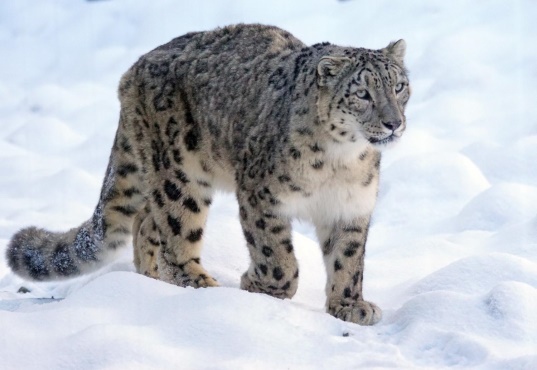
Unit 4 SPACE & EARTH 28-такырып |
Lesson 45 |
||
Teacher name: |
|
||
Date: |
|
||
Grade: 7 |
Number present: |
absent: |
|
Lesson title |
Across curriculum: The Ozone layer |
||
Learning objectives
|
7.4.4.1 read a limited range of extended fiction and non-fiction texts on familiar and some unfamiliar general and curricular topi 7.3.6.1 begin to link comments with some flexibility to what others say at sentence and discourse level in pair, group and whole class exchanges |
||
Lesson objectives |
Learners will be able to: -recognize and interpret the narrative by timeline of events - check their own writing with the provided support (e.g. a checklist, graphic organizer - the value based on the integrated educational program is to educate students for unity and solidarity |
||
Plan |
|||
Stages / Time |
Teachers actions |
Students actions |
Assessment criteria |
Resources |
Beginning of the lesson Warming-up
3 min
Pre-learning «Brainstorming» method 7 min.
|
Organization moment : 1.Greeting. Ask about the weather. The teacher sets the lesson objectives, letting students know what to anticipate from the lesson. Warming up Where are you from? How old are you? What color is it? How many students are there in class? What day of the week today?
Lead – In
|
The aim: To develop pupils speaking skills and create friendly atmosphere Efficiency: By wishing each other they feel better and feel the support of others Students of the class are listed.
Students' attention is drawn to the lesson.
Determines the topic and purpose of the lesson
Students say different words from the picture
What do you know about Mars? |
The teacher to assess learners for their ability.
“Good job! Well done!” Formative Assessment
Good job! Assessment criteria
- Learners have met the learning objectives if they can: Talk about suggestions |
Pictures
worksheet
Student’s book |
Middle of the lesson Presentation part. 30 min
|
Ex:1 P:50 •Introduce the topic, elicit prior knowledge and predict the content of the text Read the title aloud and elicit if Ss know anything about the hole in the ozone layer. Elicit a variety of question on the topic from various Ss around the class and writ three of them on the board. Ss read through the text then elicit which of the questions on the board they can now answer.
Ex: 2 P: 50 • Read for lexico-grammatical structure (open cloze) Allow Ss some time to read the text carefully and think of an appropriate word for each gap. Have Ss look up the meanings of the words in the Check these words box and then check Ss' answers.
Ex:3 P: 50 • Summarise/paraphrase information in a text Play the recording. Ss listen and follow the text in their books. Then ask Ss to close their books. Ask various Ss around the class to talk about the hole in the ozone layer in front of the rest of the class.
Unity and Solidarity Contributing to the achievement of common goals, ability to work effectively in a team Contributing to the achievement of common goals, ability to work effectively in a team Teamwork skills are essential to your success at work, no matter your industry or job title. |
Pupils write three questions. Read through and see if you can answer your questions ANSWERS I know that the hole in the ozone layer is over the Antarctic What is ozone? Ozone is a gas. Why is the ozone layer important? It filters out the harmful rays of the sun. When did we find out about the hole in the ozone layer? the 1980s.
Pupils read the text and complete the gaps with the correct missing words ANSWERS 1 It 2 In 3 in 4 to 5 will 6 and 7 lot 8 but
Pupils listen to and read the text. ANSWERS The ozone layer is a layer of gas that protects us from the harmful rays of the sun. In the 1980s, scientists found a hole in it. They found out that chemicals caused the hole
|
Descriptor: - write three questions - write three questions - answer your questions Total: 3 point
pupils are evaluated by collecting vitamins
Descriptor: - read the text - complete the gaps Total: 3 point
Descriptor: - listen to and read the text.
Total: 3 point
-Make CCQ questions Yes / No
Total: 10 point |
Card Worksheet
Students book |
End of the lesson 5 min |
FEEDBACK Learners provide feedback on what they have learned at the lesson. Ex: Home task: |
What worked well for you in today’s class? What could we have done differently to make today’s class better for you? What are you wondering about after today’s lesson? What did you find difficult about today’s lesson?
|
Poster Success
|
|
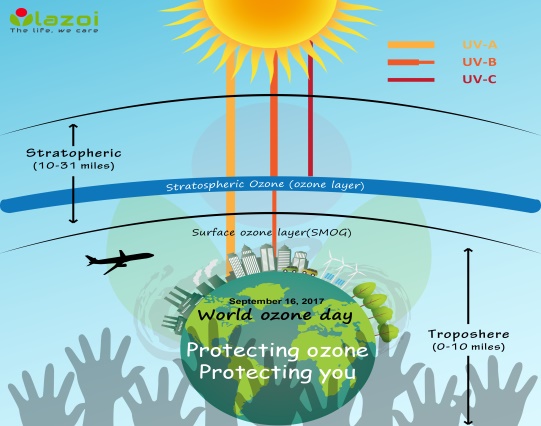
Unit 5: Reading for pleasure 30-такырып |
Lesson 49 |
||
Teacher name: |
|
||
Date: |
|
||
Grade: 7 |
Number present: |
absent: |
|
Lesson title |
The Hound of the Baskervilles |
||
Learning objectives
|
7.4.1.1 understand the main points in texts on a limited range of unfamiliar general and curricular topics 7.2.5.1 recognise the opinion of the speakers in supported extended talk on a range of general and curricular topics 7.3.8.1 recount some extended stories and events on a growing range of |
||
Lesson objectives |
Learners will be able to: - introduce the topic; to read for specific information - read for specific information - consolidate vocabulary from the text |
||
Value links |
Family – Family values are moral and ethical principles of typical family life, including sacrificing for loved ones, putting your loved ones first, and keeping your loved ones at the centre of your thoughts and actions. |
||
Plan |
|||
Stages / Time |
Teachers actions |
Students actions |
Assessment criteria |
Resources |
Beginning of the lesson Warming-up
3 min.
Pre-learning «Brainstorming» method 7 min.
|
Organization moment : 1.Greeting. Ask about the weather. The teacher sets the lesson objectives, letting students know what to anticipate from the lesson. Warming up Where are you from? How old are you? What color is it? How many students are there in class? What day of the week today? Hand out the completed Progress Report Cards for the previous module and ask the pupils to file them in their language. Lead – In
|
The aim: To develop pupils speaking skills and create friendly atmosphere Efficiency: By wishing each other they feel better and feel the support of others Students of the class are listed. Students' attention is drawn to the lesson. Students say different words from the picture •Learners remember previous lesson vocabulary •Learners answer the questions
Did you read this book?
What about it? |
The teacher to assess learners for their ability. “Good job! Well done!” Formative Assessment
Good job! Descriptor: - remembers the lesson passed Point 1 Assessment criteria make basic statements related to the literature |
Pictures
worksheet
Picture |
Middle of the lesson Presentation part. 30 min
|
Ex:1 P:54 • Elicit what, if anything, Ss know about Sir Arthur Conan Doyle and the famous character he created. Ask Ss to read the biography and elicit answers around the class.
Ex: 2 P: 54 • Explain that the plot of a book/film is the series of events that make up the story. Allow Ss time to read the plot and answer the questions. Elicit answers around the class.
Ex: 3 P: 54 • Explain the task Elicit Ss' guesses as to what happens. Play the recording. Ss listen and read the text to find out.
Ex: 4 P: 55 •Explain the task Allow Ss time to read the text again and complete the task Check Ss' answers.
Ex: 5 P: 55 •Explain the task. Allow Ss time to fill in the gaps with the corect verbs. Check 55 answers.
Conclusion during the lesson some tasks differentiated by outcomes of the students and by their abilities. |
• Learners read the biography to find out. Answer the question. ANSWERS Sir Arthur Conan Doyle was a British writer born in 1859. He created the famous detective Sherlock Holmes
• Learners read the plot to find out. Answer the question. ANSWERS The Hound of the Baskervilles is about a family who are threatened by an enormous dog. One member of the family is killed, and his nephew is in danger. Sherlock Holmes and Dr Watson try to find out if the legend is true and solve the mystery of who is trying to kill the nephew. It is a detective story.
• Learners listen and read to find out. Answer the question ANSWERS I think that on the way back to his house, an enormous hound chases after Sir Henry.
• Learners read the extract and mark the sentences ANSWERS 1T 2 DS 3 T 4 F 5 DS 6 T
• Learners complete the sentences ANSWERS 1 broke 2 burst 3 ruin 4 hung 5 starred |
Descriptor: - read the biography - answer the question Total: 2 point
Self assessment
Differentiation: «Verbal support» method is used to help Ss use new words in the sentences.
Descriptor: - read the plot - answer the question. Total: 3 point
Descriptor: - read the extract - mark the sentences Total: 3 point
-Make CCQ questions Yes / No
|
Card Worksheet
Students book |
End of the lesson 5 min |
FEEDBACK Learners provide feedback on what they have learned at the lesson. Ex: P: Home task: Write the days |
|
Poster Success
|
|
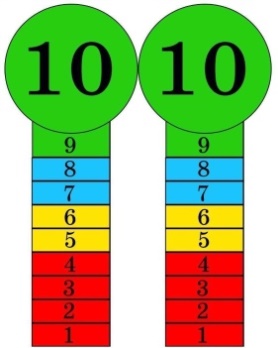

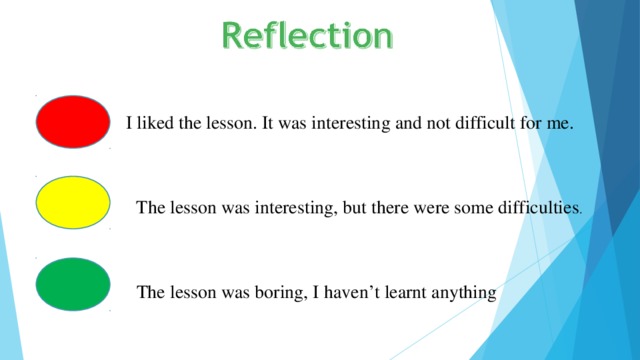
Unit 5 Reading for pleasure 31-такырып |
Lesson 50 |
||
Teacher name: |
|
||
Date: |
|
||
Grade: 7 |
Number present: |
absent: |
|
Lesson title |
The time Machine |
||
Learning objectives
|
7.4.2.1 understand specific information and detail in texts on a range of familiar general and curricular topics 7.3.3.1 give an opinion at discourse level on a growing range of general and curricular topics 7.3.8.1 recount some extended stories and events on a growing range of |
||
Lesson objectives |
Learners will be able to: - introduce the topic; to read for specific information - predict the content of textto and read confirmation -
|
||
Value links |
Loyalty – Loyalty might be a core personal value to you if you highly prize friends that are reliable and trustworthy. You might put your friends or chosen family first, always being there for them when they need you. |
||
Plan |
|||
Stages / Time |
Teachers actions |
Students actions |
Assessment criteria |
Resources |
Beginning of the lesson Warming-up
3 min
Pre-learning «Brainstorming» method 7 min.
|
Organization moment : 1.Greeting. Ask about the weather. The teacher sets the lesson objectives, letting students know what to anticipate from the lesson. Warming up Where are you from? How old are you? What color is it? How many students are there in class? What day of the week today? Ask a few pupils to stand up and stand in a row. Ask the rest of the class questions to revise the ordinals. Lead – In
|
The aim: To develop pupils speaking skills and create friendly atmosphere Efficiency: By wishing each other they feel better and feel the support of others Students of the class are listed. Students' attention is drawn to the lesson. Determines the topic and purpose of the lesson •Learners remember previous lesson vocabulary
Did you listen about the time machine? |
The teacher to assess learners for their ability. “Good job! Well done!” Formative Assessment
Good job! Descriptor: - know daily routines vocabulary - know prepositions of place Point 1 Assessment criteria - Learners have met the learning objectives and predict the content of a text |
Pictures
worksheet
Student’s book |
Middle of the lesson Presentation part. 30 min
|
Ex:1 P:56 • Elicit what Ss know about H.G. Wells and the stories he wrote. Allow time for Ss to read the biography and then elicit answers around the class.
Ex: 2 P: 56 • Draw attention to the pictures and elicit guesses to what happens the extract Ss read and listen to the text to find Check Ssanswers
Ex: 3 P: 57 • Ask Ss to read the questions and the answer choices Allow Ss time to read the text again and complet the task. Check Ss answers.
Ex: 4 P: 57 • Explain the task. Elicit answers to the questions from Ss around the class.
Ex: 5 P: 57 • Explain the task. Allow Ss some time to fill in the gaps. Check Ss answers.
Conclusion during the lesson some tasks differentiated by outcomes of the students and by their abilities. |
• Pupils read the biography to find out. Answer the question. ANSWERS H.G. Wells was a British writer born in 1866. He wrote science-fiction storie
• Pupils listen and read to find out. Answer the question ANSWERS The Time Traveller and Weena are walking the gardenA Morlock appears and the Time Traveller follows a wellHe finds a of Morlocks under the groundlights match and discovers that the Morlocks are of the light. frightened when they start to follow and he climbs out the
• Pupils read the extract and choose the correct answer. ANSWERS 1 B 2 C 3 A
• Pupils answer the question ANSWERS 1 The Time Traveller thinks Weena is nice, because they quickly became friends and she cares for him. 2 The Morlocks look like white apes with greyish-red eyes. 3 The Time Traveller goes down the well to find out about the Morlocks. 4 The Eloi are afraid because the Morlocks have the power and hunt them.
• Pupils complete the sentences. ANSWERS 1 became 2 vanished 3 began 4 moved 5 lit |
Descriptor: - read the biography - answer the question Total: 2 point
Differentiation: «Verbal support» method is used to help Ss use new words in the sentences.
Descriptor: - read the extract - choose the correct answer Total: 2 point
Descriptor: - answer the question Total: 2 point
Descriptor: - complete the sentences. Total: 1 point
-Make CCQ questions Yes / No Total: 1 point
Total: 10 point |
Card Worksheet
Students book |
End of the lesson 5 min |
FEEDBACK Learners provide feedback on what they have learned at the lesson. Ex: P: Home task: Write the days |
|
Poster Success
|
|
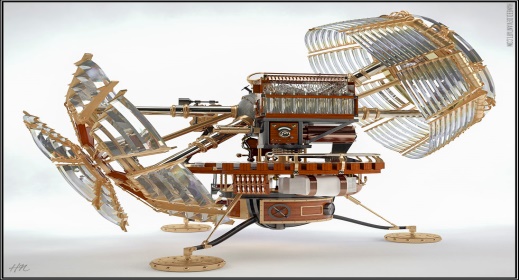
Short term plan: term 3
Unit 5 Reading for pleasure 32-такырып |
Lesson 51 |
||
Teacher name: |
|
||
Date: |
|
||
Grade: 7 |
Number present: |
absent: |
|
Lesson title |
Maadai-Kara |
||
Learning objectives
|
7.4.2.1 understand specific information and detail in texts on a range of familiar general and curricular topics 7.4.3.1 understand the detail of an argument on a growing range of familiar general and curricular topics, 7.1.6.1 organise and present information clearly to others 7.3.8.1 recount some extended stories and events on a growing range of |
||
Lesson objectives |
Learners will be able to: - introduce the topic; to read for specific information - listen and read for specific information - read for specific information |
||
Value links |
Fairness – If you value fairness, you might be highly sensitive to situations at school or in the workplace where a teacher or a peer has exhibited favoritism or allowed someone to get away with living by a different set of rules to everyone else. |
||
Plan |
|||
Stages / Time |
Teachers actions |
Students actions |
Assessment criteria |
Resources |
Beginning of the lesson Warming-up
3 min
Pre-learning «Brainstorming» method 7 min.
|
Organization moment : 1.Greeting. Ask about the weather. The teacher sets the lesson objectives, letting students know what to anticipate from the lesson. Warming up Where are you from? How old are you? What color is it? How many students are there in class? What day of the week today? revise the vocabulary from the previous Lead – In
|
. The aim: To develop pupils speaking skills and create friendly atmosphere Efficiency: By wishing each other they feel better and feel the support of others Students of the class are listed. Students' attention is drawn to the lesson. • Learners remember previous lesson vocabulary
Determines the topic and purpose of the lesson
Students say different words from the picture
|
The teacher to assess learners for their ability. “Good job! Well done!” Formative Assessment
Good job!
Descriptor: - can tell the time Point 1
Assessment criteria - Learners have met the learning objectives if they can talk about Maadai-Kara |
Pictures
worksheet
Picture |
Middle of the lesson Presentation part. 30 min
|
Ex:1 P: 58 • Explain the task. Allow Ss time to read through the short text and answer the questions. Check Ss' answers.
Ex: 2 P: 58 • Explain the task. Play the recording. Ss listen and read to find out the answers to the questions. Elicit answers from Ss around the class.
Ex: 3 P: 59 • Explain the task. Allow Ss time to answer the questions. Elicit answers from Ss around the class.
Ex: 4 P: 59 • Explain the task. Allow Ss time to read the text again and develop their answers. Check Ss' answers.
Ex: 5 P: 59 • Give Ss time to look up the words in the Check these words box and elicit their meanings. Explain the task, Allow Ss time to fill in the gaps. Check Ss' answers.
Conclusion during the lesson some tasks differentiated by outcomes of the students and by thir abilities. |
•Pupils read the text to find out. Answer the question. ANSWERS Kai is a special type of singing from the Altai Mountains in Kazakhstan, People use it to tell epic stories •Pupils listen and read to find out. Answer the question ANSWERS Maadai-Kara was the ruler of the human world. Kögüdei Mergen was his son. Altyn Küskü was his daughter-in-law, because she married his son. Play the video for Ss and elicit their comments at the end.
•Pupils read the text and answer the question. ANSWERS 1 Erlik was the god of the underworld. 2 Maadai-Kara left his son on the Black Mountain to keep him safe. 3 Kara-Kula made all of Maadai-Kara's people slaves. 4 Kögüdei Mergen released all the good souls from the underworld. 5 Kögüdei Mergen is now a star in the sky. •Pupils answer the question. ANSWERS In the third and fourth paragraphs we see the themes of immortality. In paragraph three, Mergen goes to the underworld, and releases all the good souls. We can also see it in the fourth paragraph when Kögüdei Mergen, Altyn Küskü and the seven khans become stars •Pupils complete the sentences. ANSWERS 1 fought 2 faced 3 took 4 grow 5 rode |
Descriptor: - read the text - answer the question. Total: 2 point
Differentiation: «Verbal support» method is used to help Ss use new words in the sentences.
Descriptor: - listen and read - answer the question. Total: 2 point
Descriptor: - read the text - answer the question Total: 2 point
Descriptor: - complete the sentences. Total: 1 point
-Make CCQ questions Yes / No Total: 1 point
|
Card Worksheet
|
End of the lesson 5 min |
FEEDBACK Learners provide feedback on what they have learned at the lesson. Ex: Home task:
|
|
Poster Success
|
|
|
|
|
|
|
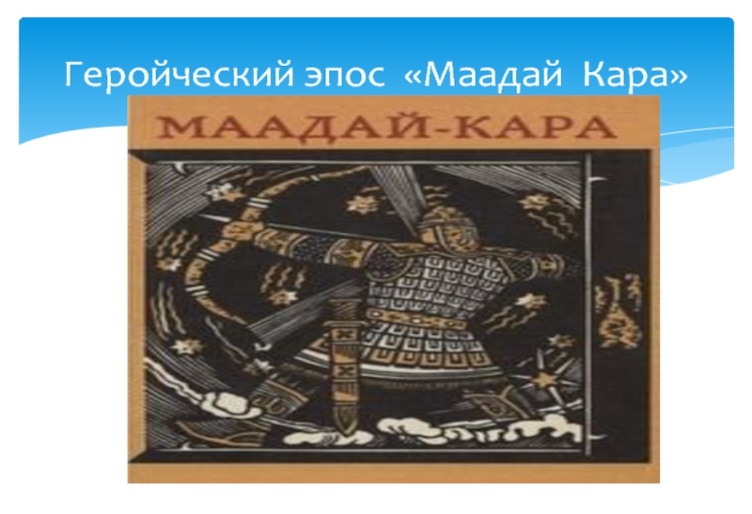
Unit 5 Reading for pleasure 33-такырып |
Lesson 52 |
||
Teacher name: |
|
||
Date: |
|
||
Grade: 7 |
Number present: |
absent: |
|
Lesson title |
The Magic Garden of the Poor |
||
Learning objectives
|
7.2.5.1 recognise the opinion of the speakers in supported extended talk on a range of general and curricular topics 7.4.1.1 understand the main points in texts on a limited range of unfamiliar general and curricular topics 7.3.3.1 give an opinion at discourse level on a growing range of general and curricular topics |
||
Lesson objectives |
Learners will be able to: - predict the content of the text; to listen and read for specific information - read for specific information - express a personal opinion on the topic |
||
Value links |
Fairness – If you value fairness, you might be highly sensitive to situations at school or in the workplace where a teacher or a peer has exhibited favoritism or allowed someone to get away with living by a different set of rules to everyone else. |
||
Plan |
|||
Stages / Time |
Teachers actions |
Students actions |
Assessment criteria |
Resources |
Beginning of the lesson Warming-up
3 min
Pre-learning «Brainstorming» method 7 min.
|
Organization moment : 1.Greeting. Ask about the weather. The teacher sets the lesson objectives, letting students know what to anticipate from the lesson. Warming up Where are you from? How old are you? What color is it? How many students are there in class? What day of the week today? revise the vocabulary from the previous Lead – In
|
. The aim: To develop pupils speaking skills and create friendly atmosphere Efficiency: By wishing each other they feel better and feel the support of others Students of the class are listed. Students' attention is drawn to the lesson. • Learners remember previous lesson vocabulary
Determines the topic and purpose of the lesson
Students say different words from the picture
|
The teacher to assess learners for their ability. “Good job! Well done!” Formative Assessment
Good job!
Descriptor: - can tell the time Point 1
Assessment criteria - Learners have met the learning objectives if they can talk about The Magic Garden of the Poor |
Pictures
worksheet
Picture |
Middle of the lesson Presentation part. 30 min
|
Ex:1 P: 60 • Ask Ss to look at the picture and read the title. Elicit Sr guesses about how the garden was created, Play the recording. Students listen and read the text to find out the answers.
Ex: 2 P: 61 •Ask Ss to read the questions and the answer choices. Allow Ss time to read the text again and choose their answers. Ss can work in closed pairs. Check Ss' answers.
Ex: 3 P: 61 • Explain the task. Ss work in closed pairs and discuss their opinions. Monitor the activity around the class. Ask some Ss to share their answers with the class.
Ex: 4 P: 61 • Give Ss time to look up the words in the Check these words box and elicit their meanings. Explain the task. Allow Ss time to complete it. Check Ss' answers.
Ex: 5 P: 61 • Present folk tales Read out the theory and the examples. Elicit further examples of folk tales from Ss around the class
Conclusion during the lesson some tasks differentiated by outcomes of the students and by thir abilities. |
•Pupils listen and read to find out. Answer the question ANSWERS The garden was created by They brought seeds from all over the world and glad them in a wise man's garden.
•Pupils read the text and for question choose the correct answer. ANSWERS 1 A 2 C 3 B .
•Pupils discuss in pairs. Answer the question. ANSWERS A: If I were the farmer, I would take the gold. Farmers usually don't have much money, and they don't know when their crops will fail.
B: Well, If I were the farmer, I would share the money with the poor. It is always good to help others when you can.
•Pupils complete the sentences. ANSWERS 1 set 2 slammed 3 passed 4 struck 5 failed
•Pupils read the theory box. ANSWERS Ss' own answers |
Descriptor: - listen and read - answer the question. Total: 2 point
Differentiation: «Verbal support» method is used to help Ss use new words in the sentences.
Descriptor: - read the text - choose the correct answer. Total: 2 point
Descriptor: - discuss in pairs - answer the question Total: 2 point
Descriptor: - complete the sentences. Total: 1 point
-Make CCQ questions Yes / No Total: 1 point
|
Card Worksheet
|
End of the lesson 5 min |
FEEDBACK Learners provide feedback on what they have learned at the lesson. Ex: Home task:
|
|
Poster Success
|
|
Unit 6 Entertainment and Media 34-такырып |
Lesson 54 |
||
Teacher name: |
|
||
Date: |
|
||
Grade: 7 |
Number present: |
absent: |
|
Lesson title |
Vocabulary: TV programs |
||
Learning objectives
|
7.2.3.1 understand with some support most of the detail of an argument in extended talk on a limited range of general and curricular topics 7.3.4.1 respond with some flexibility at both sentence and discourse level to unexpected comments on a growing range of general and curricular topics 7.3.3.1 give an opinion at discourse level on a growing range of general and curricular topics |
||
Lesson objectives |
Learners will be able to: - respond to more complex questions appropriately - participate in surveys, questionnaires and interviews - give a short response showing their opinion, agreement or disagreement |
||
Value links |
Generosity – This may be a core value of yours if you cherish people who will give their time and resources to people in need. You may consider yourself to be a generous person if you find joy and meaning in giving to others. |
||
Plan |
|||
Stages / Time |
Teachers actions |
Students actions |
Assessment criteria |
Resources |
Beginning of the lesson Warming-up
3 min
Pre-learning «Brainstorming» method 7 min.
|
Organization moment : 1.Greeting. Ask about the weather. The teacher sets the lesson objectives, letting students know what to anticipate from the lesson. Warming up Where are you from? How old are you? What color is it? How many students are there in class? What day of the week today? Revise the language of the previous lesson. Lead – In
|
The aim: To develop pupils speaking skills and create friendly atmosphere Efficiency: By wishing each other they feel better and feel the support of others Students of the class are listed. Students' attention is drawn to the lesson.
Determines the topic and purpose of the lesson
• Learners talk about favourite dayprevious lesson vocabulary
Students say different words from the picture and count one to hundred
|
The teacher to assess learners for their ability. “Good job! Well done!” Formative Assessment
Good job! Descriptor: - talk about favourite day Total: 1 point
Assessment criteria - Learners have met the learning objectives |
Pictures
worksheet
Student’s book |
Middle of the lesson Presentation part. 30 min
|
Ex:1 P:63 • Play the recording. Ss listen and repeat chorally or individually. Elicit which types of programmes Ss enjoy by asking various Ss around the class. SSD
Ex: 2 P: 63 • To consolidate new vocabulary Draw Ss' attention to the pictures (1-6) and elicit what they show
Ex: 3 P: 63 • To discuss TV programmes Go through the adjectives in the list and explain/ elicit the meanings of any unknown ones. Read out the example exchange with a S and then Ss discuss the TV programmes in pairs using the adjectives. Monitor the activity around the class and then ask some pairs to ask and answer in front of the class.
Conclusion during the lesson some tasks differentiated by outcomes of the students and by their abilities. |
Pupils listen and repeat. Answer the question. ANSWERS I enjoy watching documentaries
Pupils look at the pictures. Answer the question. ANSWERS Picture 2 shows a music programme. Picture 3 shows an awards ceremony.
Picture 4 shows a sports programme. Picture 5 shows a nature programme. Picture 6 shows a fashion show.
Pupils use the adjectives to discuss TV programmes, as in the example ANSWERS A: What do you think of soap operas? B: I find them silly. I prefer drama shows. A: What do you like to watch? B: I like quiz shows. I find them interesting. A: What do you think of drama shows? B: I find them boring. I prefer the news. A: What do you like to watch? B: I like cartoons, I find them amusing. A: What do you think of quiz shows? B: I find them terrible. I prefer sports programmes. A: What do you like to watch? B: I like sitcoms. I find them funny, etc |
Descriptor: - listen and repeat - answer the question Total: 2 point
Self assessment
Descriptor: - look at the pictures - answer the question Total: 2 point
Descriptor: - use the adjectives - discuss TV programmes Total: 3 point
-Make CCQ questions Yes / No Total: 10 point |
Card Worksheet
Students book |
End of the lesson 5 min |
FEEDBACK Learners provide feedback on what they have learned at the lesson. Ex: Home task: |
|
Poster Success
|
|

Unit 6: Entertainment and Media 35-такырып |
Lesson 55 |
||
Teacher name: |
|
||
Date: |
|
||
Grade: 7 |
Number present: |
absent: |
|
Lesson title |
Reading: Forest school, |
||
Learning objectives
|
7.1.1.1 use speaking and listening skills to solve problems creatively and cooperatively in groups 7.5.2.1 understand specific information and detail in texts on a range of familiar general and curricular topics 7.3.6.1 begin to link comments with some flexibility to what others say at sentence and discourse level in pair, group and whole class exchanges |
||
Lesson objectives |
Learners will be able to: - engage effectively in a range of collaborative discussions with diverse partners - compose and participate with fluency in dialogues, conversations, discussions and debates using a range of vocabulary, grammar and linking devices |
||
Value links |
Integrity – Integrity is the quality of having strong moral principles. So, a person with integrity will always act with honesty and adhere to their own moral code regardless of what others do. |
||
Plan |
|||
Stages / Time |
Teachers actions |
Students actions |
Assessment criteria |
Resources |
Beginning of the lesson Warming-up
3 min
Pre-learning «Brainstorming» method 7 min.
|
Organization moment : 1.Greeting. Ask about the weather. The teacher sets the lesson objectives, letting students know what to anticipate from the lesson. Warming up Where are you from? How old are you? What color is it? How many students are there in class? What day of the week today? Revise the language of the previous lesson. Lead – In
|
The aim: To develop pupils speaking skills and create friendly atmosphere Efficiency: By wishing each other they feel better and feel the support of others Students of the class are listed. Students' attention is drawn to the lesson.
• Learners write the numbers from previous lesson
Determines the topic and purpose of the lesson Students say different words from the picture
|
The teacher to assess learners for their ability. “Good job! Well done!” Formative Assessment
Good job! Descriptor: -know key phrases - know vocabulary of previous lesson Total: 1 point
Assessment criteria - Learners have met the learning objectives if they can: To talk about Forest school |
Pictures
worksheet
Student’s book |
Middle of the lesson Presentation part. 30 min
|
Ex:1 P:64 a) To introduce the topic Blicit some fins about robots that Ss have seen from Ss around the das and ask them to briefly describe them. b) To predict the content of the text Dioct Se attention to the pictures and elicit the films the characion are tom and what they are about. Play the recording. St laten and follow the text in thoir hocks and find out.
Ex: 2 P: 64 • To read for specific information Allow Ss some time to read the texts and mark the sentences, Direct Ss to the Word List to look up the meaning of the words in the Check these words box. Ex: 4 P: 65 • To present vocabulary related to the theme Go through the list of words with Ss and explain Elicit any unknown words/phrases. Ss complete the task. Check Ss' answers.
Ex: 5 P: 65 • Present verbs related to the theme Allow Ss two minutes to complete the task. Check Ss' answers. Ex: 6 P: 65 • To practise recommending films Explain the task and ask two Ss to read the example exchange aloud. Ss complete the task in pairs. Monitor the activity around the class and then ask some pairs to act out their exchanges in front of the class ANSWERS A: Have you seen 'Slumdog Millionaire'? B: Yes, I saw it last Saturday. A: Did you like it? B: Yes, it was great. It's a must-see! etc. Conclusion during the lesson some tasks differentiated by outcomes of the students and by their abilities. |
a)Pupils answer the question. Tell the class. ANSWERS Rodney Copperbeitton is a robet it a world of robots in the film Robots, He is an inventer and he goes to Robot City to met the fosse inte and holes Bigwell. He makes lots of friends and helps to make the role world a better place b)Pupils listen and read to find out. Answer the question. ANSWERS 1 WALL & is hon the fim "WALL E'. He lives on Earth which is polluted but he has the solution to the planet's problems. 2 The Terminator robot is from the film 'Terminator Genisys, & is about a war between robots and humans. 3 The X-Men are superheroes from the film 'X-Men: Apocalypse. They fight against a supervillain to keep the world safe.
Pupils read the article and mark the statements. ANSWERS 1 T 2 T 3 DS 4 T ST 6 DS 7 F (They have to fight against Apocalypse.)
Pupils fill the gaps. ANSWERS 1 effects 2 plot 3 computer-animated 4 blockbuster 5 sound 6 cast
Pupils fill the gaps ANSWERS 1 directed 2 starred 3 played 4 composed 5 released 6 won
|
Descriptor: - answer the question. - Tell the class Total: 2 point
Descriptor: - listen and read - answer the question. Total: 3 point
Descriptor: - read the article - mark the statements Total: 2 point
Descriptor: - fill the gaps Total: 1 point
Descriptor: - fill the gaps Total: 1 point
Descriptor: - use the phrases - recommend films Total: 2 point
-Make CCQ questions Yes / No |
Card Worksheet
Students book |
End of the lesson 5 min |
FEEDBACK Learners provide feedback on what they have learned at the lesson. Ex: Home task: |
|
Poster Success
|
|



Unit 6: Entertainment and Media 36-ТАКЫРЫП |
Lesson 57 |
||
Teacher name: |
|
||
Date: |
|
||
Grade: 7 |
Number present: |
absent: |
|
Lesson title |
Use of English: The passive |
||
Learning objectives
|
7.6.9.1 use appropriately a variety of active and passive simple present and past forms and past perfect simple forms on a range of familiar general and curricular topics 7.3.7.1 use appropriate subject-specific vocabulary and syntax to talk about a range of general topics, and some curricular topics 7.1.1.1 use speaking and listening skills to solve problems creatively and cooperatively in groups |
||
Lesson objectives |
Learners will be able to: - To present the passive (present simple & past simple) - To practise the present simple of the passive |
||
Value links |
Integrity – Integrity is the quality of having strong moral principles. So, a person with integrity will always act with honesty and adhere to their own moral code regardless of what others do. |
||
Plan |
|||
Stages / Time |
Teachers actions |
Students actions |
Assessment criteria |
Resources |
Beginning of the lesson Warming-up
3 min
Pre-learning «Brainstorming» method 7 min.
|
Organization moment : 1.Greeting. Ask about the weather. The teacher sets the lesson objectives, letting students know what to anticipate from the lesson. Warming up Where are you from? How old are you? What color is it? How many students are there in class? What day of the week today? Revise the language of the previous lesson. Lead – In
|
The aim: To develop pupils speaking skills and create friendly atmosphere Efficiency: By wishing each other they feel better and feel the support of others Students of the class are listed. Students' attention is drawn to the lesson.
• Learners write the numbers from previous lesson
Determines the topic and purpose of the lesson Students say different words from the picture
|
The teacher to assess learners for their ability. “Good job! Well done!” Formative Assessment
Good job! Descriptor: -know key phrases - know vocabulary of previous lesson Total: 1 point
Assessment criteria - Learners have met the learning objectives if they can: To talk about |
Pictures
worksheet
Student’s book |
Middle of the lesson Presentation part. 30 min
|
Ex: 1 P: 66 • Elicit which is the subject (lots of tourists), verb (visit) and object (the Acropolis). Show Ss how the sentence structure changes if we start the sentence with the object of the active sentence as the subject. The Acropolis is visited by lots of tourists. Explain that to form the passive verb form we need the verb to be and the past participle of the main verb. Elicit that the subject of the active sentence becomes the agent (the person doing the action) and is introduced with by. Explain that the passive sentence gives emphasis to the action rather than the person who did it.
Ex:2 P:66 • Explain the task and allow Ss some time to complete it. Check Ss' answers around the class.
Ex: 3 P: 66 • Explain the task and allow Ss some time to complete it. • Check Ss' answers around the class. .
Ex: 5 P: 66 • Explain the task and read out the example. Ss complete the task. Check Ss' answers around the class.
Conclusion during the lesson some tasks differentiated by outcomes of the students and by their abilities. |
Pupils read the theory. Say the examples in your language. Find examples in the text. ANSWERS was directed by, was designed and built by, is polluted, is left alone, was composed by
Pupils fill the gaps. ANSWERS 1 are 2 is 3 is 4 are 5 is 6 is
Pupils put the verbs in brackets into the past simple passive ANSWERS 1 was produced 2 was directed 3 was written 4 was nominated
Pupils write the sentences in the passive voice ANSWERS 2 'The Lord of the Rings' was filmed in New Zealand. 3 'The Dark Knight' was released in 2008. 4 'Twilight' was directed by Catherine Hardwicke. 5 'Slumdog Millionaire' was nominated for ten Academy Awards in 2009. 6 'Nomad' was filmed in Kazakhstan. |
Descriptor: - read the theory. - find examples in the text. Total: 2 point
Descriptor: - fill the gaps Total: 3 point
Descriptor: - put the verbs in brackets into the past simple passive - complete the sentences Total: 2 point
Descriptor: - write the sentences in the passive voice Total: 1 point
-Make CCQ questions Yes / No |
Card Worksheet
Students book |
End of the lesson 5 min |
FEEDBACK Learners provide feedback on what they have learned at the lesson. Ex: Home task: |
|
Poster Success
|
|
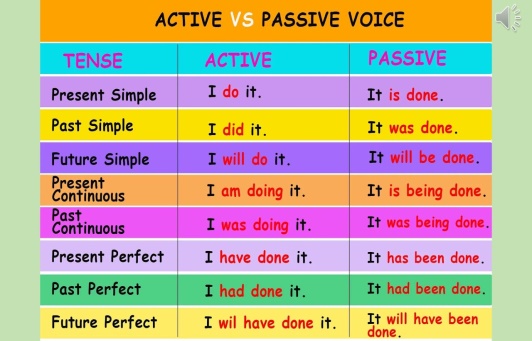
Unit 6: Entertainment and Media 37-ТАКЫРЫП |
Lesson 59 |
||
Teacher name: |
|
||
Date: |
|
||
Grade: 7 |
Number present: |
absent: |
|
Lesson title |
Reading: Playing with your food |
||
Learning objectives
|
7.2.5.1 recognise the opinion of the speakers in supported extended talk on a range of general and curricular topics 7.4.5.1 deduce meaning from context in short texts on a growing range of familiar general and curricular topics 7.3.6.1 begin to link comments with some flexibility to what others say at sentence and discourse level in pair, group and whole class exchanges |
||
Lesson objectives |
Learners will be able to: - understand specific details through the keywords, style, intonation and repetition - define the meaning of words using contextual clues |
||
Value links |
Integrity – Integrity is the quality of having strong moral principles. So, a person with integrity will always act with honesty and adhere to their own moral code regardless of what others do. |
||
Plan |
|||
Stages / Time |
Teachers actions |
Students actions |
Assessment criteria |
Resources |
Beginning of the lesson Warming-up
3 min
Pre-learning «Brainstorming» method 7 min.
|
Organization moment : 1.Greeting. Ask about the weather. The teacher sets the lesson objectives, letting students know what to anticipate from the lesson. Warming up Where are you from? How old are you? What color is it? How many students are there in class? What day of the week today? Revise the language of the previous lesson. Lead – In
|
The aim: To develop pupils speaking skills and create friendly atmosphere Efficiency: By wishing each other they feel better and feel the support of others Students of the class are listed. Students' attention is drawn to the lesson.
• Learners write the numbers from previous lesson
Determines the topic and purpose of the lesson Students say different words from the picture
|
The teacher to assess learners for their ability. “Good job! Well done!” Formative Assessment
Good job! Descriptor: -know key phrases - know vocabulary of previous lesson Total: 1 point
Assessment criteria - Learners have met the learning objectives if they can: To talk about food |
Pictures
worksheet
Student’s book |
Middle of the lesson Presentation part. 30 min
|
Ex: 1 P: 68 • To revise vocabulary Read out the list of places and elicit what people can do in each one from various Ss around the class.
Ex:2 P:68 • To identify a music genre Read out the music genres in the list and explain/ elicit what each one is. Play the recording. Ss listen and identify the type of music.
Ex: 3 P: 68 • To predict the content of a text Read the Study Skills box aloud. Then direct Ss' attention to the title and the picture. Ask Ss to read the first and last sentences from each of the paragraphs in the text and then elicit Ss' guesses as to what the text is about. Play the recording. Ss listen and follow the text in their books and find out.
Conclusion during the lesson some tasks differentiated by outcomes of the students and by their abilities. |
Pupils revise vocabulary. ANSWERS We can watch a film at a cinema. We can watch/listen to a concert/music performance in a concert hall. We can see an exhibition like a science fair in an exhibition centre. We can see artefacts/works of art from the past in a museum. We can see an opera/a performance/attend a concert in an opera house. We can watch a sporting event like a football match in a stadium. We can see performers/animals doing tricks at a circus. We can watch a play or other theatrical performance at a theatre
Pupils listen to the extract and identify a music genre ANSWERS The music brings images of nature to my mind.
Pupils read the title and look at the picture. Answer the question. ANSWERS The text is about a group of musicians whose musical instruments are made from vegetables |
Descriptor: - revise vocabulary - read out the list of places Total: 2 point
Descriptor: - listen to the extract. - identify a music genre Total: 2 point
Descriptor: - read the title - answer the question Total: 2 point
-Make CCQ questions Yes / No |
Card Worksheet
Students book |
End of the lesson 5 min |
FEEDBACK Learners provide feedback on what they have learned at the lesson. Ex: Home task: |
|
Poster Success
|
|
Unit 6: Entertainment and Media 38-ТАКЫРЫП |
Lesson 62 |
||
Teacher name: |
|
||
Date: |
|
||
Grade: 7 |
Number present: |
absent: |
|
Lesson title |
Across cultures: Musical instruments around the world |
||
Learning objectives
|
7.2.1.1 understand with little support the main points in extended talk on a limited range of general and curricular topics 7.3.3.1 give an opinion at discourse level on a growing range of general and curricular topics 7.5.1.1 plan, write, edit and proofread work at text level with some support on a range of general and curricular topics |
||
Lesson objectives |
Learners will be able to: -To introduce the topic and present ethnic music -To brainstorm for vocabulary related to the topic -To practise changing sentences from passive to active e changing |
||
Value links |
Integrity – Integrity is the quality of having strong moral principles. So, a person with integrity will always act with honesty and adhere to their own moral code regardless of what others do. |
||
Plan |
|||
Stages / Time |
Teachers actions |
Students actions |
Assessment criteria |
Resources |
Beginning of the lesson Warming-up
3 min
Pre-learning «Brainstorming» method 7 min.
|
Organization moment : 1.Greeting. Ask about the weather. The teacher sets the lesson objectives, letting students know what to anticipate from the lesson. Warming up Where are you from? How old are you? What color is it? How many students are there in class? What day of the week today? Revise the language of the previous lesson. Lead – In
|
The aim: To develop pupils speaking skills and create friendly atmosphere Efficiency: By wishing each other they feel better and feel the support of others Students of the class are listed. Students' attention is drawn to the lesson.
• Learners write the numbers from previous lesson
Determines the topic and purpose of the lesson Students say different words from the picture
|
The teacher to assess learners for their ability. “Good job! Well done!” Formative Assessment
Good job! Descriptor: -know key phrases - know vocabulary of previous lesson Total: 1 point
Assessment criteria - Learners have met the learning objectives if they can: To talk about musical instruments |
Pictures
worksheet
Student’s book |
Middle of the lesson Presentation part. 30 min
|
Ex: 1 P: 71 • Play the recording. Ss listen and number the ethnic music extracts in the order they hear them. Check Ss answers.
Ex:2a P:71 • Explain the task and write the headings on the board. Explain/Elicit what the headings mean. • Brainstorm with the class for as many musical instruments as you can think of and write them on the board under the headings. Ss copy the lists into their notebooks,
Ex: 2b P: 71 • Direct Ss' attention to the pictures and elicit Ss guesses in answer to the questions in the rubric. • Play the recording. Ss listen and follow the texts in their books and find out.
Ex: 3 P: 71 •Explain the task and read the example aloud and elicit answers from Ss around the class.
Ex: 4 P: 71 • Explain the task. Ss work in pairs. • Elicit a variety of answers from various pairs around the class and then choose two Ss to describe the two instruments. Conclusion during the lesson some tasks differentiated by outcomes of the students and by their abilities. |
Pupils listen to the music extract. Match them to their origins. ANSWERS a 6 b 3 c 7 d 4 e 8 f 1 g 5 h 2 i 9 Pupils name some musical instruments. List them under the headings. ANSWERS wind: trumpet, trombone, recorder, oboe, clarinet, bassoon string: violin, cello, viola, double bass, guitar percussion: piano, drums, cymbals, tambourine, bells, triangle .Pupils look at the musical instruments in the pictures. Answer the question. ANSWERS The dombra is a string instrument and the tin whistle is a wind instrument. The dombra is from Kazakhstan and the tin whistle is from Ireland. They are still played nowadays Pupils find all the passive sentences in the text. Rewrite them as active ANSWERS It is called... (passive) - People/They call it... (active) the strings were made... (passive) - people made the strings... (active) nylon ones are used... (passive) - people use nylon ones ... (active) Pupils say four things you have learnt from the text. ANSWERS 1 The dombra is a string instrument from Kazakhstan. 2 The tin whistle is a wind instrument from Ireland. 3 Some bands use electric dombras. 4 The theme tune from the film 'Titanic' had a tin whistle in it. |
Descriptor: - listen to the music extract - match them to their origins Total: 2 point
Descriptor: - name some musical instruments - list them under the headings. Total: 2 point
Descriptor: - look at the musical instruments - answer the question. Total: 2 point
Descriptor: - find all the passive sentences - rewrite them as active Total: 2 point
Descriptor: - say four things you have learnt - describe the two instruments. Total: 2 point
-Make CCQ questions Yes / No |
Card Worksheet
Students book |
End of the lesson 5 min |
FEEDBACK Learners provide feedback on what they have learned at the lesson. Ex: Home task: |
|
Poster Success
|
|
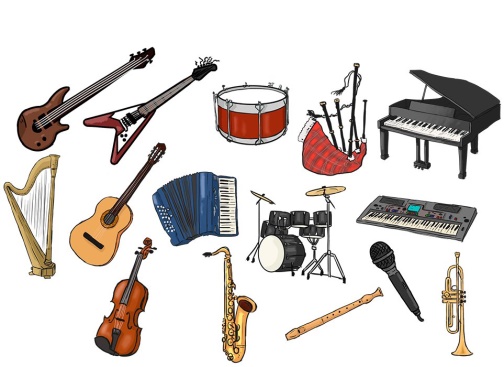
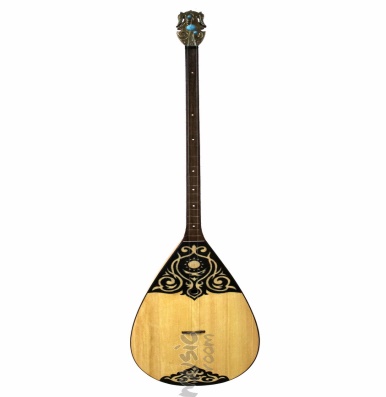
Unit 6: Entertainment and Media 39-ТАКЫРЫП |
Lesson 63 |
||
Teacher name: |
|
||
Date: |
|
||
Grade: 7 |
Number present: |
absent: |
|
Lesson title |
Across the curriculum (PSHE) |
||
Learning objectives
|
7.2.5.1 recognise the opinion of the speakers in supported extended talk on a range of general and curricular topics 7.5.3.1 Write with moderate grammatical accuracy on a limited range of familiar general and curricular topics 7.3.6.1 begin to link comments with some flexibility to what others say at sentence and discourse level in pair, group and whole class exchanges |
||
Lesson objectives |
Learners will be able to: -To present and discuss teen media use -To listen and read for specific information -To read for detail; to assess the difficulty of a text |
||
Value links |
Integrity – Integrity is the quality of having strong moral principles. So, a person with integrity will always act with honesty and adhere to their own moral code regardless of what others do. |
||
Plan |
|||
Stages / Time |
Teachers actions |
Students actions |
Assessment criteria |
Resources |
Beginning of the lesson Warming-up
3 min
Pre-learning «Brainstorming» method 7 min.
|
Organization moment : 1.Greeting. Ask about the weather. The teacher sets the lesson objectives, letting students know what to anticipate from the lesson. Warming up Where are you from? How old are you? What color is it? How many students are there in class? What day of the week today? Revise the language of the previous lesson. Lead – In
|
The aim: To develop pupils speaking skills and create friendly atmosphere Efficiency: By wishing each other they feel better and feel the support of others Students of the class are listed. Students' attention is drawn to the lesson.
• Learners write the numbers from previous lesson
Determines the topic and purpose of the lesson Students say different words from the picture
|
The teacher to assess learners for their ability. “Good job! Well done!” Formative Assessment
Good job! Descriptor: -know key phrases - know vocabulary of previous lesson Total: 1 point
Assessment criteria - Learners have met the learning objectives if they can: To talk about teen media |
Pictures
worksheet
Student’s book |
Middle of the lesson Presentation part. 30 min
|
Ex: 1 P: 72 • Go through the phrases and ensure Ss know what the words mean. • Remind Ss of adverbs of frequency. • Elicit answers from around the class.
Ex:2 P:72 • Elicit answers from Ss. (e.g. headache) Play the recording and read the text. Find out if any of their ideas are mentioned in it.
Ex: 3 P: 72 • Ask Ss to read the text and identify two examples of problems. Ss should also find solutions to the problems as recommended by the writer. • Elicit answers from around the class.
Ex: 4 P: 72 • To assess a opinion writer's intention and • Give Ss time to think about the text and assess the overall opinion.
Ex: 5 P: 72 • Read the table with Ss. Play the recording. Allow Ss time to complete the table. Check Ss' answers around the class.
Conclusion during the lesson some tasks differentiated by outcomes of the students and by their abilities. |
Pupils answer the question. Tell the class. ANSWERS I always listen to the radio in the morning. In the evenings I sometimes read a newspaper or a magazine. Pupils listen and read to find out. ANSWERS Electronic media can cause a number of problems. Students can spend hours playing games or looking at social media sites, and so they neglect their studies. They can also miss out on valuable time with family and friends. .Pupils read the text. List two examples of problems caused by electronic media. Answer the question. ANSWERS The text mentions physical problems, like overeating and sitting without stretching muscles. It also mentions that teens' school grades may drop. The writer advises teens to exercise, and keep devices out of the bedroom. It also advises teens to set a limit of an hour or two every day for using any type of electronic media. Teens should also think carefully about what they write online Pupils answer the question. ANSWERS The writer believes that it is not harmful for teens to use electronic media for a certain amount of time. But many teens spend too much time on their devices. The writer thinks teens should be active, physically and socially, and be careful with how they use the Internet. Pupils listen and tick. Listen and repeat. ANSWERS [e] bed, set, pet [æ] bad, sad, cat |
Descriptor: - answer the question - tell the class Total: 2 point
Descriptor: - listen and read to find out. Total: 2 point
Descriptor: - read the text - answer the question. Total: 2 point
Descriptor: - answer the question. Total: 2 point
Descriptor: - listen and tick - listen and repeat. Total: 2 point
-Make CCQ questions Yes / No |
Card Worksheet
Students book |
End of the lesson 5 min |
FEEDBACK Learners provide feedback on what they have learned at the lesson. Ex: Home task: |
|
Poster Success
|
|
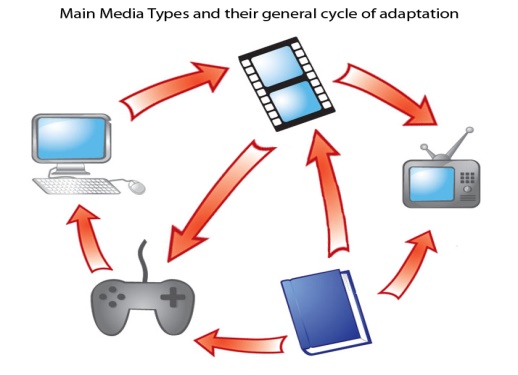
Unit 6: Entertainment and Media 40-ТАКЫРЫП |
Lesson 64 |
||
Teacher name: |
|
||
Date: |
|
||
Grade: 7 |
Number present: |
absent: |
|
Lesson title |
Writing: An email about your favourite TV series p.73 Summative Assessment for the Unit “Entertainment & Media” |
||
Learning objectives
|
7.4.6.,1 recognise the attitude or opinion of the writer on a range of unfamiliar general and curricular topics 7.5.3.1 Write with moderate grammatical accuracy on a limited range of familiar general and curricular topics 7.5.4.1 Use with some support style and register appropriate to a limited variety of written genres on general and curricular topics |
||
Lesson objectives |
Learners will be able to: - To read for gist - To read for cohesion and coherence - To prepare for a writing task |
||
Value links |
Integrity – Integrity is the quality of having strong moral principles. So, a person with integrity will always act with honesty and adhere to their own moral code regardless of what others do. |
||
Plan |
|||
Stages / Time |
Teachers actions |
Students actions |
Assessment criteria |
Resources |
Beginning of the lesson Warming-up
3 min
Pre-learning «Brainstorming» method 7 min.
|
Organization moment : 1.Greeting. Ask about the weather. The teacher sets the lesson objectives, letting students know what to anticipate from the lesson. Warming up Where are you from? How old are you? What color is it? How many students are there in class? What day of the week today? Revise the language of the previous lesson. Lead – In
|
The aim: To develop pupils speaking skills and create friendly atmosphere Efficiency: By wishing each other they feel better and feel the support of others Students of the class are listed. Students' attention is drawn to the lesson.
• Learners write the numbers from previous lesson
Determines the topic and purpose of the lesson Students say different words from the picture
|
The teacher to assess learners for their ability. “Good job! Well done!” Formative Assessment
Good job! Descriptor: -know key phrases - know vocabulary of previous lesson Total: 1 point
Assessment criteria - Learners have met the learning objectives if they can: To talk about favourite TV series |
Pictures
worksheet
Student’s book |
Middle of the lesson Presentation part. 30 min
|
Ex: 1a P: 73 • Read the phrases aloud and elicit how the writer feels.
Ex:1b P:73 • Explain the task and allow Ss some time to read the email and complete the gaps. • Direct Ss to the Word List to look up the meanings of the words in the Check these words box. • Check Ss' answers around the class.
Ex: 2 P: 73 • Read the Study Skills box with the Ss. Explain the task and elicit answers to the questions from Ss around the class.
Ex: 3 P: 73 • Allow Ss some time to answer the questions and write the answers in their notebooks. • Check Ss' answers around the class.
Summative Assessment for the Unit “Entertainment & Media”
Conclusion during the lesson some tasks differentiated by outcomes of the students and by their abilities. |
Pupils the phrases are from the email below. Answer the question. ANSWERS The writer likes the series very much.
Pupils read the text. Complete the gaps with the phrases above. ANSWERS 1 a great series 2 never miss an episode 3 are always interesting 4 appeals to everyone 5 can't wait
.Pupils read the rubric, look at the underlined words and answer the question ANSWERS 1 My English pen friend. An email in reply to hers/his 2 My favourite TV series 3 50-60 words .Pupils answer the question ANSWERS 1 'Grey's Anatomy' 2 It's a hospital drama. 3 Every Wednesday at 7 pm. 4 It's about a group of young doctors and medical students. 5 Because the storylines are interesting, the acting is very good and it can be sad one moment and funny the next. 6 Yes, it's the best hospital drama ever |
Descriptor: - answer the question - tell the class Total: 2 point
Descriptor: - read the text. - complete the gaps Total: 2 point
Descriptor: - read the rubric - answer the question. Total: 2 point
Descriptor: - answer the question. Total: 2 point
-Make CCQ questions Yes / No |
Card Worksheet
Students book |
End of the lesson 5 min |
FEEDBACK Learners provide feedback on what they have learned at the lesson. Ex: Home task: |
|
Poster Success
|
|










 Бұл курс Қазақстан Республикасы Оқу-ағарту министрлігімен келісілген










