
 ЖИ көмекші


 Қауіпсіз төлем

жүктеу мүмкіндігіне ие боласыз
Бұл материал сайт қолданушысы жариялаған. Материалдың ішінде жазылған барлық ақпаратқа жауапкершілікті жариялаған қолданушы жауап береді. Ұстаз тілегі тек ақпаратты таратуға қолдау көрсетеді. Егер материал сіздің авторлық құқығыңызды бұзған болса немесе басқа да себептермен сайттан өшіру керек деп ойласаңыз осында жазыңыз
 20 Наурыз 2019
 3665

1 жыл бойы шексіз жүктеңіз
8-сынып ТЖБ 3-тоқсан
8 сынып. Тоқсан бойынша жиынтық бағалау
тапсырмалары
SPECIFICATION OF SUMMATIVE ASSESSMENT FOR TERM 3
Review of summative assessment for term 3
Duration of the summative assessment – 40 minutes
Listening – 10 minutes
Reading – 10 minutes
Writing – 20 minutes
Speaking task is conducted separately. The time spent on an individual learner should not be more than 3 minutes (1 minute for preparation, 2 minutes for the learner’s speech).
Total marks – 24
The structure of the summative assessment
This summative assessment consists of tasks: listening, reading, writing and speaking. Different types of tasks are used in the summative assessment for the term.
Listening – Multiple matching task and filling the gap.
Reading – Answer the questions and open ended tasks.
Writing – Choose ONE of the topic and write an email .
Speaking – Choose one topic and answer the questions.
Open-ended tasks require learners to follow instructions of the task, answer questions in words, expressions and sentences.
Multiple matching tasks require learners match words with definition .
Transcript for listening task can be found in linking. Transcript can be found after the mark scheme.
The content of the summative assessment for the 3 term should be selected on topics “Reading for pleasure” and “The Natural World” and “Travel and Transport”.
Characteristic of tasks for summative assessment for the 3 term
Unit
|
Strand |
Learning objective |
Total number of questions |
Question № |
Type of question |
Task description |
Time |
Total marks |
Reading for pleasure. The Natural World. Trave land Transport.
|
Listening |
8.2.2.1 (8.L2) Understand with little or no support most specific information in extended talk on a wide range of general and curricular topics. 8.2.4.1 (8.L4) Understand with little or no support most of the implied meaning in extended talk on a range of general and curricular topics. |
6 |
1 2 3
4 5 6 |
Closed task
Opened task |
Each learner works individually. Listen only 2 minutes. Task comprises a piece of information related to guide talking about llamas . Learners should match new words with their definition. Learners should complete the gaps with one word . Learners should be given 1 minute to look through the questions before they listen. |
10 minutes
|
6 |
Reading |
8.4.7.1 (8.R7) Recognize typical features at word, sentence and text level in a range of written genres. 8.4.5.1 (8.R5) Deduce meaning from context in short texts and some extended texts on a growing range of familiar general and curricular topics. |
6 |
1 2 3 4 5 6 |
Opened task |
Each learner works individually. Picture enables learners to recognize patterns at text level. The given picture conclude train’s timetable and ticket. Learners need to use given construction and answer the questions.. Open ended questions enable learners to identify meaning of the words or phrases according to the context. |
10 minutes |
6 |
|
Unit
|
Strand |
Learning objective |
Total number of questions |
Question № |
Type of question |
Task description |
Time |
Total marks |
Reading for pleasure. The Natural World. Travel and Transport |
Writing |
8.5.4.1 (8.W4) Use with some support style and register appropriate to a variety of written genres on general and curricular topics. 8.5.7.1 (8.W7) Use with minimal support appropriate layout at text level for a range of written genres on familiar general and |
6 |
1 2 3 4 5 6
|
Opened task |
Each learner works individually. The task has three options: Topic 1. A learner should write an email describing a real country which learner want to visit. The task consists of short information and a constructer for writing. Topic 2. A learner should write an email describing a real animal which learner has never seen. The task consists of short information and a plan. Topic 3. A learner should write an email describing an imaginary or real story. The task consists of short information and a constructer for writing.
|
20 minutes |
6 |
Speaking |
8.3.7.1 (8.S7) Use appropriate subject-specific vocabulary and syntax to talk about a range of general topics, and some curricular topics. 8.3.8.1 (8.S8) Recount some extended stories and events on a range of general |
6 |
1 2 3 4 5 6 |
Opened task |
The speaking task has 8 different cards with 4 open questions. The questions on the topics ‘Reading for Pleasure’ and ‘The Natural World’ and ‘Travel and Transport’. This speaking task is for individual long turn. A learner should choose one card and spend 1 minute for preparation and 2 minutes for speaking. They should provide their own points of view by describing and recounting some stories and events and using topic related vocabulary accurately. Teacher can ask additional questions to support learners or cut the number of questions in the card if necessary
|
3 minutesforanindividual |
6 |
|
Total |
|
|
|
|
|
|
40 minutes (encludingSpeaking) |
24 |
Tasks for the Summative Assessment for the term 3
Listening
Tаsk 1.Listen tо the zоо guide talking about llamas and match the words with their definition. Write a-c next to the numbers 1-3
Transcript: http://learnenglishteens.britishcouncil.org/skills/listening/intermediate-b1-listening/llamas
1 …. wool a. to force out liquid fro the mouth [1]
2 …. split b. a large group of animals that live together [1]
3 …. herbs c. soft, thick hair that grows on the bodies of animals like sheep
[1]
Task 2. Listen to the recording and filling the gaps and write ONE word .
4. The animals come from ____. [1]
5. The biggest animal which has 1.8 height is____. [1]
6. Llama and alpaca are _____ animal. [1]
Total [6]
Reading
Task 1.Read the text attentively. Put the titles into the correct paragraphs.
Time for an adventure?
Are you a bit bored with your nine-to-five routine? Have a look at our exciting range of holidays and decide what type of adventure you’d like.
1 …..Our activity holidays are for everyone, people who love danger or who just like sports. We have a huge variety of water, snow or desert holidays. We’ll take you SCUBA diving in the Red Sea or kayaking and white water rafting in Canada. If you prefer snow, you can try skiing or snowboarding in the Alps or even igloo-building. For those who like warmer weather, we also have sandboarding (the desert version of skateboarding) or camel safaris.
2…..Take a cruise to Antarctica or the northern Arctic; explore a land of white natural beauty and wonderful wildlife. Our experts will explain everything about the two poles as you watch the penguins in Antarctica or whales and polar bears in the Arctic. There's no greater adventure than travelling to the ends of the earth. A once-in-a-lifetime experience!
3 ….Our cultural journeys will help you discover ancient civilizations: India, Thailand, Egypt and many more. Visit temples, palaces and ancient ruins – just remember to bring your camera! Get to know local ways of life by exploring markets, trying exotic foods and meeting local people.
Link to the text: http://learnenglishteens.britishcouncil.org/skills/reading/intermediate-b1-reading/adventure-travel
A) Cultural journeys [1]
B) Activity holidays [1]
C) Polar expeditions [1]
Task 2.Find the main idea of the paragraphs.
A) ____________ [1]
B) ______________ [1]
C) _______________ [1]
Total [6]
Writing
Task1. Choose ONE of the topic and write email to your friend. Use given constructions.
Examples:
Your name –Lucia
Introduction and reason for writing – My name’s Lucia. Let me tell you about my vocation in Paris.
Closing – Write back soon and tell me about your vocation.
Closing greeting – Best wishes
Body of email – I have visited many interesting places in Paris. There are many sightseeing…
Card 1
Imagine that you have visited country which you dream to visit and tell about it in your email.
Card 2
Write in your email about your favourite story which you have read.
Card 3
Write in your email about animal that you haven’t seen but want to see.
Total [6]
Speaking
Task 1.Choose 1 card and explain you experience. Use given constructer. You have 1 minute to prepare and 2 minutes to speak.
Examples:
In my opinion …
I think …
In my view …
I agree with …
I see your point …
Card 1
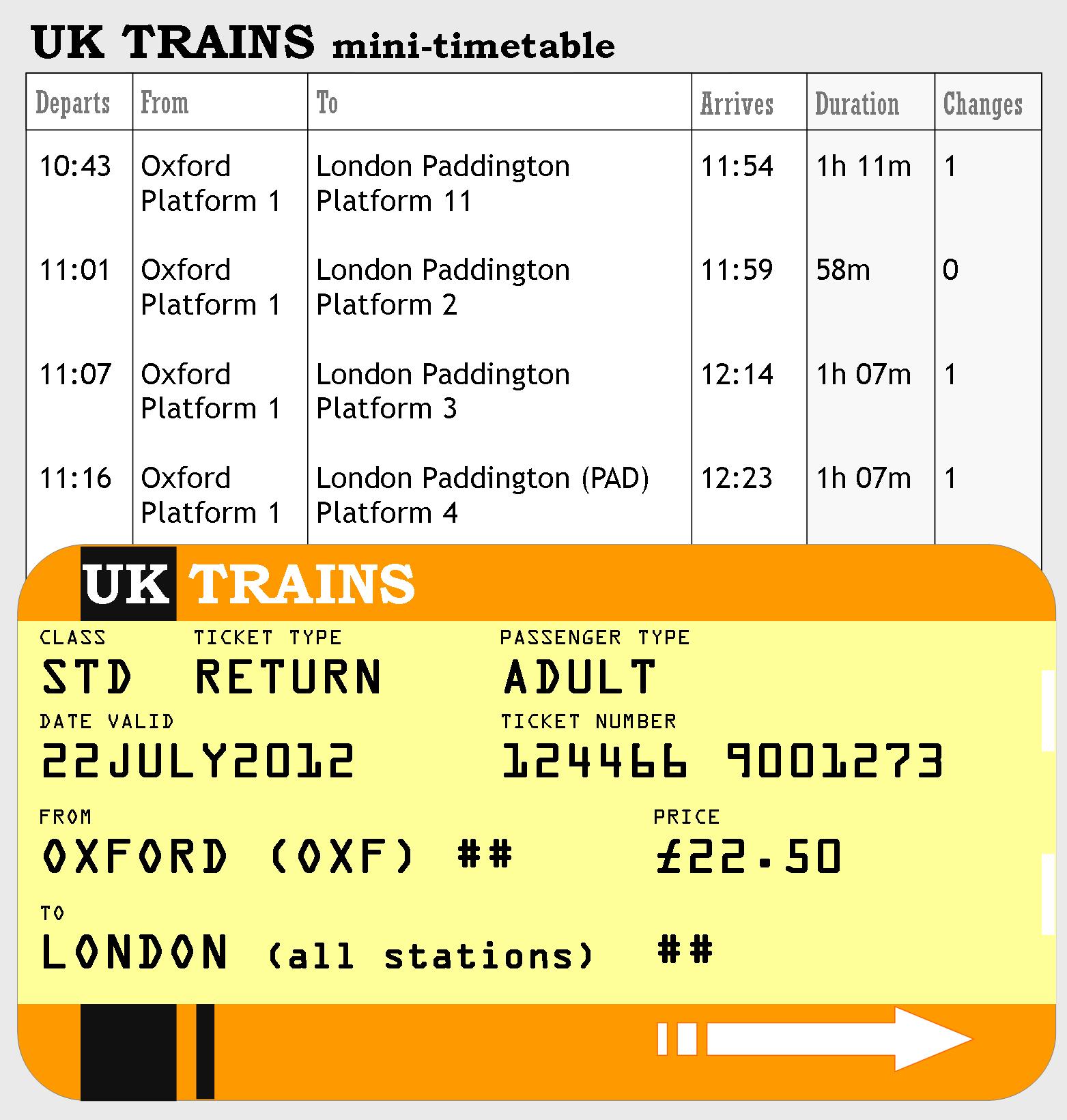
1. What do you think about this picture?
____________________________________
2. Where he/she is going to go?
____________________________________
3.For whom is this ticket?
____________________________________
4. How much does the ticket cost?
____________________________________
5. When is he/she going to go?
____________________________________
Card 2
1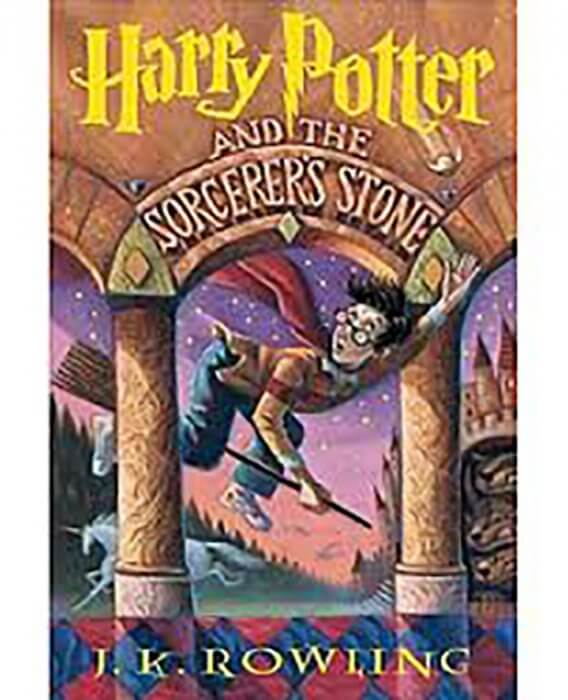 .
How many books have you read in your life?
____________________________________
2.What do you think about this book?
______________________________
3. Who is the main character?
______________________________
4. What is the genre of the book?
______________________________
5. Who is the author of the book?
____________________________
Card 3
W
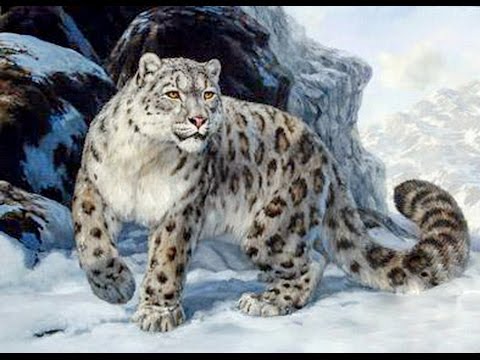 hat
is this animal?
__________________________
Where does this animal habitat?
__________________________
What does this animal eat?
__________________________
What does this animal mean for Kazakhstan?
__________________________
Why this animal in the Red book?
__________________________
Total marks _/24
Mark scheme
Listening and Reading
-
Question №
Answer
Mark
Additional information
1
1-c
1
2
2-a
1
3
3-b
1
4
South America
1
5
Llama
1
6
Domestic
1
7
Activity holidays
1
8
Polar expeditions
1
9
Cultural journeys
1
10
The main idea of 1/first paragraph is advertisement about activity holiday.
1
11
The main idea of 2/second paragraph is about polar expedition.
1
12
The main idea of 3/third paragraph is about cultural journey to East countries.
1
Total mark
12
Mark scheme
Writing and Speaking
CRITERIA FOR MARKING WRITING
Give points out of 6 for each criterion (content, organization, vocabulary and grammar and punctuation), and then calculate a mean to give a total mark out of 6. All fractional marks should be rounded up to the closest whole mark.
Mark /Criterion |
Content: relevance, style and register, and development of ideas |
Organization: cohesion, paragraphing, and format |
Vocabulary and spelling |
Grammar and Punctuation: range and accuracy |
6 |
• All content is relevant to the task. • The register completely corresponds to the requirements of the task; consistent and intentional misuse of register* may indicate a writer’s personal style. • All content points are fully addressed and developed in a balanced way.
*Such misuse of register should not harm the format of writing. |
Uses a range of basic connectors correctly and attempts to use referencing, but not always clearly or appropriately. • Uses paragraphs to separate ideas; all paragraphs revolve around one idea or a set of like ideas; the size of each paragraph allows for a proper and balanced development of ideas. • The format is appropriate, but may be modified for a better reading experience
|
Uses a range of everyday vocabulary appropriately; attempts to use less common lexical items with occasional in appropriacies. • Has good control of a word formation; may make occasional errors in producing less common word forms. • Spells common vocabulary items correctly; very few (one or two) occasional spelling mistakes may be present. • May occasionally misspell less common lexical items. • Errors in a word choice and/or spelling do not distort meaning.
|
• Writes simple and compound sentence forms correctly and demonstrates some variety in length. • May attempt some complex sentences, but they tend to be less accurate, including punctuation. • Errors in grammar and/or punctuation do not distort meaning
|
4 |
• Most content is relevant to the task; insignificant content omissions may be present. • The register on the whole corresponds to the requirements of the task. • Most content points are addressed, but some content points may be more fully covered than others.
|
• Uses some basic connectors, but these may be inaccurate or repetitive. • Uses paragraphs to separate ideas, but tends to misuse paragraphing (a script is a set of very short paragraphs or some paragraphs may be much longer than other ones for no apparent reason). • The format is generally appropriate.
|
• Uses everyday vocabulary generally appropriately, while occasionally overusing certain lexical items. • Has good control of a word formation; can produce common word forms correctly. • May make infrequent errors in spelling more difficult words. • Errors in word choice and/or spelling rarely distort meaning.
|
• Writes simple and some compound sentence forms correctly. • While errors in grammar and/or punctuation are noticeable, meaning is rarely distorted.
|
3 |
• Some content is relevant to the task; significant content omissions may be present. • The register barely corresponds to the requirements of the task. • Only some content points, which are minimally addressed.
|
• Uses a very limited range of basic cohesive devices correctly. • Writes in paragraphs, but may not use them to separate ideas (a script may have random breaks between paragraphs). • The format may be inappropriate in places.
|
• Uses basic vocabulary reasonably appropriately. • Has some control of word formation; can produce some common word forms correctly. • Makes frequent errors in spelling more difficult words, but simple words are spelled correctly. • Errors in word choice and/or spelling distort meaning at times.
|
• Writes simple sentence forms mostly correctly. • Errors in grammar and/or punctuation may distort meaning at times.
|
2 |
• Severe irrelevances and misinterpretations of the task may be present. • Only few content points, which are minimally addressed.
|
• May use a very limited range of basic cohesive devices, and those used, may not indicate a logical relationship between ideas. • Attempts to write in paragraphs, But their use maybe confusing (may start every sentence with a new line) • The format maybe inappropriate |
• Uses an extremely limited range of vocabulary. • Has very limited control of a word formation; can produce a few common word forms correctly. • Make many errors in spelling, including a range of simple words. • Errors in a word choice and/or spelling distort meaning.
|
• Writes some simple sentence forms correctly. • Frequent errors in grammar and/or punctuation distort meaning.
|
1 |
• Attempts the task, but it is largely misinterpreted and the response is barely relevant to the task.
|
• Links are missing or incorrect. • Does not write in paragraphs at all (a script is a block of text). • The format is not appropriate.
|
• Can only use a few isolated words and/or memorized phrases. • Has essentially no control of a word formation; can barely produce any word forms. • Displays few examples of conventional spelling.
|
• No evidence of sentence forms.
|
0 |
• Does not attempt the task in any way. OR • The response is completely irrelevant to the task. OR • There is too little language to assess. OR • Contentiscompletely |
|||
Link to the : Specification of Summative Assessment for term on the subject “English” Grade 8









 Бұл курс Қазақстан Республикасы Оқу-ағарту министрлігімен келісілген










