
 ЖИ көмекші


 Қауіпсіз төлем

жүктеу мүмкіндігіне ие боласыз
Бұл материал сайт қолданушысы жариялаған. Материалдың ішінде жазылған барлық ақпаратқа жауапкершілікті жариялаған қолданушы жауап береді. Ұстаз тілегі тек ақпаратты таратуға қолдау көрсетеді. Егер материал сіздің авторлық құқығыңызды бұзған болса немесе басқа да себептермен сайттан өшіру керек деп ойласаңыз осында жазыңыз
 03 Шілде 2026
 35
35
1 жыл бойы шексіз жүктеңіз
9 сынып Қмж
Short term plan
Unit: 8 Travel and tourism
|
lesson 79 |
||
School |
|
||
Teacher name |
|
||
Date: |
|
||
Grade: 9 |
Number present: |
absent: |
|
Lesson title |
Vocabulary: means of transport |
||
Learning objectives |
9.3.3.1 explain and justify their own and others’ point of view on a range of general and curricular topics 9.4.5.1 deduce meaning from context in extended texts on a range of familiar general and curricular topics |
||
Lesson objectives (assessment criteria) (Негіздеме: Мемлекет басшысы Қ.Тоқаевтың Ұлттық құрылтайдың ІІ,ІІІ, ІV отырыстарында берген тапсырмасы, ҚР Оқу-ағарту министрлігінің №123 бұйрығы) |
Learners will be able to: - introduce the topic - read for gist
Instilling values of the program “Birtutas tarbiye” being Adal Azamat for Month March “Independence and patriotism” Quote of the week 4: “A nation without patriotism is like a body without a soul.”/ 4-апта дәйек сөз/ |
||
Stages/ Time |
Teachers actions |
Students actions |
Assessment |
Resources |
Beginning 5 min |
Greeting. Asking dates and weather Warm up: Teacher asks Ss where they usually go on holiday. Elicit some ideas. Write Dream holiday on the board and elicit the meaning. Ask: What is your dream holiday? Elicit a range of ideas from the class and write useful vocabulary on the board Teacher tells values of this month. The value of creativity and innovation. Personal safety, life safety: - Risk recognition: being able to distinguish between threats such as bullying, drugs, violence, and fraud; - Making conscious decisions: avoiding actions that are harmful to one's life and health; |
Learners read the given sentences on the board and guess the topic and share with their ideas.
|
Teacher controles the process, gives feedback. The teacher to assess learners for their ability. “Good job! Well done!” Formative Assessment
|
Assessment
sheet
|
Middle 35 min |
Ex:1 P:87 Teacher asks Ss brainstorm with the class for as many means of transport as Ss can think of and write them on the board. Ask Ss to copy them down into their notebooks. Then elicit which are various 5s' favourite ones and why.
|
Learners in a minute write in your notebook as many means of transport as you can think of. Compare with your partner. ANSWERS car, plane, taxi, boat, ship, train, bus, coach, bike, motorbike, etc My favourite means of transport is the plane because it is fast and comfortable and you can travel long distances in little time |
Descriptor: A learner - brainstorm with the class - write in your notebook as many means of transport Point-5
|
Pictures
|
|
Ex: 2 P: 87 Teacher asks Ss to read the advert and then make sentences following the example. Elicit answers from Ss around the class. Differentiation: Learners will be supported by teacher and by helpers from his class. |
Learners read the advert and make sentences as in the example. ANSWERS a yak. If you go to Thailand you can ride an elephant. If you go to Kazakhstan, you can ride a camel |
Descriptor: A learner - read the advert - make sentences as in the example Point -5
Total points 10 |
|
End 5 min |
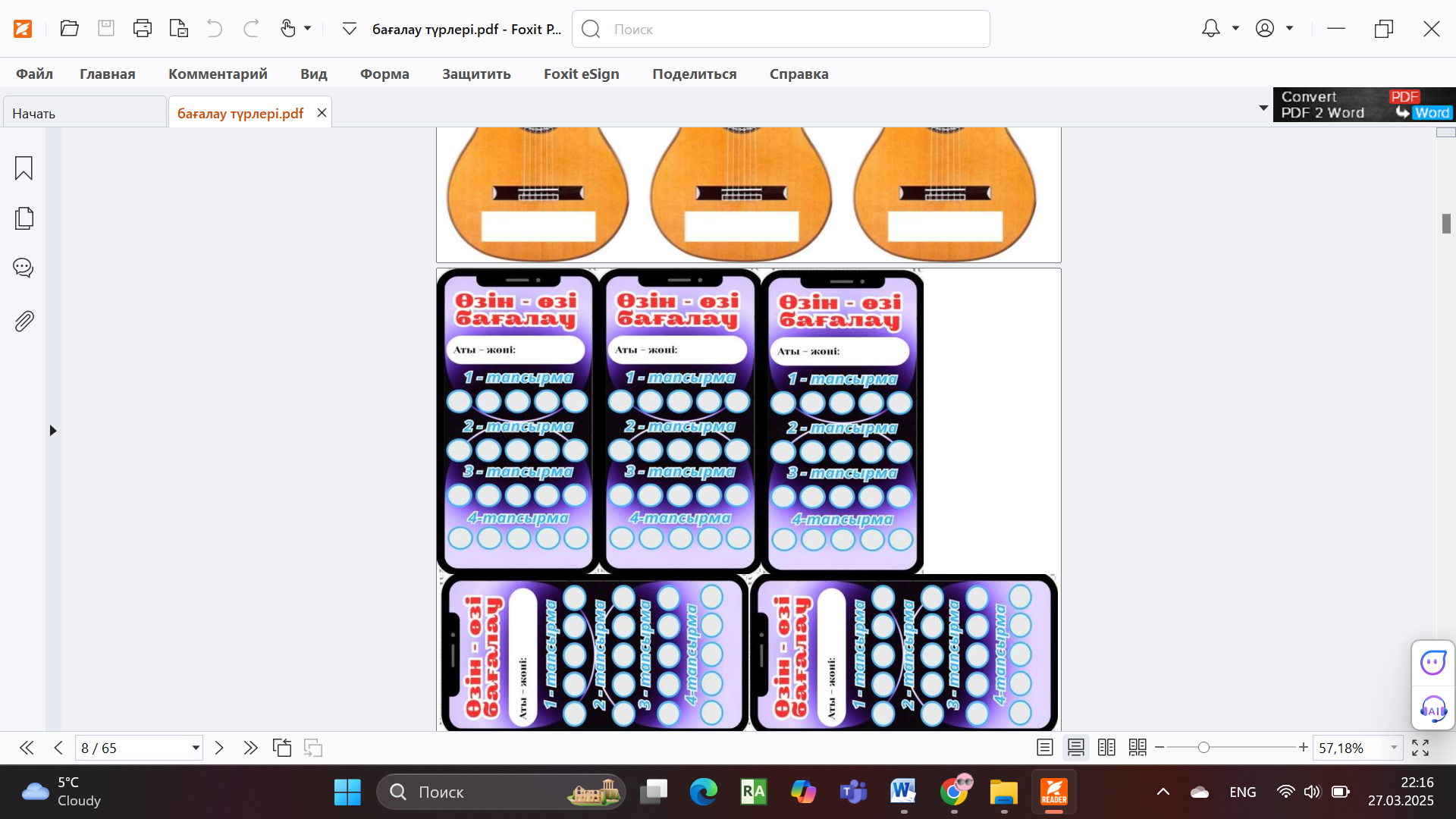
Learners provide feedback on what they have learned at the lesson and draw it on the face of students prototype. Ex: Home task: |
Ss evaluate each other and encourage classmate with phrases like:
|
Poster |
|
Short term plan
Unit: 8 Travel and tourism
|
lesson 80 |
||
School |
|
||
Teacher name |
|
||
Date: |
|
||
Grade: 9 |
Number present: |
absent: |
|
Lesson title |
Reading: Destination |
||
Learning objectives |
9.2.5.1 recognize the attitude or opinion of the speaker(s) in unsupported extended talk on a wide range of general and curricular topics, including talk on a limited range of unfamiliar topics 9.4.5.1 deduce meaning from context in extended texts on a range of familiar general and curricular topics |
||
Lesson objectives (assessment criteria) (Негіздеме: Мемлекет басшысы Қ.Тоқаевтың Ұлттық құрылтайдың ІІ,ІІІ, ІV отырыстарында берген тапсырмасы, ҚР Оқу-ағарту министрлігінің №123 бұйрығы) |
Learners will be able to: - present vocabulary for sights and activities - listen and read for gist - read for specific information
Instilling values of the program “Birtutas tarbiye” being Adal Azamat for Month April “Labor and Professional qualifIictions month” Quote of the week 1: Work, joy, laziness - inseparable suffering (Abai)/ 1-апта дәйек сөз/ |
||
Stages/ Time |
Teachers actions |
Students actions |
Assessment |
Resources |
Beginning 5 min |
Greeting. Asking dates and weather Warm up: Teacher asks Ss where they usually go on holiday. Elicit some ideas. Write Dream holiday on the board and elicit the meaning. Ask: What is your dream holiday? Elicit a range of ideas from the class and write useful vocabulary on the board Teacher tells values of this month. The value of creativity and innovation. Understanding the importance of health: - Understanding the need for a healthy lifestyle (sports, proper nutrition, rest); - Avoid harmful habits (smoking, alcohol, drugs); |
Learners read the given sentences on the board and guess the topic and share with their ideas.
|
The teacher to assess learners for their ability. “Good job! Well done!” Formative Assessment
|
Assessment sheet
|
Middle 7 min |
Ex:1 P:88 Teacher asks Ss to look at the pictures. Play the recording with pauses for Ss to repeat chorally and/or individually. Check Ss' pronunciation and intonation. Then ask Ss to close their books and try to remember as many sights and activities as possible. Elicit answers from Ss around the class. Differentiation: Allow students to repeat the words chorally several times before individual repetition
|
Learners look at the pictures. Listen and repeat ANSWERS Student’s own answer |
Descriptor: A learner - look at the pictures - repeat chorally and/or individually Point-2
|
Pictures
|
8 min |
Ex: 2 P: 88 Teacher asks Ss read out the question and play the recording. Ss listen and read and find out the answer. Differentiation: Learners will be supported by teacher and by helpers from his class. |
Learners listen to and read to find out. Answer the question. ANSWERS Astana is an exciting destination because there are lots of amazing sights to see and lots of interesting activities to do |
Descriptor: A learner - read out the question - complete the sentences Point -2
|
|
10 min |
Ex: 3a P: 89 Teacher asks Ss to read the sentence stems 1-6 and give them time to read the text again and then complete them. Check Ss' answers around the class.
|
Learners read again and complete the sentences. ANSWERS 1 all the way down Nurzhol Boulevard and the Presidential Palace 2 Nur Astana Mosque 3 giant tent 4 an indoor pool with a sandy beach and palm trees and trendy shops 5 market with traditional yurts 6 shopping malls and outdoors |
Descriptor: A learner - read out the question - complete the sentences Point -3
|
|
10 min |
Ex: 3b P: 89 Teacher give 5s time to look up the meanings of the word in bold in their dictionaries and then elicit explanations from Ss around the class. Differentiation: Learners will receive support from the teacher and classmates who assist them |
Learners explain the words in bold. You can use your dictionary. ANSWERS miss (v): to lose the opportunity to see/do sth spectacular (adj): amazing unforgettable (adj): memorable trendy (adj): fashionable pick up (phr v): to buy |
Descriptor: A learner - explain the words in bold - use your dictionary Point -3
Total points 10 |
|
End 5 min |
Learners provide feedback on what they have learned at the lesson and draw it on the face of students prototype. Ex: Home task: |
Ss evaluate each other and encourage classmate with phrases like: Well done! Brilliant! Good job! I like it! |
Poster |
|
Short term plan
Unit: 8 Travel and tourism
|
lesson 81 |
||
School |
|
||
Teacher name |
|
||
Date: |
|
||
Grade: 9 |
Number present: |
absent: |
|
Lesson title |
Phrasal verb: take |
||
Learning objectives |
9.2.5.1 recognize the attitude or opinion of the speaker(s) in unsupported extended talk on a wide range of general and curricular topics, including talk on a limited range of unfamiliar topics 9.3.2.1 ask complex questions to get information about a wide range of general and curricular topics 9.4.8.1 use a wide range of familiar and unfamiliar paper and digital reference resources to |
||
Lesson objectives (assessment criteria) (Негіздеме: Мемлекет басшысы Қ.Тоқаевтың Ұлттық құрылтайдың ІІ,ІІІ, ІV отырыстарында берген тапсырмасы, ҚР Оқу-ағарту министрлігінің №123 бұйрығы) |
Learners will be able to: - consolidate new vocabulary - express an opinion - learn phrasal verbs with take
Instilling values of the program “Birtutas tarbiye” being Adal Azamat for Month April “Labor and Professional qualifIictions month” Quote of the week 1: Work, joy, laziness - inseparable suffering (Abai)/ 1-апта дәйек сөз/ |
||
Stages/ Time |
Teachers actions |
Students actions |
Assessment |
Resources |
Beginning 5 min |
Greeting. Asking dates and weather Warm up: Teacher asks Ss what do you usually take with you when you go on holiday? Put students into pairs to write a list of things they take. Elicit ideas from the class and write them on the board Teacher tells values of this month. The value of creativity and innovation. Understand responsibility for one's own life: - Demonstrate a sense of responsibility for one's own life and health; - To show conscious responsibility for one's actions and life choices. |
Learners read the given sentences on the board and guess the topic and share with their ideas.
|
The teacher to assess learners for their ability. “Good job! Well done!” Formative Assessment
|
Assessment sheet
|
Middle 10 min |
Ex:4 P:89 Teacher asks Ss to read the words in the list and then use them to complete the phrases 1-10. Check Ss' answers around the class. Differentiation: Allow them to work in pairs and refer to example phrases if needed. |
Learners complete the phrases. ANSWERS 1 capital 2 shopping 3 palm 4 sandy 5 stunning 6 indoor 7 architectural 8 boat 9 holiday 10 trendy |
Descriptor: A learner - read the words in the list - complete the phrase Point-3
|
Pictures
|
8 min |
Ex: 5 P: 89 Teacher asks Ss to look at the bar chart and then play the recording. Ss listen and fill in the percentages. Then ask various ss to present the information in the chart to the class. Differentiation: Learners will be supported by teacher and by helpers from his class. |
Learners listen and fill in the percentages. Present the information to the class. ANSWERS 1 90 2 65 3 5 4 25 5 15
|
Descriptor: A learner - listen and fill - present the information Point -2
|
|
10 min |
Ex: 6 P: 89 Teacher asks Ss to read the text again if necessary. Give Ss time to consider their answers and then ask various 5s to share their opinions with the class. Differentiation: Provide sentence starters such as I think…, In my opinion…, According to the text… to help them express their opinions.
|
Learners answer the question. Give your opinion. ANSWERS I think tourists should definitely visit the Bayterek Tower to get stunning views of the city. I think they should also visit the Khan Shatyr Entertainment Centre to enjoy the facilities and visit trendy shops. I also think they should go on a boat trip on the river to see the sights of the city
|
Descriptor: A learner - answer the question - give your opinion Point -3
|
|
7 min |
Ex: 7 P: 89 Teacher asks Ss to read the box and then give them time to choose the correct particles in the sentences. Check Ss' answers.
|
Learners read the box, then choose the correct particle. ANSWERS 1 up 2 after 3 off 4 to |
Descriptor: A learner - read the box - choose the correct particle Point -2
Total points 10 |
|
End 5 min |
Learners provide feedback on what they have learned at the lesson and draw it on the face of students prototype. Ex: Home task: |
Ss evaluate each other and encourage classmate with phrases like: Well done! Brilliant! Good job! I like it! |
Poster |
|
Short term plan
Unit: 8 Travel and tourism
|
lesson 82 |
||
School |
|
||
Teacher name |
|
||
Date: |
|
||
Grade: 9 |
Number present: |
absent: |
|
Lesson title |
Use of English: Adverbs – order of adverbs |
||
Learning objectives |
9.5.3.1 write with grammatical accuracy on a range of familiar general and curricular topics 9.6.12.1 use an increased variety of comparative degree adverb structures with regular and irregular adverbs, use a variety of preverbal, post-verbal and end-position adverbs on a range of familiar general and curricular topics; |
||
Lesson objectives (assessment criteria) (Негіздеме: Мемлекет басшысы Қ.Тоқаевтың Ұлттық құрылтайдың ІІ,ІІІ, ІV отырыстарында берген тапсырмасы, ҚР Оқу-ағарту министрлігінің №123 бұйрығы) |
Learners will be able to: - revise adverbs - order of adverbs - practise adverbs
Instilling values of the program “Birtutas tarbiye” being Adal Azamat for Month April “Labor and Professional qualifIictions month” Quote of the week 2: “Happiness comes to those who work hard” – Leonardo da Vinci/ 2-апта дәйек сөз/ |
||
Stages/ Time |
Teachers actions |
Students actions |
Assessment |
Resources |
Beginning 5 min |
Greeting. Asking dates and weather Warm up: Teacher refer students back to the holiday advice text on page 94. Ask: Why shouldn’t you play your mp3 player? Elicit the answer You’ll annoy travel companions. and write it on the board Write It’s raining. You’re going to get wet. on the board. Ask: Does this refer to the past, present or future? (the future) Does it describe a plan, or a prediction? (a prediction). Point out that this is another function of going to. Teacher tells values of this month. The value of unity and solidarity. Respect and mutual respect: - Respect for the rights and individuality of each person; - Not to have a negative impact on others with one's actions; |
Learners read the given sentences on the board and guess the topic and share with their ideas.
|
Teacher controles the process, gives feedback. The teacher to assess learners for their ability. “Good job! Well done!” Formative Assessment
|
Assessment sheet
|
Middle 10 min |
Ex:1 P:90 Teacher asks go through the theory and revise adverbs and order of adverbs and explain when and how we use them. Explain any points Ss are unsure of. Then give them time to form correct sentences with the prompts. Check Ss' answers. Differentiation: Provide a short reminder chart with examples of adverbs of manner, place, and time
|
Learners read the theory. Form correct sentences. Answer the question. ANSWERS 1 The train is never late. (manner) 2 I left my bus pass upstairs. (place) 3 They left quickly. (manner) 4 We were terribly busy yesterday. (degree) 5 She finished work early on Fridays. (time) 6. You can catch the bus to town from here. (place) 7 She drives extremely fast. (degree; manner) 8 He always walks to work. (frequency) 9. The bus is quite slow. (degree) 10 Please ride your bike carefully. (manner) |
Descriptor: A learner - read the theory - correct sentences Point-3
|
Pictures
|
10 min |
Ex: 2 P: 90 Teacher give Ss time to complete the task, and then check Ss' answers around the class. Differentiation: Learners will be supported by teacher and by helpers from his class. |
Learners make sentences. ANSWERS I can speak English well. I never behave badly. I usually walk slowly. I went to school today. I regularly ride my bike at the weekends. It is very hot today. I am never late for school. I feel quite tired. |
Descriptor: A learner - make sentences - complete the task Point -3
|
|
8 min |
Ex: 3 P: 90 Teacher explain the task and give Ss time to complete it. Check Ss' answers. Differentiation: Allow students to work in pairs and give them sentence frames to help them form correct sentences.
|
Learners choose the correct item. ANSWERS 1 very 2 well 3 usually go 4 slightly 5 spoke angrily 6 straight 7 badly 8 happily give you
|
Descriptor: A learner - choose the correct item - complete the task Point -2
|
|
7 min |
Ex: 4 P: 90 Teacher explain the task and elicit answers from Ss around the class
|
Learners fill the gaps. ANSWERS 1 tomorrow 2 patiently 3 here 4 fast 5 rather |
Descriptor: - fill the gaps Total: 2 point
Total points 10 |
|
End 5 min |
Learners provide feedback on what they have learned at the lesson and draw it on the face of students prototype. Ex: Home task: |
Ss evaluate each other and encourage classmate with phrases like: Well done! Brilliant! Good job! I like it!
|
Poster |
|
Short term plan
Unit: 8 Travel and tourism
|
lesson 83 |
||
School |
|
||
Teacher name |
|
||
Date: |
|
||
Grade: 9 |
Number present: |
absent: |
|
Lesson title |
Use of English: Determiners / pre- determiners |
||
Learning objectives |
9.5.3.1 write with support factual descriptions at text level which describe people, places and objects 9.6.4.1 use a wide variety of determiners and pre-determiner structures on a range of familiar general and curricular topics; |
||
Lesson objectives (assessment criteria) (Негіздеме: Мемлекет басшысы Қ.Тоқаевтың Ұлттық құрылтайдың ІІ,ІІІ, ІV отырыстарында берген тапсырмасы, ҚР Оқу-ағарту министрлігінің №123 бұйрығы) |
Learners will be able to: - present/practise determiners/pre- determiners - present/practise determiners/ pre-determiners - practise determiners/pre-determiners Instilling values of the program “Birtutas tarbiye” being Adal Azamat for Month April “Labor and Professional qualifIictions month” Quote of the week 2: “Happiness comes to those who work hard” – Leonardo da Vinci/ 2-апта дәйек сөз/ |
||
Stages/ Time |
Teachers actions |
Students actions |
Assessment |
Resources |
Beginning 5 min |
Greeting. Asking dates and weather Warm up: Teacher focus on the picture and elicit that it shows space travel. Elicit the words moon and planet. Ask: Do you think more people will travel into space in the future? Do you think people will ever go on holiday to other planets? Elicit a range of ideas. Teacher tells values of this month. The value of unity and solidarity. Openness in communication: - Express your opinion confidently but politely; - Avoiding ulterior motives or lies; |
Learners read the given sentences on the board and guess the topic and share with their ideas.
|
The teacher to assess learners for their ability. “Good job! Well done!” Formative Assessment
|
Assessment sheet
|
Middle 7 min |
Ex:5 P:91 Teacher asks Ss to read the theory. Explain any points Ss are unsure of. Explain the task. Give Ss time to complete it and then ask Ss around the class to share their sentences with the rest of the class. Differentiation: Provide examples from the theory and highlight key structures.
|
Learners read the theory. Then complete the sentences with the right determiner. ANSWERS 1 Each 2 whole 3 every 4 none 5 all 6 plenty
|
Descriptor: A learner - read the theory- - complete the sentences Point-2
|
Pictures
|
10 min |
Ex: 6 P: 91 Teacher asks Ss to read the theory box and then ask various Ss to tell the class how we use the determiners. Differentiation: Learners will be supported by teacher and by helpers from his class. |
Learners read the examples. ANSWERS We use both, and to say we mean each one of two things/people. We use neither, nor to say not the one or the other of two things/people. We use either, or/either to say one or the other of two things/people
|
Descriptor: A learner - read the theory box - tell the class how we use the determiners Point -3
|
|
10 min |
Ex: 7 P: 91 Teacher explain the task and give 5s time to complete it. Check Ss' answer Differentiation: Allow students to work in pairs and give them sentence starters or prompts
|
Learners rewrite the sentences using the words in brackets. ANSWERS 1 The whole (of my) family came to watch me play football. 2 Each of the passengers boarded the plane./ Each passenger boarded the plane. 3 Neither Assel nor Nurlan have got a passport. 4 Either Saule or Dina is going to help me out with my luggage. |
Descriptor: A learner - rewrite the sentences - use the words in brackets Point -3
|
|
8 min |
Ex: 8 P: 91 Teacher explain the task and give Ss time to complete it. Check Ss' answers.
|
Learners choose the correct word. ANSWERS 1 whole 2 Each 3 either 4 plenty 5 None 6 every 7 either 8 every 9 Both 10 nor |
Descriptor: A learner - choose the correct word Point 2
Total points 10 |
|
End 5 min |
Learners provide feedback on what they have learned at the lesson and draw it on the face of students prototype. Ex: Home task: |
Ss evaluate each other and encourage classmate with phrases like: Well done! Brilliant! Good job! I like it! |
The teacher to assess learners for their ability. “Good job! Well done!”
|
Poster |
Short term plan
Unit: 8 Travel and tourism
|
lesson 84 |
||
School |
|
||
Teacher name |
|
||
Date: |
|
||
Grade: 9 |
Number present: |
absent: |
|
Lesson title |
Reading: The legend of the lake |
||
Learning objectives |
9.2.6.1 deduce meaning from context in unsupported extended talk on a wide range of general and curricular topics, including talk on a limited range of unfamiliar topics 9.4.5.1 deduce meaning from context in extended texts on a range of familiar general and curricular topics |
||
Lesson objectives (assessment criteria) (Негіздеме: Мемлекет басшысы Қ.Тоқаевтың Ұлттық құрылтайдың ІІ,ІІІ, ІV отырыстарында берген тапсырмасы, ҚР Оқу-ағарту министрлігінің №123 бұйрығы) |
Learners will be able to: - introduce new vocabulary - listen and read for gist - read for specific information (multiple choice) Instilling values of the program “Birtutas tarbiye” being Adal Azamat for Month April “Labor and Professional qualifIictions month” Quote of the week 2: “Happiness comes to those who work hard” – Leonardo da Vinci/ 2-апта дәйек сөз/ |
||
Stages/ Time |
Teachers actions |
Students actions |
Assessment |
Resources |
Beginning 5 min |
Greeting. Asking dates and weather Warm up: Teacher asks Ss if anyone mentions present continuous or present simple for future, include them in your discussion. If not, write two sentences on the board and elicit what time they refer to, past, present or future: The plane leaves at six o’clock this evening. I’m meeting Dave at the airport. Elicit the tenses of the underlined verbs (present simple and present continuous). Tell students they are going to learn about the use Teacher tells values of this month. The value of unity and solidarity. Resolve disputes peacefully: - Control emotions during an argument and avoid hasty actions; - Solving problems through non-violent, civilized language; |
Learners read the given sentences on the board and guess the topic and share with their ideas.
|
The teacher to assess learners for their ability. “Good job! Well done!” Formative Assessment
|
Assessment sheet
|
Middle 12 min |
Ex:1 P:92 Teacher asks Ss to read the words in the list and explain/elicit the meanings of any unknown ones and then give them time to look at the pictures and fill in the correct words. Tell Ss they can use their dictionaries to help them. Play the recording, Ss listen and check their answers Differentiation: Pre-teach difficult vocabulary using pictures or simple explanations. |
Learners label the pictures. You can use your dictionary. ANSWERS 1 Loch 2 Falls 3 Causeway 4 Cove 5 Cave 6 Lake
|
Descriptor: A learner - label the picture - use your dictionary Point-3
|
Pictures
|
13 min |
Ex: 2 P: 92 Teacher elicit Ss' guesses in answer to the questions. Play the recording. Ss listen and read to find out. Differentiation: Learners will be supported by teacher and by helpers from his class. |
Learners listen to and read to find out. Answer the question. ANSWERS Toraigyr Lake is at the foot of Akbet Mountain in Kazakhstan. The legend associated with it is of a three- headed dragon and seven brothers who killed it
|
Descriptor: A learner - listen to and read to find out- - answer the question Point -4
|
|
10 min |
Ex: 3 P: 92 Teacher explain the task and ask Ss to read the questions and answer choices. Give Ss time to read the text and then complete the task. Check 5s' answers.
|
Learners read again and for question choose ANSWERS 1 A 2 C 3 B
|
Descriptor: A learner - read the questions - complete the task Point -3
Excellent Total points 10 |
|
End 5 min |
Learners provide feedback on what they have learned at the lesson and draw it on the face of students prototype. Ex: Home task: |
Ss evaluate each other and encourage classmate with phrases like: Well done! Brilliant! Good job! I like it!
|
Poster |
|

Short term plan
Unit: 8 Travel and tourism
|
lesson 85 |
||
School |
|
||
Teacher name |
|
||
Date: |
|
||
Grade: 9 |
Number present: |
absent: |
|
Lesson title |
Word formation |
||
Learning objectives |
9.2.6.1 deduce meaning from context in unsupported extended talk on a wide range of general and curricular topics, including talk on a limited range of unfamiliar topics 9.3.2.1 ask complex questions to get information about a wide range of general and curricular topics 9.4.6.1 recognise the attitude or opinion of the writer in extended texts on a wide range of familiar general and curricular topics |
||
Lesson objectives (assessment criteria) (Негіздеме: Мемлекет басшысы Қ.Тоқаевтың Ұлттық құрылтайдың ІІ,ІІІ, ІV отырыстарында берген тапсырмасы, ҚР Оқу-ағарту министрлігінің №123 бұйрығы) |
Learners will be able to: - create an alternate ending - form adjectives from verbs - learn and practise prepositional phrases
Instilling values of the program “Birtutas tarbiye” being Adal Azamat for Month April “Labor and Professional qualifIictions month” Quote of the week 3: “There are no promising professions, there are only promising specialists.” / 3-апта дәйек сөз/ |
||
Stages/ Time |
Teachers actions |
Students actions |
Assessment |
Resources |
Beginning 5 min |
Greeting. Asking dates and weather Warm up: Teacher tell students to imagine they are on holiday in a place they don’t know. Elicit ideas for how they can find out what there is to do there, e.g. buy a guidebook, look on the internet, find posters and leaflets, go to the tourist information office Teacher tells values of this month. The value of hard work and professional qualifications. Responsibility for work - A sense of full responsibility for the results of actions; - Maintain order and consistency in performing tasks; |
Learners read the given sentences on the board and guess the topic and share with their ideas.
|
The teacher to assess learners for their ability. “Good job! Well done!” Formative Assessment
|
Assessment sheet
|
Middle 10 min |
Ex:4 P:93 Teacher give Ss time to consider their answers and then elicit various answers from Ss around the class. Differentiation: Allow students to discuss their answers in pairs before sharing with the class.
|
Learners answer the question. ANSWERS The last brother could have waited until the dragon was asleep because it only had one head left and it had to sleep sometime. Then he could have killed it and got away without being injured
|
Descriptor: A learner - discuss the photo - answer the question Point-3
|
Pictures
|
10 min |
Ex: 5 P: 93 Teacher asks Ss to read the theory box and then give them time to complete the sentences with adjectives formed from the verbs in brackets. Differentiation: Learners will be supported by teacher and by helpers from his class. |
Learners read the theory. Then complete each sentence with the correct adjective formed from the verb in brackets. ANSWERS 1 accessible 2 believable 3 excellent 4 creative 5 considerate |
Descriptor: A learner - read the theory - complete each sentence with the correct adjective Point -3
|
|
8 min |
Ex: 6 P: 93 Teacher explain the task and give Ss some time to complete it then check Ss' answers.
|
Learners choose the correct preposition. ANSWERS 1 for 2 after 3 about 4 of
|
Descriptor: A learner - complete the sentences - choose the correct preposition Point -2
|
|
7 min |
Ex: 7 P: 93 Teacher explain the task and ask Ss to read the gapped advert. Play the recording. Ss listen and complete the gaps. Check Ss' answers. Differentiation: Provide guiding questions or prompts to help them express their ideas.
|
Learners listen and complete the advert with the missing words. ANSWERS 1 coach 2 Akbet 3 picnic lunch 4 guest |
Descriptor: A learner - listen and complete - complete the advert Point -2
Total points 10 |
|
End 5 min |
Learners provide feedback on what they have learned at the lesson and draw it on the face of students prototype. Ex: Home task: |
Ss evaluate each other and encourage classmate with phrases like: Well done! Brilliant! Good job! I like it!
|
Poster |
|
Short term plan
Unit: 8 Travel and tourism
|
lesson 86 |
||
School |
|
||
Teacher name |
|
||
Date: |
|
||
Grade: 9 |
Number present: |
absent: |
|
Lesson title |
Everyday English: Apologising – Accepting an apology |
||
Learning objectives |
9.2.5.1 recognize the attitude or opinion of the speaker(s) in unsupported extended talk on a wide range of general and curricular topics, including talk on a limited range of unfamiliar topics 9.3.7.1 use appropriate subject-specific vocabulary and syntax to talk about a limited range of general topics and curricular topics |
||
Lesson objectives (assessment criteria) (Негіздеме: Мемлекет басшысы Қ.Тоқаевтың Ұлттық құрылтайдың ІІ,ІІІ, ІV отырыстарында берген тапсырмасы, ҚР Оқу-ағарту министрлігінің №123 бұйрығы) |
Learners will be able to: - present situational language - Listen and read for specific information - identify synonymous phrases in a situational dialogue
Instilling values of the program “Birtutas tarbiye” being Adal Azamat for Month April “Labor and Professional qualifIictions month” Quote of the week 3: “There are no promising professions, there are only promising specialists.” / 3-апта дәйек сөз/ |
||
Stages/ Time |
Teachers actions |
Students actions |
Assessment |
Resources |
Beginning 5 min |
Greeting. Asking dates and weather Warm up: Teacher asks Ss what tourist attractions are there in your town / city? Ask students if friends or relatives ever come from other places to stay. Ask: What do you take them to visit? Teacher tells values of this month. The value of hard work and professional qualifications. Self-development and professional growth: - Striving to acquire new professional knowledge and skills; - Effective use of experience and knowledge in the workplace; |
Learners read the given sentences on the board and guess the topic and share with their ideas.
|
The teacher to assess learners for their ability. “Good job! Well done!” Formative Assessment
|
Assessment sheet
|
Middle 7 min |
Ex:1 P:94 Teacher play the recording with pauses for Ss to listen and repeat chorally and/or individually. Check Ss' pronunciation and intonation
|
Learners listen and repeat. ANSWERS Student’s own answer
|
Descriptor: A learner - listen and repeat Point-2
|
Pictures
|
10 min |
Ex: 2 P: 94 Teacher play the recording. Ss listen and follow the dialogue in their books and find out. Differentiation: Learners will be supported by teacher and by helpers from his class. |
Learners read a dialogue between two friends. Answer the question. ANSWERS The friends are at an airport. Todd takes Ryan's bag by mistake.
|
Descriptor: A learner - read a dialogue - answer the question Point -3
|
|
10 min |
Ex: 3 P: 94 Teacher asks Ss read out the phrases and give Ss time to find alternative phrases in the dialogue that have a similar meaning. Check Ss' answers and elicit the L1 equivalents. Differentiation: Allow students to work in pairs and help them locate the phrases in the dialogue |
Learners find sentences in the dialogue. ANSWERS I'm surprised you're here. = Fancy seeing you here. Are you sure? Oh, did 1? Where are you going? Where are you off to? Never mind. Oh, don't worry about it. I apologise. I'm terribly sorry about that. (Ss' own answers |
Descriptor: A learner - read the phrases - find the sentences Point -3
|
|
8 min |
Ex: 4 P: 94 Teacher play the recording again. Ss listen and then take roles and act out the dialogue in closed pairs. Monitor the activity around the class and then ask various pairs to act out the dialogue in front of the class. Differentiation: Provide simple explanations or examples if needed. |
Learners listen and read the dialogue. Take roles and read it aloud ANSWERS Student’s own answer
|
Descriptor: A learner - listen and read - act out the dialogue Point -2
Total points 10 |
|
End 5 min |
Learners provide feedback on what they have learned at the lesson and draw it on the face of students prototype. Ex: Home task: |
Ss evaluate each other and encourage classmate with phrases like: Well done! Brilliant! Good job! I like it!
|
Poster |
|
Short term plan
Unit: 8 Travel and tourism
|
lesson 87 |
||
School |
|
||
Teacher name |
|
||
Date: |
|
||
Grade: 9 |
Number present: |
absent: |
|
Lesson title |
Across cultures: Man – made Masterpieces |
||
Learning objectives |
9.4.5.1 deduce meaning from context in extended texts on a wide range of familiar general and curricular topics, and some unfamiliar topics 9.5.3.1 write with support factual descriptions at text level which describe people, places and objects |
||
Lesson objectives (assessment criteria) (Негіздеме: Мемлекет басшысы Қ.Тоқаевтың Ұлттық құрылтайдың ІІ,ІІІ, ІV отырыстарында берген тапсырмасы, ҚР Оқу-ағарту министрлігінің №123 бұйрығы)
|
Learners will be able to: - understand cultural heritage and its importance, to introduce the topic and listen and read for gist - read for specific information (multiple matching)
Instilling values of the program “Birtutas tarbiye” being Adal Azamat for Month April “Labor and Professional qualifIictions month” Quote of the week 3: “There are no promising professions, there are only promising specialists.” / 3-апта дәйек сөз/ |
||
Stages/ Time |
Teachers actions |
Students actions |
Assessment |
Resources |
Beginning 5 min |
Greeting. Asking dates and weather Warm up: Teacher asks Ss think about what places and sights they would promote to tourists coming to Kazakhstan. Tell them to think of eight items. Encourage students to share their ideas with the class and get a consensus of the most popular attractions. Teacher tells values of this month. The value of hard work and professional qualifications. Discipline and organizational skills: - Effective planning of work schedules and tasks; - Complete difficult or complex tasks in stages; |
Learners read the given sentences on the board and guess the topic and share with their ideas.
|
The teacher to assess learners for their ability. “Good job! Well done!” Formative Assessment
|
Assessment sheet
|
Middle 12 min |
Ex:1 P:95 Teacher direct Ss' attention to the definition and give them time to read it. Then play the recording. Ss listen and follow the texts in their books to find out how the places are UNESCO World Heritage Sites Differentiation: Work in pairs to identify how the places are UNESCO World Heritage Sites.
|
Learners look at the definition. Answer the question. ANSWERS Blenheim Palace is a man-made structure that is one of the first buildings created in the English Romantic style of architecture. The Mausoleum of Khoja Ahmend Yasawi is a man-made structure that is a beautiful example of 12th century architecture. |
Descriptor: A learner - look at the definition - answer the question Point-3
|
Pictures
|
10 min |
Ex: 2 P: 95 Teacher asks Ss to read the sentences 1-5. Give Ss time to read the texts again and mark the statements. Check Ss' answers. Differentiation: Learners will be supported by teacher and by helpers from his class. |
Learners read the text. Then, read the sentences and write M for the Mouselium and B Blenheim ANSWERS 1 B 2 M 3 B 4 B 5 M |
Descriptor: A learner - read the text - write M for the Mouselium and B Blenheim Point -3
|
|
13 min |
Ex: 3 P: 95 Teacher give Ss time to complete the task in closed pairs. Elicit comparisons from Ss around the class. Differentiation: The teacher may give examples to support understanding.
|
Learners compare and contrast the two buildings in the text. ANSWERS Blenheim Palace was built by a queen for a military leader but The Mausoleum was built by a military leader. Blenheim Palace was completed in 1722, but the Mausoleum of Khoja Ahmed Yasawi was never completed. Both Blenheim Palace and the Mausoleum of Khoja Ahmed Yasawi have paintings inside and are open to the public. Blenheim Palace has a Great Lake and trees which are almost 1,000 years old, but the Mausoleum of Khoja Ahmed Yasawi does not. Blenheim Palace has 187 rooms whereas the Mausoleum of Khoja Ahmed Yasawi has 35 rooms. They are both excellent examples of types of architecture |
Descriptor: A learner - read the text - compare two buildings Point -4
Excellent
|
|
End 5 min |
Learners provide feedback on what they have learned at the lesson and draw it on the face of students prototype. Ex: Home task: |
Ss evaluate each other and encourage classmate with phrases like: Well done! Brilliant! Good job! I like it! |
Poster |
|
Short term plan
Unit: 8 Travel and tourism
|
lesson 88 |
||
School |
|
||
Teacher name |
|
||
Date: |
|
||
Grade: 9 |
Number present: |
absent: |
|
Lesson title |
Across the curriculum: Linking East and West |
||
Learning objectives |
9.2.5.1 recognize the attitude or opinion of the speaker(s) in unsupported extended talk on a wide range of general and curricular topics, including talk on a limited range of unfamiliar topics 9.4.5.1 deduce meaning from context in short texts on a limited range of familiar general and curricular topics |
||
Lesson objectives (assessment criteria) (Негіздеме: Мемлекет басшысы Қ.Тоқаевтың Ұлттық құрылтайдың ІІ,ІІІ, ІV отырыстарында берген тапсырмасы, ҚР Оқу-ағарту министрлігінің №123 бұйрығы) |
Learners will be able to: - introduce the topic; to listen and read for gist - read for specific information - understand cultural heritage and its importance
Instilling values of the program “Birtutas tarbiye” being Adal Azamat for Month April “Labor and Professional qualifIictions month” Quote of the week 4:
“By
gaining deep knowledge, one will build a profession; 4-апта дәйек сөз/ |
||
Stages/ Time |
Teachers actions |
Students actions |
Assessment |
Resources |
Beginning 5 min |
Greeting. Asking dates and weather Warm up: Teacher asks Ss do you go on holiday with your family? Where do you go? What do you do? Elicit a range of answers, encouraging as many students as possible to contribute. Ask students to think of the possible benefits of tourism to an area, and any negative aspects Teacher tells values of this month. The value of independence and patriotism. Respect, self-respect: - Maintaining personal dignity, not degrading oneself; - To cultivate the ability to treat oneself and others fairly. |
Learners read the given sentences on the board and guess the topic and share with their ideas.
|
The teacher to assess learners for their ability. “Good job! Well done!” Formative Assessment
|
Assessment sheet
|
Middle 10 min |
Ex:1 P:96 Teacher elicit what, if anything Ss know about the Chang'an Tian-Shan Corridor. Play the recording. Ss listen and follow the text in their books and find out. Differentiation: Pre-teach key vocabulary from the text and allow students to listen more than once.
|
Learners listen and read to find out. Answer the question. ANSWERS It is a 5,000 km stretch of the Silk Road that ran through Kazakhstan
|
Descriptor: A learner - listen and read - answer the question Point-3
|
Pictures
|
12 min |
Ex: 2 P: 96 Teacher give Ss time to read the text again and answer the comprehension questions. Check Ss' answers. Differentiation: Learners will be supported by teacher and by helpers from his class. |
Learners read the text again and answer the question. ANSWERS 1 5,000 km 2 Chang'an (modern-day Xian) 3 the Taklamakan desert, the Tian-Shan Mountains, the Kazakh steppe 4 Talgar, Aktobe, Kulan, Ormek, Almaty 5 It was a major link between East and West and the beginning of globalisation and the spread of ideas.
|
Descriptor: A learner - read the text -answer the question Point -3
|
|
13 min |
Ex: 3 P: 96 Teacher tells Ss to refer back to p.95 and read the information box about UNESCO again and then give Ss time to consider their answers to the questions referring to the text as necessary. Ask various Ss to share their answers with the class. Differentiation: Allow students to work in pairs and help them locate the relevant information in the text
|
Learners read the information box. Answers to the questions ANSWERS I think the Chang'an - Tian Shan Corridor is on the UNESCO World Heritage list because it is a place with incredible natural beauty and it reflects cultural change. I think it helped communication between people because the people that travelled along it brought news from the east to the west and from the west to the east in a way that hadn't been known before. |
Descriptor: A learner - read the information box. - answer the question Point -4
|
|
End 5 min |
Learners provide feedback on what they have learned at the lesson and draw it on the face of students prototype. Ex: Home task: |
Ss evaluate each other and encourage classmate with phrases like: Well done! Brilliant! Good job! I like it!
|
Poster |
|
Short term plan
Unit: 8 Travel and tourism
|
lesson 89 |
||
School |
|
||
Teacher name |
|
||
Date: |
|
||
Grade: 9 |
Number present: |
absent: |
|
Lesson title |
Writing: a story |
||
Learning objectives |
9.3.3.1 give an opinion at sentence level on a limited range of general and curricular topics 9.4.5.1 deduce meaning from context in short texts on a limited range of familiar general and curricular topics 9.5.1.1 plan, write, edit and proofread work at text level with support on a limited range of general and curricular topics |
||
Lesson objectives (assessment criteria) (Негіздеме: Мемлекет басшысы Қ.Тоқаевтың Ұлттық құрылтайдың ІІ,ІІІ, ІV отырыстарында берген тапсырмасы, ҚР Оқу-ағарту министрлігінің №123 бұйрығы) |
Learners will be able to: - determine specific features relating to stories - listen to sounds to predict a story; to read for gist
Instilling values of the program “Birtutas tarbiye” being Adal Azamat for Month April “Labor and Professional qualifIictions month” Quote of the week 4:
“By
gaining deep knowledge, one will build a profession; 4-апта дәйек сөз/ |
||
Stages/ Time |
Teachers actions |
Students actions |
Assessment |
Resources |
Beginning 5 min |
Greeting. Asking dates and weather Warm up: Teacher asks Ss do you go on holiday with your family? Where do you go? What do you do? Elicit a range of answers, encouraging as many students as possible to contribute. Ask students to think of the possible benefits of tourism to an area, and any negative aspects Teacher tells values of this month. The value of independence and patriotism. Being able to speak well: - Maintaining polite and cultured language standards; - Avoid using rude and unpleasant words in communication; |
Learners read the given sentences on the board and guess the topic and share with their ideas.
|
The teacher to assess learners for their ability. “Good job! Well done!” Formative Assessment
Descriptor: -do the home task-1 |
Assessment sheet
|
Middle 10 min |
Ex:1 P:97 Teacher asks Ss to think of stories they have read and then elicit answers to the questions from Ss around the class. Differentiation: Provide guiding questions if necessary.
|
Learners answer the question. ANSWERS We mainly use past tenses in stories (the past simple, the past continuous and less frequently the past perfect simple and continuous |
Descriptor: A learner - answer the question Point-3
|
Pictures
|
10 min |
Ex: 2 P: 97 Teacher play the recording. Ss listen and identify the sounds. Elicit a number of possible storylines from Ss around the class and then give Ss time to read the story to check if their guesses were correct Differentiation: Learners will be supported by teacher and by helpers from his class. |
Learners listen to the sounds. Answer the question. ANSWERS I think the story is about a car accident that happened in a storm on the way to the airport, but everyone still got on their flight.
|
Descriptor: A learner - listen to the sounds - answer the question Point -3
|
|
8 min |
Ex: 3 P: 97 Teacher asks Ss read out the Study Skills box and explain that this tip will help Ss to complete the writing task successfully. Give Ss time to read the story again and then read the events and put them into the correct order. Check Ss' answers. Differentiation: Allow students to work in pairs and help them identify key words
|
Learners read the story and put the events in the order they happened. ANSWERS a 4 b 2 c 1 d 6 e 3 f 5
|
Descriptor: A learner - read the story - put the events in the order Point -2
|
|
7 min |
Ex: 4 P: 97 Teacher explain the task and give Ss time to complete it and then elicit answers from Ss around the class |
Learners use these words in bold. Use them to make sentences. ANSWERS join similar ideas: and refer to time: when, as, as soon as join contrasting ideas: but show consequence: so |
Descriptor: A learner - use these words in bold - make sentences Point -2
Total points 10 |
|
End 5 min |
Learners provide feedback on what they have learned at the lesson and draw it on the face of students prototype. Ex: Home task: |
Ss evaluate each other and encourage classmate with phrases like: Well done! Brilliant! Good job! I like it!
|
Poster |
|

Short term plan
Unit: 8 Travel and tourism
|
lesson 90 |
||
School |
|
||
Teacher name |
|
||
Date: |
|
||
Grade: 9 |
Number present: |
absent: |
|
Lesson title |
Edutainment: Love for one’s country Summative assessment for the unit 8 |
||
Learning objectives |
9.1.7.1 develop and sustain a consistent argument when speaking or writing 9.2.4.1 understand the main points of supported extended talk on a range of general and curricular topics 9.4.5.1 deduce meaning from context in short texts on a limited range of familiar general and curricular topics |
||
Lesson objectives (assessment criteria) (Негіздеме: Мемлекет басшысы Қ.Тоқаевтың Ұлттық құрылтайдың ІІ,ІІІ, ІV отырыстарында берген тапсырмасы, ҚР Оқу-ағарту министрлігінің №123 бұйрығы) |
Learners will be able to: - explain expressions relating to love for one's country - talk about ways to show one loves one's country Instilling values of the program “Birtutas tarbiye” being Adal Azamat for Month April “Labor and Professional qualifIictions month” Quote of the week 4:
“By
gaining deep knowledge, one will build a profession; 4-апта дәйек сөз/ |
||
Stages/ Time |
Teachers actions |
Students actions |
Assessment |
Resources |
Beginning 5 min |
Greeting. Asking dates and weather Warm up: Teacher asks Ss how their lives would be different if they didn’t have social media to communicate with friends. Would they talk to their friends less or more? Students discuss the questions in pairs before opening the discussion to the class Teacher tells values of this month. The value of independence and patriotism. Ability to communicate warmly: - Maintaining personal dignity, not degrading oneself; - Maintain decency and courtesy; |
Learners read the given sentences on the board and guess the topic and share with their ideas.
|
The teacher to assess learners for their ability. “Good job! Well done!” Formative Assessment
|
Assessment sheet
|
Middle15 min |
Ex:1 P:98 Teacher asks Ss read out the expressions and give Ss time to think about them and then ask various Ss around the class to explain them. Differentiation: Learners will be supported by teacher and by helpers from his class.
|
Learners explain the expressions. Answer the question. ANSWERS I think the first expression means that wherever you travel, you will always miss your home and feel that it is a better place than anywhere else. I think that the second expression means that you can learn a lot from travelling |
Descriptor: A learner - answer the question Point-2
|
Pictures
|
5 min |
Ex: 3 P: 98 Teacher give Ss time to consider their answers and think of other ways one can show they love their country. Then give Ss time to prepare a poster or write a short poem. Display the posters and poems around the class. Differentiation: Allow students to work in pairs or small groups. |
Learners use the ideas in ex2. Prepare a poster for the class or write a short poem. ANSWERS I think it is important to love one's country because national pride is a good thing that makes people care about their countrymen and women and makes them look after their local and national environment. Some other ways they can show this is by organising community events, helping veterans, learning national songs and following national traditions |
Descriptor: A learner - use the ideas - write a poster Point -3
|
|
5 min
20 min |
Ex: 4 P: 98 Teacher give Ss time to complete the quiz referring back to the module as necessary. Check Ss' answers
Summative assessment for the unit 8
|
Learners do quiz. Mark the statements. ANSWERS 1 F 2 F 3 T 4 T 5 F 6 T
|
Descriptor: A learner - do quiz- - mark the statement Point -2
|
|
End 5 min |
Learners provide feedback on what they have learned at the lesson and draw it on the face of students prototype. Ex: Home task: |
Ss evaluate each other and encourage classmate with phrases like: Well done! Brilliant! Good job! I like it!
|
Poster |
|
Short term plan
Unit: 9 Science and technology
|
lesson 91 |
||
School |
|
||
Teacher name |
|
||
Date: |
|
||
Grade: 9 |
Number present: |
absent: |
|
Lesson title |
Vocabulary: Gadgets |
||
Learning objectives |
9.2.4.1 understand implied meaning in unsupported extended talk on a wide range of general and curricular topics, including talk on a limited range of unfamiliar topic 9.3.1.1 provide basic information about themselves and others at sentence level on an increasing range of general topics |
||
Lesson objectives (assessment criteria) (Негіздеме: Мемлекет басшысы Қ.Тоқаевтың Ұлттық құрылтайдың ІІ,ІІІ, ІV отырыстарында берген тапсырмасы, ҚР Оқу-ағарту министрлігінің №123 бұйрығы) |
Learners will be able to: - introduce the topic - present new vocabulary Instilling values of the program “Birtutas tarbiye” being Adal Azamat for Month May “The value of creativity and innovation” Quote of the week 1: “The sunlight is shared by all, just like the wise words of a good person.” / 1-апта дәйек сөз/ |
||
Stages/ Time |
Teachers actions |
Students actions |
Assessment |
Resources |
Beginning 5 min |
Greeting. Asking dates and weather Warm up: Teacher asks Ss how their lives would be different if they didn’t have social media to communicate with friends. Would they talk to their friends less or more? Students discuss the questions in pairs before opening the discussion to the class Teacher tells values of this month. The value of justice and responsibility. Understanding responsibility: - Know and respect their duties and rights; - Ability to admit one's mistakes and strive to correct them; |
Learners read the given sentences on the board and guess the topic and share with their ideas.
|
The teacher to assess learners for their ability. “Good job! Well done!” Formative Assessment
|
Assessment sheet
|
Middle 10 min |
Ex:1a P:99 Teacher asks Ss brainstorm with the class for as many gadgets as Ss can think of and write them on the board. Ask Ss to copy them down into their notebooks. Differentiation: Show pictures of common gadgets and give simple examples to help students recall vocabulary
|
Learners in one minute, say as many gadgets as you can think of ANSWERS smartphone, MP3 player, GPS, digital camera, e-book reader, tablet, games console, fitness tracker, smart watch, etc |
Descriptor: A learner - brainstorm with the class - say as many gadgets Point-3
|
Pictures
|
12 min |
Ex: 1b P: 99 Teacher asks Ss go through the list of features and explain/elicit the meanings of any unknown words and then read out the example sentence. Elicit which gadgets have/haven't got the features in the list from Ss around the class. Differentiation: Learners will be supported by teacher and by helpers from his class. |
Learners which of these gadgets have/haven't got: ANSWERS 1 A smartphone has got a touch screen. It hasn't got a keypad. 2 A games console has got a controller. It hasn't got a mouse. 4 A robotic vacuum cleaner has got buttons and a remote control. It hasn't got a wire. 5 An MP3 player has got buttons, a (touch) screen and headphones. It hasn't got a remote control. |
Descriptor: A learner - complete the sentences - identify the gadgets Point -3
|
|
13 min |
Ex: 2 P: 99 Teacher asks Ss go through the phrases and explain/elicit the meanings of any unknown words. Then elicit how we use the gadgets in the pictures. Differentiation: Allow them to work with a partner |
Learners use these phrases to say how we use the gadgets in the pictures: download music, play mes, call friends, send ANSWERS 2 We use a games console to play games. 3 We use a tablet to download music, play games, upload photos, watch films and go online. 4 We use a robotic vacuum cleaner to clean the carpets. 5 We use an MP3 player to listen to music. |
Descriptor: A learner - read these phrase - say how we use the gadgets in the pictures Point -4
Total points 10 |
|
End 5 min |
Learners provide feedback on what they have learned at the lesson and draw it on the face of students prototype. Ex: Home task: |
Ss evaluate each other and encourage classmate with phrases like: Well done! Brilliant! Good job! I like it! |
Poster |
|
Short term plan
Unit: 9 Science and technology
|
lesson 92 |
||
School |
|
||
Teacher name |
|
||
Date: |
|
||
Grade: 9 |
Number present: |
absent: |
|
Lesson title |
Reading: The age of cybernetics |
||
Learning objectives |
9.3.4.1 respond with growing flexibility at both sentence and discourse level to unexpected comments on a range of general and curricular topics; 9.4.3.1 understand the detail of an argument in extended texts on a range of familiar general and curricular topics; |
||
Lesson objectives (assessment criteria) (Негіздеме: Мемлекет басшысы Қ.Тоқаевтың Ұлттық құрылтайдың ІІ,ІІІ, ІV отырыстарында берген тапсырмасы, ҚР Оқу-ағарту министрлігінің №123 бұйрығы) |
Learners will be able to: - introduce the topic and predict the content of the text - read for specific information - consolidate new vocabulary
Instilling values of the program “Birtutas tarbiye” being Adal Azamat for Month May “The value of creativity and innovation” Quote of the week 1: “The sunlight is shared by all, just like the wise words of a good person.” / 1-апта дәйек сөз/ |
||
Stages/ Time |
Teachers actions |
Students actions |
Assessment |
Resources |
Beginning 5 min |
Greeting. Asking dates and weather Warm up: Teacher write yes and no on the board. Ask: Which word do you say more – yes or no? Elicit some ideas. Ask: Do you think your life would be different if you always said ‘yes’? How? Would the consequences be good or bad? Elicit a range of ideas. Teacher tells values of this month. The value of justice and responsibility. Being fair to oneself: - Be able to critically and honestly assess one's own actions, be able to admit mistakes and be ready to correct them; |
Learners read the given sentences on the board and guess the topic and share with their ideas.
|
The teacher to assess learners for their ability. “Good job! Well done!” Formative Assessment
|
Assessment sheet
|
Middle 13 min |
Ex:1 P:100 Teacher direct Ss' attention to the dictionary definition and elicit what a cyborg is. Direct Ss attention to the pictures and elicit how Ss think they are like a cyborg. Play the recording. Ss listen and follow the text in their books and find out. Differentiation: Pre-teach key vocabulary from the dictionary definition and allow students to discuss the pictures in pairs before answering.
|
Learners read the definition. What is a cyborg? In which sense are the people in the pictures cyborgs? Listen and read to find out ANSWERS A cyborg is a being which is part-mechanical and part- biological. Suggested Answer Key Terminator is a cyborg in the sense that he is a machine that looks human and has living flesh on top of a metal skeleton. Robocop is a cyborg in the sense that he has a robotic body with a human mind and human feelings. Jesse Sullivan is a cyborg in the sense that he is human with robotic arms |
Descriptor: A learner - read the definition - listen and read to find out Point-4
|
Pictures
|
12 min |
Ex: 2 P: 100 Teacher asks direct Ss' attention to the Study Skills box. Read it out and point out that this advice will help Ss to complete the task successfully. Ask Ss to read the five questions and the possible answers. Give Ss time to read the text again and complete the task and then check Ss' answers. Ask Ss to justify their answers. Differentiation: Learners will be supported by teacher and by helpers from his class. |
Learners read the text and for questions 1-5 choose the best answer A, B, C ANSWERS 1 D (lines 9-10) 2 A (lines 16-17) 5 C (lines 35-37) 3 C (lines 17-19) 4 C (lines 25-27 |
Descriptor: A learner - read the text - choose the best answer Point -3
|
|
10 min |
Ex: 3 P: 101 Teacher asks Go through the list of verbs and explain/elicit their meanings. Give Ss time to complete the task and then check Ss answers. Differentiation: Provide guiding questions to help them understand the idea of a cyborg. |
Learners fill the gaps ANSWERS 1 connect 2 develop, function 3 dream 4 control 5 become
|
Descriptor: A learner - fill the gaps - complete the task Point -3
Total points 10 |
|
End 5 min |
Learners provide feedback on what they have learned at the lesson and draw it on the face of students prototype. Ex: Home task: |
Ss evaluate each other and encourage classmate with phrases like: Well done! Brilliant! Good job! I like it! |
The teacher to assess learners for their ability. “Good job! Well done!”
|
Poster |
Short term plan
Unit: 9 Science and technology
|
lesson 93 |
||
School |
|
||
Teacher name |
|
||
Date: |
|
||
Grade: 9 |
Number present: |
absent: |
|
Lesson title |
Word formation |
||
Learning objectives |
9.4.4.1 read a range of extended fiction and non-fiction texts on familiar and unfamiliar general and curricular topics; 9.5.6.1 write coherently at text level using a variety of connectors on a growing range of familiar general and curricular topics; 9.6.8.1 use a variety of future active and passive and future continuous forms range of familiar general and curricular topics |
||
Lesson objectives (assessment criteria) (Негіздеме: Мемлекет басшысы Қ.Тоқаевтың Ұлттық құрылтайдың ІІ,ІІІ, ІV отырыстарында берген тапсырмасы, ҚР Оқу-ағарту министрлігінің №123 бұйрығы) |
Learners will be able to: - learn about/practise forming nouns from adjectives - consolidate new vocabulary
Instilling values of the program “Birtutas tarbiye” being Adal Azamat for Month May “The value of creativity and innovation” Quote of the week 1: “The sunlight is shared by all, just like the wise words of a good person.” / 1-апта дәйек сөз/ . |
||
Stages/ Time |
Teachers actions |
Students actions |
Assessment |
Resources |
Beginning 5 min |
Greeting. Asking dates and weather Warm up: Teacher refer students back to the text on the Yes Man. Ask: What was the day that changed Danny’s life? What happened? Elicit that Danny got on a bus and met a mystery man. Ask: What if he’d been ill that day? What if he’d stayed at home? Elicit some ideas and then write on the board: If he’d stayed at home, he wouldn’t have met the man. Teacher tells values of this month. The value of justice and responsibility. Self-control, accountability: - Monitor your own behavior and emotions; - Identify and strive to correct reported deficiencies; |
Learners read the given sentences on the board and guess the topic and share with their ideas.
|
The teacher to assess learners for their ability. “Good job! Well done!” Formative Assessment
|
Assessment sheet
|
Middle 10 min |
Ex:4 P:101 Teacher asks Ss read out the theory box and the examples. Elicit further examples. Give Ss time to complete the task and then check Ss' answers on the board. Differentiation: Provide additional examples from the theory and allow students to work in pairs.
|
Learners read the theory and the examples. Complete the sentences with the correct noun derived from the adjectives in brackets. You can use your dictionary. ANSWERS 1 generosity 2 independence 3 usefulness 4 possibility |
Descriptor: A learner - read the theory and the examples - complete the sentences with the correct noun Point-3
|
Pictures
|
8 min |
Ex: 5 P: 101 Teacher asks Ss to look up the meanings of the three similar words in the rubric. Explain that all three words mean 'not real' but are used in different contexts. Then give Ss time to complete the collocations. Check Ss' answers. Alternatively, Ss can check their answers in their dictionaries. Differentiation: The teacher may give sentence starters or hints to help them complete the task.. |
Learners Fill in: artificial, false, fake. Choose four and make sentences using them ANSWERS 1 artificial 2 false 3 artificial 4 false 5 fake 6 fake 7 false 8 false 9 false 10 fake 11 artificial 12 artificial |
Descriptor: A learner - fill the gaps - choose and make sentences Point -2
|
|
7 min |
Ex: 6 P: 101 Teacher explain the task and give Ss time to complete it. Ss can use their dictionaries to check the meanings of the words. Check Ss' answers. Explain/Elicit what the other word means. |
Learners choose the correct word ANSWERS 1 lost 2 artificial 3 individual 4 allow 5 control |
Descriptor: A learner - choose the correct word Point -2
|
|
10 min |
Ex: 7 P: 101 Teacher give Ss three minutes to write down a few sentences based on the ideas in the text about the positive consequences of cybernetics. Ask various Ss around the class to read out their sentences to the class Differentiation: Allow them to work with a partner before sharing their ideas with the class. |
Learners use the ideas in the text and your own to explain how cybernetics will improve people's lives. Write a few sentences. Tell the class. ANSWERS Cybernetics will help people who have lost part of their body through an accident. A cybernetic arm or leg will allow the person to have more control than the artificial limbs available today. It will be almost like the real thing so obviously people will have a better quality of life. They will be able to do all the things they could before |
Descriptor: A learner - use the ideas in the text - write a few sentences Point -3
Total points 10 |
|
End 5 min |
Learners provide feedback on what they have learned at the lesson and draw it on the face of students prototype. Ex: Home task: |
Ss evaluate each other and encourage classmate with phrases like: Well done! Brilliant! Good job! I like it! |
Poster |
|
Short term plan
Unit: 9 Science and technology
|
lesson 94 |
||
School |
|
||
Teacher name |
|
||
Date: |
|
||
Grade: 9 |
Number present: |
absent: |
|
Lesson title |
Use of English: Infinitive – ing |
||
Learning objectives |
9.5.6.1 write coherently at text level using a variety of connectors on a growing range of familiar general and curricular topics; 9.6.15.1 use infinitive forms after a growing number of adjectives and verbs, use gerund forms after a growing variety of verbs and prepositions, use an increased variety of prepositional verbs and phrasal verbs on a range of familiar general and curricular topics |
||
Lesson objectives (assessment criteria) (Негіздеме: Мемлекет басшысы Қ.Тоқаевтың Ұлттық құрылтайдың ІІ,ІІІ, ІV отырыстарында берген тапсырмасы, ҚР Оқу-ағарту министрлігінің №123 бұйрығы) |
Learners will be able to: - revise the (to) - infinitive and the -ing form - practise the (to) - infinitive and the -ing form - practise the (to) - infinitive and the -ing form using personal examples
Instilling values of the program “Birtutas tarbiye” being Adal Azamat for Month May “The value of creativity and innovation” Quote of the week 2: “If there is no unity, there is no organization; if there is no organization, there is no future.” / 2-апта дәйек сөз/ |
||
Stages/ Time |
Teachers actions |
Students actions |
Assessment |
Resources |
Beginning 5 min |
Greeting. Asking dates and weather Warm up: Teacher write the word phobia on the board and elicit its meaning. If necessary, explain that a phobia is a strong, unreasonable fear of something. Elicit examples of phobias from the class and find out if anyone suffers from a phobia. Teacher tells values of this month. The value of law and order. Being able to distinguish between discipline and subordination: - Obey the rules of conduct, understanding their meaning; - Be able to distinguish between a legitimate, fair claim and an unreasonable, unfounded claim; |
Learners read the given sentences on the board and guess the topic and share with their ideas.
|
The teacher to assess learners for their ability. “Good job! Well done!” Formative Assessment
|
Assessment sheet
|
Middle 7 min |
Ex:1 P:102 Teacher asks Ss go through the theory and revise the -ing form, the infinitive with to and the infinitive without to. Elicit the L1 equivalents for the examples. Differentiation: Provide clear examples and a short reference table showing the -ing form, infinitive with to, and infinitive without to. |
Learners read the theory. Give examples in your language ANSWERS Student’s own answer
|
Descriptor: A learner - read the theory Point-2
|
Pictures
|
8 min |
Ex: 2 P: 102 Teacher give Ss time to complete the task, and then check Ss' answers around the class. Differentiation: Allow students to work in pairs and give simple sentences |
Learners put the verbs in brackets into their correct form ANSWERS 1 to buy, go 2 fix, calling, repairing 3 to visit, to do |
Descriptor: A learner - put verbs - complete the task Point -2
|
|
10 min |
Ex: 3 P: 102 Teacher explain the task and give Ss time to complete it. Check Ss' answers and elicit the verb meanings. Differentiation: Learners will be supported by teacher and by helpers from his class. |
Learners put the verbs in brackets into the to-infinitive or the -ing form. How do the sentences differ in meaning? ANSWERS 1 a charging: recall doing it b to charge: never forgets to do it 2 a to upload: made an effort to do it b uploading: as a form of advice 3 a working: operating b to have: stopped what she was doing in order to do something else 4 a talking: continued for a long time on the same topic b to talk: moved on to another topic 5 a meeting: being introduced to b to meet: be at an arranged time/place 6 a to tell: inform sb b telling: sharing information with sb |
Descriptor: A learner - put the verbs in brackets into the to-infinitive - complete the task Point -3
|
|
10 min |
Ex: 4 P: 102 Teacher explain the task and elicit a variety of answers from Ss around the class. Differentiation: Provide examples or prompts to guide their answers and allow them to discuss their ideas in pairs |
Learners use the words in the boxes to make true sentences about yourself ANSWERS I hate writing emails. I want to update my blog. I love listening to music. I don't mind fixing my own computer. I'd like to talk to my friends online. My parents don't let me play video games. I enjoy going to the cinema. I can't stand running out of battery. I look forward to learning about new technology |
Descriptor: A learner - use the words in the boxes - make true sentences about yourself Point -3
Total points 10 |
|
End 5 min |
Learners provide feedback on what they have learned at the lesson and draw it on the face of students prototype. Ex: Home task: |
Ss evaluate each other and encourage classmate with phrases like: Well done! Brilliant! Good job! I like it!
|
Poster |
|
Short term plan
Unit: 9 Science and technology
|
lesson 95 |
||
School |
|
||
Teacher name |
|
||
Date: |
|
||
Grade: 9 |
Number present: |
absent: |
|
Lesson title |
Use of English: Abstracts / Compound nouns |
||
Learning objectives |
9.5.1.1 plan, write, edit and proofread work at text level with support on a limited range of general and curricular topics 9.6.1.1 use a growing variety of abstract compound nouns and complex noun phrases on a range of familiar general and curricular topics; |
||
Lesson objectives (assessment criteria) (Негіздеме: Мемлекет басшысы Қ.Тоқаевтың Ұлттық құрылтайдың ІІ,ІІІ, ІV отырыстарында берген тапсырмасы, ҚР Оқу-ағарту министрлігінің №123 бұйрығы) |
Learners will be able to: - practise the (to) - infinitive and the -ing form using personal examples -present and practise compound nouns
Instilling values of the program “Birtutas tarbiye” being Adal Azamat for Month May “The value of creativity and innovation” Quote of the week 2: “If there is no unity, there is no organization; if there is no organization, there is no future.” / 2-апта дәйек сөз/ |
||
Stages/ Time |
Teachers actions |
Students actions |
Assessment |
Resources |
Beginning 5 min |
Greeting. Asking dates and weather Warm up: Teacher write on the board: What do you remember about the man? Ask students whether they know which man you are talking about. (no) Now ask students what they remember about the ‘Yes Man’ from the reading text on page 106. Ask: What do you remember about the man who said ‘Yes’ to everything? Elicit some answers and then write the question on the board. Underline the relative clause. Teacher tells values of this month. The value of law and order. Principled, able to keep one's word, able to understand the meaning of authority: - express one's position based on specific principles; - distinguish between influence and dominance through argument; |
Learners read the given sentences on the board and guess the topic and share with their ideas.
|
The teacher to assess learners for their ability. “Good job! Well done!” Formative Assessment
|
Assessment sheet
|
Middle 10 min |
Ex:5 P:103 Teacher explain the task. Give Ss time to complete it and then ask Ss around the class to share their sentences with the rest of the class Differentiation: Provide sentence starters, key words, or examples to help students complete the task
|
Learners complete the sentences so they are true about you ANSWERS 1 I try to help my mum around the house. 2 I can't stand waiting for a film to load. 3 I miss chatting with my friends face-to-face. 4 I don't mind helping my sister with her homework. 5 It's not worth using mobile data; there is free Wi-Fi in many places. 6 I hate waking up early. 7 I'd rather go out and play football than stay at home and watch TV in the evenings. 8 I avoid downloading from sites I don't trust. 9 I can't help having a messy room. 10 I would love to have a smart watch |
Descriptor: A learner - complete the sentences Point-3
|
Pictures
|
7 min |
Ex: 6 P: 103 Teacher explain that compound nouns are nouns that are formed by two or more words and are joined either as one word or hyphenated. Ask Ss to read the theory box and then choose the words that don't make a compound noun. Check Ss' answers around the class. Differentiation: Allow them to work in pairs before sharing their sentences with the class. |
Learners read the theory. Then, cross out the word that doesn't make a compound noun ANSWERS 1 sea 2 library 3 pilot 4 cap |
Descriptor: A learner - read the sentences - fill in the blanks with the correct Point -2
|
|
10 min |
Ex: 7 P: 103 Teacher explain the task and give Ss time to complete it. Check Ss' answers. Differentiation: Learners will be supported by teacher and by helpers from his class. |
Learners read the sentences and fill in the blanks with the correct words from the box. Check in your dictionary ANSWERS 1 flashlight 2 software 3 download 4 keyboard 5 flat screen 6 update 7 underground 8 birthday |
Descriptor: A learner - read the sentences - fill in the blanks with the correct Point -3
|
|
8 min |
Ex: 8 P: 103 Teacher explain the task and give Ss time to complete it. Check Ss' answers. Then give Ss time to use the compound nouns in sentences and elicit answers from Ss around the class. Then elicit which of the compound nouns are abstract. Differentiation: Provide examples of compound nouns and explain their meanings. |
Learners match the words to form compound nouns. Then make sentences. Which ones are abstract nouns? ANSWERS 1 f 2 d 3 g 4 e 5 a 6 b 7 c |
Descriptor: A learner - match the words to form compound nouns - make sentences Point -2 Total points 10 |
|
End 5 min |
Learners provide feedback on what they have learned at the lesson and draw it on the face of students prototype. Ex: Home task: |
Ss evaluate each other and encourage classmate with phrases like: Well done! Brilliant! Good job! I like it!
|
Poster |
|
Short term plan
Unit: 9 Science and technology
|
lesson 96 |
||
School |
|
||
Teacher name |
|
||
Date: |
|
||
Grade: 9 |
Number present: |
absent: |
|
Lesson title |
Reading: Square – eyed Teens |
||
Learning objectives |
9.3.7.1 use appropriate subject-specific vocabulary and syntax to talk about a limited range of general topics 9.4.7.1 recognize typical features at word, sentence and text level in a limited range of written genres |
||
Lesson objectives (assessment criteria) (Негіздеме: Мемлекет басшысы Қ.Тоқаевтың Ұлттық құрылтайдың ІІ,ІІІ, ІV отырыстарында берген тапсырмасы, ҚР Оқу-ағарту министрлігінің №123 бұйрығы) |
Learners will be able to: - introduce new vocabulary - predict the content of the text - read for specific information
Instilling values of the program “Birtutas tarbiye” being Adal Azamat for Month May “The value of creativity and innovation” Quote of the week 2: “If there is no unity, there is no organization; if there is no organization, there is no future.” / 2-апта дәйек сөз/ |
||
Stages/ Time |
Teachers actions |
Students actions |
Assessment |
Resources |
Beginning 5 min |
Greeting. Asking dates and weather Warm up: Teacher write on the board: A problem shared is a problem halved. Tell students this is an English proverb and ask them what they think it means. Accept suggestions and establish that talking about a problem can help us feel better about it. Ask students who they talk to when they are feeling upset or worried. Teacher tells values of this month. The value of law and order. Understanding the importance of the principle of honor: - Accepting conscience as the main criterion of behavior; - To prevent injustice and unfair practices; |
Learners read the given sentences on the board and guess the topic and share with their ideas.
|
The teacher to assess learners for their ability. “Good job! Well done!” Formative Assessment
|
Assessment sheet
|
Middle 10 min |
Ex:1 P:104 Teacher direct Ss' attention to the bar chart and explain that it shows the results of a survey of a class of pupils in Year 12 from a British high school about what gadgets they own. Explain that the different coloured bars relate to different gadgets and the numbers relate to the amount of students. Go through the phrases in the rubric and explain that each one refers to the percentage in brackets. Check Ss' answers around the class Differentiation: Guide students in reading the chart by asking simple questions
|
Learners look at the bar graph. Use the phrases. ANSWERS Most of Year 12 students at Blackhill High School have got a PC. Half of Year 12 students at Blackhill High School have got a digital camera. Some of Year 12 students at Blackhill High School have got a portable gaming device. A third of Year 12 students at Blackhill High School have got a games console. A few of Year 12 students at Blackhill High School have got an MP3 player. Very few of Year 12 students at Blackhill High School have got a laptop. |
Descriptor: A learner - discuss the bar graph - use the phrases Point-3
|
Pictures
|
10 min |
Ex: 2 P: 104 Teacher asks go through the phrases in the rubric, explain the task and read out the example. Ask various Ss around the class to say sentences using the gadgets in the bar chart in Ex. 1 and all the phrases in the rubric Differentiation: Learners will be supported by teacher and by helpers from his class. |
Learners what about you? Which of the gangets have you got? How often do you use them? Use the phrases ANSWERS I've got a mobile phone. I always call and text my friends, listen to music and play games on it every day. I've got a games console. I sometimes play games in the evenings. I haven't got an MP3 player. I haven't got a portable gaming device. I've got a PC. I often surf the Net and do research for my homework in the evenings. I sometimes watch IV, go on social networking sites, play games and chat online at the weekends |
Descriptor: A learner - answer the question - use the phrases Point -3
|
|
7 min |
Ex: 3 P: 104 Teacher asks read the title of the text and the rubric aloud and elicit Ss' answers. Differentiation: Allow them to work in pairs to interpret the information.
|
Learners read the title of the text. Do you think it? ANSWERS I think the title means teenagers spend too much time looking at their TV, computer or mobile phone screens.
|
Descriptor: A learner - read the title of the text - answer the question Point -2
|
|
8 min |
Ex: 4 P: 104 Teacher explain the task and ask Ss to read the questions. Play the recording. Ss listen and read the text and then complete the task. Check Ss' answers. Differentiation: Pre-teach key vocabulary from the text and allow students to listen to the recording more than once.
|
Learners listen and read the text 00 and answer the questions ANSWERS 1 A teenager who constantly watches TV, uses his mobile phone, chats online on his computer and plays video games. 2 Teenagers watch digital TV, listen to music on digital MP3 players, send emails and instant messages and chat and read online. 3 Because teenagers will use their gadgets so much that they will need psychological help and treatment. |
Descriptor: A learner - listen and rea - answer the questions Point -2
Total points 10
|
|
End 5 min |
Learners provide feedback on what they have learned at the lesson and draw it on the face of students prototype. Ex: Home task: |
Ss evaluate each other and encourage classmate with phrases like: Well done! Brilliant! Good job! I like it! |
Poster |
|
Short term plan
Unit: 9 Science and technology
|
lesson 97 |
||
School |
|
||
Teacher name |
|
||
Date: |
|
||
Grade: 9 |
Number present: |
absent: |
|
Lesson title |
Phrasal verb: come |
||
Learning objectives |
9.2.4.1 understand implied meaning in unsupported extended talk on a wide range of general and curricular topics, including talk on a limited range of unfamiliar topics 9.4.3.1 understand the detail of an argument- both explicitly stated and implied - in extended texts on a wide range of familiar general and curricular topics, and some unfamiliar topics 9.6.15.1 use infinitive forms after a growing number of adjectives and verbs, use gerund forms after a growing variety of verbs and prepositions, use an increased variety of prepositional verbs and phrasal verbs on a range of familiar general and curricular topics |
||
Lesson objectives (assessment criteria) (Негіздеме: Мемлекет басшысы Қ.Тоқаевтың Ұлттық құрылтайдың ІІ,ІІІ, ІV отырыстарында берген тапсырмасы, ҚР Оқу-ағарту министрлігінің №123 бұйрығы) |
Learners will be able to: - present & practise new vocabulary - learn phrasal verbs with come - learn and practise prepositional phrases
Instilling values of the program “Birtutas tarbiye” being Adal Azamat for Month May “The value of creativity and innovation” Quote
of the week 3: “In this world, if you think deeply, unity is
needed; |
||
Stages/ Time |
Teachers actions |
Students actions |
Assessment |
Resources |
Beginning 5 min |
Greeting. Asking dates and weather Warm up: Teacher write robotics on the board. Elicit the meaning (designing and operating robots). Ask whether anyone has experience of robotics, or elicit jobs that are carried out by robots. Teacher tells values of this month. The value of creativity and innovation. Personal safety, life safety: - Risk recognition: being able to distinguish between threats such as bullying, drugs, violence, and fraud; - Safe behavior: obeying traffic rules, acting safely in public places; |
Learners read the given sentences on the board and guess the topic and share with their ideas.
|
The teacher to assess learners for their ability. “Good job! Well done!” Formative Assessment
|
Assessment sheet
|
Middle 10 min |
Ex: 5 P: 105 Teacher asks Ss to look up the meanings of the verbs in the rubric in their dictionaries Give Ss time to use them to complete the sentences. Check Ss' answers.
Differentiation: Provide simple explanations or examples of the verbs
|
Learners fill the gaps. ANSWERS 1 log on 2 upload 3 unplug 4 connect 5 log out, switch off 6 download 7 instal
|
Descriptor: A learner - choose the correct particle - make sentences Point-3
|
Pictures
|
7 min |
Ex: 6 P: 105 Teacher asks Ss to read the table and then give Ss time to complete the task. Check Ss' answers. Differentiation: Allow students to work in pairs while using their dictionaries |
Learners fill the gaps. ANSWERS 1 across 2 with 3 out 4 up with
|
Descriptor: A learner - fill the gaps - complete the task Point -2
|
|
8 min |
Ex: 7 P: 105 Teacher explain the task and give Ss some time to complete it then check Ss' answers. Differentiation: Provide examples or hints to help students understand the task
|
Learners choose the correct particle(s). Make sentences using the other option. ANSWERS 1 with 2 on 3. to 4 in 5 with
|
Descriptor: A learner - choose the correct participle - make sentences Point -2
|
|
10 min |
Ex: 8 P: 105 Teacher explain the task and ask Ss to read the sentences A-F. Play the recording. Ss listen and complete the task. Check Ss' answers. Differentiation: Allow them to work in pairs and use their notes or textbooks for support. |
Learners listen and match the speakers (1-5) to the statements (A-F). There is one extra statement. ANSWERS 1 D 2 C 3 F 4 E 5B |
Descriptor: A learner - complete the sentences - match the speakers Point -3
Total points 10 |
|
End 5 min |
Learners provide feedback on what they have learned at the lesson and draw it on the face of students prototype. Ex: Home task: |
Ss evaluate each other and encourage classmate with phrases like: Well done! Brilliant! Good job! I like it! |
Poster |
|
Short term plan
Unit: 9 Science and technology
|
lesson 98 |
||
School |
|
||
Teacher name |
|
||
Date: |
|
||
Grade: 9 |
Number present: |
absent: |
|
Lesson title |
Everyday English: Complaining about a faulty product |
||
Learning objectives |
9.2.4.1 understand implied meaning in unsupported extended talk on a wide range of general and curricular topics, including talk on a limited range of unfamiliar topics 9.3.8.1 recount extended stories and events on a wide range of general and curricular topics 9.4.3.1 understand the detail of an argument- both explicitly stated and implied - in extended texts on a wide range of familiar general and curricular topics, and some unfamiliar topics |
||
Lesson objectives (assessment criteria) (Негіздеме: Мемлекет басшысы Қ.Тоқаевтың Ұлттық құрылтайдың ІІ,ІІІ, ІV отырыстарында берген тапсырмасы, ҚР Оқу-ағарту министрлігінің №123 бұйрығы)
|
Learners will be able to: - present situational language and to predict the content of a dialogue - listen and read for specific information
Instilling values of the program “Birtutas tarbiye” being Adal Azamat for Month May “The value of creativity and innovation” Quote
of the week 3: “In this world, if you think deeply, unity is
needed; |
||
Stages/ Time |
Teachers actions |
Students actions |
Assessment |
Resources |
Beginning 5 min |
Greeting. Asking dates and weather Warm up: Teacher asks Ss if they think cities will look different in the future. In pairs, ask them to make a list of things that will stay the same and things which will change. Ask pairs of students to feedback their ideas Teacher tells values of this month. The value of creativity and innovation. Understanding the importance of health: - Understanding cultural, ethical, and legal norms in society; - Showing respect for others and recognizing mutual respect; |
Learners read the given sentences on the board and guess the topic and share with their ideas.
|
The teacher to assess learners for their ability. “Good job! Well done!” Formative Assessment
|
Assessment sheet
|
Middle 10 min |
Ex: 1 P: 106 Teacher asks Ss read out the sentences 1-6 and explain/elicit the meaning of any unknown vocabulary. Explain the example and then ask Ss around the class to match the sentences to the objects. Point out that multiple answers are possible for sentences 3, 5 & 6 because more than one object has features such as keys Differentiation: Pre-teach difficult vocabulary and allow students to work in pairs. |
Learners match the sentences to the objects. Some sentences match more than one object ANSWERS 2 MP3 player 3 TV/mobile phone/ laptop 4 TV 5 MP3 player/laptop 6 camera, mobile phone, MP3 player, laptop |
Descriptor: A learner - match the sentences to the objects - match more than one object Point-3
|
Pictures
|
7 min |
Ex: 2a P: 106 Teacher play the recording with pauses for Ss to listen and repeat chorally or individually. Pay attention to Ss' intonation and pronunciation. Elicit what Ss think the problem is based on the sentences. Differentiation: Learners will be supported by teacher and by helpers from his class. |
Learners listen and repeat. The following sentences appear in the dialogue below. What is the problem ANSWERS I think someone is taking a camera they bought back to the shop because the lens is scratched |
Descriptor: A learner - listen and repeat - answer the question Point -2
|
|
8 min |
Ex: 2b P: 106 Teacher play the recording. Ss listen and follow the dialogue in their books and find out. Differentiation: Provide pictures or examples of the objects to help them understand the sentences.
|
Learners listen and read to find out. ANSWERS Jane has bought a camera which seems to be faulty. She wants someone to fix the camera. Refer Ss to the Word List to look up the words in the Check these words box |
Descriptor: A learner - listen and read - follow the dialogue Point -2
|
|
10 min |
Ex: 3 P: 106 Teacher asks Ss read out the phrases and give Ss time to find alternative phrases in the dialogue that have a similar meaning. Check Ss' answers. Differentiation: Allow students to work in pairs and help them locate the relevant part of the dialogue.
|
Learners find words/phrases in the dialogue which mean: What's wrong? - May I examine it? - You don't have to pay anything. - We will contact you by telephone ANSWERS What's wrong? What seems to be the problem? May I examine it? Can I have a look at it? You don't have to pay anything. = there's no charge We will contact you by telephone... We'll call you ... |
Descriptor: A learner - read out the phrase - find alternative phrases in the dialogue Point -3
Total points 10 |
|
End 5 min |
Learners provide feedback on what they have learned at the lesson and draw it on the face of students prototype. Ex: Home task: |
Ss evaluate each other and encourage classmate with phrases like: Well done! Brilliant! Good job! I like it! |
Poster |
|
Short term plan
Unit: 9 Science and technology
|
lesson 99 |
||
School |
|
||
Teacher name |
|
||
Date: |
|
||
Grade: 9 |
Number present: |
absent: |
|
Lesson title |
Across cultures: The world of science Summative assessment for the unit «Science and Technology» |
||
Learning objectives |
9.2.3.1 understand the detail of an argument in unsupported extended talk on a wide range of general and curricular topics, including talk on a limited range of unfamiliar topics 9.3.4.1 respond with growing flexibility at both sentence and discourse level to unexpected comments on a range of general and curricular topics; 9.4.5.1 deduce meaning from context in extended texts on a wide range of familiar general and curricular topics, and some unfamiliar topics |
||
Lesson objectives (assessment criteria) (Негіздеме: Мемлекет басшысы Қ.Тоқаевтың Ұлттық құрылтайдың ІІ,ІІІ, ІV отырыстарында берген тапсырмасы, ҚР Оқу-ағарту министрлігінің №123 бұйрығы) |
Learners will be able to: - introduce the topic, predict the content of the text and listen and read for gist - consolidate and compare information in the texts Instilling values of the program “Birtutas tarbiye” being Adal Azamat for Month May “The value of creativity and innovation” Quote
of the week 3: “In this world, if you think deeply, unity is
needed; |
||
Stages/ Time |
Teachers actions |
Students actions |
Assessment |
Resources |
Beginning 5 min |
Greeting. Asking dates and weather Warm up: Teacher draw a large circle on the board and label it Earth. Check that students understand the meaning, then point to the area around it and ask: What is this? (space) Ask: What is there in space? Elicit students’ ideas. Ask: Would you like to travel into space? Why? Elicit ideas. Encourage students to join in and give their opinions Teacher tells values of this month. The value of creativity and innovation. Fairness in the use and acquisition of necessary information: - Be able to select reliable and correct sources of information; - Be able to draw logical and objective conclusions. |
Learners read the given sentences on the board and guess the topic and share with their ideas.
|
The teacher to assess learners for their ability. “Good job! Well done!” Formative Assessment
|
Assessment sheet
|
Middle 5 min |
Ex: 1 P: 107 Teacher direct Ss' attention to the title and the motto, Elicit Ss' guesses as to how it relates to the texts. Play the recording. Ss listen and follow the texts in their books to find out. Differentiation: Allow students to discuss their guesses in pairs before listening. |
Learners read the title and the motto. How does it relate to the texts? Listen and read to find out. ANSWERS The motto relates to the texts because they show that learning can be fun |
Descriptor: A learner - read the title - answer the question Point-3
|
Pictures
|
5 min |
Ex: 2 P: 107 Teacher asks Ss to read the sentences 1-5. Give Ss time to read the texts again and mark the statements. Check Ss' answers. Differentiation: Provide guiding questions to help them make predictions.
|
Learners mark the sentences T (true) or F (False) ANSWERS 1 F 2 F 3 T 4 T 5 F
|
Descriptor: A learner - read the sentences - mark the sentences Point -3
|
|
5 min
20 min |
Ex: 3 P: 107 Teacher explain the task and give Ss time to make notes about each place under the headings and then use their notes to compare and contrast them following the example. Give Ss time to complete the task and then ask various Ss around the class to share their answers with the rest of the class. Differentiation: Provide a table with headings and examples to help students organize their notes
Summative assessment for the unit «Science and Technology»
|
Learners compare and contrast the GSC and Evrikum. Think about: where it is when it opened - what people can see/do there opening times. ANSWERS The GSC opened in 2001 but the Evrikum opened in 2017. At the GSC, visitors can visit the planetarium, and learn about space, careers in science, the human body and much more. At Evrikum, visitors can learn about physics, chemistry and optical illusions. There is no planetarium here, but there are science shows where scientists explain chemical reactions. At both places visitors can take part in experiments. Evrikum is open every day from 10 am to 9 pm. GSC is open every day in the summer from 10 am to 5 pm but it closes on Mondays and Tuesdays in the winter. |
Descriptor: A learner - compare and contrast - make notes about each place under the headings Point -4
Total points 10 |
|
End 5 min |
Learners provide feedback on what they have learned at the lesson and draw it on the face of students prototype. Ex: Home task: |
Ss evaluate each other and encourage classmate with phrases like: Well done! Brilliant! Good job! I like it! |
Poster |
|
Short term plan
Unit: 9 Science and technology
|
lesson 100 |
||
School |
|
||
Teacher name |
|
||
Date: |
|
||
Grade: 9 |
Number present: |
absent: |
|
Lesson title |
Across the curriculum: What is in a computer? |
||
Learning objectives |
9.2.4.1 understand implied meaning in unsupported extended talk on a wide range of general and curricular topics, including talk on a limited range of unfamiliar topics 9.4.5.1 deduce meaning from context in extended texts on a wide range of familiar general and curricular topics, and some unfamiliar topics 9.5.1.1 plan, write, edit and proofread work at text level with minimal teacher support on a range of general and curricular topics |
||
Lesson objectives (assessment criteria) (Негіздеме: Мемлекет басшысы Қ.Тоқаевтың Ұлттық құрылтайдың ІІ,ІІІ, ІV отырыстарында берген тапсырмасы, ҚР Оқу-ағарту министрлігінің №123 бұйрығы) |
Learners will be able to: - introduce the topic; to listen and read for gist -consolidate information in a text
Instilling values of the program “Birtutas tarbiye” being Adal Azamat for Month May “The value of creativity and innovation” Quote of the week 4: “A harmonious nation is blessed with peace and prosperity” / 4-апта дәйек сөз/ |
||
Stages/ Time |
Teachers actions |
Students actions |
Assessment |
Resources |
Beginning 5 min |
Greeting. Asking dates and weather Warm up: Teacher draw a large circle on the board and label it Earth. Check that students understand the meaning, then point to the area around it and ask: What is this? (space) Ask: What is there in space? Elicit students’ ideas. Ask: Would you like to travel into space? Why? Elicit ideas. Encourage students to join in and give their opinions Teacher tells values of this month. The value of unity and solidarity. Respect and mutual respect: - Respect for the rights and individuality of each person; - Recognize and support the successes of colleagues and friends. |
Learners read the given sentences on the board and guess the topic and share with their ideas.
|
The teacher to assess learners for their ability. “Good job! Well done!” Formative Assessment
|
Assessment sheet
|
Middle 35 min |
Ex: 1 P: 108 Teacher direct Ss' attention to the picture and elicit answers to the questions in the rubric. Play the recording. Ss listen and follow the text in their books and find out.
Differentiation: Ask simple guiding questions about the picture and allow students to discuss their ideas in pairs |
Learners look at the picture. Do you know what the different parts of a computer are and what they do? Listen and read the text to find out ANSWERS The motherboard is the largest circuit board in a computer. It contains the CPU, or central processing unit and several cards including the video card which generates the graphics and the sound card which controls the audio on the PC. A computer also has two keds of memory: the RAM, which is like a short-term memory and the ROM, which holds permanent information. |
Descriptor: A learner - discuss the picture - answer the question Point-3
|
Pictures
|
|
Ex: 2 P: 108 Teacher give Ss time to read the text again and answer the comprehension questions. Check Ss' answers. Differentiation: Pre-teach any difficult vocabulary from the rubric. |
Learners read the text again and answer the questions ANSWERS 1 The motherboard is the largest circuit board in a computer. 2 CPU stands for Central Processing Unit. 3 The BIOS (Basic Input Output System) wakes up the computer. 4 It controls the audio in a computer. 5 A computer has two kinds of memory: RAM, which is like a short-term memory and ROM, which holds permanent information. |
Descriptor: A learner - read the text again - answer the questions Point -3
|
|
|
Ex: 3 P: 108 Teacher asks various Ss around the class to present a computer's hardware using the diagram and the information in the text. Differentiation: Provide a labelled diagram and key vocabulary for computer hardware
|
Learners use the diagram to present a computer's hardware to the class ANSWERS The motherboard is the biggest circuit board in a computer. It contains the CPU, which is the command centre and several cards. The video card generates the graphics and the sound card controls the audio on a computer. RAM is like short-term memory and ROM is the computer's permanent memory |
Descriptor: A learner - answer the questions - use the diagram Point -3
Total points 10 |
|
End 5 min |
Learners provide feedback on what they have learned at the lesson and draw it on the face of students prototype. Ex: Home task: |
Ss evaluate each other and encourage classmate with phrases like: Well done! Brilliant! Good job! I like it! |
Poster |
|
Short term plan
Unit: 9 Science and technology
|
lesson 101 |
||
School |
|
||
Teacher name |
|
||
Date: |
|
||
Grade: 9 |
Number present: |
absent: |
|
Lesson title |
Summative Control work for the fourth term. |
||
Learning objectives |
9.2.3.1 Understand most of the detail of an argument in unsupported extended talk on a wide range of general and curricular topics 9.4.5.1 deduce meaning from context in extended texts on a wide range of familiar general and curricular topics, and some unfamiliar topics 9.5.7.1 Use independently appropriate layout at text level on a growing range of general and curricular topics 9.3.8.1 Recount extended stories and events on a range of general and curricular topics |
||
Lesson objectives (assessment criteria) (Негіздеме: Мемлекет басшысы Қ.Тоқаевтың Ұлттық құрылтайдың ІІ,ІІІ, ІV отырыстарында берген тапсырмасы, ҚР Оқу-ағарту министрлігінің №123 бұйрығы) |
Learners will be able to: - identify language style, tone and voice of the speaker - compile personal vocabulary lists - use different points of view and roles retelling stories and events
Instilling values of the program “Birtutas tarbiye” being Adal Azamat for Month May “The value of creativity and innovation” Quote of the week 4: “A harmonious nation is blessed with peace and prosperity” / 4-апта дәйек сөз/ |
||
Stages/ Time |
Teachers actions |
Students actions |
Assessment |
Resources |
Beginning 5 min |
Greeting. Asking dates and weather Warm up: Teacher asks Ss if they think cities will look different in the future. In pairs, ask them to make a list of things that will stay the same and things which will change. Ask pairs of students to feedback their ideas Teacher tells values of this month. The value of unity and solidarity. Resolve disputes peacefully: - Willingness to compromise or reach a common solution; |
Learners read the given sentences on the board and guess the topic and share with their ideas.
|
The teacher to assess learners for their ability. “Good job! Well done!” Formative Assessment
|
Assessment sheets |
Middle 40 min |
LISTENING Task. Listen to two people talking about why they visited or moved to a particular place. Match the sentences (1-2) with their opinion (A – D). There are TWO extra options. CD3 Tapescript4 |
Students listen to two people talking about why they visited or moved to a particular place
|
Descriptor: A learner - listen to two people Point-6
|
Pictures
|
|
READING Task. Read the text and circle the word that can replace the underlined word in the text without changing the meaning
Example:
(0) average greedy Task. Match paragraphs A – E to the topic sentences below.
|
Students read the text and circle the word that can replace the underlined word in the text without changing the meaning
|
Descriptor: A learner - read the text and circle the word Point -6
|
|
|
WRITING Choose ONE of the topics and write an essay. Topic 1. Travelling has become popular in recent years. What are the advantages and disadvantages of travelling? |
Students choose ONE of the topics and write an essay
|
Descriptor: A learner - choose ONE of the topics and write an essay Point -6 |
|
|
SPEAKING Task. You are given a card with a topic and questions to speak about for 2-3 minutes. Before you speak you have one minute to think about what you are going to say and you can make notes if you wish. |
Students answer the question
|
Descriptor: A learner - answer the question Point -6
|
|
\
Short term plan
Unit: 9 Science and technology
|
lesson 102 |
||
School |
|
||
Teacher name |
|
||
Date: |
|
||
Grade: 9 |
Number present: |
absent: |
|
Lesson title |
Writing: Mobile phones at school |
||
Learning objectives |
9.4.7.1 recognise typical features at word, sentence and text level in a limited range of written genres 9.5.1.1 plan, write, edit and proofread work at text level with support on a limited range of general and curricular topics |
||
Lesson objectives (assessment criteria) (Негіздеме: Мемлекет басшысы Қ.Тоқаевтың Ұлттық құрылтайдың ІІ,ІІІ, ІV отырыстарында берген тапсырмасы, ҚР Оқу-ағарту министрлігінің №123 бұйрығы) |
Learners will be able to: - analyse a model opinion essay - analyse a rubric and prepare for a writing task - Talk about what things will be possible in the future
Instilling values of the program “Birtutas tarbiye” being Adal Azamat for Month May “The value of creativity and innovation” Quote of the week 4: “A harmonious nation is blessed with peace and prosperity” / 4-апта дәйек сөз/ |
||









 Бұл курс Қазақстан Республикасы Оқу-ағарту министрлігімен келісілген










