|
Beginning
5 min
|
Greeting
Warm-up (5
minutes)
Method: Brainstorming, visual
prompt
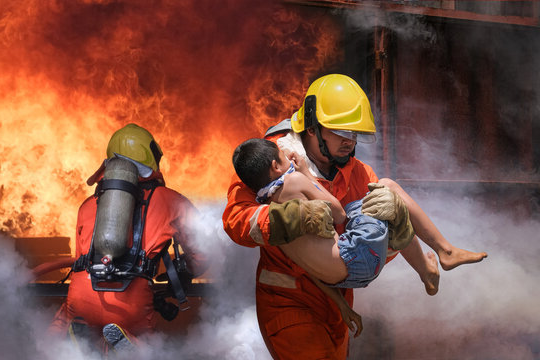
Shows a picture of a rescue
(sea rescue / dog rescue).
Asks guiding
questions:
“What is
happening?”
“Is it
dangerous?”
“Have you read stories like
this before?”
Differentiation:
Support: Sentence starters
(I think…, I can
see…)
Challenge: Ask stronger students to
predict the ending of the story.
|
Look at the
picture.
Share ideas orally using
simple sentences.
|
Descriptor:
Students identify the
situation and predict the topic of the
text.
|
Picture
|
|
Middle
10
min
5
min
10
min
10
min
|
Pre-reading (Vocabulary) (8
minutes)
Method: Guided discovery, reference
skills
Introduces key
words:
Rescue-құтақару
Wave-толқын
Surfer-зардап
шегу
Windy-желді
Bravе-батыл
Encourages students to
use dictionaries (paper or
digital).
Differentiation:
Support: Provide word meanings with
pictures.
Challenge: Ask students to make their own
example sentences.
While-reading (10
minutes)
Method: Reading for gist and
detail
Provides students
with the narrative text “A Brave
Rescue”.
Explains the task
and gives clear instructions.
Asks students to
read the text first for general understanding
(gist).
Then asks students
to read again for specific details.
Differentiation:
Support: Provide true/false
questions.
Challenge: Ask students to explain why
the rescue was dangerous.
Language Focus: Quantifiers
(7 minutes)
Method: Explicit instruction +
practice
Revises
quantifiers: too much, too many, enough,
none, any.
Gives examples from the text
(e.g. too many
waves).
Differentiation:
Support: Multiple-choice
exercises.
Challenge: Write 2 original sentences
using different quantifiers.
Writing Task (10
minutes)
Method: Guided
writing
Explains the writing
task and shares the success criteria. Provides a clear writing
plan:
Paragraph
1: Introduction – when and where
the event happened
Paragraph
2: Description of the rescue –
what happened and who helped
Paragraph
3: Ending – how the rescue ended
and personal opinion
Reminds students to
use linking
words (when, while, suddenly, as
soon as) and
quantifiers (too much, too many, enough,
any, none).
Differentiation:
Support: Writing frame with sentence
starters.
Challenge: Add feelings and descriptive
adjectives.
|
Find meanings using
dictionaries.
Write short
definitions or translations.
Read
individually.
Identify when the event
happened, where it took place,
and who was
involved.
Find and underline
the linking words used in the text
(when, while,
suddenly, as soon as).
Complete gap-fill
sentences.
Choose correct
quantifiers.
Write a short narrative text
of 50-60
words following the given
plan.
Use
at least two linking
words to connect
events.
Use
at least two
quantifiers correctly in
sentences.
|
Descriptor:
Uses reference
resources with little support to understand unfamiliar
words.
Descriptor:
Identifies the main
idea of the text and locate specific
information 2p.
recognize and
identify linking words used to show sequence of events
2p./4p.
Descriptor:
Correctly uses
quantifiers with countable and uncountable
nouns. 2p.
Descriptor:
Writes a
well-organized narrative text.
Uses linking words
and quantifiers appropriately.
Demonstrates
moderate grammatical accuracy.
4p.
|
|

 ЖИ көмекші


 Қауіпсіз төлем












 Бұл курс Қазақстан Республикасы Оқу-ағарту министрлігімен келісілген