
 ЖИ көмекші


 Қауіпсіз төлем

жүктеу мүмкіндігіне ие боласыз
Бұл материал сайт қолданушысы жариялаған. Материалдың ішінде жазылған барлық ақпаратқа жауапкершілікті жариялаған қолданушы жауап береді. Ұстаз тілегі тек ақпаратты таратуға қолдау көрсетеді. Егер материал сіздің авторлық құқығыңызды бұзған болса немесе басқа да себептермен сайттан өшіру керек деп ойласаңыз осында жазыңыз
 04 Қаңтар 2020
 556

1 жыл бойы шексіз жүктеңіз
"All about me"
Short term plan
LESSON: All bout me! ABC – Review |
School: |
||||||
Date: |
Teacher name |
||||||
CLASS: |
Number present: |
absent: |
|||||
Learning objectives(s) that this lesson is contributing to
|
1. recycle some pictures from activity above in projections 2. helps learners recognize the intonation in questions and statements. 3.. try and identify a bank of Anglophone characters [celebrities, cartoon characters] know to most learners with short simple names [short consonant-vowel-consonant first names will serve well for later letter activities]. |
||||||
1L1.Recognize short instructions for basic classroom routines spoken slowly and distinctly 1S1. Make basic personal statements and simple statements about objects 1L3.Recognize with support simple greetings 1UE1.use common singular and plural nouns to say what and where things are
|
|||||||
Lesson objectives |
All learners will be able to: |
||||||
Sing a song’’ Hello’’ To introduce the pupils to the English alphabet; To present and prictise letters ABCD |
|||||||
Most learners will be able to: |
|||||||
To practise greetings with teacher’s support |
|||||||
Some learners will be able to: |
|||||||
Make simple dialogue with teacher’s support |
|||||||
Success criteria |
Pupils achieve if: Can pronounce letters Can listen sounds |
||||||
Previous learning |
The Alphabet |
||||||
Plan |
|||||||
Planned timings |
Planned activities (replace the notes below with your planned activities) |
Resources |
|||||
Start
3-min
|
Learners are introduced with the lesson objectives /D/ Organize the lesson Greetings Hello, Good morning pupils! How are you? Fine, thanks. Sit down. Warm up. Brain storming.
Presentation and practice (activities to present and activate the new language.) Listen, point and repeat. Pupils’ books closed. Put up the flashcards, one at a time, and say the corresponding words. The pupils repeat, chorally and or individually. Point to each flashcard in random order. Ask individual pupils to say the word. Ask the rest of the class for verification. Pupils’ books open. Play the CD. The pupils listen, point to the pictures and repeat the words. Play the CD again pausing after each word. The pupils repeat, chorally and or individually. Audio script Mummy, daddy, brother, sister
|
CD-player
|
|||||
Middle 7-10min
5-min
5-min
7-min
3-min 5-min |
/D/ Teacher demonstrates and drills basic The Alphabet, using visual at board. Use a visual presentation of objects complete with The Alphabet for feedback
Present and practice the letters ABCD 1.Pupils’ books closed. Put the My ABCD poster up on the board. Say a letter. Ask a pupil to point it on the poster. Ask the rest of the class for verification. Then ask the pupils to think of words which start with that letter. Repeat the procedure with the remaining letters. Note: Leave the My ABC poster on the board for the duration of the lesson. In the way, you can refer to it every time you need it and the pupils can always have it as a point of reference. Before going into class: Prepare some slips of paper with the letters of the alphabet in upper and lower case, each on separate slips. Hold up a lowercase and upper case slip of paper sometimes matching sometimes not. The pupils say “Yes” or “No”, respectively. e.g. T:(holding b and B) P: Yes Alternatively, you can put the upper and lower case slips of paper up on the board. The pupils take turns coming to the board and matching the letters.
Complete then sing Explain the activity. Allow the pupils some timeto complete the missing letters. Check the pupils answer. Then say: Sing the alphabet along with us today! The pupils repeat after you. Follow the same procedure and present the rest of the song. Play the CD. The pupils listen to the song and follow in their books. Divide the class into three groups and assign a verse to each group. Play the song again. The groups sing their assigned verse. Time permitting, play the song a third time for the pupils to sing the song as a class. Answer key: D,H,J,L,O,Q,U,W
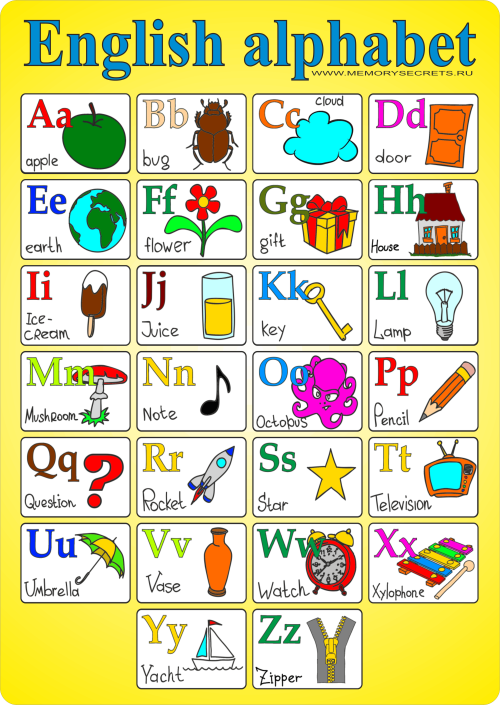
Aa [ei] Aa is for apple Bb [bi:] Bb is for bed Cc [si:] Cc is for cat Dd [di:] Dd is for dog Ee [i:] Ee is for egg Ff [ef] Ff is for fish Gg [dᴣi:] Gg is for glass Hh [eitʃ] Hh is for house Ii [ai] Ii is for igloo Jj [dᴣei] Jj is for jam Kk [ke] Kk is for kite Ll [el] Ll is for lemon Mm [em] Mm is for milk Nn [en] Nn is for nest Oo [ou] Oo is for orange Pp [pi:] Pp is for pen Qq [kju:] Qq is for queen Rr [a:] Rr is for rabbit Ss[es] Ss is for snake Tt [ti:] Tt is for train Uu [ju:] Uu is for umbrella Vv [vi:] Vv is for van Ww [dʌbl ju:] Ww is for whale Xx [eks] Xx is for fox Yy [vai] Yy is for yo- yo Zz [zed] Zz is for zebra
Pupils’ books open. Point to and elicit the letters. Play the CD. The pupils listen, point to and repeat the letters.
/W/ Teacher and learners stand in circle. Teacher models / gestures: Hello I’m … . Teacher indicates learners in turn to say Hello I’m …. Teacher given out picture cards to learners. Teacher models for learners to assume identity on card. Whole circle replies What is your name? – My name is …. His/ Her name is …. How are you …? - I’m fine … .
Listening to and singing along with a simple song The ABC Learners listen and sing along to an animation of the song. Get learners performing gestures to accompany the lyrics of the song ex.2 p.3 ‘The ABC’ Aa , Bb, Cc, Dd, Ee, Ff, Gg, Hh, Ii, Jj, Kk, Ll, Mm, Nn, Oo, Pp, Qq, Rr, Ss, Tt, Uu, Vv, Ww, Xx, Yy, Zz and Xx, Yy, Zz.
Explain the learners that they are going to describe the jobs in the following list but without saying the name of the job and explain their choices.
|
Cards and pictures
CD-player
pictures
CD-player
(Track 50CD2)
|
|||||
End 10-min
2-min |
Divide the pupils into groups of three. Write a 3-letter word for each group on the board and ask them to make a body shape of the word. Demonstrate some of the shapes yourself first (see ex.3 chart) At the end of the lesson, the T asks the P to assess the lesson using a technique 9-10 smiles- “5” 8-6 smiles –“4” 5-3 smiles - “3” The song “Good bye” |
Cards, coloured pencils and slips of paper
CD - player |
|||||
Additional information |
|||||||
Differentiation – how do you plan to give more support? How do you plan to challenge the more able learners? |
Assessment – how are you planning to check learners’ learning? |
Cross-curricular
links |
|||||
More support: Teacher can help learners with content and language if it needs to be and challenge learners on language and use of learning skills throughout the lesson as necessary group work allows both stronger and weaker learners to make contributions at their own language level. More-able learners: |
Opportunities for formative assessment are embedded in this lesson. Learners and teacher gain feedback on learners’ abilities to plane, organize, cooperate, respect different opinions and solve problems as they work in groups. |
Learners work in groups apply skills and knowledge to a practical and cooperative task, and produce their own materials. All of these lesson correlate with the aims of critical and creative communication set out in the Subject Programme for G 1-4 English |
|||||
Reflection Were the lesson objectives/learning objectives realistic? What did the learners learn today? What was the learning atmosphere like? Did my planned differentiation work well? Did I stick to timings? What changes did I make from my plan and why? |
Use the space below to reflect on your lesson. Answer the most relevant questions from the box on the left about your lesson. All lesson and learning objectives were met. The lesson was exciting. Learners were always in action and interaction. Game style lessons prove to be very useful. |
||||||
Simulation game created this opportunity for them.
|
|||||||
Summary evaluation What two things went really well (consider both teaching and learning)? 1: Simulation game 2: Video and vocabulary prior to the game What two things would have improved the lesson (consider both teaching and learning)? 1: Better level of English language of learners. Inability of communication in English language of some learners keeps behind more able ones as well. 2:Learners came late after flash mob break. This usually happens. What have I learned from this lesson about the class or individuals that will inform my next lesson? |
|||||||









 Бұл курс Қазақстан Республикасы Оқу-ағарту министрлігімен келісілген










