ALMATY TECHNOLOGICAL
UNIVERSITY (ATU) — COMPLETE REFERENCE
Author : Muratkhan
Begimai,Talgat
Zhanserik,Tussipkali
Nurbergen Teacher : Abdullaeva
Ainur
ALMATY TECHNOLOGICAL
UNIVERSITY (ATU) — COMPLETE REFERENCE
1. GENERAL
INFORMATION
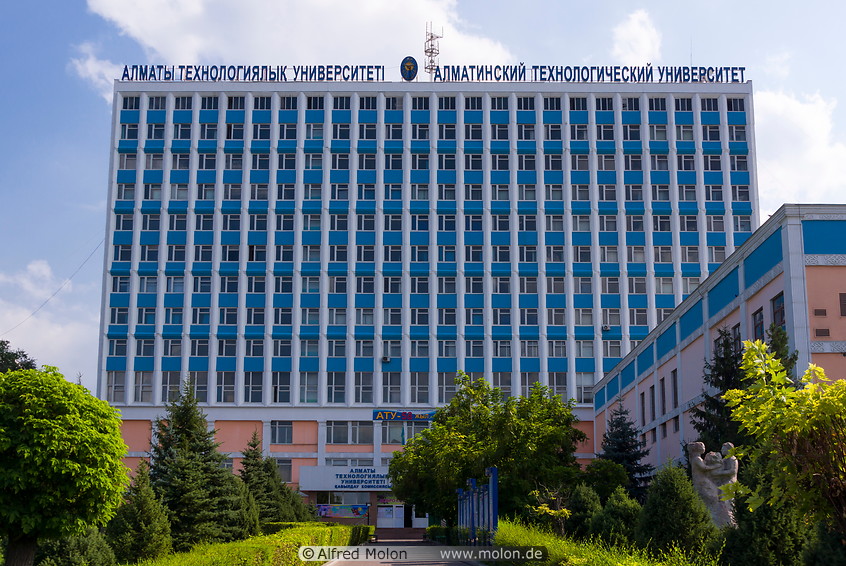
Almaty Technological
University (ATU) is a private higher educational institution
located at 100 Tole Bi Street, Almaty, Kazakhstan. It was founded
in 1957 and is registered as a Joint Stock Company. The university
can be reached by phone at +7 727 293-52-87 or +7 707 221-88-08, by
email at info@atu.edu.kz, and through its official website at
atu.edu.kz.
2.
HISTORY
ATU was established in 1957 as
an educational consultation point in Almaty, based on the All-Union
Institute of the Food Industry in Moscow. In 1961 it became a
branch of that institution, and in 1966 it was transferred to the
Zhambyl Institute of Light and Food Industry Technology. In 1996,
by decree of the Ministry of Education of the Republic of
Kazakhstan, it was reorganized into the Almaty Technological
Institute. On August 18, 1999, by Government Resolution No. 1192,
it was transformed into the Almaty Technological University as a
Closed Joint Stock Company, and on December 15, 2003, it was
re-registered as an Open Joint Stock Company. Since 2014, Talgat
Kuralbekovich Kulazhanov has served as
rector.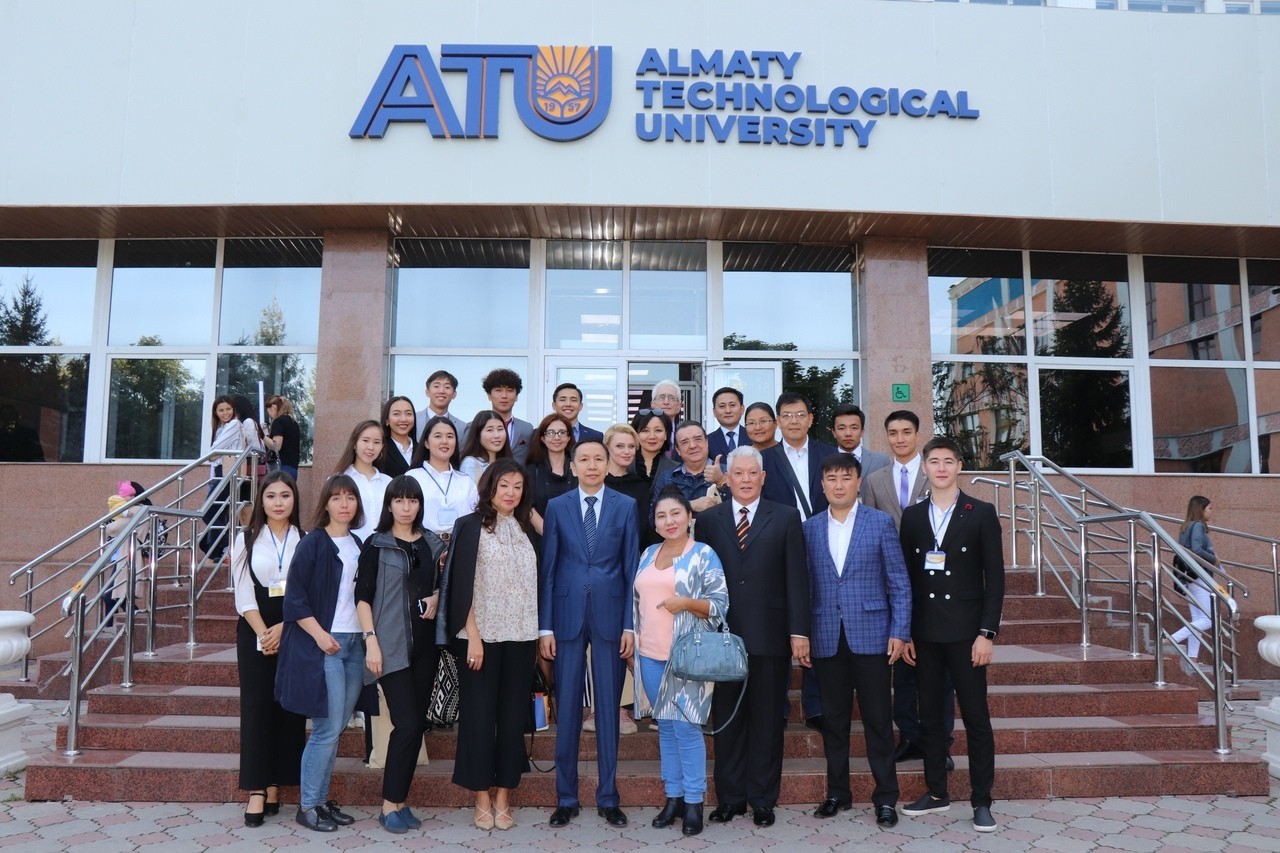
3.
FACULTIES
ATU operates the following
faculties: the Faculty of Food Technology, the Faculty of Light
Industry and Design, the Faculty of Engineering and Information
Technology, the Faculty of Economics and Business, the Faculty of
Distance Learning, the Faculty of Biotechnology and Chemical
Technologies, and the Kazakh-Swiss Institute of
Tourism.
4. KEY
SPECIALIZATIONS
The Faculty of Engineering and
Information Technology offers programs in Technological Machines
and Equipment, Refrigeration Machines and Air Conditioning Systems
(6B07106), Information Technologies, Computer Engineering and
Software, Software Engineering, and Automation and
Robotics.
The Faculty of Food Technology
covers Food Product Technology, Biotechnology, and Public
Catering.
The Faculty of Light Industry
and Design includes Garment Industry Technology, Design, and Light
Industry Machines and Apparatus.
The Faculty of Economics and
Business offers Management, Marketing, Tourism, and Restaurant and
Hotel Business.
5. INTERNATIONAL
COOPERATION
In the 2014–2015 academic
year, ATU launched a double-degree program in Tourism and
Restaurant and Hotel Business in partnership with the Hotel and
Tourism Management Institute (HTMi, Switzerland). The program is
delivered in English by highly qualified instructors from the Swiss
partner institution, ensuring compliance with Swiss educational
standards.
6.
RANKINGS
According to the National
Rating of the Best Higher Educational Institutions of Kazakhstan
(2015) and ARTA ratings, ATU ranked 10th among 130 universities.
Its core specializations in food and light industry consistently
rank first among all universities in Kazakhstan in those
fields.
7.
INFRASTRUCTURE
The university has three
academic buildings, dormitories, a library, a mini flour mill, a
bakery, and a sewing workshop. Since its founding, more than 15,000
engineers, economists, and mechanics have graduated from the
institution. In 2012, a modern food production plant was
commissioned, allowing students in food-related programs to
complete hands-on professional practice without interrupting their
studies.
8. "TECHNOLOGICAL MACHINES AND
EQUIPMENT" — SPECIALIZATION OVERVIEW
Program code: 6B07105.
Faculty: Engineering and Information Technology. Core subjects for
admission: Mathematics and Physics. Minimum entrance score: 50
points (in both Kazakh and Russian instruction). Duration:
Bachelor's degree, 4 years.
The program trains highly
qualified specialists in mechanization of technological processes
for the food and processing sectors of the agro-industrial complex,
with skills in designing, operating, and maintaining modern
machinery. Core disciplines include the design and construction of
machines, apparatus, aggregates, and flexible automated lines for
processing industries; dynamic and strength calculations of
equipment; technical documentation requirements; methods and tools
of technical diagnostics; and the planning, installation, repair,
and overhaul systems for technological machines and
equipment.
Graduates are prepared to work
at food industry plants, processing enterprises, agro-industrial
facilities, light industry companies, and machine-building
organizations.

 ЖИ көмекші


 Қауіпсіз төлем













 Бұл курс Қазақстан Республикасы Оқу-ағарту министрлігімен келісілген










