|
Unit 1. Animals
|
School: №5 school-
lyceum
|
|
Date: 03,09,2018
|
Teacher name: Kulbarakov Nurbol
|
|
Grade: 3 г
|
Number present:
|
absent:
|
|
Theme of the lesson: Animal types
2
|
|
Learning objectives that this lesson is
contributing to
|
3.2.1.1
make basic statements which
provide personal information on a limited range of general
topics;
3.5.5.1 use interrogative pronouns
including: which, what, where, whose, how many, what kind of … on a
limited range of familiar topics;
3.5.14.1
use prepositions of location
and position: at, behind, between, in, in front of, near, next to,
on, under, above to describe where people and things
are, use prepositions of time: on,
in, at to talk about days and times and no preposition last
week
|
|
Lesson objectives
|
Learners will be able to:
|
-
Talk about a snow leopard using some of the new
words
-
Recognize/underline/understand some of the new
words while reading the text and answer the questions/fill in the
table
-
Use prepositions while
describing a snow leopard’s appearance and
routine
|
|
Assessment criteria
|
Learners have met the learning objective
(3.2.1.1 / 3.5. 5.1/
3.5.14.1) if they can:
|
|
Value links
|
Values are instilled by/through discussion
activities, answering the questions, respecting each other, sharing
opinions.
|
|
Cross - curricular links
|
Art, Kazakh, Russian,
Literature, History
|
|
Previous learning
|
Animal types
1
|
|
Plan
|
|
Planned timings
|
Planned activities
|
Resources
|
|
Beginning
5
mins
|
Greeting & Objectives
Warm up: Words around the
room
Cards with words and pictures on them are placed
in different places around the room. The task for students is to
match as many of them as quickly as possible. After they have done
it, let them divide the words into 2 categories (plants and
animals). The students should guess the topic of the
lesson.
|
DIDACTIC MATERIAL 1
|
|
Middle
30mins
|
Pre-reading (Pair
Work)
For differentiation at this lesson it is
recommended to pair students of the same ability levels (weak+weak
or strong+strong). For this activity the teacher comes up to weaker
students to support with vocabulary or ideas.
-
What is a name of this animal?
-
What do you know about it?
-
Tell your class about your
ideas
-
Vocabulary
Learners are handed out
posters complete. Less able students have to use the given word
bank, while stronger ones have only initials of the words. Compare
your work with another pairs
(peer-assessment).
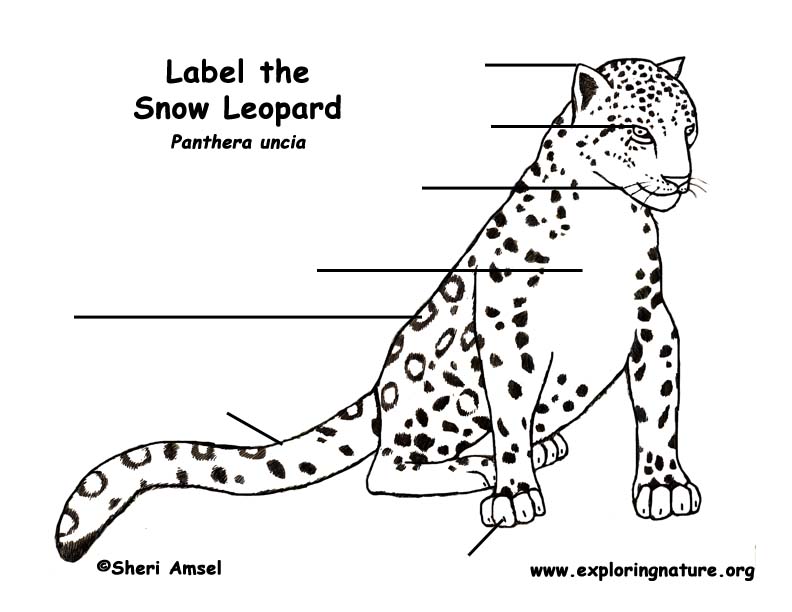
Reading
Learners
Post-reading/Speaking
Pair work: Tell your classmate 5 facts about a
snow leopard using Present Simple tense
Mini –group discussion: Discuss in your group a
question: Why do you think a snow leopard is in danger? Tell your
class about your group ideas.
|
PPT
DIDACTIC MATERIAL
2
DIDACTIC MATERIAL 3
|
|
End
5 mins
|
Reflection/Self-assessment: Tick yes or
no
Homework: Draw a picture of a snow
leopard and write a formula poem about this
animal.
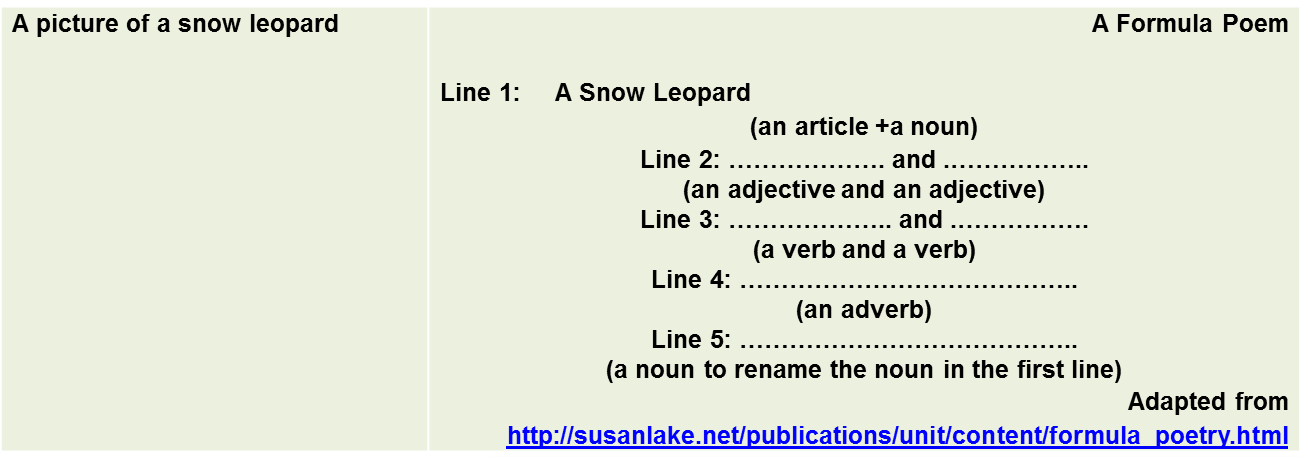
|
DIDACTIC MATERIAL 4
|
|
Additional information
|
|
Differentiation – how do you plan to give more
support? How do you plan to challenge the more able
learners?
|
Assessment – how are you planning to check
learners’ learning?
|
|
Less able students – greater support by means of
prompts, visuals or writing difficult words on the
board
More able students – independent work on definite
tasks with little/no support
Allow for flexible groupings and cooperative
learning, depending on the appropriateness to the
task
Allow for extra time for students needing it,
when appropriate
Give extra text or visual support to students
needing extra English support
Create small learning groups for students needing
extra support or enrichment with the co-teacher, when
appropriate
|
through observation
|
|
Reflection
Were the lesson objectives/learning objectives
realistic?
What did the learners learn
today?
What was the learning atmosphere
like?
Did my planned differentiation work
well?
Did I stick to timings? What changes did I make
from my plan and why?
|
|
Summary evaluation
What two things went really well (consider both
teaching and learning)?
1:
2:
What two things would have improved the lesson
(consider both teaching and learning)?
1:
2:
What have I learned from this lesson about the
class or individuals that will inform my next
lesson?
|

 ЖИ көмекші


 Қауіпсіз төлем













 Бұл курс Қазақстан Республикасы Оқу-ағарту министрлігімен келісілген










