
 ЖИ көмекші


 Қауіпсіз төлем

жүктеу мүмкіндігіне ие боласыз
Бұл материал сайт қолданушысы жариялаған. Материалдың ішінде жазылған барлық ақпаратқа жауапкершілікті жариялаған қолданушы жауап береді. Ұстаз тілегі тек ақпаратты таратуға қолдау көрсетеді. Егер материал сіздің авторлық құқығыңызды бұзған болса немесе басқа да себептермен сайттан өшіру керек деп ойласаңыз осында жазыңыз
 06 Қаңтар 2020
 1079

1 жыл бойы шексіз жүктеңіз
Ашық сабақ 8 сынып Plant parts and functions
Lesson plan
Long-term plan unit: |
School: «Makhtaral» school-gymnasium |
|||||
Date: |
Teacher name: Nazarkulova U.U |
|||||
Number present:10 |
absent:0 |
|||||
Theme of the lesson: |
Plant parts and functions |
|||||
Learning objectives(s) |
Identify different parts of plants and name them Describe the purpose of the main parts of plants Analyze the connection of each part and functions |
|||||
Level of thinking skills |
Comprehension Application Higher order thinking skill |
|||||
Lesson objectives |
They will learn new words from the lesson and read them They will demonstrate cycling process of plants using the visual organizers They will explain the parts and functions of plants |
|||||
Success criteria |
Ss will be able to Label the parts of plants and explain theirfunctions Define cycling process and group them according to their peculiarities Orally explain the necessity of each plant’s part and its functions |
|||||
Differentiation |
Less able students will know the meaning of the new words through the video and label the plant parts |
|||||
More able students will understand the importance of plants parts and describe the growing process using the visual organizer |
||||||
Most able students can describe andexplain the plants parts and their functions doing all tasks without mistakes |
||||||
Value links |
The strategy “Mangilik el”.
|
|||||
Cross curricular links |
Physiology, Chemistry, Psychology |
|||||
ICT skills |
The use of Active Board by teacher, hand outs, worksheets, different kinds of plants, artificial handmade plastic bottle with planted flowers, posters, pens, markers |
|||||
Previous learning |
Anatomy of human being |
|||||
Plan |
||||||
Planned timings |
Planned activities
|
Resources |
||||
Beginning
4 min |
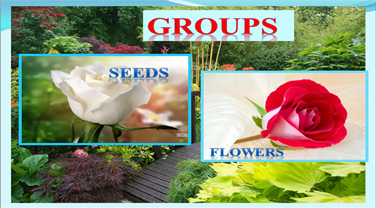
I. Organization moment 1. Greeting and wishing good wishes to each other 2. Dividing into two groups. The first group “Seeds”, the second “Flowers” (Teacher will divide students according to the colour of the roses)
3. Checking up attendance - Good morning, students! How are you? - Students … T: Who is on duty today? S: … T: What date is it today? S: … T: What day is it today? Day in a week? S: … T: What is the weather like today? S:… 4. Checking up home task |
6 white, 6 redroses in the vase
Active board |
||||
Middle 3 min
6 min
4 min
3 min
3 min
3 min
2 min
4 min |
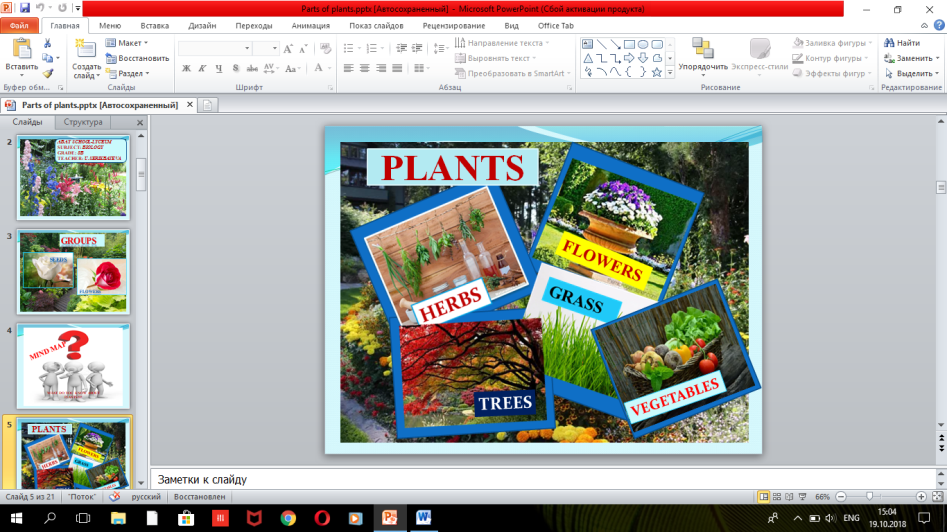
Lead-in: 1. brainstorm and activate prior knowledgeordering students to look around and think what are they going to learn T: Look around and think what are we going to learn today? S: Maybe about flowers, trees … T: How do you call them in general? S:Plants T: Let’s check it from the active board. Mind map (Teacher shows the slide and checks the pictures)
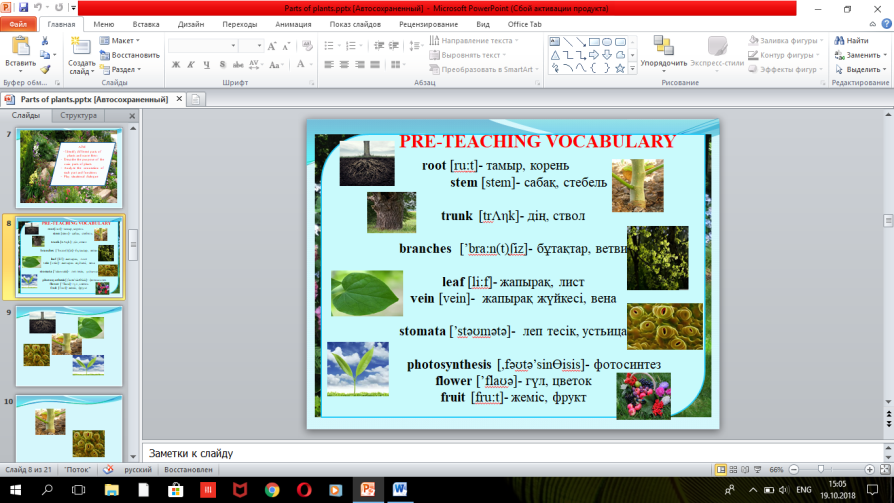
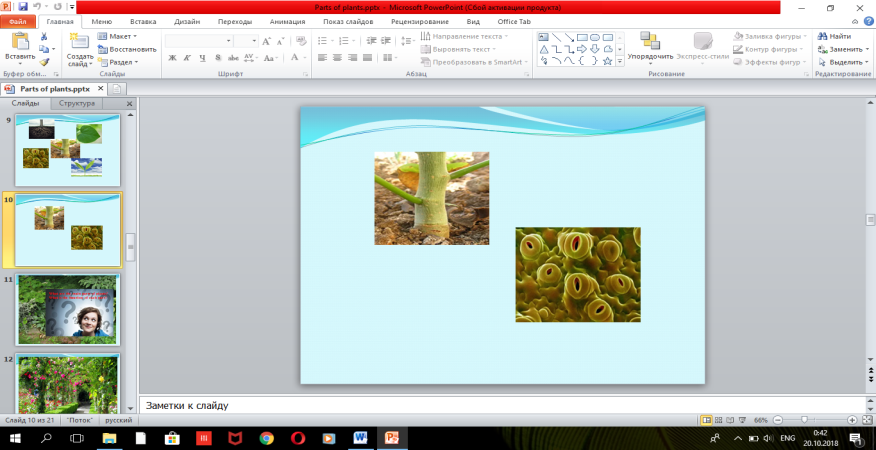
T: Our lesson’s theme is “Plant parts and functions” Teacher informs the aim of the lesson, type of assessment - peer assessment, descriptors and the rules of how to put scores 2. Pre-teaching vocabulary: T: Students let’s learn new words which related to the new theme. Repeat these words in group. (Students repeat them for 3 times in chorus, new words given with pictues)
1.root [ru:t]- тамыр, корень 2.stem [stem]- сабақ, стебель 3.trunk [trΛηk]- дің, ствол 4.branches [’bra:n(t)ʃiz]- бұтақтар, ветви 5.leaf [li:f]- жапырақ, лист 6.vein [vein]- жапырақжүйкесі, вена 7.stomata [’stәʊmәtә]- лептесік, устьица 8.photosynthesis [,fәʊtә’sinӨisis]- фотосинтез 9.flower [’flaʊә]- гүл, цветок 10.fruit [fru:t]- жеміс, фрукт
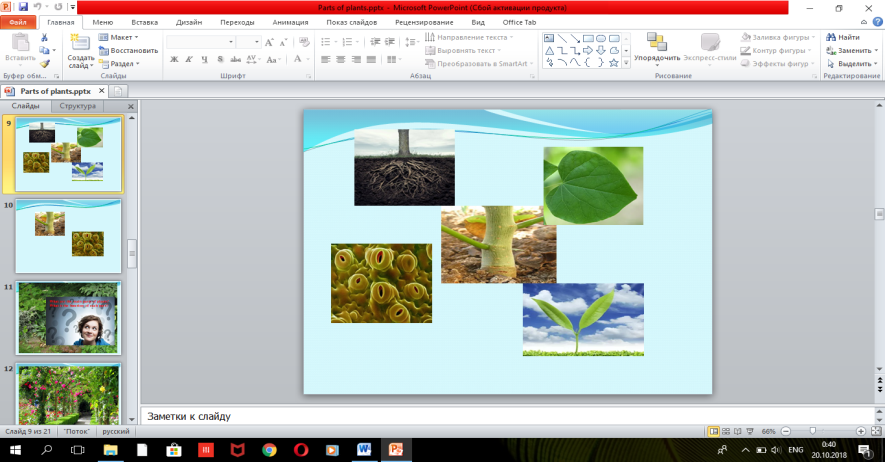
T: Now repeat them in pairs S: … T: Look at the screen. What pictures are disappeared?
S: … T: And now?
T:What are the main parts of plants? What is the function of each part? You should answer to these questions after watching the video. Teacher shows the eggplant with its root to students and asks recall and process question
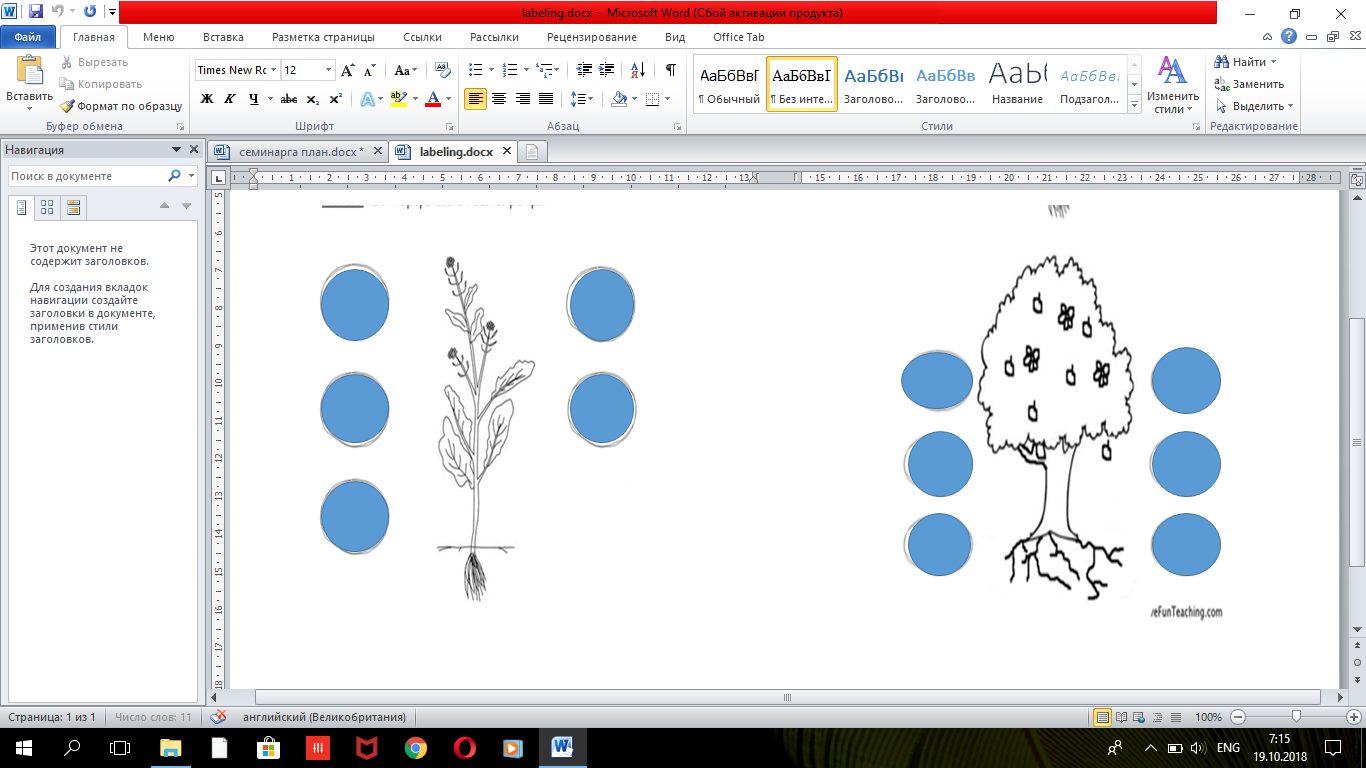
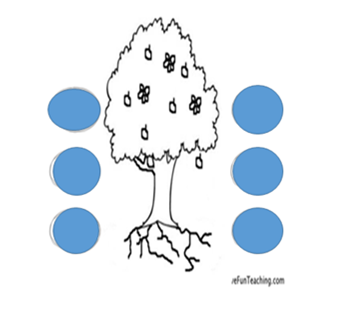
3.T: And now in order to check your understanding do the labeling activity(IW) For group “Seeds” For group “Flowers” leaf roots veins flower stem flower trunk leaf roots branches fruit
4. Walking gallery. Students in pairs go through the room (PW) 1.________the lines of the leaf which give it support and carry water to the leaf (vein) 2. _____tiny pores on the underside of the leaf blade through which the plant breathes air (stomata) 3. ________the most beautiful part and it blooms from a bud (flower) 4.__________ the main thick root (tap root) 5. _________ it grows on a branch of a plant (leaf) 6. _________ it bears branches, leaves, flowers and fruits (stem) 7. ______________ large number of roots grow at the end of the stem (fibrous) 8. _________ process used by plants and other organisms to convert light energy (photosynthesis)
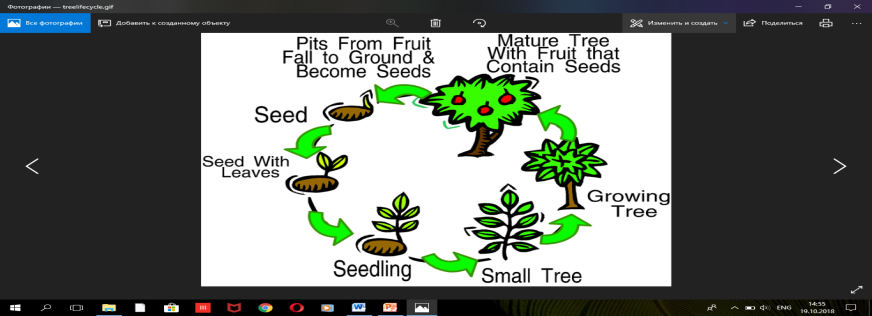
5.Cycle. Group “Seeds” describes the tree’s life cyclingprocess and group “Flowers”describes the flower aster’s life cycling process (GW) T: There is a poster and marker on the desk. Take them and draw the life cycling process of tree and flower aster (GW)
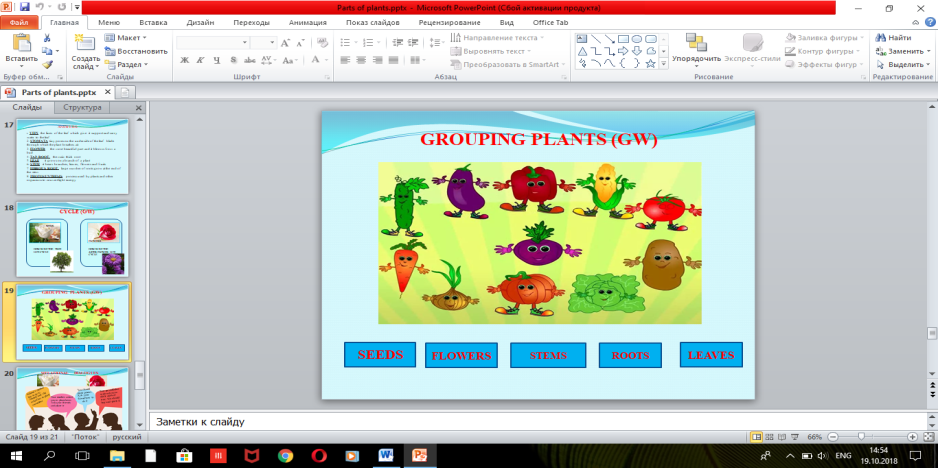
6. Grouping plants T: There are two boxes. In each box there are fruits, vegetables and etc with the label. You should group them into seeds, flowers, stems, roots and leaves and put labels and related fruits, vegetables near it.
|
Active board
Active board
Flowers
Active board
Hand outs
Active board
Active board
Active board Worksheets
Active board Worksheets
Walls with the sentences
Posters Markers
2 boxes with fruits, vegetables |
||||
End 8 min |
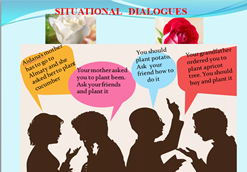
Concluding the lesson. 7. Situational dialogue
For the group “Seeds” 1) Aidana’s mother has to go to Almaty and she asked her to plant cucumber 2) Your mother asked you to plant been. Ask your friends and plant it
For the group “Flowers” 1) You should plant potato. Ask your friend how to do it 2) Your grandfather ordered you to plant apricot tree. You should buy and plant it
Individual, peer assessments Encourage them to compare answers individually and in pairs before checking as a class.
Reflection Pair-share. Students tell each other what they have learnt from the lesson Teacher gives feedback and home task |
Posters Pencils Active board |
||||
Additional information |
||||||
Differentiation – how do you plan to give more support? How do you plan to challenge the more able learners? |
Assessment – how are you planning to check learners’ learning?
|
Health
and safety check |
||||
Less able learners: -Giving students more support using the visual organizers, videos with explanation -Using different form of grouping
More able learners: -get help from their peers during the pair and group work - using supporters as pictures, models for explanation
Most able students: Act the situational dialogue without any support |
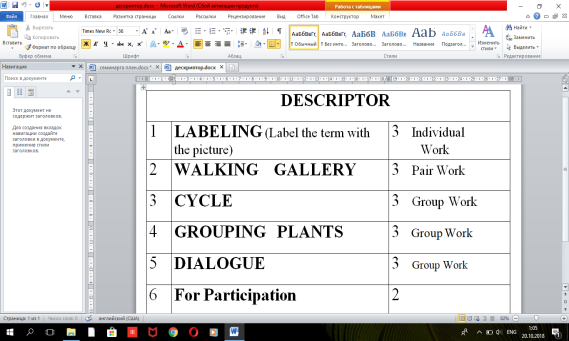
Group, peer and individual assessment were used using special assessment descriptor |
|
||||
Reflection
Were the lesson objectives/learning objectives realistic? Did all learners achieve the LO? If not, why? Did my planned differentiation work well? Did I stick to timings? What changes did I make from my plan and why?
|
Use the space below to reflect on your lesson. Answer the most relevant questions from the box on the left about your lesson. |
|||||
|
||||||
Summary evaluation
What two things went really well (consider both teaching and learning)? 1:
2:
What two things would have improved the lesson (consider both teaching and learning)? 1:
2:
What have I learned from this lesson about the class orachievements/difficulties of individuals that will inform my next lesson?
|
||||||









 Бұл курс Қазақстан Республикасы Оқу-ағарту министрлігімен келісілген










