LESSON: 5
Colours School: Inkarbek
Zhumagulov
Date: 18.09.2018 Teacher name: Aitmuhan
Anar
CLASS: 1 Number
present: 12 absent:
Learning objectives(s)
that this lesson is contributing to UE3 use basic adjectives and
coloursto say what someone /something is or
has
L3 recognise the spoken
form of a limited rangeof basic and everydayclassroom
words
Lesson
objectives
All learners will be
able to:
• Name the
colours
• Identify
colours
Most learners will be
able to:
• Recognise and name the
colours
• Ask what colour it
is
Some learners will be
able to:
• Name the colours and
ask what colour it is without
mistakes
Previous learning
Colour
Plan
Planned timings Planned
activities (replace the notes below with your planned activities)
Resources
10
minutes
ORGANISATION
MOMENT
Good morning children!
How are you? I`m glad to see you!
Who is absent
? What day is today ? What
date is it today ? What season is it now
?
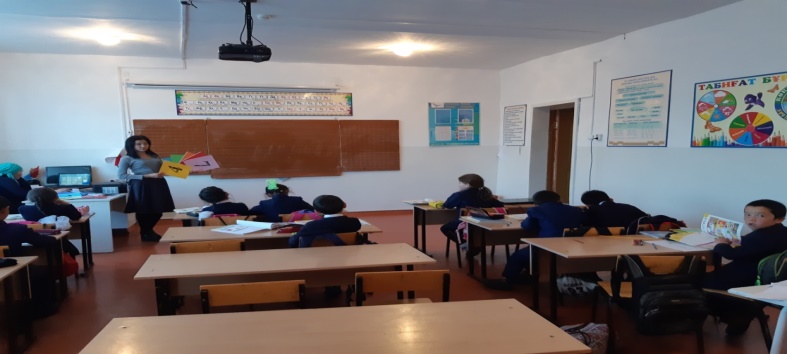
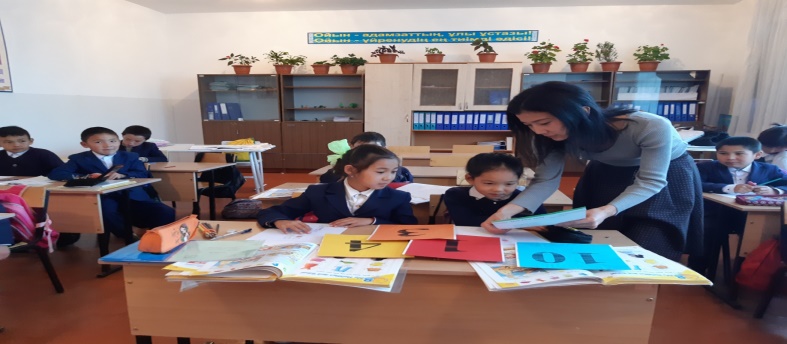
Work with flashcards.
Put up the flashcards on the board. Point to the family members.
Ask a pupil to name it. Ask the rest of
t
he class for
verification.
Play the Family song CD
Track 08
20
minutes
PRE-LEARNING
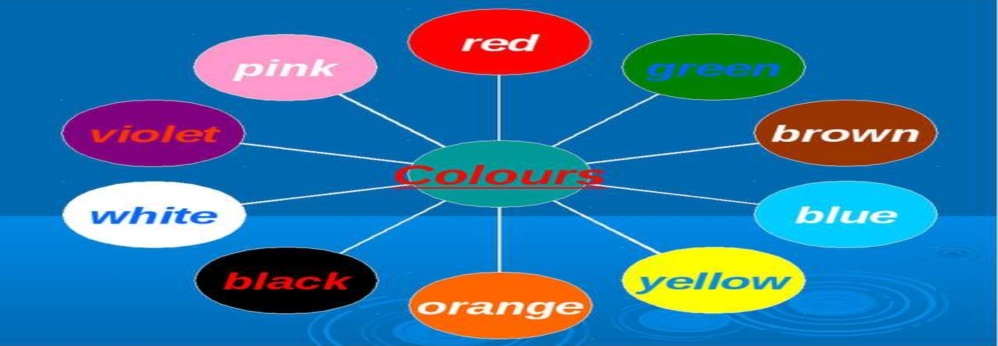
• Put up the Pretty
Colours poster on the board. Point to the colours, one at a time,
and say them. Ask the pupils to take out their coloured pencils.
Name a colour, e.g blue. Ask the pupils to raise their blue
coloured pencil.
• Play the CD. The pupils
listen, point to the pictures and repeat the words. Audioscript:
red, blue, green, yellow, purple,
orange
• Let’s listen! Set the
scene by asking the pupils questions about what they can see in the
pictures.
• Listen and
colour.
• Sing the Colours
song
5
minutes
ENDING THE
LESSON:
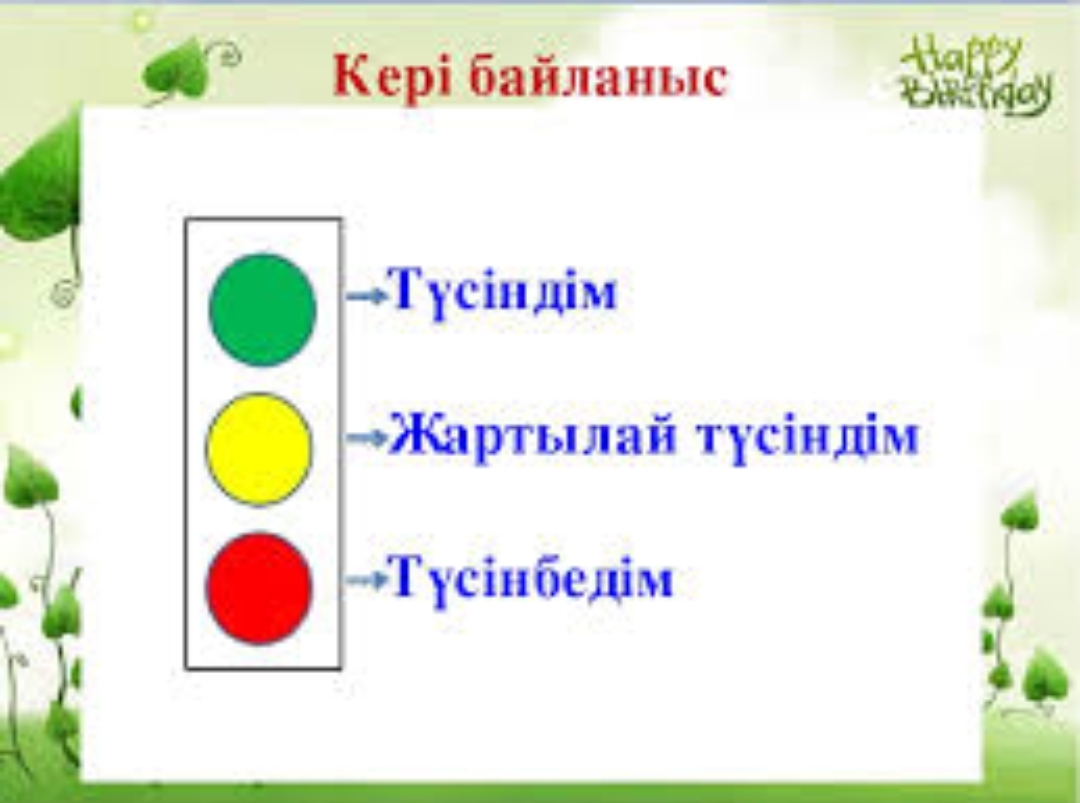
Draw a simple sketch of
a traffic light on the board. Ask a pupil to come to the board and
ask What colour is it? Put one of the circles you have prepared on
the traffic light, e.g the green one. The rest of the class says:
It’s green, go. The pupil follows the
instruction.
Additional
information
Differentiation – how do
you plan to give more support? How do you plan to challenge the
more able learners? Assessment – how are you planning to check
learners’ learning? Cross-curricular
links
Health and safety
check
ICT links Values
links
• Create mixed ability
pairs for speaking activity. • through questioning and the
redirecting of questioning in feedback
activities
• through observation in
pair work
•
Art
Reflection
Were the lesson
objectives/learning objectives
realistic?
What did the learners
learn today?
What was the learning
atmosphere like?
Did my planned
differentiation work well?
Did I stick to timings?
What changes did I make from my plan and why? Use the space below
to reflect on your lesson. Answer the most relevant questions from
the box on the left about your
lesson.
Summary
evaluation
What two things went
really well (consider both teaching and
learning)?
What two things would
have improved the lesson (consider both teaching and
learning)?
What have I learned from
this lesson about the class or individuals that will inform my next
lesson?

 ЖИ көмекші


 Қауіпсіз төлем













 Бұл курс Қазақстан Республикасы Оқу-ағарту министрлігімен келісілген










