
 ЖИ көмекші


 Қауіпсіз төлем

жүктеу мүмкіндігіне ие боласыз
Бұл материал сайт қолданушысы жариялаған. Материалдың ішінде жазылған барлық ақпаратқа жауапкершілікті жариялаған қолданушы жауап береді. Ұстаз тілегі тек ақпаратты таратуға қолдау көрсетеді. Егер материал сіздің авторлық құқығыңызды бұзған болса немесе басқа да себептермен сайттан өшіру керек деп ойласаңыз осында жазыңыз
 21 Қараша 2018
 925

1 жыл бойы шексіз жүктеңіз
Ашық сабақ "Hobbies and Leisure " 7 сынып
Short term plan
|
7.1A Hobbies and Leisure Term 1 Unit 1 |
School: |
|||||
|
Date:______.09.2016 |
Teacher’s name: |
|||||
|
Grade 7 __ |
Number present: |
Number absent: |
||||
|
Theme of the lesson: |
Grammar consolidation for topic Hobbies. |
|||||
|
Learning objectives(s) that this lesson is contributing to |
7.UE2 Use a growing variety of quantifiers for countable and uncountable nouns including too much, too many, none any, enough. 7.UE15 Use infinitive forms after a limited number of verbs and adjectives; use gerund forms after a limited variety of verbs and prepositions on a growing range of familiar general and curricular topics. 7.UE10 Use present continuous forms for present and future meaning and past continuous on a range of familiar general and curricular topics. 7.C6Organise and present information clearly to others. 7.S3 Give an opinion at discourse level on a growing range of general and curricular topics. |
|||||
|
Lesson objectives |
All learners will be able to: |
|||||
|
||||||
|
Most learners will be able to: |
||||||
|
||||||
|
Some learners will be able to: |
||||||
|
||||||
|
Languageobjective |
Specific vocabulary and grammar points related to the topic. |
|||||
|
Value links |
Responsibility, Global Citizenship. |
|||||
|
Crosscurricular links |
Social Studies,
Kazakh, Russian languages. |
|||||
|
Previous learning |
Listening skills and speakingon topic Hobbies. |
|||||
|
Useof ICT |
Projector or Smart board for showing a presentation, searching information in the internet. |
|||||
|
Intercultural awareness |
Compare Conditional sentences in English, Russian and Kazakh languages. |
|||||
|
Kazakh culture |
Compare some grammar points in English and Kazakh languagesorally. |
|||||
|
Pastoral Care |
Student centered teaching: respect, support and scaffolding; To create a friendly atmosphere for collaborative work. Promote a sense of self-esteem and self-respect and respect for others among all the learners. |
|||||
|
Health and Safety |
Everyday classroom precautions will ensure that safety measures are provided to prevent the exposure of electrical power cords. |
|||||
|
Planned timings |
Planned activities |
Resources |
||||
|
5 minutes |
Warm-up
Teacher informs that they are going to meet basic rules for definite grammar points and do some exercises. |
https://www.youtube.com/watch?v=PmRb_W7NuZ8
PPT |
||||
|
Main part 10 min. 10 min. 10 min. |
The main part of the lesson
(W)This information can be helpful for teacher. Quantifiers must agree with the noun. There are 3 main types of quantifiers. Much/little/a little are used with countable nouns, many/few/a few are used with uncountable nouns. A lot of is used with both of them in positive sentences. Learners are given the following tasks: (I) Task 1: Complete the following exercise with LITTLE or A LITTLE, FEW or A FEW. 1. He was sad because he had ___________ friends. 2. Contrary to my wife I only need ___________ minutes to get ready in the morning. 3. A hundred years ago, ___________ teenagers could read and write in this country. Task 2: In each gap, write either "MUCH" or "LITTLE" or "MANY" or "FEW". 1. Mathematics is a subject I know very ________of. 2. She's gone already? But I am only _______ minutes late! 3. "Give that beggar _______ extra money", the old man said. Task 3: Feel in the dialogue with “Too much” or “How much” or “How many” or “A lot”. A: Would you like some cheese? B: Yes please but not _____________. A: Can you pass me some envelopes? B: ___________? A: ___________ people came? B: ___________. Answer keys: Task1: 1. few; 2.a few; 3.few. Task 2:1.little; 2.few; 3.little. Task 3:1. too much; 2.how many; 3. A lot.
If you sleep well at night, you will not fall asleep during your classes. Unless you don’t sleep well, you will fall asleep during your classes.
E.g.: If you learn English, you will get any job you like in future.
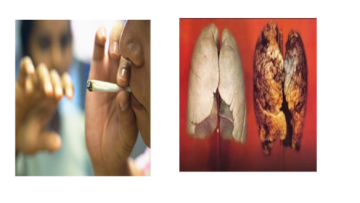
E.g.: If you smoke, you will spoil your lungs.
Task 5: Complete the sentences using Gerunds. Don’t change the meaning of the sentence. 1. My friends talk on the phone for hours. My friends enjoy ________________________. 2. I do my housework and then I usually watch TV. After _________________________________. 3. I really don’t need to go to the shops on Sunday I can’t stand ___________________________. Task 6: Complete the task using infinitive. 1. Laura didn’t want to tell me the secret. Laura didn’t feel like _________________________. 2. My parents use the car more often than the motorbike. My parents prefer ____________________________. 3. She sent me an email. I phoned her. Instead of __________________________________. Answer keys: Task 1: 1. talking; 2. doing; 3.going. Task 2: 1.to tell; 2. to use; 3. to send.
Differentiation on this lesson lies in constant teacher’s monitoring the class and helping less able learners with understanding and managing the tasks. |
PPT slide 4 Worksheet Appendix 1 PPP slide 4 Worksheet Appendix 1 Worksheet Appendix 1 |
||||
|
5 min. |
Reflection Learners write : What did you learn today? What parts of the lesson were easy? What parts of the lesson were difficult? |
PPP |
||||
|
Additionalinformation |
||||||
|
Differentiation – how do you plan to give more support? How do you plan to challenge the more able learners? |
Assessment – how are you planning to check learners’ learning? |
Critical thinking |
||||
|
More support:
Make analysis of their work and help weaker ones to help with the right explanation of answers. |
|
Critical thinking on this lesson lies in understanding grammar point of these rules in English language and it is based on clarity, accuracy, precision, depth, breadth, and fairness. |
||||
|
Summary evaluation What two things went really well (consider both teaching and learning)? 1: 2: What two things would have improved the lesson (consider both teaching and learning)? 1: 2: What have I learned from the lesson about this class or individuals that will inform my next lesson? |
||||||

 I
Name ____________________ Date___________
Worksheet
Task 1: Complete the following exercise with LITTLE or A LITTLE, FEW or A FEW.
1. He was sad because he had ___________ friends.
2. Contrary to my wife I only need ___________ minutes to get ready in the morning.
3. A hundred years ago, ___________ teenagers could read and write in this country.
Task 2: In each gap, write either "MUCH" or "LITTLE" or "MANY" or "FEW".
1. Mathematics is a subject I know very ________of.
2. She's gone already? But I am only _______ minutes late!
3. "Give that beggar _______ extra money", the old man said.
Task 3: Feel in the dialogue with “Too much” or “How much” or “How many” or “A lot”.
A: Would you like some cheese?
B: Yes please but not _____________.
A: Can you pass me some envelopes?
B: ___________?
A: ___________ people came?
B: ___________.
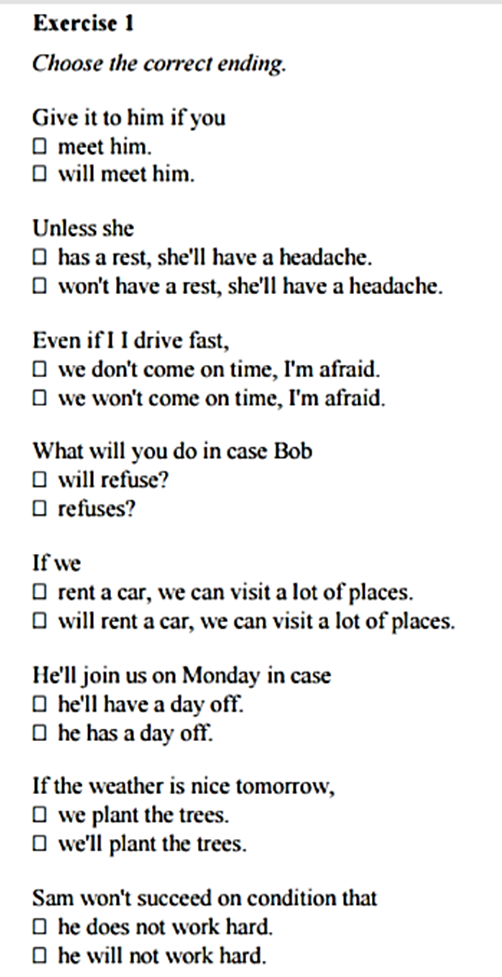
Task 4:Choose the right ending.
Task 5: Complete the sentences using Gerunds. Don’t change the meaning of the sentence.
1. My friends talk on the phone for hours.
My friends enjoy ________________________.
2. I do my housework and then I usually watch TV.
After _________________________________.
3. I really don’t need to go to the shops on Sunday
I can’t stand ___________________________.
Task 6: Complete the task using infinitive.
1. Laura didn’t want to tell me the secret.
Laura didn’t feel like _________________________.
2. My parents use the car more often than the motorbike.
My parents prefer ____________________________.
3. She sent me an email. I phoned her.
She decided __________________________________.
Appendix 1
|
|
yes |
no |
Need revising |
Need more practice |
|
I understand the rule for Much/many |
|
|
|
|
|
I understand the rule for little/few, a little/a few |
|
|
|
|
|
I did exercises for this rule without any mistakes |
|
|
|
|
|
I understand the rule for 1 Conditional |
|
|
|
|
|
I did exercises for this rule without any mistakes |
|
|
|
|
|
I understand the rule for gerund |
|
|
|
|
|
I understand the rule for infinitives |
|
|
|
|
|
I did exercises for this rule without any mistakes |
|
|
|
|









 Бұл курс Қазақстан Республикасы Оқу-ағарту министрлігімен келісілген










