
 ЖИ көмекші


 Қауіпсіз төлем

жүктеу мүмкіндігіне ие боласыз
Бұл материал сайт қолданушысы жариялаған. Материалдың ішінде жазылған барлық ақпаратқа жауапкершілікті жариялаған қолданушы жауап береді. Ұстаз тілегі тек ақпаратты таратуға қолдау көрсетеді. Егер материал сіздің авторлық құқығыңызды бұзған болса немесе басқа да себептермен сайттан өшіру керек деп ойласаңыз осында жазыңыз
 04 Наурыз 2019
 2536

1 жыл бойы шексіз жүктеңіз
ашық сабақ NOUNS:ART 8-сынып
Term 3 Unit 6 "The natural world" |
School: Yntymak |
||||||||||||||||
Date:11.02.2019 |
Teacher’s name: Duisenbaeva M.A.
|
||||||||||||||||
Grade 8 «Ә» |
Number present: |
Number absent: |
|||||||||||||||
Theme of the lesson: |
Vocabulary and language focus: Nouns: art. |
||||||||||||||||
Learning objectives(s) that this lesson is contributing to |
8.S7 use appropriate subject-specific vocabulary and syntax to talk about a range of general topics, and some curricular topics 8.UE9 use appropriately a variety of active and passive simple present and past forms and past perfect simple forms in narrative and reported speech on a range of familiar general and curricular topics |
||||||||||||||||
Lesson objectives |
All learners will be able to: |
||||||||||||||||
|
|||||||||||||||||
Most learners will be able to: |
|||||||||||||||||
|
|||||||||||||||||
Some learners will be able to: |
|||||||||||||||||
|
|||||||||||||||||
Value links |
Appreciating the magnificence of the world around you. |
||||||||||||||||
Crosscurricular links |
Natural environment, Art. |
||||||||||||||||
Previous learning |
Review 5. Project: A film poster. |
||||||||||||||||
Useof ICT |
Smart board for showing a presentation, getting additional information,playing the audio files. |
||||||||||||||||
Intercultural awareness |
It is promoted by raising awareness when comparing world-wide and Kazakh works of art. |
||||||||||||||||
Health and Safety |
Breaks and physical activities used. |
||||||||||||||||
Plan |
|||||||||||||||||
Planned timings |
Planned activities |
Resources |
|||||||||||||||
Beginning the lesson |
The lesson greeting. The teacher sets the lesson objectives, letting students know what to anticipate from the lesson. Start thinking p.68. Read the questions with the class and elict answers from individual students. Answering questions. 1. Do you know any artists or paintings? 2. Are there any endangered species in your country? 3. What are the most important museums in your town or country?
Warm up: (2-3minutes)
|
|
|||||||||||||||
Main actuvities |
New words: painting -кескіндеме sculpture-мүсін gallery-галерея landscape-ландшафт auction- аукцион critic-сыншы masterpiece-шедевр exhibition-көрме collector-коллектор portrait-портрет Ex.1
Answers: Places: gallery, museum People: critic, collector Works of art: painting, sculpture, landscape, masterpiece, portrait Events: auction, exhibition Not in any list: art movement
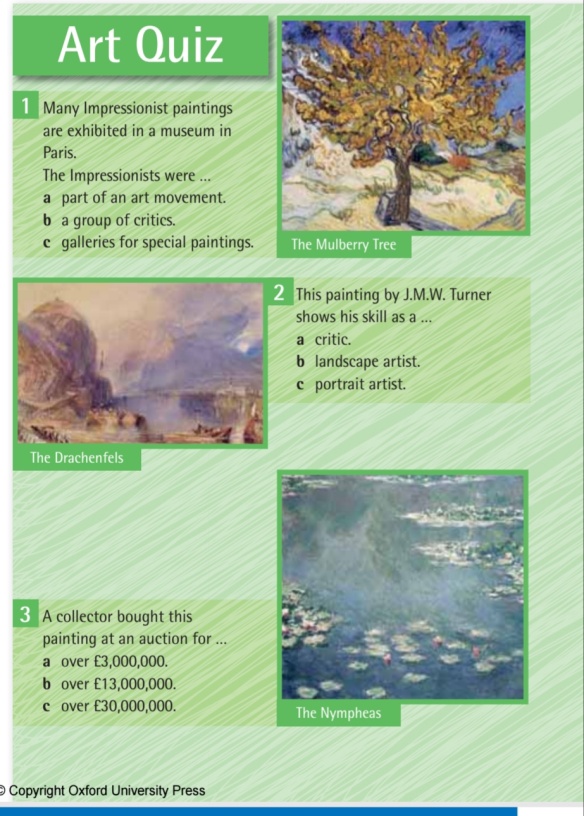
Ex:2 Listen and check your answers to the quiz . How many did you answer correctly
|
CD Pictures Grammar books Lesson book
|
|||||||||||||||
Main Activities |
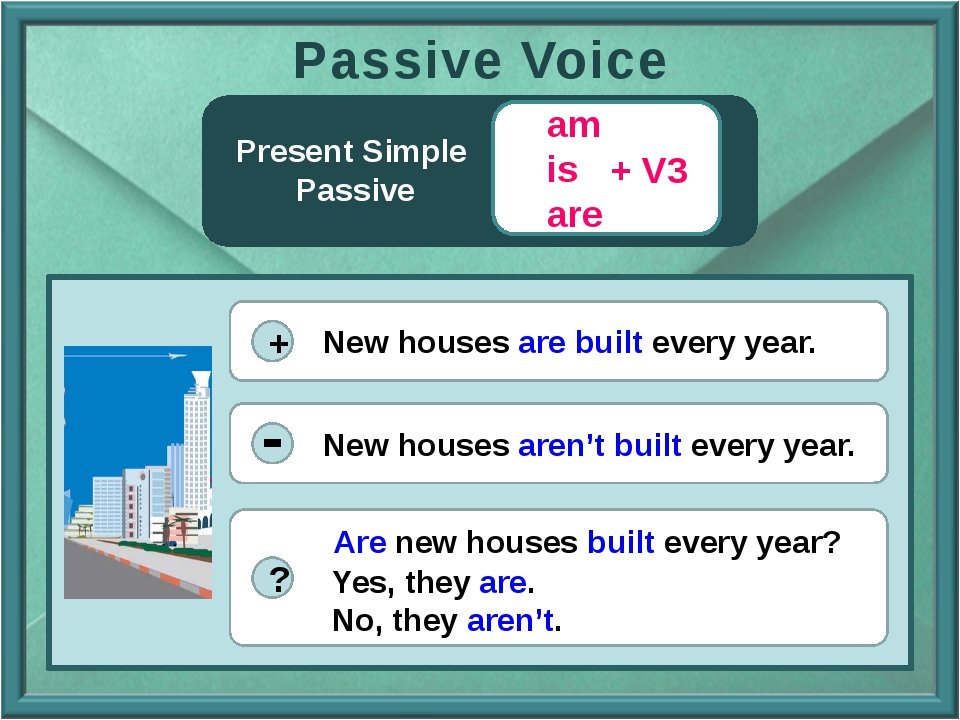
Present passive : affirmative and negative We form the present passive affirmative wite the subject +present simple of be +past particile. We form the present passive negative with the subject + present simple of be +not+past participle . USE Passive sentences emphasize the action. The action is more important than the person who does the action. Often the person is unknown so it is nit included. People paint these pictures in Japan= These pictures are painted in Japan
Language
note: students often forget to use past participle form , using
the infinitive firm of verb instead: Students also make mistakes with irregular past participles:
Another common error is for students o forget to use the correct form of be:
Some
students may make the mistake of using of or from instead of by to
introduce the agent in a passive sentence:
Doing exerceses:
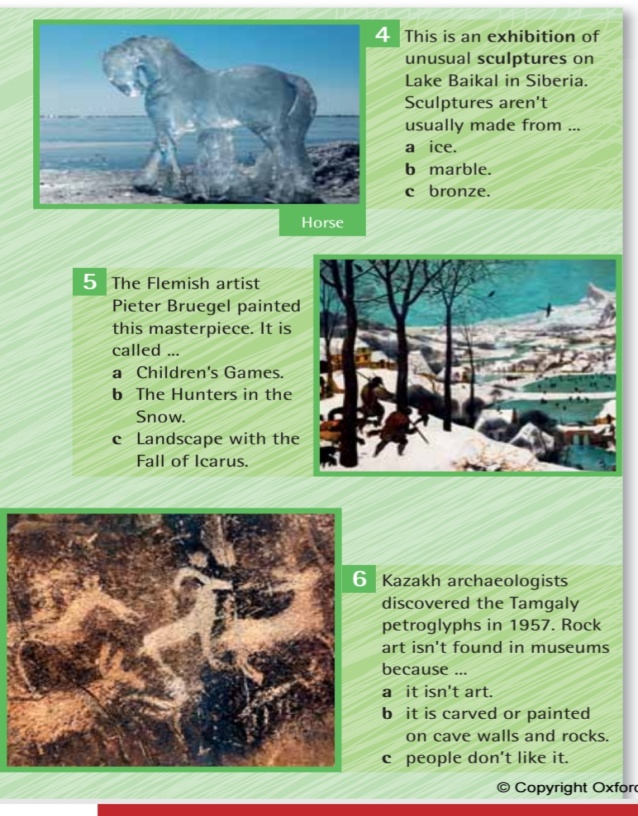
Ex.4 p.68. Sentence completion task. Answers: 1)are exhibited 2) aren't usually made d) isn't found 4) shows 5) don't like
Ex.5 p.68. Recognition exercise. Answers: 1) is 2) are not, aren't past participle
x.1 p.68. Classifying words. Answers: Places: gallery, museum People: critic, collector Works of art: painting, sculpture, landscape, masterpiece, portrait Events: auction, exhibition Not in any list: art movement
Completing questionnaire.
Ex.2 p.68. Gist listening.Comparing answers. Answers: 1) a 2) b 3) c 4) a 5) b 6) b
Ex.3 p.68. Guessing words through definitions.
Ex.4 p.68. Sentence completion task. Answers: 1)are exhibited 2) aren't usually made d) isn't found 4) shows 5) don't like
Ex.5 p.68. Recognition exercise. Answers: 1) is 2) are not, aren't past participle
Ex.6 p.68. Opening the brackets. Answers: 1) is exhibited, is made 2) isn't shown, is kept 3) aren't owned, are sold 4) is painted, are included 5) is visited, is located
Ex.7 p.68. Blank filling. Answering questions. Answers: 1) is spoken 2) is made 3) are mixed 4) is sung 5) are bought, sold (auctions) 6) are used (glasses)
Ex.8 p.68. Putting the words into context. Guessing game. Answers:
Extra task. Writing practice.
|
|
|||||||||||||||
|
Ex.6 p.68. Opening the brackets. Answers: 1) is exhibited, is made 2) isn't shown, is kept 3) aren't owned, are sold 4) is painted, are included 5) is visited, is located
Ex.7 p.68. Blank filling. Answering questions. Answers: 1) is spoken 2) is made 3) are mixed 4) is sung 5) are bought, sold (auctions) 6) are used (glasses) |
|
|||||||||||||||
Ending the lesson |
Dictate these sentences to the class. Then correct the errors.
ANSWERS:
As a class correct any mistakes Learning to learn This activity demonstrates the importance of evolution |
Cards placards Marker `
|
|||||||||||||||
Reflection |
Self-assessment.
If children liked something at the lesson they put it into the column “plus”, if they didn’t like or were bored during some part of the lesson, they can use the column “minus”, the section “interesting” is for those activities which were interesting during the lesson.
Giving the home task : WB: p.48 |
|
|||||||||||||||
Additionalinformation
|
||||
Differentiation – how do you plan to give more support? How do you plan to challenge the more able learners?
|
Assessment – how are you planning to check learners’learning? |
Critical thinking
|
||
Differentiation can be achieved through the selection of activities, identification of learning outcomes for a certain student, provision of individual support to learners, selection of learning materials and resources based on the individual abilities of learners. |
Assessment criteria:
Descriptor: A learner:
|
Students think critically, exploring, developing, evaluating and making choices about their own and others’ ideas |
||
Reflection
|
|
|||
Summary evaluation What two things went really well (consider both teaching and learning)? 1: 2: What two things would have improved the lesson (consider both teaching and learning)? 1: 2: What have I learned from the lesson about this class or individuals that will inform my next lesson?
|
||||









 Бұл курс Қазақстан Республикасы Оқу-ағарту министрлігімен келісілген










