
 ЖИ көмекші


 Қауіпсіз төлем

жүктеу мүмкіндігіне ие боласыз
Бұл материал сайт қолданушысы жариялаған. Материалдың ішінде жазылған барлық ақпаратқа жауапкершілікті жариялаған қолданушы жауап береді. Ұстаз тілегі тек ақпаратты таратуға қолдау көрсетеді. Егер материал сіздің авторлық құқығыңызды бұзған болса немесе басқа да себептермен сайттан өшіру керек деп ойласаңыз осында жазыңыз
 21 Қаңтар 2020
 370

1 жыл бойы шексіз жүктеңіз
Ашық сабақ "Қазақстан халықтарының зергерлік өнерлерімен танысу" 6сынып
MODULE 1
LESSON: Module 1 Lesson 10 |
School: 219 |
||||
Date:25.09.2019 |
Teacher name:Құлахметова А |
||||
CLASS: 7 |
Number present: |
absent: |
|||
Learning objectives(s) that this lesson is contributing to |
S7 C3 L4 R2
|
||||
Lesson objectives |
All learners will be able to: |
||||
use some target vocabulary successfully in response to prompts and identify some specific information in reading task |
|||||
Most learners will be able to: |
|||||
use most target vocabulary successfully in response to prompts and identify most specific information in reading task
|
|||||
Some learners will be able to: |
|||||
use most target vocabulary accurately and flexibly in response to more challenging prompts and identify all specific information in reading task
|
|||||
Previous learning |
basic free-time activities , talking about likes and dislikes |
||||
Plan |
|||||
Planned timings |
Planned activities |
Excel |
Teacher
|
||
Beginning the lesson |
Read the title of the module Hobbies & Leisure and ask Ss to suggest what they think it means. Go through the What’s in this module and stimulate a discussion to prompt Ss’ interest in the module.
|
|
|
||
|
Main Activities
S7
C3
L4
R2
|
To present vocabulary for free-time activities
To present and practise vocabulary for hobbies and leisure activities
|
Class CD
Video
|
|
|
|||||
|
To predict the content of the text
|
|
|
|
||||||
|
To read for specific information & main ideas
|
|
|
|
||||||
|
|
|||||||||
|
Ending the lesson |
Check Ss’ answers around the class. |
|
|||||||
|
Additional information |
|
||||||||
Differentiation – how do you plan to give more support? How do you plan to challenge the more able learners? |
Assessment – how are you planning to check learners’ learning? |
Cross-curricular
links |
||||||||
more and less challenging expansion questions in vocabulary checking activities |
plenary questions in checking understanding of new words |
values links: leading a healthy life. |
||||||||
|
more modelling and drilling of new words in monitoring and supporting less able groups |
monitoring of pronunciation of new words in pair and group tasks |
|
|
||||||
Reflection
Were the lesson objectives/learning objectives realistic?
Did I stick to timings?
What changes did I make from my plan and why?
|
Answer the most relevant questions from the box on the left about your lesson. |
MODULE 1
Lesson plan
LESSON: Module 1 Lesson 2 |
School: |
||||
Date: |
Teacher name: |
||||
CLASS: |
Number present: |
absent: |
|||
Learning objectives(s) that this lesson is contributing to |
S3 S7 UE1 W2 W6
|
||||
Lesson objectives |
All learners will be able to: |
||||
produce some target language with correct pronunciation and communicate some ideas successfully in article writing task |
|||||
Most learners will be able to: |
|||||
produce most target language with correct pronunciation, communicate a range of ideas successfully in article writing task, showing some features of organisation
|
|||||
Some learners will be able to: |
|||||
produce most target language with correct pronunciation, communicate a range of ideas successfully in article writing task with good overall coherence and cohesion
|
|||||
Previous learning |
hobby and free time vocabulary, a range of ways of expressing likes and preferences |
||||
Plan |
|||||
Planned timings |
Planned activities |
Excel |
Teacher
|
||
Beginning the lesson |
Ask learners to recall vocabulary form text in previous lesson
To practise vocabulary from the text
|
|
|
||
|
Main Activities
S3
UE1
S7
|
To express likes and dislikes
To present more hobbies
To categorise hobbies
|
Class CD
|
|
|
||||
|
To talk about hobbies, likes and dislikes
|
|
|
|
|||||
|
Ending the lesson
W2
W6 |
To write a short article
|
|
|
|
||||
|
Additional information |
|
|||||||
Differentiation – how do you plan to give more support? How do you plan to challenge the more able learners? |
Assessment – how are you planning to check learners’ learning? |
Cross-curricular
links |
|||||||
provide more guidance e.g. sentence starters for written task with weaker groups |
monitor pronunciation in pair and plenary work |
cross-curricular links: languages [ features of an article] |
|||||||
|
challenge more able learners by asking them to expand on two points in their writing |
take in writing and highlight one or two areas for improvement |
|
|
|||||
Reflection
Were the lesson objectives/learning objectives realistic?
Did I stick to timings?
What changes did I make from my plan and why?
|
Answer the most relevant questions from the box on the left about your lesson. |
MODULE 1
Lesson plan
LESSON: Module 1 Lesson 3 |
School: |
||||
Date: |
Teacher name: |
||||
CLASS: |
Number present: |
absent: |
|||
Learning objectives(s) that this lesson is contributing to |
UE1 UE7
|
||||
Lesson objectives |
All learners will be able to: |
||||
use some target structures correctly in controlled tasks and be understood some of the time in freer tasks |
|||||
Most learners will be able to: |
|||||
use most target structures correctly in controlled tasks and communicate successfully most of the time in freer tasks
|
|||||
Some learners will be able to: |
|||||
use most target structures correctly in controlled tasks and communicate fluently and flexibly most of the time in freer tasks
|
|||||
Previous learning |
some knowledge of irregular singular/plural nouns / some knowledge of simple and continuous contrasts |
||||
Plan |
|||||
Planned timings |
Planned activities |
Excel
|
Teacher
|
||
Beginning the lesson |
Elicit from learners what they already know about the difference in usage between present simple and present continuous
|
|
|
||
|
Main Activities
UE7
UE7
UE1
|
To present and compare the present simple and the present continuous Ss close their books. Say then write on the board: I watch TV in the evening. I am watching TV now. Elicit the tense of each sentence (I watch – present simple; I am watching – present continuous) and which sentence describes a habit or routine (I watch) and which one describes an action happening now/around the time of speaking (I am watching). Ss open their books. Go through the theory box with them. Elicit the L1 equivalents for the examples. Allow Ss time to read through the text on p. 6 to find examples. Check Ss’ answers. |
|
|
|
||||
|
To practise the present simple and the present continuous Explain the task and allow Ss some time to complete it. Tell Ss to refer back to the theory box to help them justify their answers. Check Ss’ answers around the class |
|
|
|
|||||
|
To practise using the present simple and the present continuous
|
|
|
|
|||||
|
To present and practise singular/plural nouns
|
|
|
|
|||||
|
Ending the lesson |
Check Ss’ answers around the class.
Ask Ss to create a special page in their notebooks with two boxes for singular and plural nouns to record any nouns like this they meet on the course |
|
|
|
||||
|
Additional information |
|
|||||||
Differentiation – how do you plan to give more support? How do you plan to challenge the more able learners? |
Assessment – how are you planning to check learners’ learning? |
Cross-curricular
links |
|||||||
ask more challenging probing questions involving a range of determiners in whole class plenary checking of singular and plural nouns |
use thumbs up/down technique in checking controlled task answers |
cross curricular links: languages [comparison of words and structures in different languages] |
|||||||
|
monitor weaker groups in more controlled tasks and provide further support and modelling |
plenary whole class follow-up questioning |
|
|
|||||
Reflection
Were the lesson objectives/learning objectives realistic?
Did I stick to timings?
What changes did I make from my plan and why?
|
Answer the most relevant questions from the box on the left about your lesson. |
MODULE 1
Lesson plan
LESSON: Module 1 Lesson 4 |
School: |
||||
Date: |
Teacher name: |
||||
CLASS: |
Number present: |
absent: |
|||
Learning objectives(s) that this lesson is contributing to |
UE2 UE12 S3
|
||||
Lesson objectives |
All learners will be able to: |
||||
use some target structures accurately to communicate intended meanings |
|||||
Most learners will be able to: |
|||||
use most target structures accurately to communicate intended meanings and pronounce target language intelligibly most of the time. |
|||||
Some learners will be able to: use target language accurately and flexibly with clear pronunciation to communicate a range of intended meanings |
|||||
|
|||||
Previous learning |
common comparative and superlative adjectives including some irregular ones |
||||
Plan |
|||||
Planned timings |
Planned activities |
Excel
|
Teacher
|
||
Beginning the lesson |
Elicit from learners how they can say they prefer something to something else
|
|
|
||
|
Main Activities
UE12
S3
UE2
S3 |
1b To present the comparative and the superlative Go through the table with Ss. Explain that when we want to compare two people/things/places etc, we use comparative forms. Explain that when we want to compare one person/thing/place etc, with more than one person/thing/place in the same group, we use superlative forms. Explain the task and allow Ss some time to complete it. Check Ss’ answers around the class |
|
|
|
||||
|
To practise comparative forms Explain the task and allow Ss some time to complete it. Check Ss’ answers around the class. As an extension ask Ss to compare two members of their family. (e.g. My dad is older than my mum.)
To practise superlative forms Explain the task and allow Ss some time to complete it. Check Ss’ answers around the class.
To practise comparative – superlative forms
|
Video |
|
|
|||||
|
To present too/enough
To practise too/enough
|
|
|
|
|||||
|
Ending the lesson |
To revise the present continuous, the present simple, singular/plural nouns, the comparative and superlative, too/enough
|
|
|
|
||||
|
Additional information |
|
|||||||
Differentiation – how do you plan to give more support? How do you plan to challenge the more able learners? |
Assessment – how are you planning to check learners’ learning? |
Cross-curricular
links |
|||||||
ask more challenging probing questions involving a range of adjectives in whole class plenary checking of comparative forms |
monitor learners’ production and pronunciation of target language in whole class plenary checking of tasks |
cross curricular links: languages [similar structures in learners’ L1] |
|||||||
|
monitor less able groups during controlled tasks and provide further modelling support |
|
|
|
|||||
Reflection
Were the lesson objectives/learning objectives realistic?
Did I stick to timings?
What changes did I make from my plan and why?
|
Answer the most relevant questions from the box on the left about your lesson. |
MODULE 1
Lesson plan
LESSON: Module 1 Lesson 5 |
School: |
||||
Date: |
Teacher name: |
||||
CLASS: |
Number present: |
absent: |
|||
Learning objectives(s) that this lesson is contributing to |
S3 S7 R2 R3
|
||||
Lesson objectives |
All learners will be able to: |
||||
identify some main points and some specific information in the text successfully and utilise some language in the text to express a view |
|||||
Most learners will be able to: |
|||||
respond to most gist prompts accurately and identify most specific information in the text successfully and utilise some language in the text to express views
|
|||||
Some learners will be able to: |
|||||
respond to most gist prompts accurately and fluently and identify all specific information in the text successfully and utilise a range of language in the text to express views
|
|||||
Previous learning |
language of hobbies, interests and traditional activities in Kazakhstan |
||||
Plan |
|||||
Planned timings |
Planned activities |
Excel |
Teacher
|
||
Beginning the lesson
S7 |
To stimulate interest in the topic
|
|
|
||
|
Main Activities
R1
R2
|
To read for specific information/ purpose/ inference Give Ss time to look up the words/phrases in the Check these words box and elicit their meanings. Allow Ss time to read through the text again and answer the questions. They should justify their answers. Check Ss’ answers.
To predict the content of a text Explain the task. Ask Ss to read the article and the first sentence of each paragraph and elicit answers around the class as for what the article is about. Play the recording. Ss listen and read to find the answer. Check Ss’ answers around the class. |
Class CD
|
|
|
||||
|
To read for specific information/ purpose/ inference Give Ss time to look up the words/phrases in the Check these words box and elicit their meanings. Allow Ss time to read through the text again and answer the questions. They should justify their answers. Check Ss’ answers. |
Class CD |
|
|
|||||
|
Ending the lesson
S3 |
To personalise the topic; to express an opinion
|
|
|
|
||||
|
Additional information |
|
|||||||
Differentiation – how do you plan to give more support? How do you plan to challenge the more able learners? |
Assessment – how are you planning to check learners’ learning? |
Cross-curricular
links |
|||||||
monitor weak groups in reading activities and provide oral prompts to support understanding |
checking of reading comprehension answers |
values links: respecting tradition |
|||||||
|
challenge stronger learners to justify answers through questioning when eliciting views. |
monitoring oral production in whole class feedback |
|
|
|||||
Reflection
Were the lesson objectives/learning objectives realistic?
Did I stick to timings?
What changes did I make from my plan and why?
|
Answer the most relevant questions from the box on the left about your lesson. |
MODULE 1
Lesson plan
LESSON: Module 1 Lesson 6 |
School: |
||||
Date: |
Teacher name: |
||||
CLASS: |
Number present: |
absent: |
|||
Learning objectives(s) that this lesson is contributing to |
S1 S2 S6 S7 R2 L7
|
||||
|
|
|
|
|
|
All learners will be able to: use dictionary to locate some target meanings and uses, identify some target information in listening activity and communicate some views comprehensibly in speaking tasks
|
|||||
Most learners will be able to: use dictionary to locate most target meanings and uses, identify most target information in listening activity and communicate a range of views in speaking tasks
|
|||||
|
|||||
Some learners will be able to: |
|||||
use dictionary to locate all target meanings and uses, identify most target information in listening activity and communicate a range of developed views in speaking tasks
|
|||||
Previous learning |
types of hobby and pastime and ways of expressing likes, benefits and preferences |
||||
Plan |
|||||
Planned timings |
Planned activities |
Excel
|
Teacher
|
||
Beginning the lesson |
Elicit words from previous lesson from learners by placing jumbled letter words on board
|
|
|
||
|
Main activities
S7
R2
L7
S2 S6
|
To practise vocabulary from the text
To present parts of speech and practise using dictionaries Books closed. Explain the parts of a sentence. Say “The large eagle flies beautifully.” Write the sentence on the board. Elicit parts of speech. Large is an adjective; a describing word. Eagle is a noun; a thing. Flies is a verb; the action word. Beautifully is an adverb; modifies verbs, adjectives and other adverbs. Elicit further examples of the parts of speech from the Ss to check understanding. Draw Ss’ attention to the Study Skills Box. Read the box. Allow Ss time to look up words in dictionaries. Monitor the activity around the class. Check Ss’ answers. |
|
|
|
||||
|
To listen for key information Explain the task. Play the recording. Ss listen and fill in the gaps. Check Ss’ answers. |
Class CD |
|
|
|||||
|
To personalise the topic; to talk about sports/hobbies/leisure activities
|
|
|
|
|||||
|
Ending the lesson
S1 |
To make a poster about your favourite hobby
|
|
|
|
||||
|
Additional information |
|
|||||||
Differentiation – how do you plan to give more support? How do you plan to challenge the more able learners? |
Assessment – how are you planning to check learners’ learning? |
Cross-curricular
links |
|||||||
monitor pair speaking work and support less able groups with modelling and prompting |
use thumbs up and down checking technique for listening comprehension checking |
Health and safety: presenting their hobby [learners are asked to make a health and safety comment] |
|||||||
|
set more able learners a more structured challenge for the poster task e.g. list five benefits of your chosen hobby |
monitoring of accuracy and fluency in poster presentation task |
|
|
|||||
Reflection
Were the lesson objectives/learning objectives realistic?
Did I stick to timings?
What changes did I make from my plan and why?
|
Answer the most relevant questions from the box on the left about your lesson. |
MODULE 1
Lesson plan
LESSON: Module 1 Lesson 7 |
School: |
||||
Date: |
Teacher name: |
||||
CLASS: |
Number present: |
absent: |
|||
Learning objectives(s) that this lesson is contributing to |
UE8 L4 C4 S6
|
||||
Lesson objectives |
All learners will be able to: |
||||
take part in some exchanges using some target language accurately and intelligibly and identify some target information in listening task |
|||||
Most learners will be able to: |
|||||
take part in a range of exchanges using most target language accurately and intelligibly and identify most target information in listening task
|
|||||
Some learners will be able to: take part in a range of exchanges using most target language accurately and with clear pronunciation and identify all target information in listening task
|
|||||
|
|||||
Previous learning |
why don’t we/you ..? how/what about …? |
||||
Plan |
|||||
Planned timings |
Planned activities |
Excel |
Teacher
|
||
Beginning the lesson
UE8 |
To present language related to making plans
|
|
|
||
|
Main Activities
L4
C4
S6
|
To predict the content of a dialogue Explain the task. Elicit answers from the Ss. Play the recording. Ss listen and read to check answers. Elicit answers around the class.
To read out a dialogue
|
Class CD
|
|
|
||||
|
To learn synonymous phrases Explain the task. Allow Ss time to match the sentences. Check Ss’ answers around the class
To act out a dialogue Explain the task. Direct Ss’ attention to the diagram and have a S to read it out. Ask Ss to act out dialogues using Ex. 2 as an example as well as the phrases in the Useful Phrases box. Allow Ss time to act out dialogues. Monitor the activity around the class. Ask some Ss to present their dialogues to the class to check answers. |
|
|
|
|||||
|
Ending the lesson |
To practise pronunciation
|
|
|
|
||||
|
Additional information |
|
|||||||
Differentiation – how do you plan to give more support? How do you plan to challenge the more able learners? |
Assessment – how are you planning to check learners’ learning? |
Cross-curricular
links |
|||||||
monitor less able groups in role play and production tasks and support with further modelling and drilling |
monitor accuracy and interaction appropriacy in role play tasks |
cross curricular links: languages [sounds of English/ sounds of L1] |
|||||||
|
challenge more able learners to give more expansive answers in response to role play prompts |
monitor pronunciation performance in final activity |
|
|
|||||
Reflection
Were the lesson objectives/learning objectives realistic?
Did I stick to timings?
What changes did I make from my plan and why?
|
Answer the most relevant questions from the box on the left about your lesson. |
MODULE 1
Lesson plan
LESSON: Module 1 Lesson 8 |
School: |
||||
Date: |
Teacher name: |
||||
CLASS: |
Number present: |
absent: |
|||
Learning objectives(s) that this lesson is contributing to |
C7 C8 R1 R2 S7 W3
|
||||
Lesson objectives |
All learners will be able to: |
||||
identify some specific information and main ideas in text and use some language from the text accurately to craft a short text on hobbies |
|||||
Most learners will be able to: |
|||||
identify most specific information and main ideas in text and use a range of language from the text to craft a short coherent text on hobbies
|
|||||
Some learners will be able to: |
|||||
identify all specific information and most main ideas in text and use a range of language from the text to craft a short coherent text on hobbies in which some ideas are developed,
|
|||||
Previous learning |
hobby and pastime vocabulary sports equipment vocabulary language for benefits of exercise |
||||
Plan |
|||||
Planned timings |
Planned activities |
Excel
|
Teacher
|
||
Beginning the lesson
C8 |
1e To predict content of a text
|
Video |
|
||
|
Main Activities
R1 R2
S7
|
To read for specific information and main ideas Explain the task. Allow Ss time to complete the task. Correct the false statements. Check Ss’ answers around the class.
To practise vocabulary from the text Give Ss time to look up the words in the Check these words box and elicit their meaning. Allow Ss time to make sentences Elicit answers from various Ss around the class |
Class CD
|
|
|
||||
|
Ending the lesson
C7
W3 |
To write a short text about a hobby
|
|
|
|
||||
|
Additional information |
|
|||||||
Differentiation – how do you plan to give more support? How do you plan to challenge the more able learners? |
Assessment – how are you planning to check learners’ learning? |
Cross-curricular
links |
|||||||
provide support to less able learners in writing task by providing more of a guided writing template e.g. sentence starters |
monitor sentence writing task and note errors for delayed feedback to whole class on board |
values links: benefits of being active |
|||||||
|
challenge more able learners to divide their short text into two distinct paragraphs |
take-in learner writing to assess |
|
|
|||||
Reflection
Were the lesson objectives/learning objectives realistic?
Did I stick to timings?
What changes did I make from my plan and why?
|
Answer the most relevant questions from the box on the left about your lesson. |
MODULE 1
Lesson plan
LESSON: Module 1 Lesson 9 |
School: |
||||
Date: |
Teacher name: |
||||
CLASS: |
Number present: |
absent: |
|||
Learning objectives(s) that this lesson is contributing to |
L4 R2 C7 S3 S6
|
||||
Lesson objectives |
All learners will be able to: |
||||
identify some relevant information in the text and use some target language to give advice about staying healthy and active |
|||||
Most learners will be able to: |
|||||
identify most relevant information in the text and use a range of target language to give advice about staying healthy and active
|
|||||
Some learners will be able to: |
|||||
identify most relevant information in the text, use it effectively in sentence transfer task and use a range of target language to give advice about staying healthy and active
|
|||||
Previous learning |
language for giving advice adjectives relating to lifestyle: active unhealthy lazy |
||||
Plan |
|||||
Planned timings |
Planned activities |
Excel |
Teacher
|
||
Beginning the lesson
L4 |
1f To personalise topic and stimulate interest
|
Class CD |
|
||
|
Main activities
R2
C7 S3
|
To read for specific information Explain the task. Allow Ss time to read the text and fill in the missing information. Check Ss’ answers
To personalise the topic; to give advice Allow Ss some time to prepare their answers. Ss can work in closed pairs. Monitor the activity. Invite various students to tell the class. |
|
|
|
||||
|
Ending the lesson
S3 S6 |
To give advice on how to stay healthy
|
|
|
|
||||
|
Additional information |
|
|||||||
Differentiation – how do you plan to give more support? How do you plan to challenge the more able learners? |
Assessment – how are you planning to check learners’ learning? |
Cross-curricular
links |
|||||||
monitor, guide and support less able learners to produce correct sentences in pair/group advice sentence task |
monitor sentence production in information transfer and sentence writing task – feedback on errors to whole class |
values link: healthy minds and bodies |
|||||||
|
set an extension challenge in final writing task for more able learners e.g. organise advice under two separate headings. |
take in learners’ final task writing to assess |
|
|
|||||
Reflection
Were the lesson objectives/learning objectives realistic?
Did I stick to timings?
What changes did I make from my plan and why?
|
Answer the most relevant questions from the box on the left about your lesson. |
MODULE 1
Lesson plan
LESSON: Module 1 Lesson10 |
School: |
||||
Date: |
Teacher name: |
||||
CLASS: |
Number present: |
absent: |
|||
Learning objectives(s) that this lesson is contributing to |
C6 C10 W1 W6 W9 S1
|
||||
Lesson objectives |
All learners will be able to: |
||||
organise and link some ideas accurately and produce some appropriate features of an email |
|||||
Most learners will be able to: |
|||||
organise and link some ideas accurately and produce a range of appropriate features of an email
|
|||||
Some learners will be able to: |
|||||
organise and link most ideas accurately with good use of cohesive ties and produce a range of appropriate features of an email
|
|||||
Previous learning |
main features of email correspondence some basic linkers and but or so |
||||
Plan |
|||||
Planned timings |
Planned activities |
Excel
|
Teacher
|
||
Beginning the lesson
C6 C10 |
To present ‘topic sentences’ and read for specific information
|
|
|
||
|
Main activities
W6
S1
W1 W6 W9
|
To present and practise using ‘linkers’ Draw Ss’ attention to the Study Skills box about ‘Linkers’ and read through it. Elicit some more examples from the Ss. Allow Ss time to rewrite the sentences. Check Ss’ answers.
To personalise the topic Explain the task. Allow Ss time to think of their answers. Monitor the activity around the class. Elicit answers from some Ss. |
|
|
|
||||
|
To write an email describing a hobby Explain the task. Ask Ss to use the answers to Ex. 3 for their email and to follow the plan given. Allow Ss time to write the email. Alternatively assign the task as HW and correct it the next day. |
|
|
|
|||||
|
Ending the lesson |
Check Ss’ answers. Ask some Ss to read their email aloud to the class. |
|
|
|
||||
|
Additional information |
|
|||||||
Differentiation – how do you plan to give more support? How do you plan to challenge the more able learners? |
Assessment – how are you planning to check learners’ learning? |
Cross-curricular
links |
|||||||
provide support for final writing task by providing less able learners with sentence starters |
monitor ‘linkers’ activity as learners complete in groups. Note common problems for feedback to whole groups |
ICT links: features of email correspondence |
|||||||
|
set an extension challenge in final writing task for more able learners e.g. refer twice to a previous email you received from a friend. |
take in extended email writing for assessment |
|
|
|||||
Reflection
Were the lesson objectives/learning objectives realistic?
Did I stick to timings?
What changes did I make from my plan and why?
|
Answer the most relevant questions from the box on the left about your lesson. |
MODULE 1
Lesson plan
LESSON: Module1 Lesson 11 |
School: |
||||
Date: |
Teacher name: |
||||
CLASS: |
Number present: |
absent: |
|||
Learning objectives(s) that this lesson is contributing to |
C3 C4 S1 S3 UE5
|
||||
Lesson objectives |
All learners will be able to: |
||||
use some language from the module to express views and pose some relevant questions accurately |
|||||
Most learners will be able to: |
|||||
use a range of language from the module to express views and pose a range of relevant questions accurately |
|||||
Some learners will be able to: |
|||||
use a wide range of language from the module to express views and pose a range of relevant questions accurately
|
|||||
Previous learning |
language of hobbies , benefits of hobbies, adjectives that describe different kinds of activity |
||||
Plan |
|||||
Planned timings |
Planned activities |
Excel |
Teacher
|
||
Beginning the lesson
C3
S3 |
To personalise the topic and talk about hobbies
To express an opinion
|
|
|
||
|
Main activities
C4
UE5
UE5
|
To invent a hobby; to generate new ideas Explain the task. Allow Ss plenty of time to invent a hobby. Monitor the activity around the class. Ask each pair to present their inventions to the class.
To test knowledge learnt in this module Explain the task. Allow Ss some time to read the statements and decide whether each one is true or false. Alternatively, you may allow Ss to review the module and find the relevant information to mark the statements correctly. Check Ss’ answers |
|
|
|
||||
|
To revise knowledge taught in the module
|
|
|
|
|||||
|
Ending the lesson
S1 |
To predict the content of a song
To personalise the task
|
Video |
|
|
||||
|
Additional information |
|
|||||||
Differentiation – how do you plan to give more support? How do you plan to challenge the more able learners? |
Assessment – how are you planning to check learners’ learning? |
Cross-curricular
links |
|||||||
prompt less able learners to ask a range of questions with different question starters and highlight areas of questions that need to be corrected before proceeding to quiz
|
monitor question production in group activity |
values links: benefits of hobbies |
|||||||
|
challenge more able learners to write different types of quiz question e.g. multiple choice complete the missing word etc.. |
|
|
|
|||||
Reflection
Were the lesson objectives/learning objectives realistic?
Did I stick to timings?
What changes did I make from my plan and why?
|
Answer the most relevant questions from the box on the left about your lesson. |
MODULE 2
Lesson plan
LESSON: Module 2 Lesson 1 |
School: |
||||
Date: |
Teacher name: |
||||
CLASS: |
Number present: |
absent: |
|||
Learning objectives(s) that this lesson is contributing to |
S3 UE9 R1 R2 C7 W5
|
||||
Lesson objectives |
All learners will be able to: |
||||
identify some of the main ideas and some specific information in the text and write some sentences accurately in response to ideas in the text with some support |
|||||
Most learners will be able to: |
|||||
identify most of the main ideas and most specific information in the text and write a range of sentences accurately in response to ideas in the text with some support
|
|||||
Some learners will be able to: |
|||||
identify most of the main ideas and all specific information in the text and write a range of sentences accurately in response to ideas in the text with little support
|
|||||
Previous learning |
simple vocabulary relating to computers mobile phones and the internet |
||||
Plan |
|||||
Planned timings |
Planned activities |
Excel
|
Teacher
|
||
Beginning the lesson
S3 |
Read the title of the module Communication & Technology and ask Ss to suggest what they think it means. Go through the What’s in this module section and stimulate a discussion to prompt Ss’ interest in the module.
|
|
|
||
|
Main activities
UE9
R1
R2
|
To present vocabulary for means of communication Draw Ss’ attention to the pictures. Play the recording. Ss listen and repeat chorally or individually
To practise vocabulary for means of communication Read the rubric and explain the task to Ss. Explain/Elicit the meanings of the adverbs of frequency Ask various Ss around the class for their answers.
|
Class CD
|
|
|
||||
|
To introduce the topic and stimulate interest in a text
To predict the content of a text Give Ss’ one minute to read the title and the first sentence in each paragraph and elicit their guesses as to what the text is about. Play the recording. Ss listen and follow the text in their books and find out. |
Class CD |
|
|
|||||
|
To read for specific information
|
|
|
|
|||||
|
Ending the lesson
C7 W5 |
To consolidate information in a text; to personalise the topic
|
|
|
|
||||
|
Additional information |
|
|||||||
Differentiation – how do you plan to give more support? How do you plan to challenge the more able learners? |
Assessment – how are you planning to check learners’ learning? |
Cross-curricular
links |
|||||||
monitor and direct less able learners to correct section of text to locate target answers in reading tasks |
monitor written accuracy in sentence production task. Feedback to whole class on common errors |
cross curricular links: purposes of space prgrammes |
|||||||
|
challenge more able learners to underline the part of the text that provides key information to each question |
|
|
|
|||||
Reflection
Were the lesson objectives/learning objectives realistic?
Did I stick to timings?
What changes did I make from my plan and why?
|
Answer the most relevant questions from the box on the left about your lesson. |
MODULE 2
Lesson plan
LESSON: Module 2 Lesson 2 |
School: |
||||
Date: |
Teacher name: |
||||
CLASS: |
Number present: |
absent: |
|||
Learning objectives(s) that this lesson is contributing to |
C3 C9 S7 W5 C10
|
||||
Lesson objectives |
All learners will be able to: |
||||
identify some specific information in listening task correctly and use some target language to express some views and describe some elements of a scene |
|||||
Most learners will be able to: |
|||||
identify most specific information in listening task correctly and use a range of target language to express views and describe some elements of a scene
|
|||||
Some learners will be able to: |
|||||
identify all specific information in listening task correctly and use a range of target language to express views and describe a range of elements of a scene
|
|||||
Previous learning |
basic vocabulary for describing photos and geographical locations |
||||
Plan |
|||||
Planned timings |
Planned activities |
Excel
|
Teacher
|
||
Beginning the lesson
|
To personalise the topic
Remind Ss of the text they read last lesson
Read the rubric aloud and elicit a variety of answers from Ss around the class.
|
|
|
||
|
Main activities
S7
S7
L5
C3 W5
|
To practise vocabulary related to space Explain the task. Allow Ss some time to complete the task. Check Ss’ answers.
To practise verbs related to space Go through the list of verbs and the sentences. Explain/Elicit any unknown words. Ss complete the task. Check Ss’ answers. |
Video
|
|
|
||||
|
To listen for specific information Explain the task. Play the recording. Ss listen and choose the correct answers for the questions. Check Ss’ answers around the class.
To express and justify opinions
|
Class CD |
|
|
|||||
|
Ending the lesson
C9 |
To describe an imaginary scene
|
|
|
|
||||
|
Additional information |
|
|||||||
Differentiation – how do you plan to give more support? How do you plan to challenge the more able learners? |
Assessment – how are you planning to check learners’ learning? |
Cross-curricular
links |
|||||||
provide support for writing task by providing less able learners with sentence starters |
monitor group work and final presentations and feedback on errors to whole class |
values links: appreciating national identity and culture |
|||||||
|
monitor and challenge learners to justify their opinions in group task with probing questions |
|
|
|
|||||
Reflection
Were the lesson objectives/learning objectives realistic?
Did I stick to timings?
What changes did I make from my plan and why?
|
Answer the most relevant questions from the box on the left about your lesson. |
MODULE 2
Lesson plan
LESSON: Module 2 Lesson 3 |
School: |
||||
Date: |
Teacher name: |
||||
CLASS: |
Number present: |
absent: |
|||
Learning objectives(s) that this lesson is contributing to |
|
||||
Lesson objectives |
All learners will be able to: |
||||
use some target structures correctly in receptive and productive tasks |
|||||
Most learners will be able to: |
|||||
use a range of target structures correctly in receptive and productive tasks
|
|||||
Some learners will be able to: use a range of target structures correctly in receptive and productive tasks and give more expansive examples |
|||||
|
|||||
Previous learning |
‘can/ can’t’ and ‘am able to’ structures |
||||
Plan |
|||||
Planned timings |
Planned activities |
Excel
|
Teacher
|
||
Beginning the lesson S7 |
Elicit from learners to board different ways we can talk about ability in English [present and past]
|
|
|
||
|
Main activities
UE13
UE13
|
To present can/could, be able to Say and write on the board: I could read when I was six. Explain that we use could to express ability in the past. Say then write on the board I was able to finish my homework early yesterday. Explain that we use was able to to express ability in the past in a particular situation. Ss close their books. Say and write on the board: I can speak French. Underline can and explain that we use can to express ability in the present. Ss open their books. Read the table aloud. Then elicit the Kazakhstani equivalents for the examples
To practise can/could, be able to Explain the task. Ss complete the task. Check Ss’ answers.
To practise can/could, be able to using personal examples Explain the task and allow Ss some time to complete it. Say, then write on the board: I couldn’t play the guitar when I was five. I couldn’t find my hat this morning. Elicit/Explain that couldn’t expresses lack of ability in the past both generally and in a particular situation. Check Ss’ answers around the class. |
|
|
|
||||
|
To present used to and practise talking about past habits Read the examples in the table aloud and elicit the L1 equivalents from various Ss around the class.
To present time words Read the examples aloud and elicit the L1 equivalents from Ss around the class.
To practise the future use of the present simple Give Ss time to complete the task, then check Ss’ answers. |
|
|
|
|||||
|
Ending the lesson |
Allow learners to exit class when they can give one true sentence about themselves using an item of today’s target language. |
|
|
|
||||
|
Additional information |
|
|||||||
Differentiation – how do you plan to give more support? How do you plan to challenge the more able learners? |
Assessment – how are you planning to check learners’ learning? |
Cross-curricular
links |
|||||||
monitor and support less able learners in sentence writing tasks and highlight where they should self-correct |
monitor learners’ answers in sentence production tasks and use a range of correction techniques |
cross-curricular links: languages [contrasts with L1] |
|||||||
|
challenge more able learners to correct other learners’ sentences written on the board |
|
|
|
|||||
Reflection
Were the lesson objectives/learning objectives realistic?
Did I stick to timings?
What changes did I make from my plan and why?
|
Answer the most relevant questions from the box on the left about your lesson. |
MODULE 2
Lesson plan
LESSON: Module 2 Lesson 4 |
School: |
||||
Date: |
Teacher name: |
||||
CLASS: |
Number present: |
absent: |
|||
Learning objectives(s) that this lesson is contributing to |
C6 C10 UE3 UE12
|
||||
Lesson objectives |
All learners will be able to: |
||||
use some target language to correctly describe some features of people, objects, places and activities with support |
|||||
Most learners will be able to: |
|||||
use a range of target language to correctly describe some features of people, objects, places and activities with support
|
|||||
Some learners will be able to: |
|||||
use some target language to correctly describe a range of features of people, objects, places and activities with little support
|
|||||
Previous learning |
a range of types of adjective used before nouns and some adverbs used to qualify adjectives e.g. very |
||||
Plan |
|||||
Planned timings |
Planned activities |
Excel |
Teacher
|
||
Beginning the lesson
C6 |
To generate interest in the lesson
Ask learners to write a sentence about something they own using 6 adjectives in front the object [noun]
Explain that part of the lesson today will be about the correct order of adjectives in such sentences
|
|
|
||
|
Main activities
UE3
UE3
UE3
UE12 |
To present and practise adjectives and order of adjectives Ss’ books closed. Explain/Elicit that adjectives describe nouns and go before nouns. They can be used alone, after the verb to be or after verbs such as look, smell, sound, feel, taste etc. They have the same form in the singular and plural. Explain that opinion adjectives (nice, beautiful, ugly, etc) go before fact adjectives (big, old, glass, etc). Write the following examples on the board: a) a pretty young girl, b) an ugly old man. Elicit which is the fact/opinion adjective in each example (opinion = pretty, ugly; fact = young, old). Ss open their books. Go through the theory box and draw Ss’ attention to the table. Explain that when there are two or more fact adjectives in a sentence they go in the order shown. Also, point out that we do not usually have a long list of adjectives before a noun – three is usually the most. Explain the task. Ss complete it. Check Ss answers
To present and practise adjectives with -ing/-ed endings Read the theory box aloud and elicit other examples of adjectives with -ing/-ed endings. Point out that -ing endings refer to what something is like and -ed endings to how we feel about something. Explain the task. Ss complete the task. Check Ss’ answers. |
|
|
|
||||
|
To present and practise adjectives with -ing/-ed endings Read the theory box aloud and elicit other examples of adjectives with -ing/-ed endings. Point out that -ing endings refer to what something is like and -ed endings to how we feel about something. Explain the task. Ss complete the task. Check Ss’ answers.
To present and practise adverbs of degree (quite – rather) Go through the theory box for quite – rather with the Ss. Elicit further examples from the class. Ss complete the exercises. Check Ss’ answers.
|
|
|
|
|||||
|
Ending the lesson
C10 |
Play in teams. Point to an object/person in the class. The other team has to use two adjectives to describe it. Each correct answer gets one point. The team with the most points is the winner. |
|
|
|
||||
|
Additional information |
|
|||||||
Differentiation – how do you plan to give more support? How do you plan to challenge the more able learners? |
Assessment – how are you planning to check learners’ learning? |
Cross-curricular
links |
|||||||
monitor less able groups during controlled tasks and provide further modelling support use a narrower range of questions and prompts in whole class elicitation and feedback activities to engage less able learners
|
monitor learners’ answers in sentence production tasks and use a range of correction techniques |
cross-curricular links: languages [contrasts with L1] |
|||||||
|
provide more able learners with the challenge of coming up with a way to remember the difference in use of -ed and -ing adjectives |
|
|
|
|||||
Reflection
Were the lesson objectives/learning objectives realistic?
Did I stick to timings?
What changes did I make from my plan and why?
|
Answer the most relevant questions from the box on the left about your lesson. |
MODULE 2
Lesson plan
LESSON: Module 2 Lesson 5 |
School: |
||||
Date: |
Teacher name: |
||||
CLASS: |
Number present: |
absent: |
|||
Learning objectives(s) that this lesson is contributing to |
C6 C10 R1 R2 S1 S3
|
||||
Lesson objectives |
All learners will be able to: |
||||
identify some of the main ideas and specific information correctly in text and use some target vocabulary correctly in response to prompts |
|||||
Most learners will be able to: |
|||||
identify most of the main ideas and specific information correctly in text and use a range of target vocabulary correctly in response to prompts
|
|||||
Some learners will be able to: |
|||||
identify all of the main ideas and specific information correctly in text and use a range of target vocabulary correctly in response to prompts
|
|||||
Previous learning |
basic vocabulary relating to computer hardware and programme commands |
||||
Plan |
|||||
Planned timings |
Planned activities |
Excel
|
Teacher
|
||
Beginning the lesson
C10 |
To introduce new vocabulary about computers
|
|
|
||
|
Main activities
R1
R2
S3
|
To predict the content of a text Ask Ss to read the title and the first paragraph in the text and elicit Ss’ guesses as to what the text is about. Play the recording. Ss listen and follow the text in their books and find out.
To read for specific information Allow Ss some time to read the text and answer the questions. Direct Ss to the Word List to look up the meanings of the words in the Check these words box. Check Ss’ answers.
To consolidate and expand on information in a text
|
Video
|
|
|
||||
|
Ending the lesson
C6 S1 |
To personalise the topic
|
|
|
|
||||
|
Additional information |
|
|||||||
Differentiation – how do you plan to give more support? How do you plan to challenge the more able learners? |
Assessment – how are you planning to check learners’ learning? |
Cross-curricular
links |
|||||||
encourage less able learners to scan text and locate area of text where answers might be located and to compare this with other learners |
use thumbs up and down and follow-up question technique to check comprehension answers |
ICT links: computer science |
|||||||
|
challenge more able learners to give more expansive answers in response to each category in final task |
monitor accuracy of language use in final presentation task and note errors for whole class feedback |
|
|
|||||
Reflection
Were the lesson objectives/learning objectives realistic?
Did I stick to timings?
What changes did I make from my plan and why?
|
Answer the most relevant questions from the box on the left about your lesson. |
MODULE 2
Lesson plan
LESSON: Module 2 Lesson 6 |
School: |
||||
Date: |
Teacher name: |
||||
CLASS: |
Number present: |
absent: |
|||
Learning objectives(s) that this lesson is contributing to |
S2 S7 UE13 L7 C10
|
||||
Lesson objectives |
All learners will be able to: |
||||
identify some specific information in graph and listening comprehension tasks and write some correct questions for survey activities |
|||||
Most learners will be able to: |
|||||
identify most specific information in graph and listening comprehension tasks and write some correct questions for survey activities
|
|||||
Some learners will be able to: |
|||||
identify most specific information in graph and listening comprehension tasks and write a range of correct questions for survey activities
|
|||||
Previous learning |
basic language for describing number and amount and graphs |
||||
Plan |
|||||
Planned timings |
Planned activities |
Excel |
Teacher
|
||
Beginning the lesson
S7
S2 |
To discuss survey results in a graph
To personalise the topic
|
|
|
||
|
Main activities
UE13
L7
|
To practise giving advice (should/shouldn’t)
To listen for specific information
|
Class CD |
|
|
||||
|
Ending the lesson
C10 |
To conduct a survey and make a graph of the results
|
|
|
|
||||
|
Additional information |
|
|||||||
Differentiation – how do you plan to give more support? How do you plan to challenge the more able learners? |
Assessment – how are you planning to check learners’ learning? |
Cross-curricular
links |
|||||||
monitor and prompt less able learners to self-correct language when preparing questions for survey |
monitor accuracy of language use in final presentation task and note errors for whole class feedback |
cross-curricular links: Maths [presenting graphical information] |
|||||||
|
prompt more able learners to speculate how graph would look if young people in Kazakhstan were surveyed. |
|
|
|
|||||
Reflection
Were the lesson objectives/learning objectives realistic?
Did I stick to timings?
What changes did I make from my plan and why?
|
Answer the most relevant questions from the box on the left about your lesson. |
MODULE 2
Lesson plan
LESSON: Module 2 Lesson 7 |
School: |
||||
Date: |
Teacher name: |
||||
CLASS: |
Number present: |
absent: |
|||
Learning objectives(s) that this lesson is contributing to |
C10 L5 L7 S7
|
||||
Lesson objectives |
All learners will be able to: |
||||
identify some target language correctly and use some target language correctly in functional exchanges with some control of pronunciation |
|||||
Most learners will be able to: |
|||||
identify most target language correctly and use some target language correctly in functional exchanges with good control of pronunciation
|
|||||
Some learners will be able to: |
|||||
identify all target language correctly and use most target language correctly in functional exchanges with good control of pronunciation |
|||||
Previous learning |
imperative forms for giving instructions basic questions asking for guidance and clarification |
||||
Plan |
|||||
Planned timings |
Planned activities |
Excel |
Teacher
|
||
Beginning the lesson |
To present situational language
Play the recording for Ss to listen and repeat chorally or individually.
|
Class CD |
|
||
|
Main activities
L5
C10
S7
|
To listen and read for specific information Play the recording. Ss listen and follow the dialogue in their books and order the pictures. To learn synonymous phrases Read out the phrases. Refer Ss back to the dialogue and elicit the synonymous ones from various Ss around the class. To consolidate situational language through translation Elicit the Kazakhstani equivalents for the sentences in Ex. 1 from various Ss around the class. To act out a dialogue
|
|
|
|
||||
|
Ending the lesson
L7 |
To pronounce /s/,/S/
|
Class CD |
|
|
||||
|
Additional information |
|
|||||||
Differentiation – how do you plan to give more support? How do you plan to challenge the more able learners? |
Assessment – how are you planning to check learners’ learning? |
Cross-curricular
links |
|||||||
monitor less able groups when learners practise in pairs and provide further modelling, elicitation and drilling support |
monitor learners as they work in pairs and note errors with target forms and remodel for whole class |
cross-curricular links: languages [L1 contrasts] |
|||||||
|
challenge more able learners to perform a version of the dialogue to the class just using the visuals as prompts |
assess pronunciation, individual sounds, sentence stress and intonation in role play and final activity. |
|
|
|||||
Reflection
Were the lesson objectives/learning objectives realistic?
Did I stick to timings?
What changes did I make from my plan and why?
|
Answer the most relevant questions from the box on the left about your lesson. |
MODULE 2
Lesson plan
LESSON: Module 2 Lesson 8 |
School: |
||||
Date: |
Teacher name: |
||||
CLASS: |
Number present: |
absent: |
|||
Learning objectives(s) that this lesson is contributing to |
C3 C7 L8 R2 W5
|
||||
Lesson objectives |
All learners will be able to: |
||||
identify some specific information in the text by scanning effectively and producing a simple short text with some organisational features an article |
|||||
Most learners will be able to: |
|||||
identify most specific information in the text by scanning effectively and producing a short text in which language is mostly accurate and which shows clear organisational features an article |
|||||
Some learners will be able to: |
|||||
identify all specific information in the text by scanning effectively and producing a short text in which language is mostly accurate and in which organisational features an article are used to good effect |
|||||
Previous learning |
use of scanning and confirmation strategies in reading / use of headings and neutral style in articles |
||||
Plan |
|||||
Planned timings |
Planned activities |
Excel
|
Teacher
|
||
Beginning the lesson
C7 L8 |
To predict the content of the text
|
Video |
|
||
|
Main activities
R2
|
To read for specific information Allow Ss some time to read the text and answer the questions then check Ss’ answers. Direct Ss to the Word List to look up the meanings of the words in the Check these words box. To consolidate information from a text Explain the task and allow Ss some time to formulate their answers. Elicit a variety of answers from Ss around the class.
|
|
|
|
||||
|
Ending the lesson
C3 W5 |
To personalise the topic
|
|
|
|
||||
|
Additional information |
|
|||||||
Differentiation – how do you plan to give more support? How do you plan to challenge the more able learners? |
Assessment – how are you planning to check learners’ learning? |
Cross-curricular
links |
|||||||
support less able writers in article task by eliciting from them clear and accurate section openings |
use thumbs up and down technique and follow-up questions to check text understanding |
values link: appreciating cultural differences |
|||||||
|
challenge more able learners to rephrase ideas that they take from the input text in their own article |
take in extended article to assess |
|
|
|||||
Reflection
Were the lesson objectives/learning objectives realistic?
Did I stick to timings?
What changes did I make from my plan and why?
|
Answer the most relevant questions from the box on the left about your lesson. |
MODULE 2
Lesson plan
LESSON: Module 2 Lesson 9 |
School: |
||||
Date: |
Teacher name: |
||||
CLASS: |
Number present: |
absent: |
|||
Learning objectives(s) that this lesson is contributing to |
L8 R3 S3 C3 W3 W5
|
||||
Lesson objectives |
All learners will be able to: |
||||
identify some specific information in the text by scanning effectively and producing a short text with some accurate use of structure and textual linking with support |
|||||
Most learners will be able to: |
|||||
identify most specific information in the text by scanning effectively and producing a short text with mostly accurate use of structure and some good textual linking with support
|
|||||
Some learners will be able to: |
|||||
identify all specific information in the text by scanning effectively and producing a short text with mostly accurate use of structure and good textual linking with little support
|
|||||
Previous learning |
use of simple past to describe historical events / use of narrative sequencers |
||||
Plan |
|||||
Planned timings |
Planned activities |
Excel
|
Teacher
|
||
Beginning the lesson
L8 |
To introduce the topic of the text
|
Video |
|
||
|
Main activities
R2
S3
W3
W5
|
To read for specific information Allow Ss some time to read the text carefully and answer the questions. Direct Ss to the Word List to look up the meanings of the words in the Check these words box and then check Ss’ answers.
To consolidate information from a text and express an opinion Write the words positive/negative on the board. Elicit Ss’ answers and write them under the correct heading. Ss copy the completed table in their notebooks. Allow Ss three minutes to write their paragraphs. Ask Ss to read their paragraphs to their partner.
|
|
|
|
||||
|
Ending the lesson
C3 W3 |
To give a presentation on the Industrial Revolution
|
|
|
|
||||
|
Additional information |
|
|||||||
Differentiation – how do you plan to give more support? How do you plan to challenge the more able learners? |
Assessment – how are you planning to check learners’ learning? |
Cross-curricular
links |
|||||||
support less able writers in writing task by eliciting and guiding them towards different textual reference options as they build their writing |
use thumbs up and down technique and follow-up questions to check text understanding |
cross-curricular links: History [phases of industrial and technological development] |
|||||||
|
challenge more able learners to rephrase ideas that they take from the input text in their own writing |
take in extended writing to assess |
|
|
|||||
Reflection
Were the lesson objectives/learning objectives realistic?
Did I stick to timings?
What changes did I make from my plan and why?
|
Answer the most relevant questions from the box on the left about your lesson. |
MODULE 2
Lesson plan
LESSON: Module 2 Lesson 10 |
School: |
||||
Date: |
Teacher name: |
||||
CLASS: |
Number present: |
absent: |
|||
Learning objectives(s) that this lesson is contributing to |
C10 R1 L5 S4 W5 W6
|
||||
Lesson objectives |
All learners will be able to: |
||||
read and listen to identify some main ideas and produce a short piece of writing with some clear organisational features of an essay with support |
|||||
Most learners will be able to: |
|||||
read and listen to identify most of the main ideas and produce a short piece of writing with clear organisational features of an essay with support
|
|||||
Some learners will be able to: |
|||||
read and listen to identify all of the main ideas and produce a short piece of writing with good organisational features of an essay with little support
|
|||||
Previous learning |
role of topic sentences in paragraphs some features of an essay |
||||
Plan |
|||||
Planned timings |
Planned activities |
Excel
|
Teacher
|
||
Beginning the lesson
R1 |
To read for specific information
|
Video |
|
||
|
Main activities
C10
S4
L5
W5 W6
|
To identify topic sentences Read the Study Skills box aloud and explain which sentences are topic sentences and which are supporting. Elicit the topic sentences in the article and ask various Ss around the class to suggest alternatives.
To listen for specific information and ideas
To write a for-and-against essay Explain the task and remind Ss to use their answers from Ex. 3 and the paragraph plan to help them. Allow Ss some time to complete the task and then ask various Ss around the class to read out their essays. |
Class CD
|
|
|
||||
|
Ending the lesson
S7 |
To revise Module Vocabulary
Play in teams. Say a word related to technology. Make sure the word is from Module 2. The other team makes a sentence using it. Each correct sentence gets one point. The team with the most points wins. Team AS1: keyboard Team BS1: We use the keyboard to type documents –printer. Team AS2: We use a printer to print a document. etc |
|
|
|
||||
|
Additional information |
|
|||||||
Differentiation – how do you plan to give more support? How do you plan to challenge the more able learners? |
Assessment – how are you planning to check learners’ learning? |
Cross-curricular
links |
|||||||
support less able writers in writing task by eliciting and guiding them towards solid topic sentences for each paragraph their writing |
ask learners to look at other learners’ writing and highlight in pencil using a correct code where it could be improved |
ICT links: using ICT responsibly |
|||||||
|
provide more challenge to able writers by highlighting in their draft texts where they could give more example and explanation |
take in extended piece of writing for assessment |
|
|
|||||
Reflection
Were the lesson objectives/learning objectives realistic?
Did I stick to timings?
What changes did I make from my plan and why?
|
Answer the most relevant questions from the box on the left about your lesson. |
MODULE 2
Lesson plan
LESSON: Module 2 Lesson 11 |
School: |
||||
Date: |
Teacher name: |
||||
CLASS: |
Number present: |
absent: |
|||
Learning objectives(s) that this lesson is contributing to |
C3 C10 S1 S8 L2 R3 W3
|
||||
Lesson objectives |
All learners will be able to: |
||||
use some language from the Module accurately and intelligibly in presenting to and writing questions for others |
|||||
Most learners will be able to: |
|||||
use language from the Module mostly accurately and with clear pronunciation in presenting to and writing questions for others
|
|||||
Some learners will be able to: |
|||||
use a range of language from the Module mostly accurately and with good pronunciation in presenting to and writing questions for others
|
|||||
Previous learning |
use of bullet points and headings in posters / different subject and object questions / vocabulary from the Module |
||||
Plan |
|||||
Planned timings |
Planned activities |
Excel |
Teacher
|
||
Beginning the lesson
S8
C3 |
To personalise the topic and talk about mobile phone manners
|
|
|
||
|
Main Activities
S1
R3
W3
L2
|
To present a poster with Dos & Don’ts for smartphones Explain the task. Put Ss into groups. Allow Ss time to make a poster using their answers from Ex. 1a. Ss present their posters or display them on a noticeboard. To consolidate information from the module Explain the task. Allow Ss some time to read the statements and decide whether each one is true or false. Alternatively, you may allow Ss to review the module and find the relevant information to mark the statements correctly. Check Ss’ answers.
To consolidate information from the module Explain the task and allow Ss time to look through Module 2 and think of questions for their quiz. Tell Ss they can use the quiz in the previous task as a model. Offer an example (e.g. James Hargreaves invented the steam engine. F) Ss swap their quizzes, do them and then report back to the class.
To read for lexico – grammatical structure; to listen for confirmation Explain the task. Allow Ss time to fill in the gaps. Play the recording. Ss listen and check answers. |
|
|
|
||||
|
Ending the lesson
C10 |
To read for specific information; to personalise the task
Elicit responses to the song from the Ss. |
|
|
|
||||
|
Additional information |
|
|||||||
Differentiation – how do you plan to give more support? How do you plan to challenge the more able learners? |
Assessment – how are you planning to check learners’ learning? |
Cross-curricular
links |
|||||||
support less able writers in their poster and question writing tasks by highlighting areas where they can self-correct as they draft |
monitor learners’ use of structure and vocabulary from the Module across tasks |
ICT links: internet safety and responsible use of communication devices |
|||||||
|
challenge more able learners to vary the way in which they ask questions by thinking of alternatives |
use a checklist to assess learner poster presentations for accuracy, delivery and organisation. |
|
|
|||||
Reflection
Were the lesson objectives/learning objectives realistic?
Did I stick to timings?
What changes did I make from my plan and why?
|
Answer the most relevant questions from the box on the left about your lesson. |
MODULE 3
Lesson plan
LESSON: Module 3 Lesson 1 At home |
School: |
||||
Date: |
Teacher name: |
||||
CLASS: |
Number present: |
absent: |
|||
Learning objectives(s) that this lesson is contributing to |
7.UE1 begin to use basic abstract nouns and compound nouns and noun phrases describing times and location on a growing range of familiar general and curricular topics 7.UE14 use an increased variety of prepositions of time, location and direction use by and with to denote agent and instrument; use prepositions before nouns and adjectives in common prepositional phrases on a growing range of familiar general and curricular topics |
||||
Lesson objectives |
All learners will be able to: |
||||
use some target vocabulary successfully in opinion tasks and show some gist understanding of the text and find some specific information in the text |
|||||
Most learners will be able to: |
|||||
most target vocabulary successfully in opinion tasks, show good gist understanding and locate most specific information in the text |
|||||
Some learners will be able to: |
|||||
most target vocabulary successfully in opinion tasks, read effectively for gist and identify all specific information in the text |
|||||
Previous learning |
|
||||
Plan |
|||||
Planned timings |
Planned activities |
Excel
|
Teacher
|
||
Beginning the lesson (3–4 minutes) |
Warm-up • With books closed, ask students if they can remember their first day at school. • Ask students what they did and what things happened. Ask what it was like and how they felt. They can discuss this in L1 at first, but elicit as many words in English as possible. Write these on the board. • Find out how many students enjoyed their first day at school and how many did not enjoy it. Ask those who enjoyed it to think of positive adjectives, and those who did not to think of negative adjectives. Write these on the board as separate categories.
|
|
|
||
Main activities 35m
|
Exercise 1 • Read the task with the class. You may need to translate or pre-teach the word, memory. • In a weaker class, encourage students to make notes about each question before you discuss their ideas. In a stronger class, encourage them to go into more detail in their answers by explaining why they felt the way they did on this occasion. • Discuss ideas as a class. Students can use their own language for any ideas that they find difficult to express in english. however, encourage them to give simple answers. to the questions if they can. answers. Students’ own answers. Exercise 2 CD 1.31 • Allow students time to look at the photos and match them to the phrases. • If they do not know the adjectives, encourage them to make guesses based on the nouns they recognize. Once students have matched the photos and the adjectives, check answers by calling out a number and asking for the correct phrase answers. 1
a cute baby
2 a
naughty boy
3 a
nervous teenager
4 an
upset baby
5 a
lucky girl 6
a
scary film Exercise 3 • Students read through the sentences and choose the correct words to complete them. Encourage students to think about the context given by the sentences before choosing their answers. answers. 1 nervous 2 lucky 3 scary 4 cute 5 upset, naughty 6 lonely Exercise 4 • Read the title to the quiz with the class and check understanding. Ask how many students think they have a good memory. • Students do the quiz. In a weaker class, they can work in pairs. In a stronger class, ask them to work individually, and to use a dictionary to look up any words they do not know. • Once students have added up their scores, ask individuals which category they came into: a, b or c. Which was the most common category among the students? Ask students whether they agree with the key or not. Exercise 5 • Students use what they have learnt in the lesson to write true sentences. They can write these individually then compare answers with a partner. • In a weaker class, you could write suggestions for completing the gaps on the board, in no particular order, for students to use as support while they work. • In a stronger class, ask students to write some additional true sentences describing feelings and events. answers. Students’ own answers. Finished? • Refer fast finishers to the Finished? activity. • Encourage students to invent reasons for the way the people are feeling. • Once they have finished their descriptions, they can swap their work with another fast finisher to compare their ideas. First, they can ask their partner to guess which photo they chose, then discuss whether they agree or disagree. answers. Students’ own answers. Optional activity: Vocabulary Play a mime game to practise the vocabulary on page 28. To demonstrate the activity, mime one of the adjectives yourself and ask students to guess which one it is. Ask students to come to the front of the class in turn and mime one of the adjectives. The other students must guess which adjective they are miming. Allow as many students as possible to have a turn at miming. Social and civic competences This activity will help your students interact with other students in the class in a cooperative manner. Optional activity: Vocabulary To practise or revise the vocabulary set in a fun way, divide the class into two teams. Ask one student from each team to be the team captain. The two captains should come to the front of the class and, without showing their classmates, write one of the adjectives from exercise 2 on a piece of paper. Explain to the teams that each captain has chosen an adjective, and their team mates must guess what it is. With books closed, ask individual students from first one team then another to ask their captain Yes / No questions about the adjective they have chosen. For example, Is it positive? Do you feel sad? Only accept questions if they are correctly formed. When the team mates guess correctly, the team wins a point. Another team member comes to the front and repeats the activity. When everyone has had a turn at choosing an adjective, the team with the most points wins the game. Social and civic competences, Communicative competence This activity will help your students to interact with other students in the class in a cooperative manner. It will also enrich their communication skills by helping them to understand the structure of the language. |
Class CD
|
|
|
||||
|
|
|
||||||
Ending the lesson
1m |
To express an opinion and develop critical thinking skills • Explain the task and allow Ss three minutes to prepare their answers. Ss share their answers with their partners. Ask some pairs to report back to the class. |
|
|
|
||||
Additional information |
|
|||||||
Differentiation – how do you plan to give more support? How do you plan to challenge the more able learners? |
Assessment – how are you planning to check learners’ learning? |
Cross-curricular
links |
||||||
present different degrees of challenge through ‘gist’ questioning
|
monitor group and plenary speaking tasks to give whole class feedback on board |
values links: sport and cultural life |
||||||
modelling of speaking tasks with less able groups |
whole class gist questioning |
|
|
|||||
Reflection Were the lesson objectives/learning objectives realistic? Did I stick to timings? What changes did I make from my plan and why? |
Answer the most relevant questions from the box on the left about your lesson. |
Lesson plan
LESSON: Module 3 Lesson 2 Seeing stars |
School: |
||||
Date: |
Teacher name: |
||||
CLASS: |
Number present: |
absent: |
|||
Learning objectives(s) that this lesson is contributing to |
S4 S7 C9 W2
|
||||
Lesson objectives |
All learners will be able to: |
||||
use some target vocabulary successfully in speaking tasks and show some basic organisational coherence and cohesion in writing task |
|||||
Most learners will be able to: |
|||||
use most target vocabulary successfully in speaking tasks and show clear organisational coherence and cohesion in writing task
|
|||||
Some learners will be able to: |
|||||
use most target vocabulary successfully in speaking tasks and show good organisational coherence and cohesion and some elements of appropriate style in writing task
|
|||||
Previous learning |
Different types of adventure sports and activities Some adjectives for describing experiences |
||||
Plan |
|||||
Planned timings |
Planned activities |
Excel |
Teacher
|
||
Beginning the lesson
|
Warm-up (2–3 minutes) • Ask individual students: Where do you live? Describe your house. Is your house big? • Elicit some answers from the class, then ask: Do you know any very big houses? Who lives in them? |
|
|
||
|
Main activities
S4 S7
C9
W2
|
Exercise 1 • Ask the question to the class and elicit ideas. If students find this difficut, brainstorm features which might be found in a famous person’s house, such as swimming pools, cinema rooms, big gardens, etc. Use L1 if necessary, and write suitable ideas on the board. • Ask students to explain the reasons for their choices. answers. Students own answers. Exercise 2 • Tell students to look at the advert and the photo to find the answer to the question. Point out that at this stage, they only need to scan the text for the specific information, and they do not need to understand every word. answer. A three-hour tour of celebrities’ homes in Los Angeles in a Cadillac car. Exercise 3 CD 1.17 • Focus students on the postcard image and explain that it shows the house of a celebrity. Ask for ideas about who the celebrity might be. • Tell students to read the sentences carefully and to think about whether they are true or false as they listen. answers. 1 True. 2 False. The tours start from your hotel. 3 False. They give you drinks in the car. 4 False. Jen is on the tour. 5 False. Jen’s dad organized the tour. 6 True. Exercise 4 • Refer students to the blue words in the text and ask them to match these to the definitions. • Encourage them to work out the meaning from the context of the text. In a weaker class, allow students to do this in pairs. In a stronger class, once students have finished, ask them to write new sentences containing words 1–5. You can then ask them to read these out, to ensure they have used the words correctly. answers. 1 c 2 a 3 d 4 b 5 e Exercise 5 • Ask students to prepare their answers to the questions individually. • Go round and listen as students ask and answer the questions in pairs. Help with pronunciation, and offer support for any ideas that students find difficult to express. • Ask some students to report back on their discussion. answers. Students’ own answers.
|
Video |
|
|
||||
|---|---|---|---|---|---|---|---|---|---|
|
Ending the lesson |
Ask various Ss to share their answers with the class. |
|
|
|
||||
|
Additional information |
|
|||||||
Differentiation – how do you plan to give more support? How do you plan to challenge the more able learners? |
Assessment – how are you planning to check learners’ learning? |
Cross-curricular
links |
|||||||
set more and less extended version of the writing task |
peer assessment with correction code for writing tasks |
values link: sporting experiences |
|||||||
|
add certain elements to correct code for more able learners to assess e.g. ww wrong word wo word order
|
monitoring speaking and writing group work. |
|
|
|||||
Reflection Were the lesson objectives/learning objectives realistic? Did I stick to timings? What changes did I make from my plan and why?
|
Answer the most relevant questions from the box on the left about your lesson. |
Lesson plan
LESSON: Module 3 Lesson 3 Present continuous: affirmative and negative |
School: |
||||
Date: |
Teacher name: |
||||
CLASS: |
Number present: |
absent: |
|||
Learning objectives(s) that this lesson is contributing to |
UE7 S7
|
||||
Lesson objectives |
All learners will be able to: |
||||
use some target structures, questions and short answers successfully in tasks |
|||||
Most learners will be able to: |
|||||
use most target structures, questions and short answers successfully in tasks |
|||||
Some learners will be able to: |
|||||
use most target structures, questions and short answers well in tasks, showing flexibility of use in freer tasks |
|||||
Previous learning |
describing experiences in speech and writing vocabulary feel alive , time of my life, nothing compares to |
||||
Plan |
|||||
Planned timings |
Planned activities |
Excel
|
Teacher
|
||
Beginning the lesson |
Warm-up • Refer students back to the text on page 24 and ask: Where is Jen sitting at the moment? What is Britney doing in Europe? What is she looking for in London? • Elicit the answers and write them on the board. Underline the verb forms. • Elicit or explain that these sentences use the present continuous because the actions are happening now. |
|
|
||
|
Main activities
UE7
S7
UE7 |
Exercise 1 • Read through the sentences with the class, and ask them to complete the gaps individually. • Students then choose the correct words in the rules. answers. 1 ’re having 2 ’m sitting 3 isn’t living 4 is looking Rules answers. 1 actions in progress 2 be
LANGUAGE
NOTE
In the present continuous affirmative, we add -ing
to the main verb: He’s
eating.
We
need to have the correct form of be
before the -ing
form
of the verb: I’m
eating.
NOT In
the negative form, we use ‘m
not, isn’t, aren’t
+ -ing:
He
isn’t eating.
NOT Exercise 2 • Students read the texts on page 24 again and find more examples. Ask individual students to read these out. answers. 1 We’re doing a tour of celebrity homes. 2 Britney isn’t sitting outside. Exercise 3 • Ask students to work in pairs to write the -ing forms. • Check answers with the class and elicit the rules. • Focus
on the verbs have
and live.
Point out that for verbs ending in -e,
we delete the -e
and add -ing:
having
NOT answers. 1 working 2 sitting 3 living 4 having 5 looking 6 putting Rules answers. 1 looking 2 living, having 3 sitting, putting Exercise 4 CD 1.18 • Explain
that students are going to hear people doing different
activities, and that they should guess what • Tell students to read through the verbs in the box before they listen. • Once students have completed the sentences with the correct form of the verbs, ask individuals to read out their sentences to check answers. answers. 1 ’s running 2 ’s writing 3 ’re sleeping 4 is calling 5 is crying Exercise 5 • Focus on the picture and the example. Elicit that we use the present continuous because these things are happening now (in the picture). • Students complete the sentences with the correct form of the verbs. Remind students to think about the spelling of the -ing forms as well as the correct form of the verb be. • In a weaker class, do the exercise orally first as a wholeclass activity. answers. 1
is sleeping 2
is describing 3
are listening 4
is running 5
aren’t looking 6
isn’t raining 7
are taking Exercise 6 • Read the example exchange with the class and elicit one more example from the class. • Students write their sentences individually. • Ask students to read their sentences to each other in pairs and say whether they are true or false. Check that they are able to form the correct versions of any that are incorrect. • Ask some students to read their sentences to the class and ask the class to say whether they are correct or not. answers. Students’ own answers. Finished? • Refer fast finishers to the Finished? activity. Encourage them to look through their books to find interesting photos to describe. • Students can write their sentences, then compare with another fast finisher. answers. Students’ own answers. |
|
|
|
||||
|---|---|---|---|---|---|---|---|---|---|
|
|
||||||||
|
Ending the lesson |
• Ss open their books. Go through the table with Ss and elicit how we form the present perfect interrogative. |
|
|
|
||||
|
Additional information |
|
|||||||
Differentiation – how do you plan to give more support? How do you plan to challenge the more able learners? |
Assessment – how are you planning to check learners’ learning? |
Cross-curricular
links |
|||||||
ask more able earners to expand on short answers with varying degrees of probing questioning |
monitoring of formation of questions and answers in plenary work |
values links: experiencing different cultures |
|||||||
|
elicit correct answers by giving more support to less able learners in pair and group work |
|
|
|
|||||
Reflection
Were the lesson objectives/learning objectives realistic?
Did I stick to timings?
What changes did I make from my plan and why?
|
Answer the most relevant questions from the box on the left about your lesson. |
Lesson plan
LESSON: Module 3 Lesson 4 Housework |
School: |
||||
Date: |
Teacher name: |
||||
CLASS: |
Number present: |
absent: |
|||
Learning objectives(s) that this lesson is contributing to |
UE7 S4 S7 W3
|
||||
Lesson objectives |
All learners will be able to: |
||||
Learn expressions for housework. • Do a questionnaire on being helpful at home. With support |
|||||
Most learners will be able to: |
|||||
Learn expressions for housework. • Do a questionnaire on being helpful at home. with little support
|
|||||
Some learners will be able to: |
|||||
Learn expressions for housework. • Do a questionnaire on being helpful at home. without support
|
|||||
Previous learning |
interrogatives |
||||
Plan |
|||||
Planned timings |
Planned activities |
|
Teacher
|
||
Beginning the lesson
S7 |
Warm-up (2 minutes) • Write the word housework on the board. • Elicit or explain the meaning, and ask students what things they do to help at home. They can discuss this in their own language. |
|
|
||
|
Main activities
UE7
|
Exercise 1 CD 1.19 • Read through the table with the class and make sure students understand the verbs in the headings. • Students check the meaning of the words in the box, then use them to complete the table. • Play the CD for students to check their answers. • Model and drill the pronunciation of any words that are new to students. answers. clear: the table make: your bed, breakfast, lunch, dinner do: the ironing, the shopping, the vacuuming, the washing up tidy: your room clean: the car, the floor, your room take: the dog for a walk, out the rubbish Exercise 2 • Read the title of the questionnaire and the questions under the title with the class. • If students do not understand the word helpful, refer them back to the housework phrases and ask if they think these help other people at home. Ask some individual students if they think they are very helpful or not very helpful. • Students can complete the questionnaire in pairs and compare their scores. • Ask students what they learned about their partner. Ask if they agree with their own scores. In a stronger class, encourage students to give reasons. answers. Students’ own answers. Exercise 3 CD 1.20 Tapescript page 135 • Allow students time to read the question before listening. answer. b Exercise 4 CD 1.20 • Allow students time to read the questions and all the options. • Play the CD again and ask students to answer the questions individually, then compare their answers in pairs. answers. 1 b 2 c 3 c 4 a 5 b 6 c Exercise 5 • In a weaker class, start this activity off by doing one or two mimes for the class to interpret. • Encourage students to stand up and move around to make the mimes more effective. • Ask one or two individuals to perform for the class if you think they will enjoy this. answers. Students’ own answers. • |
|
|
|
||||
|---|---|---|---|---|---|---|---|---|---|
|
|
|
|
||||||
|
Ending the lesson
S4
W3 |
End the lesson with this personalisation task.
To practise talking about the past with time expressions using personal examples Explain the task and read out the example. Then elicit a variety of answers from Ss around the class. Get Ss to write sentences about themselves. Set as homework task. |
|
|
|
||||
|
Additional information |
|
|||||||
Differentiation – how do you plan to give more support? How do you plan to challenge the more able learners? |
Assessment – how are you planning to check learners’ learning? |
Cross-curricular
links |
|||||||
elicit and model correct answers by giving more support to less able learners in pair and group work |
monitoring outcomes in group work with aim of feeding back to whole class on errors noted |
cross-curricular links : languages [ how things are expressed differently across languages] |
|||||||
|
encouraging more able learners to expand their contributions in group and plenary exchanges |
|
|
|
|||||
Reflection
Were the lesson objectives/learning objectives realistic?
Did I stick to timings?
What changes did I make from my plan and why?
|
Answer the most relevant questions from the box on the left about your lesson. |
Lesson plan
LESSON:
Module 3 Lesson 5
Present
continuous: questions • Present simple |
School: |
||||
Date: |
Teacher name: |
||||
CLASS: |
Number present: |
absent: |
|||
Learning objectives(s) that this lesson is contributing to |
R2 S7 S8
|
||||
Lesson objectives |
All learners will be able to: |
||||
Learn the question form of the present continuous. • Write questions using the present continuous. • Practise using the present simple and present continuous. With support |
|||||
Most learners will be able to: |
|||||
Learn the question form of the present continuous. • Write questions using the present continuous. • Practise using the present simple and present continuous. With little support |
|||||
Some learners will be able to: |
|||||
Learn the question form of the present continuous. • Write questions using the present continuous. • Practise using the present simple and present continuous. without support
|
|||||
Previous learning |
Time phrases used with simple past and present perfect |
||||
Plan |
|||||
Planned timings |
Planned activities |
Excel |
Teacher
|
||
Beginning the lesson
S8 |
Warm-up (2 minutes) • Ask students to think back to the listening on page 26. Ask if they can remember the first question that Megan asked Jack. (What are you reading?) Elicit that this is the question form of the present continuous.
|
|
|
||
|
Main activities
R2
|
Exercise 1 • Once students have matched the questions and answers, ask them to explain what made them choose each one. Clarify that the subject pronouns should correspond in the question and answer. • Using the example questions and answers, students deduce the rules. answers. 1 b 2 c 3 a Rules answers. 1 present continuous 2 be
LANGUAGE
NOTE
In present continuous questions, we use am,
is, are before
the subject, rather than do
/ does: Students
must remember to use the -ing
form of the verb for all persons: Is
he going to bed?
NOT Exercise 2 • Clarify that these are all question forms and that students need to put the words in the correct order. • In a weaker class, warn students that some of these use question words, and others do not. In a stronger class, allow them to discover this as they do the exercise. answers. 1 Is the teacher sitting in a chair? 2 Why are you learning English? 3 Are your parents working? 4 What are your parents doing? 5 Are you enjoying the lesson? 6 Who is talking to your teacher? Exercise 3 • When you have checked that students formed the questions correctly in exercise 2, ask them to work in pairs. They ask the questions and supply answers that are true for them, or invent information to fit. answers. Students’ own answers. Exercise 4 • Read through the examples with the class and elicit which is in the present simple and which is in the present continuous. In a weaker class, students can complete the rules in pairs. answers. 1 present simple 2 present continuous Rules answers. 1 present continuous 2 present simple
LANGUAGE
NOTE
Ie use the present simple, not the present continuous for things
that we do regularly or repeatedly: I
get up at seven o’clock every day.
NOT With
adverbs of frequency, we use the present simple: She
never goes swimming.
NOT We
use the present continuous, not the present simple, for things
that are happening now: I’m
watching TV at the moment.
NOT Exercise 5 • Remind students to think about the spelling of the verbs as well as choosing the correct tense while they complete the telephone conversation. • Ask students to explain their choice of tense when you check answers. answers. 1 ’m watching 2 love 3 watch 4 is looking 5 drives 6 are watching Exercise 6 • Elicit one or two possible questions using the wordpool from the whole class. • Students write their questions. Make sure that students have formed the questions correctly and chosen the correct tense. In a stronger class, students can do this activity without writing questions first. • Check some answers with the class, encouraging students to give answers that are true for them. answers. Students’ own answers. Finished? • Refer fast finishers to the Finished? activity. Ask them to write about two or three students, then compare answers. with another fast finisher to guess the identities. answers. Students’ own answers.
|
Video
|
|
|
||||
|---|---|---|---|---|---|---|---|---|---|
|
Ending the lesson
S7 S8 |
To describe a past experience from someone’s else point of view
• Explain the task and allow Ss some time to think about their answers. • Ask various Ss to describe the event to the class from the point of view of the customs officer. |
|
|
|
||||
|
Additional information |
|
|||||||
Differentiation – how do you plan to give more support? How do you plan to challenge the more able learners? |
Assessment – how are you planning to check learners’ learning? |
Cross-curricular
links |
|||||||
provide more guidance to less able learners in how to structure their relating of the experience task |
use thumbs up or down technique in checking reading answers to monitor which learners are finding target information |
values links: understanding the perspective of others |
|||||||
|
challenge more able learners to ask questions about experiences related by other able learners and for these learners to respond in character. |
monitoring fluency and accuracy in oral descriptions |
|
|
|||||
Reflection
Were the lesson objectives/learning objectives realistic?
Did I stick to timings?
What changes did I make from my plan and why?
|
Answer the most relevant questions from the box on the left about your lesson. |
Lesson plan
LESSON: Module 3 Lesson 6 Making compromises |
School: |
||||
Date: |
Teacher name: |
||||
CLASS: |
Number present: |
absent: |
|||
Learning objectives(s) that this lesson is contributing to |
L5 C9 S4 W2
|
||||
Lesson objectives |
All learners will be able to: |
||||
• Listen to a conversation about making compromises. • Learn key phrases for making requests and compromises. • Practise making compromises. With support |
|||||
Most learners will be able to: |
|||||
• Listen to a conversation about making compromises. • Learn key phrases for making requests and compromises. • Practise making compromises. With little support |
|||||
Some learners will be able to: |
|||||
• Listen to a conversation about making compromises. • Learn key phrases for making requests and compromises. • Practise making compromises. Without support |
|||||
Previous learning |
present perfect and simple past forms and time phrases |
||||
Plan |
|||||
Planned timings |
Planned activities |
|
Teacher
|
||
Beginning the lesson
L5 |
Warm-up (2–3 minutes) • Ask students if their parents sometimes ask them to tidy their bedroom. • Ask if they do it immediately or if they want to do it later. • Ask what usually happens in this situation. • Elicit or teach the expression make compromises. |
|
|
||
|
Main Activities
C9 S4
W2
|
Exercise 1 • Students look at the photo and guess what Leah’s mum is saying. In a stronger class, ask students to think about how Leah and her mum are feeling, using the photo. answers. Students’ own answers. Exercise 2 CD 1.21 • Explain that students are going to listen to the conversation between Leah and her mum to find out what Leah’s mum wants Leah to do. answers. She wants Leah to tidy her room. Exercise 3 • Students read the key phrases then find them in the dialogue in order to identify who says each one. • You can ask them to translate the phrases into their own language to check understanding. answers. 1 Mum 2 Leah 3 Leah 4 Leah 5 Mum Exercise 4 CD 1.22 • Refer students back to the key phrases and point out that some of the words are bold. Ask why this might be and elicit that these words are stressed in the sentences. • Play the CD. Students listen and repeat the phrases using the correct stress and intonation. • Ask if students know why certain words are stressed. answers. We stress words that carry the most meaning in a sentence. Exercise 5 CD 1.23 • Allow students time to read through the sentences. • Play the CD, pausing after each sentence for students to mark the stressed words. • Play the CD again and ask students to repeat the sentences, emphasizing the stresses. answers. 1 article, interesting 2 haven’t, time 3 Dad, kitchen 4 do 5 watching, TV Exercise 6 • Students work in pairs to practise the dialogue. • Ask some students to perform their dialogues for the class. • Encourage them to use the correct stress and intonation. Exercise 7 • Students work in pairs and invent mini-dialogues using the prompts given and the key phrases. In a weaker class, create these mini-dialogues as a whole-class activity, writing the sentences as prompts on the board. • Ask some students to perform their dialogues for the class. • Encourage them to use the correct stress and intonation. answers. Students’ own answers. Exercise 8 • Refer students back to the dialogue in exercise 1 and focus them on the blue words. Demonstrate how they can invent a new dialogue by changing these words. Do one or two examples if necessary. • Students write new dialogues in pairs, then practise them. • Ask some students to perform their dialogues for the class. • Encourage students to use the correct stress and intonation to make their dialogues sound realistic. answers. Students’ own answers.
|
|
|
|
||||
|---|---|---|---|---|---|---|---|---|---|
|
|
|
|
||||||
|
Ending the lesson |
Check students’ answers |
|
|
|
||||
|
Additional information |
|
|||||||
Differentiation – how do you plan to give more support? How do you plan to challenge the more able learners? |
Assessment – how are you planning to check learners’ learning? |
Cross-curricular
links |
|||||||
set more and less challenging versions of the writing task |
monitoring accuracy, pronunciation and fluency in role play task |
Cross-curricular links: languages [features of an article] |
|||||||
|
ask learners to check each other’s writing using more and less extended versions of a correction code |
taking in learners’ writing at the end of the lesson |
|
|
|||||
Reflection Were the lesson objectives/learning objectives realistic? Did I stick to timings? What changes did I make from my plan and why?
|
Answer the most relevant questions from the box on the left about your lesson. |
Lesson plan
LESSON: Module 3 Lesson 7 A perfect place to live |
School: |
||||
Date: |
Teacher name: |
||||
CLASS: |
Number present: |
absent: |
|||
Learning objectives(s) that this lesson is contributing to |
L4 R1 S7
|
||||
Lesson objectives |
All learners will be able to: |
||||
• Study a model description of an ideal home. • Learn how to use and, but and because. • Write a description of an ideal home. with support |
|||||
Most learners will be able to: |
|||||
• Study a model description of an ideal home. • Learn how to use and, but and because. • Write a description of an ideal home. with little support
|
|||||
Some learners will be able to: |
|||||
• Study a model description of an ideal home. • Learn how to use and, but and because. • Write a description of an ideal home. Without support |
|||||
Previous learning |
basic forms for inviting accepting and declining |
||||
Plan |
|||||
Planned timings |
Planned activities |
|
Teacher
|
||
Beginning the lesson
L4 |
2. Warm-up (3–4 minutes) • With books closed, write My ideal home on the board. • Ask students for some ideas about their ideal home. Give them a few ideas to start with if necessary, by saying My ideal home is very big and there’s a swimming pool in the garden.
|
Class CD |
|
||
|
Main Activities
R1
S7
|
New theme Exercise 1 • Refer students to the model text. Point out that the paragraphs are labelled, but do not ask them to read the text at this stage. • Tell students to read through topics 1–3 and check they understand them before reading the text quickly and matching the paragraphs to the topics. • Point out that they do not need to understand every word in the text at this stage, they should just read for gist. answers. 1 C 2 A 3 B Exercise 2 • Focus attention on the gapped key phrases in the box. • Ask students to find the key phrases in the model text and complete them. In a weaker class, ask students to do this in pairs. • In a stronger class, once they have found the key phrases, ask students to substitute the nouns so they can practise using the key phrases in a different context. answers. 1 It’s, near 2 It’s also got 3 can see 4 There’s 5 favourite room 6 like being Exercise 3 • Refer students back to the text and tell them to study the position and meaning of the blue words carefully. • In
a
weaker class,
provide more examples of sentence parts for students to link
using and,
but
and because.
answers. 1 but 2 and 3 because Exercise 4 • Tell students to read the sentences carefully to check they understand the context before completing them with the linking words. answers. 1 but 2 and 3 because Exercise 5 • Read the task with the class. Students think and plan their description individually. In a weaker class, help students by brainstorming ideas for different features of a house. • Students write their descriptions. This can be set for homework. In a stronger class, you could ask students to present their work to the class in a subsequent lesson. • Tell students to check their work. They should check they have used correct spellings and punctuation, used present continuous verbs correctly, and included and, but and because where appropriate. |
|
|
|
||||
|---|---|---|---|---|---|---|---|---|---|
|
|
|
|
||||||
|
Ending the lesson |
• Check Ss’ answers, then elicit other words with the same sounds from Ss around the class.
|
|
|
|
||||
|
Additional information |
|
|||||||
Differentiation – how do you plan to give more support? How do you plan to challenge the more able learners? |
Assessment – how are you planning to check learners’ learning? |
Cross-curricular
links |
|||||||
monitor less able learners in group work and support through further modelling, prompting and drilling |
monitor oral production and pronunciation in performed dialogues |
cross-curricular links: languages [differences between English and L1] |
|||||||
|
ask more able learners to read and highlight any errors In the dialogues of other pairs |
|
|
|
|||||
Reflection Were the lesson objectives/learning objectives realistic? Did I stick to timings? What changes did I make from my plan and why?
|
Answer the most relevant questions from the box on the left about your lesson. |
Lesson plan
LESSON: Module 3 Holidays and travel (Indirect speech: say and tell) |
School: |
||||
Date: |
Teacher name: |
||||
CLASS: |
Number present: |
absent: |
|||
Learning objectives(s) that this lesson is contributing to |
7.C8 develop intercultural awareness through reading and discussion 7.UE17 use subordinate clauses following think know believe hope, say, tell use subordinate clauses following sure, certain; use defining relative clauses with which who that where on a growing range of familiar general and curricular topics
|
||||
Lesson objectives |
All learners will be able to: |
||||
• Read a travel brochure about adventure holidays in Kazakhstan. • Talk about holidays and travel. • Learn and practise using indirect speech. • Learn how to use say and tell with indirect speech.with support |
|||||
Most learners will be able to: |
|||||
Read a travel brochure about adventure holidays in Kazakhstan. • Talk about holidays and travel. • Learn and practise using indirect speech. • Learn how to use say and tell with indirect speech.with little support
|
|||||
Some learners will be able to: |
|||||
Read a travel brochure about adventure holidays in Kazakhstan. • Talk about holidays and travel. • Learn and practise using indirect speech. • Learn how to use say and tell with indirect speech.Without support |
|||||
Previous learning |
basic forms for inviting accepting and declining |
||||
Plan |
|||||
Planned timings |
Planned activities |
Resources |
Teacher
|
||
Beginning the lesson
|
Warm-up (3–4 minutes) • Divide students into pairs and ask them to tell each other about their last holiday: where did they go, who with, how long did they stay, what did they do, etc. • Ask a few students to describe their partner’s holiday. • Tell the class they are going to read a travel brochure about adventure holidays in Kazakhstan. |
Class CD |
|
||
|
Main Activities
|
New theme Exercise 1 $ 2.14 • Ask students if they recognise any of the places shown. • In a weaker class, pre-teach the following words and phrases: destination, rafting, peak. • Ask students to read the text, then play the recording. • Check answers as a class. ANSWERS They choose camel riding in the steppe. Tapescript $ 2.14 See Teacher’s Book page 143 Optional activity: Reading Dictate these questions to the class, or write them on the board. 1 Can people do winter sports in Shymbulak in March? (Yes, they can. There is snow from November until May.) 2 How many languages do the Sharyn tour guides speak? (They speak three languages: Kazakh, Russian and English.) 3 How long is the camel ride in the steppe? (It lasts one hour.) 4 What is the name of the largest mountain range in Central Asia? (Tien Shan.) 5 Who can climb the Khan Tengri? (Only experienced climbers can go up the Khan Tengri.) Communicative competence This activity will help to improve students’ reading and writing skills. Exercise 2 $ 2.14 • Explain the task. • Play the recording again and ask students to write the names of the people. ANSWERS 1 Henry 2 Serik 3 Kate 4 Tanya 5 Serik 6 Tanya Exercise 3 • Draw students’ attention to the words in blue in the sentences in exercise 2. • Read the rules and check understanding. • Point out that said and told are the past simple forms of say and tell and that both verbs are irregular. Elicit or explain that the two verbs have the same meaning, but are used in different ways. ANSWERS 1 tell 2 Say 3 tell Exercise 4 • Explain the task. • Students complete the table in pairs. ANSWERS 1 Present simple 2 Past simple 3 Present continuous 4 Past continuous When we report what someone else said, we change the present simple to the past simple and the present continuous to the past continuous. Exercise 5 • Explain the task and ask students to do it individually. ANSWERS 1 He said (that) he often went climbing. 2 She said (that) she was good at snowboarding. 3 They told Boris (that) they were taking the train to Semey. 4 You said (that) you lived in Petropavl. 5 He told Dana (that) he was going home. Exercise 6 • Divide students into pairs and explain the task. • Circulate and monitor, listening for correct use of tenses, say and tell. |
|
|
|
||||
|---|---|---|---|---|---|---|---|---|---|
|
|
|
|
||||||
|
Ending the lesson |
Ask learners what the most interesting/ difficult part of the lesson was. Name two words you practiced today. |
|
|
|
||||
|
Additional information |
|
|||||||
Differentiation – how do you plan to give more support? How do you plan to challenge the more able learners? |
Assessment – how are you planning to check learners’ learning? |
Cross-curricular
links |
|||||||
monitor less able learners in group work and support through further modelling, prompting and drilling |
monitor oral production and pronunciation in performed dialogues |
cross-curricular links: languages [differences between English and L1] |
|||||||
|
ask more able learners to read and highlight any errors In the dialogues of other pairs |
|
|
|
|||||
Reflection Were the lesson objectives/learning objectives realistic? Did I stick to timings? What changes did I make from my plan and why? |
Answer the most relevant questions from the box on the left about your lesson. |
Lesson plan
LESSON: Module 3 Finding things |
School: |
||||
Date: |
Teacher name: |
||||
CLASS: |
Number present: |
absent: |
|||
Learning objectives(s) that this lesson is contributing to |
7.L5 understand most specific information and detail of supported, extended talk on a range general and curricular topics 7.S5 keep interaction going in longer exchanges on a range of general and curricular topics
|
||||
Lesson objectives |
All learners will be able to: |
||||
• Learn key phrases for finding things. • Listen to a conversation about finding things. • Practise talking about finding things..with support |
|||||
Most learners will be able to: |
|||||
• Learn key phrases for finding things. • Listen to a conversation about finding things. • Practise talking about finding things..with little support
|
|||||
Some learners will be able to: |
|||||
• Learn key phrases for finding things. • Listen to a conversation about finding things. • Practise talking about finding things..Without support |
|||||
Previous learning |
basic forms for inviting accepting and declining |
||||
Plan |
|||||
Planned timings |
Planned activities |
Resources |
Teacher
|
||
Beginning the lesson
|
Warm-up (2 minutes) • With books closed, ask students if they ever put something in a place and then cannot find it when they need it. • Ask what kinds of things they cannot find. Ask if anyone helps them to find the things. |
Class CD |
|
||
|
Main Activities
|
New theme Exercise 1 $ 1.26 • Tell students to look at the pictures carefully and make a note of where things are. • Explain that they are going to listen to sentences which give false information. They should listen and write true sentences. • Check answers by asking students to read out their corrected versions. ANSWERS 2 The clothes are in the wardrobe. 3 The toaster is next to the microwave. 4 The lamp is between the armchairs. 5 The laptop is on the bed. 6 The magazine is in front of the TV. 7 The umbrella is behind the armchair. 8 The bag is under the table. Exercise 2 $ 1.27 Tapescript page 154 • Play the CD, then ask students the question. ANSWERS They are looking for Eva’s history book. Exercise 3 $ 1.27 • Read through the key phrases with the class. • Ask students to translate them into their own language. • Ask students if they can remember who said each of the phrases. • Allow students time to read the questions before listening again. • Ask students to compare their answers in pairs, then check answers with the class. ANSWERS 1 She’s got an exam. 2 They are in the kitchen. 3 In the kitchen. 4 In the microwave. 5 She thinks he is responsible for putting the book in the microwave. Exercise 4 $ 1.28 • Refer students back to the house plan. • Play the CD once for students to listen to the dialogue and read it. • Students practise the dialogue in pairs. Remind them to swap roles and start again. ANSWERS Students’ own answers. Exercise 5 • Students work in pairs to prepare their own dialogues. • Students practise their dialogues in pairs, then swap roles and practise again. ANSWERS Students’ own answers. |
|
|
|
||||
|---|---|---|---|---|---|---|---|---|---|
|
|
|
|
||||||
|
Ending the lesson |
Ask learners what the most interesting/ difficult part of the lesson was. Name two words you practiced today. |
|
|
|
||||
|
Additional information |
|
|||||||
Differentiation – how do you plan to give more support? How do you plan to challenge the more able learners? |
Assessment – how are you planning to check learners’ learning? |
Cross-curricular
links |
|||||||
monitor less able learners in group work and support through further modelling, prompting and drilling |
monitor oral production and pronunciation in performed dialogues |
cross-curricular links: languages [differences between English and L1] |
|||||||
|
ask more able learners to read and highlight any errors In the dialogues of other pairs |
|
|
|
|||||
Reflection Were the lesson objectives/learning objectives realistic? Did I stick to timings? What changes did I make from my plan and why? |
Answer the most relevant questions from the box on the left about your lesson. |
Lesson plan
LESSON: Module 3 CLIL. Poetry |
School: |
||||
Date: |
Teacher name: |
||||
CLASS: |
Number present: |
absent: |
|||
Learning objectives(s) that this lesson is contributing to |
7.R5 deduce meaning from context on a limited range of familiar general and curricular topics, including some extended texts |
||||
Lesson objectives |
All learners will be able to: |
||||
Read a poem. • Learn vocabulary for talking about poems. • Learn about metaphors and practise thinking of metaphors. • Write a poem...with support |
|||||
Most learners will be able to: |
|||||
•Read a poem. • Learn vocabulary for talking about poems. • Learn about metaphors and practise thinking of metaphors. • Write a poem. with little support
|
|||||
Some learners will be able to: |
|||||
Read a poem. • Learn vocabulary for talking about poems. • Learn about metaphors and practise thinking of metaphors. • Write a poem. Without support |
|||||
Previous learning |
basic forms for inviting accepting and declining |
||||
Plan |
|||||
Planned timings |
Planned activities |
Resources |
Teacher
|
||
Beginning the lesson
|
Warm-up (2–3 minutes) • Ask students if they know any poems in their own language or in English. Ask if they enjoy reading poems and why. • Ask what makes a text a poem. Elicit the words rhyme, rhythm and verse. • Tell students they are going to read a poem in English. |
Class CD |
|
||
|
Main Activities
|
New theme Exercise 1 • Students work in pairs to read the poem and answer the questions. ANSWERS 1 seven verses 2 No 3 No Exercise 2 $ 1.29 • Play the CD. Students listen and read the poem again. • Ask students where the writer lives. ANSWERS The writer lives in a house. Exercise 3 • Students work individually to read the lines of the poem and decide if the sentences are true or false. • Ask students to compare their answers in pairs. • Make sure that students understand the meaning of metaphor: a word or phrase that is used in an imaginative way to show that somebody or something has the same qualities as another thing. ANSWERS 1 False. 2 False. 3 True. 4 False. 5 True. Exercise 4 • Ask students to work in pairs to find five more metaphors in the poem. Discuss with the class whether any of them are true for their home. ANSWERS My home is a school. My home is a city. My home is a cafe. My home is a castle. My home is a mountain. Students’ own answers. Exercise 5 • Read the ideas in the box with the class and elicit one or two metaphors from the class. • Ask students to work in pairs to think of some more metaphors. • Students then write their poems individually. Point out that students can use rhyme if they like, but lines in a poem do not have to rhyme. • Ask students to compare their poems in pairs. Then ask some students to read their poems to the class. ANSWERS Students’ own answers. |
|
|
|
||||
|---|---|---|---|---|---|---|---|---|---|
|
|
|
|
||||||
|
Ending the lesson |
Ask learners what the most interesting/ difficult part of the lesson was. Name two words you practiced today. |
|
|
|
||||
|
Additional information |
|
|||||||
Differentiation – how do you plan to give more support? How do you plan to challenge the more able learners? |
Assessment – how are you planning to check learners’ learning? |
Cross-curricular
links |
|||||||
monitor less able learners in group work and support through further modelling, prompting and drilling |
monitor oral production and pronunciation in performed dialogues |
cross-curricular links: languages [differences between English and L1] |
|||||||
|
ask more able learners to read and highlight any errors In the dialogues of other pairs |
|
|
|
|||||
Reflection Were the lesson objectives/learning objectives realistic? Did I stick to timings? What changes did I make from my plan and why? |
Answer the most relevant questions from the box on the left about your lesson. |
Lesson plan
LESSON: Module 3 Summative Control work 3 |
School: |
||||
Date: |
Teacher name: |
||||
CLASS: |
Number present: |
absent: |
|||
Learning objectives(s) that this lesson is contributing to |
7.L5 Recognise the opinion of the speaker(s) in supported extended talk on a range of general and curricular topics 7.W7 Use with minimal support appropriate layout at text level for a growing range of written genres on familiar general and curricular topics |
||||
Lesson objectives |
All learners will be able to: |
||||
Read a poem. • Learn vocabulary for talking about poems. • Learn about metaphors and practise thinking of metaphors. • Write a poem...with support |
|||||
Most learners will be able to: |
|||||
•Read a poem. • Learn vocabulary for talking about poems. • Learn about metaphors and practise thinking of metaphors. • Write a poem. with little support
|
|||||
Some learners will be able to: |
|||||
Read a poem. • Learn vocabulary for talking about poems. • Learn about metaphors and practise thinking of metaphors. • Write a poem. Without support |
|||||
Previous learning |
basic forms for inviting accepting and declining |
||||
Plan |
|||||
Planned timings |
Planned activities |
Resources |
Teacher
|
||
Beginning the lesson
|
Warm-up (2–3 minutes) • Ask students if they know any poems in their own language or in English. Ask if they enjoy reading poems and why. • Ask what makes a text a poem. Elicit the words rhyme, rhythm and verse. • Tell students they are going to read a poem in English. |
Class CD |
|
||
|
Main Activities
|
New theme Listening Exercise 1 • Look at the pictures with the class and ask students to think about the situation. Elicit that the two people are having a conversation on the phone, and that one of them is on holiday. • Read through the questions together and answer them as a class. POSSIBLE ANSWERS 1 France / Paris 2 At home 3 No Exercise 2 $ 1.25 Tapescript page 150 • Explain that students are now going to listen to Alan and Bess’s conversation. They should look at the pictures while they listen and identify which picture is Alan’s hotel room. • Ask them to explain their choice. (It can’t be 2, because that only has one bed, and it can’t be 3, because that has a great view.) ANSWER 1 Exercise 3 $ 1.25 • Students now listen again more closely and complete the sentences with specific information. • In a weaker class, ask students if they need to listen to the recording a third time. In a stronger class, ask students to complete as much as they can from memory before you play the recording. ANSWERS 1 galleries 2 Paris 3 bus station 4 about ten o’clock 5 tidying 6 the bus 7 cinema 8 photos Speaking Exercise 4 • Read the task with the class. If students find this hard at first, brainstorm ideas about holiday locations and activities. • Encourage students to make notes about their ideas, using the questions to help them. ANSWERS Students’ own answers.
SA15-20 m Listening Task 1. Listen to the conversation twice and answer the questions. CD2. Tapescript 2. Go to the following link to listen to the information: http://www.esl-lab.com/flight/flightrd1.htm
Task 2. Choose the right answer A, B, C or D.
Example:0.What date is flight reservation going to be?
C) 23 D) 24
B) 90 C) 1070 D) 830
Writing
Task 3. Write a postcard to a friend. You may answer the questions while you are writing.
Teacher should print both examples of handouts for each learner.
Example of the postcard Sample sheet for Postcard
Assessment criteria
Task
Descriptor
Mark
A learner
Identify the position
of speakers in an extended talk with some support
1
answers
for the 1st
question
1
answers
for the 2nd
question
1
answers
for the 3rd
question
1
2
chooses 1-C;
1
chooses 2-B;
1
chooses 3-B;
1
chooses 4-B;
1
chooses 5-A;
1
Write a text keeping
the layout and format of a given genre with little support
3
writes with structure
which is logically
organized;
1
spells the words
correctly;
1
writes with grammar
accuracy;
1
uses topic related
vocabulary correctly
1
Total marks
12
|
|
|
|
||||||||||||||||||||||||||||||||||||||||||
|---|---|---|---|---|---|---|---|---|---|---|---|---|---|---|---|---|---|---|---|---|---|---|---|---|---|---|---|---|---|---|---|---|---|---|---|---|---|---|---|---|---|---|---|---|---|---|---|
|
|
|
|
||||||||||||||||||||||||||||||||||||||||||||
|
Ending the lesson |
Ask learners what the most interesting/ difficult part of the lesson was. Name two words you practiced today. |
|
|
|
||||||||||||||||||||||||||||||||||||||||||
|
Additional information |
|
|||||||||||||||||||||||||||||||||||||||||||||
Differentiation – how do you plan to give more support? How do you plan to challenge the more able learners? |
Assessment – how are you planning to check learners’ learning? |
Cross-curricular
links |
|||||||||||||||||||||||||||||||||||||||||||||
monitor less able learners in group work and support through further modelling, prompting and drilling |
monitor oral production and pronunciation in performed dialogues |
cross-curricular links: languages [differences between English and L1] |
|||||||||||||||||||||||||||||||||||||||||||||
|
ask more able learners to read and highlight any errors In the dialogues of other pairs |
|
|
|
|||||||||||||||||||||||||||||||||||||||||||
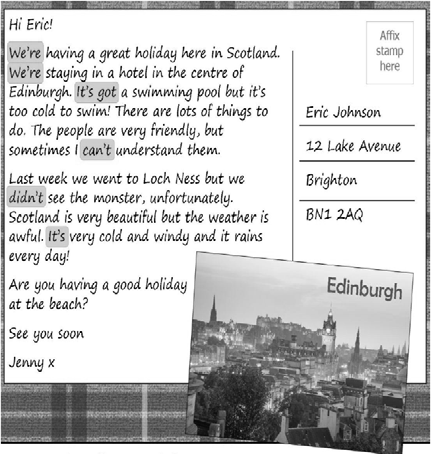

Reflection Were the lesson objectives/learning objectives realistic? Did I stick to timings? What changes did I make from my plan and why? |
Answer the most relevant questions from the box on the left about your lesson. |
Lesson plan
LESSON: Module 3 Review |
School: |
||||
Date: |
Teacher name: |
||||
CLASS: |
Number present: |
absent: |
|||
Learning objectives(s) that this lesson is contributing to |
7.L5 Recognise the opinion of the speaker(s) in supported extended talk on a range of general and curricular topics 7.W7 Use with minimal support appropriate layout at text level for a growing range of written genres on familiar general and curricular topics |
||||
Lesson objectives |
All learners will be able to: |
||||
Read a poem. • Learn vocabulary for talking about poems. • Learn about metaphors and practise thinking of metaphors. • Write a poem...with support |
|||||
Most learners will be able to: |
|||||
•Read a poem. • Learn vocabulary for talking about poems. • Learn about metaphors and practise thinking of metaphors. • Write a poem. with little support
|
|||||
Some learners will be able to: |
|||||
Read a poem. • Learn vocabulary for talking about poems. • Learn about metaphors and practise thinking of metaphors. • Write a poem. Without support |
|||||
Previous learning |
basic forms for inviting accepting and declining |
||||
Plan |
|||||
Planned timings |
Planned activities |
Resources |
Teacher
|
||
Beginning the lesson
|
Warm-up (2–3 minutes) • Ask students if they know any poems in their own language or in English. Ask if they enjoy reading poems and why. • Ask what makes a text a poem. Elicit the words rhyme, rhythm and verse. • Tell students they are going to read a poem in English. |
Class CD |
|
||
|
Main Activities
|
New theme Vocabulary Exercise 1 ANSWERS 1 shower (the others are rooms) 2 view (the others are objects) 3 window (the others are objects) 4 mirror (the others are for sitting on) 5 microwave (the others belong in the bathroom) 6 washing machine (the others belong in the bedroom) Exercise 2 ANSWERS 1 make 2 clear 3 tidy 4 clean 5 do 6 take Language focus Exercise 3 ANSWERS 1 is making 2 isn’t doing 3 are sleeping 4 is cleaning 5 is taking Exercise 4 ANSWERS 1 Is Mum wearing a dress? No, she isn’t. 2 Are the cats sleeping? Yes, they are 3 Is the boy watching TV? Yes, he is. 4 Are the children listening to music? No, they aren’t. 5 Is the girl working? Yes, she is. Exercise 5 ANSWERS 1 makes, doesn’t tidy 2 Are ... watching, ‘m not enjoying it 3 help, ‘m making 4 are staying, visit Communication Exercise 6 ANSWERS 1 Is there 2 there is 3 Where 4 It’s 5 Can you 6 I’m 7 Is it 8 I suppose Listening Exercise 7 $ 1.24 Tapescript page 149 ANSWERS 1 True. 2 False. Ellen’s brother is talking to his best friend, Steve Dunton. 3 False. Daisy thinks Steve Dunton is really nice. 4 False. Ellen’s brother is in the dining room. 5 True. 6 False. Steve and Ellen’s brother are talking about Daisy. Tests Unit 2 test, Test Bank MultiROM |
|
|
|
||||
|---|---|---|---|---|---|---|---|---|---|
|
|
|
|
||||||
|
Ending the lesson |
Ask learners what the most interesting/ difficult part of the lesson was. Name two words you practiced today. |
|
|
|
||||
|
Additional information |
|
|||||||
Differentiation – how do you plan to give more support? How do you plan to challenge the more able learners? |
Assessment – how are you planning to check learners’ learning? |
Cross-curricular
links |
|||||||
monitor less able learners in group work and support through further modelling, prompting and drilling |
monitor oral production and pronunciation in performed dialogues |
cross-curricular links: languages [differences between English and L1] |
|||||||
|
ask more able learners to read and highlight any errors In the dialogues of other pairs |
|
|
|
|||||
Reflection Were the lesson objectives/learning objectives realistic? Did I stick to timings? What changes did I make from my plan and why? |
Answer the most relevant questions from the box on the left about your lesson. |
MODULE 4
Lesson plan
LESSON: Module 4 lesson 1 Prepositions: movement |
School: |
|||||
Date: |
Teacher name: |
|||||
CLASS: |
Number present: |
absent: |
||||
Learning objectives(s) that this lesson is contributing to |
7.UE14 use an increased variety of prepositions of time, location and direction use by and with to denote agent and instrument; use prepositions before nouns and adjectives in common prepositional phrases on a growing range of familiar general and curricular topics
|
|||||
Lesson objectives |
All learners will be able to: |
|||||
identify some specific information in the text and use some target vocabulary accurately in response to prompts to express views Learn verbs and prepositions of movement. • Do a quiz about daredevils. |
||||||
Most learners will be ble to: |
||||||
identify most specific information in the text and use a range of target vocabulary accurately in response to prompts to express views Learn verbs and prepositions of movement. • Do a quiz about daredevils. |
||||||
Some learners will be able to: |
||||||
identify some specific information in the text and use a range of target vocabulary accurately to express and justify views Learn verbs and prepositions of movement. • Do a quiz about daredevils. |
||||||
Previous learning |
basic vocabulary connected to green issues |
|||||
Plan |
||||||
Planned timings |
Planned activities |
Resources |
Teacher
|
|||
Beginning the lesson |
What’s in this module? Read the title of the module Space & Earth and ask Ss to say what they know about the subject. Go through the What’s in this module? list and stimulate a discussion to prompt Ss' interest in the module. • With books closed, write the words dare and daredevil on the board. • Elicit the meaning of dare (be brave enough to do something dangerous). • Ask students to name some activities that are dangerous, then ask students if they would dare to do these things. • Elicit or explain the meaning of daredevil. Ask if anyone thinks he/she is a daredevil.
|
|
|
|||
|
Main Activities
|
To present vocabulary about problems with our planet • If necessary, students can check the meanings of the verbs in their dictionaries. • Students can work in pairs to match the prepositions with the pictures. • Check answers with the class, and model and drill pronunciation of the prepositions where necessary. ANSWERS 1 up 2 down 3 into 4 across 5 through 6 around 7 over 8 under 9 off Exercise 2 • Students read the quiz and choose the correct prepositions, based on the context. ANSWERS 1 off 2 around 3 across 4 down 5 along 6 across 7 over Exercise 3 $ 2.02 • Students do the quiz in pairs. • While checking answers to the quiz, encourage students to explain how they made their choices. In a weaker class, prompt them: 2,200 kilometres isn’t far enough, 5,000 °C is too hot. ANSWERS 1 a 2 c 3 b 4 a 5 c 6 b 7 c |
Class CD
Video
|
|
|
||||
|---|---|---|---|---|---|---|---|---|---|
|
Exercise 4 • Now refer students back to the pictures in exercise 1 and ask them to describe them using a verb + preposition combination from the quiz. ANSWERS 1 climb up 6 run around 2 climb down 7 jump over 3 jump into 8 walk under 4 swim across 9 fall off 5 cycle through Exercise 5 • Explain that the verbs can be used with a combination of prepositions. Ask students to read the sentences carefully and choose the best preposition to complete them. • To extend the activity, ask students to use the prepositions and verbs in different combinations, and make new sentences. In a weaker class, students may need to write these down. In a stronger class, encourage students to tell you sentences spontaneously. • Check answers by asking individual students to read out their sentences. ANSWERS 1 off 2 down 3 up 4 into 5 around 6 through Exercise 6 • Read through the key phrases for making and responding to suggestions. Explain that the suggestions are given above, with a choice of responses (1–4) depending on whether the speaker thinks it is a good or bad idea. • Ask what word they can use to work out the answers (the adjective), and elicit that these are either positive or negative. Students complete the sentences with yes or no. ANSWERS 1 Yes 2 No 3 No 4 Yes LANGUAGE NOTE Why don’t we, Let’s and Shall we can be used to introduce suggestions which include both the speaker and the listener. They are always followed by the infinitive without to: Shall we go for a walk? NOT Shall we to go for a walk? Let’s means Let us. We do not use don’t to form the negative: Let’s not go out tonight. NOT Let’s don’t go out tonight.
|
Class CD |
|
|
|||||
|
Exercise 7 • Students put what they have learnt into practice by combining the key phrases with the verbs and prepositions. • In a weaker class, ask students to write their sentences before they speak. In a stronger class, allow them to improvise as they talk. ANSWERS Students’ own answers. Finished? • Refer fast finishers to the Finished? activity. Encourage them to think of places all around the world where they could do a variety of activities. Refer them to a dictionary if they need help with new vocabulary. ANSWERS Students’ own answers. |
|
|
|
|||||
|
Ending the lesson |
Teacher asks learners 1) What was difficult to do at the lesson? 2) What do you need to work on? Feedbac |
|
|
|
||||
|
Additional information |
|
|||||||
Differentiation – how do you plan to give more support? How do you plan to challenge the more able learners? |
Assessment – how are you planning to check learners’ learning? |
Cross-curricular
links |
|||||||
Provide more prompted support through questioning for less able learners in whole class plenary |
use thumbs up or down technique and questioning to monitor learner comprehension of text |
values links: preserving heritage |
|||||||
|
provide more challenge in writing task by asking more able learners to include two phrases in their writing |
monitor for learner accuracy and control issues during writing task and feedback to class |
|
|
|||||
Reflection
Were the lesson objectives/learning objectives realistic?
Did I stick to timings?
What changes did I make from my plan and why?
|
Answer the most relevant questions from the box on the left about your lesson. |
MODULE 4
Lesson plan
LESSON: Module 4 Lesson 2 Daredevils |
School: |
|||||
Date: |
Teacher name: |
|||||
CLASS: |
Number present: |
absent: |
||||
Learning objectives(s) that this lesson is contributing to |
7.R1 understand the main points in a growing range of short, simple texts on general and curricular topics 7.R2 understand independently specific information and detail in short, simple texts on a limited range of general and curricular topics 7.S1 provide basic information about themselves and others at discourse level on a range of |
|||||
Lesson objectives |
All learners will be able to: |
|||||
Read about Niagara Falls. • Read for general meaning and specific information. • Talk about people who do dangerous things.with support |
||||||
Most learners will be able to: |
||||||
Read about Niagara Falls. • Read for general meaning and specific information. • Talk about people who do dangerous things.with little support |
||||||
Some learners will be able to: |
||||||
Read about Niagara Falls. • Read for general meaning and specific information. • Talk about people who do dangerous things.without support
|
||||||
Previous learning |
vocabulary relating to monuments and preserving environment from previous lesson |
|||||
Plan |
||||||
Planned timings |
Planned activities |
|
Teacher
|
|||
Beginning the lesson |
Warm-up (2 minutes) • With books closed, write Niagara Falls on the board and ask students what they know about it. • Elicit ideas, then ask what dangerous things people do at Niagara Falls. Elicit students’ ideas, but do not accept or reject any at this stage. |
|
|
|||
Main Activities
|
Background Niagara Falls are on the border between Canada and the USA. Although they are not particularly high, they are exceptionally wide. Energy from the falls is now used in a hydroelectric power plant. |
Class CD
|
|
|||||
Exercise 1 $ 2.03 • Allow students time to read the title and look at the photos before reading and listening. • In a stronger class, encourage students to scan the text to find the names of the daredevils, without listening to the CD. ANSWERS The Great Blondin, Signor Farini and Annie Taylor. Exercise 2 • Clarify that the headings below can all be matched to one of the paragraphs in the text. Students read the text again more carefully and match the headings. • Check answers with the class. Ask students to tell you the information that made them choose each answer. ANSWERS 1 D 2 B 3 E 4 A Exercise 3 • Ask students to read the text again and decide whether the sentences are true or false. They correct the false ones. ANSWERS 1 True. 2 False. Farini watched and copied Blondin. 3 True. 4 False. People weren’t expecting to see Annie alive. 5 False. Stunts are prohibited. Exercise 4 • Ask students to find the words in the text and work out the meanings. Students complete the sentences. • In a weaker class, check understanding of the words by asking students to translate them into their own language. In a stronger class, ask students to put the words into new sentences to show understanding. ANSWERS 1 heroes, heroines 2 daring 3 daredevils 4 stunts 5 spectacular |
|
|
||||||
Exercise 5 • Allow students time to read through the questions, and help with anything they do not understand before they ask and answer. • In a weaker class, encourage students to make notes before they start to talk. ANSWERS Students’ own answers. |
|
|
||||||
Ending the lesson |
Check Ss’ answers by asking various Ss to read their paragraphs aloud. • Alternatively, assign the task as HW and check Ss’ answers in the next lesson.
|
|
|
|||||
Additional information |
||||||||
Differentiation – how do you plan to give more support? How do you plan to challenge the more able learners? |
Assessment – how are you planning to check learners’ learning? |
Cross-curricular
links |
|
|||||
provide more structure to writing task by suggesting sentence starters to less able writers |
monitor writing and highlight for learners where they need to self-correct |
values links: citizenship [caring for the environment] |
|
|||||
suggest note-headings for speech task which will challenge more able learners to extend range of their talk e.g. possible solutions |
assess control, pronunciation and organisation of talk in speech task |
|
||||||
Reflection
Were the lesson objectives/learning objectives realistic?
Did I stick to timings?
What changes did I make from my plan and why?
|
Answer the most relevant questions from the box on the left about your lesson. |
MODULE 4
Lesson plan
LESSON: Module 4 Lesson 3 Past Continuous: affirmative and negative |
School: |
|||||
Date: |
Teacher name: |
|||||
CLASS: |
Number present: |
absent: |
||||
Learning objectives(s) that this lesson is contributing to |
7.C6 organise and present information clearly to others 7.UE10 use present continuous forms with present and future meaning and past continuous forms for background and interrupted past actions on a limited range of familiar general and curricular topics |
|||||
Lesson objectives |
All learners will be able to: |
|||||
Learn the affirmative and negative forms of the past continuous. • Practise using reference material. with some support |
||||||
Most learners will be able to: |
||||||
Learn the affirmative and negative forms of the past continuous. • Practise using reference material. • Use the past continuous to talk about an event.some support |
||||||
Some learners will be able to: |
||||||
Learn the affirmative and negative forms of the past continuous. • Practise using reference material. • Use the past continuous to talk about an event.with little support |
||||||
Previous learning |
other uses of will e.g. making offers use of ‘going to’ for ‘ future intentions’ |
|||||
Plan |
||||||
Planned timings |
Planned activities |
|
Teacher
|
|||
Beginning the lesson
|
Warm-up (2 minutes) • With books closed, write on the board: I fell off my bike while I was cycling through the forest. Draw a long line on the board, with an arrow in the middle of it. Ask students to tell you which part of the sentence can be represented by the long line (I was cycling) and which part by the arrow (I fell off my bike). |
|
|
|||
|
Main Activities
|
Exercise 1 • Refer students back to the text on page 40 and ask: When did Blondin cook eggs? Elicit the answer (While he was standing on the tightrope). Write this on the board and underline the past continuous verb. • After students have completed the sentences, check answers, then ask students to complete the rule. In a weaker class, do this as a whole class activity for support. ANSWERS 1 was standing 3 were watching 2 was carrying 4 weren’t expecting Rule ANSWERS an action in progress LANGUAGE NOTE In the past continuous affirmative we use was for I / he / she / it but were for you / they: They were walking. NOT They was walking. In the negative form, we use wasn’t / weren’t: I wasn’t walking. NOT I didn’t walking. We use the past continuous, not the past simple, for an action in progress in the past: He was walking across the rope when he fell. NOT He walked across the rope when he fell. Exercise 2 • Refer students to page 21 in the Student’s Book to find the spelling rules which will help them write the -ing forms. ANSWERS 1 driving 2 running 3 jumping 4 flying 5 cycling 6 swimming Exercise 3 • Look at the photo and read the title of the text. Ask if anyone can guess what it is about and what the man is doing. Elicit or explain that Alain Robert climbs very tall buildings without safety equipment. ANSWERS 1 was walking 4 was climbing 2 weren’t talking 5 wasn’t wearing 3 were looking 6 wasn’t using |
|
|
|
||||
|---|---|---|---|---|---|---|---|---|---|
|
Exercise 4 • Students practise using the new tense to write about events that were happening recently in their own lives. • Point out that they can use either the affirmative or negative forms of the verb to make the sentence true for them. ANSWERS 1 My friends were / weren’t playing football at 6 a.m. 2 I was / wasn’t sitting in a car at 8.15 a.m. 3 We were / weren’t listening to the teacher five minutes ago. 4 My friends and I were / weren’t talking at 8.45 a.m. 5 I was / wasn’t sleeping at 5 a.m. 6 It was / wasn’t raining before school.
|
|
|
|
|||||
|
Ending the lesson
|
Teacher asks learners 1) What was difficult to do at the lesson? 2) What do you need to work on? Feedback *Alternatively, let the students do this for homework. |
|
|
|
||||
|
Additional information |
|
|||||||
Differentiation – how do you plan to give more support? How do you plan to challenge the more able learners? |
Assessment – how are you planning to check learners’ learning? |
Cross-curricular
links |
|||||||
monitor less able learners in group work and give further modelling and drilling support |
use concept checking questions to check learner understanding of why a time phrase suggests use of a particular form |
cross-curricular links: languages [contrasts with L1] |
|||||||
|
challenge more able learners to give multiple [and/or] answers in practice exercises |
assess pronunciation in oral and checking stages of the lesson [particularly contractions and weak forms] |
|
|
|||||
Reflection Were the lesson objectives/learning objectives realistic? Did I stick to timings? What changes did I make from my plan and why? |
Answer the most relevant questions from the box on the left about your lesson. |
MODULE 4
Lesson plan
LESSON: Module 4 Lesson 4 Geographical features |
School: |
|||||
Date: |
Teacher name: |
|||||
CLASS: |
Number present: |
absent: |
||||
Learning objectives(s) that this lesson is contributing to |
7.L4 understand with limited support the main points of extended talk on a range of general and curricular topics 7.L5 understand most specific information and detail of supported, extended talk on a range general and curricular topics 7.W6 link, with minimal support, sentences into coherent paragraphs using basic connectors on a growing range of familiar general topics
|
|||||
Lesson objectives |
All learners will be able to: |
|||||
Learn words for geographical features. • Listen to a conversation about a dangerous journey. • Listen for general meaning and specific details. with support |
||||||
Most learners will be able to: |
||||||
Learn words for geographical features. • Listen to a conversation about a dangerous journey. • Listen for general meaning and specific details. • Write about places in your country. with support
|
||||||
Some learners will be able to: |
||||||
Learn words for geographical features. • Listen to a conversation about a dangerous journey. • Listen for general meaning and specific details. • Write about places in your country.with little support |
||||||
Previous learning |
basic vocabulary relating to theme of space and solar system and exploration |
|||||
Plan |
||||||
Planned timings |
Planned activities |
|
Teacher
|
|||
Beginning the lesson
|
Warm-up (2 minutes) • With books closed, ask students if there are any famous mountains, lakes or rivers in their country. |
|
|
|||
|
Main Activities
|
Exercise 1 $ 2.04 • Students check the meaning of the words in the box if necessary, then use them to complete the place names. • Play the CD for students to check their answers. • Model and drill the pronunciation of any words that are new to students. ANSWERS 2 Lake 7 Desert 3 Pole 8 Falls 4 Mountains 9 Sea 5 Forest 10 Ocean 6 River Exercise 2 • Do the first sentence with the class as an example. • Students work in pairs to complete the sentences. In a weaker class, you could offer support by giving the first letter of the answer each time. In a stronger class, if there are any questions they do not know, refer them to reference material or the internet to find out the answers. ANSWERS 1 mountains 4 Ocean 2 Desert 5 Sea 3 Pole 6 river / forest Exercise 3 $ 2.05 Tapescript page 150 • Explain to students that they are going to listen to a conversation between two girls about a daring adventure. • Tell students to read all the options before they listen. ANSWER Exercise 4 $ 2.05 • Explain to students that they are now going to listen again more carefully for more specific details. • Allow students time to read through the questions and all the options. In a stronger class, encourage students to choose answers from memory before you play the CD. ANSWERS 1 c 2 b 3 b 4 c 5 a Exercise 5 • Students write clues about geographical features. Encourage students to describe them accurately but not to reveal their identity, so that their partner has to guess. |
|
|
|
||||
|---|---|---|---|---|---|---|---|---|---|
|
• While students are testing each other, walk around the room, monitoring for accuracy. • Ask some students to read their clues out for the class to guess. ANSWERS Students’ own answers. |
|
|
|
|||||
|
Ending the lesson |
Check Ss’ answers around the class. |
|
|
|
||||
|
Additional information |
|
|||||||
Differentiation – how do you plan to give more support? How do you plan to challenge the more able learners? |
Assessment – how are you planning to check learners’ learning? |
Cross-curricular
links |
|||||||
provide more prompted support through questioning for less able learners in whole class plenary |
assess learner comprehension of text through follow-up questioning |
cross curricular links: history [Kazakhstan’s place in space history] |
|||||||
|
as an extension task challenge more able learners to think of three possible different titles for the passage and compare with other groups |
assess learner ability to mark stress on polysyllabic new words from the lesson. |
|
|
|||||
Reflection Were the lesson objectives/learning objectives realistic? Did I stick to timings? What changes did I make from my plan and why?
|
Answer the most relevant questions from the box on the left about your lesson. |
MODULE 4
Lesson plan
LESSON: Module 4 Lesson 5 Past Continuous: questions |
School: |
||||
Date: |
Teacher name: |
||||
CLASS: |
Number present: |
absent: |
|||
Learning objectives(s) that this lesson is contributing to |
7.UE10 use present continuous forms with present and future meaning and past continuous forms for background and interrupted past actions on a limited range of familiar general and curricular topics |
||||
Lesson objectives |
All learners will be able to: |
||||
Learn the question forms of the past continuous. • Write questions using the past continuous. • Learn the rules for using the past simple and past continuous. • Practise using the past simple and past continuous.with support |
|||||
Most learners will be able to: |
|||||
Learn the question forms of the past continuous. • Write questions using the past continuous. • Learn the rules for using the past simple and past continuous. • Practise using the past simple and past continuous.With little support |
|||||
Some learners will be able to: |
|||||
Learn the question forms of the past continuous. • Write questions using the past continuous. • Learn the rules for using the past simple and past continuous. • Practise using the past simple and past continuous.without support |
|||||
Previous learning |
solar system and space exploration vocabulary from previous lesson |
||||
Plan |
|||||
Planned timings |
Planned activities |
Resources |
Teacher
|
||
Beginning the lesson |
Warm-up (2–3 minutes) • Refer students back to exercise 4 on page 53. • Focus on the verb forms and elicit that some use the past continuous form. Tell students they are going to practise forming questions in the past continuous. |
|
|
||
|
Activities
|
Students work with book/ Teacher present rule. Exercise 1 • Remind students to read through all the options before they start to match the questions and answers. answers. 1 e 2 f 3 c 4 b 5 d 6 a Rules answers. was / were
LANGUAGE
NOTE
In past continuous questions we use was
/ were,
not did:
Were you
watching TV?
Point
out that was
/ were
comes before the subject: Were
they sleeping?
NOT Exercise 2 • Students complete the questions using the past continuous, then write answers based on the information provided in the recording in the previous lesson. answers. 1 Were, skiing; Yes, they were. 2 Was, swimming; No, she wasn’t. 3 were, cycling; They were cycling across the United States and into Central America. 4 were, sailing; They were sailing to Ecuador. 5 was waiting; Their families were waiting for them. Exercise 3 • Students write the questions and answers individually, then ask and answer giving true information with a partner. answers. 1 What were you doing at 6.30 yesterday evening? 2 Were you and your family having breakfast at 7.30 a.m.? 3 What were your parents doing at 8.30 a.m. yesterday? 4 Were you walking to school at 8 o’clock? 5 Where were you sitting at 9.30 yesterday morning? 6 Who was sitting next to you in your English lesson last week? Students’ own answers. Exercise 4 • Read through the examples with the class. Elicit which are in the past simple and which are in the past continuous. • Ask students to complete the rules in pairs, then check answers by asking individual students to read them out. Rules answers. 1 past continuous 2 past simple 3 past simple 4 past continuous LANGUAGE NOTE We can put either the short action or the longer action first in a sentence, with the same meaning: They were skiing across the Arctic when she fell. She fell while they were skiing across the Arctic. We usually use when before the short action and while before the longer action: He
fell while he was climbing.
NOT He
was climbing when he fell.
NOT Exercise 5 • Students complete the sentences with the correct forms of the verbs. In a weaker class, students can do this in pairs. In a stronger class, do this orally as a class activity. answers. 1 was swimming, saw 2 met, were walking 3 had, was skiing 4 wasn’t wearing, fell off 5 weren’t sleeping, phoned
|
|
|
|
||||
|---|---|---|---|---|---|---|---|---|---|
|
Ending the lesson |
Home task Feedback Reflection What kind of lesson today? (bad, good, scientific, interesting) Did you like this lesson? Our lesson is over! Good bye, children!
|
|
|
|
||||
|
Additional information |
|
|||||||
Differentiation – how do you plan to give more support? How do you plan to challenge the more able learners? |
Assessment – how are you planning to check learners’ learning? |
Cross-curricular
links |
|||||||
provide clear outline structure with possible language starters for sections of the presentation |
check comprehension of listening through follow-up questioning |
ICT links: using slides to give a presentation |
|||||||
|
challenge more able learners to research and use a quotation about space as part of their presentations |
assess pronunciation, fluency and lexical and grammatical range in presentations |
cross-curricular links: history [Kazakhstan’s role in space history] |
|
|||||
Reflection
Were the lesson objectives/learning objectives realistic?
Did I stick to timings?
What changes did I make from my plan and why?
|
Answer the most relevant questions from the box on the left about your lesson. |
MODULE 4
Lesson plan
LESSON: Module4 Lesson 6 Expressing interest |
School: |
|
||||||||
Date: |
Teacher name: |
|
||||||||
CLASS: |
Number present: |
absent: |
|
|||||||
Learning objectives(s) that this lesson is contributing to |
7.L5 understand most specific information and detail of supported, extended talk on a range general and curricular topics 7.S5 keep interaction going in longer exchanges on a range of general and curricular topics |
|
||||||||
Lesson objectives |
All learners will be able to: |
|
||||||||
Listen to a conversation about an interesting event. • Learn key phrases for expressing interest. • Practise expressing interest.with support |
|
|||||||||
Most learners will be able to: |
|
|||||||||
Listen to a conversation about an interesting event. • Learn key phrases for expressing interest. • Practise expressing interest.with little support |
|
|||||||||
Some learners will be able to: |
|
|||||||||
Listen to a conversation about an interesting event. • Learn key phrases for expressing interest. • Practise expressing interest.Without support |
|
|||||||||
Previous learning |
simple forms for making and responding to suggestions: shall we.. let’s .. what about ..? |
|
||||||||
Plan |
|
|||||||||
Planned timings |
Planned activities |
Resources |
Teacher
|
|
||||||
Beginning the lesson
|
Warm-up (2–3 minutes) • Ask students to tell you something interesting that they did last summer. • Respond with interest, for example, by saying Really? or You’re kidding! Ask the class what you are doing and elicit that you are showing you are interested. |
|
|
|
||||||
Main Activities
|
Exercise 1 • Look at the photo and ask students for their ideas answers. They are looking at a photo of a skateboarder doing tricks. Students’ own answers. Exercise 2 CD 2.06 • For this activity, the aim is for students to just listen before they read the dialogue. Ask them to cover it with a piece of paper or a book. They can still look at the photo. • Tell them to listen carefully to the speakers’ intonation. answer. No, he didn’t. Exercise 3 CD 2.07 • Keep the dialogue covered, and ask students to read through the key phrases and try to complete them from memory. • Play the CD and tell students to check their answers. Ask students how intonation is used to express surprise. • Students practise the key phrases, using the correct intonation. In a stronger class, tell individual students something for them to react to, for example, I won a prize. Did you run the marathon last year? You worked very well. answers. 1 amazing 2 kidding 3 Well 4 very kind We stress words to show interest. Exercise 4 • Go through the ideas in the box and check understanding. • Students prepare their ideas individually, then work in pairs to tell their partner some amazing things and express interest. In a weaker class, students can make notes before they speak. • Monitor while students are working, and encourage them to use the correct stress and intonation. answers. Students’ own answers. |
|
|
|
||||||
Exercise 5 • To prepare for the exercise, look at the photo with the class and ask students to describe what is happening. answers. 1 a 2 f 3 c 4 e 5 d 6 b Leah Did you take this photo, Shaun? Shaun Yes, do you like it? Leah Yeah. But what was happening? Shaun This diver was jumping from a ten-metre diving board. Leah Oh! That’s amazing! Where did you take it? Shaun I was in Barcelona with my dad. We were visiting sites from the 1992 Olympics. Leah Really? What were they doing at the pool? Shaun There was an international diving competition. Leah Did you try it? Shaun You’re kidding! I don’t like the water. Leah Well, it’s a great photo. Well done! Shaun That’s very kind of you. |
|
|
|
|||||||
To pronounce /s/, /z/ • Explain the task and play the recording. Ss listen and identify the sounds and tick the correct boxes. • Play the recording again with pauses for Ss to listen and repeat chorally and/or individually. Pay special attention to Ss’ pronunciation and intonation and correct as necessary. |
|
|
|
|||||||
Ending the lesson |
Home task Feedback Reflection What kind of lesson today? (bad, good, scientific, interesting) Did you like this lesson? Our lesson is over!Good bye, children! |
|
|
|
||||||
Additional information |
|
|||||||||
Differentiation – how do you plan to give more support? How do you plan to challenge the more able learners? |
Assessment – how are you planning to check learners’ learning? |
Cross-curricular
links |
||||||||
monitor less able learners in group work and give further modelling and drilling support |
assess pronunciation of individual sounds and intonation in role play and sentence |
cross-curricular links: languages [contrasts with L1] |
||||||||
challenge more able learners to script a role play in which the interactant is reluctant to begin with. |
assess learner interactive ability in role play. |
|
|
|||||||
MODULE 4
Lesson plan
LESSON: Module 4 Lesson 7 A narrative text |
School: |
||||
Date: |
Teacher name: |
||||
CLASS: |
Number present: |
absent: |
|||
Learning objectives(s) that this lesson is contributing to |
7.W6 link, with minimal support, sentences into coherent paragraphs using basic connectors on a growing range of familiar general topics |
||||
Lesson objectives |
All learners will be able to: |
||||
Study a model text about a rescue. • Learn about when, while and as soon as. • Write an account of a rescue.with support |
|||||
Most learners will be able to: |
|||||
Study a model text about a rescue. • Learn about when, while and as soon as. • Write an account of a rescue. with little support |
|||||
Some learners will be able to: |
|||||
Study a model text about a rescue. • Learn about when, while and as soon as. • Write an account of a rescue. with out support |
|||||
Previous learning |
names of animals vocabulary related to animal habitats |
||||
Plan |
|||||
Planned timings |
Planned activities |
Resources |
Teacher
|
||
Beginning the lesson
C9 |
To introduce the topic and predict the content of the text • Direct Ss’ attention to the pictures and elicit a variety of guesses for reasons why these animals may be endangered from Ss around the class. Write two on the board. • Play the recording. Ss listen and follow the text in their books and check if their guesses were correct. |
Class CD |
|
||
|
Main Activities
R2 R4
S3
W3
W6
|
To read for specific information • Ask Ss to read the statements 1-5 and then allow Ss some time to read the text and mark their answers. • Check Ss’ answers. • Go through the Check these words box with Ss. • Read aloud the Famous quotation and explain/ elicit what it means. (It is important to value and conserve wildlife.) To consolidate information in a text; to express an opinion Read the rubric aloud and elicit answers from various Ss around the class. |
|
|
|
||||
|---|---|---|---|---|---|---|---|---|---|
|
Exercise 1 • Look at the summary sentences with the class and elicit that they explain what is happening at important stages of the story. • In a weaker class, you may need to help them locate relevant information in the text. In a stronger class, when you check answers, ask students to tell you which pieces of text helped them do the matching. answers. 1 d 2 e 3 f 4 c 5 a 6 b Exercise 2 • Read through the key phrases and the words in the box with the class. • Ask students to find the key phrases in the model text and complete them with the words in the box. • In a weaker class, check understanding by asking students to translate the sentences into their own language. In a stronger class, ask students to use the words in new sentences. answers. 1 while 2 When 3 After 4 As soon as 5 Suddenly
|
|
|
|
|||||
|
Exercise 3 • Before starting the exercise, ask students to find examples of when, while and as soon as in the model text. • Elicit the difference in meaning between them (we use when + past simple and while + past continuous; we use as soon as when an action follows immediately after another). answers. 1 while 2 As soon as 3 When
|
|
|
|
|||||
|
Ending the lesson |
Home task Exercise 4 • Read the task with the class. • Students think and plan their stories individually. • Students write their stories. This can be set for homework. • Tell students to check their work, ensuring they have used there was, there were, past tenses, and linking words, correctly. Feedback Reflection What kind of lesson today? (bad, good, scientific, interesting) Did you like this lesson? Our lesson is over! Good bye, children! |
Video |
|
|
||||
|
Additional information |
|
|||||||
Differentiation – how do you plan to give more support? How do you plan to challenge the more able learners? |
Assessment – how are you planning to check learners’ learning? |
Cross-curricular
links |
|||||||
encourage less able learners to show another learner where they think the answer to reading question is in the text before deciding on answer |
monitor reading comprehension with thumbs up and down technique and follow-up questioning |
values link: caring for the environment |
|||||||
|
encourage more able learners to extend their writing to two paragraphs |
take in learners’ extended writing for assessment |
|
|
|||||
Reflection Were the lesson objectives/learning objectives realistic? Did I stick to timings? What changes did I make from my plan and why? |
Answer the most relevant questions from the box on the left about your lesson. |
MODULE 4
Lesson plan
LESSON: Module 4 Lesson 8 Space and Earth |
School: |
|||||
Date: |
Teacher name: |
|||||
CLASS: |
Number present: |
absent: |
||||
Learning objectives(s) that this lesson is contributing to |
7.C8 develop intercultural awareness through reading and discussion 7.UE9 use appropriately an increased variety of present and past simple active and some passive forms on a growing range of familiar general and curricular topics
|
|||||
Lesson objectives |
All learners will be able to: |
|||||
Learn vocabulary for talking about Space and Earth. • Read a text about the Baikonur Cosmodrome. • Learn and practise using the passive voice. • Learn how to use by and with in passive sentences.with support |
||||||
Most learners will be able to: |
||||||
Learn vocabulary for talking about Space and Earth. • Read a text about the Baikonur Cosmodrome. • Learn and practise using the passive voice. • Learn how to use by and with in passive sentences.with little support |
||||||
Some learners will be able to: |
||||||
Learn vocabulary for talking about Space and Earth. • Read a text about the Baikonur Cosmodrome. • Learn and practise using the passive voice. • Learn how to use by and with in passive sentences.without support |
||||||
Previous learning |
vocabulary relating to environmental problems and signposting presentation language |
|||||
Plan |
||||||
Planned timings |
Planned activities |
Resources |
Teacher
|
|||
Beginning the lesson
|
Warm-up (2–3 minutes) • Ask students if they have ever been to Baikonur. Ask what they know about the cosmodrome and whether they would like to visit it. • Write their ideas about Baikonur on the board, but do not confirm or reject any at this stage. • Tell students they are going to read a text about Baikonur.
|
|
|
|||
|
Main Activities
|
To read for lexico-grammatical structure (open cloze) • Allow Ss some time to read the text carefully and think of an appropriate word for each gap. • Have Ss look up the meanings of the words in the Check these words box and then check Ss’ answers. Exercise 1 • Focus students’ attention on the words in the box. • In pairs, students check the meaning of the words and complete the sentences with six of the words. answers. 1 star, galaxy 2 planets 3 satellite 4 Cosmodrome 5 astronaut Exercise 2 CD 2.40 • Focus students' attention on the numbers in the box. Ask: Which numbers might refer to years? (1950s, 2011, 2003, 2015) What might the other numbers refer to? (dates, measurements, amount of something, etc.) • Play the recording, students check their answers. answers. 1 1950s 2 200 3 1 4 13th 5 2001 6 2015 7 500th 8 2003 9 6 10 2nd Exercise 3 • Read through the instructions together and draw students’ attention to the words in blue. Write on the board: My grandfather built this house. This house was built by my grandfather. • Ask students to identify the subject in each sentence. Point out that the information in both sentences is the same but the focus is different. In the first sentence, we focus on the person doing the action (my grandfather is the subject) and we use an active verb (built). In the second sentence, the focus is on the result of the action (the subject is this house, the thing the action is directed at) and we use a passive verb (was built). • Read through the rules together and check for understanding. answers. 1 is, are 2 were Exercise 4 • Explain the task and emphasise that students need to use the correct tense (present simple or past simple). • In a weaker class, do this together as a class activity. answers. 1
was served 2 were designed 3 were invented
4 is dried 5 were used 6 are
placed 7 is eaten To summarise/paraphrase information in a text • Play the recording. Ss listen and follow the text in their books. Then ask Ss to close their books. • Ask various Ss around the class to talk about the hole in the ozone layer in front of the rest of the class.
|
|
|
|
||||
|---|---|---|---|---|---|---|---|---|---|
|
Exercise 5 • Give students a minute to find all instances of by and with in the text in exercise 4. Students work in pairs. answers. by: … new containers were designed by scientists …; … the ones which were used by astronauts … We use by to show who or what does something. with: … the food is eaten with a fork and spoon …; The containers are opened with scissors …; … the water is drunk with a straw …. We use with to show the method. It means ‘using something.’
|
|
|
|
|||||
|
Ending the lesson |
Home task Exercise 6 • Explain the task and ask students to do it individually. answers. 1 The ISS was visited by the space tourist Dennis Tito in 2001. 2 The planet Uranus was first seen with a telescope in 1781. 3 Cosmonautics Day is celebrated on 12th April every year. 4 The first rocket to go into space was created by a team of German and Russian scientists. 5 English and Russian are spoken on the ISS. Feedback Reflection What kind of lesson today? (bad, good, scientific, interesting) Did you like this lesson? Our lesson is over! Good bye, children!
|
|
|
|
||||
|
Additional information |
|
|||||||
Differentiation – how do you plan to give more support? How do you plan to challenge the more able learners? |
Assessment – how are you planning to check learners’ learning? |
Cross-curricular
links |
|||||||
monitor less able learners when preparing presentations and give support on structure and language to use |
monitor use of new language from module in learners’ work across tasks |
values links: concern for the environment |
|||||||
|
challenge more able learners to find and present attention grabbing statistics as part of their presentations |
assess presentations for accuracy of language, fluency of delivery and organisation using a checklist |
cross-curricular links: Geography [ climate change] |
|
|||||
Reflection
Were the lesson objectives/learning objectives realistic?
Did I stick to timings?
What changes did I make from my plan and why?
|
Answer the most relevant questions from the box on the left about your lesson. |
MODULE 4
Lesson plan
LESSON: Module 4 Lesson 9 Directions |
School: |
|||||
Date: |
Teacher name: |
|||||
CLASS: |
Number present: |
absent: |
||||
Learning objectives(s) that this lesson is contributing to |
7.L5 understand most specific information and detail of supported, extended talk on a range general and curricular topics 7.S5 keep interaction going in longer exchanges on a range of general and curricular topics
|
|||||
Lesson objectives |
All learners will be able to: |
|||||
Learn vocabulary for places in a town. • Learn key phrases for asking for and giving directions. • Listen to a phone conversation about asking for and giving directions. • Practise asking for and giving directions. with support |
||||||
Most learners will be able to: |
||||||
Learn vocabulary for places in a town. • Learn key phrases for asking for and giving directions. • Listen to a phone conversation about asking for and giving directions. • Practise asking for and giving directions. with little support |
||||||
Some learners will be able to: |
||||||
i Learn vocabulary for places in a town. • Learn key phrases for asking for and giving directions. • Listen to a phone conversation about asking for and giving directions. • Practise asking for and giving directions. Without support |
||||||
Previous learning |
vocabulary on global environmental problems from previous sections of the Module |
|||||
Plan |
||||||
Planned timings |
Planned activities |
Resources |
Teacher
|
|||
Beginning the lesson
|
Warm-up (3–4 minutes) • With books closed, think of a place fairly close to your school, such as a sports centre, shop or cinema. Ask students where it is. • Elicit some ideas, then ask: How do I get there from this school? • Elicit some directions, but do not correct students at this stage. • Tell students they are going to practise asking for and giving directions. |
|
|
|||
Main Activities
|
Exercise 1 CD 2.10 • Look at the example with the class and ask students to work in pairs to form more compound nouns. • Check answers with the class by asking students to read out their answers. answers. 2 stop 3 park 4 crossing 5 station 6 office 7 school 8 centre 9 park 10 centre 11 lights 12 club Exercise 2 • Refer students to the map and ask them to locate the places they have named. They can do this in pairs. answers. B
secondary school C pedestrian crossing D post
office E sports centre F youth club G
traffic lights |
|
|
|
||||
Exercise 3 CD 2.11 Tapescript page 155 • Read through the key phrases with the class. • Ask students to translate the phrases into their own language. • Explain that students are going to listen to two conversations. They should identify which places the people are looking for. • After listening to the conversations, ask students the question in the instructions. answers. 1 skateboard park 2 art gallery |
|
|
|
|||||
Exercise 4 CD 2.12 • Students read and listen to the dialogue. Tell them not to worry about the blue words at this stage. They can repeat after each line if necessary. • Students practise the dialogue with a partner. Remind them to swap roles and practise it again. answers. Students’ own answers. |
|
|
|
|||||
Ending the lesson |
Home task Ex 1 new words activate Feedback Reflection What kind of lesson today? (bad, good, scientific, interesting) Did you like this lesson? Our lesson is over! Good bye, children! |
|
|
|
||||
Additional information |
|
|||||||
Differentiation – how do you plan to give more support? How do you plan to challenge the more able learners? |
Assessment – how are you planning to check learners’ learning? |
Cross-curricular
links |
||||||
support less able learners in planning by working to draft topic sentences in groups |
assess learners’ use of module vocabulary in monitoring planning stage of work |
values link: caring for the environment |
||||||
provide challenge to more able learners by suggesting they give examples of problems they mention and write about alternative solutions [ not just one]. |
take in extended pieces of writing for assessment |
|
|
|||||
Reflection
Were the lesson objectives/learning objectives realistic?
Did I stick to timings?
What changes did I make from my plan and why?
|
Answer the most relevant questions from the box on the left about your lesson. |
MODULE 4
Lesson plan
LESSON: Module 4 Lesson 10 CLIL. Natural science: Natural disasters |
School: |
|||||
Date: |
Teacher name: |
|||||
CLASS: |
Number present: |
absent: |
||||
Learning objectives(s) that this lesson is contributing to |
7.R1 understand the main points in a growing range of short, simple texts on general and curricular topics SA 7.R5 Deduce meaning from context in short texts on a growing range of familiar general and curricular topics 7.R7 Recognise typical features at word, sentence and text level in a range of written genres 7.S3 Give an opinion at discourse level on a growing range of general and curricular topics 7.S6 Begin to link comments with some flexibility to what others say at sentence and discourse level in pair, group and whole class exchanges |
|||||
Assessment criteria |
• Identify the meaning and details of the reading texts • Identify the correct form of a word, appropriate sentence structure and text layout • Provide a point of view in conversations and discussions • Interact in a pair, group and a whole class work presenting logically connected information with ideas of other people |
|||||
Lesson objectives |
All learners will be able to: |
|||||
Learn vocabulary for talking about natural disasters. • Read a text about earthquakes. with support |
||||||
Most learners will be able to: |
||||||
Learn vocabulary for talking about natural disasters. • Read a text about earthquakes. with little support
|
||||||
Some learners will be able to: |
||||||
Learn vocabulary for talking about natural disasters. • Read a text about earthquakes. without support
|
||||||
Previous learning |
solar system and space exploration vocabulary from previous lesson |
|||||
Plan |
||||||
Planned timings |
Planned activities |
Resources |
Teacher
|
|||
Beginning the lesson |
Warm-up (2–3 minutes) • With books closed, write earthquake on the board and elicit the meaning. • Ask students if they have watched reports about earthquakes in the news recently. Ask: What happened? Where? What did people do? Elicit some answers. • Tell students they are going to learn what causes earthquakes. |
|
|
|||
|
Main Activities
|
To recall significant information from a text; to express an opinion • Ask Ss to think about what impressed them in the text. Suggest the scale of the planets or the human achievements. • Give Ss some time to write their sentences and then check Ss’ answers around the class. • Play the video for the Ss and elicit their comments at the end. Exercise 1 • Students work individually to check the meaning of the words in their dictionaries. • Check that students understand the words. Model and drill pronunciation of the words. • In pairs, students discuss which natural disasters they think are the most dangerous. • Get some feedback from a few students and encourage them to give reasons for their answers ANSWERS Students’ own answers. Exercise 2 $ 2.13 • Play the recording and ask students to listen and read the text. • Allow students time to read the questions. In a weaker class, pre-teach the following words and phrases: surface, layer, core, mantle and crust. • Ask them to read the text again and answer the questions. • Ask students to compare their answers in pairs, then check answers with the class. ANSWERS 1 Tectonic plates are pieces of the Earth’ crust. 2 It’s made up of four layers: inner core, outer core, mantle and crust. 3 A hypocentre is the location below the Earth’s surface where the earthquake starts. 4 A seismograph measures the strength of an earthquake. 5 More than a million earthquakes occur every year. Exercise 3 • Students find the words in the text and match them with the definitions. • Check answers as a class. ANSWERS 1 occur 2 prevent 3 cause 4 collide 5 damage 6 slide |
|
|
|
|||||||||||||||||||||||||||||||||||||||||||||||||||||||||||||||
|---|---|---|---|---|---|---|---|---|---|---|---|---|---|---|---|---|---|---|---|---|---|---|---|---|---|---|---|---|---|---|---|---|---|---|---|---|---|---|---|---|---|---|---|---|---|---|---|---|---|---|---|---|---|---|---|---|---|---|---|---|---|---|---|---|---|---|---|---|
|
|
|
||||||||||||||||||||||||||||||||||||||||||||||||||||||||||||||||||
|
SA – 20m Task 1. Read the text and answer the questions. Example:0.Is Pluto no longer a planet? Yes, It is Is Pluto a Planet?‘Dwarf’ is a very little star Many people are saying that Pluto is no longer a planet. National Geographic News says that, according to the International Astronomical Union, a full planet is an object that orbits the sun and is large enough to have become round due to the force of its own gravity. Because Pluto doesn't meet these standards, the International Astronomical Union classifies Pluto as a dwarf planet. Not everyone agrees that this is a good way to decide, though. Andy Cheng, a planetary scientist at Johns Hopkins University, says that the new rules aren't clear enough and asks the question “how round is round?” “...I'll still continue to maintain that Pluto is a planet," he said. Owen Gingerich is an astronomer and historian at Harvard University in Cambridge. He favored a special distinction for Pluto. Gingerich supported a proposal to call the big eight planets classical planets—as opposed to just plain "planets"—and Pluto and the others dwarf planets, so there would be two classes of planets. He believes that reclassifying Pluto as a dwarf planet is not "sensitive to the historical and cultural role that Pluto has played." The argument continues. What do you think it is?
|
|
|
|
||||||||||||||||||||||||||||||||||||||||||||||||||||||||||||||||
|
Group Assessment sheet
|
|
|
|
||||||||||||||||||||||||||||||||||||||||||||||||||||||||||||||||
|
Ending the lesson |
A Feedback. The teacher gives comments about learners work and awards learner. Students will choose one and put on the board their stickers. |
|
|
|
|||||||||||||||||||||||||||||||||||||||||||||||||||||||||||||||
|
Additional information |
|
||||||||||||||||||||||||||||||||||||||||||||||||||||||||||||||||||
Differentiation – how do you plan to give more support? How do you plan to challenge the more able learners? |
Assessment – how are you planning to check learners’ learning? |
Cross-curricular
links |
||||||||||||||||||||||||||||||||||||||||||||||||||||||||||||||||||
provide clear outline structure with possible language starters for sections of the presentation |
check comprehension of listening through follow-up questioning |
ICT links: using slides to give a presentation |
||||||||||||||||||||||||||||||||||||||||||||||||||||||||||||||||||
|
challenge more able learners to research and use a quotation about space as part of their presentations |
assess pronunciation, fluency and lexical and grammatical range in presentations |
cross-curricular links: history [Kazakhstan’s role in space history] |
|
||||||||||||||||||||||||||||||||||||||||||||||||||||||||||||||||
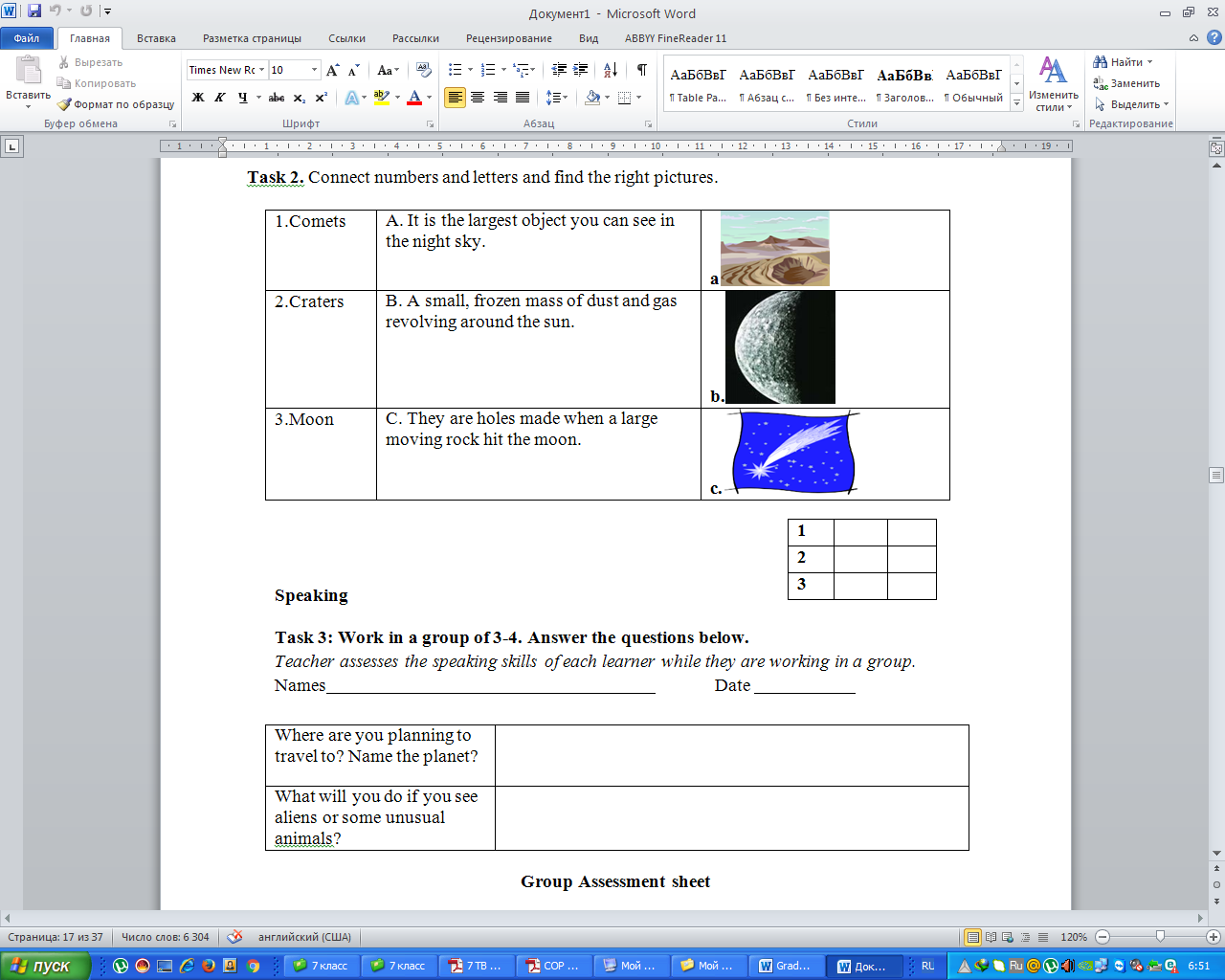
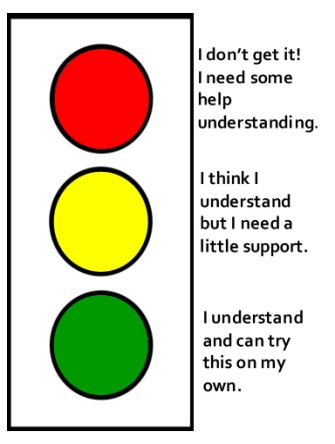 ssessment.
Traffic light.
Reflection Were the lesson objectives/learning objectives realistic? Did I stick to timings? What changes did I make from my plan and why?
|
Answer the most relevant questions from the box on the left about your lesson. |
MODULE 4
Lesson plan
LESSON: Module4 Lesson 11 Summative Control work 4 |
School: |
|
||||||||||||||||||||||||||||||||||||||||||||||||||||||||||||||||
Date: |
Teacher name: |
|
||||||||||||||||||||||||||||||||||||||||||||||||||||||||||||||||
CLASS: |
Number present: |
absent: |
|
|||||||||||||||||||||||||||||||||||||||||||||||||||||||||||||||
Learning objectives(s) that this lesson is contributing to |
7.L3 Understand with some support most of the detail of an argument in extended talk on a limited range of general and curricular topics. 7.L6 Deduce meaning from context with little support in extended talk on a limited range of general and curricular topics. 7.R3 Understand the detail of an argument on a growing range of familiar general and curricular topics, including some extended texts. 7.R5 Deduce meaning from context in short texts on a growing range of familiar general and curricular topics 7.W2 Write with minimal support about real and imaginary pastevents, activities and experiences on a growing range of familiar general topics and some curricular topics. 7.UE9 Use appropriately a variety of active and passive simple present and past forms and past perfect simple forms on a range of familiar generala7n.Sd4cRurersipcuolnadr wtoipthicsome flexibility at both sentence and discourse level to unexpected comments on a growing range of general and curricular topics. 7.S7 Use appropriate subject-specific vocabulary and syntax to talk about a growing range of general topics, and some curricular topics. |
|
||||||||||||||||||||||||||||||||||||||||||||||||||||||||||||||||
Lesson objectives |
All learners will be able to: |
|
||||||||||||||||||||||||||||||||||||||||||||||||||||||||||||||||
use some target functional language appropriately in functional exchanges and pronounce some target words and phrases clearly with support |
|
|||||||||||||||||||||||||||||||||||||||||||||||||||||||||||||||||
Most learners will be able to: |
|
|||||||||||||||||||||||||||||||||||||||||||||||||||||||||||||||||
use a range of target functional language appropriately in functional exchanges and pronounce most target words and phrases clearly with support
|
|
|||||||||||||||||||||||||||||||||||||||||||||||||||||||||||||||||
Some learners will be able to: |
|
|||||||||||||||||||||||||||||||||||||||||||||||||||||||||||||||||
use a range of target functional language appropriately in functional exchanges and pronounce most target words and phrases clearly with little support
|
|
|||||||||||||||||||||||||||||||||||||||||||||||||||||||||||||||||
Previous learning |
simple forms for making and responding to suggestions: shall we.. let’s .. what about ..? |
|
||||||||||||||||||||||||||||||||||||||||||||||||||||||||||||||||
Plan |
|
|||||||||||||||||||||||||||||||||||||||||||||||||||||||||||||||||
Planned timings |
Planned activities |
Resources |
Teacher
|
|
||||||||||||||||||||||||||||||||||||||||||||||||||||||||||||||
Beginning the lesson
|
To present situational language • Play the recording for Ss to listen and repeat chorally and/or individually. • Check Ss’ pronunciation and intonation. |
|
|
|
||||||||||||||||||||||||||||||||||||||||||||||||||||||||||||||
Main Activities
|
SPECIFICATION OF SUMMATIVE ASSESSMENT FOR TERM 2Review of summative assessment for term 2 Duration of summative assessment – 40 minutes Listening – 10 minutes Reading – 10 minutes Writing – 20 minutes Speaking task is conducted separately. Total marks- 24The structure of the summative assessment This Summative Assessment consists of 14 questions: listening, reading, writing and speaking. Different types of tasks are used in the Summative Assessment for the term. Matching tasks require learners to match two sets of items according to the instructions for the task. Open-ended tasks require learners to follow instructions of the task, answer questions in words, expressions and sentences. The content of the summative assessment for the 2 term should be selected on topics “Holidays and Travel” or/and “Space and Earth”. |
|
|
|
||||||||||||||||||||||||||||||||||||||||||||||||||||||||||||||
Reading
Task. Read the article. Holidays in Space
The World Tourism Organization says that space will soon be a popular place to go on holiday – possibly by 2020. One Japanese company is getting ready. They are planning a space holiday centre. It will look like a bicycle wheel and have a hotel for 100 people and a theme park. It will travel round the Earth at a height of 300 km. The company hopes the centre will be ready in 2017. The company chairman says that flying to the centre will probably be quicker than flying from Hong Kong to Singapore. When they are on board of the centre, the tourists will take short trips to the Moon or go for walks in space. An American hotel group is also thinking of building a hotel, called the Lunar Hotel. This will be on the Ьoon. Most of the hotel will be under the ground so it won’t become too hot or too cold. The rooms will look just like they do on Earth. The guests will eat normal food for lunch. The cooks will just push a button to mix dried food with water to become an instant meal!
You may use this plan for the answer:What
were the
problems? How did you solve them?
Topic 2. Read the beginning of the story and create your continuation.
Kyle and Steve were on board of the spaceship, the destination of which was Mars. Suddenly Kyle looked out of the window and noticed something big with lots of flashing lights coming towards their ship. The ship’s radio began to make noise and everybody was waiting for something to happen. Then a little window at the end of the ship opened and a small green creature appeared as if it was waiting outside. “An alien!” – Kyle shouted but people didn’t hear him… You may use this plan for the answer:What happened next? What did Kyle decide to do? Describe the end
Mark scheme Listening and Reading
|
|
|
|
|||||||||||||||||||||||||||||||||||||||||||||||||||||||||||||||
|
|
|
|
|||||||||||||||||||||||||||||||||||||||||||||||||||||||||||||||
Ending the lesson |
Assessment. Traffic light. Feedback. The teacher gives comments about learners work and awards learner. Students will choose one and put on the board their stickers. |
|
|
|
||||||||||||||||||||||||||||||||||||||||||||||||||||||||||||||
Additional information |
|
|||||||||||||||||||||||||||||||||||||||||||||||||||||||||||||||||
|
Differentiation – how do you plan to give more support? How do you plan to challenge the more able learners? |
Assessment – how are you planning to check learners’ learning? |
Cross-curricular
links |
|||||||||||||||||||||||||||||||||||||||||||||||||||||||||||||||
|
monitor less able learners in group work and give further modelling and drilling support |
assess pronunciation of individual sounds and intonation in role play and sentence |
cross-curricular links: languages [contrasts with L1] |
|||||||||||||||||||||||||||||||||||||||||||||||||||||||||||||||
|
challenge more able learners to script a role play in which the interactant is reluctant to begin with. |
assess learner interactive ability in role play. |
|
|
||||||||||||||||||||||||||||||||||||||||||||||||||||||||||||||
|
Reflection Were the lesson objectives/learning objectives realistic? Did I stick to timings? What changes did I make from my plan and why?
|
Answer the most relevant questions from the box on the left about your lesson. |
||||||||||||||||||||||||||||||||||||||||||||||||||||||||||||||||
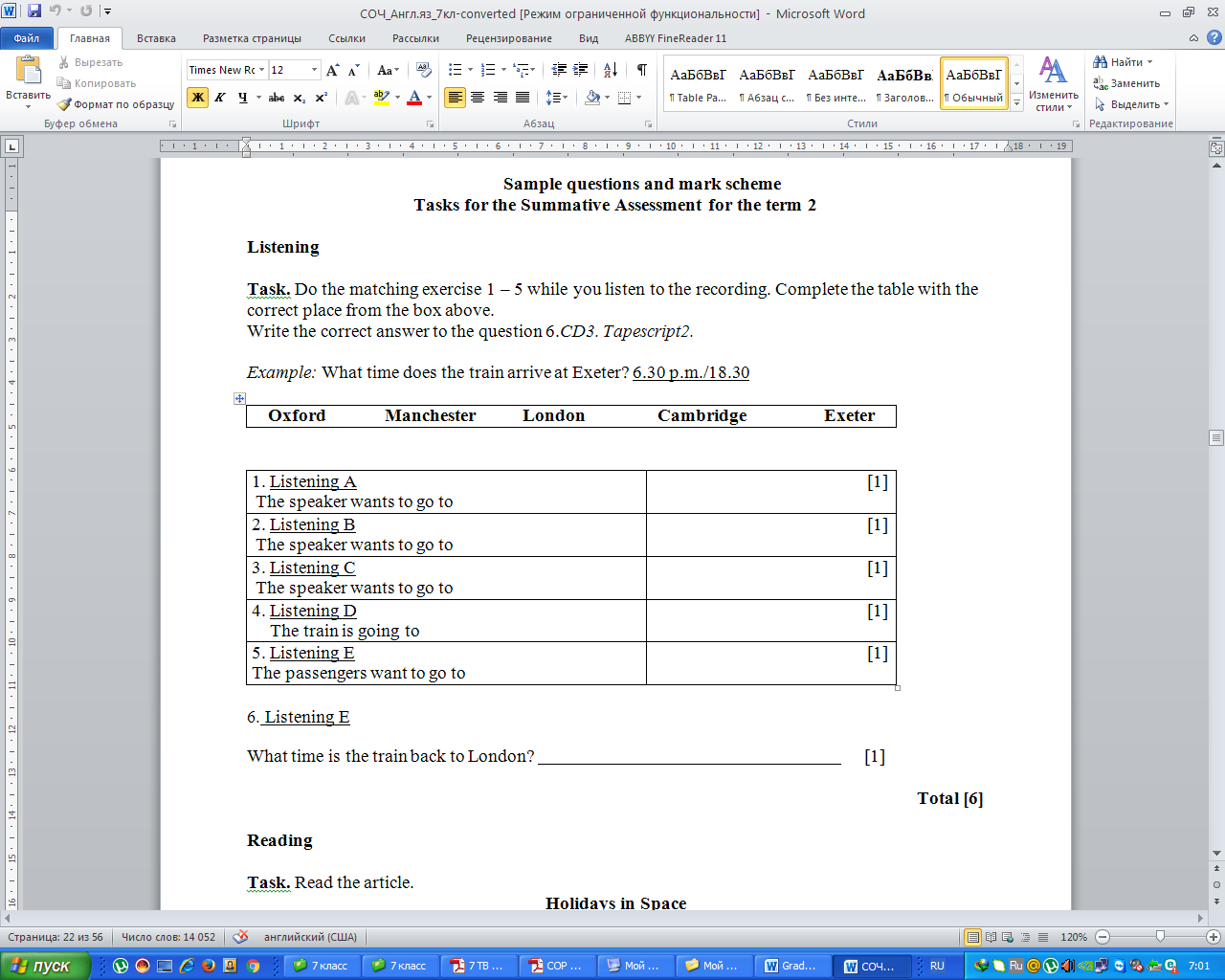
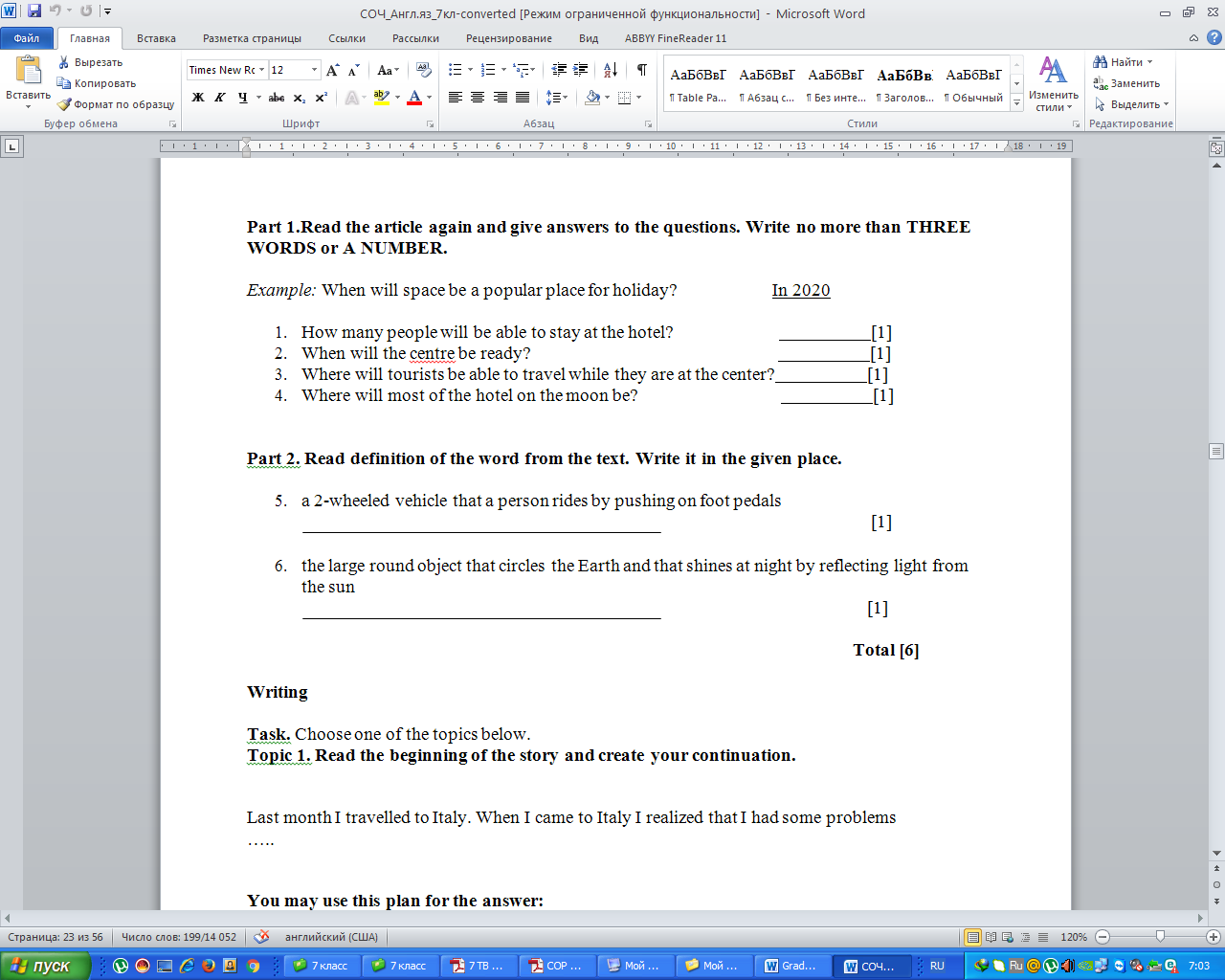

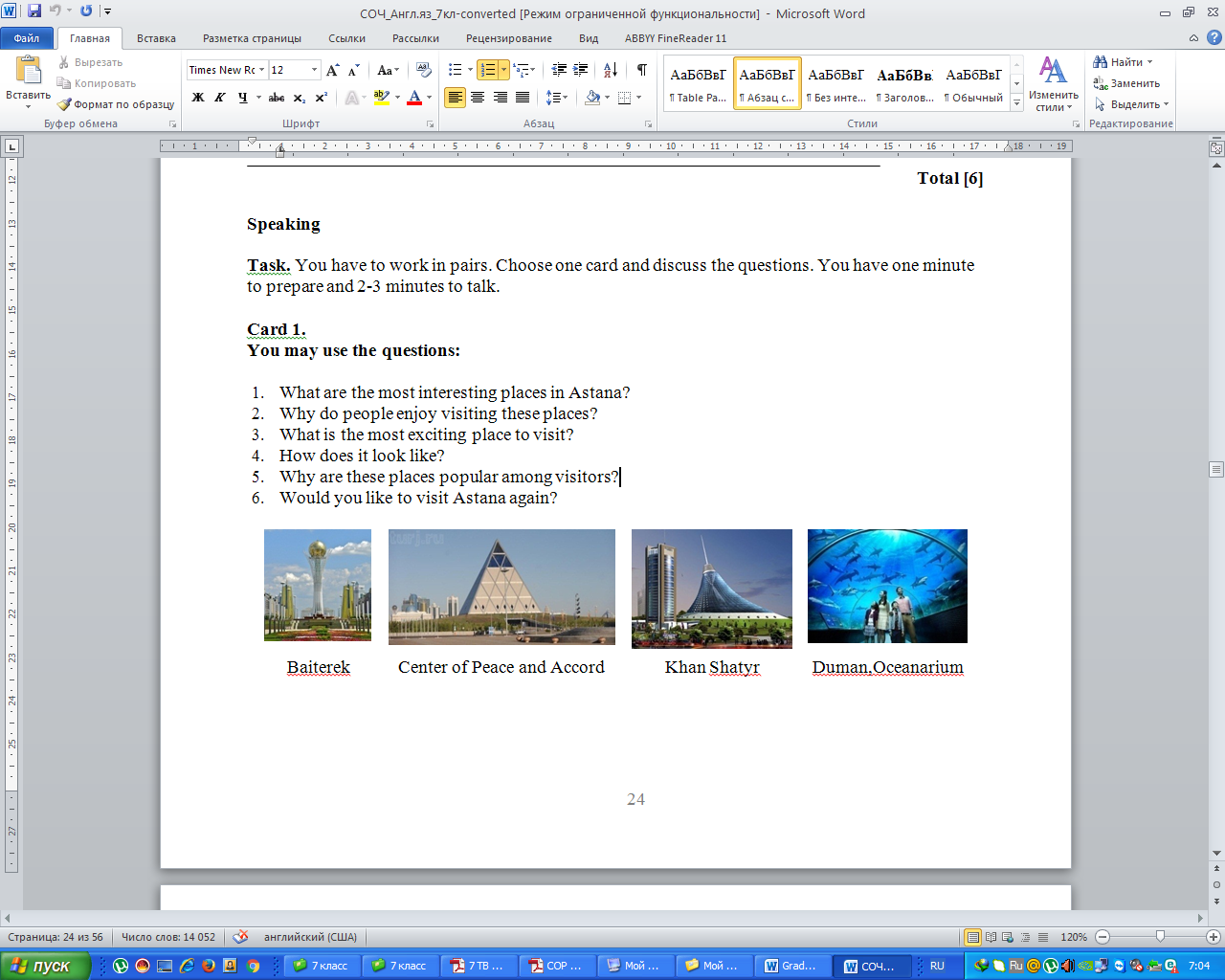
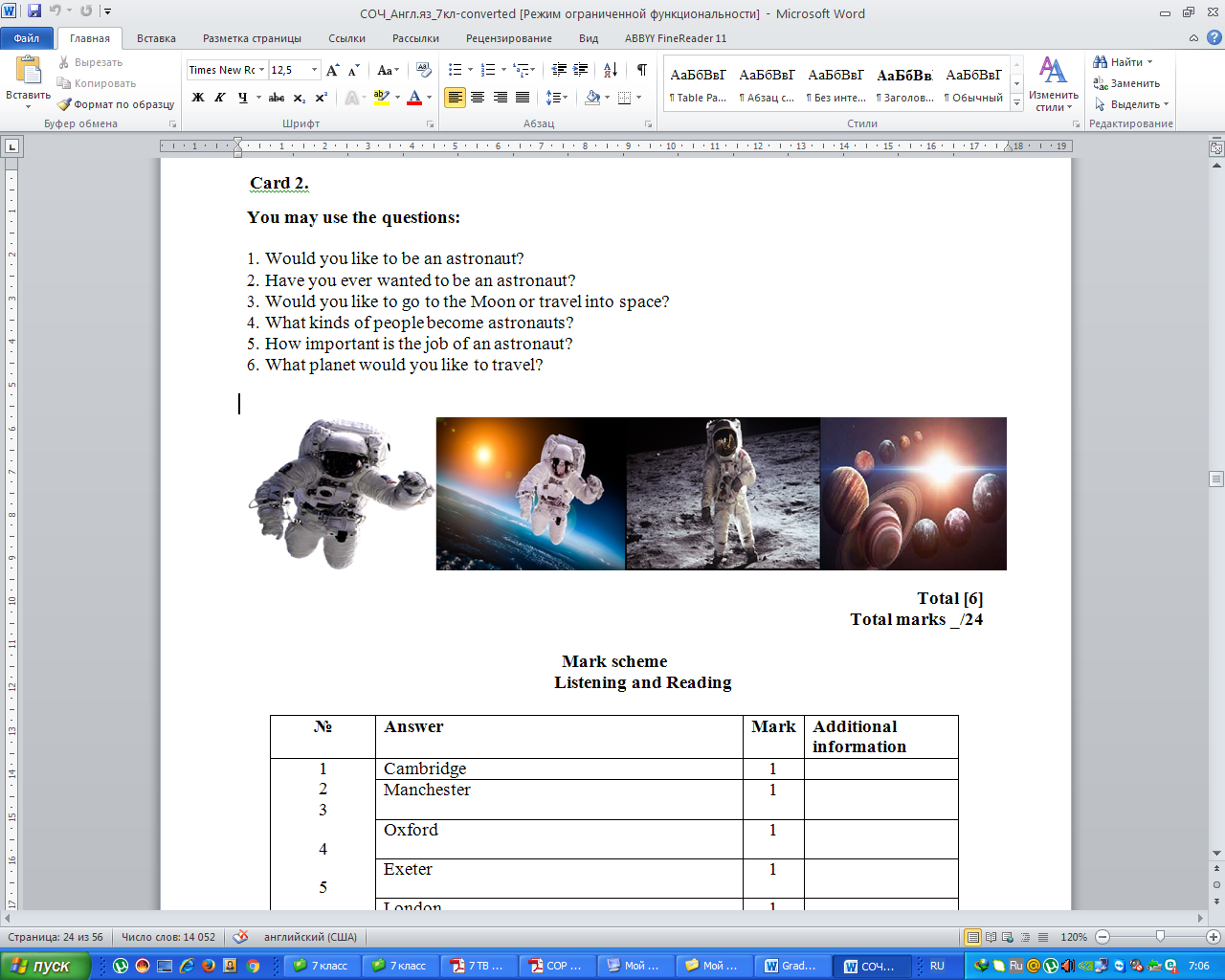
MODULE 4
Lesson plan
LESSON: Module 4 Lesson 12 Review |
School: |
||||
Date: |
Teacher name: |
||||
CLASS: |
Number present: |
absent: |
|||
Learning objectives(s) that this lesson is contributing to |
7.C2 use speaking and listening skills to provide sensitive feedback to peers
|
||||
Lesson objectives |
All learners will be able to: |
||||
identify some specific information in the text and use information found online to write a paragraph with some correct linking between ideas. |
|||||
Most learners will be able to: |
|||||
identify most specific information in the text and use information found online to write a paragraph with mostly correct linking between ideas.
|
|||||
Some learners will be able to: |
|||||
identify all specific information in the text and use information found online to write a paragraph with mostly correct linking between ideas.
|
|||||
Previous learning |
names of animals vocabulary related to animal habitats |
||||
Plan |
|||||
Planned timings |
Planned activities |
Resources |
Teacher
|
||
Beginning the lesson
|
To introduce the topic and predict the content of the text • Direct Ss’ attention to the pictures and elicit a variety of guesses for reasons why these animals may be endangered from Ss around the class. Write two on the board. • Play the recording. Ss listen and follow the text in their books and check if their guesses were correct. |
Class CD |
|
||
|
Main Activities
|
To read for specific information • Ask Ss to read the statements 1-5 and then allow Ss some time to read the text and mark their answers. • Check Ss’ answers. • Go through the Check these words box with Ss. • Read aloud the Famous quotation and explain/ elicit what it means. (It is important to value and conserve wildlife.)
To consolidate information in a text; to express an opinion Read the rubric aloud and elicit answers from various Ss around the class. |
|
|
|
||||
|---|---|---|---|---|---|---|---|---|---|
|
To revise material taught in the module; to write a quiz. • Explain the task and allow Ss time to look through the module and think of quiz questions in pairs. • Tell Ss they can use the quiz in the previous task as a model. • Ss swap their quizzes with another pair, do the quiz, and then report back to the class. |
|
|
|
|||||
|
Vocabulary Exercise 1 ANSWERS 1 across 2 off 3 through 4 up 5 over 6 down Exercise 2 ANSWERS 1 pole 2 lake 3 forest 4 valley 5 desert 6 ocean Language focus Exercise 3 ANSWERS 1 He was cycling. He wasn’t running. 2 She was reading a magazine. She wasn’t listening to music. 3 They weren’t cleaning the floor. They were clearing the table. 4 The cat wasn’t swimming. It was climbing up a tree. 5 He was making his bed. He wasn’t doing his homework. 6 They weren’t watching a DVD. They were playing in a group. Exercise 4 ANSWERS 1 Was he wearing a helmet? Yes, he was. 2 Was she reading a book? No, she wasn’t. 3 Were they helping at home? Yes, they were. 4 Was the cat jumping over a tree? No, it wasn’t. 5 Was he listening to music? Yes, he was. 6 Were they singing in a group? No, they weren’t. Exercise 5 ANSWERS 1 fell, was cycling 2 were doing, started 3 4 weren’t listening, called
|
|
|
|
|||||
|
Ending the lesson |
Assessment. Traffic light. Feedback. The teacher gives comments about learners work and awards learner. Students will choose one and put on the board their stickers. |
|
|
|
||||
|
Additional information |
|
|||||||
Differentiation – how do you plan to give more support? How do you plan to challenge the more able learners? |
Assessment – how are you planning to check learners’ learning? |
Cross-curricular
links |
|||||||
encourage less able learners to show another learner where they think the answer to reading question is in the text before deciding on answer |
monitor reading comprehension with thumbs up and down technique and follow-up questioning |
values link: caring for the environment |
|||||||
|
encourage more able learners to extend their writing to two paragraphs |
take in learners’ extended writing for assessment |
|
|
|||||
Reflection
Were the lesson objectives/learning objectives realistic? Did I stick to timings? What changes did I make from my plan and why? |
Answer the most relevant questions from the box on the left about your lesson. |
MODULE 9
Lesson plan
LESSON: Module 9 Lesson 1 Sherlock Holmes: The Blue Diamond |
School: |
||||
Date: |
Teacher name: |
||||
CLASS: |
Number present: |
absent: |
|||
Learning objectives(s) that this lesson is contributing to |
7.C9 use imagination to express thoughts, ideas, experiences and feelings 7.R4 read independently a limited range of short simple fiction and non-fiction texts |
||||
Lesson objectives |
All learners will be able to: |
||||
identify some specific information and key ideas in texts and use some target language to express views and comment on some views of others with support |
|||||
Most learners will be able to: |
|||||
identify most specific information and key ideas in texts and use a range of target language to express views and comment on some views of others with support
|
|||||
Some learners will be able to: |
|||||
identify all specific information and most key ideas in texts and use a range of target language to express views and comment on views of others with little support
|
|||||
Previous learning |
general adjectives used to describe non-fictional characters |
||||
Plan |
|||||
Planned timings |
Planned activities |
|
Teacher
|
||
Beginning the Lesson
|
Read the title of the module Reading for Pleasure and ask Ss to suggest what it means. Go through the What’s in this module? section and stimulate a discussion to prompt Ss’ interest in the module.
To present and practise character adjectives • Draw Ss’ attention to the pictures. • Present the example and ask Ss to work in pairs and make sentences following the example. • Monitor the activity around the class. • Elicit answers from various Ss around the class. • Play the video for Ss and elicit their comments at the end. |
Video |
|
||
|
Main Activities
|
To introduce the topic; to read for specific information • Elicit what, if anything, Ss know about Sir Arthur Conan Doyle and the famous character he created. • Ask Ss to read the biography and elicit answers around the class. To read for specific information • Explain that the plot of a book/film is the series of events that make up the story. • Allow Ss time to read the plot and answer the questions. • Elicit answers around the class |
|
|
|
||||
|---|---|---|---|---|---|---|---|---|---|
|
To read for specific information • Explain the task. • Elicit Ss’ guesses as to what happens. Play the recording. Ss listen and read the text to find out.
To listen and watch for confirmation Play the video for Ss and elicit their comments about whether their guesses were correct. |
Video |
|
|
|||||
|
To read for specific information • Explain the task. • Allow Ss time to read the text again and complete the task. • Check Ss’ answers.
To develop critical thinking skills • Explain the task and the adjectives. • Ask Ss to work in pairs and answer the questions from Watson’s point of view. • Monitor the activity around the class. • Ask some pairs to present their answers to the class.
|
|
|
|
|||||
|
Ending the lesson |
To consolidate vocabulary from the text • Explain the task. • Allow Ss time to fill in the gaps with the correct verbs. • Check Ss’ answers. |
|
|
|
||||
|
Additional information |
|
|||||||
Differentiation – how do you plan to give more support? How do you plan to challenge the more able learners? |
Assessment – how are you planning to check learners’ learning? |
Cross-curricular
links |
|||||||
prompt less able learners to engage in whole class checking and plenary activity with supportive questioning |
check pronunciation of new words and reinforce with drilling where necessary |
cross curricular links: languages [world literature] |
|||||||
|
challenge more able learners to come up with a strategy for effectively recording different types of vocabulary presented in this lesson |
|
|
|
|||||
Reflection
Were the lesson objectives/learning objectives realistic?
Did I stick to timings?
What changes did I make from my plan and why?
|
Answer the most relevant questions from the box on the left about your lesson. |
MODULE 9
Lesson plan
LESSON: Module 9Lesson 2 Sherlock Holmes: The Blue Diamond |
School: |
||||
Date: |
Teacher name: |
||||
CLASS: |
Number present: |
absent: |
|||
Learning objectives(s) that this lesson is contributing to |
7.C2 use speaking and listening skills to provide sensitive feedback to peers 7.S3 give an opinion at sentence and discourse level on an increasing range of general and curricular topics |
||||
Lesson objectives |
All learners will be able to: |
||||
use some target language correctly in response to speaking and writing task prompts |
|||||
Most learners will be able to: |
|||||
use a range of target language correctly in response to speaking and writing task prompts
|
|||||
Some learners will be able to: |
|||||
use a range of target language correctly in response to a wider range of speaking and writing task prompts
|
|||||
Previous learning |
adverbs for talking about sequence of events vocabulary for character motivations from previous lesson |
||||
Plan |
|||||
Planned timings |
Planned activities |
|
Teacher
|
||
Beginning the lesson
|
To consolidate and classify new vocabulary • Explain the task and explain the meaning of noun, adjective, verb and adverb. • Say or write on the board: The beautiful girl speaks quickly. Elicit the parts of speech, e.g. A noun is a thing (e.g. chair, girl, etc.). An adjective describes a thing (e.g. beautiful, happy, etc.). A verb is what we do (e.g. eat, speak, run, etc.) An adverb modifies a verb (e.g. He runs quickly, he eats slowly, etc.). Elicit more examples from Ss. • Allow Ss time to decide which part of speech each word in bold is. • Check Ss’ answers |
|
|
||
|
Main Activities
|
To present narrative point of view • Read the theory box aloud. Elicit further examples of first- and third-person narrative from Ss. • Allow Ss time to read the text again to find the narrative point of view and who the narrator is. • Check Ss’ answers. |
|
|
|
||||
|---|---|---|---|---|---|---|---|---|---|
|
To summarise a text and consolidate vocabulary • Ask Ss to work in pairs and summarise the text using the phrases provided. • Monitor the activity around the class. • Ask some Ss to present their answers to the class. |
|
|
|
|||||
|
To predict the outcome of a story • Divide the class into small groups and ask them to discuss what they think will happen next in the story. • Monitor the activity around the class. • Ask groups to present their answers.
|
|
|
|
|||||
|
To write a short paragraph for the back of a book • Explain the task. Allow Ss time to write their texts. Ss can work in closed pairs. |
|
|
|
|||||
|
Ending the lesson |
• Ss present their answers to the class. |
|
|
|
||||
|
Additional information |
|
|||||||
Differentiation – how do you plan to give more support? How do you plan to challenge the more able learners? |
Assessment – how are you planning to check learners’ learning? |
Cross-curricular
links |
|||||||
prompt less able learners to engage in whole class checking and plenary activity with supportive questioning provide sentence starters for final writing task
|
monitor for spoken accuracy in plot prediction task and use a range of oral correction techniques |
cross curricular links: languages [world literature] |
|||||||
|
challenge more able learners to structure final writing to include key words |
take in extended writing to assess |
|
|
|||||
Reflection
Were the lesson objectives/learning objectives realistic?
Did I stick to timings?
What changes did I make from my plan and why?
|
Answer the most relevant questions from the box on the left about your lesson. |
MODULE 9
Lesson plan
LESSON: Module 9 Lesson 3 The Lost World |
School: |
||||
Date: |
Teacher name: |
||||
CLASS: |
Number present: |
absent: |
|||
Learning objectives(s) that this lesson is contributing to |
7.C9 use imagination to express thoughts, ideas, experiences and feelings 7.R4 read independently a limited range of short simple fiction and non-fiction texts |
||||
Lesson objectives |
All learners will be able to: |
||||
identify some specific information and key ideas from the text and use some target vocabulary to recount some main points from the story |
|||||
Most learners will be able to: |
|||||
identify most specific information and some key ideas from the text and use a range of target vocabulary to recount some main points from the story
|
|||||
Some learners will be able to: |
|||||
identify most specific information and key ideas from the text and use a range of target vocabulary to recount the main points and some detailed ideas from the story
|
|||||
Previous learning |
character and plot vocabulary from previous section |
||||
Plan |
|||||
Planned timings |
Planned activities |
|
Teacher
|
||
Beginning the lesson
|
To introduce the topic; to read for specific information Elicit what Ss know about H.G. Wells and the stories he wrote. Allow time for Ss to read the biography and then elicit answers around the class.
|
|
|
||
|
Main Activities
|
To predict the content of a text; to listen and read for confirmation • Draw Ss’ attention to the pictures and elicit Ss’ guesses as to what happens in the extract. • Ss read and listen to the text to find out. • Check Ss’ answers |
Video
|
|
|
||||
|---|---|---|---|---|---|---|---|---|---|
|
To read for specific information • Ask Ss to read the questions and the answer choices. • Allow Ss time to read the text again and complete the task. • Check Ss’ answers.
To read for gist/specific information • Explain the task. • Elicit answers to the questions from Ss around the class. |
|
|
|
|||||
|
To express a personal opinion • Explain the task. • Elicit answers from Ss about how they feel about the Morlocks. • Ask Ss to give reasons for their answers.
To practise new vocabulary • Explain the task. Allow Ss some time to fill in the gaps. • Check Ss’ answers. |
|
|
|
|||||
|
Ending the lesson
|
To summarise a story • Decide whether Ss will say or write the task and then allow Ss time to write or say the story around the class using the pictures in Ex. 2 to help them. • Ss prepare their answers. • Monitor the activity around the class. • Alternatively, assign the task as HW and have the students present their answers in the next lesson. |
|
|
|
||||
|
Additional information |
|
|||||||
Differentiation – how do you plan to give more support? How do you plan to challenge the more able learners? |
Assessment – how are you planning to check learners’ learning? |
Cross-curricular
links |
|||||||
provide support for less able learners in recounting task in the form of a plot line template |
use thumbs up and down technique and follow-up questioning to check learner comprehension |
cross-curricular links: languages [world literature] |
|||||||
|
challenge more able learners to explain connections between different elements in the story when recounting |
monitor learner language for accuracy in opinion feedback task and ask other learners to peer correct errors |
|
|
|||||
Reflection
Were the lesson objectives/learning objectives realistic?
Did I stick to timings?
What changes did I make from my plan and why?
|
Answer the most relevant questions from the box on the left about your lesson. |
MODULE 9
Lesson plan
LESSON: Module 9 Lesson 4 The Lost World |
School: |
||||
Date: |
Teacher name: |
||||
CLASS: |
Number present: |
absent: |
|||
Learning objectives(s) that this lesson is contributing to |
7.C2 use speaking and listening skills to provide sensitive feedback to peers 7.S3 give an opinion at sentence and discourse level on an increasing range of general and curricular topics |
||||
Lesson objectives |
All learners will be able to: |
||||
use some target language to express some ideas about the development of the story and link some description and events coherently in their writing |
|||||
Most learners will be able to: |
|||||
use a range of target language to express some ideas about the development of the story and use a range of language to link description and events coherently in their writing
|
|||||
Some learners will be able to: |
|||||
use a range of target language to express both general and detailed ideas about the development of the story and use a range of language to link description, events and comment coherently in their writing
|
|||||
Previous learning |
narrative sequencing words vocabulary for talking about plot and character |
||||
Plan |
|||||
Planned timings |
Planned activities |
|
Teacher
|
||
Beginning the lesson
|
To predict the outcome of a story • Divide Ss into small groups and ask them to predict what will happen in the story. • Check Ss’ answers around the class.
|
|
|
||
|
Main Activities
|
To watch for confirmation Play the video for Ss and elicit their comments about whether their guesses were correct. |
Video |
|
|
||||
|---|---|---|---|---|---|---|---|---|---|
|
To develop and personalise the topic • Put Ss into groups or have them choose their own groups. • Explain the task and direct Ss’ attention to the prompts. • Tell Ss that they need to use the simple past to describe what happened. • Allow Ss time to draw their time machines and complete their descriptions in class or, alternatively, as HW. • Have Ss present their time machines and descriptions to the rest of the class.
|
|
|
|
|||||
|
Ending the lesson |
Display Ss’ drawings in the classroom. |
|
|
|
||||
|
Additional information |
|
|||||||
Differentiation – how do you plan to give more support? How do you plan to challenge the more able learners? |
Assessment – how are you planning to check learners’ learning? |
Cross-curricular
links |
|||||||
provide support for less able learners through sentence starters in their written task |
in oral speculation of story outcome monitor use of linkers for delayed feedback to whole class on board |
cross-curricular links: languages [world literature] |
|||||||
|
encourage more able learners to include description and comment in their speculative narrative as well as details of place and events. |
take in pieces of extended writing |
|
|
|||||
Reflection
Were the lesson objectives/learning objectives realistic?
Did I stick to timings?
What changes did I make from my plan and why?
|
Answer the most relevant questions from the box on the left about your lesson. |
MODULE 9
Lesson plan
LESSON: Module 9 Lesson 5 The Last of the Mohicans |
School: |
||||
Date: |
Teacher name: |
||||
CLASS: |
Number present: |
absent: |
|||
Learning objectives(s) that this lesson is contributing to |
7.C9 use imagination to express thoughts, ideas, experiences and feelings 7.R4 read independently a limited range of short simple fiction and non-fiction texts |
||||
Lesson objectives |
All learners will be able to: |
||||
identify some specific information and thematic connections in text and use some target vocabulary in identifying synonyms |
|||||
Most learners will be able to: |
|||||
identify most specific information and some thematic connections in text and use a range of target vocabulary in identifying synonyms
|
|||||
Some learners will be able to: |
|||||
identify all specific information and explain a range of thematic connections in text and use a range of target vocabulary in identifying synonyms
|
|||||
Previous learning |
vocabulary related to explaining plot character and theme in literature from previous sections |
||||
Plan |
|||||
Planned timings |
Planned activities |
Excel
|
Teacher
|
||
Beginning the lesson
|
To introduce the topic; to read for specific information • Explain the task. • Allow Ss time to read through the short text and answer the questions. • Check Ss’ answers.
|
|
|
||
|
Main Activities
|
To listen and read for specific information • Explain the task. • Play the recording. Ss listen and read to find out the answers to the questions. • Elicit answers from Ss around the class.
To read for specific information • Explain the task. Allow Ss time to answer the questions. • Elicit answers from Ss around the class.
To understand themes in a story; to develop critical thinking skills • Explain the task. • Allow Ss time to read the text again and develop their answers. • Check Ss’ answers.
|
Class CD
|
|
|
||||||||||
|---|---|---|---|---|---|---|---|---|---|---|---|---|---|---|---|
|
To practise/consolidate new vocabulary • Give Ss time to look up the words in the Check these words box and elicit their meanings. • Explain the task. Allow Ss time to fill in the gaps. • Check Ss’ answers. To consolidate new vocabulary through synonyms • Explain the task. • Allow Ss time to match the words in bold to the synonymous words/phrases in the list.
|
|
|
|
|||||||||||
|
Ending the lesson |
• Check Ss’ answers.
|
|
|
|
||||||||||
|
Additional information |
|
|||||||||||||
Differentiation – how do you plan to give more support? How do you plan to challenge the more able learners? |
Assessment – how are you planning to check learners’ learning? |
Cross-curricular
links |
|||||||||||||
support less able learners in comprehension task by encouraging them to scan text quickly to find a section of the text that contains the answer. |
in oral explanation of themes in the story monitor use of linkers for delayed corrective feedback to whole class on board |
|
|||||||||||||
|
challenge more able learners to explain thematic connections between different elements in the story or between this legend and others |
monitor learner pronunciation of new words from text and drill and ask learners to mark word stress |
|
|
|||||||||||
Reflection
Were the lesson objectives/learning objectives realistic?
Did I stick to timings?
What changes did I make from my plan and why?
|
Answer the most relevant questions from the box on the left about your lesson. |
MODULE 9
Lesson plan
LESSON: Module 9 Lesson 6 The Last of the Mohicans |
School: |
||||
Date: |
Teacher name: |
||||
CLASS: |
Number present: |
absent: |
|||
Learning objectives(s) that this lesson is contributing to |
7.C2 use speaking and listening skills to provide sensitive feedback to peers 7.S3 give an opinion at sentence and discourse level on an increasing range of general and curricular topics |
||||
Lesson objectives |
All learners will be able to: |
||||
identify some main ideas in text and use some target language in productive tasks to communicate some relevant ideas correctly with support |
|||||
Most learners will be able to: |
|||||
identify most main ideas in text and use a range of target language in productive tasks to communicate some relevant ideas correctly with support
|
|||||
Some learners will be able to: |
|||||
identify most main ideas in text and use a range of target language in productive tasks to communicate mostly relevant ideas correctly with little support
|
|||||
Previous learning |
vocabulary related to explaining plot character and theme in literature from previous sections |
||||
Plan |
|||||
Planned timings |
Planned activities |
|
Teacher
|
||
Beginning the lesson
|
To present the literary genre ‘epic’ • Read out the theory box and the examples. • Elicit further examples from Ss. To consolidate understanding of the literacy genre ‘epic’ • Give Ss time to make notes under the headings. • Check Ss’ answers. |
|
|
||
|
Main Activities
|
.To summarise a story • Decide whether Ss will say or write the task and then allow Ss time to list the main events and write or say the story around the class using their notes. • Monitor the activity around the class. • Alternatively, assign the task as HW and have the students present their answers in the next lesson. |
|
|
|
||||
|---|---|---|---|---|---|---|---|---|---|
|
To draw a comic strip; to develop creative skills • Explain the task. Ask Ss to work in groups and produce the 15 frames. • Display the results to the class or on a noticeboard. |
|
|
|
|||||
|
To develop creative skills • Explain the task. • Have Ss work in groups and brainstorm answers to the questions. • Make notes and develop a contemporary version of the story. • Ask groups to present their stories to the class.
|
|
|
|
|||||
|
Ending the lesson
|
The class vote to decide on the most interesting story. |
|
|
|
||||
|
Additional information |
|
|||||||
Differentiation – how do you plan to give more support? How do you plan to challenge the more able learners? |
Assessment – how are you planning to check learners’ learning? |
Cross-curricular
links |
|||||||
monitor less able groups and participate and prompt in their brainstorming activity |
monitor learner language for accuracy and range in their final three tasks. Note particularly where they struggle to express connections between story frames and events. Give whole class feedback |
cross-curricular links: Kazakh literature |
|||||||
|
challenge learners to present their modern epic in the form of a rap |
|
|
|
|||||
Reflection
Were the lesson objectives/learning objectives realistic?
Did I stick to timings?
What changes did I make from my plan and why?
|
Answer the most relevant questions from the box on the left about your lesson. |
MODULE 9
Lesson plan
LESSON: Module 9 Lesson 7 Nicholas Nickleby |
School: |
||||
Date: |
Teacher name: |
||||
CLASS: |
Number present: |
absent: |
|||
Learning objectives(s) that this lesson is contributing to |
7.C9 use imagination to express thoughts, ideas, experiences and feelings 7.R4 read independently a limited range of short simple fiction and non-fiction texts |
||||
Lesson objectives |
All learners will be able to: |
||||
identify some specific information in the text and respond to some prompts correctly about its main themes and genre questions with support |
|||||
Most learners will be able to: |
|||||
identify most specific information in the text and respond to a range of prompts correctly about its main themes and genre questions with support
|
|||||
Some learners will be able to: |
|||||
identify all specific information in the text and respond to a range of prompts correctly about its main themes and genre questions with little support
|
|||||
Previous learning |
vocabulary related to explaining plot, theme and genre in literature from previous sections |
||||
Plan |
|||||
Planned timings |
Planned activities |
|
Teacher
|
||
Beginning the lesson
|
To predict the content of the text; to listen and read for specific information • Ask Ss to look at the picture and read the title. • Elicit Ss’ guesses about how the garden was created. • Play the recording. Students listen and read the text to find out the answers.
Play the video for Ss and elicit their comments at the end.
|
Class CD
Video |
|
||
|
Main Activities
|
To read for specific information • Ask Ss to read the questions and the answer choices. • Allow Ss time to read the text again and choose their answers. Ss can work in closed pairs. • Check Ss’ answers. To express a personal opinion on the topic • Explain the task. Ss work in closed pairs and discuss their opinions. • Monitor the activity around the class. • Ask some Ss to share their answers with the class. |
|
|
|
|||
|---|---|---|---|---|---|---|---|---|
|
To consolidate new vocabulary • Give Ss time to look up the words in the Check these words box and elicit their meanings. • Explain the task. Allow Ss time to complete it. • Check Ss’ answers.
|
|
|
|
||||
|
Ending the lesson
|
• Elicit further examples of folk tales from Ss around the class.
|
|
|
|
|||
|
Additional information |
|
||||||
Differentiation – how do you plan to give more support? How do you plan to challenge the more able learners? |
Assessment – how are you planning to check learners’ learning? |
Cross-curricular
links |
||||||
support less able learners in productive tasks by preparing prompt or sentence starter cards |
monitor learners’ pronunciation of new words and ask learners to mark word stress |
cross-curricular links: languages [world literature] |
||||||
|
challenge more able learners to link themes in this folktale to themes in others they know |
when eliciting opinions monitor extent to which learners can expand on answers when prompted |
|
|
||||
Reflection
Were the lesson objectives/learning objectives realistic?
Did I stick to timings?
What changes did I make from my plan and why?
|
Answer the most relevant questions from the box on the left about your lesson. |
MODULE 9
Lesson plan
LESSON: Module 9 Lesson 8 Romeo and Juliet |
School: |
||||
Date: |
Teacher name: |
||||
CLASS: |
Number present: |
absent: |
|||
Learning objectives(s) that this lesson is contributing to |
7.C9 use imagination to express thoughts, ideas, experiences and feelings 7.R4 read independently a limited range of short simple fiction and non-fiction texts |
||||
Lesson objectives |
All learners will be able to: |
||||
make some effective notes and use a limited range of target vocabulary to talk about some features of folktales and describe one simply |
|||||
Most learners will be able to: |
|||||
make mostly effective notes and use a range of target vocabulary to talk about some features of folktale and describe a folktale concisely |
|||||
Some learners will be able to: |
|||||
make mostly effective notes and use a range of target vocabulary to talk about a variety of features of folktales and describe a folktale concisely |
|||||
Previous learning |
vocabulary related to explaining plot, theme and genre in literature from previous sections |
||||
Plan |
|||||
Planned timings |
Planned activities |
|
Teacher
|
||
Beginning the lesson
|
. To present folk tales • Read out the theory and the examples.
|
|
|
||
|
|
To make notes about the elements of folk tales • Explain the task. Allow Ss time to complete the spidergram. • Check Ss’ answers
To consolidate understanding of folk tales • Ask Ss to work in groups and discuss what makes t
• Refer Ss to their answers in Ex. 6a. • Monitor the activity around the class, checking for vocabulary and pronunciation. • Ask Ss to present their answers to the class
|
|
|
|
||||
|---|---|---|---|---|---|---|---|---|---|
|
To present a folk tale to the class • Explain the task. Divide the class into groups and allow them time to research a folk tale, and list the events in the order they happened. • Ask groups to present the folktale to the class. |
|
|
|
|||||
|
To draw a picture of the magic garden • Allow Ss time to draw a picture of the Magic Garden. |
|
|
|
|||||
|
Ending the lesson |
• Present Ss’ pictures in class and/or display on a noticeboard. |
|
|
|
||||
|
Additional information |
|
|||||||
Differentiation – how do you plan to give more support? How do you plan to challenge the more able learners? |
Assessment – how are you planning to check learners’ learning? |
Cross-curricular
links |
|||||||
provide less able learners with a grid to complete for task 6b to prompt discussion |
monitor learners’ discussions make notes on pronunciation and use of target language for whole class feedback |
cross-curricular links: languages [world literature] |
|||||||
|
provide learners with extra challenge in presenting their pictures to class – give them five words/phrases connected to folktale genre for them to use in the presentation |
use a checklist to check accuracy and delivery of learners’ presentation of their pictures |
|
|
|||||
ReflectionWere the lesson objectives/learning objectives realistic? Did I stick to timings? What changes did I make from my plan and why? |
Answer the most relevant questions from the box on the left about your lesson. |
||||||||
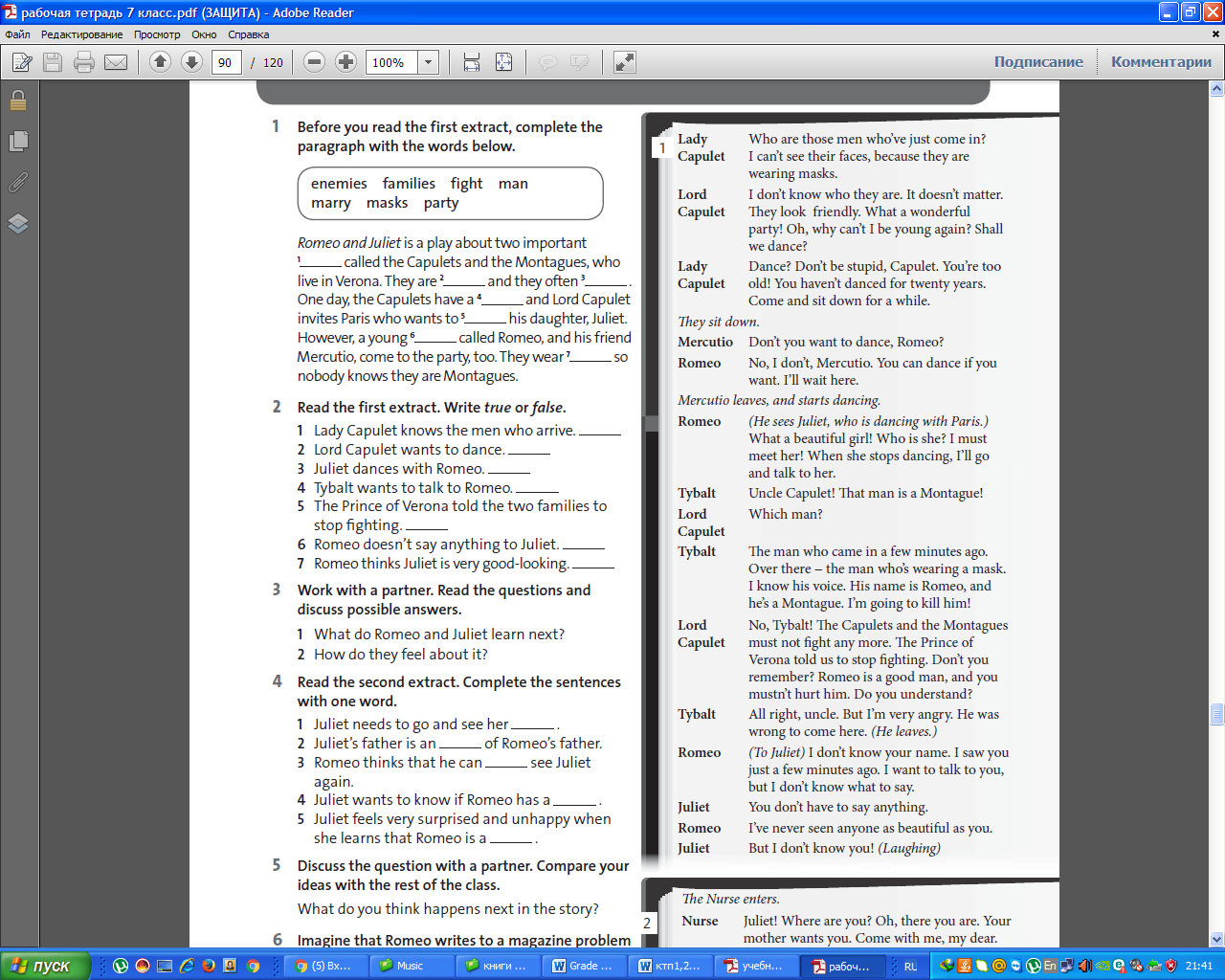 his
a good example of a folk tale.
MODULE 9
Lesson plan
LESSON: Module 9 Lesson 9 Emma |
School: |
||||
Date: |
Teacher name: |
||||
CLASS: |
Number present: |
absent: |
|||
Learning objectives(s) that this lesson is contributing to |
7.C9 use imagination to express thoughts, ideas, experiences and feelings 7.R4 read independently a limited range of short simple fiction and non-fiction texts |
||||
Lesson objectives |
All learners will be able to: |
||||
use some new language learnt in the Module to respond to prompts and produce simple creative outcomes correctly |
|||||
Most learners will be able to: |
|||||
use a range of new language learnt in the Module to respond to prompts and produce simple creative outcomes correctly |
|||||
Some learners will be able to: |
|||||
use a range of new language learnt in the Module to respond to prompts and produce more detailed creative outcomes correctly |
|||||
Previous learning |
vocabulary related to explaining character, plot, theme and genre in literature from previous sections |
||||
Plan |
|||||
Planned timings |
Planned activities |
|
Teacher
|
||
Beginning the lesson
|
To understand values • Read out the task and ask Ss to choose which reasons are important for them. • Elicit answers from Ss around the class. |
|
|
||
|
|
To create characters for a detective story • Explain the task. Ask Ss to work in pairs and think of two characters for a detective story, a good one and a bad one. • Allow Ss time to think of names, where the characters live, what they look like and what they are like.
• |
|
|
|
||||
|---|---|---|---|---|---|---|---|---|---|
|
To consolidate information from the module • Explain the task. Allow Ss some time to read the sentences and decide whether each one is true or false. • Alternatively, allow Ss to look through the module and find the relevant information to mark the
s |
|
|
|
|||||
|
To prepare a quiz; to revise information from the module • Explain the task and allow Ss time to look through Module 5 and think of quiz questions. • Ss swap their quizzes, do them and then report back to the class. |
|
|
|
|||||
|
To predict missing words; • Explain the task. • Ss work in pairs and complete the gaps. • Play the video for S’s. |
Video |
|
|
|||||
|
|
To listen for specific information Play the recording. Ss listen and check their answers to Ex. 5. |
Class CD |
|
|
||||
|
Ending the lesson |
To personalise the topic • Elicit Ss’ responses to the song |
|
|
|
||||
|
Additional information |
|
|||||||
Differentiation – how do you plan to give more support? How do you plan to challenge the more able learners? |
Assessment – how are you planning to check learners’ learning? |
Cross-curricular
links |
|||||||
monitor learner question writing in groups and highlight for less able learners where they should self-correct errors |
monitor learner questions for accuracy and encourage them to self-correct |
cross-curricular links: languages [world literature] |
|||||||
|
challenge more able learners to create anecdotes about the characters they invent |
|
values link : understanding the moral of stories |
|
|||||
 Ask
Ss to present their characters to the class.
 tatements
correctly. Check Ss’ answers.
Reflection Were the lesson objectives/learning objectives realistic? Did I stick to timings? What changes did I make from my plan and why? |
Answer the most relevant questions from the box on the left about your lesson. |
MODULE 9
Lesson plan
LESSON: Module 9 Lesson 10 Summative Control work 5 |
School: |
||||
Date: |
Teacher name: |
||||
CLASS: |
Number present: |
absent: |
|||
Learning objectives(s) that this lesson is contributing to |
7.C9 use imagination to express thoughts, ideas, experiences and feelings 7.R4 read independently a limited range of short simple fiction and non-fiction texts |
||||
Lesson objectives |
All learners will be able to: |
||||
use some new language learnt in the Module to respond to prompts and produce simple creative outcomes correctly |
|||||
Most learners will be able to: |
|||||
use a range of new language learnt in the Module to respond to prompts and produce simple creative outcomes correctly |
|||||
Some learners will be able to: |
|||||
use a range of new language learnt in the Module to respond to prompts and produce more detailed creative outcomes correctly |
|||||
Previous learning |
vocabulary related to explaining character, plot, theme and genre in literature from previous sections |
||||
Plan |
|||||
Planned timings |
Planned activities |
|
Teacher
|
||
Beginning the lesson
|
Greeting Make a circle choose the cards, divided into two groups. Warm up Task1.Each learner of the group take the cards with the questions, find flexibility answers 1Where did Shakespeare born? 2.With whom did live William Shakespeare? 3. Where and when did Shakespeare die? 4. How many plays did he write? 5.What is your favorite plays? Descriptor: Read the questions Find the flexibility answer
|
|
|
||
|
|
Task 2. Make up the sentences using the verbs in the Past Simple. to begin To move to write to live
to die to born
Descriptor: task 2 A learners Describe the pictures Make up sentences, use the verbs in the Past Simple.
3.Put the compound and participle adjectives into the gaps.
Descriptor: Task 3 C learners Find the compound and participle adjective Put the adjectives into the gaps. This task is for C learners |
|
|
|
|||||
|---|---|---|---|---|---|---|---|---|---|---|
|
|
|
||||||||
|
Listening Listen to the story. Students listen to the short story of the novel “Oliver Twist”
The
novel “Oliver Twist” was written by Charles Dickens
(1812-1870). The novel is about an orphan boy whose childhood was
marked by poverty and unhappiness. Struggling against the life
problems Oliver manages to find out his origin and gain a loving
family. Oliver
was born in a workhouse in the first half of the nineteenth
century. His mother died during his birth, and he was sent to an
orphanage, where he was poorly treated, regularly beaten and
poorly fed. Oliver was an innocent and poor boy. When he was
eleven he was tried to be sold from the workhouse as an
apprentice but he escaped from there. He wanted to find his
fortune in London. In his way to London he met a boy called
Artful Dodger and then ended up with Fagin the leader of a gang
of thieves who taught children how to still. Oliver was brought
into the gang and trained as a pickpocket. When he went out on
his first job, he ran away and was nearly sent to prison.
However, the kindness of the person he tried to rob saved him
from the terrors of the city gaol (jail) and instead he was taken
into the man's home. He believed he has escaped Fagan and his
gang, but Bill Sikes and Nancy, two members of the gang, forced
him back. Oliver was once more sent out on another job--this time
assisting Sikes on a burglary. The job went wrong and Oliver was
shot and left behind. Once more he was taken in, this time by the
Maylies, the family he was sent to rob, where his life changed
dramatically for the better. But Fagin's gang came after him
again. Nancy, who was worried about Oliver, told the Maylies what
was happening. When the gang found out about Nancy's treachery,
they murdered her. Task 1. Answer the questions according to the text.
Descriptor : answers the questions according to the text. Task 2. Read the text and put the sentences in the right chronological order:
Descriptor:
|
|
||||||||
|
|
|
|
|
|
|||||
|
Ending the lesson |
Feedback Students stick the smiles to the column: ‘suitcase’ – I know the material; ‘meat grinder’- I need to repeat the material. Students answer the concept questions:
Reflection |
|
|
|
|||||
|
Additional information |
|
||||||||
Differentiation – how do you plan to give more support? How do you plan to challenge the more able learners? |
Assessment – how are you planning to check learners’ learning? |
Cross-curricular
links |
||||||||
monitor learner question writing in groups and highlight for less able learners where they should self-correct errors |
monitor learner questions for accuracy and encourage them to self-correct |
cross-curricular links: languages [world literature] |
||||||||
|
challenge more able learners to create anecdotes about the characters they invent |
|
values link : understanding the moral of stories |
|
||||||
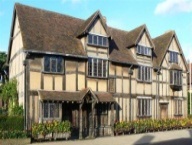
Reflection Were the lesson objectives/learning objectives realistic? Did I stick to timings? What changes did I make from my plan and why? |
Answer the most relevant questions from the box on the left about your lesson. |
MODULE 5
Lesson plan
LESSON: Module 5 Lesson1 Skills and people p.64 (paint, painter, compose, composer, etc.) |
School: |
|||||
Date: |
Teacher name: |
|||||
CLASS: |
Number present: |
absent: |
||||
Learning objectives(s) that this lesson is contributing to |
7.C6 organise and present information clearly to others |
|||||
Lesson objectives |
All learners will be able to: with support |
|||||
• Learn vocabulary for skills and people.• Do a quiz on talented people. • Learn how to learn words in groups.• Learn phrases for expressing knowledge. • Practise saying what you know. |
||||||
Most learners will be able to: with little support |
||||||
• Learn vocabulary for skills and people.• Do a quiz on talented people. • Learn how to learn words in groups.• Learn phrases for expressing knowledge. • Practise saying what you know. |
||||||
Some learners will be able to: without support |
||||||
• Learn vocabulary for skills and people.• Do a quiz on talented people. • Learn how to learn words in groups.• Learn phrases for expressing knowledge. • Practise saying what you know. |
||||||
Previous learning |
basic vocabulary relating to TV genre types and viewing |
|||||
Plan |
||||||
Planned timings |
Planned activities |
|
Teacher
|
|||
Beginning the lesson
|
Warm-up (3–4 minutes) • With books closed, write the word clever on the board and elicit the meaning. • Name a few famous artists, musicians or scientists and ask students if these people are / were clever. • Ask students to name some more clever people. |
|
|
|||
|
Main Activities
|
Exercise 1 • Look at the title of the quiz and elicit that it is going to be about famous people who showed their talents when they were children. • Explain that this is a general knowledge quiz. Students should work in pairs. • After checking answers, find out who got the most correct answers. • In a stronger class, ask students if they know anything else about the people in the quiz. ANSWERS1 a Salvador Dali 2 b Henry Ford 3 b karate 4 a prince 5 c Oliver Twist 6 a lens 7 c Chinese 8 b The X factor Exercise 2 $ 2.15 • Focus on the table with the class, then ask students to read the quiz to find the missing words to complete the table. • Play the CD so that students can check their answers. Drill the pronunciation of the new words if necessary. ANSWERS 1 composer 2 swimmer 3 play 4 writer 5 winner 6 program 7 singer |
Class CD Video
|
|
|
||||
|---|---|---|---|---|---|---|---|---|---|
|
Exercise 3 $ 2.16 • Point out that it is a good idea to learn new vocabulary in groups. • Focus on the example, then ask students to work individually to add the related words. To extend the activity, refer students back to the table in exercise 2 and elicit the activity nouns associated with those words. • In a stronger class, you could also ask students to look up more words to add to the list and write each form in their notebooks. ANSWERS 1 actor 4 dancer 2 acting 5 cook 3 dance 6 cooking Pronunciation: Word stress Workbook page 91 Teaching notes page 145 Exercise 4 • Read the two gapped key phrases with the class and point out that the words in the box fit in one or the other. Explain that there is more than one answer for each key phrase. • Students complete the phrases. Check understanding by asking students to translate them into their own language. In a weaker class, say some names of topics or famous people and ask students to respond by using the key phrases. • Model and drill pronunciation of the phrases, encouraging students to use the correct intonation. ANSWERS 1 a bit, a lot 2 anything, much Exercise 5 • Students use the key phrases to say how much they know about each of the famous people in the box. • Go through the example and encourage students to try to supply information if their partner does not know it. • In a weaker class, elicit or provide other phrases to respond to statements, for example, I don’t know much about ..., I do, ..., Don’t you? I think ..., I don’t know much either. In a stronger class, ask students to follow up their exchanges with examples or opinions of the famous people and their work |
|
|
|
|||||
|
|
|
|
|
|||||
|
Ending the lesson
|
Ask some pairs to ask and answer in front of the class. |
|
|
|
||||
|
Additional information |
|
|||||||
Differentiation – how do you plan to give more support? How do you plan to challenge the more able learners? |
Assessment – how are you planning to check learners’ learning? |
Cross-curricular
links |
|||||||
prompt less able learners to engage in whole class checking and plenary activities with supportive questioning provide headings for final note writing task
|
monitor for spoken accuracy in elicitation and checking tasks and use a range of oral correction techniques |
cross curricular links: languages [TV genres] |
|||||||
|
challenge more able learners to give reasons for their views and to say how they view content |
|
|
|
|||||
Reflection Were the lesson objectives/learning objectives realistic? Did I stick to timings? What changes did I make from my plan and why? |
Answer the most relevant questions from the box on the left about your lesson. |
||||||||
MODULE 5
Lesson plan
LESSON: Module 5 Lesson 2 Whizz-kids |
School: |
||||
Date: |
Teacher name: |
||||
CLASS: |
Number present: |
absent: |
|||
Learning objectives(s) that this lesson is contributing to |
7.R1 understand the main points in a growing range of short, simple texts on general and curricular topics 7.R2 understand independently specific information and detail in short, simple texts on a limited range of general and curricular topics 7.S1 provide basic information about themselves and others at discourse level on a range of general topics |
||||
Lesson objectives |
All learners will be able to: |
||||
• Read about prodigies. • Read for general meaning and specific information. • Talk about topics raised in the text. with support |
|||||
Most learners will be able to: |
|||||
• Read about prodigies. • Read for general meaning and specific information. • Talk about topics raised in the text. With little support |
|||||
Some learners will be able to: |
|||||
identify all specific information and most key ideas in texts and use a range of target language to express views and comment on views of others without support |
|||||
Previous learning |
basic vocabulary relating to films and TV viewing |
||||
Plan |
|||||
Planned timings |
Planned activities |
|
Teacher
|
||
Beginning the lesson
|
Warm up (2 minutes) • Refer students back to the Clever Kids quiz on page 49. Ask students to think about the people in the quiz. Ask what links all the people mentioned (they were all exceptionally talented from a very early age). • Ask students if they know anyone like this, or whether they can name any other famous prodigies. |
Class CD |
|
||
|
Main Activities
|
To read for specific information • Focus on the title of the text and the photo. Elicit or explain the meaning of prodigy. • Ask students what kinds of things prodigies can do. Accept all ideas at this stage. ANSWERS A prodigy is a child with incredible talents. Background In British schools, children who are recognized as ‘gifted’ or exceptionally talented are sometimes given extra lessons by their school, or may attend special classes for similarly gifted children after school or during school holidays. Exercise 2 $ 2.17 • Tell students to read through the summaries. Clarify that only one of these fits the text correctly. • Play the CD. Students, read, listen and choose the correct summary. In a stronger class, ask them to explain their choice in English. ANSWER Exercise 3 • After closely reading the text, students complete the sentences. ANSWERS 1 of twelve 2 children 3 university at seven 4 they help 5 160 |
Video
|
|
|
||||
|---|---|---|---|---|---|---|---|---|---|
|
Exercise 4 • Students read the text again and complete the phrases with the correct words. • In a weaker class, check understanding of the words and phrases, for example, by asking students to translate them. In a stronger class, ask students to put the phrases into a sentence to show they have understood. • Explain that these phrases are very common and useful to learn. In a stronger class, elicit or explain some other related phrases, for example, set a record, take a decision. ANSWERS 1 break 2 take 3 take 4 make 5 make |
|
|
|
|||||
|
|
|
|
|
|||||
|
Ending the lesson
|
homework. Optional activity: Language focus With books closed, dictate these sentences to the class or write them on the board. Pause to indicate a gap. Students complete the sentences in pairs by adding one word in each gap. 1 ___ this age, Wendy Vo could speak eleven languages. 2 He could program his father’s computer ___ seven. 3 Two years ___ he went to university. 4 It’s difficult to take a break ___ a parrot is shouting at you! 5 Elise broke a record ___ she scored 156 in an IQ exam. Allow students to check their answers in the text. Point out that these sentences all contain useful phrases for talking about someone’s life, which may be useful when students write a biography later in the unit. ANSWERS 1 At 2 at 3 later 4 when 5 when S’s complete for homework. |
|
|
|
||||
|
Additional information |
|
|||||||
Differentiation – how do you plan to give more support? How do you plan to challenge the more able learners? |
Assessment – how are you planning to check learners’ learning? |
Cross-curricular
links |
|||||||
support less able learners in comprehension task by encouraging them to scan text quickly to find a section of the text that contains the answer. |
check learner comprehension using thumbs up or down technique and follow-up questioning |
cross-curricular links: literature [film genres] |
|||||||
|
provide challenge for more able learners by asking them to form a range of questions about the information in the table |
monitor production error in pair and whole class checking discussions and feedback to whole class |
|
|
|||||
Reflection Were the lesson objectives/learning objectives realistic? Did I stick to timings? What changes did I make from my plan and why? |
Answer the most relevant questions from the box on the left about your lesson. |
MODULE 5
Lesson plan
LESSON: Module 5 Lesson 3 Ability: can, could. Questions with How...? |
School: |
|
|||||||||
Date: |
Teacher name: |
|
|||||||||
CLASS: |
Number present: |
absent: |
|
||||||||
Learning objectives(s) that this lesson is contributing to |
7.UE5 use questions including questions with whose, how often , how long and a growing range of tag questions on a growing range of familiar general and curricular topics 7.UE13 use modal forms including mustn’t (prohibition), need (necessity) should (for advice) on a range of familiar general and curricular topics |
|
|||||||||
Lesson objectives |
All learners will be able to: |
|
|||||||||
identify some specific information in the listening text and use some functional language correctly in speaking and email writing task • Learn can and could for ability in the present and past. • Learn about questions using How ...? • Practise asking and answering questions using can, could and How ...? with support |
|
||||||||||
Most learners will be able to: |
|
||||||||||
identify most specific information in the listening text and use a range of functional language correctly in speaking and email writing task • Learn can and could for ability in the present and past. • Learn about questions using How ...? • Practise asking and answering questions using can, could and How ...? with support |
|
||||||||||
Some learners will be able to: |
|
||||||||||
identify all specific information in the listening text and use a range of functional language correctly in speaking and email writing task • Learn can and could for ability in the present and past. • Learn about questions using How ...? • Practise asking and answering questions using can, could and How ...? with little support |
|
||||||||||
Previous learning |
basic functional phrases for making recommendations adjectives relating to film, plot and character |
|
|||||||||
Plan |
|
||||||||||
Planned timings |
Planned activities |
|
Teacher
|
|
|||||||
Beginning the lesson
|
Warm-up (2–3 minutes) • Refer students back to the reading text on page 50. Read the first sentence with the class and ask which verb refers to ability (could). • Elicit or explain that we use can to talk about ability in the present, and could to talk about ability in the past. |
|
|
|
|||||||
|
Exercise 1 • Explain that students are going to focus on can and could in the context of the text. ANSWERS 1 can’t do 2 could 3 couldn’t Exercise 2 • Students choose the correct words to complete the rules. In a weaker class, do this as a class activity for support. • In a stronger class, ask for an example of what students could / couldn’t do in the past and what they can / can’t do now. ANSWERS 1 without 2 can 3 can’t 4 present 5 past LANGUAGE NOTE We use can for ability in the present and could for ability in the past: I
can swim now. I could swim when I was three. NOT
The verbs can and could do not add -s after he, she and it: He
can dance. NOT
After can and could, we use the infinitive without to: I can speak
English. NOT
Point out that the negative forms are can’t and couldn’t: He
can’t
paint. NOT
|
|
|
|
|||||||
Exercise 3 • Tell students to read all the sentences carefully before they start to complete them to check they understand the context. They should think about whether the sentences refer to the present or the past. ANSWERS 1 could 2 couldn’t 3 can 4 couldn’t 5 can’t Exercise 4 • Once students have matched the question halves, check answers and ask students to ask and answer pairs. 1 e How far can you swim? 2 f How strict is your teacher? 3 b How often do you go to the cinema? 4 g How intelligent are your friends? 5 a How many people are in your class? 6 c How much cola do you drink? 7 d How tall are you? LANGUAGE NOTE We use How + adjective / adverb + verb + subject: How old are you? NOT How old you are? We use How many to ask about quantity and How often to ask about frequency: ‘How many brothers have you got?’ ‘Two.’ ‘How often do you do exercise?’ ‘Three times a week.’
|
|
||||||||||
Ending the lesson |
Feedback Exercise 5 • Read the instructions and the example with the class. Demonstrate how students should use the key information given in the answer to help them form the correct question ANSWERS 1 How far did Samantha Druce swim? 2 How long did Jef Sarver play (a guitar) for? 3 How long is Yam Bhandari’s hair? 4 How fast did Chris Carr travel?
|
|
|
|
|||||||
Additional information |
|
||||||||||
|
Differentiation – how do you plan to give more support? How do you plan to challenge the more able learners? |
Assessment – how are you planning to check learners’ learning? |
Cross-curricular
links |
||||||||
|
provide more support for less able writers through suggested sentence starters |
correct learners’ oral responses using a range of feedback techniques including delayed response wait-time |
ICT links: email options |
||||||||
|
provide further challenge in the writing task for stronger writers by asking them to include particular target words in their email |
take in learners extended email writing to assess at the end of the lesson |
|
|
|||||||
|
Reflection Were the lesson objectives/learning objectives realistic? Did I stick to timings? What changes did I make from my plan and why? |
Answer the most relevant questions from the box on the left about your lesson. |
|||||||||
MODULE 5
Lesson plan
LESSON: Module 5 Lesson 4 Adjectives: qualities |
School: |
||||
Date: |
Teacher name: |
||||
CLASS: |
Number present: |
absent: |
|||
Learning objectives(s) that this lesson is contributing to |
7.C6 organise and present information clearly to others 7.UE3 use common participles as adjectives and order adjectives correctly in front of nouns on a growing range of familiar general and curricular topics 7.L5 understand most specific information and detail of supported, extended talk on a range general and curricular topics |
||||
Lesson objectives |
All learners will be able to: |
||||
use some target structures accurately in more controlled and freer production tasks • Learn adjectives used to describe animals. • Listen to a conversation about animals. • Listen for general meaning and specific details. with some support |
|||||
Most learners will be able to: |
|||||
use most target structures accurately in more controlled and freer production tasks • Learn adjectives used to describe animals. • Listen to a conversation about animals. • Listen for general meaning and specific details.with some support |
|||||
Some learners will be able to: |
|||||
use most target structures accurately in more controlled and freer production tasks • Learn adjectives used to describe animals. • Listen to a conversation about animals. • Listen for general meaning and specific details. with little support |
|||||
Previous learning |
simple uses of passive structure by to introduce the agent |
||||
Plan |
|||||
Planned timings |
Planned activities |
Resources |
Teacher
|
||
Beginning the lesson
|
Warm-up (3–4 minutes) • With books closed, ask students to work in pairs and write down as many animals in English as they can in two minutes. • Elicit names of animals from the class and write them on the board. • Point to one of the words and ask students what they know about this animal. Elicit some adjectives to describe it and write them on the board. Do the same with two or three more of the animal words. • Ask students which animals they think are clever. Exercise 1 2.18 • Focus on the example. Ask students to work in pairs to find pairs of adjectives. • In a weaker class, check that students understand all the adjectives, for example by asking them to translate the words into their own language. In a stronger class, encourage students to put the words into a sentence to show understanding. • Model and drill the pronunciation of any new adjectives. ANSWERS aggressive – peaceful common – rare domesticated – wild fast – slow heavy – light intelligent – stupid |
|
|
||
|
Main Activities
|
Exercise 2 • Read the instructions with the class. Check that students understand the animal words, and check that they understand the difference between not very, quite, very and really. • Students prepare their sentences in pairs. Ask students to report back to the class on how they described the animals. ANSWERS Students’ own answers. Exercise 3 $ 2.19 Tapescript page 151 • Explain to students that they are going to listen to two people talking about animals. Before you play the CD, look at the photos and identify the animal in each one. • Tell students that there is one extra animal in the conversation which is not pictured. ANSWER Monkeys |
|
|
|
||||
|---|---|---|---|---|---|---|---|---|---|
|
Exercise 4 $ 2.19 • Read through the sentences. |
|
|
|
|||||
|
In a weaker class, play the CD again before students choose the words. In a stronger class, ask students to choose as many words as they can from memory before listening again. ANSWERS 1 faces 2 can 3 can 4 vocabulary Exercise 5 $ 2.19 • Allow students time to read the sentences. • After students have completed the sentences, allow them to compare their answers in pairs before you check answers with the class. ANSWERS 1 artistic than 2 intelligent 3 Monkeys are 4 whale’s 5 most stupid |
|
|
|
|||||
|
Ending the lesson |
Check Ss’ answers around the class. Optional activity: Listening Dictate these questions to the class. Put students into pairs and ask them to answer the questions from memory. 1 What do octopuses enjoy doing? 2 When do they change colour? 3 What have elephants and octopuses both got? 4 Which animals does Sophie think are amazing? 5 What kind of animal is Betsey? 6 Why is it a prodigy? Play the recording again, pausing to allow students to check their answers. ANSWERS 1 They like having fun. 2 When they are happy, sad or angry. 3 They’ve both got good memories. 4 Elephants. 5 A dog. 6 Because it can understand 340 different words. |
|
|
|
||||
|
Additional information |
|
|||||||
Differentiation – how do you plan to give more support? How do you plan to challenge the more able learners? |
Assessment – how are you planning to check learners’ learning? |
Cross-curricular
links |
|||||||
monitor less able learners in group work and give further modelling and drilling support |
use concept checking questions to check learner understanding of why passive is used |
cross-curricular links: languages [contrasts with L1] |
|||||||
|
challenge more able learners to give multiple [and/or] answers in practice exercises |
assess pronunciation in oral and checking stages of the lesson [particularly weak form ‘was’] |
|
|
|||||
Reflection Were the lesson objectives/learning objectives realistic? Did I stick to timings? What changes did I make from my plan and why? |
Answer the most relevant questions from the box on the left about your lesson. |
||||||||
MODULE 5
Lesson plan
LESSON: Module 5 Lesson 5 Choosing a present |
School: |
||||
Date: |
Teacher name: |
||||
CLASS: |
Number present: |
absent: |
|||
Learning objectives(s) that this lesson is contributing to |
7.UE13 use modal forms including mustn’t (prohibition), need (necessity) should (for advice) on a range of familiar general and curricular topics 7.L5 understand most specific information and detail of supported, extended talk on a range general and curricular topics 7.S5 keep interaction going in longer exchanges on a range of general and curricular topics |
||||
Lesson objectives |
All learners will be able to: |
||||
use some target structures accurately in more controlled and freer production tasks• Listen to a conversation about comparing ideas for a present. • Learn key phrases for choosing a present. • Learn how to use should and must. • Practise comparing ideas for a present. with some support |
|||||
Most learners will be able to: |
|||||
use most target structures accurately in more controlled and freer production tasks • Listen to a conversation about comparing ideas for a present. • Learn key phrases for choosing a present. • Learn how to use should and must. • Practise comparing ideas for a present.with some support |
|||||
Some learners will be able to: |
|||||
use most target structures accurately in more controlled and freer production tasks • Listen to a conversation about comparing ideas for a present. • Learn key phrases for choosing a present. • Learn how to use should and must. • Practise comparing ideas for a present.with little support |
|||||
Previous learning |
present and past simple uses of passive structure by to introduce the agent |
||||
Plan |
|||||
Planned timings |
Planned activities |
|
Teacher
|
||
Beginning the lesson
|
Warm-up (3–4 minutes) • With books closed, ask students if they ever buy presents. Ask them when and where they buy them. • Ask them to think about the last present they bought and say why they chose that present. • Ask if they ever buy a present with another person. • Tell them they are going to practise choosing a present with someone else. |
|
|
||
|
|
Exercise 1 • Discuss the questions as a class. Find out how many artists students can name and who the most popular artists are. • In a stronger class, encourage them to describe briefly the artist and their work using adjectives, and comparative and superlative forms from the previous lessons in the unit. • Explain that Shaun and Gemma are looking at posters of works by famous artists. Exercise 2 $ 2.20 • Play the CD. Students read and listen to find out the answer to the question in the instructions. In a stronger class, encourage students to listen with books closed. • Ask students if Gemma agrees with Shaun about the posters. ANSWERS Yes, she does. |
Class CD
|
|
|
||||
|---|---|---|---|---|---|---|---|---|---|
|
Exercise 3 $ 2.21 • Read through the key phrases with the class and the questions below each one. • Ask students to listen to the key phrases and find them in the dialogue. They answer the questions based on their understanding of the dialogue. • Play the CD. Students listen and answer the questions. In a weaker class, it may help to write the key phrases on the board, underlining the word(s) they need to define. Then, using the printed dialogue for support, help students work out what is being referred to in each case. ANSWERS 1 Gemma’s dad 2 van Gogh 3 Starry Night 4 the poster of the painting by Picasso Exercise 4 • Students practise the dialogue in pairs. Allow them to go through this once or twice, then ask them to swap roles and practise it again. |
|
|
|
|||||
|
Ending the lesson |
HT Exercise 5 • Students read the example sentences. Check understanding by asking students to translate them. • Students complete the rules from the context provided by the sentences. ANSWERS 1 must 2 should Exercise 6 • Remind students to read through the sentences carefullyto check they understand the context. Explain that they should think about whether they are talking about obligation or advice. • To extend the activity, ask students to give other examples of situations where you might give advice or where you are obliged to do or not do something. Encourage students to provide example sentences. ANSWERS 1 should 2 must 3 must 4 should |
|
|
|
||||
|
Additional information |
|
|||||||
Differentiation – how do you plan to give more support? How do you plan to challenge the more able learners? |
Assessment – how are you planning to check learners’ learning? |
Cross-curricular
links |
|||||||
monitor less able learners in group work and give further modelling and drilling support |
use concept checking questions to check learner understanding of why passive is used |
cross-curricular links: languages [contrasts with L1] |
|||||||
|
challenge more able learners to give multiple [and/or] answers in practice exercises |
assess pronunciation in oral and checking stages of the lesson [particularly weak form ‘was’] |
|
|
|||||
Reflection Were the lesson objectives/learning objectives realistic? Did I stick to timings? What changes did I make from my plan and why? |
Answer the most relevant questions from the box on the left about your lesson. |
||||||||
MODULE 5
Lesson plan
LESSON: Module 5 Lesson 6 Biographies |
School: |
||||
Date: |
Teacher name: |
||||
CLASS: |
Number present: |
absent: |
|||
Learning objectives(s) that this lesson is contributing to |
7.W1 plan, write, edit and proofread work at text level with some support on a growing range of general and curricular topics |
||||
Lesson objectives |
All learners will be able to: |
||||
identify some specific information and key ideas in texts and use some target language to express views and comment on some views of others • Study a model text. • Learn key phrases to link events in a biography. • Write a biography of a famous writer and artist.with support |
|||||
Most learners will be able to: |
|||||
identify most specific information and key ideas in texts and use a range of target language to express views and comment on some views of others • Study a model text. • Learn key phrases to link events in a biography. • Write a biography of a famous writer and artist.with support |
|||||
Some learners will be able to: |
|||||
identify all specific information and most key ideas in texts and use a range of target language to express views and comment on views of others • Study a model text. • Learn key phrases to link events in a biography. • Write a biography of a famous writer and artist.with little support |
|||||
Previous learning |
vocabulary for musical instruments / types of instrument |
||||
Plan |
|||||
Planned timings |
Planned activities |
|
Teacher
|
||
Beginning the lesson |
Warm-up (2–3 minutes) • With books closed, write the word biography on the board and elicit the meaning. • Ask students if they ever read biographies of famous people. • Ask what kinds of information you usually find in a biography. Elicit ideas, but do not accept or reject any at this stage. |
|
|
||
|
|
Exercise 1 • Read the title of the text and look at the picture with the class. Ask students if they have heard of this writer, and whether they can name any of her books (for example, Emma, Pride and Prejudice, Sense and Sensibility, Mansfield Park). • Students read the text, then match four of the five headings to the paragraphs. Tell them not to worry about the blue words at this stage. • In a weaker class, demonstrate how to find clues in the text. In a stronger class, ask students which parts of the text helped them identify which heading to choose.
ANSWERS 1 B 2 C 4 D 5 A Exercise 2 • Focus students on the blue words in the text and explain that they are used to convey the time expression in a sentence. • Students match the sentences from the text. In a weaker class, ask them to do this in pairs. • In a stronger class, check answers by asking individuals to read out the complete sentence. ANSWERS 1 e 2 d 3 f 4 c 5 a 6 b Exercise 3 • Read the task with the class and refer students to the biographical information and the book covers. • Students use the questions to make notes and plan their biographies individually. • Students write their biographies. This can be set for homework. • Tell students to check their work, and check they have used comparative and superlative forms, and time expressions correctly. |
Class CD
|
|
|
||||
|---|---|---|---|---|---|---|---|---|---|
|
|
|
|||||||
|
Ending the lesson |
• Play the video and elicit comments from the Ss. HT Optional activity: Writing To practise or revise the key phrases, dictate these sentences to the class with books closed. Ask students to correct the mistakes in them. 1 She was born for Warsaw. 2 A year by, he got married. 3 She lived in Paris in five years. 4 In the age of twenty, he was studying at university. 5 She died at 1824. ANSWERS 1 She was born in Warsaw. 2 A year later, he got married. 3 She lived in Paris for five years. 4 By the age of twenty, he was studying at university. 5 She died in 1824. |
Video |
|
|
||||
|
Additional information |
|
|||||||
Differentiation – how do you plan to give more support? How do you plan to challenge the more able learners? |
Assessment – how are you planning to check learners’ learning? |
Cross-curricular
links |
|||||||
support less able learners in comprehension task by encouraging them to scan text quickly to find a section of the text that contains the answer. |
check learner comprehension using thumbs up or down technique and follow-up questioning |
cross-curricular links: Music [music genres / sections of the orchestra] |
|||||||
|
challenge more able learners to ask more complex questions by suggesting more complex question starters |
monitor general accuracy and pronunciation in Q&A task for feedback to whole class |
|
|
|||||
Reflection Were the lesson objectives/learning objectives realistic? Did I stick to timings? What changes did I make from my plan and why?
|
Answer the most relevant questions from the box on the left about your lesson. |
MODULE 5
Lesson plan
LESSON: Module 5 Lesson 7 Entertainment and media |
School: |
||||
Date: |
Teacher name: |
||||
CLASS: |
Number present: |
absent: |
|||
Learning objectives(s) that this lesson is contributing to |
7.UE3 use common participles as adjectives and order adjectives correctly in front of nouns on a growing range of familiar general and curricular topics 7.UE17 use subordinate clauses following think know believe hope, say , tell use subordinate clauses following sure, certain; use defining relative clauses with which who that where on a growing range of familiar general and curricular topics 7.W1 plan, write, edit and proofread work at text level with some support on a growing range of general and curricular topics |
||||
Lesson objectives |
All learners will be able to: |
||||
identify some key ideas from listening and plan and write an email recounting some experiences • Learn vocabulary for talking about films. • Learn about adjectives ending in -ing and -ed. • Learn and practise using relative clauses. • Write a film review.with support |
|||||
Most learners will be able to: |
|||||
identify most key ideas from listening and plan and write an email recounting a range of experiences • Learn vocabulary for talking about films. • Learn about adjectives ending in -ing and -ed. • Learn and practise using relative clauses. • Write a film review.with support |
|||||
Some learners will be able to: |
|||||
identify all key ideas from listening and plan and write an email recounting a range of experiences • Learn vocabulary for talking about films. • Learn about adjectives ending in -ing and -ed. • Learn and practise using relative clauses. • Write a film review. with little support |
|||||
Previous learning |
basic style and organisation of an email |
||||
Plan |
|||||
Planned timings |
Planned activities |
|
Teacher
|
||
Beginning the lesson
|
Warm-up (3–4 minutes) • With books closed, divide students into pairs and ask them to tell each other about their favourite film. Encourage them to give reasons for their choice. • Ask a few students to describe their partner’s preferences. |
Class CD |
|
||
|
Main Activities
|
Exercise 1 • Focus students’ attention on the words in the box. Encourage them to try to guess the meaning of all the words before they look them up in a dictionary. • Ask students to name a film for each genre. • Model and drill the pronunciation of the words. Exercise 2 $ 2.28 • Play the recording and ask students to listen and read the text. • Allow students time to read the questions. In a weaker class, pre-teach the following words and phrases: relationship, based on, star (verb), brave and recommend. • Ask them to read the text again and answer the questions. • Check answers as a class. ANSWERS 1 The title of the film is The Old Man. 2 It’s a drama. 3 It’s about family relationships and the relationship between people and nature. 4 Yes, it’s based on a book by the American writer Ernest Hemingway. 5 It’s set in Kazakhstan 6 Yerbulat Toguzakov plays the main role. 7 Her favourite character is Kassym. She likes him because he is brave. 8 She thinks that it is a great film. She would recommend it to anyone who likes adventure stories. Exercise 3 • Draw students’ attention to the words in blue. Ask them to find the word or phrase that the each blue word refers to in the text and underline them (The Old Man and the Sea, shepherd, town, actors, film, anyone). • Students complete the rules and check their answers. ANSWERS 1 who 2 which 3 where. |
|
|
|
||||
|---|---|---|---|---|---|---|---|---|---|
|
Exercise 4 • Explain the task and ask students to do it individually. ANSWERS 1 who 2 which 3 who 4 where 5 which 6 where |
|
|
|
|||||
|
Ending the lesson |
Exercise 5 • Draw students’ attention to the words in the box. Elicit or explain that they are all adjectives. • In a stronger class, ask students to identify the verbs the adjectives are derived from (interest, annoy, bore, worry, terrify, excite). ANSWERS We use adjectives ending in -ed to say how someone feels: interested, annoyed, bored, worried. We use adjectives ending in -ing to describe something:
HT Exercise 6 • Explain the task and ask students to do it individually. ANSWERS 1 a interested, b interesting 2 a tiring, b tired 3 a annoying, b annoyed 4 a excited, b exciting 5 a surprising, b surprised Exercise 7 • Students work individually to write their reviews, referring to the questions in exercise 2 and the review of The Old Man as a model. • This activity could also be set for homework. |
|
|
|
||||
|
Additional information |
|
|||||||
Differentiation – how do you plan to give more support? How do you plan to challenge the more able learners? |
Assessment – how are you planning to check learners’ learning? |
Cross-curricular
links |
|||||||
monitor less able learners as they plan write their emails and highlight with a pencil things they should self-correct |
use thumbs up or down technique and follow-up questioning to check comprehension |
ICT links: email features and tools |
|||||||
|
encourage more able learners to include in their email points responding to previous emails. |
take in learners’ extended email writing for assessment |
|
|
|||||
Reflection Were the lesson objectives/learning objectives realistic? Did I stick to timings? What changes did I make from my plan and why? |
Answer the most relevant questions from the box on the left about your lesson. |
MODULE 5
Lesson plan
LESSON: Module 5 Lesson 8 CLIL: Natural science: Adapting to the environment |
School: |
||||
Date: |
Teacher name: |
||||
CLASS: |
Number present: |
absent: |
|||
Learning objectives(s) that this lesson is contributing to |
7.C10 use talk or writing as a means of reflecting on and exploring a range of perspectives on the world 7.R2 understand independently specific information and detail in short, simple texts on a limited range of general and curricular topics |
||||
Lesson objectives |
All learners will be able to: |
||||
use some target functional language appropriately in functional exchanges and pronounce some target words and phrases clearly • Learn vocabulary for talking about animal adaptations and migrations. • Read a text about animal migrations. • Practise talking about animals migrations.with support |
|||||
Most learners will be able to: |
|||||
use a range of target functional language appropriately in functional exchanges and pronounce most target words and phrases clearly • Learn vocabulary for talking about animal adaptations and migrations. • Read a text about animal migrations. • Practise talking about animals migrations.with support |
|||||
Some learners will be able to: |
|||||
use a range of target functional language appropriately in functional exchanges and pronounce most target words and phrases clearly • Learn vocabulary for talking about animal adaptations and migrations. • Read a text about animal migrations. • Practise talking about animals migrations.with little support |
|||||
Previous learning |
basic phrases for making and accepting suggestions /asking about alternatives |
||||
Plan |
|||||
Planned timings |
Planned activities |
|
Teacher
|
||
Beginning the lesson |
Warm-up (2–3 minutes) • With books closed, write polar bear and camel on the board. • Check that students understand the words, then ask where these animals live. Ask why polar bears are able to live in very cold conditions. • Elicit some ideas, then write the word adapt on the board. Ask how camels have adapted to living in very hot, dry conditions. • Ask students what other examples they know of how animals have adapted to their environment. |
Class CD |
|
||
|
|
Exercise 1 $ 2.26 • Refer students to the pictures and elicit or teach the names of the animals (arctic fox, snake, salmon, butterfly). • Play the CD, and ask students to listen and read the text. • Students match the words in blue with the definitions. • Check answers, and make sure that students understand the meaning of the blue words, for example, by asking them to translate them into their own language. ANSWERS 1 breed 2 habitat 3 migrate 4 feed 5 adapt Exercise 2 $ 2.27 • Focus on the map and the pictures. Model pronunciation of grey whale and arctic tern. • Play the CD and ask students to read and listen, and choose the correct migration routes. ANSWERS grey whale b arctic tern c
|
Class CD
|
|
|
||||
|---|---|---|---|---|---|---|---|---|---|
|
Exercise 3 $ 2.27 Tapescript page 156 • Allow time for students to read the table. • Play the CD again, and ask students to listen and complete the table. • Ask students to compare answers in pairs, then check answers with the class. ANSWERS 1 Bering Sea, Arctic 2 3 3 Antarctic 4 20,000 |
|
|
|
|||||
|
Exercise 4 • Brainstorm ideas with the class for other animals that migrate. Encourage students to use a variety of resources to find out about the animal they choose. • They should make sure they focus on the information set out in the table, rather than general facts about the animal. • This task could be set for homework as described in the Optional activity below. Ask students to read their information out to the class when they have finished. ANSWERS Students’ own answers. |
|
|
|
|||||
|
Ending the lesson |
Exercise 4 • Read through the table with the class. Make sure that students understand the words dolphin and marlin. Point out that the plural of marlin is marlin (not marlins). • Before students write the sentences, demonstrate how the headings in the table relate to the adjectives in the box. For example, elicit that population matches the adjective rare. In a weaker class, match all the headings with the adjectives as a class before students start the exercise. ANSWERS 1 Atlantic marlin are more aggressive than blue whales. 2 The common dolphin is the shortest. 3 Atlantic marlin are heavier than common dolphins. 4 Blue whales are rarer than Atlantic marlin. 5 The blue whale is the slowest.
|
|
|
|
||||
|
Additional information |
|
|||||||
Differentiation – how do you plan to give more support? How do you plan to challenge the more able learners? |
Assessment – how are you planning to check learners’ learning? |
Cross-curricular
links |
|||||||
monitor less able learners in group work and give further modelling and drilling support |
assess pronunciation of individual sounds and intonation in role play and sentence |
cross-curricular links: languages [contrasts with L1] |
|||||||
|
challenge more able learners to leave some lines blank in script of role play to promote spontaneous interaction |
assess learner interactive ability in role play. |
|
|
|||||
Reflection Were the lesson objectives/learning objectives realistic? Did I stick to timings? What changes did I make from my plan and why? |
Answer the most relevant questions from the box on the left about your lesson. |
||||||||
MODULE 5
Lesson plan
LESSON: Module 5 Lesson 9 Summative Control work 6 |
School: |
|
||||||||||||||||||||||||||||
Date: |
Teacher name: |
|
||||||||||||||||||||||||||||
CLASS: |
Number present: |
absent: |
|
|||||||||||||||||||||||||||
Learning objectives(s) that this lesson is contributing to |
7.R2 Understand specific information and details in texts on a range of familiar general and curricular topics 7.S5 Keep interaction with peers to negotiate, agree and organise priorities and plans for completing classroom tasks |
|
||||||||||||||||||||||||||||
Lesson objectives |
All learners will be able to: |
|
||||||||||||||||||||||||||||
identify some key ideas from listening and use some target language correctly in planning and giving a presentation with support |
|
|||||||||||||||||||||||||||||
Most learners will be able to: |
|
|||||||||||||||||||||||||||||
identify most key ideas from listening and use a range of target language correctly in planning and giving a presentation with support |
|
|||||||||||||||||||||||||||||
Some learners will be able to: |
|
|||||||||||||||||||||||||||||
identify all key ideas from listening and use a range of target language correctly in planning and giving a presentation with little support |
|
|||||||||||||||||||||||||||||
Previous learning |
common musical instruments / types of instrument adjectives describing music and song |
|
||||||||||||||||||||||||||||
Plan |
|
|||||||||||||||||||||||||||||
Planned timings |
Planned activities |
|
Teacher
|
|
||||||||||||||||||||||||||
Beginning the lesson |
To introduce the topic and present ethnic music • Play the recording. Ss listen and number the ethnic music extracts in the order they hear them. • Check Ss’ answers. |
Class CD |
|
|
||||||||||||||||||||||||||
|
Main Activities
|
Reading Task 1. Read the text and mark the sentences True or False. Haiti in Ruins After Huge Earthquake Television pictures are slowly beginning to show how great the damage is in Haiti following the huge earthquake on Tuesday. A magnitude 7.3 quake, just 16km from the capital, hit the Caribbean nation as people were going home after work. Much of the country has been devastated. Many major buildings in the capital Port-au-Prince have collapsed, including the Presidential Palace and the UN headquarters. Haiti's President Rene Preval described the scene in the capital as "unimaginable". The Red Cross says up to 3 million people have been affected. Mr. Preval fears "well over 100,000 people" may have died. Haiti's ambassador to the USA, Raymond Joseph, said there was "no way of estimating" how many casualties there were. Countries around the world are acting quickly to send whatever help they can to Haiti. Haiti is one of the poorest countries in the world. More than half of its people live below the poverty line on less than two dollars a day. It is one of the poorest-equipped countries on Earth to deal with such a catastrophe. The nation was still trying to recover from being hit by four deadly hurricanes in 30 days in 2008. Its economy is in ruins and it has a long history of corruption and coups. Example: The earthquake that hit Haiti was a magnitude 16 in strength. False
Speaking Task 2. Choose the question and be ready to answer it after the teacher starts the conversation. You should add your ideas to the class discussion. |
Class CD
|
|
|
|||||||||||||||||||||||||
|
Teacher organizes a Socratic seminar which helps teacher to assess learners while they are speaking on the topic ‘Natural Disasters’. Learners are sitting in a circle and answering the question which teacher prepared and cut down beforehand. These are some rules to this task:
Example: What are the safety rules for an earthquake emergency? Learner’spossible answer: Don’t panic.Get under a table or a desk. Check for injuries.Call emergency services to get help for injured persons. Leave the room. Exit the building.Once outside, move to the evacuation assembly point. Wait for further instructions.
Assessment Sheet
Total marks-10 Your Total marks ________________________ |
|
|
|
||||||||||||||||||||||||||
|
|
|
|
|
||||||||||||||||||||||||||
|
Ending the lesson |
• Choose various Ss to present their instrument(s) to the class. |
|
|
|
|||||||||||||||||||||||||
|
Additional information |
|
||||||||||||||||||||||||||||
|
Differentiation – how do you plan to give more support? How do you plan to challenge the more able learners? |
Assessment – how are you planning to check learners’ learning? |
Cross-curricular
links |
|||||||||||||||||||||||||||
|
support less able readers and by helping them with search language |
monitor extent to which learners are able to search independently in English |
cross-curricular links: Music [traditional instruments] |
|||||||||||||||||||||||||||
|
provide an extra heading for more able readers to research |
use a checklist to assess accuracy, organisation and delivery of presentation |
|
|
||||||||||||||||||||||||||
|
Reflection Were the lesson objectives/learning objectives realistic? Did I stick to timings? What changes did I make from my plan and why? |
Answer the most relevant questions from the box on the left about your lesson. |
||||||||||||||||||||||||||||
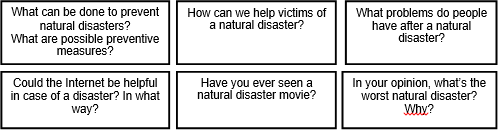
MODULE 5
Lesson plan
LESSON: Module 5 Lesson 10 Review |
School: |
||||
Date: |
Teacher name: |
||||
CLASS: |
Number present: |
absent: |
|||
Learning objectives(s) that this lesson is contributing to |
7.C2 use speaking and listening skills to provide sensitive feedback to peers
|
||||
Lesson objectives |
All learners will be able to: |
||||
identify some detailed arguments in the text and use some target vocabulary to make simple points accurately in response to prompts and in discussion |
|||||
Most learners will be able to: |
|||||
identify some detailed arguments in the text and use a range of target vocabulary to make simple points accurately in response to prompts and in discussion |
|||||
Some learners will be able to: |
|||||
identify most detailed arguments in the text and use a range of target vocabulary to make a range of points accurately in response to prompts and in discussion |
|||||
Previous learning |
|
||||
Plan |
|||||
Planned timings |
Planned activities |
|
Teacher
|
||
Beginning the lesson
|
To present and discuss teen media use • Go through the phrases and ensure Ss know what the words mean. • Remind Ss of adverbs of frequency. • Elicit answers from around the class. |
|
|
||
|
Main Activities
|
Vocabulary Exercise 1 ANSWERS 1 writer, wrote 2 composer, composed 3 dancer, dance 4 cook, cook 5 paints, painter Exercise 2 ANSWERS 1 slow – f fast 2 domesticated – c wild 3 stupid – b intelligent 4 light – e heavy 5 common – d rare 6 aggressive – a peaceful Language focus Exercise 3 ANSWERS 1 must 2 Could, couldn’t 3 How many, can, can’t 4 should Exercise 4 ANSWERS 1 The St Bernard is rarer than the Whippet. 2 The Whippet is the fastest. 3 The St Bernard is more common than the Ridgeback. 4 The Ridgeback is the most aggressive. 5 The Ridgeback is the rarest. 6 The Ridgeback is slower than the Whippet.
Communication Exercise 5 ANSWERS 1 do you think 2 She’s into 3 This one’s 4 Who’s it 5 about this 6 should |
Class CD
Video
|
|
|
||||
|---|---|---|---|---|---|---|---|---|---|
|
Pronunciation • Read the table with Ss. • Play the recording. • Allow Ss time to complete the table. • Check Ss’ answers around the class. • Play the recording again. Ss listen and repeat.
|
Class CD |
|
|
|||||
|
Ending the lesson |
Ask Ss to add words to the boxes with same sound/pronunciation Listening Exercise 6 $ 2.22 Tapescript page 151 ANSWERS 1 True. 2 False. Tom had a dog. 3 True. 4 True. 5 False. Tom’s new house is further from school. 6 False. Tom is moving near to Martha’s road. |
|
|
|
||||
|
Additional information |
|
|||||||
Differentiation – how do you plan to give more support? How do you plan to challenge the more able learners? |
Assessment – how are you planning to check learners’ learning? |
Cross-curricular
links |
|||||||
encourage less able learners to show another learner where they think the answer to reading question is in the text before deciding on answer |
monitor reading comprehension with thumbs up and down technique and follow-up questioning |
Health and safety: moderating screen time |
|||||||
|
challenge more able learners to say whether they agree with ideas in text |
monitor pronunciation in checking, discussion and final pronunciation focus and use further drilling where necessary |
|
|
|||||
Reflection
Were the lesson objectives/learning objectives realistic?
Did I stick to timings?
What changes did I make from my plan and why?
|
Answer the most relevant questions from the box on the left about your lesson. |
MODULE 8
Lesson plan
LESSON: Module 8 Lesson 1 Feelings |
School: |
|||||
Date: |
Teacher name: |
|||||
CLASS: |
Number present: |
absent: |
||||
Learning objectives(s) that this lesson is contributing to |
7.C6 organise and present information clearly to others
|
|||||
Lesson objectives |
All learners will be able to: |
|||||
identify some specific information and key ideas in texts and use some target vocabulary to express views in speaking and writing tasks with support • Do a quiz about risks and dangers. • Learn how to use modifiers with different adjectives. • Learn how to express emotions. |
||||||
Most learners will be able to: |
||||||
identify most specific information and key ideas in texts and use a range of target vocabulary to express views in speaking and writing tasks with support • Do a quiz about risks and dangers. • Learn how to use modifiers with different adjectives. • Learn how to express emotions. |
||||||
Some learners will be able to: |
||||||
identify all specific information and most key ideas in texts and use a range of target vocabulary to express views in speaking and writing tasks with little support • Do a quiz about risks and dangers. • Learn how to use modifiers with different adjectives. • Learn how to express emotions. |
||||||
Previous learning |
basic vocabulary for describing geographical location / types of disaster |
|||||
Plan |
||||||
Planned timings |
Planned activities |
Resources |
Teacher
|
|||
Beginning the lesson
|
What’s in this module? Read the title of the module Natural disasters and ask Ss to suggest what they think it means. Go through the What’s in this module section and stimulate a discussion to prompt Ss’ interest in the module. Warm-up (2–3 minutes) • With books closed, write the words risk and danger on the board and elicit the meanings. • Ask students if they do any things that are dangerous. Elicit some ideas. • Ask students if they enjoy taking risks. Elicit a variety of responses. |
Class CD |
|
|||
|
Main Activities
|
To practise vocabulary for natural phenomena and personalise the topic • Explain the task. Exercise 1 • Read the title of the quiz and look at the photos. Ask students if they think the things pictured are scary. • Students do the quiz individually and look at the key. • They discuss their results with a partner, giving reasons for their ideas. • Ask one or two students to report back to the class. answers. Students’ own answers.
Exercise 2 • Explain that each of the adjectives can be used with one of the prepositions to give a particular meaning. answers. 1 at 2 of 3 at 4 about 5 in 6 about 7 of 8 about Exercise 3 • Students read the phrases again and think about the emotion they express. If they are not sure, refer them back to the quiz to check the context and any other supporting words that might help. • Ask students to use the phrases in sentences. In a weaker class, ask students to work in pairs and write new sentences using the phrases in context. Monitor students as they do this. In a stronger class, ask students to say new sentences with the phrases as a whole-class activity. answers. 1 negative 2 positive 3 positive 4 positive 5 positive 6 negative 7 negative 8 negative Exercise 4 • Explain that adjectives can be modified to express the emotion in a stronger or weaker way. • Students refer back to the quiz to find the modifiers and complete the chart. Check answers, then ask about the position of the modifier. answers. 1 not at all 2 quite 3 very Modifiers go before the adjective. • Ask a S to read out the example. Then elicit answers from various Ss around the class. |
|
|
|
||||
|---|---|---|---|---|---|---|---|---|---|
|
Energizer |
|
|
|
|||||
|
Students work in group.
T
|
|
|
|
|||||
|
|
|
|
|
|||||
|
Ending the lesson |
Get Ss to write an email to a friend about their holiday experience or set as a homework task. |
|
|
|
||||
|
Additional information |
|
|||||||
Differentiation – how do you plan to give more support? How do you plan to challenge the more able learners? |
Assessment – how are you planning to check learners’ learning? |
Cross-curricular links Health and safety check ICT links Values links |
|||||||
support less able learners in comprehension task by encouraging them to scan text quickly to find a section of the text that contains the answer. |
check learner comprehension using thumbs up or down technique and follow-up questioning |
cross-curricular links: Geography [disasters in types of location] |
|||||||
|
encouraging more able learners to expand their contributions in group and plenary exchanges |
get learners to check each other’s writing using a correction code |
|
|
|||||
Reflection Were the lesson objectives/learning objectives realistic? Did I stick to timings? What changes did I make from my plan and why? |
Answer the most relevant questions from the box on the left about your lesson. |
||||||||
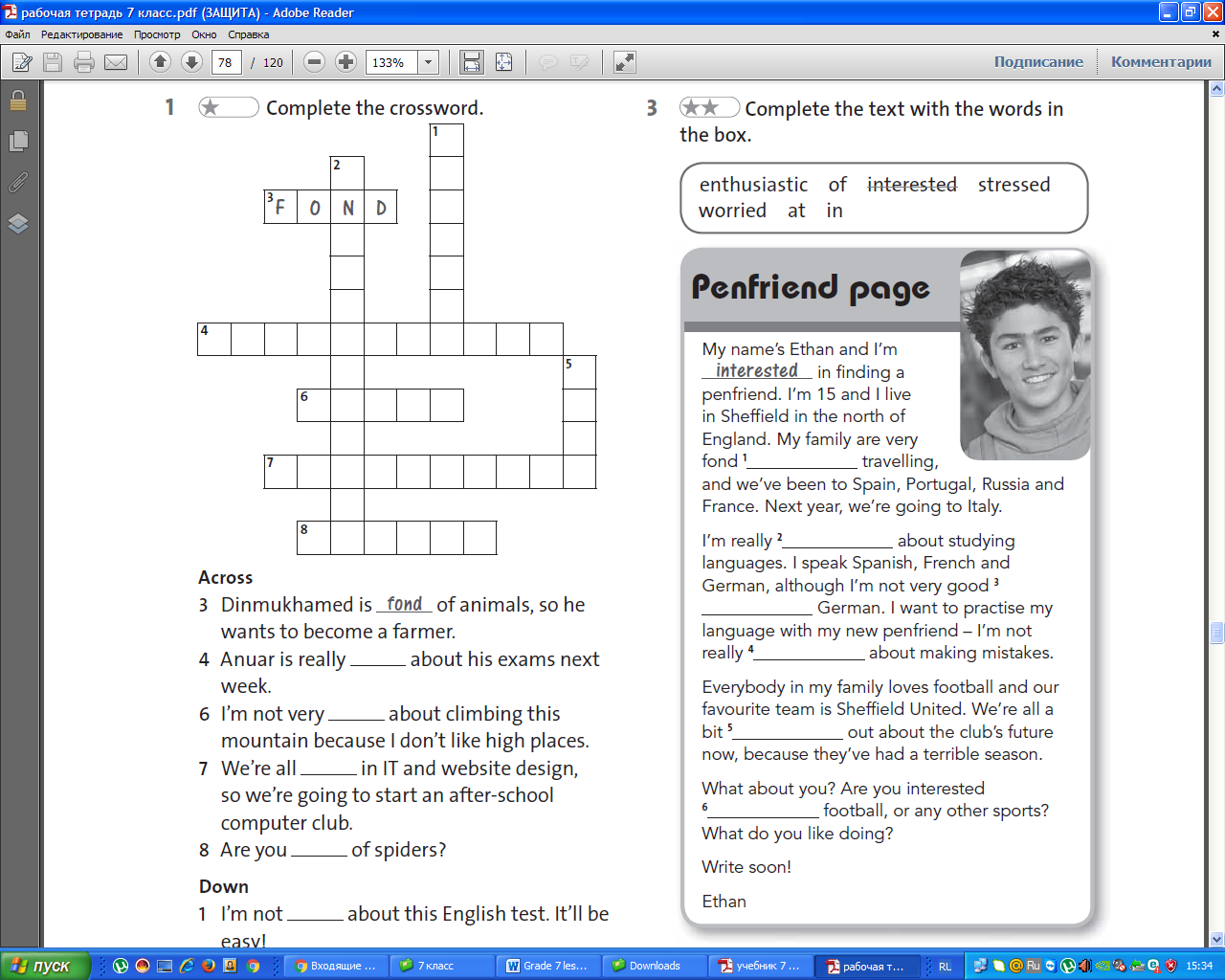
MODULE 8
Lesson plan
LESSON: Module 8 Lesson 2 Arachnophobia |
School: |
|||||
Date: |
Teacher name: |
|||||
CLASS: |
Number present: |
absent: |
||||
Learning objectives(s) that this lesson is contributing to |
7.R1 understand the main points in a growing range of short, simple texts on general and curricular topics 7.R2 understand independently specific information and detail in short, simple texts on a limited range of general and curricular topics 7.S5 keep interaction going in longer exchanges on a range of general and curricular topics |
|||||
Lesson objectives |
use some target structures accurately to communicate intended meanings |
|||||
All learners will be able to: use some target structures accurately to communicate intended meanings and pronounce target language intelligibly some of the time. • Read about phobias. • Read for general meaning and specific information. • Talk about fears and phobias. |
||||||
Most learners will be able to: use most target structures accurately to communicate intended meanings and pronounce target language intelligibly most of the time. • Read about phobias. • Read for general meaning and specific information. • Talk about fears and phobias. |
||||||
Some learners will be able to: |
||||||
use target language accurately and flexibly with clear pronunciation to communicate a range of intended meanings • Read about phobias. • Read for general meaning and specific information. • Talk about fears and phobias. |
||||||
Previous learning |
simple uses of past continuous form |
|||||
Plan |
||||||
Planned timings |
Planned activities |
|
Teacher
|
|||
Beginning the lesson
|
Warm-up (2 minutes) • With books closed, draw a picture of a spider on the board. Ask students to identify the animal and say how it makes them feel. • Then draw a picture of a snake. Repeat the activity and find out if any of the students are scared of snakes. • Ask students to suggest other things that could scare people. Elicit some ideas, then write the word phobia on the board. Ask students what it means. |
|
|
|||
Main Activities
|
Exercise 1 • Read the questions with the class and discuss their ideas. Ask students if they are frightened of anything. • Ask students if they know anyone who has a phobia. answers. 1 Students’ own answers. 2 Students’ own answers. 3
The difference between a fear and a phobia is that a phobia can
seem irrational but is very strong and has to be Exercise 2 CD 3.11 • Read the question with the class before they read and listen to the text. answers. Exposure therapy. Exercise 3 • Explain that students should now read for detail so that they can decide if the sentences are true or false. Remind them to correct the false sentences. answers. 1 True. 2 False. Mark Tanner has helped a lot of patients with phobias. 3 True. 4 False. Georgia’s family hid plastic spiders at home. 5 True. 6 False. Georgia may touch a spider. Exercise 4 • Refer students back to the text to find the blue adjectives. In a weaker class, students can match these in pairs. • Remind students that there is one definition they do not need to use. answers. 1 d 2 f 3 e 4 a 5 b Exercise 5 • Read through the questions with the class and check students understand everything. • In a weaker class. encourage students to make notes before they talk with a partner. In a stronger class. they can have the conversation more spontaneously. answers. Students’ own answers. Optional activity: Reading Dictate these questions to the class. Ask students to read the text again and answer the questions in their own words. 1 What has Georgia done sometimes when there were spiders in her house? 2 What strange phobias does Georgia mention? 3 What did Georgia’s family hide around the house? 4 According to Georgia, what happens when you’ve seen a thousand spiders? answers. 1 She’s stayed at friends’ houses. 2 She mentions phobias of bananas, eating in public and fear of going to school. 3 Her family hid plastic spiders around the house. 4 When you’ve seen a thousand spiders, you aren’t scared of them. |
|
|
|
||||
Ending the lesson |
Game Ask Ss to look at the picture for 30”. Ss close their books and in teams try to remember what was happening in the picture. Each correct sentence gets 1 point. The team with the most points is the winner. Team A S1: Mr Smith was talking on the phone. Teacher: Wrong! Team B S1: Max was sleeping. Teacher: Correct! etc. |
|
|
|
||||
Additional information |
|
|||||||
Differentiation – how do you plan to give more support? How do you plan to challenge the more able learners? |
Assessment – how are you planning to check learners’ learning? |
Cross-curricular
links |
||||||
monitor less able groups during controlled tasks and provide further modelling and drilling support |
monitor learners’ production and pronunciation of target language in whole class plenary checking of tasks |
cross-curricular links: languages [contrasts with L1] |
||||||
encourage more able learners to give more expansive answers in timetable production task |
|
|
|
|||||
Reflection Were the lesson objectives/learning objectives realistic? Did I stick to timings? What changes did I make from my plan and why?
|
Answer the most relevant questions from the box on the left about your lesson. |
MODULE8
Lesson plan
LESSON: Module 8 Lesson 3 Present Perfect |
School: |
|||||
Date: |
Teacher name: |
|||||
CLASS: |
Number present: |
absent: |
||||
Learning objectives(s) that this lesson is contributing to |
7.C6 organise and present information clearly to others 7.UE7 use simple perfect forms to express indefinite and unfinished past with for and since] on a growing range of familiar general and curricular topics |
|||||
Lesson objectives |
All learners will be able to: Use some target structures accurately to communicate intended meanings and pronounce target language intelligibly some of the time. • Learn the affirmative and negative forms of the present perfect. • Read about school phobia. • Use the present perfect to talk about experiences.
use some target structures accurately to communicate intended meanings and pronounce target language intelligibly some of the time. |
|||||
Most learners will be able to: use most target structures accurately to communicate intended meanings and pronounce target language intelligibly most of the time. • Learn the affirmative and negative forms of the present perfect. • Read about school phobia. • Use the present perfect to talk about experiences. |
||||||
Some learners will be able to: |
||||||
use target language accurately and flexibly with clear pronunciation to communicate a range of intended meanings • Learn the affirmative and negative forms of the present perfect. • Read about school phobia. • Use the present perfect to talk about experiences. |
||||||
Previous learning |
simple uses of past continuous form and time phrases used with typical meanings |
|||||
Plan |
||||||
Planned timings |
Planned activities |
|
Teacher
|
|||
Beginning the lesson
|
Warm-up (2–3 minutes) • Refer students back to the text on page 80. Focus on the final paragraph and the sentence I’ve looked at hundreds of spiders with Mark. • Ask: Is Georgia talking about an event at a specific time in the past, or about an experience at some time in the past? • Elicit that she is talking about an experience at some time in the past. Tell students that we use the present perfect to talk about experiences. |
|
|
|||
|
|
Exercise 1 • Students use the sentences in the text as examples to help them complete the rules. In a stronger class, let them do this individually, otherwise, in pairs. answers. 1 ’s helped 2 ’ve seen 3 ’s made 4 ’ve seen Rules answers. 1 past, now 2 don’t say 3 have
LANGUAGE
NOTE
We use ’ve or ’s before the past
participle: I’ve been to England. NOT We
form the negative with haven’t or hasn’t: I
haven’t driven a car. NOT We use never with the affirmative form of the present perfect: She’s
never driven a car. NOT We use the present perfect, not the past simple, to talk about experiences: I’ve
read all the Harry Potter books. NOT The past simple use here indicates that the books were read at a specific time. Often, a time reference would be used for clarification: I read all the Harry Potter books when I was a teenager. Exercise 2 • Refer students to the Irregular verbs list on page 104 of the Workbook to help them decide which verbs are irregular. They may need further reference material to complete the table. answers. Regular:
look – looked – looked, play – played – played, stay –
stayed – stayed, touch – touched – touched, Irregular:
speak – spoke – spoken, find – found – found, go – went
– been/gone, see – saw – seen, make – Exercise 3 • Remind students that it is a good strategy to test what they have remembered from time to time. • Go round and listen as students are working and check they are producing the correct forms. Exercise 4 • Students complete the sentences. In a weaker class, remind them to refer back to exercise 2 for the past participles. In a stronger class, encourage them to try to remember these. answers. 1 ’ve seen 2 haven’t spoken 3 haven’t stayed 4 ’ve looked 5 hasn’t touched Exercise 5 • Look at the photo and the title of the text. Ask students if they remember this phobia from the text on page 80 and ask them to explain it in their own words. • Tell students to read through the text once, without worrying about the gaps, to get a general understanding. Then they should read it again and complete the gaps. answers. 1 has gone 2 ’s seen 3 haven’t found 4 hasn’t spoken 5 have visited 6 has upset 7 ’ve had Exercise 6 • Read the task with the class and point out that there are many different combinations of ideas they can use with the words in the box and the experiences. • Check that students understand which form of the verb have to use with the different subjects. In a weaker class, remind them that everybody, nobody and one of my friends are followed by has, and my friends, my mum / dad and one or two people in my class are followed by have. Write this on the board if necessary. answers. Students’ own answers. Finished? • Refer fast finishers to the Finished? activity. Encourage them to think of ridiculous situations about their experiences. • Students can write their sentences, then swap with another fast finisher to compare their ideas. answers. Students’ own answers.
|
|
|
|
||||
|---|---|---|---|---|---|---|---|---|---|
|
|
|
|||||||
|
Ending the lesson |
• Check Ss’ answers around the class.
|
|
|
|
||||
|
Additional information |
|
|||||||
Differentiation – how do you plan to give more support? How do you plan to challenge the more able learners? |
Assessment – how are you planning to check learners’ learning? |
Cross-curricular
links |
|||||||
monitor less able groups during controlled tasks and provide further modelling and drilling support |
monitor learners’ production and pronunciation of target language in whole class plenary checking of tasks |
cross-curricular links: languages [contrasts with L1] |
|||||||
|
encourage more able learners to give more expansive answers in sentence production task |
|
|
|
|||||
Reflection
Were the lesson objectives/learning objectives realistic?
Did I stick to timings?
What changes did I make from my plan and why?
|
Answer the most relevant questions from the box on the left about your lesson. |
MODULE 8
Lesson plan
LESSON: Module 8 Lesson 4 Injuries |
School: |
|||||
Date: |
Teacher name: |
|||||
CLASS: |
Number present: |
absent: |
||||
Learning objectives(s) that this lesson is contributing to |
7.C2 use speaking and listening skills to provide sensitive feedback to peers 7.L4 understand with limited support the main points of extended talk on a range of general and curricular topics 7.L5 understand most specific information and detail of supported, extended talk on a range general and curricular topics |
|||||
Lesson objectives |
All learners will be able to: identify some speaker attitudes and opinions in listening and reading text and use some target language to express some views in speaking and writing with support • Learn key phrases for phoning a medical helpline. • Listen to someone phoning a medical helpline. • Practise phoning a medical helpline. |
|||||
Most learners will be able to: identify most speaker attitudes and opinions in listening text and use a range of target language to express some views in speaking and writing with support • Learn key phrases for phoning a medical helpline. • Listen to someone phoning a medical helpline. • Practise phoning a medical helpline. |
||||||
Some learners will be able to: identify most speaker attitudes and opinions in listening text and use a range of target language to express a range of views in speaking and writing with little support • Learn key phrases for phoning a medical helpline. • Listen to someone phoning a medical helpline. • Practise phoning a medical helpline. |
||||||
Previous learning |
vocabulary relating to natural disasters from previous sections |
|||||
Plan |
||||||
Planned timings |
Planned activities |
|
Teacher
|
|||
Beginning the lesson
|
Warm-up (2–3 minutes) • With books closed, ask: Have you ever had an accident? What happened? • Elicit some answers, then ask: What do you do when someone has an accident? • Elicit some answers, then write Medical helpline on the board. Elicit that this is a helpline you can phone when you hurt yourself and need advice. Background In the United Kingdom there is a state-run medical helpline called NHS Direct. People can call if they have any medical worries. Trained nurses give advice or suggest whether the caller needs to see their doctor or go to the hospital.
|
Video |
|
|||
|
|
Exercise 1 • Students work in pairs to match the instructions with the pictures. answers. 1 B 2 E 3 A 4 F 5 D 6 C Exercise 2 CD 3.17 Tapescript page 156 • Play the CD. Students listen and say which instructions they hear. answers. Put it under cold water. Put some ice on it. Take an aspirin. Exercise 3 CD 3.17 • Read through the key phrases with the class. Point out that we use the present perfect, not the past simple, when talking about injuries that happened very recently. • Allow students time to read the questions. • Play the CD again. Students listen and answer the questions individually, then compare their answers in pairs. answers. 1 She has burnt her hand. 2 She was making lunch. She was taking some hot soup out of the microwave and it went on her hand. 3 It really hurts. 4 She’s fallen over and bruised her knee. 5 She is going to play badminton. 6 She mustn’t move her leg a lot. Exercise 4 CD 3.18 Tapescript page 156 • Play the CD once for students to listen to the sentences. Point out that the difference between the present perfect and past simple forms is quite slight in spoken English. • Students write the sentences they hear. Then check answers. • Play the CD again for students to listen and repeat. answers. 1 I’ve bruised it. 2 I bruised it. 3 She’s burnt it. 4 She burnt it. 5 You cut it. 6 You’ve cut it. Exercise 5 CD 3.19 • Play the CD. Students read and listen to the dialogue. Tell them not to worry about the blue words at this stage. • Students practise the dialogue with a partner. Remind them to swap roles and practise it again. answers. Students’ own answers. Exercise 6 • Students work in pairs to prepare their own dialogues. Refer them back to the pictures and the instructions for support. • Students practise their dialogues in pairs, then swap roles and practise again. answers. Students’ own answers.
|
|
|
|
||||
|---|---|---|---|---|---|---|---|---|---|
|
|
|
|
||||||
|
|
|
|
||||||
|
Ending the lesson
|
To write an account of a natural disaster • Ask Ss to copy the headings into their notebooks. • Play the recording again. Ss make notes under the headings. • Give Ss time to write the story. Alternatively, assign the task as HW. |
Class CD |
|
|
||||
|
Additional information |
|
|||||||
Differentiation – how do you plan to give more support? How do you plan to challenge the more able learners? |
Assessment – how are you planning to check learners’ learning? |
Cross-curricular
links |
|||||||
monitor weak groups in reading activities and provide oral prompts to support and guide understanding |
use thumbs up and down technique when checking comprehension answers and ask learners to point to evidence for inferences |
cross-curricular links: Geography [extreme weather] |
|||||||
|
challenge stronger learners to justify answers through questioning when eliciting views – particularly learner thoughts about text |
monitor oral narrating task and make notes on errors general accuracy and pronunciation to feedback to whole class |
|
|
|||||
Reflection
Were the lesson objectives/learning objectives realistic?
Did I stick to timings?
What changes did I make from my plan and why?
|
Answer the most relevant questions from the box on the left about your lesson. |
MODULE 8
Lesson plan
LESSON: Module 8 Lesson 5 Helping with problems |
School: |
|||||
Date: |
Teacher name: |
|||||
CLASS: |
Number present: |
absent: |
||||
Learning objectives(s) that this lesson is contributing to |
7.L5 understand most specific information and detail of supported, extended talk on a range general and curricular topics 7.S5 keep interaction going in longer exchanges on a range of general and curricular topics |
|||||
Lesson objectives |
All learners will be able to: |
|||||
identify some target language correctly and use some target language correctly in functional exchanges with some control of pronunciation • Listen to a conversation about an injury. • Learn key phrases for helping someone who is hurt. • Practise suggesting how to help someone.
|
||||||
Most learners will be able to: identify most target language correctly and use a range of target language correctly in functional exchanges with good control of pronunciation • Listen to a conversation about an injury. • Learn key phrases for helping someone who is hurt. • Practise suggesting how to help someone.
|
||||||
Some learners will be able to: identify all target language correctly and use most target language correctly in functional exchanges with good control of pronunciation • Listen to a conversation about an injury. • Learn key phrases for helping someone who is hurt. • Practise suggesting how to help someone. |
||||||
Previous learning |
basic functional language for expressing support and sympathy |
|||||
Plan |
||||||
Planned timings |
Planned activities |
Resources |
Teacher
|
|||
Beginning the lesson
|
Warm-up (2–3 minutes) • With books closed, tell students you are going to mime one of the injuries from the vocabulary section of this unit. Mime spraining your ankle and get students to guess the injury. • Ask students to imagine their friend has sprained his/her ankle. Ask: What would you say to your friend? • Elicit some ideas, but do not confirm or reject any at this stage.
|
Class CD |
|
|||
|
|
Exercise 1 CD 3.14 • Look at the photo with the class and ask students to guess what has happened to Leah. • Play the CD. Students read and listen, and answer the question in the instructions. answers. Leah has cut her arm. Exercise 2 • Ask students to read the key phrases and match them to make mini-dialogues. • Ask students to find the key phrases in the dialogue and translate them into their own language. answers. 1 b 2 d 3 c 4 a Exercise 3 • In a stronger class, ask students to close their books. You point to the body parts to find out if students already know the vocabulary. In a weaker class, students match the words with the photos. • Check answers and model pronunciation of the words. answers. 1 shoulder 2 wrist 3 ankle 4 elbow 5 neck 6 toe 7 finger 8 knee Exercise 4 • Read the example with the class. In a weaker class, encourage students to write the questions together before they ask and answer. • Monitor while they are working and encourage them to use the correct intonation. answers. Students’ own answers. Exercise 5 • Students identify the phrases that can be replaced. • Students work in pairs to change the phrases in the dialogue, then practise it. • Ask some students to perform their dialogues for the class. • In a stronger class, you could ask students to create their own dialogues without using the model. answers. 1 a 2 f 3 e 4 b 5 c 6 d Teacher Leah, what’s wrong? Are you OK? Leah I’ve hurt my finger. Teacher Have you broken it? Leah No, I’ve burnt it. Teacher How did that happen? Leah It was an accident. I put my hand on the cooker. Teacher Oh, right. Have you put it in cold water? Leah Yes, I have, but it hurts. Teacher Do you need help? Leah No, it isn’t serious. Teacher Mmm. Maybe you need to go to the chemist.
|
|
|
|
||||
|---|---|---|---|---|---|---|---|---|---|
|
Ending the lesson
|
Ss perform dialogues for the class. |
|
|
|
||||
|
Additional information |
|
|||||||
Differentiation – how do you plan to give more support? How do you plan to challenge the more able learners? |
Assessment – how are you planning to check learners’ learning? |
Cross-curricular
links |
|||||||
monitor less able groups in role play and production tasks and support with further modelling and drilling |
monitor accuracy and interaction appropriacy in role play tasks |
cross curricular links: languages [sounds of English/ sounds of L1] |
|||||||
|
|
challenge more able learners to give more expansive answers in response to role play prompts |
monitor pronunciation performance in final activity |
|
|||||
Reflection
Were the lesson objectives/learning objectives realistic?
Did I stick to timings?
What changes did I make from my plan and why?
|
Answer the most relevant questions from the box on the left about your lesson. |
MODULE 8
Lesson plan
LESSON: Module 8 Lesson 6 Emails |
School: |
||||
Date: |
Teacher name: |
||||
CLASS: |
Number present: |
absent: |
|||
Learning objectives(s) that this lesson is contributing to |
7.W1 plan, write, edit and proofread work at text level with some support on a growing range of general and curricular topics |
||||
Lesson objectives |
All learners will be able to: |
||||
use some target vocabulary successfully in opinion tasks and show some detailed understanding of the text and find some relevant information in research task • Study a model email. • Learn how to use different tenses. • Learn key phrases for writing emails. • Learn how to use so and because. • Write an email. |
|||||
Most learners will be able to: |
|||||
most target vocabulary successfully in opinion tasks, show good detailed understanding of the text and locate a range of relevant information in research task • Study a model email. • Learn how to use different tenses. • Learn key phrases for writing emails. • Learn how to use so and because. • Write an email. |
|||||
Some learners will be able to: |
|||||
most target vocabulary successfully in opinion tasks, read effectively for gist and and show good detailed understanding of the text and locate a range of relevant information in research task • Study a model email. • Learn how to use different tenses. • Learn key phrases for writing emails. • Learn how to use so and because. • Write an email. |
|||||
Previous learning |
vocabulary relating to natural disasters and geographical location and weather from this Module |
||||
Plan |
|||||
Planned timings |
Planned activities |
|
Teacher
|
||
Beginning the lesson
|
Warm-up (2–3 minutes) • With books closed, ask students how often they send emails. • Ask students whether they send emails that tell stories, or whether they only use them for short messages. Do many students send letters to their friends or family?
|
|
|
||
|
|
Exercise 1 • Check students have found the tenses by asking them to read out the examples they have found. • Ask students what the purpose of this email is. (To tell a story to a friend.) answers. 1 Have you heard from Amy?; I’ve broken my leg!; I’ve been in bed for three weeks. 2 I was walking in the mountains; It was getting dark; we were hurrying. Exercise 2 • Read through the descriptions 1–5 and explain that these are about the structure and content of the email. • Once students have matched the descriptions with parts of the email, ask which parts of the text helped them do the matching. In a weaker class, they should do this in pairs. In a stronger class, ask them to do this individually, then check answers as a whole class. answers. 2 A 3 B 4 E 5 D Exercise 3 • Remind students there is one definition they do not need. • In a stronger class, ask if they can think of other informal phrases which could be used in an email (Hi, Listen to this!, Bye, Love). answers. 1 c 2 a 3 d 4 e 5 f Exercise 4 • Students complete the sentences from memory. In a weaker class, refer back to the text for support. • Check answers, then ask students to complete the rules. Ask individual students to read out the completed rules so the class can check their answers. answers. 1 because 2 so Rules answers. 1 because 2 so 3 so, because Exercise 5 • Read the task with the class. • Students check the meaning of the words and plan their emails. • Students write their emails. This can be set for homework. • Tell students to check their work, ensuring that they have used informal phrases, because and so, and appropriate tenses. |
|
|
|
||||
|---|---|---|---|---|---|---|---|---|---|
|
Ending the lesson |
• Check Ss’ answers around the class. • Alternatively, assign the task as HW and check Ss’ answers in the next lesson. |
|
|
|
||||
|
Additional information |
|
|||||||
Differentiation – how do you plan to give more support? How do you plan to challenge the more able learners? |
Assessment – how are you planning to check learners’ learning? |
Cross-curricular
links |
|||||||
monitor weak groups in reading activities and provide oral prompts to support and guide understanding |
use thumbs up and down technique when checking comprehension answers and ask learners to point to evidence for inferences |
cross-curricular links: Geography [disasters and weather extremes] |
|||||||
|
challenge stronger learners to justify answers through questioning when eliciting views and to cite examples from the text |
monitor use of target vocabulary in research task and feedback to whole class |
|
|
|||||
Reflection Were the lesson objectives/learning objectives realistic? Did I stick to timings? What changes did I make from my plan and why?
|
Answer the most relevant questions from the box on the left about your lesson. |
||||||||
MODULE 8
Lesson plan
LESSON: Module 8 Lesson 7 Reading for pleasure |
School: |
|||||
Date: |
Teacher name: |
|||||
CLASS: |
Number present: |
absent: |
||||
Learning objectives(s) that this lesson is contributing to |
7.UE12 use an increased variety of adverbs, including adverbs of degree too, not enough, quite , rather on a growing range of familiar general and curricular topics 7.UE7 use simple perfect forms to express indefinite and unfinished past with for and since] on a growing range of familiar general and curricular topics 7.S8 recount some extended stories and events on a limited range of general and curricular topics |
|||||
Lesson objectives |
All learners will be able to: |
|||||
use some target vocabulary successfully in opinion tasks and show some detailed understanding of the text and find some relevant information in research task • Read a folk story from Kazakhstan. • Learn about different types of adverbs. • Learn how to use for and since with the present perfect. • Write a summary of a folk story or a legend. |
||||||
Most learners will be able to: |
||||||
most target vocabulary successfully in opinion tasks, show good detailed understanding of the text and locate a range of relevant information in research task • Read a folk story from Kazakhstan. • Learn about different types of adverbs. • Learn how to use for and since with the present perfect. • Write a summary of a folk story or a legend. |
||||||
Some learners will be able to: |
||||||
most target vocabulary successfully in opinion tasks, read effectively for gist and and show good detailed understanding of the text and locate a range of relevant information in research task • Read a folk story from Kazakhstan. • Learn about different types of adverbs. • Learn how to use for and since with the present perfect. • Write a summary of a folk story or a legend. |
||||||
Previous learning |
vocabulary relating to helping others and personal and public safety |
|||||
Plan |
||||||
Planned timings |
Planned activities |
|
Teacher
|
|||
Beginning the lesson
|
Warm-up (2–3 minutes) • With books closed, divide students into pairs and ask them to think about the most beautiful garden they have ever seen. Tell them to describe it to their partner. • Get feedback from the class by asking a few students to describe their partner’s preferences.
|
|
|
|||
|
|
Exercise 1 • Tell students they are going to read a Kazakh folk story. Draw their attention to the photo and the title. • Students discuss their ideas. Get some feedback from the class, but do not confirm or reject any ideas at this stage. Exercise 2 • Refer students to Part 1 of the story. In a weaker class, preteach the following words and phrases: pot, buried, wise, argue, rest, seeds, gates, merchant, gull, swallow, lark. • In pairs, students put the events in the correct order. • Check answers as a class. Allow students one or two minutes to discuss their ideas about the ending of the story, then elicit some ideas. answers. 1 the shepherd’s sheep died 2 the farmer gave the shepherd some land 3 the shepherd found a pot of gold coins 4 the farmer and the shepherd argued 5 they asked a wise man for advice 6 the student travelled to the city 7 the student met some merchants Exercise 3 CD 3.21 • Tell students they are going to hear the ending of the story. Explain they have to listen and decide whether it’s a happy ending or not. They should focus on listening for the general meaning. • Play the recording. • In pairs, students discuss the ending and compare it with their ideas in exercise 2. answers. The story has a happy ending. Tapescript CD 3.21 See Teacher’s Book page 143 Optional activity: Listening Dictate these sentences to the class or write them on the board: a The birds finished building the garden. b The student travelled back to the village. c Some of the poor people stayed to live in the garden. d When the poor people came, the gates opened to let them in. e The rich merchants came and tried to enter the garden, but they couldn’t. f When he arrived, he saw a lot of birds. g He was sad because now he had no money to build the garden h A small bird promised to help him. i The student bought all the birds from the merchant and set them free. j The student fell asleep because he was too tired. Ask students to put the sentences in the correct order to create a summary of Part 2 of the story. Give students a few minutes to write their answers, then play the recording again, pausing to allow students to check if necessary. (Order: 1 i, 2 g, 3 h, 4 b, 5 f, 6 j, 7 a, 8 e, 9 d, 10 c) Communicative competence This activity will help to improve students’ listening skills. Exercise 4 • Read through the rules together and check for understanding. • Ask students to work in pairs to complete the rules. answers. 1 for 2 since Exercise 5 • Explain the task and ask students to do it individually. answers. 1 since 2 for 3 for 4 since 5 since 6 for 7 since 8 for 9 for 10 since Exercise 6 • Draw students’ attention to the words in the box and the table, elicit that they are all adverbs. Highlight that we often use adverbs to make a story more interesting. • Make sure students understand the difference between the three types of adverbs. • Students work in pairs to complete the table, and then write six sentences. answers. 1 here 2 there 3 nearby 4 now 5 then 6 tonight 7 happily 8 carefully 9 slowly |
|
|
|
||||
|---|---|---|---|---|---|---|---|---|---|
|
|
|
|
|
|||||
|
Ending the lesson
|
Ask various groups to give their presentation to the class. |
|
|
|
||||
|
Additional information |
|
|||||||
Differentiation – how do you plan to give more support? How do you plan to challenge the more able learners? |
Assessment – how are you planning to check learners’ learning? |
Cross-curricular
links |
|||||||
monitor weak groups in reading activities and provide oral prompts to support and guide understanding |
use thumbs up and down technique when checking comprehension answers and ask learners to point to evidence for inferences |
health and safety: public servants who keep us safe |
|||||||
|
challenge stronger learners to justify answers through questioning when eliciting views and to cite examples from the text |
monitor use of target vocabulary in heading research task and feedback to whole class |
|
|
|||||
Reflection
Were the lesson objectives/learning objectives realistic?
Did I stick to timings?
What changes did I make from my plan and why?
|
Answer the most relevant questions from the box on the left about your lesson. |
MODULE 8
Lesson plan
LESSON: Module 8 Lesson 8 CLIL: Reading for pleasure: Stories |
School: |
|||||
Date: |
Teacher name: |
|||||
CLASS: |
Number present: |
absent: |
||||
Learning objectives(s) that this lesson is contributing to |
7.R2 understand independently specific information and detail in short, simple texts on a limited range of general and curricular topics 7.S8 recount some extended stories and events on a limited range of general and curricular topics |
|||||
Lesson objectives |
All learners will be able to: |
|||||
identify some points of coherence and cohesion in texts and use some cohesive ties correctly in writing their own stories with support • Learn vocabulary for talking about stories. • Read a story. |
||||||
Most learners will be able to: |
||||||
identify most points of coherence and cohesion in texts and use a range of cohesive ties correctly in writing their own stories with support • Learn vocabulary for talking about stories. • Read a story. |
||||||
Some learners will be able to: |
||||||
identify all main points of coherence and cohesion in texts and use a range of cohesive ties correctly in writing their own stories with support • Learn vocabulary for talking about stories. • Read a story. |
||||||
Previous learning |
basic narrative structure / simple narrative linkers |
|||||
Plan |
||||||
Planned timings |
Planned activities |
|
Teacher
|
|||
Beginning the lesson
|
Warm-up (2–3 minutes) • With books closed, ask students if they enjoy reading stories. Ask what stories they are reading at the moment. • Ask what they think makes a good story, for example, what makes a story exciting. |
|
|
|||
|
|
Exercise 1 • Allow students time to check the meaning of the words in their dictionaries. • Check that students understand the words and model pronunciation. • Focus on the picture and ask students to discuss in pairs which words they think will be in the story. answers. Students’ own answers. Exercise 2 CD 3.20 • Play the CD. Students listen and read the story, and check their answers to exercise 1. • Point out the name of the author and ask students if they have read this story. answers. castle, coach, wolves, howling Exercise 3 • Students work in pairs to match the different types of writing. • Ask students which of the three types of writing they enjoy the most and find the most exciting. answers. 1 c 2 a 3 b Exercise 4 • Read through the questions with the class. Students discuss their ideas in pairs. Elicit that Dracula is a horror story, then ask them to report their ideas back to the class. answers. Students’ own answers. Exercise 5 • To confirm students’ understanding of the different types of writing, ask them to find more examples in the text. possible answers. Description: Transylvania was a strange and beautiful place; Inside the hotel it was warm and friendly. Narration: I went into a little hotel; They began to talk again. Dialogue: ‘To Castle Dracula,’ I replied; ‘Don’t go there,’ someone said. Optional activity: Writing Elicit that the story uses a first person narrative. Ask students what they think the inside of the castle will be like. Elicit some ideas and write useful vocabulary on the board. Ask students what they think will happen when the man goes into the castle. Elicit some ideas and write useful vocabulary on the board. Ask what they think Count Dracula will say to the narrator. Ask students to read the story again and write the next paragraph, using a mixture of description, narration and dialogue. Ask students to compare their answers, then ask some students to read their paragraphs to the class. You could ask the class to vote for the best one. Alternatively, for homework ask students to find information about Bram Stoker and write a short paragraph about his life and work. |
|
|
|
||||
|---|---|---|---|---|---|---|---|---|---|
|
|
|
|
|
|||||
|
Ending the lesson |
Ask Ss to read out their stories or story plans. |
|
|
|
||||
|
Additional information |
|
|||||||
Differentiation – how do you plan to give more support? How do you plan to challenge the more able learners? |
Assessment – how are you planning to check learners’ learning? |
Cross-curricular
links |
|||||||
support less able writers in writing task by eliciting and guiding them towards ways of linking ideas in narrative |
ask learners to look at other learners’ writing and highlight in pencil using a correct code where it could be improved |
cross-curricular links: literature [narrative structure] |
|||||||
|
provide more challenge to able writers by highlighting in their draft texts where they could improve narrative cohesion and coherence |
take in extended piece of writing for assessment |
|
|
|||||
Reflection Were the lesson objectives/learning objectives realistic? Did I stick to timings? What changes did I make from my plan and why? |
Answer the most relevant questions from the box on the left about your lesson. |
MODULE 8
Lesson plan
LESSON: Module 8 Lesson 9 Summative Control work 7 |
School: |
|||||
Date: |
Teacher name: |
|||||
CLASS: |
Number present: |
absent: |
||||
Learning objectives(s) that this lesson is contributing to |
|
|||||
Lesson objectives |
All learners will be able to: |
|||||
express some views and ideas accurately in language, question writing and song tasks using some target language from module with support |
||||||
Most learners will be able to: |
||||||
express a range of views and ideas accurately in language, question writing and song tasks using a range of target language from module with support
|
||||||
Some learners will be able to: |
||||||
express a range of views and ideas accurately in language, question writing and song tasks using a range of target language from module with little support
|
||||||
Previous learning |
vocabulary from the Module vocabulary relating to basic positive and negative feelings |
|||||
Plan |
||||||
Planned timings |
Planned activities |
|
Teacher
|
|||
Beginning the lesson
|
To match sentences with similar meanings • Ask Ss if they can think of some characteristics of nature (beautiful, amazing, cruel, etc.)
|
|
|
|||
|
Listening Task. Listen to the recording twice and answer the questions. Write NO MORE THAN THREE WORDS or A NUMBER. In copy book for SA. CD3. Tapescript 3.OR Go to this link to listen information. http://www.autoenglish.org/listening/JK.htm Example: 0. Was she happy in her marriage? No, she was not.
Reading Task. Read the text carefully and answer the questions. HurricanesHave you ever been to a hurricane? Hurricanes are serious weather storms. They can do a lot of damage. But what is a hurricane? Another name for a hurricane is a tropical cyclone. A hurricane consists of thunderstorms, torrential rains, and waves with winds up to 75 mph or higher. A hurricane is a tropical storm that starts out in the ocean and gathers speed and strength as it travels. When the winds inside these storms reach 39 mph, they are given names. An international committee developed the list of names. Hurricanes alternate back and forth between male and female names. Giving the hurricanes names makes it easier for meteorologists to identify and track certain storms. This makes it easier to announce hurricane warnings, as well. The best place to be during a hurricane is indoors and away from windows and doors. If the hurricane is very bad, you will probably be asked to evacuate and move to safer ground. It is important to keep a bag ready that contains fresh water, long-lasting food, first aid kit, flashlight, rain gear, and other items that would be useful if you had to leave your home for a few days. Part 1. Choose the correct answer.
|
|
|
|||
|
|
|||||
|
||||||
Ending the lesson |
• Play the video and elicit Ss' comments. |
Video |
|
|||
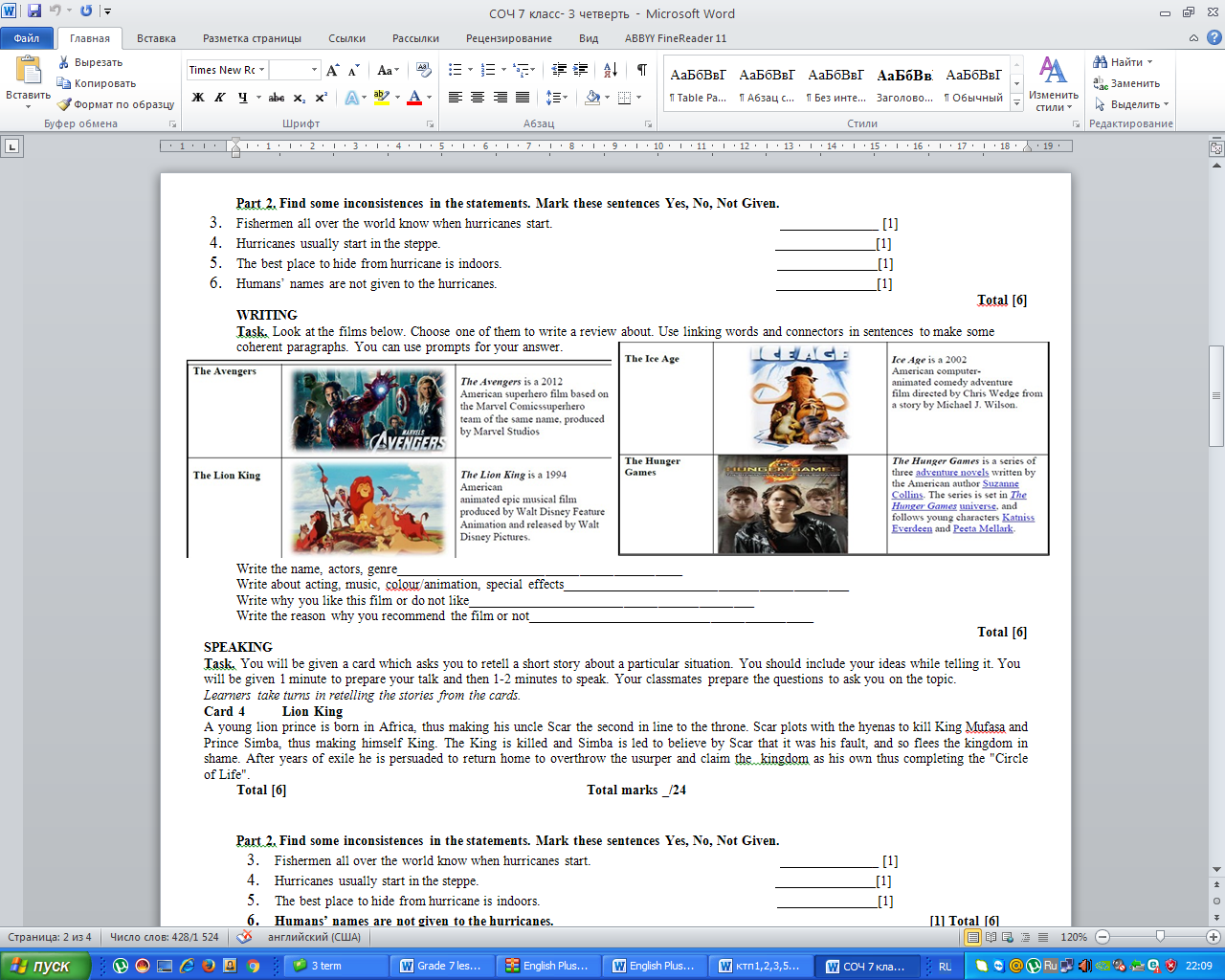
MODULE 8
Lesson plan
LESSON: Module 8 Lesson 9 Review |
School: |
|||||
Date: |
Teacher name: |
|||||
CLASS: |
Number present: |
absent: |
||||
Learning objectives(s) that this lesson is contributing to |
7.C2 use speaking and listening skills to provide sensitive feedback to peers |
|||||
Lesson objectives |
All learners will be able to: |
|||||
express some views and ideas accurately in language, question writing and song tasks using some target language from module with support |
||||||
Most learners will be able to: |
||||||
express a range of views and ideas accurately in language, question writing and song tasks using a range of target language from module with support
|
||||||
Some learners will be able to: |
||||||
express a range of views and ideas accurately in language, question writing and song tasks using a range of target language from module with little support
|
||||||
Previous learning |
vocabulary from the Module vocabulary relating to basic positive and negative feelings |
|||||
Plan |
||||||
Planned timings |
Planned activities |
|
Teacher
|
|||
Beginning the lesson
|
To match sentences with similar meanings • Ask Ss if they can think of some characteristics of nature (beautiful, amazing, cruel, etc.)
|
|
|
|||
|
|
V Exercise 1 answers. 1 interested, ridiculous 2 phobic, scared 3 fond, unpleasant 4 worried, weird 5 real, bad Exercise 2 answers. 1 bitten 2 bruise 3 sprained 4 injured 5 burnt 6 cuts 7 break 8 injury Language focus Exercise 3 answers. 1 not at all 2 really 3 isn’t very 4 quite 5 very 6 really
Exercise 4 answers. 1 haven’t met 2 ’s visited 3 hasn’t arrived 4 ’ve competed 5 haven’t studied Exercise 5 answers. 1 Has the man broken his foot? Yes, he has. 2 Have the girls sprained their ankles? No, they haven’t. 3 Has the mother cut her leg? No, she hasn’t. 4 Has the mother hurt her arm? Yes, she has. 5 Have the boys burnt their arms? Yes, they have. 6 Has the man bruised his arm? No, he hasn’t. Communication Exercise 6 answers. 1 wrong 2 broken 3 happen 4 accident 5 think 6 need Listening Exercise 7 CD 3.15 Tapescript page 153 answers. 1 really enthusiastic 2 a shark bit his foot 3 police officer 4 always interested in it 5 sprained wrist Tests Unit 7 test, Test Bank MultiROM
|
|
|
|
||||
|---|---|---|---|---|---|---|---|---|---|
|
|
|
|||||||
|
|
|
|
|
|
||||
|
Ending the lesson |
• Play the video and elicit Ss' comments. |
Video |
|
|
||||
|
Additional information |
|
|||||||
Differentiation – how do you plan to give more support? How do you plan to challenge the more able learners? |
Assessment – how are you planning to check learners’ learning? |
Cross-curricular
links |
|||||||
support less able learners by providing question stems and prompting them to look at certain areas of the module to locate information |
monitor learner use of vocabulary from across the module in the quiz task |
values links: value of team cooperation and collaboration |
|||||||
|
challenge more able learners to work out which words in the song they could change without changing the meaning |
|
|
|
|||||
 ocabulary
Reflection Were the lesson objectives/learning objectives realistic? Did I stick to timings? What changes did I make from my plan and why?
|
Answer the most relevant questions from the box on the left about your lesson. |
Module 7
|
LESSON: Module 7 Lesson 1 People in sport |
School: |
|
|||||||||||
|---|---|---|---|---|---|---|---|---|---|---|---|---|---|---|
|
Date: |
Teacher name: |
|
|||||||||||
|
CLASS: 7 |
Number present: |
absent: |
|
||||||||||
|
Learning objectives(s) that this lesson is contributing to |
7.C6 organise and present information clearly to others
|
|
|||||||||||
|
Lesson objectives |
All learners will be able to: |
|
|||||||||||
|
show some understanding of arguments in text, make some inferences about it and express some views accurately about the topic with support • Learn vocabulary for people in sport. • Play the Team Manager game. • Learn about imperatives. • Practise using imperatives to give advice.
|
|
||||||||||||
|
Most learners will be able to: |
|
||||||||||||
|
show understanding of most arguments in text, make some inferences about it and express a range of views accurately about the topic with little support • Learn vocabulary for people in sport. • Play the Team Manager game. • Learn about imperatives. • Practise using imperatives to give advice.
|
|
||||||||||||
|
Some learners will be able to: without support |
|
||||||||||||
|
show understanding of most arguments in text, make a range of inferences about it and express a range of views accurately about the topic • Learn vocabulary for people in sport. • Play the Team Manager game. • Learn about imperatives. • Practise using imperatives to give advice.
|
|
||||||||||||
|
Previous learning |
language for describing habits / negative prefixes with adjectives / activities relating to healthy living |
|
|||||||||||
|
Plan |
|
||||||||||||
|
Planned timings |
Planned activities |
|
Teacher
|
|
|||||||||
|
Beginning the lesson |
Read the title of the module Healthy Habits and ask Ss to suggest what they think it means. Go through the What’s in this module? list and stimulate a discussion to prompt Ss’ interest in the module.
Warm-up (3–4 minutes) • With books closed, write the word sport on the board. • Put students into pairs and ask them to write down as many names of sports as they can in two minutes. • Ask students to call out sports they have written down. Write them on the board. • Ask students if they know any words for people in sport. Elicit a few words and write them on the board.
|
|
|
|
|||||||||
|
|
Main activities
|
To present vocabulary for healthy/ unhealthy habits Draw Ss’ attention to the pictures. Play the recording. Ss listen and repeat chorally and/or individually. Check Ss’ intonation and pronunciation Exercise 1 CD 3.02 • Students match the words with the photos. • Check answers with the class, and model and drill pronunciation of any words that are new to students. answers. 1 referee 2 supporter 3 TV reporter 4 captain 5 champion 6 loser
To practise vocabulary for healthy/ unhealthy habits Draw Ss’ attention to the pictures. Present the example and ask Ss to form sentences following the example. Monitor the activity around the class. Check Ss’ answers around the class. Exercise 2 • Students complete the sentences with their own ideas. This activity is based on general knowledge. In some classes you may need to group students who do not know much about sport with those who do. • Ask students to check their answers in pairs. Then ask some students to read their answers to the class. answers. Students’ own answers.
To introduce the topic and stimulate interest in the text
Exercise 3 • Look at the title and ask if anyone can explain what it means. Confirm that a team manager decides what the team should do in a variety of situations. • Students play the Team Manager game individually, then compare their answers in pairs. • Ask some students to report their own results and their partner’s results. Ask whether they agree with the results. • In a stronger class, go through each question and elicit why each option implies good or bad management skills. Follow up by asking for adjectives which describe a good manager. • In a weaker class, ask for adjectives which can describe good and bad managers. Students can refer to the key to help them. answers. Students’ own answers. Exercise 4 • Focus on the examples in the table with the class, then ask students to answer the questions. answers. 1 The negative is formed with do not or don’t. 2 No. LANGUAGE NOTE We do not use a subject before an imperative: Buy
the player.
NOT In
negative imperatives, we use Don’t
rather than Not:
Don’t buy the player.
NOT
|
Class CD
Video
|
|
|
||||||||
|
|
To predict the content of a text and listen for main idea Elicit predictions from the Ss about the text. Play the recording. Ss listen and read to find the answer. Check Ss’ answers.
To read for more detailed understanding Explain the task. Ss’ first go through the Check these words box and look up the meaning of any unknown words Allow Ss time to complete the task. Check Ss’ answers. Exercise 5 • Focus on the example with the class and elicit one or two more examples from the class. • Students prepare their advice individually, then practise giving their advice in pairs. Ask some students to report back on whether their partner gave good advice. • In a weaker class, to consolidate imperatives, write drink, eat, go on the board. Then say I’m hungry, I’m thirsty, etc. Ask students to give you advice using the imperative. In a stronger class, students can give advice without relying on prompts. answers. Students’ own answers. Finished? • Refer fast finishers to the Finished? activity. Students imagine different situations and use the language from exercise 1. Encourage them to explain why each situation is good or bad. answers. Students’ own answers.
|
Video |
|
|
|||||||||
|
|
Ending the lesson
|
Concluding the lesson Assessment Peer and self assessment chart Giving the home task |
|
|
|
||||||||
|
|
Additional information |
|
|||||||||||
|
Differentiation – how do you plan to give more support? How do you plan to challenge the more able learners? |
Assessment – how are you planning to check learners’ learning? |
Cross-curricular
links |
|
||||||||||
|
monitor weak groups in reading activities and provide oral prompts to support and guide understanding |
use thumbs up and down technique when checking comprehension answers and ask learners to point to evidence for inferences |
health and safety: lifestyle choices |
|
||||||||||
|
|
challenge stronger learners to justify answers through questioning when eliciting views – particularly learner inferences about text |
|
|
|
|||||||||
Reflection Were the lesson objectives/learning objectives realistic? Did I stick to timings? What changes did I make from my plan and why? |
Answer the most relevant questions from the box on the left about your lesson. |
|
||||||||||||
MODULE 7
Lesson plan
-
LESSON: Module 7 Lesson 2
Women in sport
School:
Date:
Teacher name:
CLASS: 7
Number present:
absent:
Learning objectives(s) that this lesson is contributing to
7.R1 understand the main points in a growing range of short, simple texts on general and curricular topics
7.R2 understand independently specific information and detail in short, simple texts on a limited range of general and curricular topics
7.S3 give an opinion at sentence and discourse level on an increasing range of general and curricular topics
Lesson objectives
All learners will be able to:
identify some speaker attitudes and opinions in listening text and use some target language to express some views in speaking and writing with support
• Read about a female racing driver.
• Read for general meaning and specific information.
• Give your opinions about sport.
Most learners will be able to:
identify most speaker attitudes and opinions in listening text and use a range of target language to express some views in speaking and writing with little support
• Read about a female racing driver.
• Read for general meaning and specific information.
• Give your opinions about sport.
Some learners will be able to:
identify most speaker attitudes and opinions in listening text and use a range of target language to express a range of views in speaking and writing without support
• Read about a female racing driver.
• Read for general meaning and specific information.
• Give your opinions about sport.
Previous learning
language of giving opinions / agreeing and disagreeing / vocabulary relating to lifestyle factors
Plan
Planned timings
Planned activities
ResourcesTeacher
Notes
Beginning the lesson
Warm-up (2 minutes)
• With books closed, write Formula 1 on the board. Elicit the meaning and ask students what they know about the sport.
• Ask students if they know any Formula 1 drivers, then ask if they think that women also race Formula 1 cars.
Background
The woman who has competed the most frequently in Formula 1 was Lella Lombardi, from Italy, who was born in 1941. She competed in 17 Formula 1 Grand Prix. She finished in the top six in the 1975 Spanish Grand Prix. She is the only woman to have scored any points in a Formula 1 Grand Prix.
Main activities
To practise giving advice to a friend
Explain the task to the Ss. Remind them that when giving advice, we use should/shouldn’t. They should use the text in Ex. 2 for ideas.
When giving advice, it is best to finish with positive encouragement.
Give them some time to prepare answers.
Check answers by asking Ss to give their advice.
Exercise 1
• Read the task with the class and ask students for their ideas. Ask students to justify their ideas with reasons.
• You could ask whether the situation is the same in all sports, comparing football with athletics, for example.
answers.
Students’ own answers.
Exercise 2 CD 3.03
• Read through the interview questions with the class and clarify that the text is a transcript of the interviewee’s answers.
• in a stronger class, ask students to say which part of the answers they used to make their choices. In a weaker class, help them identify the areas of the text which dictate which choices to make.
answers.
1 B 2 A 3 G 4 D 5 F 6 E
To practise new vocabulary
Explain the task.
Allow time for Ss to compete the exercise.
Check Ss’ answers.
To listen for specific information
Explain the task.
Play the recording (twice if necessary). Ss listen and answer the questions.
Check Ss’ answers.
Exercise 3
• Students read the text again more carefully and complete the sentences. Note that sometimes more than one word is needed.
answers.
1 watched 2 rally cars 3 massive / popular 4 competitors 5 money 6 sponsors
To personalise the topic
Exercise 4
• Students find the words and phrases and work out the meanings, then complete the sentences.
• In a weaker class, check understanding of the words and phrases, for example, by asking students to translate them. In a stronger class, after translating the words, students could also use the words in their own sentences to show they understand them in context.
answers.
1 support 2 have a go at 3 competed 4 racing 5 situation 6 atmosphere
Exercise 5
• Read through the questions with the class and make sure that students understand everything.
• Students prepare their answers individually, then ask and answer in pairs. Ask some students to report back on their partner’s answers and opinions.
answers.
Students’ own answers.
Class CD
Ending the lesson
To write a text about a lifestyle
Concluding the lesson
Assessment Peer and self assessment chart
Giving the home task
Additional information
Differentiation – how do you plan to give more support? How do you plan to challenge the more able learners?
Assessment – how are you planning to check learners’ learning?
Cross-curricular links
Health and safety check
ICT links Values links
support less able learners prior to listening by highlighting key opinion/attitude language from text on board
use thumbs up and down technique to monitor comprehension
health and safety: lifestyle choices
challenge more able learners in vocabulary task by asking them to come up with strategies for grouping new words in their notebooks
monitor pronunciation: sentence stress and intonation in dialogue tasks. remodel and drill for whole class as appropriate
Reflection
Were the lesson objectives/learning objectives realistic?
Did I stick to timings?
What changes did I make from my plan and why?
Answer the most relevant questions from the box on the left about your lesson.
MODULE 7
Lesson plan
MODULE 7
Lesson plan
LESSON: Module 7 Lesson 4 Compound nouns |
School: |
|
|||||||||||
Date: |
Teacher name: |
|
|||||||||||
CLASS: |
Number present: |
absent: |
|
||||||||||
Learning objectives(s) that this lesson is contributing to |
7.UE1 begin to use basic abstract nouns and compound nouns and noun phrases describing times and location on a growing range of familiar general and curricular topics 7.L4 understand with limited support the main points of extended talk on a range of general and curricular topics 7.L5 understand most specific information and detail of supported, extended talk on a range general and curricular topics |
|
|||||||||||
|
All learners will be able to: |
|
|||||||||||
use some target structures accurately to communicate intended meanings with support • Learn compound nouns related to sport. • Listen to three people talking about sport for the disabled. • Listen for general meaning and specific details. |
|
||||||||||||
Most learners will be able to: |
|
||||||||||||
use most target structures accurately to communicate intended meanings and pronounce target language intelligibly most of the time. with little support • Learn compound nouns related to sport. • Listen to three people talking about sport for the disabled. • Listen for general meaning and specific details. |
|
||||||||||||
Some learners will be able to: |
|
||||||||||||
use target language accurately and flexibly with clear pronunciation to communicate a range of intended meanings without support• Learn compound nouns related to sport. • Listen to three people talking about sport for the disabled. • Listen for general meaning and specific details. |
|
||||||||||||
Previous learning |
|
|
|||||||||||
Plan |
|
||||||||||||
Planned timings |
Planned activities |
|
Teacher
|
|
|||||||||
Beginning the lesson
|
Warm-up (2–3 minutes) • With books closed, ask students to name some people in sport. Write their names on the board and ask: What is this person? Elicit the compound nouns tennis / football player and write them on the board. • Focus on the compound nouns and tell students they are going to learn more compound nouns to do with sport.
|
|
|
|
|||||||||
|
Main activities
|
Exercise 1 CD 3.04 • Allow students time to read the sentences and choose the correct answers. Encourage them to guess if they aren’t sure. • Play the CD. Students listen and check their answers. In a stronger class, ask where the stress falls. In a weaker class, point out that in compound nouns, the stress falls on the first word, not the second word. Model and drill some of the pronunciations. answers. 1
tennis tournament
2 rugby
match
3 football
team
4 swimming
champion 5
athletics
stadium Exercise 2 • Read the instructions and the example sentence with the class. Then, in pairs, students form compound nouns and complete the sentences. answers. 1
tennis player / champion
2 cycling
competition
3 football
stadium
4 skiing
tournament 5
basketball
team Exercise 3 CD 3.05 Tapescript page 152 • Focus on the photos and elicit or explain the meaning of disabled. • Play the CD. Students listen and check their answer. answers. Oscar Pistorius Exercise 4 CD 3.05 • Allow students time to read the questions. Play the CD again and ask students to answer the questions. • Allow students to compare their answers in pairs. answers. 1 False. She isn’t going to prepare for any skiing competitions next year. 2 True. 3 False. Oscar Pistorius can’t compete in the Olympics. He is going to compete in the Paralympic games. 4 True. 5 True. 6 False. The basketball team is going to play a match in Glasgow on Friday. Exercise 5 • Students use the compound nouns to write questions. If they do not know the answers to any questions, encourage them to find these out. answers. Students’ own answers.
|
|
|
|
||||||||
|
Ending the lesson |
Concluding the lesson Assessment Peer and self assessment chart Giving the home task |
|
|
|
||||||||
|
Additional information |
|
|||||||||||
Differentiation – how do you plan to give more support? How do you plan to challenge the more able learners? |
Assessment – how are you planning to check learners’ learning? |
Cross-curricular
links |
|||||||||||
monitor less able groups during controlled tasks and provide further modelling and drilling support |
monitor learners’ production and pronunciation of target language in whole class plenary checking of tasks |
cross-curricular links: languages [contrasts with L1] |
|||||||||||
|
extend final task for more able learners by asking them to use target structures to explain good ways to remember new vocabulary |
|
|
|
|||||||||
Reflection
Were the lesson objectives/learning objectives realistic?
Did I stick to timings?
What changes did I make from my plan and why?
|
Answer the most relevant questions from the box on the left about your lesson. |
MODULE 87
Lesson plan
LESSON: Module 7 Lesson 5 Be going to and Present Continuous |
School: |
|
|||||||||||||
Date: |
Teacher name: |
|
|||||||||||||
CLASS: |
Number present: |
absent: |
|
||||||||||||
Learning objectives(s) that this lesson is contributing to |
7.C6 organise and present information clearly to others 7.UE8 use future form will to make offers, promises, and predictions on a growing range of familiar general and curricular topics
|
|
|||||||||||||
Lesson objectives |
All learners will be able to: |
|
|||||||||||||
show some understanding of detail and arguments in text, make some inferences about it and express some views accurately about the topic with support • Learn the question form of be going to. • Write questions using be going to. • Learn the use of present continuous for future arrangements. • Practise asking about future arrangements using the present continuous. |
|
||||||||||||||
Most learners will be able to: |
|
||||||||||||||
show understanding of most detail and arguments in text, make some inferences about it and express a range of views accurately about the topic with little support • Learn the question form of be going to. • Write questions using be going to. • Learn the use of present continuous for future arrangements. • Practise asking about future arrangements using the present continuous. |
|
||||||||||||||
Some learners will be able to: |
|
||||||||||||||
show understanding of most detail and arguments in text, make a range of inferences about it and express a range of views accurately about the topic without support• Learn the question form of be going to. • Write questions using be going to. • Learn the use of present continuous for future arrangements. • Practise asking about future arrangements using the present continuous. |
|
||||||||||||||
Previous learning |
food vocabulary , nutritional benefits of different food groups |
|
|||||||||||||
Plan |
|
||||||||||||||
Planned timings |
Planned activities |
|
Teacher
|
|
|||||||||||
Beginning the lesson
|
Warm-up • Revise
statements with be
going to
with the class. Ask them to form affirmative or negative sentences
with • Ask: Does the word order usually change in questions in English? Do not confirm or reject any ideas at this stage. |
|
|
|
|||||||||||
|
Main activities
|
To predict the content of a text and listen for main idea Exercise 1 • Focus students on the questions and ask them to complete them with the words in the box. They should read them carefully to choose the correct question words. answers. 1 What 2 Where 3 going to 4 Is, is 5 How LANGUAGE NOTE The forms am / is / are come before the subject in questions with be going to: Is
he going to leave school?
NOT Exercise 2 • Students order the words and write the questions individually. answers. 1 Are you going to play tennis later? 2 Are you and your friends going to join any teams next year? 3 Are you going to go to any tournaments this year? 4 Is your friend going to go cycling this weekend? 5 What sport are you going to play next week? Exercise 3 • Go round and listen as students ask and answer. Encourage them to give answers that are true for them, or to make answers up to fit the topic if they prefer. answers. Students’ own answers.
To read for specific information Exercise 4 • Allow students time to read through the mini-dialogues, then match each one to the rule that describes its function. In a stronger class, ask if students can describe the difference in function without looking at the rules. answers. 1 a 2 b
LANGUAGE
NOTE
We use the present continuous for definite arrangements that are
planned and agreed for I’m
going to London on Saturday.
NOT The
taxi is coming to collect us at six o’clock.
NOT
To practise talking Exercise 5 • Students analyse the meaning of the tense in each sentence. Remind them to look carefully at any time markers that might give them clues. • In a weaker class, provide more examples for students to identify. answers. 1 future arrangement 2 action in progress 3 future arrangement Exercise 6 • If necessary refer back to the spelling rules on page 21. • Students read and complete the dialogue. Explain that they do not need to worry about the blue words at this stage. answers. 1 ’re practising 2 ’re cycling 3 ’m visiting 4 Are, doing, ’m swimming 5 ’m watching
|
Video
|
|
|
||||||||||
|
|
|
|||||||||||||
|
Ending the lesson
|
Concluding the lesson Assessment Peer and self assessment chart Giving the home task |
|
|
|
||||||||||
|
Additional information |
|
|||||||||||||
Differentiation – how do you plan to give more support? How do you plan to challenge the more able learners? |
Assessment – how are you planning to check learners’ learning? |
Cross-curricular
links |
|
||||||||||||
monitor weak groups in reading activities and provide oral prompts to support and guide understanding |
use thumbs up and down technique when checking comprehension answers and ask learners to point to evidence for inferences |
health and safety: lifestyle choices |
|
||||||||||||
|
challenge stronger learners to justify answers through questioning when eliciting views and to cite examples from the text |
monitor use of target vocabulary in poster task and feedback to whole class |
|
|
|
||||||||||
|
Reflection Were the lesson objectives/learning objectives realistic? Did I stick to timings? What changes did I make from my plan and why?
|
Answer the most relevant questions from the box on the left about your lesson. |
|
||||||||||||
MODULE 7
Lesson plan
LESSON: Module 7 Lesson 6 Making plans and arrangements |
School: |
|
||||||||||||
Date: |
Teacher name: |
|
||||||||||||
CLASS: 7 |
Number present: |
absent: |
|
|||||||||||
Learning objectives(s) that this lesson is contributing to |
7.UE6 use a variety of personal, demonstrative and quantitative pronouns including someone somebody, everybody , no-one on a growing range of familiar general and curricular topics 7.L5 understand most specific information and detail of supported, extended talk on a range general and curricular topics 7.S5 keep interaction going in longer exchanges on a range of general and curricular topics
|
|
||||||||||||
Lesson objectives
|
All learners will be able to: identify some specific information and speaker opinions in listening text and use some target language to express some views in speaking and writing with support • Listen to a conversation about plans and arrangements. • Learn key phrases for talking about plans and arrangements. • Learn about indefinite pronouns. • Practise talking about plans and arrangements. |
|
||||||||||||
Most learners will be able to: |
|
|||||||||||||
identify most specific information and opinions in listening text and use a range of target language to express some views in speaking and writing with support • Listen to a conversation about plans and arrangements. • Learn key phrases for talking about plans and arrangements. • Learn about indefinite pronouns. • Practise talking about plans and arrangements. |
|
|||||||||||||
Some learners will be able to: |
|
|||||||||||||
identify most specific information and speaker opinions in listening text and use a range of target language to express a range of views in speaking and writing with little support • Listen to a conversation about plans and arrangements. • Learn key phrases for talking about plans and arrangements. • Learn about indefinite pronouns. • Practise talking about plans and arrangements. |
|
|||||||||||||
Previous learning |
vocabulary relating to healthy diet and lifestyle in previous sections basic phrases for advice and suggestions |
|
||||||||||||
Plan |
|
|||||||||||||
Planned timings |
Planned activities |
|
Teacher
|
|
||||||||||
Beginning the lesson |
Warm-up (3–4 minutes) • With books closed, ask students if they ever meet their friends at the weekend. Ask where they go and what they do. • Ask when they make their plans for the weekend and how they make the arrangements. • Ask them to imagine that they want to meet some friends and go to a football match. Ask: What things do you need to talk about with your friends? • Elicit that they will talk about where they should meet and what time they should meet. • Tell students they are going to practise a conversation like this in English. |
|
|
|
||||||||||
|
Main activities
|
Exercise 1 CD 3.06 • Ask students to listen for where and when Callum and Gemma are meeting. answer. They’re meting outside the sports centre at about 7.30. Exercise 2 CD 3.06 • Read through the key phrases with the class. • Ask students to think about the dialogue and recall who says each one. Remind them to think about whether the speaker is making or responding to an invitation. • Play the CD and ask students to listen and check. answers. 1 Callum 2 Gemma 3 Gemma 4 Callum 5 Callum 6 Gemma Exercise 3 CD 3.06 • Students complete the dialogue with the key phrases. When they have checked their answers, ask them to practise with a partner. • Ask them to perform the dialogue a couple of times, then swap roles and go through it again. answers. 1 b Are you doing anything this evening? 2 d No, nothing special. 3 a What are you up to? 4 c if you’re interested. 5 f It’s on at 6 e Shall I meet you outside … ? Exercise 4 • Allow students time to read through the examples, then ask the question in the instructions. • Explain that indefinite pronouns are used to ask or talk about a person or place without saying specifically who or what it is. answers. We use any- in negative sentences or questions, and some- in affirmative statements. Exercise 5 • Go through the indefinite pronouns in the box, and point out that the ending changes depending on the purpose of the pronoun. In a weaker class, explain that -thing relates to an object, -where relates to a place, and -one relates to a person. In a stronger class, elicit this information. answers. 1 anyone 2 somewhere 3 anything 4 something |
|
|
|
|||||||||
|
To practise role-playing Exercise 6 • Look at the posters with the class and explain that they contain all the information students need to make a plan to go to one of the events. • Refer students back to the dialogue in exercise 1 and point out that they can amend this by changing the blue words. • Students prepare and practise the new dialogue in pairs. • Go round and listen as they are talking and check they are using the key phrases correctly. answers. Students’ own answers.
|
|
|
|
||||||||||
|
Ending the lesson
|
Concluding the lesson Assessment Peer and self assessment chart Giving the home task |
|
|
|
|||||||||
|
Additional information |
|
||||||||||||
Differentiation – how do you plan to give more support? How do you plan to challenge the more able learners? |
Assessment – how are you planning to check learners’ learning? |
Cross-curricular
links |
|
|||||||||||
monitor less able learners as they script and practise their dialogues in pairs – highlight areas of language where they can self-correct |
monitor learner accuracy and pronunciation in dialogue task and provide whole class feedback |
health and safety: lifestyle choices |
|
|||||||||||
|
challenge more able learners to think about sentence stress and intonation as they script and practise dialogues |
|
|
|
||||||||||
|
Reflection Were the lesson objectives/learning objectives realistic? Did I stick to timings? What changes did I make from my plan and why?
|
Answer the most relevant questions from the box on the left about your lesson. |
|
|||||||||||
MODULE 7
Lesson plan
LESSON: Module 7 Lesson 7 A formal letter |
School: |
|||||
Date: |
Teacher name: |
|||||
CLASS: 7 |
Number present: |
absent: |
||||
Learning objectives(s) that this lesson is contributing to |
7.W1 plan, write, edit and proofread work at text level with some support on a growing range of general and curricular topics |
|||||
Lesson objectives |
All learners will be able to: |
|||||
identify some points of detail and writer opinions in text and use some target language to express some views in speaking and writing with support • Study a model formal letter. • Learn about layout and language in a formal letter. • Learn key phrases for writing a formal letter. • Write a formal letter. |
||||||
Most learners will be able to identify most points of detail and writer opinions in text and use a range of target language to express some views in speaking and writing with support • Study a model formal letter. • Learn about layout and language in a formal letter. • Learn key phrases for writing a formal letter. • Write a formal letter. |
||||||
Some learners will be able to: |
||||||
identify most points of detail and writer opinions in text and use a range of target language to express a range of views in speaking and writing with little support • Study a model formal letter. • Learn about layout and language in a formal letter. • Learn key phrases for writing a formal letter. • Write a formal letter. |
||||||
Previous learning |
benefits of certain types of food / basic vocabulary relating to feeling well/unwell |
|||||
Plan |
||||||
Planned timings |
Planned activities |
|
Teacher
|
|||
Beginning the lesson |
Warm-up (2–3 minutes) • With books closed, ask students if they ever write letters. Ask who they write letters to, and why. • Ask if they ever write formal letters. Ask who they might write a formal letter to and why.
|
|
|
|||
|
Main activities
|
To predict the content of a text Exercise 1 • Ask students to read the model letter quickly and then ask: What does the person who wrote this letter want? (They want money for a sports tournament.) • Students read the letter again and answer the questions. answers. 1 Mary Grant 2 No. 3 Paragraph C 4 Paragraph B 5 Paragraph A
To read for specific information Exercise 2 • Read through the questions with the class. Explain that these questions cover the structure of the letter and the language used in detail. • Students look at the model text again and find the information. Ask students if the layout of a formal letter is the same in their language. answers. 1 At the top of the letter. 2 Under the address of the person who is going to receive the letter. 3 At the top left of the letter. 4 Full forms: I am; we are. 5
Formal: Dear Sir
or Madam; I am writing to you because; Exercise 3 • Read through the key phrases with the class. Ask students to find the key phrases in the model letter and translate them into their own language before ordering them. answers. 1 Dear Sir or Madam 2 I am writing to you because … 3 Please contact me … 4 I look forward to hearing from you. 5 Yours faithfully Exercise 4 • Read the task notes with the class. Students read the model text and order the ideas. • Students write their letters, following their paragraph plan. This can be set for homework. • Tell students to check their work, and check they have used the correct layout and full forms of all the verbs. |
|
|
|
|||||||||||||
|
Optional activity: Writing To practise or revise language for a formal letter, dictate these sentences to the class, with books closed. Ask students to rewrite the sentences changing the contractions to full forms. 1 He’s looking for a new sponsor. 2 It’ll be good publicity for your company. 3 We’re going to invite twenty teams. 4 Please contact me if you’re interested. answers. 1 He is looking for a new sponsor. 2 It will be good publicity for your company. 3 We are going to invite twenty teams. 4 Please contact me if you are interested. |
|
|
|
||||||||||||||
|
Ending the lesson |
At the end of the lesson, students reflect on: Feedback - What have you learnt today?
I
I
can speak
I
need a help
Homework: |
|
|
|
|||||||||||||
|
Additional information |
|
||||||||||||||||
Differentiation – how do you plan to give more support? How do you plan to challenge the more able learners? |
Assessment – how are you planning to check learners’ learning? |
Cross-curricular
links |
|
|||||||||||||||
monitor less able learners in internet search task: elicit appropriate search terms
monitor less able learners as they produce posters in pairs – highlight areas of language where they can self-correct |
monitor learners’ use of structure and vocabulary from the Module thus far across tasks and note to give whole class feedback on board |
cross-curricular links: Biology [bacteria and viruses] |
|
|||||||||||||||
|
provide challenge for more able learners by requiring them to use three technical medical terms in their presentations |
use a checklist to assess learner poster presentations for accuracy, delivery and organisation. |
|
|
||||||||||||||
|
Reflection Were the lesson objectives/learning objectives realistic? Did I stick to timings? What changes did I make from my plan and why? |
Answer the most relevant questions from the box on the left about your lesson. |
||||||||||||||||
 know and understand


Lesson plan
|
LESSON: Module 7 Lesson 8 Healthy habits |
School: |
|
|||||||||||||||||||||
|---|---|---|---|---|---|---|---|---|---|---|---|---|---|---|---|---|---|---|---|---|---|---|---|---|
|
Date: |
Teacher name: |
|
|||||||||||||||||||||
|
CLASS: 7 |
Number present: |
absent: |
|
||||||||||||||||||||
|
Learning objectives(s) that this lesson is contributing to |
7.UE1 begin to use basic abstract nouns and compound nouns and noun phrases describing times and location on a growing range of familiar general and curricular topics 7.UE5 use questions including questions with whose, how often , how long and a growing range of tag questions on a growing range of familiar general and curricular topics 7.UE8 use future form will to make offers, promises, and predictions on a growing range of familiar general and curricular topics 7.S5 keep interaction going in longer exchanges on a range of general and curricular topics
|
|
|||||||||||||||||||||
|
Lesson objectives
|
All learners will be able to: |
|
|||||||||||||||||||||
|
identify some of the main ideas and specific information correctly in text and use some target vocabulary correctly in response to prompts with support • Learn abstract nouns related to health and lifestyle. • Talk about healthy habits. • Learn how to use will for offers and promises. • Learn and practise using tag questions. |
|
||||||||||||||||||||||
|
Most learners will be able to: |
|
||||||||||||||||||||||
|
identify most of the main ideas and specific information correctly in text and use a range of target vocabulary correctly in response to prompts with little support • Learn abstract nouns related to health and lifestyle. • Talk about healthy habits. • Learn how to use will for offers and promises. • Learn and practise using tag questions. |
|
||||||||||||||||||||||
|
Some learners will be able to: |
|
||||||||||||||||||||||
|
identify all of the main ideas and specific information correctly in text and use a range of target vocabulary correctly in response to prompts without support • Learn abstract nouns related to health and lifestyle. • Talk about healthy habits. • Learn how to use will for offers and promises. • Learn and practise using tag questions. |
|
||||||||||||||||||||||
|
Previous learning |
basic vocabulary relating to emotions and behaviour |
|
|||||||||||||||||||||
|
Plan |
|
||||||||||||||||||||||
|
Planned timings |
Planned activities |
|
Teacher
|
|
|||||||||||||||||||
|
Beginning the lesson
|
Warm-up (3–4 minutes) • With books closed, ask students to name the oldest person they know. • Elicit some names, then ask for more details, e.g. how old is the person, where do they live, how they spend their time, do they have any unusual habits. • Ask students what they think the secret to a long and healthy life is. Elicit some ideas, but do not confirm or reject any at this stage.
|
|
|
|
|||||||||||||||||||
|
|
Main activities
|
To listen and read for general understanding Exercise 1 • Explain the task. In pairs, students discuss the different options and decide which ones are healthier. • Get some feedback from a few students and encourage them to give reasons for their answers. answers. Students’ own answers. Exercise 2 CD 3.10 • Read the instructions and draw students’ attention to the word in the box. Ask students what part of speech they are and elicit that they are all nouns. Then ask: Do they refer to material objects or abstract ideas? Elicit answers and explain that nouns like these are called abstract nouns. In a stronger class, you could point out that most (but not all) abstract nouns are uncountable. • Students work in pairs to complete the text. Play the recording for them to listen and check their answers. answers. 1 habits 2 lifestyle 3 humour 4 education 5 idea. |
Video
|
|
|
||||||||||||||||||
|
|
Exercise 3 • Ask students to read the dialogue again and decide if the sentences are true or false. Encourage them to underline the parts of the dialogue where they find their answers. • Check answers as a class. Then draw students’ attention to the note about will and won’t. Ask them to find five examples in the dialogue (I’ll ask my grandparents …, I’ll help you …, I’ll call my grandmother …, I’ll be there …, I’ll make sandwiches …). answers. 1 False 2 True 3 True 4 False 5 False Exercise 4 • Read through the instructions together. Draw students’ attention to the words in blue in the dialogue and point out that these are tag questions. Explain that they aren’t real questions – they are usually used to check that the listener agrees with what the speaker has said. Highlight that tag questions are very commonly used in spoken English, but not in formal written English. • Read through the rules together and check for understanding. In a stronger class, ask students to work individually to complete the rules, then check answers. as a class. In a weaker class, allow students to do the activity in pairs. answers. 1 the same as 2 positive, negative Exercise 5 • Explain the task and ask students to do it individually. • Check answers as a class. answers. 1 c 2 a 3 e 4 b 5 f 6 d Exercise 6 • Divide students into pairs and explain the task. Ask one pair to read out the example and make sure students understand what they have to do. • Circulate and monitor, listening for correct use of question tags. Help out with pronunciation or other issues where necessary. • Ask several students to report their ideas back to the class. answers. students’ own answers. |
|
|
|
|||||||||||||||||||
|
|
Ending the lesson |
At the end of the lesson, students reflect on: Feedback - What have you learnt today?
I
know and understand
I
can speak
I
need a help
Homework: |
|
|
|
||||||||||||||||||
|
|
Additional information |
|
|||||||||||||||||||||
|
Differentiation – how do you plan to give more support? How do you plan to challenge the more able learners? |
Assessment – how are you planning to check learners’ learning? |
Cross-curricular
links |
|
||||||||||||||||||||
|
monitor less able groups during controlled tasks and provide further modelling and drilling support |
monitor learners’ production and pronunciation of target language in whole class plenary checking of tasks |
values links: citizenship |
|
||||||||||||||||||||
|
|
provide an extension task for more able learners if they finish controlled tasks quickly: replace four last lines of poem with four of your own. |
|
|
|
|||||||||||||||||||
Reflection Were the lesson objectives/learning objectives realistic? Did I stick to timings? What changes did I make from my plan and why? |
Answer the most relevant questions from the box on the left about your lesson. |
|
||||||||||||||||||||||
MODULE 7
Lesson plan
LESSON: Module 7 lesson 9 Talking about scores |
School: |
|
||||||||||||||
Date: |
Teacher name: |
|
||||||||||||||
CLASS: |
Number present: |
absent: |
|
|||||||||||||
Learning objectives(s) that this lesson is contributing to |
7.L5 understand most specific information and detail of supported, extended talk on a range general and curricular topics 7.S5 keep interaction going in longer exchanges on a range of general and curricular topics
|
|
||||||||||||||
Lesson objectives |
All learners will be able to: |
|
||||||||||||||
identify some points of coherence and cohesion in texts and use some cohesive ties correctly in writing their own emails with support • Learn key phrases for talking about scores. • Listen to a conversation about scores. • Practise talking about scores. |
|
|||||||||||||||
Most learners will be able to: |
|
|||||||||||||||
identify most points of coherence and cohesion in texts and use a range of cohesive ties correctly in writing their own emails with support • Learn key phrases for talking about scores. • Listen to a conversation about scores. • Practise talking about scores. |
|
|||||||||||||||
Some learners will be able to: |
|
|||||||||||||||
identify all points of coherence and cohesion in texts and use a range of cohesive ties correctly in writing their own emails with little support • Learn key phrases for talking about scores. • Listen to a conversation about scores. • Practise talking about scores. |
|
|||||||||||||||
Previous learning |
basic features of email genre / basic phrases in written correspondence |
|
||||||||||||||
Plan |
|
|||||||||||||||
Planned timings |
Planned activities |
|
Teacher
|
|
||||||||||||
Beginning the lesson
|
Warm-up (2–3 minutes) • With books closed, ask students: Do you like watching sport on TV? • Ask what sports they like watching. • Ask what was the last football match they watched on TV. Ask who was playing and what the score was. |
|
|
|
||||||||||||
|
Main activities
|
To read for cohesion and coherence Exercise 1 • Students use their dictionaries to check the meaning of the words then complete the sentences. • Check answers and model pronunciation of the words. answers. 1 fan 2 score 3 goal 4 match Exercise 2 CD 3.08 Tapescript page 156 • Refer students to the picture. Tell students they are going to listen to a conversation between people who are watching a match. • After students have listened to the dialogue, ask which match Paula and Andy are watching. • Elicit the answer, then write Liverpool vs Roma on the board. Point out that we use vs (versus) to mean ‘against’ when we are talking about football matches. answers. They are watching Liverpool vs Roma. Exercise 3 CD 3.08 • Read
through the key phrases with the class, pointing out that we say
three
all (not
three-three)
and • Explain the meaning of draw if necessary. • Allow time for students to read the sentences. • Students listen again and correct the false sentences. answers. 1 False. The match started twenty minutes ago. 2 True. 3 True. 4 False. The score is one all, so it is a draw at the moment 5 False. Paula thinks that Liverpool will win this match and the Champions League. Exercise 4 CD 3.09 • Students read and listen to the dialogue. Tell them not to worry about the blue words at this stage. • Students practise the dialogue with a partner. Remind them to swap roles and practise it again. answers. Students’ own answers. Exercise 5 • Go through the information with the class and make sure students know how to interpret it. • Students work in pairs to prepare their own dialogues. • Students practise their dialogues in pairs, then swap roles and practise again. answers. Students’ own answers.
|
Class CD |
|
|
|||||||||||
|
Ending the lesson
|
Concluding the lesson
F
A
Traffic
lights :
Red
– doesn’t understand anything
Green-
knows everything;
Yellow
– understands not all the information ; Self assessment table Giving the home task |
|
|
|
|||||||||||
|
Additional information |
|
||||||||||||||
Differentiation – how do you plan to give more support? How do you plan to challenge the more able learners? |
Assessment – how are you planning to check learners’ learning? |
Cross-curricular
links |
|
|||||||||||||
support less able writers in writing task by eliciting and guiding them towards ways of linking ideas |
ask learners to look at other learners’ writing and highlight in pencil using a correct code where it could be improved |
ICT links: features of email communication |
|
|||||||||||||
|
provide more challenge to able writers by highlighting in their draft texts where they could improve cohesion |
take in extended piece of writing for assessment |
|
|
||||||||||||
|
Reflection Were the lesson objectives/learning objectives realistic? Did I stick to timings? What changes did I make from my plan and why? |
Answer the most relevant questions from the box on the left about your lesson. |
||||||||||||||
 eedback
MODULE 7
Lesson plan
LESSON: Module 7 Lesson 10 CLIL: Maths: Average speed |
School: |
|
||||||||||||
Date: |
Teacher name: |
|
||||||||||||
CLASS: |
Number present: |
absent: |
|
|||||||||||
Learning objectives(s) that this lesson is contributing to |
7.C6 organise and present information clearly to others
|
|
||||||||||||
Lesson objectives |
All learners will be able to: |
|
||||||||||||
use some language from the Module accurately and intelligibly in speaking tasks and writing questions for others with support • Learn vocabulary for talking about average speed. • Read statistics about average speed. • Practise calculating average speed in English. |
|
|||||||||||||
Most learners will be able to: |
|
|||||||||||||
use language from the Module mostly accurately and with clear pronunciation speaking tasks and writing questions for others with little support • Learn vocabulary for talking about average speed. • Read statistics about average speed. • Practise calculating average speed in English. |
|
|||||||||||||
Some learners will be able to: |
|
|||||||||||||
use a range of language from the Module mostly accurately and with good pronunciation in speaking tasks and writing questions for others without support • Learn vocabulary for talking about average speed. • Read statistics about average speed. • Practise calculating average speed in English. |
|
|||||||||||||
Previous learning |
vocabulary on health and lifestyle from Module / language of giving advice |
|
||||||||||||
Plan |
|
|||||||||||||
Planned timings |
Planned activities |
|
Teacher
|
|
||||||||||
Beginning the lesson
|
Warm-up (3–4 minutes) • With books closed, ask students some questions about journey distances and times. For example, name two large cities in the area and ask: How far is it from X to Y? How long does it take by train? How far is it from here to the next town? How long does it take to drive? • Write
some of their answers on the board, then focus on some of the
figures of distance and time and ask: • Elicit some answers, but do not confirm or reject any at this stage.
|
|
|
|
||||||||||
|
Main activities
|
To talk about healthy habits; to use adverbs of frequency Exercise 1 • Focus on the picture and tell students that this kind of racing is called Speedway. • Read the instructions with the class and make sure that students understand the word lap. • Students study the information and answer the questions. answers. 1 Olsen 2 Gollob 3 Adams 4 Crump Exercise 2 • Allow students time to check the meaning of the words in their dictionaries. • Read the information with the class. • Point out the spoken form of distance / time (distance over time), m/s (metres per second), x 3.6 (times three point six) and km/h (kilometres per hour). • Students work in pairs to answer the questions. answers. 1,200 1 Gollob: ______ = 16.44 73 1,200 Olsen: ______ = 18.75 64 1,200 Crump: ______ = 15.38 78 2 Adams: 19.05 x 3.6 = 68.58 Gollob: 16.44 x 3.6 = 59.18 Olsen: 18.75 x 3.6 = 67.5 Crump: 15.38 x 3.6 =55.37
|
|
|
|
|||||||||
|
To test knowledge learnt in the module Exercise 3 • Students work in pairs to read the sentences and find the average speed for each sports person. • Check answers by asking students to read out their answers, making sure that they read them correctly. answers. 1 Paula Radcliffe: 42.19 (km) ____________ = 18.67 km/h 2.26 (hours) 2 Lance Armstrong: 3,870 (km) ____________ = 46.86 km/h 82.59 (hours) 3 Usain Bolt: 100 (m) ________ = 10.44 m/s 10.44 x 3.6 = 37.58 km/h 9.58 (s) 4 Michael Phelps: 200 (m) ________ = 10.44 m/s 1.94 x 3.6 = 6.98 km/h 103 (s)
|
|
|
|
||||||||||
|
Ending the lesson
|
Concluding the lesson Assessment Peer and self assessment chart Giving the home task |
|
|
|
|||||||||
|
Additional information |
|
||||||||||||
Differentiation – how do you plan to give more support? How do you plan to challenge the more able learners? |
Assessment – how are you planning to check learners’ learning? |
Cross-curricular
links |
|
|||||||||||
prompt less able learners to ask a range of questions with different question starters and highlight areas of questions that need to be corrected before proceeding to quiz
|
monitor question production in group activity |
values link: citizenship [when to help others] |
|
|||||||||||
|
challenge more able learners to write different types of quiz question e.g. multiple choice complete the missing word etc.. |
assess extent to which learners are using language from Module accurately across tasks |
|
|
||||||||||
Reflection Were the lesson objectives/learning objectives realistic? Did I stick to timings? What changes did I make from my plan and why? |
Answer the most relevant questions from the box on the left about your lesson. |
|||||||||||||
MODULE 7
Lesson plan
LESSON: Module 7 Lesson 11 Summative Control work 8 |
School: |
|
||||||||||||||
Date: |
Teacher name: |
|
||||||||||||||
CLASS: |
Number present: |
absent: |
|
|||||||||||||
Learning objectives(s) that this lesson is contributing to |
7.L6 Deduce meaning from context with little support in extended talk on a limited range of general and curricular topics 7.W5 Develop with some support coherent arguments supported when necessary by examples and reasons for a limited range of written genres in familiar general and curricular topics 7.W9 Punctuate written work at text level on a growing range of familiar general and curricular topics with some accuracy |
|
||||||||||||||
Lesson objectives |
All learners will be able to: |
|
||||||||||||||
use some language from the Module accurately and intelligibly in speaking tasks and writing questions for others with support |
|
|||||||||||||||
Most learners will be able to: |
|
|||||||||||||||
use language from the Module mostly accurately and with clear pronunciation speaking tasks and writing questions for others with little support
|
|
|||||||||||||||
Some learners will be able to: |
|
|||||||||||||||
use a range of language from the Module mostly accurately and with good pronunciation in speaking tasks and writing questions for others without support
|
|
|||||||||||||||
Previous learning |
vocabulary on health and lifestyle from Module / language of giving advice |
|
||||||||||||||
Plan |
|
|||||||||||||||
Planned timings |
Planned activities |
|
Teacher
|
|
||||||||||||
Beginning the lesson
|
To personalise the topic and talk about healthy lifestyles
|
|
|
|
||||||||||||
|
Main activities
|
To talk about healthy habits; to use adverbs of frequency Ask Ss to read out the activities. Ask Ss to get into pairs. Together, they tell each other which activities they do and how often. Allow Ss time to complete the task. Check Ss’ answers around the class.
To create a poster promoting a healthy lifestyle. Ask Ss to get into groups of four. Explain the task. Suggest that one S writes the ‘Dos’ section and another writes the ‘Don’ts’ section. The other two should find or draw appropriate pictures. For the ‘Don’t’ column, the picture of the forbidden activity can be crossed out. Allow time in class for Ss to complete the task. Alternatively, assign the task as HW. Put the best posters up around the class. |
|
|
|
|||||||||||
|
SA – 20 m |
|
|
|
||||||||||||
|
Ending the lesson
|
Concluding the lesson
F
Traffic
lights :
Red
– doesn’t understand anything
Green-
knows everything;
Yellow
– understands not all the information ; Assessment Self assessment table Giving the home task
|
|
|
|
|||||||||||
|
Additional information |
|
||||||||||||||
Differentiation – how do you plan to give more support? How do you plan to challenge the more able learners? |
Assessment – how are you planning to check learners’ learning? |
Cross-curricular
links |
||||||||||||||
prompt less able learners to ask a range of questions with different question starters and highlight areas of questions that need to be corrected before proceeding to quiz
|
monitor question production in group activity |
values link: citizenship [when to help others] |
||||||||||||||
|
challenge more able learners to write different types of quiz question e.g. multiple choice complete the missing word etc.. |
assess extent to which learners are using language from Module accurately across tasks |
|
|
||||||||||||
|
Reflection Were the lesson objectives/learning objectives realistic? Did I stick to timings? What changes did I make from my plan and why? |
Answer the most relevant questions from the box on the left about your lesson. |
|
|||||||||||||
MODULE 7
Lesson plan
LESSON: Module 7 Lesson 12 Review |
School: |
|
|||||||||||
Date: |
Teacher name: |
|
|||||||||||
CLASS: |
Number present: |
absent: |
|
||||||||||
Learning objectives(s) that this lesson is contributing to |
7.C2 use speaking and listening skills to provide sensitive feedback to peers
|
|
|||||||||||
Lesson objectives |
All learners will be able to: |
|
|||||||||||
use some language from the Module accurately and intelligibly in speaking tasks and writing questions for others with support |
|
||||||||||||
Most learners will be able to: |
|
||||||||||||
use language from the Module mostly accurately and with clear pronunciation speaking tasks and writing questions for others with little support
|
|
||||||||||||
Some learners will be able to: |
|
||||||||||||
use a range of language from the Module mostly accurately and with good pronunciation in speaking tasks and writing questions for others without support
|
|
||||||||||||
Previous learning |
vocabulary on health and lifestyle from Module / language of giving advice |
|
|||||||||||
Plan |
|
||||||||||||
Planned timings |
Planned activities |
|
Teacher
|
|
|||||||||
Beginning the lesson
|
Organization moment: T: Good morning children! S: Good morning teacher! T: How are you today? T: Who is on duty today? T: Who is absent today? |
|
|
|
|||||||||
|
Main activities
|
Vocabulary Exercise 1 answers. 1 trophy 2 supporter 3 rugby team 4 skiing season Exercise 2 answers. 1 matches 2 atmosphere 3 stadium 4 supporters 5 referee’s Language focus Exercise 3 answers. 1 Don’t arrive late for races. 2 Don’t eat chocolate. 3 Listen to the trainer. 4 Run every day. 5 Wear running shoes. Exercise 4 answers. 1 I think my favourite team will win the league next year. 2 Who is going to win the match tomorrow? 3 I’m going to the cinema with Nick later. 4 They aren’t going to play tennis tomorrow. They’re going to play football. 5 The PE teacher is going to train us tonight. Exercise 5 answers. 1 aren’t going 2 Is the owner meeting 3 ’re watching 4 ’m not swimming 5 aren’t competing 6 Are you playing Communication Exercise 6 answers. 1 Sir 2 Madam 3 writing 4 contact 5 forward 6 faithfully Listening Exercise 7 CD 3.07 Tapescript page 153 answers. 1 watching TV 2 football 3 captain 4 are meeting at 5 is going to
|
|
|
|
|
|||||||
|
|
|
|
|
|
||||||||
|
Ending the lesson
|
Concluding the lesson
F
Traffic
lights :
Red
– doesn’t understand anything
Green-
knows everything;
Yellow
– understands not all the information ; Assessment Self assessment table Giving the home task
|
|
|
|
|
|||||||
|
Additional information |
|
|
||||||||||
Differentiation – how do you plan to give more support? How do you plan to challenge the more able learners? |
Assessment – how are you planning to check learners’ learning? |
Cross-curricular
links |
|
||||||||||
prompt less able learners to ask a range of questions with different question starters and highlight areas of questions that need to be corrected before proceeding to quiz
|
monitor question production in group activity |
values link: citizenship [when to help others] |
|
||||||||||
|
challenge more able learners to write different types of quiz question e.g. multiple choice complete the missing word etc.. |
assess extent to which learners are using language from Module accurately across tasks |
|
|
|||||||||
Reflection Were the lesson objectives/learning objectives realistic? Did I stick to timings? What changes did I make from my plan and why? |
Answer the most relevant questions from the box on the left about your lesson. |
MODULE 3
Lesson plan
|
LESSON: Module 3 Lesson 1 Adjectives: feeling and events |
School: |
|
||||||||||||||
|---|---|---|---|---|---|---|---|---|---|---|---|---|---|---|---|---|---|
|
Date: |
Teacher name: |
|
||||||||||||||
|
CLASS: 7 |
Number present: |
absent: |
|
|||||||||||||
|
Learning objectives(s) that this lesson is contributing to |
7.C6 organise and present information clearly to others 7.UE14 use an increased variety of prepositions of time, location and direction use by and with to denote agent and instrument; use prepositions before nouns and adjectives in common prepositional phrases on a growing range of familiar general and curricular topics |
|
||||||||||||||
|
Lesson objectives |
All learners will be able to: |
|
||||||||||||||
|
identify some of the main ideas and specific information correctly in text and use some target vocabulary correctly in response to prompts and freer speaking tasks with support • Learn vocabulary for feelings and events. • Do a quiz about memory. • Talk about feelings. |
|
|||||||||||||||
|
Most learners will be able to: |
|
|||||||||||||||
|
identify most of the main ideas and specific information correctly in text and use a range of target vocabulary correctly in response to prompts and freer speaking tasks with little support • Learn vocabulary for feelings and events. • Do a quiz about memory. • Talk about feelings. |
|
|||||||||||||||
|
Some learners will be able to: |
|
|||||||||||||||
|
identify all of the main ideas and specific information correctly in text and use a range of target vocabulary correctly in response to prompts and freer speaking tasks without support • Learn vocabulary for feelings and events. • Do a quiz about memory. • Talk about feelings. |
|
|||||||||||||||
|
Previous learning |
basic clothing and accessory vocabulary verbs relating to wearing clothes |
|
||||||||||||||
|
Plan |
|
|||||||||||||||
|
Planned timings |
Planned activities |
|
Teacher
|
|
||||||||||||
|
Beginning the lesson
|
What’s in this module? Read the title of the module Clothes & Fashion and ask Ss to suggest what they think it means. Go through the What’s in this module list and stimulate a discussion to prompt Ss’ interest in the module
To present new vocabulary
Warm-up (3–4 minutes) • With books closed, ask students if they can remember their first day at school. • Ask students what they did and what things happened. Ask what it was like and how they felt. They can discuss this in L1 at first, but elicit as many words in English as possible. Write these on the board. • Find out how many students enjoyed their first day at school and how many did not enjoy it. Ask those who enjoyed it to think of positive adjectives, and those who did not to think of negative adjectives. Write these on the board as separate categories. |
Class CD |
|
|
||||||||||||
|
Main Activities
|
To categorise new vocabulary
To practise new vocabulary Explain the task. Ask Ss to tell their partner what each person is wearing.
|
|
|
|
||||||||||||
|
To personalise the topic Exercise 1 • Read the task with the class. You may need to translate or pre-teach the word, memory. • In a weaker class, encourage students to make notes about each question before you discuss their ideas. In a stronger class, encourage them to go into more detail in their answers by explaining why they felt the way they did on this occasion. • Discuss ideas as a class. Students can use their own language for any ideas that they find difficult to express in english. however, encourage them to give simple answers. to the questions if they can. answers. Students’ own answers. Exercise 2 CD 1.31 • Allow students time to look at the photos and match them to the phrases. • If they do not know the adjectives, encourage them to make guesses based on the nouns they recognize. Once students have matched the photos and the adjectives, check answers by calling out a number and asking for the correct phrase answers. 1
a cute baby 2 a
naughty boy 3 a
nervous teenager
4 an upset baby
5 a lucky girl
6 a
scary film |
Video |
|
|
|||||||||||||
|
|
|
|
||||||||||||||
|
To read for specific information Exercise 3 • Students read through the sentences and choose the correct words to complete them. Encourage students to think about the context given by the sentences before choosing their answers. answers. 1 nervous 2 lucky 3 scary 4 cute 5 upset, naughty 6 lonely Exercise 4 • Read the title to the quiz with the class and check understanding. Ask how many students think they have a good memory. • Students do the quiz. In a weaker class, they can work in pairs. In a stronger class, ask them to work individually, and to use a dictionary to look up any words they do not know. • Once students have added up their scores, ask individuals which category they came into: a, b or c. Which was the most common category among the students? Ask students whether they agree with the key or not. Exercise 5 • Students use what they have learnt in the lesson to write true sentences. They can write these individually then compare answers with a partner. • In a weaker class, you could write suggestions for completing the gaps on the board, in no particular order, for students to use as support while they work. • In a stronger class, ask students to write some additional true sentences describing feelings and events. answers. Students’ own answers. Finished? • Refer fast finishers to the Finished? activity. • Encourage students to invent reasons for the way the people are feeling. • Once they have finished their descriptions, they can swap their work with another fast finisher to compare their ideas. First, they can ask their partner to guess which photo they chose, then discuss whether they agree or disagree. answers. Students’ own answers. |
|
|
|
|||||||||||||
|
Ending the lesson
|
Concluding the lesson «60 seconds» Choose a few students and give each 60 seconds to summarize important concepts that they have covered during the lesson. Assessment Giving smile stickers at the every stages of the lesson. Self-assessment chart. Giving the home task. Feedback Plus/Minus/Delta (+/-/∆) |
|
|
|
||||||||||||
|
Additional information |
|
|||||||||||||||
|
Differentiation – how do you plan to give more support? How do you plan to challenge the more able learners? |
Assessment – how are you planning to check learners’ learning? |
Cross-curricular
links |
|
|||||||||||||
|
monitor less able groups in reading activities and provide oral prompts to support and guide understanding |
use thumbs up and down technique when checking comprehension answers and ask learners to point to evidence for answers in text |
cross curricular links: Art and Design [fashion and accessories] |
|
|||||||||||||
|
challenge stronger learners to justify answers through questioning when eliciting views and to cite examples from the text |
monitor use of target vocabulary in prompted speaking activities and feedback to whole class |
|
|
|||||||||||||
Reflection Were the lesson objectives/learning objectives realistic? Did I stick to timings? What changes did I make from my plan and why? |
Answer the most relevant questions from the box on the left about your lesson. |
MODULE 3
Lesson plan
LESSON: Module 3 Lesson 2 Remember this! |
School: |
|
||||||||||||||
Date: |
Teacher name: |
|
||||||||||||||
CLASS: 7 |
Number present: |
absent: |
|
|||||||||||||
Learning objectives(s) that this lesson is contributing to |
7.R1 understand the main points in a growing range of short, simple texts on general and curricular topics 7.R2 understand independently specific information and detail in short, simple texts on a limited range of general and curricular topics 7.S5 keep interaction going in longer exchanges on a range of general and curricular topics |
|
||||||||||||||
Lesson objectives |
All learners will be able to: |
|
||||||||||||||
identify some specific information and opinions in listening text and use some target language to express some views in speaking and presenting ideas with support • Read about people with very good memories. • Read for general meaning and specific information. • Talk about memory. |
|
|||||||||||||||
Most learners will be able to: |
|
|||||||||||||||
identify most specific information and opinions in listening text and use a range of target language to express some views in speaking and presenting ideas with support • Read about people with very good memories. • Read for general meaning and specific information. • Talk about memory. |
|
|||||||||||||||
Some learners will be able to: |
|
|||||||||||||||
identify most specific information and speaker opinions in listening text and use a range of target language to express a range of views in speaking and presenting ideas with little support • Read about people with very good memories. • Read for general meaning and specific information. • Talk about memory. |
|
|||||||||||||||
Previous learning |
basic ways of expressing likes/dislikes and commenting |
|
||||||||||||||
Plan |
|
|||||||||||||||
Planned timings |
Planned activities |
|
Teacher
|
|
||||||||||||
Beginning the lesson
|
Warm-up (2–3 minutes) • With books closed, ask students to work individually and write down as many objects in the photos as they can remember from the quiz on page 37. • Set a strict time limit of one minute and then see who has remembered the most. • Write the word memory on the board and elicit or explain the meaning. Tell students they are going to read about some people with very good memories. |
|
|
|
||||||||||||
|
|
Background Stephen Wiltshire is unusual in that he could not speak as a young child and was diagnosed with autism. He was sent to a special school and learned to talk at the age of nine. He started drawing when he was still a child and was encouraged by his teachers. He has since been to art college and graduated with a degree. He has published several books of his drawings. Exercise 1 • Do the task as a fun way to test students’ memory. • Find out how many students could remember half of the numbers. Could anyone remember all of them? Exercise 2 CD 1.32 • Read the title of the text with the class and ask students what they think the text will be about. • Then read the task and clarify that students should listen for four different names. Point out that students do not need to understand everything in the text at this stage. • Once students have read and listened to the text, elicit answers to the questions. answers. Stephen Wiltshire, Mahavir Jain, Akira Haraguchi, Dominic O’Brien They all have good memories. Exercise 3 • Tell students to read through all the sentences before reading the text again more carefully to decide whether the sentences are true or false. answers. 1 False. Stephen doesn’t know the city. He drew a picture of it from memory. 2 False. Stephen was in a helicopter. 3 True. 4 False. He recited 100,000 digits of pi in 16 hours. 5 False. He was World Memory Champion eight times. Exercise 4 • Once students have found the phrases in the text and completed the sentences, ask individuals to read out the sentences to check answers. • Ask students to try to work out the meanings from the context. Check understanding by asking students to translate them into their own language or, in a stronger class, ask them to put the words into new sentences. answers. 1 remember 2 memorize 3 from memory 4 photographic 5 memory 6 recited Exercise 5 • Read through the questions with the class and make sure that students understand everything. • Ask students to prepare their answers to the questions individually. In a weaker class, ask them to make notes before they speak to support their ideas. • Students can ask and answer the questions in pairs. • Ask some students to report back on their partner’s answers and opinions. In a stronger class, limit the time for pairwork and then open up as a class discusssion. Encourage students to give as many examples as possible. answers. Students’ own answers. Optional activity: Reading Dictate these questions to the class. Ask students to read the text again and answer the questions. 1 Who memorized hundreds of buildings? 2 Who won memory competitions? 3 Who can only remember six or seven numbers? 4 Who worked for sixteen hours to break a record? 5 Who did well in English exams? Students write their answers individually, then check their answers in the text. answers. 1 Stephen Wiltshire 2 Dominic O’Brien 3 most people 4 Akira Haraguchi 5 Mahaveer Jain |
|
|
|
|||||||||||
|
|
|
|
|
||||||||||||
|
|
|
|
|
||||||||||||
|
Ending the lesson
|
Concluding the lesson «60 seconds» Choose a few students and give each 60 seconds to summarize important concepts that they have covered during the lesson. Assessment Giving smile stickers at the every stages of the lesson. Self-assessment chart. Giving the home task. Feedback Plus/Minus/Delta (+/-/∆) |
|
|
|
|||||||||||
|
Additional information |
|
||||||||||||||
Differentiation – how do you plan to give more support? How do you plan to challenge the more able learners? |
Assessment – how are you planning to check learners’ learning? |
Cross-curricular
links |
||||||||||||||
monitor and support less able learners in writing tasks and highlight where they should self-correct |
monitor learners’ answers in written production tasks and use a range of correction techniques |
cross curricular links: Art and Design [fashion and accessories] |
||||||||||||||
|
challenge more able learners to highlight areas for correction in other learners’ written work by asking them to swap writing |
monitor general accuracy and use of target vocabulary in presentation activity and feedback to whole class |
|
|
||||||||||||
|
Reflection Were the lesson objectives/learning objectives realistic? Did I stick to timings? What changes did I make from my plan and why? |
Answer the most relevant questions from the box on the left about your lesson. |
|
|||||||||||||
MODULE 3
Lesson plan
LESSON: Module 3 Lesson 3 Was, were |
School: |
|||||
Date: |
Teacher name: |
|||||
CLASS: 7 |
Number present: |
absent: |
||||
Learning objectives(s) that this lesson is contributing to |
7.C6 organise and present information clearly to others 7.UE9 use appropriately an increased variety of present and past simple active and some passive forms on a growing range of familiar general and curricular topics |
|||||
Lesson objectives |
All learners will be able to: |
|||||
use some target structures accurately to communicate intended meanings with support • Learn was and were to talk about the past. • Talk about the past using was and were.
|
||||||
Most learners will be able to: |
||||||
use most target structures accurately to communicate intended meanings and pronounce target language intelligibly most of the time. with little support • Learn was and were to talk about the past. • Talk about the past using was and were. |
||||||
Some learners will be able to: |
||||||
use target language accurately and flexibly with clear pronunciation to communicate a range of intended meanings • Learn was and were to talk about the past. • Talk about the past using was and were. without support
|
||||||
Previous learning |
use of some verbs followed by infinite or gerund / basic uses of relative clauses |
|||||
Plan |
||||||
Planned timings |
Planned activities |
|
Teacher
|
|||
Beginning the lesson
UE15 |
Warm-up (2 minutes) • Ask students to think about how they were feeling yesterday, last week, and last month. Ask for ideas about specific events that happened and ask students to say whether they felt happy, sad, excited, etc. • Encourage students to use the adjectives from page 36 if they can, for example, nervous, lonely or lucky. • Explain to the class that they are going to learn how to describe events in the past.
To present -ing and infinitive forms with was/were
Say then write on the board: I want to play football. I can play football.
|
|
|
|||
|
|
To practise the was/were forms Exercise 1 • Explain that students are using sentences in context to deduce the rules. • once students have completed the rules, check answers. by asking students to read them out. • In a weaker class, ensure students understand that was is for the first and third person, and were is for the rest. In a stronger class, ask students to find more sentences using was, wasn’t, were or weren’t in the text. answers. 1 were 2 wasn’t 3 Was 4 was Rules answers. 1 were 2 wasn’t 3 was 4 was
LANGUAGE
NOTE
We use was
for I,
he, she, it
and were
for you,
they: I was happy. They were happy.
In
question forms, we put was,
were
before the subject: Were
they late?
NOT Exercise 2 CD 1.33 • Students complete the sentences. If they are not sure about the information, encourage them to make a guess, although they should be careful to use the correct form of was, were. answers. 1 wasn’t 2 was 3 weren’t 4 were 5 wasn’t / was Exercise 3 • Students ask and answer in pairs. Refer them back to the rules section if they need help forming the short answers. • Ask some students to read some of their questions to the class and report back on their partner. answers. 1 Was the football world cup in 2008? No, it wasn’t. 2 Was Michael Jackson an American singer? Yes, he was. 3 Were DVDs popular in 1980? No, they weren’t. 4 Were Robert Pattinson and Kristen Stewart in the Twilight films? Yes, they were. 5 Was I at school in 2001? Yes, I was. / No, I wasn’t. Exercise 4 • Remind students to read all the options before they start to complete the questions. Encourage them to give as much information in their answers as they can. answers. 1 When was 2 Were you 3 What were 4 What was 5 Where were Students’ own answers. |
|
|
|
||||
|
|
|
|
|
|||||
|
Ending the lesson
|
Concluding the lesson «60 seconds» Choose a few students and give each 60 seconds to summarize important concepts that they have covered during the lesson. Assessment Giving smile stickers at the every stages of the lesson. Self-assessment chart. Giving the home task. Feedback Plus/Minus/Delta (+/-/∆) |
|
|
|
||||
|
Additional information |
|
|||||||
Differentiation – how do you plan to give more support? How do you plan to challenge the more able learners? |
Assessment – how are you planning to check learners’ learning? |
Cross-curricular
links |
|
||||||
monitor less able groups during controlled tasks and provide further modelling and drilling support |
monitor learners’ production and pronunciation of target language in whole class plenary checking of tasks |
cross-curricular links: languages [contrasts with L1] |
|
||||||
|
ask more able learners to sit with weaker learners and explain points of usage and elements of tasks to them |
|
|
|
|||||
Reflection Were the lesson objectives/learning objectives realistic? Did I stick to timings? What changes did I make from my plan and why? |
Answer the most relevant questions from the box on the left about your lesson. |
Lesson plan
LESSON: Module 3 Lesson 4 Milestones |
School: |
|||||
Date: |
Teacher name: |
|||||
CLASS: 7 |
Number present: |
absent: |
||||
Learning objectives(s) that this lesson is contributing to |
7.UE3 use common participles as adjectives and order adjectives correctly in front of nouns on a growing range of familiar general and curricular topics 7.L4 understand with limited support the main points of extended talk on a range of general and curricular topics 7.L5 understand most specific information and detail of supported, extended talk on a range general and curricular topics |
|||||
Lesson objectives |
All learners will be able to: |
|||||
use some target structures accurately to communicate intended meanings with support • Learn adjectives used to talk about life events. • Listen to details about events in the lives of famous people. • Listen for general meaning and specific details. |
||||||
Most learners will be able to: |
||||||
use most target structures accurately to communicate intended meanings and pronounce target language intelligibly most of the time. with little support • Learn adjectives used to talk about life events. • Listen to details about events in the lives of famous people. • Listen for general meaning and specific details. |
||||||
Some learners will be able to: |
||||||
use target language accurately and flexibly with clear pronunciation to communicate a range of intended meanings without support • Learn adjectives used to talk about life events. • Listen to details about events in the lives of famous people. • Listen for general meaning and specific details. |
||||||
Previous learning |
basic uses of articles, determiners and quantifiers |
|||||
Plan |
||||||
Planned timings |
Planned activities |
Resources |
Teacher
|
|||
Beginning the lesson
|
Warm-up (3–4 minutes) • With books closed, ask students to name a few famous people and write their names on the board. • Ask students what information they know about the people. • Elicit some ideas, for example he / she is married, he / she has two children, etc. Write vocabulary to do with life events on the board. • Ask students what other important things can happen to your in your life, and write useful vocabulary on the board. |
|
|
|||
|
|
Exercise 1 CD 1.34 • Students choose the correct words to complete the phrases. In a weaker class, encourage them to guess if they are not sure, or to compare ideas with a partner. • Play the CD for students to check their answers. answers. 1
become 2 have
3 be
4 get
5 go
6 learn
7 leave
8 do
9 buy
10
graduate 11
win Exercise 2 CD 1.35 • Students work in pairs to identify the people in the photos. Encourage them to use sentences to express their ideas, as in the example. • Once students have listened and checked their answers, find out how many they guessed correctly. answers. A
Tom Cruise B
Beyoncé C
Brad Pitt D
Serena Williams
E Keira Knightley
Exercise 3 CD 1.36 Tapescript page 136 • Tell students to read through the sentences carefully. In a stronger class, if they can remember any information from the first time they listened, they can complete it now. Ensure students understand that they may need more than one word. • Play the CD again and ask students to complete the sentences. answers. 1 became a model 2 become 3 a big house 4 graduate 5 a job 6 drive 7 married 8 didn’t go Exercise 4 • Students discuss the questions and answers in pairs. Encourage them to use full sentences in their answers. • Check answers by asking one or two pairs to perform their exchanges for the class. • In a stronger class, ask students to think of more life events and ask about these. They can use a dictionary for new vocabulary, for example, What age can people vote? Optional activity: Vocabulary To practise the vocabulary set in a fun way, ask students to look at the life events again and choose three things they definitely want to do before they are twenty, and three things they definitely do not want to do. Ask them to write these down, but not allow anyone else to see. Put students into pairs and ask them to now guess which six things their partner wrote down. Tell them to write their answers down. Students can now work in their pairs and compare their guesses with their partner’s own answers. Ask some students to report back on what their partner wants and does not want to do, and whether they guessed this correctly. Social and civic competences This activity will help your students to work in a cooperative manner. Optional activity: Listening Dictate these sentences to the class and ask students to decide whether the sentences are true or false. 1 Kate Moss left school at eighteen. 2 Angelina Jolie won an Oscar in 2000. 3 Bill Gates started a company in 1973. 4 Tom Cruise went to lots of different schools. 5 Serena Williams started playing tennis when she left school. Play the recording again, pausing to allow students to check their answers. answers. 1 False. She left at the age of sixteen. 2 True. 3 False. He started it in 1975. 4 True. 5 False. She started playing tennis when she was four. |
|
|
|
||||
|
|
|
|
|
|||||
|
Ending the lesson |
Concluding the lesson «60 seconds» Choose a few students and give each 60 seconds to summarize important concepts that they have covered during the lesson. Assessment Giving smile stickers at the every stages of the lesson. Self-assessment chart. Giving the home task. Feedback Plus/Minus/Delta (+/-/∆) |
|
|
|
||||
|
Additional information |
|
|||||||
Differentiation – how do you plan to give more support? How do you plan to challenge the more able learners? |
Assessment – how are you planning to check learners’ learning? |
Cross-curricular
links |
|||||||
monitor less able groups during controlled tasks and provide further modelling and drilling support |
monitor learners’ production and pronunciation of target language in whole class plenary checking of tasks |
cross-curricular links: languages [contrasts with L1] |
|||||||
|
ask more able learners to sit with weaker learners and explain points of usage and elements of tasks to them |
|
|
|
|||||
Reflection Were the lesson objectives/learning objectives realistic? Did I stick to timings? What changes did I make from my plan and why? |
Answer the most relevant questions from the box on the left about your lesson. |
MODULE 3
Lesson plan
LESSON: Module 3 Lesson 5 Past Simple |
School: |
|
||||||||||||||
Date: |
Teacher name: |
|
||||||||||||||
CLASS: 7 |
Number present: |
absent: |
|
|||||||||||||
Learning objectives(s) that this lesson is contributing to |
7.C6 organise and present information clearly to others 7.UE9 use appropriately an increased variety of present and past simple active and some passive forms on a growing range of familiar general and curricular topics
|
|
||||||||||||||
Lesson objectives |
All learners will be able to: |
|
||||||||||||||
identify some points of detail and writer opinions in text and use some target language to express some views and comment in speaking and writing with support • Learn the affirmative, negative and question forms of the past simple. • Use the past simple to talk about past events. |
|
|||||||||||||||
Most learners will be able to: |
|
|||||||||||||||
identify most points of detail and writer opinions in text and use a range of target language to express some views and comment in speaking and writing with support • Learn the affirmative, negative and question forms of the past simple. • Use the past simple to talk about past events. |
|
|||||||||||||||
Some learners will be able to: |
|
|||||||||||||||
identify most points of detail and writer opinions in text and use a range of target language to express a range of views and comment in speaking and writing with little support • Learn the affirmative, negative and question forms of the past simple. • Use the past simple to talk about past events. |
|
|||||||||||||||
Previous learning |
vocabulary relating to the description of clothing basic language of purpose |
|
||||||||||||||
Plan |
|
|||||||||||||||
Planned timings |
Planned activities |
|
Teacher
|
|
||||||||||||
Beginning the lesson |
Warm-up (3–4 minutes) • Refer students back to the reading text on page 30 and ask them to find examples of affirmative and negative forms of the past simple. • Elicit verb forms and write them on the board. Ask students what difference they notice between the affirmative and negative forms. Elicit ideas, but do not give an explanation at this stage. |
|
|
|
||||||||||||
|
|
Exercise 1 • Once students have copied and completed the table, check answers with the class. answers. Regular: learn – learned Irregular: buy – bought, get – got, go – went, become – became LANGUAGE NOTE The past simple affirmative forms are the same for all persons: I left, she left, we left, etc. In the past simple negative form, we use didn’t and the infinitive form of the verb, not the past simple form: She
didn’t leave school.
NOT In question forms, did comes before the subject, and we use the infinitive form of the verb, not the past simple form: Did
you like school?
NOT Did
they leave school?
NOT Pronunciation: Past tense -ed endings Workbook page 106 Teaching notes page 144 Exercise 2 • Students complete the sentences individually. In a weaker class, discuss questions a–c as a whole class activity. • In a stronger class, once students have finished, ask them to think of a new sentence for each of the past simple forms in the box. Check they have formed these correctly. answers. 1 played 2 didn’t go 3 taught a 1 b 3 c 2 Exercise 3 • Remind students to read all the options carefully before they match them. • In a weaker class, revise why questions 1 and 2 need information answers, and why question 3 requires a short answer. answers. 1 c 2 a 3 b Exercise 4 • Allow students time to study exercises 2 and 3 before they complete the rules. answers. 1 same 2 base form 3 base form |
Video
|
|
|
|||||||||||
|
Exercise 5 • Go through the instructions with the class. Ask students to complete this task and encourage them to continue to do this as a regular language learning strategy. answers. Regular Irregular memorize – memorized win – won recite – recited draw – drew start – started finish – finished repeat – repeated Exercise 6 • To prepare, ask students to read the text through quickly, and ask What was Elizabeth Blackwell’s job? Elicit the answer (She was a doctor.). answers. 1 moved 2 didn’t work 3 didn’t go 4 wanted 5 didn’t want 6 graduated 7 became Exercise 7 • Students work individually to form the questions. Encourage them to make notes about the answers to these questions as well, using personal information. • Students ask and answer in pairs. Go round and listen as they are talking, paying attention to regular and irregular verbs. answers. 1 did, leave 2 did, get 3 did, have 4 did, buy 5 Did, graduate Finished? • Refer fast finishers to the Finished? activity. They continue the table they started in exercise 1, referring to the verbs about milestones on page 32. answers. Regular Irregular graduate – graduated have – had move – moved leave – left do – did |
|
|
|
||||||||||||
|
Ending the lesson
|
Concluding the lesson «60 seconds» Choose a few students and give each 60 seconds to summarize important concepts that they have covered during the lesson. Assessment Giving smile stickers at the every stages of the lesson. Self-assessment chart. Giving the home task. Feedback Plus/Minus/Delta (+/-/∆) |
Video |
|
|
|||||||||||
|
Additional information |
|
||||||||||||||
Differentiation – how do you plan to give more support? How do you plan to challenge the more able learners? |
Assessment – how are you planning to check learners’ learning? |
Cross-curricular
links |
||||||||||||||
monitor less able groups in reading activities and provide oral prompts to support and guide understanding |
use thumbs up and down technique when checking comprehension answers and ask learners to point to evidence for answers in text |
cross curricular links: Art and Design [fashion and accessories] |
||||||||||||||
|
challenge stronger learners to justify answers through questioning when eliciting views and to cite examples from the text |
monitor use of target vocabulary in prompted speaking activities and feedback to whole class |
|
|
||||||||||||
|
Reflection Were the lesson objectives/learning objectives realistic? Did I stick to timings? What changes did I make from my plan and why? |
Answer the most relevant questions from the box on the left about your lesson. |
|
|||||||||||||
MODULE 3
Lesson plan
LESSON: Module 3 Lesson 6 Your weekend |
School: |
|
||||||||||||||||||
Date: |
Teacher name: |
|
||||||||||||||||||
CLASS: 7 |
Number present: |
absent: |
|
|||||||||||||||||
Learning objectives(s) that this lesson is contributing to |
7.UE9 use appropriately an increased variety of present and past simple active and some passive forms on a growing range of familiar general and curricular topics 7.S5 keep interaction going in longer exchanges on a range of general and curricular topics |
|
||||||||||||||||||
Lesson objectives |
All learners will be able to: |
|
||||||||||||||||||
identify some of the main ideas and specific information correctly in listening text and use some target vocabulary correctly in line with allotted section of writing task with support • Listen to a conversation about experiences in the past. • Learn key phrases for talking about experiences in the past. • Learn time expressions and ago. • Practise talking about experiences in the past. |
|
|||||||||||||||||||
Most learners will be able to: |
|
|||||||||||||||||||
identify most of the main ideas and specific information correctly in listening text and use a range of target vocabulary correctly in line with allotted section of writing task with little support • Listen to a conversation about experiences in the past. • Learn key phrases for talking about experiences in the past. • Learn time expressions and ago. • Practise talking about experiences in the past. |
|
|||||||||||||||||||
Some learners will be able to: |
|
|||||||||||||||||||
identify all of the main ideas and specific information correctly in text and use a range of target vocabulary correctly in line with allotted section of writing task without support • Listen to a conversation about experiences in the past. • Learn key phrases for talking about experiences in the past. • Learn time expressions and ago. • Practise talking about experiences in the past. |
|
|||||||||||||||||||
Previous learning |
writing short descriptions language of clothing / verbs relating to wearing clothing |
|
||||||||||||||||||
Plan |
|
|||||||||||||||||||
Planned timings |
Planned activities |
|
Teacher
|
|
||||||||||||||||
Beginning the lesson
|
Warm-up (2–3 minutes) • Write last weekend on the board. • Ask individual students what they did last weekend. Encourage them to name as many different activities as possible. • Tell students they are going to practise talking about experiences in the past. |
|
|
|
||||||||||||||||
|
|
Exercise 1 CD 1.37 • Play the CD. Students read and listen, then name the football match Gemma saw. In a stronger class, students could listen with books closed to find the answer to the question in the instructions. answers. Chelsea against Liverpool. Exercise 2 • Read through the key phrases with the class. Students match the questions with the answers. • To check understanding, ask students to find the key phrases in the dialogue, and translate them into their own language. • Compare answers, then allow time for students to practise the dialogue in pairs. answers. 1 c 2 d 3 a 4 b Exercise 3 • Point out to students that there are two gaps in each question. They must choose the correct position for the word ago, and complete the other gap with correct information for the day. • Check answers by asking students to read out the completed versions. In a weaker class, provide more examples following the model of the exercise. • Ask the class to answer the question in the instructions. answers. 1 (x), ago 2 (x), ago 3 hours ago 4 (x), ago 5 ago We put ago at the end of a time expression. LANGUAGE NOTE We always use ago after a time expression, not before it: We
arrived two days ago.
NOT Three
years ago, we went to France.
NOT Exercise 4 • Students order the time phrases, starting with the most recent. • In a weaker class, write now at the top the board, then write an hour ago below it. Draw a line joining the two phrases, then extend this down. Add four more markers to the extended line, and explain that students need to complete them all. • In a stronger class, add extra words for students to order: last Wednesday, Friday morning, a week ago, ten days ago, a month ago, etc. answers. 1 an hour ago 2 yesterday morning 3 on Saturday 4 last Monday 5 a year ago |
Class CD
|
|
|
|
||||||||||||||
|
Exercise 5 • Students work in pairs to prepare their mini-dialogues. • Go round and listen as students are working. Monitor and help with pronunciation, and check they are using the key phrases correctly. answers. Students’ own answers. Exercise 6 • Refer students back to the dialogue in exercise 1. • Tell students to change the blue words and include their own ideas from exercise 5. • While students are practising their dialogues, go around the class monitoring for accuracy. • Ask some students to perform their dialogues for the class. answers. Students’ own answers.
|
|
|
|
|
|||||||||||||||
|
|
|
|
|
|
|||||||||||||||
|
Ending the lesson
|
Concluding the lesson «60 seconds» Choose a few students and give each 60 seconds to summarize important concepts that they have covered during the lesson. Assessment Giving smile stickers at the every stages of the lesson. Self-assessment chart. Giving the home task. Feedback:
|
|
|
|
|
||||||||||||||
|
Additional information |
|
|
|||||||||||||||||
|
Differentiation – how do you plan to give more support? How do you plan to challenge the more able learners? |
Assessment – how are you planning to check learners’ learning? |
Cross-curricular
links |
|||||||||||||||||
|
support less able writers in writing task by eliciting and guiding them towards ways of linking ideas |
ask learners to look at other learners’ writing and highlight in pencil using a correct code where it could be improved |
values links: intercultural awareness [uniforms in other cultures] |
|||||||||||||||||
|
|
provide more challenge to able writers by highlighting in their draft texts where they could improve cohesion |
note use of target vocabulary when learners’ present work and comment in whole class feedback |
|
|
|||||||||||||||
|
Reflection Were the lesson objectives/learning objectives realistic? Did I stick to timings? What changes did I make from my plan and why? |
Answer the most relevant questions from the box on the left about your lesson. |
|
|||||||||||||||||

MODULE 3
Lesson plan
LESSON: Module 3 Lesson 7 A past event |
School: |
|
||||||||||||
Date: |
Teacher name: |
|
||||||||||||
CLASS: 7 |
Number present: |
absent: |
|
|||||||||||
Learning objectives(s) that this lesson is contributing to |
7.W2 write with some support about real and imaginary past events, activities and experiences on a limited range of familiar general topics and some curricular topics |
|
||||||||||||
Lesson objectives |
All learners will be able to: |
|
||||||||||||
use some target structures accurately to communicate intended meanings with support • Study a model text. • Learn about time linkers. • Write about an event in the past. |
|
|||||||||||||
Most learners will be able to: |
|
|||||||||||||
use most target structures accurately to communicate intended meanings and pronounce target language intelligibly most of the time. with little support • Study a model text. • Learn about time linkers. • Write about an event in the past. |
|
|||||||||||||
Some learners will be able to: use target language accurately and flexibly with clear pronunciation to communicate a range of intended meanings without support • Study a model text. • Learn about time linkers. • Write about an event in the past. |
|
|||||||||||||
|
|
|||||||||||||
Previous learning |
basic reporting verbs / sentence patterns following common reporting verbs / punctuation of direct speech |
|
||||||||||||
Plan |
|
|||||||||||||
Planned timings |
Planned activities |
|
Teacher
|
|
||||||||||
Beginning the lesson |
Warm-up (3–4 minutes) • With books closed, write the words memorable day on the board and elicit the meaning (an important day that is easy to remember). • Ask students to describe any memorable days from the past. Brainstorm ideas and write them on the board. |
|
|
|
||||||||||
|
Main activities
|
Exercise 1 • Allow students time to read through the text. Check understanding by asking questions, such as When was the wedding? (Six months ago.) How many people were at the wedding? (About a hundred.) • Read through the key phrases with the class. • Ask students to find the key phrases in the model text and put them in the order they happened in the story. answers. 1 c 2 d 3 a 4 e 5 b Exercise 2 • Students read the options then match the sentences, using the text for support if necessary. • Check answers with the class by asking students to read out their completed sentences. answers. 1 b 2 a 3 d 4 c Exercise 3 • Students complete the sentences. In a weaker class, ask them to do this in pairs. In a stronger class, ask students to write each sentence in full in their notebooks, then to write the opposite affirmative or negative sentence for each one. answers. 1 There was 2 there wasn’t 3 There were 4 There weren’t Exercise 4 • Read the task with the class. • Students think and plan their paragraphs individually. In a weaker class, help individual students to decide which event they are going to write about. In a stronger class, allow students to use a different memorable event to those on the list if there is something particular they want to describe. • Students write their paragraphs. This can be set for homework. • Tell students to check their work, and check they have used past simple forms, linking words and ago, correctly. Optional activity: Writing To practise or revise time linkers, dictate these sentences to the class with books closed. Pause or make a sound to indicate a gap. Ask students to complete the sentences with the correct time linkers. I had a lovely day yesterday. ___ I went shopping. ___ I met some friends in town. We had lunch together and ___ we went to the cinema. ___ we got the bus home. Check answers with the class by asking individual students in turn to come out and write a sentence on the board. answers. First After that / Then then / after that Finally |
|
|
|
|||||||||
|
|
|
|
|
||||||||||
|
Ending the lesson
|
Concluding the lesson «60 seconds» Choose a few students and give each 60 seconds to summarize important concepts that they have covered during the lesson. Assessment Giving smile stickers at the every stages of the lesson. Self-assessment chart. Giving the home task. Feedback:
|
|
|
|
|||||||||
|
Additional information |
|
||||||||||||
Differentiation – how do you plan to give more support? How do you plan to challenge the more able learners? |
Assessment – how are you planning to check learners’ learning? |
Cross-curricular
links |
||||||||||||
monitor less able groups during controlled tasks and provide further modelling and drilling support |
monitor learners’ production and pronunciation of target language in whole class plenary checking of tasks |
cross-curricular links: languages [contrasts with L1] |
||||||||||||
|
challenge more able learners to spontaneously report things you say |
|
|
|
||||||||||
Reflection Were the lesson objectives/learning objectives realistic? Did I stick to timings? What changes did I make from my plan and why? |
Answer the most relevant questions from the box on the left about your lesson. |
MODULE 3
Lesson plan
LESSON: Module 3 Lesson 8 Clothes and fashion |
School: |
|||||
Date: |
Teacher name: |
|||||
CLASS: 7 |
Number present: |
absent: |
||||
Learning objectives(s) that this lesson is contributing to |
7.UE3 use common participles as adjectives and order adjectives correctly in front of nouns on a growing range of familiar general and curricular topics 7.UE15 use common verbs followed by infinitive verb / verb + ing patterns use infinitive of purpose on a limited range of familiar general and curricular topics 7.S5 keep interaction going in longer exchanges on a range of general and curricular topics |
|||||
Lesson objectives |
All learners will be able to: |
|||||
use some target structures accurately to communicate intended meanings with support • Learn vocabulary for describing clothes. • Talk about teenagers’ lives in the past in your country. • Learn about the order of adjectives before a noun. • Learn about and practise using the infinitive (verbs followed by the infinitive and infinitive of purpose) |
||||||
Most learners will be able to: |
||||||
use most target structures accurately to communicate intended meanings and pronounce target language intelligibly most of the time. with little support • Learn vocabulary for describing clothes. • Talk about teenagers’ lives in the past in your country. • Learn about the order of adjectives before a noun. • Learn about and practise using the infinitive (verbs followed by the infinitive and infinitive of purpose) |
||||||
Some learners will be able to: use target language accurately and flexibly with clear pronunciation to communicate a range of intended meanings without support • Learn vocabulary for describing clothes. • Talk about teenagers’ lives in the past in your country. • Learn about the order of adjectives before a noun. • Learn about and practise using the infinitive (verbs followed by the infinitive and infinitive of purpose) |
||||||
|
||||||
Previous learning |
basic reporting verbs / sentence patterns following common reporting verbs / punctuation of direct speech |
|||||
Plan |
||||||
Planned timings |
Planned activities |
|
Teacher
|
|||
Beginning the lesson |
Warm-up (3–4 minutes) • Ask students if they know anything about their parents’ lives when they were teenagers, for example, what clothes they wore, what music they listened to, etc. • Ask if they think life was very different for their parents when they were teenagers. Background The word teenager was first used in the 1950s because there were large numbers of young people at this time. They were gaining more freedom and independence. They were also beginning to have different tastes from those of their parents, especially when rock’ n’ roll music started to become popular. Before the 1950s, young men were expected to take life seriously and go out and get a job to support their family as soon as they could. Young women were taught how to cook and sew and look after a home. In the 1950s this all changed. |
|
|
|||
|
|
To practise reporting verbs (said – told) Explain the task. Allow Ss time to complete the sentences. Check Ss’ answers. To practise reporting verbs (said – told) Explain the task. Allow Ss time to rewrite the sentences. Check Ss’ answers |
|
|
|
||||
|
Exercise 1 CD 1.43 • Focus students’ attention on the words in the box and the photos. • Students work individually to complete the texts with six of the words in the box. • Play the recording: students check their answers. answers. 1 blouse 2 jeans 3 shorts 4 shoes 5 dress 6 hat Exercise 2 • Draw students’ attention to the table and the words in blue in the text. Elicit that all the words are adjectives. Explain the task. • Students complete the table and check their answers in pairs. • Check answers as a class. In a stronger class, you could ask students to brainstorm more adjectives and add them to the correct category in the table. answers. 1 opinion: comfortable, lovely, beautiful, wonderful 2 size: big, long, small 3 age: new, old 4 shape: round 5 colour: white, blue, brown, black, red 6 material: cotton, silk, fur Exercise 3 • Explain the task and ask students to do it individually. • Check answers as a class. answers. 1 She bought an amazing pink cotton dress. 2 I can’t wear these ugly old leather shoes. 3 You have got beautiful big green eyes. 4 She married a handsome tall young man. 5 They found a strange small round box. Exercise 4 • Ask students to find and underline five examples of the infinitive with to in the text (I bought the balloons to decorate …, … to study Russian …, … but I decided to cut it …, I promised to give …, I wanted to be …). • Check answers and remind students that to can also be a preposition, as in listen to music, go to a party, etc. • Focus students on rules 1–2. Ask them to refer to the examples they underlined while completing the rules. • Check answers as a class. answers. 1 verbs 2 why Exercise 5 • Explain the task and give students a few minutes to complete the sentences. • Monitor as students are working and help out with vocabulary where necessary. • In pairs, students compare their ideas. Get feedback from the class by asking several students to read their sentences. |
|
|
|
|||||
|
Ending the lesson
|
Concluding the lesson «60 seconds» Choose a few students and give each 60 seconds to summarize important concepts that they have covered during the lesson. Assessment Giving smile stickers at the every stages of the lesson. Self-assessment chart. Giving the home task. Feedback:
|
|
|
|
||||
|
Additional information |
|
|||||||
Differentiation – how do you plan to give more support? How do you plan to challenge the more able learners? |
Assessment – how are you planning to check learners’ learning? |
Cross-curricular links Health and safety check ICT links Values links |
|||||||
monitor less able groups during controlled tasks and provide further modelling and drilling support |
monitor learners’ production and pronunciation of target language in whole class plenary checking of tasks |
cross-curricular links: languages [contrasts with L1] |
|||||||
|
challenge more able learners to spontaneously report things you say and ask |
|
|
|
|||||
Reflection Were the lesson objectives/learning objectives realistic? Did I stick to timings? What changes did I make from my plan and why? |
Answer the most relevant questions from the box on the left about your lesson. |
MODULE 3
Lesson plan
LESSON: Module 3 Lesson 9 An event in the past |
School: |
|
|||||||||||||||
Date: |
Teacher name: |
|
|||||||||||||||
CLASS: 7 |
Number present: |
absent: |
|
||||||||||||||
Learning objectives(s) that this lesson is contributing to |
7.S5 keep interaction going in longer exchanges on a range of general and curricular topics |
|
|||||||||||||||
Lesson objectives |
All learners will be able to: |
|
|||||||||||||||
identify some target language correctly and use some target language correctly in functional exchanges with some control of pronunciation with support • Listen to people talking about a party. • Learn key phrases for talking about events. • Practise talking about a party. |
|
||||||||||||||||
Most learners will be able to: |
|
||||||||||||||||
identify most target language correctly and use a range of target language correctly in functional exchanges with good control of pronunciation with little support • Listen to people talking about a party. • Learn key phrases for talking about events. • Practise talking about a party. |
|
||||||||||||||||
Some learners will be able to: |
|
||||||||||||||||
identify all target language correctly and use most target language correctly in functional exchanges with good control of pronunciation without support • Listen to people talking about a party. • Learn key phrases for talking about events. • Practise talking about a party. |
|
||||||||||||||||
Previous learning |
basic forms for expressing support and complimenting |
|
|||||||||||||||
Plan |
|
||||||||||||||||
Planned timings |
|
|
Teacher
|
|
|||||||||||||
Beginning the lesson
|
Warm-up (2 minutes) • Ask students if they have been to any parties recently. Ask them if they enjoyed them and what they did there. Elicit that there might have been nice food, good music, or lots of presents. |
|
|
|
|||||||||||||
|
|
Exercise 1 CD 1.39 Tapescript page 141 • Look at the photos and read the names of the people. Then look at the list of subjects below. Explain that they are going to hear the speakers discussing four of the topics. • Students listen to the speakers and match them with the topics. answers. 1 d 2 a 3 e 4 b Exercise 2 CD 1.40 Tapescript page 141 • Explain that students are going to listen to a girl talking about a party. • Tell them to read through the topics in the box first, then listen and say which ones are mentioned. answers. music, food, Sally’s parents Exercise 3 CD 1.40 • Allow students time to study the key phrases, then check understanding by asking for translations. • Tell students to read through the questions carefully. Explain that they are going to listen to Clare again and that they should answer the questions. answers. 1 Karen was at her brother’s school concert. 2 A lot of people from school, and quite a lot of Sally’s sister’s friends. 3 She’s almost two years older than Sally, and she’s really cool. 4 Ruth’s boyfriend. 5 She bought her a shopping bag. Exercise 4 CD 1.41 • Students read and listen to the dialogue. Tell them not to worry about the blue words at this stage. • Students practise the dialogue with a partner. Remind them to swap roles and practise it again. answers. Students’ own answers. |
|
|
|
|
|||||||||||
|
Exercise 5 • Focus students on the text and explain that it describes a party. Allow students to read it through. • Demonstrate with one or two examples how students can amend the dialogue in exercise 4 by changing the blue words for information in the text. • In a weaker class, help students to highlight the information in the text that will fit in the dialogue. answers. Students’ own answers.
|
|
|
|
|
||||||||||||
|
|
|
|
|
|
||||||||||||
|
Ending the lesson |
Concluding the lesson «60 seconds» Choose a few students and give each 60 seconds to summarize important concepts that they have covered during the lesson. Assessment Giving smile stickers at the every stages of the lesson. Self-assessment chart. Giving the home task. Feedback “Here I am!” The teacher puts three pictures on the walls around the classroom: the top of the mountain (success), the deserted island (frustration), the cross-roads (hesitation) The learners write their names on the sticky papers and place their stickers on the appropriate picture, expressing spiritual, emotional state.
A
I have some questions…..
I want to know …….
|
|
|
|
|
|||||||||||
|
Additional information |
|
|
||||||||||||||
Differentiation – how do you plan to give more support? How do you plan to challenge the more able learners? |
Assessment – how are you planning to check learners’ learning? |
Cross-curricular
links |
|
||||||||||||||
monitor less able groups in role play and production tasks and support with further modelling and drilling |
monitor accuracy and interaction appropriacy in role play tasks |
cross curricular links: languages [sounds of English/ sounds of L1] |
|
||||||||||||||
|
challenge more able learners to give more expansive answers in response to role play prompts |
monitor pronunciation performance in final activity |
|
|
|
||||||||||||
|
Reflection Were the lesson objectives/learning objectives realistic? Did I stick to timings? What changes did I make from my plan and why? |
Answer the most relevant questions from the box on the left about your lesson. |
|
||||||||||||||


 ll
the clear for me..
MODULE 3
Lesson plan
LESSON: Module 3 Lesson 10 CLIL: Folk stories |
School: |
|
|||||||||||||
Date: |
Teacher name: |
|
|||||||||||||
CLASS: 7 |
Number present: |
absent: |
|
||||||||||||
Learning objectives(s) that this lesson is contributing to |
7.C9 use imagination to express thoughts, ideas, experiences and feelings 7.R2 understand independently specific information and detail in short, simple texts on a limited range of general and curricular topics 7.W7 use with some support appropriate layout at text level for a growing range of written genres on familiar general topics and some curricular topics 7.R8 Use familiar and some unfamiliar paper and digital reference resources with little support to check meaning and extend understanding 7.S7 Use appropriate subject-specific vocabulary and syntax to talk about a growing range of general topics, and some curricular topics |
|
|||||||||||||
Lesson objectives |
All learners will be able to: identify some points of detail and writer opinions in text and use some target language to express some views and comment in speaking and writing with support • Read a folk story. • Learn about first person and third person narrators. • Practise writing a story as a first person narrator.
|
|
|||||||||||||
Most learners will be able to: identify most points of detail and writer opinions in text and use a range of target language to express some views and comment in speaking and writing with support • Read a folk story. • Learn about first person and third person narrators. • Practise writing a story as a first person narrator. |
|
||||||||||||||
Some learners will be able to: |
|
||||||||||||||
identify most points of detail and writer opinions in text and use a range of target language to express a range of views and comment in speaking and writing with little support • Read a folk story. • Learn about first person and third person narrators. • Practise writing a story as a first person narrator. |
|
||||||||||||||
Previous learning |
vocabulary relating to teen activities and motivations |
|
|||||||||||||
Plan |
|
||||||||||||||
Planned timings |
Planned activities |
|
Teacher
|
|
|||||||||||
Beginning the lesson
|
Warm-up (2–3 minutes) • With books closed, ask students what kind of stories they enjoy reading. • Elicit some answers, then write folk story on the board. Ask students if they have read any folk stories. Elicit the names of some folk stories that students know. • Tell students they are going to read a folk story in English. |
|
|
|
|||||||||||
|
|
Exercise 1 CD 1.42 • Students work in pairs to put the pictures in the correct order. • Play the CD. Students read and listen to the story, and check their answers. answers. 1 D 2 C 3 B 4 A Exercise 2 • Students read the story again and answer the questions. answers. 1 There weren’t any other elephants around. The elephant was lonely. 2 The bird looked for the other elephants and took the young elephant to them. 3 Because the bird had helped it twenty years ago, and the elephant remembered. 4 a Exercise 3 • Read the information with the class. • Students complete the sentences. • Check answers with the class and ensure that students understand the terms first person narrator and third person narrator. Refer students back to the folk story in exercise 1 and ask whether it has a first person or third person narrator (third person). answers. 1 first person 2 third person Exercise 4 • Read the instruction and the first line of the story with the class. • Students rewrite the first paragraph of the story individually. answers. Students’ own answers.
|
Class CD
|
|
|
||||||||||
|
SA-20m |
|
|
|
|||||||||||
|
|
|
|
|
|||||||||||
|
Ending the lesson |
Feedback “Here I am!” The teacher puts three pictures on the walls around the classroom: the top of the mountain (success), the deserted island (frustration), the cross-roads (hesitation) The learners write their names on the sticky papers and place their stickers on the appropriate picture, expressing spiritual, emotional state.
All the clear for me..
I have some questions…..
I
|
Video |
|
|
||||||||||
|
Additional information |
|
|||||||||||||
Differentiation – how do you plan to give more support? How do you plan to challenge the more able learners? |
Assessment – how are you planning to check learners’ learning? |
Cross-curricular
links |
|
|
|||||||||||
monitor less able groups in reading activities and provide oral prompts to support and guide understanding |
use thumbs up and down technique when checking comprehension answers and ask learners to point to evidence for answers in text |
cross curricular links: Art and Design [fashion and accessories] |
|
|
|||||||||||
|
challenge stronger learners to justify answers through questioning when eliciting views and to cite examples from the text |
monitor use of target vocabulary in writing activity and feedback to whole class |
|
|
|||||||||||
Reflection Were the lesson objectives/learning objectives realistic? Did I stick to timings? What changes did I make from my plan and why? |
Answer the most relevant questions from the box on the left about your lesson. |
MODULE 3
Lesson plan
LESSON: Module 3 Lesson 11 Summative Control work 9 |
School: |
|
||||||||||||||||||||||||
Date: |
Teacher name: |
|
||||||||||||||||||||||||
CLASS: 7 |
Number present: |
absent: |
|
|||||||||||||||||||||||
Learning objectives(s) that this lesson is contributing to |
7.L5 Recognise the opinion of the speaker(s) in supported extended talk on a range of general and curricular topics. 7.L6 Deduce meaning from context with little support in extended talk on a limited range of general and curricular topics. 7.R1 Understand the main points in texts on a limited range of unfamiliar general and curricular topics. 7.R2 Understand specific information and detail in texts on a range of familiar general and curricular topics. 7.W6 Link with little or no support, sentences into coherent paragraphs using a variety of basic connectors on a range of familiar general topics and some curricular topics. 7.W8 Spell most high-frequency vocabulary accurately for a growing range of familiar general and curricular topics. 7.UE2 Use a growing variety of quantifiers for countable and uncountable nouns including too much, too many, none any, enough 7.S7 Use appropriate subject- specific vocabulary and syntax to talk about a growing range of general topics, and some curricular topics. 7.S8 Recount some extended stories and events on a growing range of general and curricular topics. 7.UE9 Use appropriately a variety of active and passive simple present and past forms and past perfect simple forms on a range of familiar general and curricular topics
|
|
||||||||||||||||||||||||
Lesson objectives |
All learners will be able to: |
|
||||||||||||||||||||||||
use some language from the module to some express views accurately and use some features such as signposting and appropriate functional language in giving a class presentation with support |
|
|||||||||||||||||||||||||
Most learners will be able to: |
|
|||||||||||||||||||||||||
use a range of language from the module to some express views accurately and use features such as signposting, interacting with audience and appropriate functional language in giving a class presentation with little support |
|
|||||||||||||||||||||||||
Some learners will be able to: |
|
|||||||||||||||||||||||||
use a range of language from the module to some express views accurately and use features such as signposting, interacting with audience and appropriate functional language in giving a class presentation to good effect without support |
|
|||||||||||||||||||||||||
Previous learning |
basic template for giving presentations and vocabulary relating to looking after yourself |
|
||||||||||||||||||||||||
Plan |
|
|||||||||||||||||||||||||
Planned timings |
Planned activities |
|
Teacher
|
|
||||||||||||||||||||||
Beginning the lesson |
Organization moment; Greeting with students; Divide class into two groups by cut of pictures. Warm-up Memory game Procedure Make a circle. The first student in the group starts by saying the following sentence: “Yesterday I went to the shop and I bought a dress” next student repeats the first sentence and add another thing that he/she bought. At the end, students have to remember all the things in the correct order.
|
|
|
|
||||||||||||||||||||||
|
|
|
Listening Task. Listen and choose between A, B, C or D. CD3. Tapescript 4. Use the link to listen informationhttp://www.listenaminute.com/f/fashion.mp3 Example:0.What places tell us what is ‘in’ and ‘out’ this summer?
D) TV
Continue listening to tape and fill in the gaps with NO MORE THAN TWO WORDS:
Choose the correct answer.
B)month’s salary C)year’s salary D)week’s salary [1]
Total [6]Reading
Task. Read the text and fill in the table below with necessary information.
There are five main types of nutrients we need from our food. These are carbohydrates, proteins, fats, minerals and vitamins. A sixth important part of our diet is roughage or fibre. CarbohydratesCarbohydrates are mainly used by the body as fuel. Digestion breaks them into a simple sugar called glucose. This is carried in the blood to provide energy for all our body parts. ProteinsProteins perform many important jobs in the body. Your body needs them to grow, and to make repairs when it is damaged. FatsThe body needs some fat to build its parts and keep them working properly. Fat can also be used as fuel, for energy. FibreFibre does not provide nutrition, but it helps bulk up waste so that it passes easily through the body. People who do not consume enough roughage are more likely to suffer from constipation, which can sometimes lead to more serious diseases of the intestines. MineralsMinerals are simple substances such as calcium, iron and salt. You need to eat a lot of mineral-rich food when your body is growing. VitaminsVitamins are special substances that your body needs in tiny amounts but cannot make itself.
Answer the questions.5. What do you need to eat when you are growing? 1 6.What should you eat if you have some injuries? 1 Total [6]Writing Task. Topic1. Fill in all the spaces provided. You can write more than one idea. People need to eat food. There are many kinds of food that you can eat. Your diet is all of the food that you eat. Some food is healthy. Some food is not healthy. Healthy food is good for you. It helps you stay strong and live a l ong time. What kind of food do you eat during the day? 1. 2. 3. Write three foods that are healthy: 1. 2. 3. Write three foods that are NOT healthy: 1. 2. 3. What kind of food is popular in your home country? 1. 2. 3. Which country has healthiest diet? What advice can you give to a person to live long and healthy life?
SPEAKING
Task. Choose the card. Work individually. Look at the picture and make up a story for 1-2 minutes. Use the questions from the card.
|
|
|
|
||||||||||||||||||||
|
|
Ending the lesson |
Feedback “Here I am!” The teacher puts three pictures on the walls around the classroom: the top of the mountain (success), the deserted island (frustration), the cross-roads (hesitation)
T
All the clear for me.. I have some questions….. I want to know ……. |
Video |
|
|
||||||||||||||||||||
|
|
Additional information |
|
|||||||||||||||||||||||
|
Differentiation – how do you plan to give more support? How do you plan to challenge the more able learners? |
Assessment – how are you planning to check learners’ learning? |
Cross-curricular
links |
|||||||||||||||||||||||
|
support less able writers in writing notes task by eliciting and guiding them towards logical order of points |
ask learners to look at other learners’ notes and highlight in pencil using a correct code where it could be improved |
values links: giving supportive feedback to others |
|||||||||||||||||||||||
|
|
provide more challenge to able writers by highlighting in their draft notes where they could expand |
use a checklist to assess accuracy, delivery and organisation of presentations |
|
|
|||||||||||||||||||||


Reflection Were the lesson objectives/learning objectives realistic? Did I stick to timings? What changes did I make from my plan and why? |
Answer the most relevant questions from the box on the left about your lesson. |
MODULE 3
Lesson plan
LESSON: Module 3 Lesson 12 Review |
School: |
|||||
Date: |
Teacher name: |
|||||
CLASS: 7 |
Number present: |
absent: |
||||
Learning objectives(s) that this lesson is contributing to |
7.C2 use speaking and listening skills to provide sensitive feedback to peers
|
|||||
Lesson objectives |
All learners will be able to: |
|||||
identify some points of coherence and cohesion in texts and use some cohesive ties correctly in writing their own descriptions with support |
||||||
Most learners will be able to: |
||||||
identify most points of coherence and cohesion in texts and use a range of cohesive ties correctly in writing their own descriptions with support
|
||||||
Some learners will be able to: |
||||||
identify all points of coherence and cohesion in texts and use a range of cohesive ties correctly in writing their own descriptions with little support |
||||||
Previous learning |
character adjectives basic structures for describing feelings basic linkers |
|||||
Plan |
||||||
Planned timings |
Planned activities |
|
Teacher
|
|||
Beginning the lesson
|
Organization moment; Greeting with students; Divide class into two groups by cut of pictures. Warm-up Memory game Procedure Make a circle. The first student in the group starts by saying the following sentence: “Yesterday I went to the shop and I bought a dress” next student repeats the first sentence and add another thing that he/she bought. At the end, students have to remember all the things in the correct order. |
|
|
|||
|
|
Vocabulary Exercise 1 answers. 1 nervous 2 scary 3 lucky 4 naughty 5 upset 6 cute Exercise 2 answers. 1 become 2 go 3 have 4 buy 5 do 6 graduate Language focus Exercise 3 answers. 1 was 2 was 3 wasn’t 4 were 5 wasn’t 6 were 7 weren’t 8 was Exercise 4 answers. 1 didn’t learn, passed 2 met, graduated 3 lived, didn’t like |
|
|
|
||||
|
Exercise 5 answers. 1 did he move 2 Did you go 3 did you meet 4 did she say 5 Why did they leave Communication Exercise 6 answers. 1 How was 2 It was 3 What about 4 I played 5 Was it 6 it was 7 When did 8 a year ago |
|
|
|
|||||
|
Listening Exercise 7 CD 1.38 Tapescript page 136 answers. 1 grandfather 2 school 3 shop 4 company 5 Aunt 6 house 7 grandmother 8 dad |
|
|
|
|||||
|
Ending the lesson
|
Feedback “Here I am!” The teacher puts three pictures on the walls around the classroom: the top of the mountain (success), the deserted island (frustration), the cross-roads (hesitation) The learners write their names on the sticky papers and place their stickers on the appropriate picture, expressing spiritual, emotional state.
All the clear for me..
I have some questions…..
I want to know …….
|
|
|
|
||||
|
Additional information |
|
|||||||
Differentiation – how do you plan to give more support? How do you plan to challenge the more able learners? |
Assessment – how are you planning to check learners’ learning? |
Cross-curricular
links |
|||||||
support less able writers in writing task by eliciting and guiding them towards ways of linking ideas |
ask learners to look at other learners’ writing and highlight in pencil using a correct code where it could be improved |
values links: friendship |
|||||||
|
provide more challenge to able writers by highlighting in their draft texts where they could improve coherence and cohesion |
take in extended piece of writing for assessment |
|
|
|||||
Reflection
Were the lesson objectives/learning objectives realistic?
Did I stick to timings?
What changes did I make from my plan and why?
|
Answer the most relevant questions from the box on the left about your lesson. |









 Бұл курс Қазақстан Республикасы Оқу-ағарту министрлігімен келісілген










