
 ЖИ көмекші


 Қауіпсіз төлем

жүктеу мүмкіндігіне ие боласыз
Бұл материал сайт қолданушысы жариялаған. Материалдың ішінде жазылған барлық ақпаратқа жауапкершілікті жариялаған қолданушы жауап береді. Ұстаз тілегі тек ақпаратты таратуға қолдау көрсетеді. Егер материал сіздің авторлық құқығыңызды бұзған болса немесе басқа да себептермен сайттан өшіру керек деп ойласаңыз осында жазыңыз
 07 Мамыр 2020
 1609

1 жыл бойы шексіз жүктеңіз
Ашық сабақ "Transport in Kazakhstan" 6 сынып
Short term plan
Long term plan unit: Transport |
Secondary School No.хх |
||||
Date: |
Teacher name:Фамилия Имя |
||||
Grade:6 |
Number present: |
Absent: |
|||
Theme of the lesson:Transport in Kazakhstan |
|||||
Learning objectives (s) that this lesson is contributing to
|
6.C3 respect differing points of view 6.R2 understand with little support specific information and detail in short, simple texts on a limited range of general and curricular topics 6.S7 use appropriate subject-specific vocabulary and syntax to talk about a limited range of general topics |
||||
Lesson objectives |
All learners will be able to:identify specific information concerning types of transport as water, air, and land from the text “Public transport in our city” and categorise them using subject-specific vocabulary about types of transportwith lots of support Most learners will be able to:identify specific information concerning types of transport as water, air, and land from the text “Public transport in our city” and categorise them using subject-specific vocabulary about types of transport with some support Some learners will be able to:identify specific information concerning types of transport as water, air, and land from the text “Public transport in our city” and categorise them using subject-specific vocabulary about types of transport without support |
||||
Assessment criteria
|
Render respectto different points of view Identify with little support specific information and detail in short, simple texts on familiar topics Apply appropriate subject-specific vocabulary and syntax to talk about familiar topics |
||||
Value links |
MangilikYel Patriotic Act: 4th value: Economic growth based on industrialization and innovation |
||||
Cross curricular links |
Geography, Kazakh, Russian |
||||
ICT skills |
Active board, laptop |
||||
Previous learning |
Grade 5: Transport |
||||
Plan |
|||||
Time |
Planned activities |
Resources |
|||
7 min
4 min
5 min
6 min
9 min
9 min
|
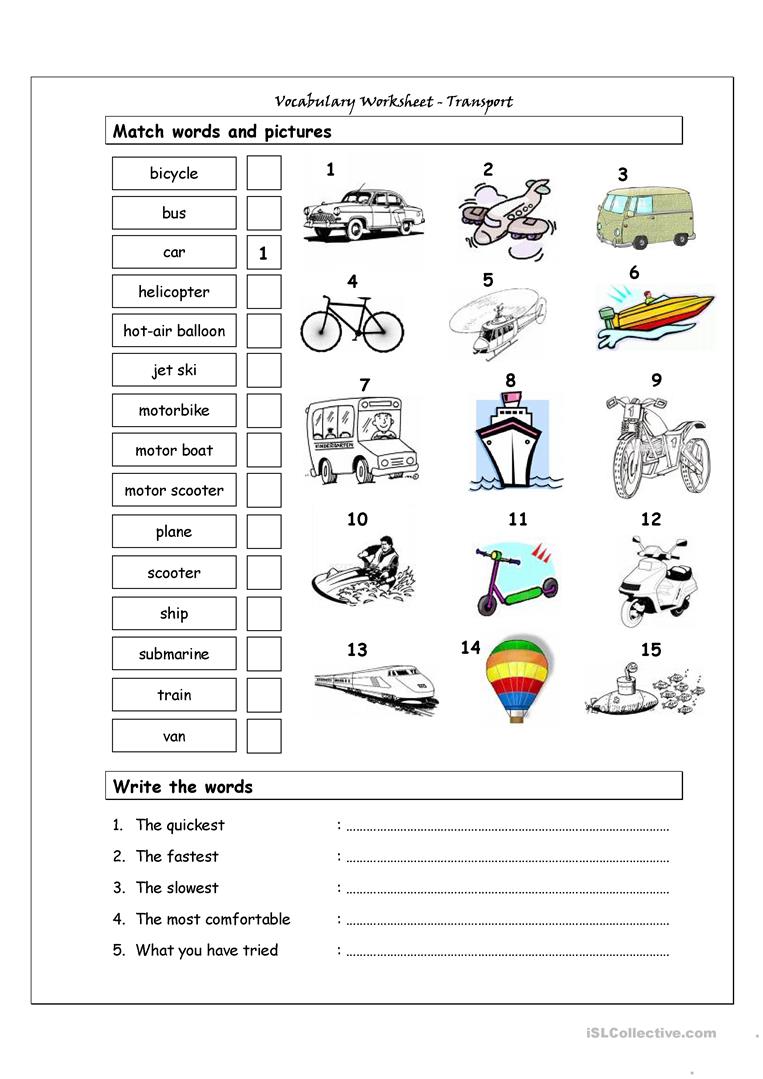
Brainstorming Differentiation by levels: I will show the following worksheet to learners. They will match the transport pictures with their names. After they match, i ask more able learners to find out the quickest, the slowest, etc. types of transport.
Formative assessment: Descriptor: A learner:
Pre-reading I will pre-teach the words and word combinations from the text:
Skimming Learners will read the text and find out type of transport from the text: Public transport in our city I would like to tell you about public transport. There is a lot of kinds of public transport in our city. For example, a bus, a trolleybus, a tram, a suburban electric train and metropolitan. To begin with the most important transport, a bus. The majority of people use a bus to get to their job every day. Elderly people use a trolleybus, because it is more quiet and cheaper for them. Also, there is a conductor and people can save their money if they have some privilege. A tram moves only along the rails and during the traffic a bus is more maneuver than a tram. Some people use an electric train. It is the mostcomfortable and the fastest way to get to their job, without traffic jam. If you have to do a lot of transfers, this kind of transport is suitable for you. In many cities people use metropolitan, the fastest way to cross the city, but it is uncomfortable because of the crowd. In our city underground is too short and you cannot get even to the center of the city. To tell about environmental pollution, I think that both public transport and your own car pollute it equally. On the whole, I would like to say that I prefer my own car, because it is more comfortable, you sit in comfortable salon without the crowd and you do not depend on the route. Of course, it is too expensive, but I do not think about it.
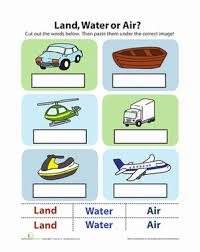
Water, Air, Land transport?
I will say to learners to divide the types of transport into land, water or air. Differentiation by support: more able learners will help to less able learners to find types of transport as Water, Air, Land.
Scanning Learners will read the text and find out type of transport from the text: I would like to tell you about public transport. There is a lot of kinds of public transport in our city. For example, a bus, a trolleybus, a tram, a suburban electric train and metropolitan. To begin with the most important transport, a bus. The majority of people use a bus to get to their job every day. Elderly people use a trolleybus, because it is more quiet and cheaper for them. Also, there is a conductor and people can save their money if they have some privilege. A tram moves only along the rails and during the traffic a bus is more maneuver than a tram. Some people use an electric train. It is the mostcomfortable and the fastest way to get to their job, without traffic jam. If you have to do a lot of transfers, this kind of transport is suitable for you. In many cities people use metropolitan, the fastest way to cross the city, but it is uncomfortable because of the crowd. In our city underground is too short and you cannot get even to the center of the city. To tell about environmental pollution, I think that both public transport and your own car pollute it equally. On the whole, I would like to say that I prefer my own car, because it is more comfortable, you sit in comfortable salon without the crowd and you do not depend on the route. Of course, it is too expensive, but I do not think about it.
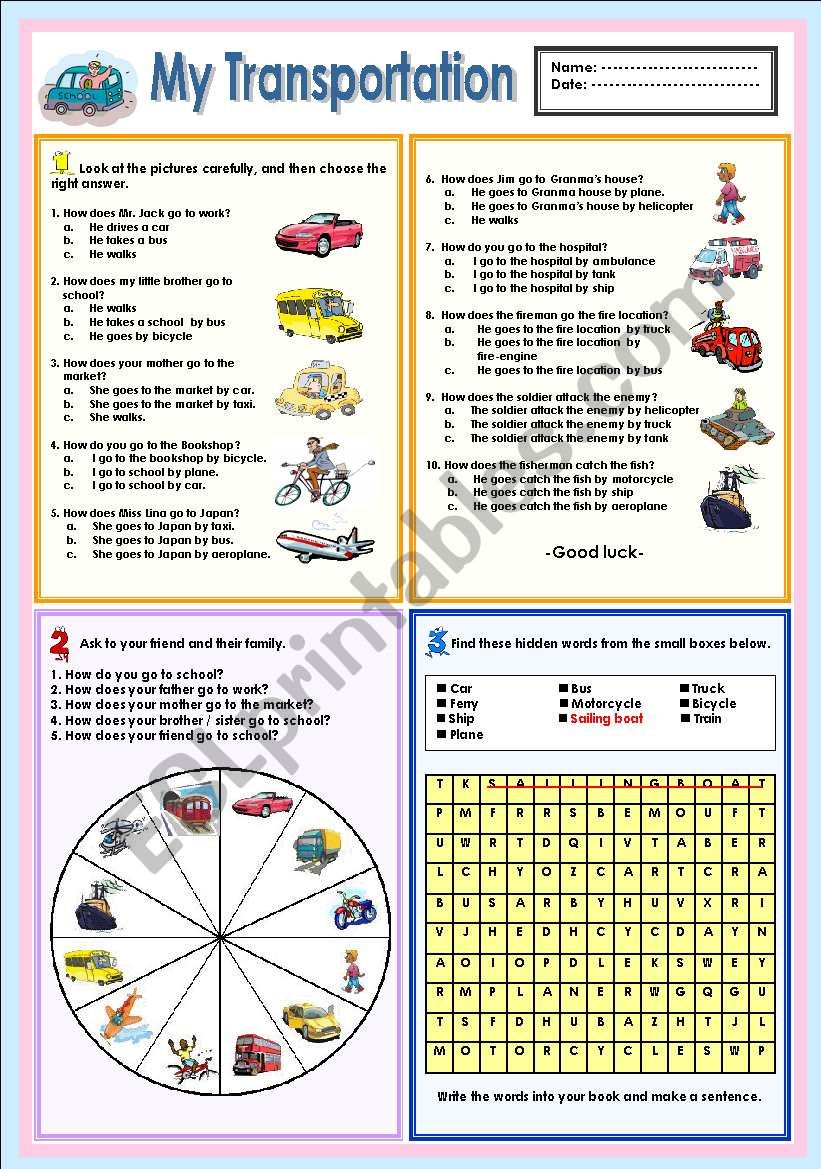
My transportation (Group work) Differentiation by task: 1 group will look at the pictures and choose the right answer. 2 group will ask peers the given questions. 3 group will find the hidden words from the box given below.
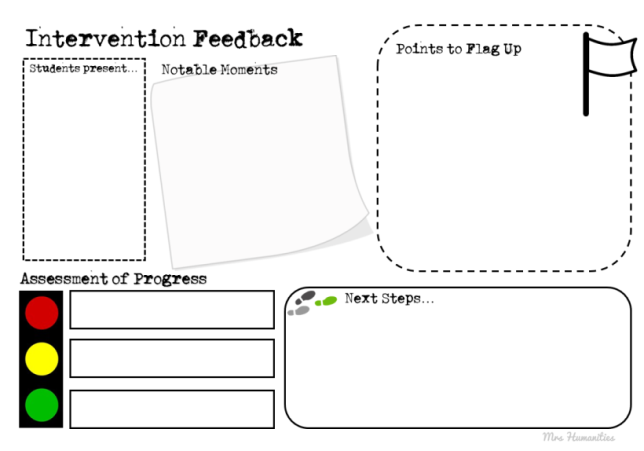
Feedback: Traffic light:
|
|
|||
Additional information |
|||||
Differentiation – how do you plan to give more support? How do you plan to challenge the more able learners? |
Assessment – how are you planning to check learners’ learning? |
Health
and safety check |
|||
Brainstorming Differentiation by levels: I will show the following worksheet to learners. They will match the transport pictures with their names. After they match, i ask more able learners to find out the quickest, the slowest, etc. types of transport. Water, Air, Land transport? Differentiation by support: more able learners will help to less able learners to find types of transport as Water, Air, Land. My transportation (Group work) Differentiation by task: 1 group will look at the pictures and choose the right answer. 2 group will ask peers the given questions. 3 group will find the hidden words from the box given below. |
Brainstorming Formative assessment: Descriptor: A learner:
Feedback: Traffic light:
|
|
|||
Reflection Were the lesson objectives/learning objectives realistic? Did the learners achieve the LO? If not, why? Did my planned differentiation work well? Did I stick to timings? What changes did I make from my plan and why?
|
|
||||
Summary evaluation What two things went really well (consider both teaching and learning)?
1:
2: What two things would have improved the lesson (consider both teaching and learning)?
1:
2:
What have I learned from this lesson about the class or achievements/ difficulties of individuals that will inform my next lesson?
|
|||||









 Бұл курс Қазақстан Республикасы Оқу-ағарту министрлігімен келісілген










