400 000+ дайын материалды
1 жыл бойы шексіз жүктеңіз
ҚМЖ, БЖБ, ТЖБ, презентациялар және авторлық материалдар
4 990₸/ 1 жыл
🔥Арнайы баға ·10.12.2026 дейін
Одан кейін - 29 990 ₸
Бір рет төлейсіз · Автотөлем жоқ
Тақырып бойынша 31 материал табылды

Ашық сабақ William Shakespeare "Romeo and Juliet" 7 сынып

Материал туралы қысқаша түсінік
ұстаздарға сабақ жоспарын дайындау үшін
Материалдың қысқаша нұсқасы

Unit of a long term plan

School: A. Yugnaki

Date: 24.01.2020.

Teacher name: Hamidullaeva Shahista

CLASS: 7 “G” grade

Number present:

absent:

Lesson title

William Shakespeare: “Romeo and Juliet”.

Learning objectives(s) that this lesson is contributing to (link to the Subject programme)

7.C9 use imagination to express thoughts, ideas, experiences and feelings

7.R4 read independently a limited range of short simple fiction and non-fiction texts

Level of thinking skills

Comprehension, Application, Evaluation

Lesson objectives

  • understand more complex supported questions on a growing range of general and curricular topics;

  • keep interaction going in longer exchanges on a range of general and curricular topics ;

  • organise and present information clearly to others;

respect differing points of view.

Differentiation

  • use talk as a means of reflecting on and exploring a range of perspectives on the world;

  • communicate meaning clearly at sentence and discourse level during pair, group and whole class exchanges.

  • less able students will know the meaning Shakespeares works names and retell the story, act out the story.

More able students will narrate heard information from recording and retell it to the class.

Most able students can describe actors from Romeo and Juliet and give characteristics.

Values links

Responsibility , Global Citizenship.

Cross-curricular links

Literature.

Previous learning

The last of the Mohicans

Plan

Planned timings

Planned activities (replace the notes below with your planned activities)

Resources

Start


5 mins


5 mins


  1. Organization moment.

T: Good morning, children! I am glad to see you. How are you?

What date is it today?

P.: Today is ..... of.....

T: Yes. It is winter. What is the weather like today?

P: It is cold, windy.


The psychological approach to the lesson: «A compliment»

The name reflects the essence of statements of the pupils is the verbal expression of positive emotions in relation to the partner. Look at your partner and tell him how he looks today, use what adjectives to describe appearance. Begin your statement with a reference name. Use the model of "You look so...!" - “You are so ... today!”students is the verbal expression of positive emotions in relation to the partner

II. Check up their homework

Fiction and Non-fiction literature

The name of William Shakespeare is known all over the world. The last half

of the 16th and the beginning of the 17th centuries are known as the Golden Age

of English Renaissance. Sometimes they are called “The Age of Shakespeare”.

People often call Shakespeare “Our national Bard”, “The Immortal Poet of Nature”. We really know few facts of his life and many often of them are doubtful. But some facts are known to us and are proved by documents.

The first facts of Shakespeare’s biography are that he was born on April 23, 1564 in Stratford-on-Avon. His father was a dealer in corn, meat, wool. William's mother was a daughter of a rich farmer.

We also know that, being 18 years old, William married Anne Hathaway, who was 9 years older than himself. They had a daughter Susanna and twins – son Hamlet and daughter Judith.

It's known that in 1567 Shakespeare went to London to find a job, where he began writing plays staged at the Globe Theatre.

It's known that only in 1611, at the height of his fame, Shakespeare returned to Stratford, where in April 23, 1616 he died.


True or False?


1. Shakespeare was born in the 17th century.

2. His father was a poet.

3. His wife was Anne Hathaway.

4. William Shakespeare had three children.

5. He died in Stratford-on-Avon, on April 23, 1616.


As you know, in London Shakespeare became an actor of the Globe Theatre and began to write plays for it. He wrote tragedies, comedies and historical plays. I am sure that you know them well. So your next task is to divide his plays into tragedies

and comedies.

Comedies:

  1. The Comedy of Errors.

  2. Othello.

  3. A Midsummer Night’s Dream.

  4. The Merry Wives of Windsor.

  5. Julius Caesar

  6. Macbeth.

Tragedies:

  1. Hamlet, Prince of Denmark.

  2. King Lear.

  3. 12th Night.

  4. Romeo and Juliet.

  5. Much Ado About Nothing..

  6. All’s Well That Ends Well.


Board, copybooks


W.B. p 90


5 mins


10 mins


10 mins


  1. The new theme

The presentation of the new lesson «Romeo and Juliet»

Students listen the tapescript and try to guess the new lesson theme


View the video (Romeo and Juliet)

New words

tragedy [trajide] трагедия

disguise [dis`giz] маска

persuade [pә(r)`sweid] седіру

tomb [tu:m] қабір

poison [`poizәn] улану

enemy [`enәmi] жау

to fell in love [tu: fel in lәv] ұнатып қалу

to kill [tu: kil] өлтіру

quit [kwit] тастау

to forgiv [tu: fәr`giv] кешіру

to hate [too heit] жек көру


  1. Middle of the lesson

Task 1

Preparation

Match the vocabulary with the correct definition and write a–h next to the numbers 1–8.

1…….. to take place a. to really want something

2…….. to step in b. to happen

3…….. to be keen for something c. wearing different clothes so that people don’t know who you are

4…….. lifeless d. a minister of the church who performs ceremonies, like marriage

5…….. in disguise e. to get involved

6…….. poison f. a space under the ground or inside a stone building to bury a dead person 7…….. a priest g. dead 8…….. a tomb h. a substance that causes illness or death


Task 2

1. Check your understanding: reordering

Write a number (1–7) to put these events from the story in order.

  1. …………. Romeo and Juliet secretly get married.

  2. …………. Juliet wakes up, sees Romeo dead and kills herself.

  3. …………. Romeo thinks Juliet is really dead. He takes poison.

  4. …………. Romeo and Juliet meet and fall in love.

  5. …………. Romeo and Juliet meet and fall in love.

  6. …………. Romeo and Juliet meet and fall in love.

  7. …………. Juliet takes a drug to make people think she’s dead.

  8. …………. The Montagues and the Capulets hate each other.

  9. …………. The two families make peace.


Task 3. Test

Check your understanding: multiple choice Circle the best answer to these questions.

1. The Montagues and the Capulets hate each other so much that they …

a. don't speak to each other. b. fight whenever they meet. c. play horrible tricks on each other.

2. The Capulets organise a party to …

a. introduce their daughter to a possible husband. b. introduce Juliet to the Montagues. c. celebrate Juliet's fourteenth birthday.

3. Romeo and his friends …

a. watch the party from a safe distance. b. plan to cause trouble at the party. c. go to the party in disguise.

4. When Romeo and Juliet meet …

a. they fall in love immediately. b. they don't like each other at first. c. Juliet doesn't feel the same way as Romeo.

5. Romeo and Juliet go to a priest called Friar Lawrence to …

a. get advice. b. ask him to persuade their families to make peace. c. get married.

6. Romeo kills Tybalt because …

a. Tybalt wants to stop him seeing Juliet. b. Tybalt is planning to kill Romeo. c. Tybalt kills Romeo's best friend.

7. Juliet’s parents are angry because …

a. she won’t marry Count Paris. b. they think she is too friendly with the Montague family. c. they find out about the secret wedding.

8. Friar Lawrence says he will help Juliet by …

a. helping her to escape with Romeo. b. giving her a drug to make people think she's dead. c talking to her parents.

Literature UK: Shakespeare – Romeo and Juliet – exercises

9. The plan goes wrong because …

a. Romeo doesn't get Friar Lawrence's message. b. the drug is too strong. c Juliet's family don't believe that she is dead.

10. Romeo drinks poison because …

a. he thinks Juliet doesn't love him. b. he knows he has brought shame on his family. c. he thinks Juliet is dead.

11. When Juliet wakes up …

a. she realises she’s trapped in the tomb. b. she commits suicide. c. she shouts for help.

12. In the end, the Montagues and the Capulets …

a. are united by their loss and make peace. b. continue fighting until they are all dead. c. think the tragedy is Friar Lawrence’s fault.

IV. Grammar

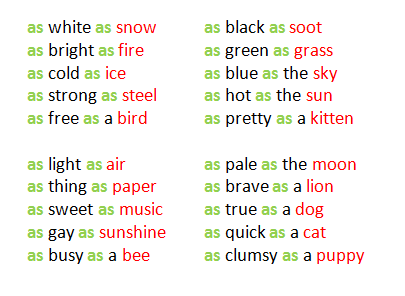
As…as comparison

We use as…..as to show two things are equal.

Not as…as

We use not as…as to show two things are unequal.


For example: It’s me. I am tall. My brother as tall as me.


Video


Handout with pictures


Handout with pictures.


Sheets with tasks


Grammar


Copybooks


End

    1. mins

  1. Concluding the lesson


The game “Who is Who?”


VI. Assessment Peer and self assessment chart

VII. Giving the home task

Your homework will be ex:5;6 on workbook on page 90


Peer and self assessment charts

Additional information

Differentiation – how do you plan to give more support? How do you plan to challenge the more able learners?

Assessment – how are you planning to check learners’ learning?

Health and safety check


Differentiation by support and outcome – teacher might decide on the number of words used by an individual learner during the speaking activity.

  • Monitor how much vocabulary learners can use in their speaking.


  • Monitor how learners find the answers during the reading for specific information activity


Monitor how learners complete the vocabulary tasks

  • Safety regulations are taken into account when planning and conducting the lesson.

  • There are types of activities that meet the needs of learners with different learning styles and level.

Reflection


Were the lesson objectives/learning objectives realistic?

Did all the learners achieve the lesson objectives/ learning objectives? If not, why?

Did my planned differentiation work well?

Did I stick to timings?

What changes did I make from my plan and why?


Use the space below to reflect on your lesson. Answer the most relevant questions from the box on the left about your lesson.


Summary evaluation


What two things went really well (consider both teaching and learning)?


1:

2:


What two things would have improved the lesson (consider both teaching and learning)?


1:


Материалды Word форматында жүктеп аласыз
Тарифке кіреді
7 ұстаз жүктеп алған
24 ақпан
2088
Бұл материалды қолданушы жариялаған. UstazTilegi материалдың мазмұны мен авторлық құқықтарына жауап бермейді. Авторлық құқық бұзылған жағдайда шағым қалдыра аласыз

"Ұстаз" платформасында тіркелген пәндік олимпиадалар
Аттестацияға жарамды екенін көру үшін "Ұстаз" платформасында "Жарыстар, олимпиадалар тізімінен "Ustaz tilegi" деп іздесеңіз шығады

Қазақстандағы ең үлкен материалдар базасынан іздеу
Сіз үшін 400 000 ұстаздардың еңбегі мен тәжірибесін біріктіріп, ең үлкен материалдар базасын жасадық. Төменде керек материалды іздеп, жүктеп алып сабағыңызға қолдана аласыз
Осы тақырыпта
көрнекілік керек па?
10 000 астам көрнекіліктерді жинап қойдық.
Көрнекілік бөліміне өтіп тақырыбын жазып жүктеп алыңыз!
Министірлікпен келісілген Аттестацияға жарамды курстар тізімі















