
 ЖИ көмекші


 Қауіпсіз төлем

жүктеу мүмкіндігіне ие боласыз
Бұл материал сайт қолданушысы жариялаған. Материалдың ішінде жазылған барлық ақпаратқа жауапкершілікті жариялаған қолданушы жауап береді. Ұстаз тілегі тек ақпаратты таратуға қолдау көрсетеді. Егер материал сіздің авторлық құқығыңызды бұзған болса немесе басқа да себептермен сайттан өшіру керек деп ойласаңыз осында жазыңыз
 20 Қазан 2026
 117

1 жыл бойы шексіз жүктеңіз
Bees and their world
Ministry of Education and science of the Republic of Kazakhstan
KSU “General Education School No. 20”
Short-term (lesson)plan
Checked by:_____________
Unit 2 of a long term plan: |
School: № 20 |
|
Date: …… . …… . 2026 |
Teacher name: …………………………… |
|
Grade: 11 |
Number present: …… absent: …… |
|
Lesson title |
Curricular (Science): Bees and their World |
|
Learning objectives |
11.4.3 – skim a range of lengthy texts with speed to identify content meriting closer reading on a range of more complex and abstract, general and curricular topics; 11.5.4 – use style and register to achieve an appropriate degree of formality in a wide variety of written genres on general and curricular topics; |
|
Lesson objectives |
|
|
Plan |
||
Stages / Time |
Teachers’ actions |
Students’ actions |
Assessment criteria |
Resources |
||||||
Start 5min |
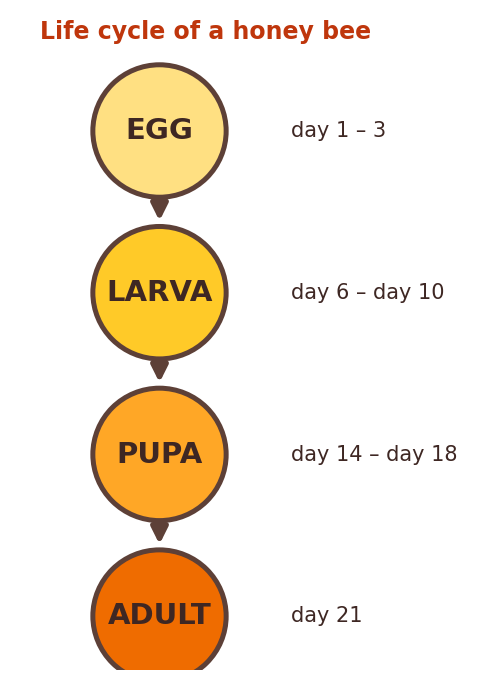
Organization moment 1. Greeting. Ask about the weather. Check who is present. Pre – reading Lead – In “Fact or myth?” Show the picture of the beehive and the life cycle (p. 31). Read 4 statements; Ss show thumbs up (true) or thumbs down (myth): 1. There are over 20,000 species of bees. 2. All bees make honey. 3. One hive can have up to 80,000 bees. 4. Honey bees live on every continent. Share the lesson objectives. |
The aim: To activate background knowledge about bees. Efficiency: By voting and giving reasons, Ss get ready for the text. Ss look at the pictures and vote. ANSWERS: 1. True. 2. Myth – only seven species are honey bees. 3. True. 4. Myth – except Antarctica. |
At the organization moment T tries to award active Ss. «The praise» method is used to evaluate Ss with phrases like: “Good job! Well done!” Formative Assessment
Descriptor: – Vote and give a reason for at least 2 statements – 1p |
Pictures PPT Student’s book p. 31 |
||||||
Main part 35min |
Pre – reading Ex: 1 P:31 (7 min) Ss read the title of the text. Ask: What is the social organisation within a beehive? Ss predict, skim the text for 90 seconds and find the three types of bees. Play the recording; Ss listen and read. Check these words larva, pollen, royal jelly, pupa, hive, fertilise, lifespan – Ss match the words with definitions. Differentiation: «Verbal support» method is used to help Ss: the first letters of the words are given. While – reading Ex: 2 P:31 (8 min) Ss read the text again and complete sentences 1–6. Check in pairs, then with the class. Ss underline the lines that gave the answer. Differentiation: In a stronger class Ss paraphrase each answer in their own words. In a weaker class the paragraph number is given. Use of English Ex: 3 P:31 (9 min) Write on the board:
Ss use the picture and the text to describe the life cycle with first, then, after that, finally. Then Ss choose the correct form in 5 sentences (task A).
Post – reading (FL) Task: 1 – “Save the Bees” (11 min) Situation: The school garden club is going to plant a bee-friendly garden. You are asked to write a short notice (80–100 words) for the school website to explain why bees are important and what students should do. Before writing, pairs ask and answer questions with the numbers from Ex: 4 (A: How many species of bees are there on planet Earth? B: Over 20,000.). Language: formal register, present forms from the lesson, should / shouldn’t. Differentiation: weaker pairs use a notice frame; stronger pairs add a calculation or compare two numbers. |
Ex: 1 P:31 Ss predict, skim, listen and read. ANSWERS: the queen, worker bees, drones. larva – a young insect that has just come out of an egg; pupa – the stage between a larva and an adult insect; pollen – a fine powder in flowers; royal jelly – a special food for a future queen; hive – a home for bees; fertilise – to make an egg able to grow; lifespan – the length of time a living thing lives. Ex: 2 P:31 Ss complete the sentences and show the evidence in the text. ANSWERS: 1. in a hexagonal cell of wax. 2. royal jelly. 3. female worker bees. 4. to leave the hive in autumn and winter, when food is short. 5. nectar (from flowers). 6. the time of year (6–7 weeks in spring and summer; up to six months in autumn and winter). Ex: 3 P:31 Ss compare the three forms and explain the difference. Describe the life cycle in pairs. ANSWERS: A. 1 lays. 2 are feeding. 3 has already laid. 4 collect. 5 has laid.
(FL) Task: 1 Ss ask and answer about the numbers, plan and write the notice in pairs and read it to another pair. Ex: 4 ANSWERS: over 20,000 species; up to 80,000 bees; about 2 cm (queen); at least 2 years; up to 1,500 eggs a day; about 300 drones; 2 million flowers; 88,000 km; 230 times a second; 6–7 weeks. Example: Help our bees! There are over 20,000 species of bees. A queen lays up to 1,500 eggs a day, and workers visit about 2 million flowers to make 500 grams of honey. We should plant flowers in the school garden. We shouldn’t disturb the hives. |
Ex: 1 P:31 Descriptor: – State the main idea of each subheading – 1p – Match at least 5 words – 1p Peer assessment: pairs check each other.
Ex: 2 P:31 Descriptor: – Complete at least 4 of 6 sentences – 1p – Show the evidence in the text – 1p Self-assessment: Ss check with the key.
Ex: 3 P:31 Descriptor: – Explain the difference between the forms – 1p
(FL) Task: 1 Descriptor (max 6p): – 3 correct facts / numbers – 1p – Formal register, clear structure (title, introduction, advice) – 1p – At least 2 present forms – 1p – Advice with should / shouldn’t – 1p
|
Student’s book p. 31
Audio recording Cards
Worksheets
Life cycle picture
Paper, markers |
||||||
End 5min Reflection |
Reflection Peer feedback Pairs exchange notices: «Two stars and a wish». Personal objective Ss complete: Next time I will improve my ... because ... Home task: Ex: 5 P: 31 SB (ICT) – collect more information about bees and prepare a presentation. Ss will evaluate other speakers’ presentations in the next lesson. Give marks for the lesson (max 19p). |
Ss give feedback to a partner. Ss write a personal learning objective. Ss complete the “3 – 2 – 1” chart.
|
Self-assessment: “3 – 2 – 1” chart; personal objective. Teacher’s feedback: marks are given according to the descriptors. |
Sticky notes Home task: Ex: 5 P: 31 SB |










 Бұл курс Қазақстан Республикасы Оқу-ағарту министрлігімен келісілген










