Sections
|
What and How? Describe
Activities
|
Time
|
1. Warm up and/or review
Review previously
learned content to begin a new lesson. Create an environment for
learning
|
Student chose one cards.
Who chose animals will be In the fauna group.
|
3 min
|
2. Introduction
Get
students interested in what is to be discussed in the lesson
|
What is ontgenesis?
Ontogenesis-
the process
of an individual organism growing organically; a purely biological
unfolding of events involved in an organism changing gradually
from a simple to a more complex level
|
3 min
|
3. Presentation
Teach the new
information or skill using a variety of strategies (monitor
students during this time and provide support)
|
1. Ontogenesis of plants
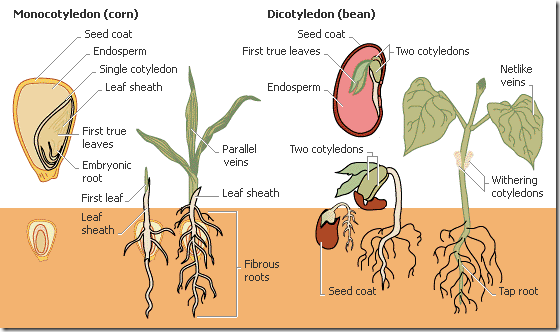
Annual
plants
|
Biennial
plants
|
Perennial
plants
|
An annual plant is a
plant that completes its life cycle, from germination to the
production of seeds, within one year, and then dies.
|
A
biennial plant is a flowering plant that takes two years to
complete its biological lifecycling. In the first year, the
plant grows leaves, stems, and roots (vegetative structures),
next summer the plant flowers
, producing fruits and seeds before
it finally dies.
|
A perennial plant is a
plant that lives more than two years
|
2.
Ontogenesis
of animals
Embryogenesis
|
Post
-embryogenesis
|
Embryogenesis is
the process by which the embryo forms and develops.
Blastula
single-layer fetus. Gastrula two-layer fetus. Neurula is formed
at the end of the gastrula.
The outer layer of
the fetal cell is ectoderm. The middle layer of the mesoderm.
The inland layer of entoderm.
|
Define
direct development:
development
without metamorphosis.
Metamorphosis is a
biological process by which an animal physically develops after
birth or hatching, involving a conspicuous and relatively
abrupt change in the animal's body structure through cell
growth and differentiation.
|
|
15 min
|
4. Practice
Let the students
practice the new skill in an activity. Make it safe for them to
make mistakes. Remember that the best lessons have more practice
than presentation
|
Task 1
1
|
plant that completes
its life cycle, from germination to the production of seeds,
within one year, and then dies.
|
|
2
|
flowering plant that
takes two years to complete its biological lifecycling. In the
first year, the plant grows leaves, stems, and roots
(vegetative structures), next summer the plant flowers
, producing fruits and seeds before
it finally dies.
|
|
3
|
plant that lives more
than two years
|
|
Task 2
|
8 min
|
5. Evaluation
Evaluate the students to
see if they can perform the skill just practiced. Use a checklist,
quiz, a report-back session or other means of assessment.
|
«Who
is fast?»
Ontogenesis
is
Monocotyledonous
plants are
Dicotyledonous
plants are
Annual
plant is
Biennial
plant is
Perennial
plant is
Embryogenesis
is
Post
-embryogenesis is
|
3 min
|
6. Application
Create an activity in
the classroom where students apply the new information or skill to
their own lives. Simulate real world application of the skill as
much as possible..


|
Metamorfisis
of butterflies
[video]
Task
4
|
5 min
|
7. Reflection
End the lesson. Create
an activity that asks students to reflect on what they have
learned and how and when they will use it, whether they enjoyed
learning about it and found it easy or difficult
|
Today we have
information about ontogenesis of plants and animals. Is it
important for a person to be?
|
3 min
|

 ЖИ көмекші


 Қауіпсіз төлем













 Бұл курс Қазақстан Республикасы Оқу-ағарту министрлігімен келісілген










