
 ЖИ көмекші


 Қауіпсіз төлем

жүктеу мүмкіндігіне ие боласыз
Бұл материал сайт қолданушысы жариялаған. Материалдың ішінде жазылған барлық ақпаратқа жауапкершілікті жариялаған қолданушы жауап береді. Ұстаз тілегі тек ақпаратты таратуға қолдау көрсетеді. Егер материал сіздің авторлық құқығыңызды бұзған болса немесе басқа да себептермен сайттан өшіру керек деп ойласаңыз осында жазыңыз
 18 Желтоқсан 2017
 1041

1 жыл бойы шексіз жүктеңіз
CLIL бойынша сабақ "Ньютон заңдары" 9 сынып
 Lesson plan Lesson
plan
CLIL: A lesson plan
Newton’s Laws
Topic
-
To increase students’ knowledge of subject content
-
To develop students’ knowledge of content-related lexis
-
To develop all four language skills such as note-taking
-
To provide material and information for further topic and language based studies
Aims
Teens
Age group
45
Time
-
CLIL lesson worksheet
Materials
This topic and accompanying tasks / activities offers the teacher (s) and students the opportunity to develop both content and language knowledge to an appropriate depth over a single lesson or a series of class hours.
Introduction
Procedure
|
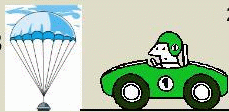
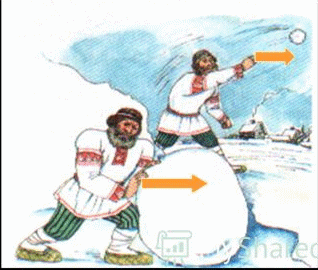
1. Lead-in (5-10 minutes) |
Students look at pictures and talk about what
they know about them
|

Lesson plan Lesson plan
|
|
Law 1. Newton's law of motion states that for every force there is an equal and opposite force. These forces are called action forces and reaction forces. Law 2. Newton's law of motion states that objects at rest tend to stay at rest, and objects that are moving tend to continue moving. This tendency of objects to resist changes in motion is called inertia. Law 3. Newton's law of motion states that when an unbalanced force is applied to an object the object accelerates. The amount of acceleration depends on the mass of the object and the amount of force applied to it. More force to an object results in greater acceleration. Increases in mass result in less acceleration. |
||||||||||||||||||||||||||||||||||||||||||||||||||||||||||||||||||||||||||||||||||||||||||||||||||||||||||||||
|
2. Task 1: Predicting content (5-10 minutes) |
Students match the above 3 Newton's Laws of Motion to the simpler way of saying them.
direction unless acted on by an outside force.
the force. Also the greater the force, the faster the object moves. c. For every action there is an equal and opposite reaction. |
||||||||||||||||||||||||||||||||||||||||||||||||||||||||||||||||||||||||||||||||||||||||||||||||||||||||||||||
|
3. Task 2: Listening to confirm expectations (5 minutes) |
Students use relevant information about the Laws of Motion and choose the term of physics from those given that is most suitable to complete every sentence. Have you ever experienced 1……, which means going against changes in your state of 2……, for example, in a car while it is braking to a stop? The 3…… of the road on the locked wheels provides the unbalanced force to change the car's 4…… of motion, however, there is no 5…… force to change your own state of motion. Therefore, you continue in motion, sliding along the seat in a forward motion. A person in motion tends to stay in motion with the same 6…… and in the same direction unless there is a(n) 7…… force. In a car this can be a seat belt. Yes, seat belts are used to provide safety for passengers whose motion is governed by Newton's laws. The seat belt provides the unbalanced force which brings you from a state of motion to a state of 8……. So, what do you think might happen when you do not put on your seat belt and your car hits another one? 1. a. forces b. inertia c. potential d. action 2. a. motion b. moving c. change d. mind 3. a. object b. action c. force d. amount 4. a. state b. tendency c. force d. mass 5. a. acceleration b. motion c. unbalanced d. object 6. a. speed b. acceleration c. inertia d. reaction 7. a. opposite b. tendency c. motion d. effort 8. a. reaction b. rest c. acceleration d. change |
||||||||||||||||||||||||||||||||||||||||||||||||||||||||||||||||||||||||||||||||||||||||||||||||||||||||||||||
|
4. Task 3: Noticing and analysing language (reading) (10 minutes) |
Students read the text on roller coaster rides and use the following words: ascent, kinetic, energy, friction, potential, track to complete it.
The basic elements of a roller coaster are kinetic energy and friction. Kinetic energy is the power that an object gets because it is moving. Friction is the force that stops something moving when it rubs on another surface. Both are used in roller coaster rides. The coaster cars ride along on a long winding ________. The track begins with a steep ________, which builds up a reservoir of ________ energy in the coaster car. The rest of the track's hills and valleys, twists and turns change the built-up ________ back and forth between potential energy to ________ energy. As the train moves, it gradually loses energy because of ________ until it reaches the end of the ride. |
||||||||||||||||||||||||||||||||||||||||||||||||||||||||||||||||||||||||||||||||||||||||||||||||||||||||||||||
|
5. Task 4: |
Students should find the following words such as: Newton, law, force, kinetic, friction, energy, potentialNewton’s Laws
|
||||||||||||||||||||||||||||||||||||||||||||||||||||||||||||||||||||||||||||||||||||||||||||||||||||||||||||||
|
Vocabulary |
|||||||||||||||||||||||||||||||||||||||||||||||||||||||||||||||||||||||||||||||||||||||||||||||||||||||||||||||
|
extension (10 |
|||||||||||||||||||||||||||||||||||||||||||||||||||||||||||||||||||||||||||||||||||||||||||||||||||||||||||||||
|
minutes) |
|||||||||||||||||||||||||||||||||||||||||||||||||||||||||||||||||||||||||||||||||||||||||||||||||||||||||||||||
|
6. Assesment
|
|












 Бұл курс Қазақстан Республикасы Оқу-ағарту министрлігімен келісілген










