ЖИ көмекші


 Қауіпсіз төлем

жүктеу мүмкіндігіне ие боласыз
Бұл материал сайт қолданушысы жариялаған. Материалдың ішінде жазылған барлық ақпаратқа жауапкершілікті жариялаған қолданушы жауап береді. Ұстаз тілегі тек ақпаратты таратуға қолдау көрсетеді. Егер материал сіздің авторлық құқығыңызды бұзған болса немесе басқа да себептермен сайттан өшіру керек деп ойласаңыз осында жазыңыз
 27 Мамыр 2026
 33
33
1 жыл бойы шексіз жүктеңіз
CLIL: Science Lifecycle of a plastic bag - 6 сынып
Ministry of Education and Science of the Republic of Kazakhstan
Secondary School №115 by name Orazbay
(name of educational organization)
Short-term (lesson) plan
CLIL: Science Lifecycle of a plastic bag.
(lesson title)
Unit 3 Our Countryside |
Lesson 10 |
||
Teacher name: |
Nakipbekova Bagila |
||
Date: |
25.11.2025 |
||
Grade: 6 a |
Number present: |
absent: |
|
Lesson title |
CLIL: Science Lifecycle of a plastic bag |
||
Learning objectives
|
6.2.6.1 deduce meaning from context in short, supported talk on an increasing range of general and curricular topics 6.3.7.1 use appropriate subject-specific vocabulary and syntax to talk about a range of general topics, and some curricular topics |
||
Lesson objectives |
Learners will be able to: - show control of their own learning - pronounce words and phrases correctly Адал азамат бағдарламасындағы құндылықтарды оқыту процесіне ұйымдастыру кезеңінен бастап, сабақтың әрбір кезеңінде жүргіземін. Value: Environmental protection and responsibility – students discuss the impact of plastic on nature and develop environmental thinking and responsibility skills. |
||
Plan |
|||
Stages / Time |
Teachers actions |
Students actions |
Assessment criteria |
Resources |
Beginning of the lesson Warming-up 5 min
Pre-learning «Brainstorming» method 5 min.
|
Organization moment : 1.Greeting. Ask about the weather. The teacher sets the lesson objectives, letting students know what to anticipate from the lesson.
Warming up Division into droups Students are divided into two small groups: group “metal” and group “plastic”.
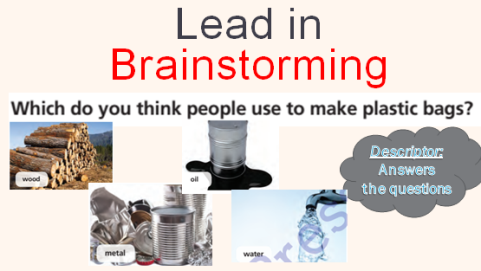
Checking the hometask By looking at the picture and reading the text at home learners should write the answers to the questions Lead – In Which do you think people use to make plastic bags?
|
The aim: To develop pupils speaking skills and create friendly atmosphere Students' attention is drawn to the lesson. Students say different words from the picture
Learners will take places according to their groups
Learners answer the questions according to the text
Learners answer the questions Pupils look at the photos. Which do you think people use to make plastic bags? |
The teacher to assess learners for their ability. “Good job! Well done!” Formative Assessment
Good job! Descriptor: -know key phrases - know vocabulary of previous lesson Total: 1 point Individual evaluation Points 1 for each correct answer
Assessment criteria - Learners have met the learning objectives if they can: Talk about lifecycle of a plastic bag |
Pictures, PPP slides
student`s book ex 1, 2 p 39
Student’s book |
Middle of the lesson Presentation part. 30 min
Differentiation tasks (деңгейлік тапсырмалар)
Group work (топтық жұмыс) |
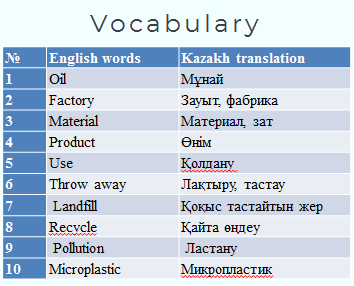
Vocabulary presentation
Complete the diagram about making plastic bags Ex: 3 P: 40 • Before students listen to the interview again, check they can pronounce polyethylene /,polr'ɛ0rli:n/, which is a substance used in plastic bags. Also check students understanding of the verb extract, which means to remove something from somewhere, usually by force. Play the interview again. Students listen and complete the diagram by putting the words and phrases in the right order. Check answers.
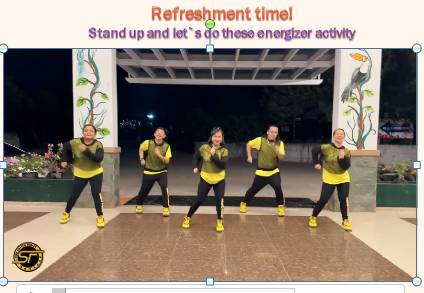
Refreshment time
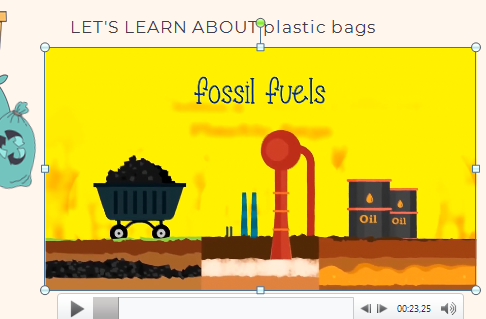
Watching the video about plastic bags
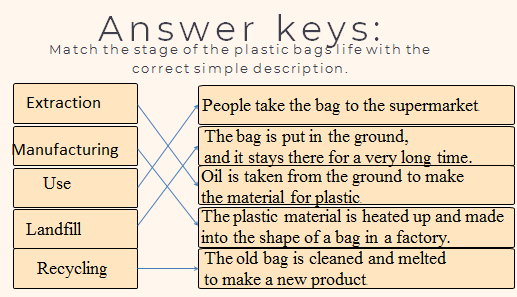
Task 2 Match the stage of the plastic bags life with the correct simple description.
Conclusion during the lesson some tasks differentiated by outcomes of the students and by their abilities.
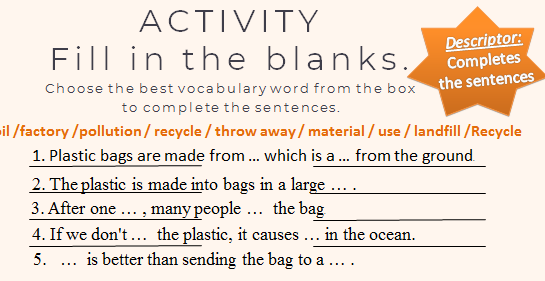
Task 3. Fill in the blanks. Choose the best vocabulary word from the box to complete the sentences.
Task 4. Discussion Discuss the questions with your group and use the new vocabulary in your answers. Use your phones and chat.gpt.com 1. What are some good things about plastic bags (Why do people use them)? 2. What is the biggest problem with plastic bags when people throw away them? (Think about pollution and landfills). 3. What can you do instead (орнына) of using a plastic bag? 4. Do you recycle plastic bags at home? Why or why not?
Conclusion. Task 5. Challenge task. Complete the sentences to show you understand the problem. oil, material microplastic, pollution landfill
1. If we do not recycle plastic bags, they will stay in the ……. for many, many years. 2. The plastic comes from …… , which is a ……… taken from the ground. 3. When a plastic bag breaks into tiny pieces, it becomes ……… and causes ……. in the ocean. |
Learners listen and repeat the words after the teacher
• Pupils listen to the interview again and complete the diagram about making plastic bags. ANSWERS 1 extract oil 2 make polyethylene 3 make plastic bags 4 use 5 recycle
Learners stand up and do the energizer activity
Learners watch the video carefully
Learners match the words with the given descriptions
Learners complete the sentences with the words from new vocabulary
Learners discuss within the groups and the leader of the group answers the questions
Learner complete the sentences to show you understand the problem |
Descriptor: -repeats the new words
Descriptor: - listen to the interview again - complete the diagram about making plastic bags. Total: 2 point
pupils are evaluated by collecting colour pencils
Descriptor: -watches and does the energizer activity
Descriptor: -watches and replies on the topic using new words
Descriptor: Matches the words with the descriptions
Points 1
Descriptor: Completes the sentences
Points 1
Descriptor: Discusses and answers the questions
Points 1
Descriptor: Completes the sentences and shows the problem points 1
|
PPP slides
Card Worksheet
https://youtu.be/h5CX_b0HkPo?list=RDh5CX_b0HkPo
Handouts 1
Handouts 2
Handouts 3 Using the phones for chat.gpt.com
Handouts 3 |
End of the lesson 5 min |
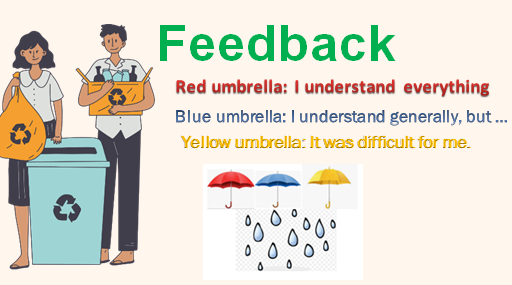
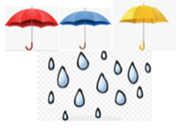
FEEDBACK Learners provide feedback on what they have learned at the lesson by choosing red, blue or yellow umbrella.
Home task: Ex 5 page 40 from the student`s book You should make your own project by answering these questions. |
Sel-assessment |
Raindrops poster
|
|













 Бұл курс Қазақстан Республикасы Оқу-ағарту министрлігімен келісілген