Lesson
plan
Long term plan
module: Module 2 My
school
Lesson: Storytime ‘Count to ten’
Yy,Zz
School: S/s:Sam
Date: 23.11.2017
Teacher’s
name: Tolganai
Tanbaeva
Class:1 а,ә,б,в,г
Number of
present:
Absent:
Learning objective(s) that
this lesson is contributing to:
1.L3 recognise with support
common names and names of places; recognise the spoken form of a
limited range of everyday and classroom
words
1.S1 make basic personal
statements about people, objects and classroom
routines
1.S3 pronounce familiar words
and expressions intelligibly
1.UE2 use cardinal numbers 6 -
10 to count.
Lesson
objectives:
All learners will be able
to: count from 1 to 10 and to name
school objects.
Most learners will be able
to: distinguish between odd and
even numbers.
Some learners will be able
to: learn about schools in the UK,
Russia and Kazakhstan. To explore other subject areas
(Maths)
Language
objectives:story cards, photocopies of
the story cards from the teacher’s Resource Pack CD-ROM, one set
per pupil.
Learners
can:
By the end of the lesson
learners will be able to
-count numbers from 1 to
10;
- use singular nouns,
plural nouns to talk about
things;
- ask and answer the
questions using the structure: How many
….?
Key words and
phrases:
Numbers: six, seven, eight,
nine, ten Plural noun How many pens? Six
pens.
How many ….? ….
…….
Discussion
points:Have a discussion in L1 if
necessary about the moral of the story. Explain to the pupils that
we sometimes have to resourceful and think of different ways to do
things.
Can you say
why? …..animals laughed from the
antilope?
Writing
prompts: exercises 1,2 on page
41
Assessment for
Teaching
Criteria based
assessment
Assessment
criteria:
Count numbers from 6 to 10
expressively, interact using
question-answers
Descriptor:
A
learner
listens and points to the
right number
makes up right questions using
the structure How many
…?
Self-assessment: Hand
signals
How to overcome barriers in
learning English
-Use miming,
gestures
-Be friendly and communicative
with learners
-Encourage active enquiry
based learning and learner research
Previous
learning: numbers from 1 to
10
Plan
Resources
Start (Beginning of the
lesson)
Greeting: Teacher greets learners;
learners respond to greeting and take their
places. Dividing into
subgroups: Warming up: Revising the previous lesson: Uu
and Vv
Middle (of the
lesson)
Task
1
Pupils book Smiles Magazine
page 28. Ex 3. Count to ten! A story from Africa. Pupils should
listen to the story. Then pupils will count
numbers.
Task
2
Point to the objects and name
them. Name the colours of the
objects.
Example: This is a ruler. It
is a blue ruler.
Song: Pencils in my
school bag, CD, DVD players,
worksheet, school objects, notebook
End (of the
lesson)
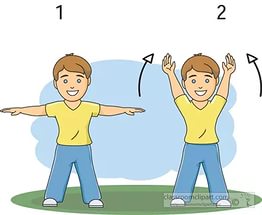
Task
3
Listen and do. Repeat after
your teacher.
Stand up,
please.
Hands up, hands
down.
Hands on hips, sit
down.
Bent left, bent
right
1, 2, 3 hop 1, 2, 3
stop!
Stand still,
please.
Descriptor: A
learner
follows instructions
correctly;
repeats after the
teacher
Additional
information:
Differentiation - how do
you plan to give more support? How do you plan to challenge the
more able learners?
Assessment - how are you
planning to check learners’
learning?
Cross – curricular links
health and safety check ICT
links
Values links
Reflection
- What did we do today on the
lesson?
What did the learners learn
today?
What was the learning
atmosphere like?
Summary
evaluation
What two things went really
well (consider both teaching and
learning)?
1.
2.
What two things would have
improved the lessons (consider both teachings and
learning)?
1.
2.
What have learned from his
lesson about this lesson about the class or individuals that will
inform my next lesson?

 ЖИ көмекші


 Қауіпсіз төлем













 Бұл курс Қазақстан Республикасы Оқу-ағарту министрлігімен келісілген










