ЖИ көмекші


 Қауіпсіз төлем

жүктеу мүмкіндігіне ие боласыз
Бұл материал сайт қолданушысы жариялаған. Материалдың ішінде жазылған барлық ақпаратқа жауапкершілікті жариялаған қолданушы жауап береді. Ұстаз тілегі тек ақпаратты таратуға қолдау көрсетеді. Егер материал сіздің авторлық құқығыңызды бұзған болса немесе басқа да себептермен сайттан өшіру керек деп ойласаңыз осында жазыңыз
 27 Мамыр 2026
 26
26
1 жыл бойы шексіз жүктеңіз
Daily meals 4 сынып
Ministry of Education and Science of the Republic of Kazakhstan
Secondary School №115 by name Orazbay
(name of educational organization)
Short-term (lesson) plan
Daily meals.
(lesson title)
Module 5. Food and Drinks
|
Lesson 5 |
||||
Date: 23/22.01.2026 |
Teacher name: Nakipbekova Bagila |
||||
Grade: 4 a` / 4 b |
Number present: |
absent: |
|||
Lesson theme |
Daily meals |
||||
Learning objectives |
4.4.1.1 Spell accurately some high-frequency words. 4.1.4.3 Recognize specific information on familiar everyday topics from short recordings with visual support. 4.1.2.2 Recognize words similar to words in a student's native language. 4.3.3.2 identify the main points of short simple texts with support; |
||||
Lesson objectives Justification: instructions given by the head of State K. Tokayev at the II,III, IV meetings of the National kurultai, order of the Ministry of Education and science of the Republic of Kazakhstan No. 123
|
Learners will be able to:
Instilling values of the program “Adal Azamat”
|
||||
Plan |
|||||
Stages / Time |
Teachers actions |
Students’ actions |
Assessment criteria |
Resources |
Beginning of the lesson Warming-up 7 min |
Organization moment: Revise the language of the previous lesson. Play the story from the previous lesson (Track 41), pausing before a word/phrase. Encourage the pupils to tell you the word/phrase.
Warming-up: Play a quick 'Miming' game. The teacher mimes eating or drinking a specific food, and students guess the food item. e.g., Teacher mimes eating pasta, and students say "Pasta!" |
Pupils respond to questions and participate in the miming game. e.g., Pupil 1: "I ate eggs for breakfast." Pupil 2: "Pasta!".
|
The teacher assess learners for their ability. “Good job! Well done!”
|
Whiteboard, flashcards of food items |
Middle of the lesson Presentationand practice. 30 min |
To present new food vocabulary. Activity 1: Listen, point, and repeat. Present the new vocabulary. Play the audio. The pupils listen, point to and repeat the food items. Explain, in L1 if necessary, what the three main meals of the day are. Ask the pupils what food they like to eat for breakfast, lunch and dinner. Differentiation:
Look and say which words are international words. Can you think of some more international words for food? Point to the tuna and ask: What’s this word in English? Elicit: Tuna. Ask: Is it the same in your language? Elicit: (Yes). Explain that tuna is an international word. The pupils then think of and/or find online with the help of their parents more international words for food. Differentiation : Support:Give examples of international words and allow pupils to answer with single words or in L1. Challenge: Ask pupils to find and share several international food words and use them in simple sentences. |
Suggested answer key • I like cereal for breakfast. • I like steak for lunch. • I like yogurt for dinner.
Suggested answer: key: sushi, paella, hot do |
Individual evaluation Points 2
Individual evaluation Points 2
|
P.B.p.62, ex.1 Pictures
|
Activity 2: Listen and read. . Choose the right dishes. (Track 43) Refer the pupils to the pictures and elicit the names of the food items. Explain the activity. Play the audio. Allow the pupils some time to complete the activity. Check their answers
|
The pupils listen and repeat the dialogue. In pairs, they read the dialogue and then choose the correct dishes for questions 1 and 2. They identify international food words and brainstorm others. |
Individual evaluation Points 2 |
P.B.p.62, ex.2 Audio CD (Track 48) Pictures |
|
Activity 3: Sing the Can I have ... song! (Track 43) Play the audio for the song. Have students listen the first time. Play it a second time and encourage them to sing along. Practice any difficult parts of the song with them. Differentiation:
|
The pupils sing the song along with the audio. |
Individual evaluation Points 2 |
P.B.p.62, ex.3 Audio CD
|
|
Activity book. Activity 1: Write the words. Then find and circle. The teacher instructs students to write the names of the food items under the corresponding pictures. After writing the words, they must find the words in the word search puzzle and circle them. Differentiation:
Activity 2: Listen and tick (✓) the box. The teacher reads aloud sentences describing what Dana, Korkem, and Sultan like for breakfast, lunch, or dinner. Students listen carefully and place a tick in the box next to the correct picture. |
Students write the food names and then find and circle them in the puzzle.
Students listen to the teacher and tick the correct food items for each person's meal. |
The teacher assesses the students' spelling of food words, their ability to find words in a puzzle, and their listening comprehension.
Mutual evaluation Points 2 |
Activity book p.55 |
|
End of the lesson 8 min |
Consolidate the language of the lesson. Ask the pupils to think about what they like doing and draw and colour simple pictures. Then they present their drawings to the class. Pupil 1: I like watching TV |
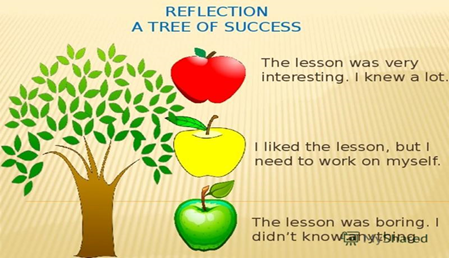
Self-assessment. Total marks – 10.
|
Poster Success
|
|


ДОЖЖО:
Ж.Б.Ахтаева
_______________________









 Бұл курс Қазақстан Республикасы Оқу-ағарту министрлігімен келісілген