DEVELOPMENT
OF WRITING SKILLS - AN IMPORTANT ASPECT OF LANGUAGE LEARNING
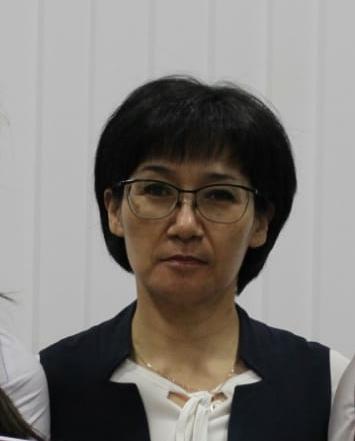
I.A.Amandykova
Teacher
of English language
Specialized
Gymnasium №21
named
after Al-Farabi
Kazakhstan,
Aktobe
Abstract
Like
any English language skill writing is an important part of learning
English. In order to write perfectly, one needs to master the
technique of writing and practice the skill tirelessly. As one of the
complex language skills, writing is a most interesting method that
stimulates our imagination and requires thoughtful communication. We
have all heard the expression "Think before you speak!", so
it is not unreasonable to say "Think before you write!"
Do
we ask ourselves how chefs prepare their masterpieces or artists
paint their pictures? Perhaps some of them watched TV programs, some
of them learned from their parents or teachers, and some of them may
have looked up recipes from textbooks and studied the history of
artists and famous paintings, etc. But anyway, of course they all
tried and practiced many many times. Gradually they improved their
abilities, and the same thing happens with writing, the more we
practice, the better our writing skills become. We use these skills
to make our writing more interesting and organized.To
be clear, we want to review some writing skills in this article.
Writing
is the art of expressing our thoughts and opinions, so we cannot
write something without organizing our thoughts in a certain order.
Language is a means of communication as we know, it is also a means
of expressing our thoughts, ideas, views and feelings in the form of
speech and writing.
As
we said above, a chef uses different techniques, process or steps to
prepare a dish. Hence also we should know the technique or format of
writing along with the skills for writing. From our early childhood,
we develop our writing skills when we start writing the letters of
alphabet or our first words in school. Gradually we move on to
writing skills for writing sentences already. And of course, when we
come to content or content writing, we need to know certain levels or
skills that we have to learn ourselves as context writing is already
a complex process as it requires proper grammar usage, high level of
vocabulary, sentence structure and other writing techniques.
Of
course, it may be easy for some to think and express their thoughts
and opinions correctly, but the main goal for us now is to express
our thoughts and ideas in a logically correct order. Also, the main
goal for those who write is to engage their reader in their writing.
Next, let's look at some skills that will help you to improve your
writing:
1.
learn to write proper complete sentences;
2.
try adding more synonymous and sustained expressions to your writing
so that your writing doesn't sound trite and simple;
3.
make your writing sound more communicative and two-way. Somewhere you
can add questions so that the reader feels as if he/she is in the
same situation with you;
4.
learn to use paragraphs. This will organize your thoughts and make
your content more interesting to the reader;
5.The
transition from one paragraph to another or the transition of one
line to the second should also be smooth and logically connected to
the previous one;
6.For
efficiency, use collocations and different speech patterns in your
writing;
7.
learn to put punctuation correctly and spell words correctly and show
a good level of vocabulary;
8.
avoid jargon, slang and abbreviations;
9.
practice every day, read the writing of others and try to look for
the charisma that your writing lacks;
Of
course using the above, we cannot say that you will become a master
of writing and your work will be very presentable. But nevertheless,
there is a format and some rules for content writing, so I suggest
the steps or steps for writing a proper content writing format:
1.decide
on the topic of the paper;
2.research
and gather material on the topic;
3.select
and make an outline;
4.write
an outline of the paper;
5.check,
review and correct errors, and write a final draft.
The
very first step of content writing is to choose and decide the topic
we want to write on. The topic to be chosen can be anything from a
burning issue to a sensitive issue or any other topic. So, we need to
have a clear idea about the topic we want to write.
The
next step after researching the topic is to research as much as
possible and gather relevant information. Collect and write down all
the random ideas and thoughts, information related to it. Determine
the main topic of the content and try to find the material that will
be of interest to the reader.
Next,
organize the correct sequence of the collected material. Creating an
outline of the article helps in organizing the content properly. This
is because when the article is quite long, outlines help to determine
the order and break up paragraphs to get meaningful .
The
next part is writing the content itself, which is already ready for
publication. This is the main task of the writer. The choice of
words, paragraphing, use of headings and subheadings, facts and
figures have a huge impact on the reader's mind. Also, try to link
cause and effect, or compare and contrast, or problem or solution
writing style.
The
work doesn't end there, and we move seamlessly into content review,
where we can add or delete or reorganize our material.
Once
we finish writing comes the time for editing, formatting and
proofreading. We check spelling, punctuation, sentence construction,
and other errors like repeated pronoun usage, plurals, and possessive
cases.
Once
we are ready with the final draft of the letter, we proceed to print
and print and further assign our work.
Using
writing as a means of communication helps us to express our thoughts
and ideas easily and clearly. Writing can be used for both personal
and formal communication. Knowledge of writing skills helps to
develop any kind of cognitive writing and also helps to bring clarity
and creativity in our thinking.
As
they say writers are never alone in their works, there is always
someone who listens and reads them. So let's improve our writing
skills and enjoy the writing procedure itself.
Literature
used
1.
Elizarova G.V. Culture and foreign language teaching. St. Petersburg,
2001. 352 с.
2.
Korotkina I.B. Literacy in the age of information technologies: in
search of conceptual unity // Education and Society. 2009. № 4. С.
125-130.
3.
Luria A.R. Letter and speech. Neurolinguistic studies. М., 2002. 352
с.
4.
Lytayeva M.A., Talalakina E.V. Academic Skills: essence, model,
practice // Vopr. of Education. 2011. № 4. C. 178-201.
5.
Nuja I.V. Linguocultural aspects of teaching academic writing at
university // Homo Loquens: topical issues of linguistics and methods
of teaching foreign languages: a collection of scientific articles /
edited by I.Y. Shchemeleva. Vol. 4. St. Petersburg, 2012. С.
364-373.
6.
Shcherba L.V. Teaching foreign languages at secondary school: General
questions of methodology. М., 1947.
7.
Shcherbakova I.O., Shchemeleva I.Y. About some aspects of teaching
academic reading in the language course at the university // Homo
Loquens: topical issues of linguistics and methods of teaching
foreign languages: a collection of scientific articles / edited by
I.Y. Shchemeleva. Vol. 4. St. Petersburg, 2012. С. 384-396.
8.
Academic Literacy: A Statement of Competencies Expected of Students
Entering California's Public Colleges and Universities. ICAS, 2002.
82 p.

 ЖИ көмекші


 Қауіпсіз төлем













 Бұл курс Қазақстан Республикасы Оқу-ағарту министрлігімен келісілген










