
 ЖИ көмекші


 Қауіпсіз төлем

жүктеу мүмкіндігіне ие боласыз
Бұл материал сайт қолданушысы жариялаған. Материалдың ішінде жазылған барлық ақпаратқа жауапкершілікті жариялаған қолданушы жауап береді. Ұстаз тілегі тек ақпаратты таратуға қолдау көрсетеді. Егер материал сіздің авторлық құқығыңызды бұзған болса немесе басқа да себептермен сайттан өшіру керек деп ойласаңыз осында жазыңыз
 07 Маусым 2019
 706

1 жыл бойы шексіз жүктеңіз
Domestic animals
Entertainment |
School: |
|||||
Date:__ |
Teacher’s name: Tuleugulova N.A.
|
|||||
Grade 8__ |
Number present: |
Number absent: |
||||
Theme of the lesson: |
Entertainment |
|||||
Learning objectives. |
8.6.15.1- use infinitive forms after a limited number of verbs and adjectives; use gerund forms after a limited variety of verbs and prepositions; use some prepositional verbs and begin to use common phrasal verbs on a growing range of familiar general and curricular topics; 8.3.7.1- use appropriate subject-specific vocabulary and syntax to talk about a range of general topics, and some curricular topics 8.2.6.1- deduce meaning from context with little or no support in extended talk on a growing range of general and curricular topics8.4.2.1- understand specific information and detail in texts on a growing range of familiar general and curricular topics, including some extended texts;
|
|||||
Lesson objectives |
All learners will be able to: |
|||||
|
||||||
Most learners will be able to: |
||||||
|
||||||
Some learners will be able to: - Understand information about the films paying attention to the specific details without support. Speak about the favorite films using the topical vocabulary without support. |
||||||
|
|
|
|
|
||
Language objective: |
To read and talk about TV programmes and film genres. Documentary, Thriller,Comedy,Soap opera ,Game, Quiz- show, show,Fantastic,Since fiction,Cartoon, Drama, melodrama, horror film. Useful classroom language: Very good! Excellent! You are right! Discussion points: What is your favourite TV programme? Who is your favourite actor or actress? Writing prompts: pictures, smiles, cards. |
|||||
Level of thinking. |
Understanding, Comprehension. |
|||||
Value links
|
Responsibility, Global Citizenship. |
|||||
Cross curricular links |
Art
|
|||||
Previous learning |
Reading for pleasure |
|||||
Assessment criteria: |
-recognize factual details in a given argument related to the curricular topics including text. -Provide a point of view in connected discourse. - recognize general basic questions without support. |
|||||
Main part Starts.
3min
10 min.
Middle.
|
Organization moment: Greeting! Group-division Divide learners into groups. Learners should take the cards with the names of the film genres and their definition of the genre the definition of the genre the names of the films from a group(genre,definition,films) The main part of the lesson. To guess the topic showing the picture. . To open the theme with the pictures. What are your favourite films and TV-programmes? How do you think what about todays new theme?
Vocabulary : Repeat after me!
Documentary- деректі филъм Thriller- триллер Comedy- комедия Soap opera - опера Game show- ойын шоу Fantastic - ғажайып Since fiction- ғылыми фантастика Cartoon- мултъфилм Drama- драма Horror-қорқынышты филъм News-жаңалықтар. Weather forecast- ауа райы болжамы.
Strategy 1. Brainstorming. (Whole group) T
The Press n
Television and Radio
Types
of the media and film genres
The Internet
Film genres
Feed
back- finger.
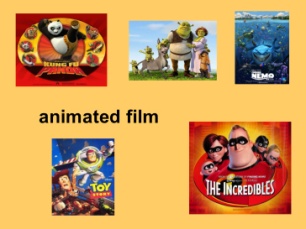
Strategy 2.“Just a minute” Listening and speaking (individually) Task: listen to three people talking about the films. Listen to three people talking about the films they like. Which types of film does each: like/ not like? Why? Jane: likes comedy. They make her relax and laugh. She does not like fantasies because thinks they are not realistic. Steve; Likes since fiction films because he likes the special effects. He does not like dramas because he thinks they are to slow. Susan: Likes computer-animated films because she thinks they are funny and clever. She does not like science-fiction films and westerns because she thinks they are boring. Feed back: smiles Read the text. (whole group) Task:
Discriptor: -Name the words according to the theme -Mark the sentences from the text. T or F. - Tell opinions about these films |
Divided in 3 group with the cards.
To show the pictures and find the names of topic.
PPP 1 To show the video.
https://www.youtube:com/watch?v=zBCO6RUfkLM. Paper, marker.
Teacher gives paper and marker to the learners. Learners to stick the stickers on the paper in the correct place. teacher t urns on type recording to the groups for listening the topic. Learners take it in turns to speak for one minute about the topic of the lesson without repetition, pause or mistake.
Teacher divides the text to three group. Learners read the text and doing the exercise.
Book, copybook. Excell ex-7.p modul 6 p 65.
Excell, reading 6 a, p 65 Differenciation. |
||||
5 min.
End. |
What have you learnt today? Could you write the structure of a film? What was the most difficult during writing task?Do you have any questions on the theme “TV programmes and films”? Then teacher gives some comments for better achievements.
Read different film or TV programmes in the internet and prepare for the unit “Entertainment and Media”. |
|
||||
End 1min |
Feedback: Teacher asks learners what task was difficult to them and which pair worked well. |
|
||||
Additionalinformation |
||||||
Differentiation – how do you plan to give more support? How do you plan to challenge the more able learners? |
Assessment – how are you planning to check learners’ learning? |
Cross curricular. Art. |
||||
All learners read the text and answer true or false. More learners to find new words in this theme. Some learners speak about types of film genres. |
Brainstorming strategy: learners associate words to the types of media and film. Finger. “Just a minute”- Teacher assess with smile. Differentiation task: Teacher assess to learners Descriptor. |
Lesson is connected with Art.
|
||||
Summary evaluation What two things went really well (consider both teaching and learning)? 1: Brainstorming was activity and the learners’ activity and motivation.
2: For the whole-class activity it is better to start describing some older films or classic ones
What two things would have improved the lesson (consider both teaching and learning)? 1:strategy “just a minute” 2 :Reading . What have I learned from the lesson about this class or individuals that will inform my next lesson? |
||||||
 nderstand
information about the films paying attention to the specific
details with minimal support.






Appendix 1 “Put in order” exercise (this exercise should be cut into paragraphs and mixed)
A review of War of the Worlds |
I recently went to see War of the Worlds. It’s a science fiction film starring Tom Cruise.
|
The film is based on a book written over 100 years ago, although it is set in modern times. The story is very gripping. It’s about alien machines from space which land on Earth. Nevertheless, the film has a happy ending. |
The acting is very good. Tom Cruise, who plays a father who is looking for his family, is excellent, as usual. However, I didn’t think Dakota Fanning was very convincing as his daughter. The special effects were incredible – the machines looked terrifying, and there were some very scary moments which I didn’t enjoy. |
This is a classic Spielberg film: fast – moving, not too violent, and full of action. In spite of the fact that it was a bit scary, overall I enjoyed it. Go and see it if you can. |
Appendix 2
Pre – reading for less able learners
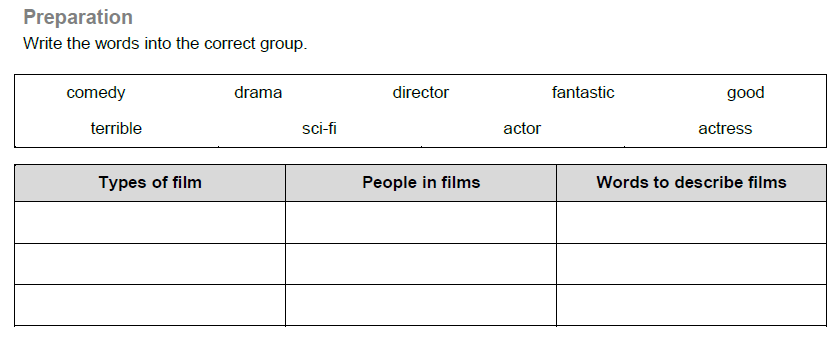 Pre
– reading for more able learners
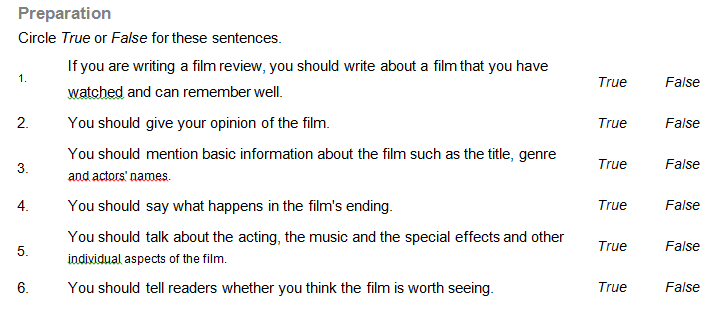
Answers
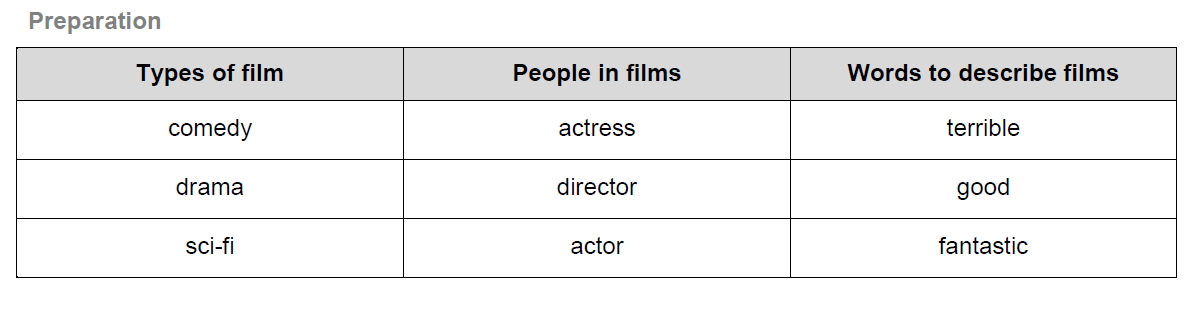
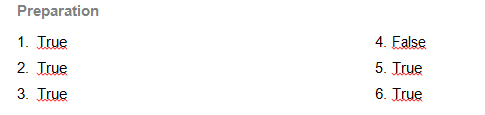
Answers









 Бұл курс Қазақстан Республикасы Оқу-ағарту министрлігімен келісілген










