
 ЖИ көмекші


 Қауіпсіз төлем

жүктеу мүмкіндігіне ие боласыз
Бұл материал сайт қолданушысы жариялаған. Материалдың ішінде жазылған барлық ақпаратқа жауапкершілікті жариялаған қолданушы жауап береді. Ұстаз тілегі тек ақпаратты таратуға қолдау көрсетеді. Егер материал сіздің авторлық құқығыңызды бұзған болса немесе басқа да себептермен сайттан өшіру керек деп ойласаңыз осында жазыңыз
 29 Қаңтар 2020
 1503

1 жыл бойы шексіз жүктеңіз
Edutainment 9 сынып
Lesson plan
Lesson: Unit 7 Edutainment Music & film |
School: 57 named after Eleu Kosherbaev |
|||||||
Date: |
Teacher name: Alenova S |
|||||||
CLASS: 9 |
Number present: |
absent: |
||||||
Learning objectives(s) that this lesson is contributing to (link to the Subject programme) |
9.4.6.1 recognise the attitude or opinion of the writer in extended texts on a range of familiar general and curricular topics 9.3.3.1 explain and justify their own point of view on a range of general and curricular topics 9.2.4.1 understand most of the implied meaning in unsupported extended talk on a wide range of general and curricular topics |
|||||||
Lesson objectives |
Learners will be able to : |
|||||||
Recognise the attitude of writer and bring in line statements with their meaning /9.4.6.1/ Complete the movie with own idea, justify with classmates by discussing the answers of main questions /9.3.3.1/ Discuss in group questions applying hidden information, correct the false points /9.2.4.1/ |
||||||||
Assessment criteria |
- Check the author's opinion by appropriate points - Express own point of view in ending the film and debate using own answers to main questions -Identify implied meaning and criticize the information |
|||||||
Values links |
Inspiration, culture, collaboration |
|||||||
Cross-curricular links |
Art, music, history |
|||||||
Previous learning |
New vocabulary from the whole unit |
|||||||
Plan |
||||||||
Planned timings |
Planned activities (replace the notes below with your planned activities) |
Resources |
||||||
Beginning
2min
Middle
3 min
10 min- to film
10 min-to answer an discuss
4 min- clip 10 min- to do activities
|
Class organization Learning and lesson objectives are introduced what they would be able to do at the end of the lesson. Warm up Teacher start the lesson with explaining the main paragraphs of lesson -" Today we will watch the historical musical fragment and listen to music. How do you think, what tasks we are going to do?” -"What would you wish to your partner before visiting the cinema? '' There will be some conversation
9.4.6.1 Activity 1 (IW) Match the sentences (1-6) to their meanings (A-F) Descriptor: A learner can
Assessment: Peer assessment by descriptor and teacher's feedback
9.3.3.1 Activity 2 (Whole class work)
Watch the short film «The greatest showman". Make the alternative ending using your point of view and justify by answering and discussing the questions with class;
«Why is the little-curious guy will be the Barnum's star? What is Barnum going to do with him?
Descriptor: A learner
Assessment: Teacher gives oral feedback an suggestions
9.2.4.1 Activity 3 (GW, IW) Student A,B Watch and listen to the clip attentively and mark the sentences as True or False (A level) Match the T/F and correct the false points. (B level) (All levels can use given by teacher sheet with information about P.T. Barnum)
Descriptor A learner
Assessment : each correct answer is one «Oscar» each reasonable answer is one «Grammy» each not full answer is one «Star» and feedback with suggestions
Student C Watch and listen to the clip attentively and discuss the implied meaning of music and try to answer the questions. (You can use the previous film materials and sheet with biography of main character given by teacher) Descriptor: A learner -Watches and listens to clip carefully - Understands the implied meanings - Discuss the questions Assessment : -each correct answer is one «Oscar» -each reasonable answer is one «Grammy» -each not full answer is one «Star» and feedback with suggestions |
Handout #1 Worksheets (Materials from Student's book Excel, 9 grade, on page 86, ex.1)
Video-fragment from film edited by teacher (flash-card)
Clip about P.T Barnum's curcus Handout #2- T/F matching sentences
Biography of P.T.Barnum as support
Handout #3- questions to answer
Biography of P.T.Barnum as support
|
||||||
|
|
|||||||
End
1 min |
Concluding the lesson. Reflection “The red carpet ” Learners goes to the appropriate carpet Red carpet- 100% understand the lesson and it was easy Pink carpet- have some questions to fix Rose carpet- need some review and discuss Giving homework Think about Showmen, history people or who had such situation like in the Musical, and make the summary in 9-10 sentences
|
|
||||||
Additional information |
||||||||
Differentiation – how do you plan to give more support? How do you plan to challenge the more able learners? |
Assessment – how are you planning to check learners’ learning? |
Cross- curricular links ICT links Values links |
||||||
Less able students:
More able students:
|
Activity 1 Peer assessment by descriptor Activity 2: Teachers oral feedback Activity 3 Assessment by Oscars, Grammies and feedback with suggestions.
|
Worksheets (Materials from Student's book Excel, 9 grade, on page 86, ex.1) Video-fragment from film edited by teacher (flash-card) about Pheneas Taylor Barnum Video-clip about P.T Barnum's circus Biography of P.T.Barnum as support
|
||||||
Reflection
Were the lesson objectives/learning objectives realistic? Did all the learners achieve thelesson objectives/ learning objectives? If not, why? Did my planned differentiation work well? Did I stick to timings? What changes did I make from my plan and why?
|
|
|||||||
|
||||||||
Summary evaluation
What two things went really well (consider both teaching and learning)?
1:
2:
What two things would have improved the lesson (consider both teaching and learning)?
1:
2:
What have I learned from this lesson about the class orindividuals that will inform my next lesson?
|
||||||||
Handout #1
9.4.6.1 Activity 1 (IW)
Match the sentences (1-6) to their meanings (A-F)
Descriptor: A learner can
Identify the meanings of sentences
Check the appropriate discription
A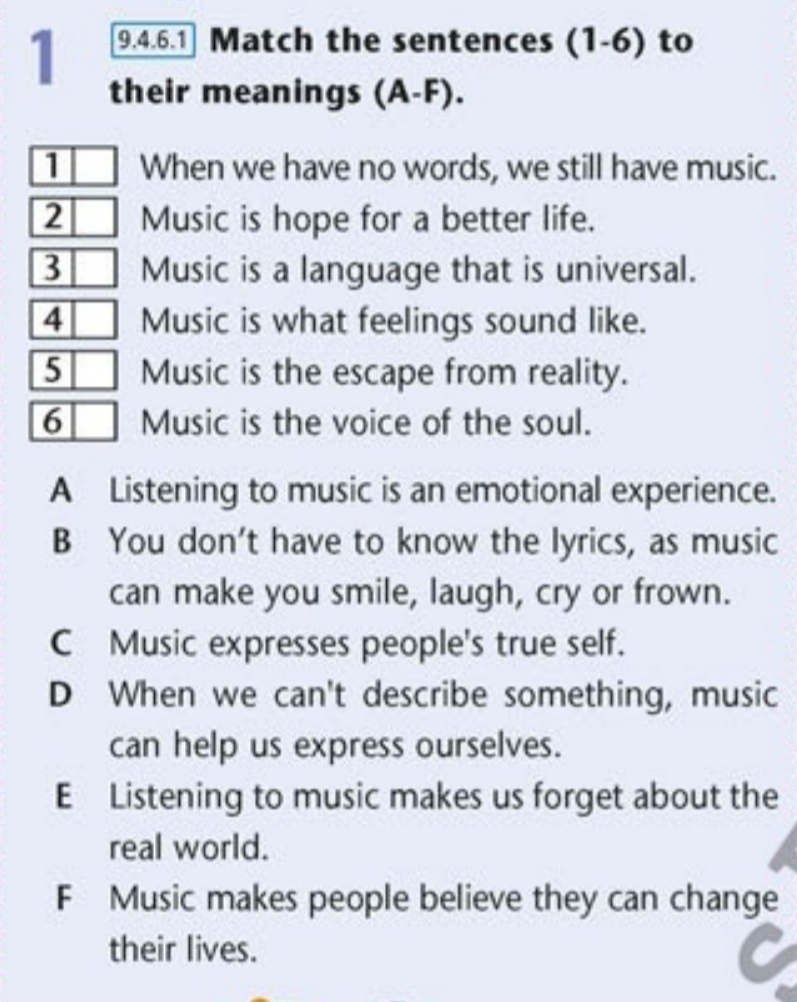
ssessment:
Peer assessment by descriptor
Handout #2
9.2.4.1 Activity 3 (GW, IW)
Student A,B
T/F matching sentences
P.T.Barnum is a greatest American showman famous for his Circus
Actually, he founded the the notion «Circus"
Charity is not his first love and forever
Charity wanted the wealthy life, not just happiness
Barnum's daughter Francis wanted to be ballerina
Charity Barnum died in 1873
Barnum did not, in fact, become a circus showman until he was past age 60.
Handout #3
9.2.4.1 Activity 3 (GW, IW)
Student C
Questions to answer:
How this clip is connected to the previous film?
Remember the fragments of film, what implied information do you find?
What did Cheriti want to and what did Pheneas want for Cheriti?
What is the final decision of P.T.Barnum and where that decision is mentioned in the song?
Can you describe some actors of Barnum's circus?
Supporting material
Biography of P.T.Barnum
P.T. Barnum
AMERICAN SHOWMAN
WRITTEN BY:
LAST UPDATED: Apr 5, 2019 See Article History
Alternative
Title: Phineas
Taylor Barnum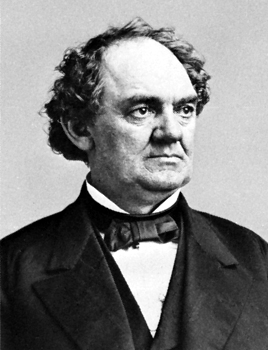
QUICK FACTS
BORN
July
5, 1810
Bethel, Connecticut
DIED
April
7, 1891 (aged 80)
Bridgeport, Connecticut
DID YOU KNOW?
Tufts University adopted P.T. Barnum's famous elephant, Jumbo, as its official mascot in 1885.
P.T. Barnum marched 21 elephants across the Brooklyn Bridge to allay fears about its stability.
P.T. Barnum co-founded Tufts University.
P.T. Barnum, in full Phineas Taylor Barnum, (born July 5, 1810, Bethel, Connecticut, U.S.—died April 7, 1891, Bridgeport, Connecticut), American showman who employed sensational forms of presentation and publicity to popularize such amusements as the public museum, the musical concert, and the three-ring circus. In partnership with James A. Bailey, he made the American circus a popular and gigantic spectacle, the so-called Greatest Show on Earth.
In 1829, at age 19, Barnum married a 21-year-old Bethel woman, Charity Hallett, who was to bear him four daughters. In 1834 he moved to New York City, where he found his vocation as a showman one year later when he successfully presented Joice Heth, a wizened black woman whom he advertised as the 161-year-old nurse to General George Washington. This human relic, on her death, was exposed as a hoax.
Between 1842, when he took over the American Museum, and 1868, when he gave it up after fires twice had all but destroyed it, Barnum’s gaudy showmanship enticed 82 million visitors—among them Henry and William James, Charles Dickens, and Edward VII, then prince of Wales—into his halls and to his other enterprises.
Barnum’s first successful exhibit in the museum was the Feejee Mermaid, which had a seemingly human head topping the finned body of a fish and was, of course, found later to be a fake. Among the genuine curiosities were Chang and Eng, Siamese twins connected by a ligament below their breastbones. It was, however, Charles Stratton, a man only 25 inches tall who was discovered by Barnum, that proved to be his most profitable exhibit. Ballyhooing Stratton as General Tom Thumb, Barnum sold 20 million tickets to the museum. After being received by President Abraham Lincoln, Barnum and Tom Thumb enjoyed a triumphal tour abroad, during which the latter gave a command performance before Queen Victoria.
After serving two terms in the Connecticut state legislature, he was elected mayor of Bridgeport, in which post he fought prostitution and union discriminationagainst blacks. In 1855 he published his autobiography, The Life of P.T. Barnum, Written by Himself;
Barnum’s family life was not entirely happy. One daughter died in childhood; another was dropped from his will for committing adultery. Disappointed because he had no male heir, Barnum left a sizable bequest to a grandson on the condition that he agree to use Barnum as part of his name. After 44 years of marriage, Charity Barnum died in 1873.
Although his name has been popularly linked with the circus, Barnum did not, in fact, become a circus showman until he was past age 60. Barnum did not invent the modern circus, but, in partnership with the retiring, efficient Bailey, he did give the American spectacle its gigantic size, its most memorable attractions, and its widest popularity, attempting to make it what he called “the greatest show on earth.” Barnum capped his circus career by purchasing a six-and-a-half-ton elephant named Jumbo, who quickly earned back his purchase price during his first season under the big top.
In his 81st year, Barnum fell gravely ill. At his request, a New York newspaper published his obituary in advance so that he might enjoy it. Two weeks later, after inquiring about the box office receipts of the circus, Barnum died in his Connecticut mansion. The Times of London echoed the world press in its final tribute: “He created the métier of showman on a grandiose scale.…He early realized that essential feature of a modern democracy, its readiness to be led to what will amuse and instruct it.…His name is a proverb already, and a proverb it will continue.”
Top 10 Curious Humans Exhibited In P.T. Barnum’s Circus
F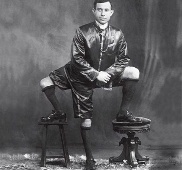
rank
Lentini
Oddity: Had Three Legs
K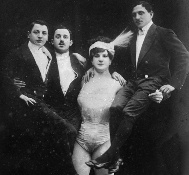
ate
Brumbach
Oddity: Exceptional Strength
S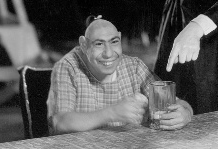
chlitzie
Oddity:
Microcephaly
Joice
Heth
Oddity: None
A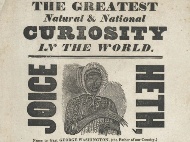
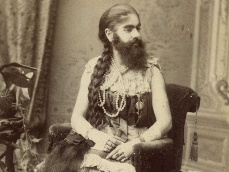
nnie
Jones
Oddity: Heavy Beard
Isaac
W. Sprague
Oddity: Extraordinarily Lean
W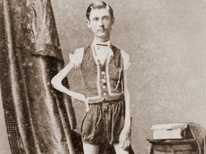
ild
Men Of Borneo
Oddity: Dwarfism And Super Strength
F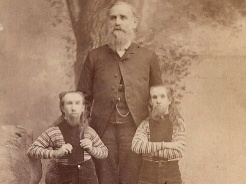
edor
Jeftichew
Oddity: Excessive Facial Hair
P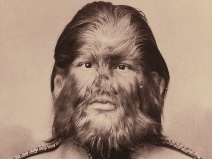
rince
Randian
Oddity: Totally Limbless
L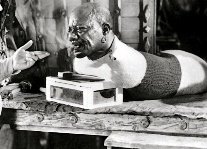
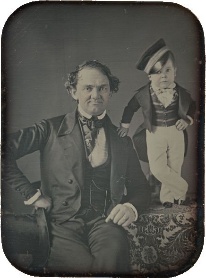
eopold
Kahn
Oddity: Dwarfism









 Бұл курс Қазақстан Республикасы Оқу-ағарту министрлігімен келісілген










