
 ЖИ көмекші


жүктеу мүмкіндігіне ие боласыз
Бұл материал сайт қолданушысы жариялаған. Материалдың ішінде жазылған барлық ақпаратқа жауапкершілікті жариялаған қолданушы жауап береді. Ұстаз тілегі тек ақпаратты таратуға қолдау көрсетеді. Егер материал сіздің авторлық құқығыңызды бұзған болса немесе басқа да себептермен сайттан өшіру керек деп ойласаңыз осында жазыңыз
 23 Қаңтар 2025
 156
156
Grade: 6.Use of English: countable and uncountable nouns
Short term plan: term 3
|
Unit: 5 Our Health |
Lesson 53 |
||
|
Teacher name: |
|
||
|
Date: 14.01.2025 |
Yerzhanova Gulnar Bisenbaevna |
||
|
Grade: 6 |
Number present: |
absent: |
|
|
Lesson title |
Use of English: countable and uncountable nouns |
||
|
Learning objectives |
6.1.1.1 use speaking and listening skills to solve problems creatively and cooperatively in groups 6.6.2.1 use quantifiers many, much, a lot of ,a few on a limited range of familiar general and curricular topics 6.3.2.1 ask simple questions to get information about a limited range of general topics |
||
|
Lesson objectives |
Learners will be able to: - To present can/can't/could, may/might, should/shouldn't, ought to/oughtn't to and consolidate through translation -To present countable/uncountable nouns and quantifiers -To identify countable/uncountable nouns |
||
|
Value links |
Generosity – This may be a core value of yours if you cherish people who will give their time and resources to people in need. You may consider yourself to be a generous person if you find joy and meaning in giving to others. |
||
|
Plan |
|||
|
Stages / Time |
Teachers actions |
Students actions |
Assessment criteria |
Resources |
|
Beginning of the lesson Warming-up
3 min Pre-learning «Brainstorming» method 7 min. |
Organization moment : 1.Greeting. Ask about the weather. The teacher sets the lesson objectives, letting students know what to anticipate from the lesson. Warming up Where are you from? How old are you? What color is it? How many students are there in class? What day of the week today? Revise the vocabulary from the previous lesson Lead – In
|
The aim: To develop pupils speaking skills and create friendly atmosphere Efficiency: By wishing each other they feel better and feel the support of others Students of the class are listed. Students' attention is drawn to the lesson. • Learners talk about days of the week previous lesson vocabulary Determines the topic and purpose of the lesson Students say different words from the picture |
The teacher to assess learners for their ability. “Good job! Well done!” Formative Assessment
Good job! Descriptor: - talk about days of the we Total: 1 point Assessment criteria - Learners have met the learning objectives if they can talk about your last I holidays. |
Pictures worksheet picture |
|
Middle of the lesson Presentation part. 30 min |
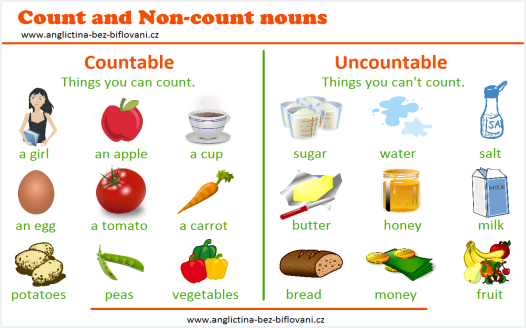
Ex:8 P:57 • Ask various Ss around the class to read out an example and give the L1 equivalent. (Ss' own answers) Elicit examples from the text on p.54. Ex: 9 P: 57 • To practise modal verbs Explain the task. Ss complete the task. Check Ss answers. Ex: 10 P: 57 • Ss' books closed. Explain that some nouns can be counted (e.g. egg, car, apple etc) and these are countable and some nouns can't be counted (e.g. milk, water, coffee etc). These are uncountable nouns. Explain that we use a/an with countable nouns and some with uncountable nouns. Ss' books open. Go through the table with Ss and elicit the L1 equivalents for the examples Ex: 11 P: 57 • To identify countable/uncountable nouns Explain the task and elicit answers from Ss around the class. Ex: 12 P: 57 • Explain the task and give Ss time to complete it. Check Ss' answers around the class. Conclusion during the lesson some tasks differentiated by outcomes of the students and by their abilities. |
• Pupils read the examples. Find examples in the text. ANSWERS it might help with the pain, you should drink some ginger, honey may help sore throats • Pupils rewrite the sentences using appropriate modal verbs. ANSWERS 1 You can't swim after you have eaten lunch. 2 You shouldn't/oughtn't to eat too much junk food. 3 Can I bring you some hot tea? 4 Can/May I go home early? I don't feel well. 5 We might order takeaway later • Pupils read the table. Say the examples in your language. ANSWERS Students
own answer. • Pupils fill in a/an or some. Then mark the nouns C (countable) and U (uncountable). ANSWERS 1 an C 2 some U 3 some U 4 a C • Pupils choose the correct item. ANSWERS 1 a few 2 How many 3 Not many 4 some 5 a little 6 How much |
Descriptor: - read the examples - find examples in the text. Total: 3 point
Descriptor: - rewrite the sentences - use appropriate modal verbs Total: 2 point Descriptor: - read the table - Say the examples in your language Total: 2 point Descriptor: - fill in a/an or some - mark the nouns C or U Total: 2 point -Make CCQ questions Yes / No Total: 10 point |
Card Worksheet Vocabulary card |
|
End of the lesson 5 min |
FEEDBACK Learners provide feedback on what they have learned at the lesson. Ex: Home task: |
|
Poster Success
|
|





 Жүктеу


 Жүктеу
шағым қалдыра аласыз

 Бұл курс Қазақстан Республикасы Оқу-ағарту министрлігімен келісілген










