Short term plan: term 3
|
Unit 6: The natural world |
|
||
|
Teacher name: |
|
||
|
Date: |
|
||
|
Grade: 8 |
Number present: |
absent: |
|
|
Lesson title |
Vocabulary: Endangered animals |
||
|
Learning objectives |
8.2.5.1 recognise the opinion of the speaker(s) with little or no support in extended talk on a wide range of general and curricular topics 8.3.7.1 use appropriate subject-specific vocabulary and syntax to talk about a range of general topics, and some curricular topics |
||
|
Lesson objectives |
-identify relate/describe the main idea, themes, setting, plot, - explain the topical word by giving definition/synonym |
||
|
Value links |
Integrity – Integrity is the quality of having strong moral principles. So, a person with integrity will always act with honesty and adhere to their own moral code regardless of what others do. |
||
|
Plan |
|||
|
Stages / Time |
Teachers actions |
Students actions |
Assessment criteria |
Resources |
|
Beginning of the lesson Warming-up 3 min
Pre-learning «Brainstorming» method 7 min. |
Organization moment : 1.Greeting. Ask about the weather. The teacher sets the lesson objectives, letting students know what to anticipate from the lesson. Warming up Where are you from? How old are you? What color is it? How many students are there in class? What day of the week today? . Lead – In Watching videos -What do you see in this video? |
The aim: To develop pupils speaking skills and create friendly atmosphere Efficiency: By wishing each other they feel better and feel the support of others Students of the class are listed. Students' attention is drawn to the lesson. Determines the topic and purpose of the lesson Students answer the questions |
The teacher to assess learners for their ability. “Good job! Well done!” Formative Assessment Good job! Descriptor: -know key phrases - can make sentence Total: 1 point Assessment criteria - Learners have met the learning objectives if they can: |
https://youtu.be/r7006Q6QA4w?si=XQauEsW9b9Wl7Ksp |
|
Middle of the lesson Presentation part. 30 min |
Ex:5 P:65 • To consolidate and broaden the topic • Ss discuss in pairs other endangered animals and how we can help them. • Ask various pairs to report back to the class. Ex: 6 P: 65 • To present and practise prepositional phrases • Read through the list of prepositions and give Ss time to complete the sentences using their dictionaries to check. • Check Ss’ answers. Ex: 7 P: 65 • To practise word formation (forming adjectives) • Ask Ss to read the theory box and then explain the task. • Give Ss time to complete the task and then check their answers. Ex: 8 P: 65 • To discuss ways to help endangered species • Ask Ss to work in small groups and discuss the ideas for helping endangered species. • Monitor the activity around the class and then ask some groups to report back to the class. Conclusion during the lesson some tasks differentiated by outcomes of the students and by their abilities. |
Pupils answer the question. Discuss in pairs. ANSWERS Many types of tigers need our help as well as gorillas, orangutans and chimpanzees. We need to protect these animals from hunters and protect their natural habitats. We can join a wildlife organisation or an environmental group. We can raise money and write to governments to make laws to stop hunting. Pupils complete the sentences ANSWERS 1 from 2 to 3 under 4 in 5 to Pupils read the theory, then form adjectives from the words in bold to complete the sentences. ANSWERS 1 natural 2 noisy 3 dangerous 4 effective Pupils what are you going to do to help endangered animals? Decide in groups. Tell the class. ANSWERS We’re going to join an environmental group that protects tigers. We are going to write letters about threatened species to governments to make laws to stop hunting. We are going to learn about adopting endangered species. |
Descriptor: - answer the question - discuss in pairs. Total: 2 point Descriptor: - complete the sentences Total: 2 point Descriptor: - read the theory - complete the sentences Total: 2 point Descriptor: - decide in groups - tell the class. Total: 2 point -Make CCQ questions Yes / No |
Students book |

|
End of the lesson 5 min |
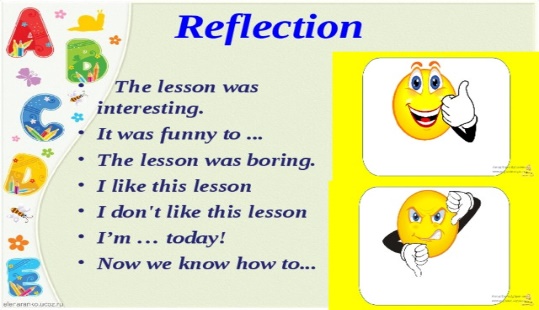
FEEDBACK Learners provide feedback on what they have learned at the lesson. Home task: Speaking “Endangered animals in Kazakhstan? |
|
|
|
жүктеу мүмкіндігіне ие боласыз
Бұл материал сайт қолданушысы жариялаған. Материалдың ішінде жазылған барлық ақпаратқа жауапкершілікті жариялаған қолданушы жауап береді. Ұстаз тілегі тек ақпаратты таратуға қолдау көрсетеді. Егер материал сіздің авторлық құқығыңызды бұзған болса немесе басқа да себептермен сайттан өшіру керек деп ойласаңыз осында жазыңыз
Grade 8 .Unit 6 The natural world .Theme:"Endangered animals"
Short term plan: term 3
|
Unit 6: The natural world |
|
||
|
Teacher name: |
|
||
|
Date: |
|
||
|
Grade: 8 |
Number present: |
absent: |
|
|
Lesson title |
Vocabulary: Endangered animals |
||
|
Learning objectives |
8.2.5.1 recognise the opinion of the speaker(s) with little or no support in extended talk on a wide range of general and curricular topics 8.3.7.1 use appropriate subject-specific vocabulary and syntax to talk about a range of general topics, and some curricular topics |
||
|
Lesson objectives |
-identify relate/describe the main idea, themes, setting, plot, - explain the topical word by giving definition/synonym |
||
|
Value links |
Integrity – Integrity is the quality of having strong moral principles. So, a person with integrity will always act with honesty and adhere to their own moral code regardless of what others do. |
||
|
Plan |
|||
|
Stages / Time |
Teachers actions |
Students actions |
Assessment criteria |
Resources |
|
Beginning of the lesson Warming-up 3 min
Pre-learning «Brainstorming» method 7 min. |
Organization moment : 1.Greeting. Ask about the weather. The teacher sets the lesson objectives, letting students know what to anticipate from the lesson. Warming up Where are you from? How old are you? What color is it? How many students are there in class? What day of the week today? . Lead – In Watching videos -What do you see in this video? |
The aim: To develop pupils speaking skills and create friendly atmosphere Efficiency: By wishing each other they feel better and feel the support of others Students of the class are listed. Students' attention is drawn to the lesson. Determines the topic and purpose of the lesson Students answer the questions |
The teacher to assess learners for their ability. “Good job! Well done!” Formative Assessment Good job! Descriptor: -know key phrases - can make sentence Total: 1 point Assessment criteria - Learners have met the learning objectives if they can: |
https://youtu.be/r7006Q6QA4w?si=XQauEsW9b9Wl7Ksp |
|
Middle of the lesson Presentation part. 30 min |
Ex:5 P:65 • To consolidate and broaden the topic • Ss discuss in pairs other endangered animals and how we can help them. • Ask various pairs to report back to the class. Ex: 6 P: 65 • To present and practise prepositional phrases • Read through the list of prepositions and give Ss time to complete the sentences using their dictionaries to check. • Check Ss’ answers. Ex: 7 P: 65 • To practise word formation (forming adjectives) • Ask Ss to read the theory box and then explain the task. • Give Ss time to complete the task and then check their answers. Ex: 8 P: 65 • To discuss ways to help endangered species • Ask Ss to work in small groups and discuss the ideas for helping endangered species. • Monitor the activity around the class and then ask some groups to report back to the class. Conclusion during the lesson some tasks differentiated by outcomes of the students and by their abilities. |
Pupils answer the question. Discuss in pairs. ANSWERS Many types of tigers need our help as well as gorillas, orangutans and chimpanzees. We need to protect these animals from hunters and protect their natural habitats. We can join a wildlife organisation or an environmental group. We can raise money and write to governments to make laws to stop hunting. Pupils complete the sentences ANSWERS 1 from 2 to 3 under 4 in 5 to Pupils read the theory, then form adjectives from the words in bold to complete the sentences. ANSWERS 1 natural 2 noisy 3 dangerous 4 effective Pupils what are you going to do to help endangered animals? Decide in groups. Tell the class. ANSWERS We’re going to join an environmental group that protects tigers. We are going to write letters about threatened species to governments to make laws to stop hunting. We are going to learn about adopting endangered species. |
Descriptor: - answer the question - discuss in pairs. Total: 2 point Descriptor: - complete the sentences Total: 2 point Descriptor: - read the theory - complete the sentences Total: 2 point Descriptor: - decide in groups - tell the class. Total: 2 point -Make CCQ questions Yes / No |
Students book |
|
End of the lesson 5 min |
FEEDBACK Learners provide feedback on what they have learned at the lesson. Home task: Speaking “Endangered animals in Kazakhstan? |
|
|
|
шағым қалдыра аласыз