Long-term
plan unit: The world around us
|
School:
|
Lesson
|
|
Date:
|
Teacher
name: Bulatkanova E
|
CLASS: 2
|
Number
present:
|
absent:
|
Theme of
the lesson: Health and body
|
|
|
Learning
objective (s) that this lesson is contributing to
|
2.R1
recognise, sound and name the letters of the alphabet
2.S3
pronounce familiar words and expressions intelligibly
2.L1
recognise short basic instructions for a limited range of
classroom routines spoken slowly and distinctly
|
Lesson
objectives
|
All
learners will be able to:
• Ask
and answer the questions with some support
• Recognize
2-3 new words
Most
learners will be able to:
• Ask
and answer the questions
• Recognize
4 - 5 new words
Some
learners will be able to:
• Help
others to ask and answer the questions
• Recognize
6-7 new words
Name
main signs correctly;
|
|
Some
learners will be able to:
Say
and write all the signs correctly
|
Success
criteria
|
Students
will be able to:
Read
and follow words, phrases and sentences with considerable support
Give
commands and instructions using imperative forms
|
Value
links
|
Communication
|
Cross
curricular links
|
Biology
|
ICT skills
|
Book,
|
Previous
learning
|
Vocabulary
of Unit
|
Plan
|
Stages of
the lesson
|
Planned
activities (replace the notes below with your planned activities)
|
Teacher’s
notes
|
Beginning
|
Greeting,
Objectives & Daily Question
As
students are entering the classroom, remind them to open their
copybooks and write down the date and the topic. It isn’t
necessary at this stage to write down the learning objective –
it can be reviewed orally. Students will start writing answers to
higher order questions instead, to practice their daily literacy
skills and recall/apply topical information. Additionally, one
student can take the role of leader to open the lesson by asking
some questions. This will take some practice/trial & error at
the beginning
Write
the following in the middle of the board:
-What
day is it today?
-What
is the date today?
-What
is the topic of the lesson?
-Ask
some questions so to remember the material from the previous
|
|
|
Introduction
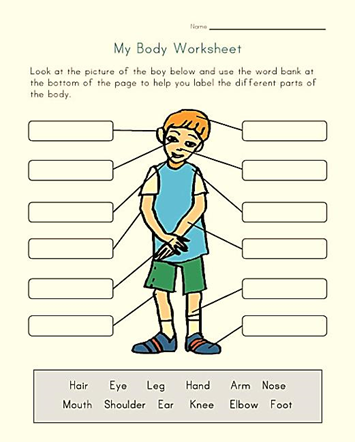
of the new vocabulary:
Head,
nose, shoulders, eyes, ears, hands, fingers, thumbs, hair, legs,
elbow, knees, mouth, tooth/teeth, foot/feet,
Practice
pronunciation of the body vocabulary. Draw learners’ attention
to the plural forms of tooth and foot: two vowels in singular and
plural forms change.
- Learners
are given the worksheet to fill in the spaces with an appropriate
words. “My body”:
|
|
Middle
|
Listening.
Draw a creature. Listen to the instructions and add the body
part.
Check
as a whole class
Less
confident learners work with teacher’s assist
|
|
End
|
Homework &
Reflection
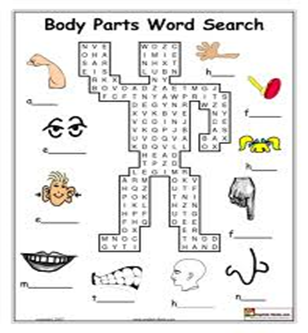
Word
search
|
|
Additional
Information
|
Differentiation
- how do you plan to give more support? How do you plan to
challenge the more able learners?
|
Assessment
- how are you planning to check learners` learning?
|
Health
and safety check ICT links
|
More
support will be given to weaker learners by giving them a
modified worksheets in some tasks with greater support
|
Peer
assessment (group work)
Checking
the task (work on worksheets)
Feedback
on the work (teacher assessment)
|
Learners
are introduced with different countries with the video (only 5-7
mins), learners develop their physical training with short songs
and movements.
|
REFLECTION
|
Were
the lesson objectives/learning objectives realistic? Did all
learners achieve the LO?
If
not, why?
Did
my planned differentiation work well?
Did
I stick to timings?
What
changes did I make from my plan and why?
|

 ЖИ көмекші


 Қауіпсіз төлем













 Бұл курс Қазақстан Республикасы Оқу-ағарту министрлігімен келісілген










