
 ЖИ көмекші

 Көп таңдалатын


 Ең тиімді
15 890₸ үнемдейсіз


жүктеу мүмкіндігіне ие боласыз
Бұл материал сайт қолданушысы жариялаған. Материалдың ішінде жазылған барлық ақпаратқа жауапкершілікті жариялаған қолданушы жауап береді. Ұстаз тілегі тек ақпаратты таратуға қолдау көрсетеді. Егер материал сіздің авторлық құқығыңызды бұзған болса немесе басқа да себептермен сайттан өшіру керек деп ойласаңыз осында жазыңыз
 29 Наурыз 2019
 642
642
Human beings 2
Lesson : Human beings 2
School:
Date:
Teacher name:
Class:5
Learning objectives
L3 understand an increasing range of unsupported basic questions on general and curricular topics
S6 communicate meaning clearly at sentence level during, pair, group and whole class exchanges
UE 13 use might may could to express possibility on a limited range of familiar general and curricular topics
Lesson objective
All learners will able to:
-Understand specific information related to the target
Pronounce and name some words according to the topic
Most learners will be able to:
Comparable animals and human beings
Some learners will be able to:
Can give an example of modal interpretation
Assessment criteria
Recognize basic general questions without support
Interact with each other delivering content correctly and clearly to others
Make up sentences with modal verbs of possibility
- ask and answer basic question speak about main points of short simple texts
Values links
Universal labour society
Cross -curricular links
Biology
ICT skills
Slides pictures
Previous learning
Human beings 1learners know about human beings
They have introduced with the information of human beings
Planned
timings
Planned activities (replace the notes below with your planned activities)
Resources
Begining
5min
Organization moment
1.Greeting
Brainstorming : I’m glad to see you. Let’s begin our lesson. Today we’ll speak about animals -Do you like animals?
What is your favorite animals?
-What do you know about wild animals? Name some of them.
-What color is your animals?
Now let’s introduce with the names of some animals
They are: a squirrel /’skwirәl/,- a wolf /wulf/, a rabbit /’raebit/, a fox /foks/.
Today we’ll speak about Human beings and animals. Let’s begin.
Teacher divides into 2 sub-groups
1-Plants
2-Animals
Teacher gives for children some piece of paper with pictures. Students take photos and divide into two groups according to their picture.
Try to guess it (make up a word from the letters)
n
m
s i →
a l a
«Animals»
T: Today we are going to summarize what we've learnt about animals. Let's begin with phonetic
Talks about animals in a small group
- asks question to find out information about human beings and animals
-chooses and puts might may and could in the right gaps
Slide
Middle
7min
7 min
8min
4min
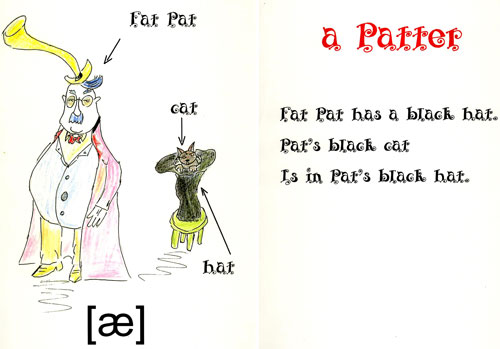
L3. Listen and repeat after me sound [æ]
Fat
pat has a black cat.
Pat's black cat
Is in pat's
black hat.
T: Now we'll revise the words.
Task-1
L3. “Guess what it is’
Listen carefully to a description of an animal.
“This is an animal which lives in Africa and Asia loves taking baths. It flaps its ears to keep cool. It has a really long nose” – answer: elephant. Then each team discusses what they think it is before giving an answer.
Descriptor: listen recognize guess find out say
Task-2
“Spiral
curricular”
What animal is it?
What can it do?
Where does it live?
What do you know about this animal?
What kind of features do you know about this animal?
Descriptor: listen and give the facts about animal
Task-3
S6. “Venn Diagram” Compare animal life with the human beings in the middle of diagram say common things.
D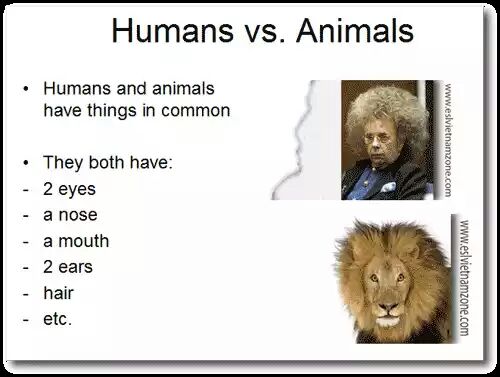 escriptor:
find identify the difference compare and say similarity.
escriptor:
find identify the difference compare and say similarity.
Task-4
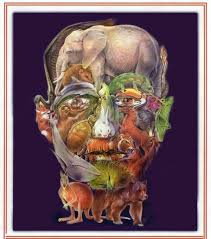
S6. Speak about the animals in the picture.
There are 30 animals at the beginning of the person find 10 animals in the picture.
Descriptor: recognize find group collect choose and express compare and say describe the object. 1-point
L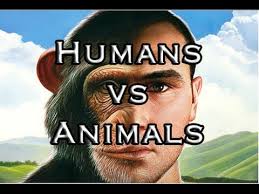 et’s
compare animals and human beings (people).
et’s
compare animals and human beings (people).
Hippos have little ears.
We have P1...earsElephants have big noses.
We have P2...Giraffes have long necks.
We have P3...Owls have big eyes.
We have P4...Crocodiles have big mouths.
We have P5...
Flashcards of animals
questions
Pictures flipchart markers
4min
7min
Modal verb: might ,may, could
Might-for possibility
The electrician might be finished by tomorrow.
It might be bad weather tomorrow.
Peter might come to the party.
May- for formal permission.
May come in?
May he ask a question
It may rain this evening.
Could – past ability.
Icould run ten kilometers when I was younger.
Icould see that Danny was angry.
Could you repeat that again?
Task-5
UE 13. The game “Bingo” Say the translation and make up a sentence using modal verb. 1-point
May could might may can


1 2 3 4 5 6
Learners should choose one number and under that number there is one modal verb a learner should make up sentence using it.
Descriptor: find and say the translation and use in sentence.
Task-6
Choose
the appropriate verb. Circle it.
1. They can/ might be away for the weekend but I'm not sure.
2. You may/might leave now if you wish.
3. Could/May you open the window a bit, please?
4. He can/could be French, judging by his accent.
5. May/Can you play the piano?
6. Listen, please. You may not/might not speak during this exam.
7. They can't/may not still be out!
8. You couldn't/might not smoke on the bus.
9. With luck, tomorrow can/could be a sunny day.
10. You can/might be right but I'm going back to check anyway.
Descriptor: underline the suitable modal verb
Card with modal verbs
The picture of a bingo
End3-min
Feedback The most activities in class for me are…….
In class I don’t like……….
Today I couldn’t say because………
I have some difficulties with speaking……
A sheet of paper
Additional information
Differentiation – how do you plan to give more support? How do you plan to challenge the more able learners?
Assessment – how are you planning to check learners’ learning?
Health
and safety check
Listen find the names of animal
Use animals in your sentences
Compare animal with human beings
Teacher assesses learners with formative assessment by traffic light and the sun star and cloud
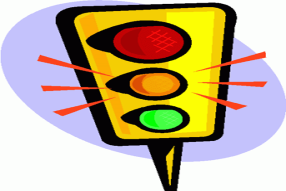
-Green The lesson is clear for me
-Yellow I have got some question
-Red I don’t understand anything
s


Health saving technologies.
Using physical exercises and active activities.
Rules from the Safety Rules book which can be applied in this lesson.
Reflection
Were the lesson objectives/learning objectives realistic?
Did all the learners achieve the lesson objectives/ learning objectives? If not, why?
Did my planned differentiation work well?
Did I stick to timings?
What changes did I make from my plan and why?
Use the space below to reflect on your lesson. Answer the most relevant questions from the box on the left about your lesson.







 Бұл курс Қазақстан Республикасы Оқу-ағарту министрлігімен келісілген










