
 ЖИ көмекші


 Қауіпсіз төлем

жүктеу мүмкіндігіне ие боласыз
Бұл материал сайт қолданушысы жариялаған. Материалдың ішінде жазылған барлық ақпаратқа жауапкершілікті жариялаған қолданушы жауап береді. Ұстаз тілегі тек ақпаратты таратуға қолдау көрсетеді. Егер материал сіздің авторлық құқығыңызды бұзған болса немесе басқа да себептермен сайттан өшіру керек деп ойласаңыз осында жазыңыз
 05 Қараша 2021
 504

1 жыл бойы шексіз жүктеңіз
Mechanical Waves
|
Long-term plan: Chapter 5: Oscillations and waves |
School: Named after Seyitkamza Lastaev |
|||||||||||||||||||
|
Date: 25 /02/20 |
Teacher name: Ramazanova Zhanar |
|||||||||||||||||||
|
Grade:9 A |
Number present: |
absent: - |
||||||||||||||||||
|
Theme of the lesson |
Mechanical Waves |
|||||||||||||||||||
|
Learning objectives that are achieved at this lesson |
|
|||||||||||||||||||
|
Lesson objectives |
After this lesson, students should be able to - Describe type of waves - Give examples of real-world systems; - solve problem on speed, frequency and wavelength |
|||||||||||||||||||
|
Success criteria |
Students have achieved if they: - Classify the waves depending on their characteristic; - Distinguish between longitudinal and transverse waves; - Know the quantities and formulas describing waves |
|||||||||||||||||||
|
Language objectives |
Subject vocabulary and terminology Wave, medium, to propagate, wavelength, crest, trough, detector, wide, transverse, longitudinal A series of useful phrases for dialogue letters I assume that the frequency of wave depends on ... ... ... In the fading experiment, we will measure measurements ....... I will keep ……… constant and change ……… The experiment can be improved with the help of ... ... .... |
|||||||||||||||||||
|
Values instilled at the lesson |
Students’ achieve of specific learning objectives, and get a certain amount of knowledge, but also develop the ability to apply their knowledge in solving learning and life problems. |
|||||||||||||||||||
|
Cross-curricular links |
Fundamentals of dynamics, especially Newton's 2 law in the form of F = ma, Hooke's law, sine and cosine graphs, angular measure (radians) and circular motion (angular velocity) |
|||||||||||||||||||
|
ICT skills |
ICT links. https://phet.colorado.edu/en/simulation/resonance |
|||||||||||||||||||
|
Previous learning |
Pendulum, oscillations |
|||||||||||||||||||
|
Planned stages of the lesson |
Planned activities at the lesson |
Resources |
||||||||||||||||||
|
Beginning 1 min
5мин |
1. Organizational moment. Hello students! How are you? I wish to be very active and show your knowledge in todayʼs lesson. To start, let’s dividing into 2 groups. Please choose one card and make a picture of the puzzles.
2. Repetition, updating of knowledge. To start let’s check the home work. I gave you home to repeat all physical quantities. For this, let’s play a game dominoes. I will give you words and definitions. You must match them. Score points for correct answers. The teacher can listen to individual answers. 1. What is called mechanical vibrations? (Mechanical vibrations are the movements of the body, repeated exactly or approximately at the same time intervals.) 2. What are the main characteristics of mechanical vibrations (the Main characteristics of mechanical vibrations are: amplitude, frequency, period.) 3. What is called the amplitude of the oscillations? (Amplitude is the module of the maximum deviation from the equilibrium position.) 4. What is called the oscillation frequency? (Frequency is the number of complete oscillations per unit of time.) 5. What is called the oscillation period? (Period — the time of one complete oscillation, i.e. the minimum period of time after which the repetition occurs 6. What is velocity? (quickness of motion) 7. Period designation (P) 8. Frequency unit (Hz) Starting point 3 pictures are shown on a slide. Students must find the common and topic of the lesson. Are there any waves that are not visible to us? (Sound waves) |
Presentation Slide 1 questions Teachers evaluates timer Slide 2 Slide 3 Slide 4 |
||||||||||||||||||
|
Middle 4 min 7 min 2 min 15 min 3 min |
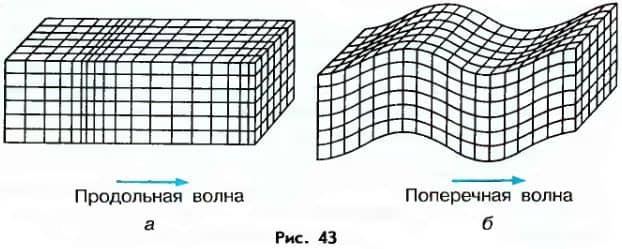
3. The study of new material. Video about wave There are two different types of wave. The vibrations are perpendicular to the direction of travel. It is transverse waves. For example: waves in water, waves on a string, light waves. The vibrations are parallel to the direction of travel. It is longitudinal waves. Waves only transfer energy. Wavelength is the length of a full cycle of a wave. Frequency is the number of complete waves to pass a point every second. What new words did you see and hear in this video? Wave- толқын -волна Medium- орта-среда To propagate- таралу- распространяться Wavelength- толқын ұзындығы- длина волны Crest- өркеш-гребень Trough- ойыс-впадина Transverse-көлденен-поперечный Longitudinal- бойлық- продольный Define objectives with students
Group work. Each group describes the type of wave with examples. Showing Cluster. After studying a generalization is carried out Descriptors -knows what are waves is; -explain the type of wave; -gives an example from everyday life; -can show on experiment Evaluate 2 stars and 1 wish Fill the table «Term table»
Speed= frequency × wavelength
Solving problems. The decision of the task individually. Verification using descriptors. P 5.7-5.8 Descriptors -know physical quantities; -know measuring of physical quantities; -know formulas -correctly draws up the task; Assessment with card Reflection
|
Slide 5, 6 video Slide 7 timer Slide Work Books Card |
||||||||||||||||||
|
End 3 min |
Generalization: Students will be asked if they have achieved the lesson’s objectives. Umbrella with questions |
Umbrella |
||||||||||||||||||
|
Differentiation – how do you plan to give more support? How do you plan to challenge the more able learners? |
Assessment – how are you planning to check students’ learning? |
Health and safety regulations |
||||||||||||||||||
|
|
|
|
||||||||||||||||||
|
Reflection Were the lesson objectives/learning objectives realistic? Did all learners achieve the LO? If not, why? Did my planned differentiation work well? Did I stick to timings? What changes did I make from my plan and why? |
Use the space below to reflect on your lesson. Answer the most relevant questions from the box on the left about your lesson. |
|||||||||||||||||||
|
|
||||||||||||||||||||
|
Summary evaluation What two things went really well (consider both teaching and learning)? 1: 2: What two things would have improved the lesson (consider both teaching and learning)? 1: 2: What have I learned from this lesson about the class orachievements/difficulties of individuals that will inform my next lesson? |
||||||||||||||||||||


|
What is called
waves |









 Бұл курс Қазақстан Республикасы Оқу-ағарту министрлігімен келісілген










