|
Beginning of
the lesson
Warming-up
3
min.
Pre-learning
«Brainstorming» method
7
min.
|
Organization
moment :
1.Greeting.
Ask about the
weather.
The teacher
sets the lesson objectives, letting students know what to
anticipate from the lesson.
Warming
up
Where are you
from?
How old are
you?
What color is
it?
How many
students are there in class?
What day of the
week today?
Lead –
In
|
The
aim: To develop pupils speaking
skills and create friendly atmosphere
Efficiency: By wishing
each other they feel better and feel the support of
others
Students of
the class are listed.
Students'
attention is drawn to the lesson.
Students say
different words from the picture
•Learners
remember previous lesson vocabulary
•Learners
answer the questions
|
The teacher to
assess learners for their ability.
“Good
job!
Well
done!”
Formative
Assessment

Good
job!
Assessment
criteria
make basic statements related to personal
information, match places to
continents
|
Pictures
worksheet
Picture
|
|
Middle of the
lesson
Presentation
part.
30
min
|
Ex:1 P:90
• Go through
the table with Ss and elicit the L1 equivalents for the
examples.
Ex: 2 P: 90
• Explain the
task.
Ss do the task
in closed pairs. Check Ss' answers.
Differentiation: «Verbal
support»
method is used to help Ss use new words in the
sentences.
Ex: 3 P: 90
• Explain the
task. Ss complete the task. Check S answers.
Ex: 4 P: 90
• Present the
passive. Explain that we use the passive to talk about an action
when we don't know who performed it or when it is obvious who
performed it from the context or when the action is more important
than the person who performed it.
Read out the
theory box and explain/elicit that we form the passive tense with
the verb to be + the past participle.
Conclusion during the lesson some tasks differentiated by outcomes of
the students and by their abilities.
|
• Learners read
the table. Say the examples in your language.
ANSWERS
Student’s own
answer.
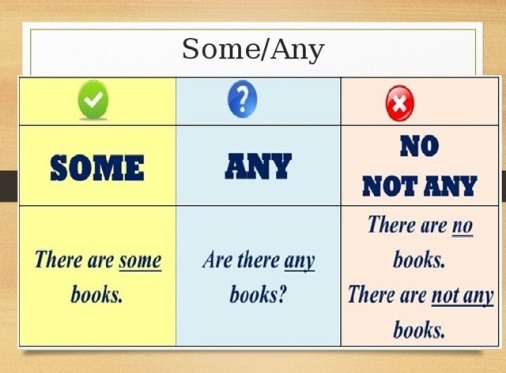
• Learners use
some, every any and their compound to complete the
postcard.
ANSWERS
A 1
some
2 a
3
any
B1 a
2
some
3 an
C1
any
2
any
3
some
D 1
no
2
some
3
any
• Learners
choose the correct word.
ANSWERS
1
Everything
2
something
3
every
4
everyone
• Learners read
the theory. Answer the question.
ANSWERS
Student’s own answer.
|
Descriptor:
-
read the table
-
Say the examples in your language
Total: 2
point

Self
assessment
Descriptor:
- use some,
every any and their compound
- complete the
postcard.
Total: 2
point
Descriptor:
- choose the
correct word.
Total: 2
point
Descriptor:
- read the
theory
- answer the
question.
Total: 2
point
-Make CCQ questions Yes / No
|

Card
Worksheet
Students book
|

 ЖИ көмекші


 Қауіпсіз төлем














 Бұл курс Қазақстан Республикасы Оқу-ағарту министрлігімен келісілген










