
 ЖИ көмекші


 Қауіпсіз төлем

жүктеу мүмкіндігіне ие боласыз
Бұл материал сайт қолданушысы жариялаған. Материалдың ішінде жазылған барлық ақпаратқа жауапкершілікті жариялаған қолданушы жауап береді. Ұстаз тілегі тек ақпаратты таратуға қолдау көрсетеді. Егер материал сіздің авторлық құқығыңызды бұзған болса немесе басқа да себептермен сайттан өшіру керек деп ойласаңыз осында жазыңыз
 22 Желтоқсан 2017
 472

1 жыл бойы шексіз жүктеңіз
Past simple
Н.У Жумаева
Т. Бигелдинов атындағы жалпы орта мектеп
Grade:4th
The theme of the
lesson: Past
simple
The aims of the
lesson:
To explain the use of the Past Simple and . to develop pupils
speaking, listening, writing habits; to revise the knowledge of the
theme ”My Hobby”;to motivate pupils’ interest in learning foreign
language ;
The type of the
lesson: mixed
lesson
The method of the
lesson: speaking ,writing,
reading.
Visual
aids: cards with different tasks,
posters.
The procedure of the lesson:
I Organization
moment
a)Greeting pupils. Talk with the pupil on duty.
Presentation of the theme of the lesson.
Let’s start our
lesson
b) Warm up activity : tongue-twister
Denise sees the fleece
Denise sees the fleas
At least Denise could sneeze
And feed and freeze the fleas
II Checking up the homework
To learn active words
I will check your homework from the copybook because at the end of the lesson I will take your copybooks. Do you understand me?
III New
lesson.
The theme of the lesson : “ Past simple ”. Now, open your copybooks
and write down the date and theme of the
lesson.
Past simple , Positive form
We use Past simple to speak about actions in the past.
We use –ed(-d) to make Past simple
Өткен шақты нақтылы уақытта болып кеткен, қазір аяқталған оқиға жайында әңгімелеген кезде пайдаланады.
Өткен шақ етістікке –ed(-d) жалғау арқылы жасалады:
Start-started
Work-worked
Live-lived
Helping words
Yesterday[jestәdi]кеше
Last[la:st]соңғы
Ago[әgou]әлдеқашан
IV Doing exercises
Open the book on page 44
Exercise 6 Listen and practice
-
-
-
-
-
[t]
[d]
[id]
looked
lived
started
worked
died
visited
-
-
-
-
Exercise 7 Put the verbs in
Past Simple.
To watch,to like,to love ,to look ,to dance , to collect ,to play, to help.
Exercise 8 Put the verbs in Past Simple.
1.My mum------------------------(like) skating when she was
a child.
2.My grandmother----------------------------(dance)very well when she was young.
3.My grandfather-----------------------------(help)me to start my stamp collection.
4.I------------------------(watch) a film about the history of stamps yesterday.
5.I------------------------(talk) to my friends about my collection.
6.My father --------------------(present) me a book about popular hobbies.
V Physical jerk:
T: Now pupils if you are tired let’s do our physical jerk. Stand up please
V .Conclusion
T: Dear Children! To we’ve fixed our knowledge of Past Simple and I hope that you are able to read the text “My hobby”
Do you like the lesson?
VI. Home task:
1)Make up 5 sentences
2)Ex 5 Speak about “My hobby”
-Is the home work clear for you?
VII Giving marks
Today you were so active. The lesson is over. You may be free. Good bye, children
Н.У Жумаева
Т. Бигелдинов атындағы жалпы орта мектеп
Grade:6th
The theme of the lesson: Can/ could модаль етістігі.
The aim of the lesson:-to develop communicative skills and abilies through different communicative activities, to teach the usage of the modal verb “can”
-to encourage real use of language in group and pair work;
-to develop the pupil’s interests for the language, singing a song, playing games.
The type of the
lesson: mixed
lesson
The method of the
lesson: speaking ,writing,
reading.
Visual
aids: cards with different tasks,
posters.
The procedure of the lesson.
І Organization moment.
a)Greeting. The duties reporting.
Good afternoon, boys and girls.
Who is on duty today? –I m on duty today.
Who is absent? –all are present.
What season is it now?
What month is it now?
II.Warming -up: phonetic drill (tongue- twister)
Whether the weather be fine
Or whether the weather be not
Whether the weather be cold,
Or whether the weather be hot.
III Checking up the home task.
Ex 5 Read the text and translate Ex:6 Are the sentences true (T)or false(F)
-
Now ,children let’s check up your home task.
-
What as your home task? Who is ready for the lesson?
IV The new lesson.
-Let’s begin our lesson. Take out your books, pens and notebooks. Get ready for the new lesson. The theme of our lesson is «Can/could modal verbs»
Can.could модальды етістіктерінің барлық жақтардағы формалары бірдей.
Can/could модальды етістігінен кейін тұйық етістік қолданылады. (to қолданылмайды. Can модальді етістігінің негізгі мағынасы: қабілеттілік,бір нәрсені істей алу, шамасы келу.
Could- can модаль етістігінің өткен шақ түрі
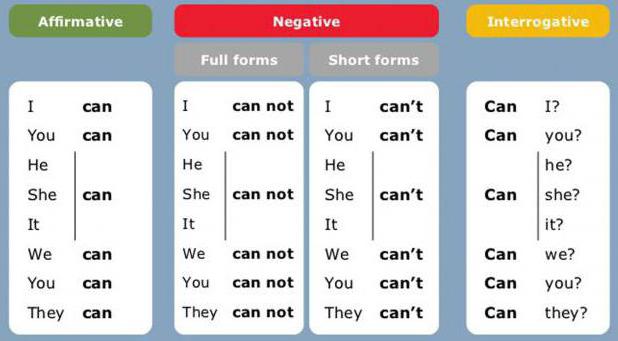
Question
What can you do? What could you do?
V Work with new words.
Often-жиі
Always-әрдайым, үнемі
Sometimes-кейде, кейбір уақытта
Usually-әдетте,әдеттегіше
Seldom- сирек
Never-ешқашан
VI Doing exercises
Exercise 13. Match A with B
1) dog/ a) check spellings
2) cats / b)write
3) birds can c)fly
4) computer/ d)drive a car
5) people/ e)see in the dark
6) robots f)swim
Exercise 14
Talk to your partner the about robots.Look at the list
What can they do?
What can’t they do?.
Exercise14 Read the information about Asel and talk to your partner.
Example: Asel could dance but she couldn’t write at the age of 4.
|
Asel |
could |
couldn’t |
|
at the age of 4
|
dance
|
write
play computer games |
Exercise 18.Work in two groups.
Group A: Read about Ivan
Two super Kids
Group B: Read about Zhansaya
V .Conclusion
Exercise 11.Answer the questions about Zhansaya/Ivan in your group.
Do you like the lesson?
VI. Home task:
1)To make up 10 sentences using verbs can and could
2)To learn by heart all new words
-Is the home work clear for you?
VII Giving marks
Today you were so active. The lesson is over. You may be free. Good bye, children
|
Long term plan module: Module 1 My family Lesson №6 Project time My Favourite Colour! |
School: School named after T.Bigeldinov |
||||||
|
Date: 15.09.2017 |
Teacher’s name: N.U Zhumaeva |
||||||
|
Class: 4 |
Number of present: |
Absent:- |
|||||
|
Learning objective(s) that this lesson is contributing to: |
1.L1 recognize short basic instructions for a limited range of classroom routines spoken slowly and distinctly 1.S1 make basic personal statements about people, objects and classroom routines 1.R1 recognize sound and name the letters of the alphabet 1.UE1 use singular nouns, plural nouns – to talk about objects 1.UE6 use demonstrative pronouns this, these that, those to indicate things |
||||||
|
Lesson objectives: |
All learners will be able to: -work together and discuss their project work in groups. |
||||||
|
Most learners will be able to: -draw their favourite things and colour them as project work. |
|||||||
|
Some learners will be able to: -demonstrate their project before class. This is my favourite colour. This ball. It is blue. |
|||||||
|
Language objectives: |
Learners can: - draw their favourite things and colour them as project work. -make and present their project My Favourite Colour! to the class. - say what their favourite colour is? |
||||||
|
Key words and phrases: This is my favourite colour? It is…. |
|||||||
|
Useful classroom language for dialogue/writing: |
|||||||
|
Discussion points: |
|||||||
|
Can you say why your favourite colour is green (pink/red )? ….. |
|||||||
|
Writing prompts: |
|||||||
|
Assessment for Teaching |
Criteria based assessment Assessment criteria: Name his/her favourite colour with clear pronunciation. Say expressions clearly. Descriptor: A learner presents his/her project clearly; pronounces topic words and expressions intelligibly. Self-assessment: Traffic lights |
||||||
|
How to overcome barriers in learning English |
-Help learners into activities by ranking what to listen for each time -Get learners to think before answering -Use gestures, actions and pictures |
||||||
|
Previous learning |
Lesson №5 Craftwork Colours, things |
||||||
|
Plan |
|||||||
|
Planned timing |
Planned activities (replace the notes below with your planned activities) What will the pupils learn? How will they learn it? Suggested Teaching Activities Active Learning activities |
Resources |
|||||
|
Start (Beginning of the lesson) |
Greeting: Teacher greets learners; learners respond to greeting and take their places. Dividing into subgroups: Teacher divides the learners into subgroups using colourful classroom objects (books, pens, rulers and pencils) Warming up: Dance and say! Learners dance to music. Teacher stops the music and says in Russian “желтый”. Learners must say the English equivalent of this word and touch the object with this colour as feedback. The teacher plays the music again. Learners dance again. After some time teacher stops the music and say another Russian word or English etc… Revising the previous lesson: What is your favourite colour? |
|
|||||
|
Middle (of the
lesson)
|
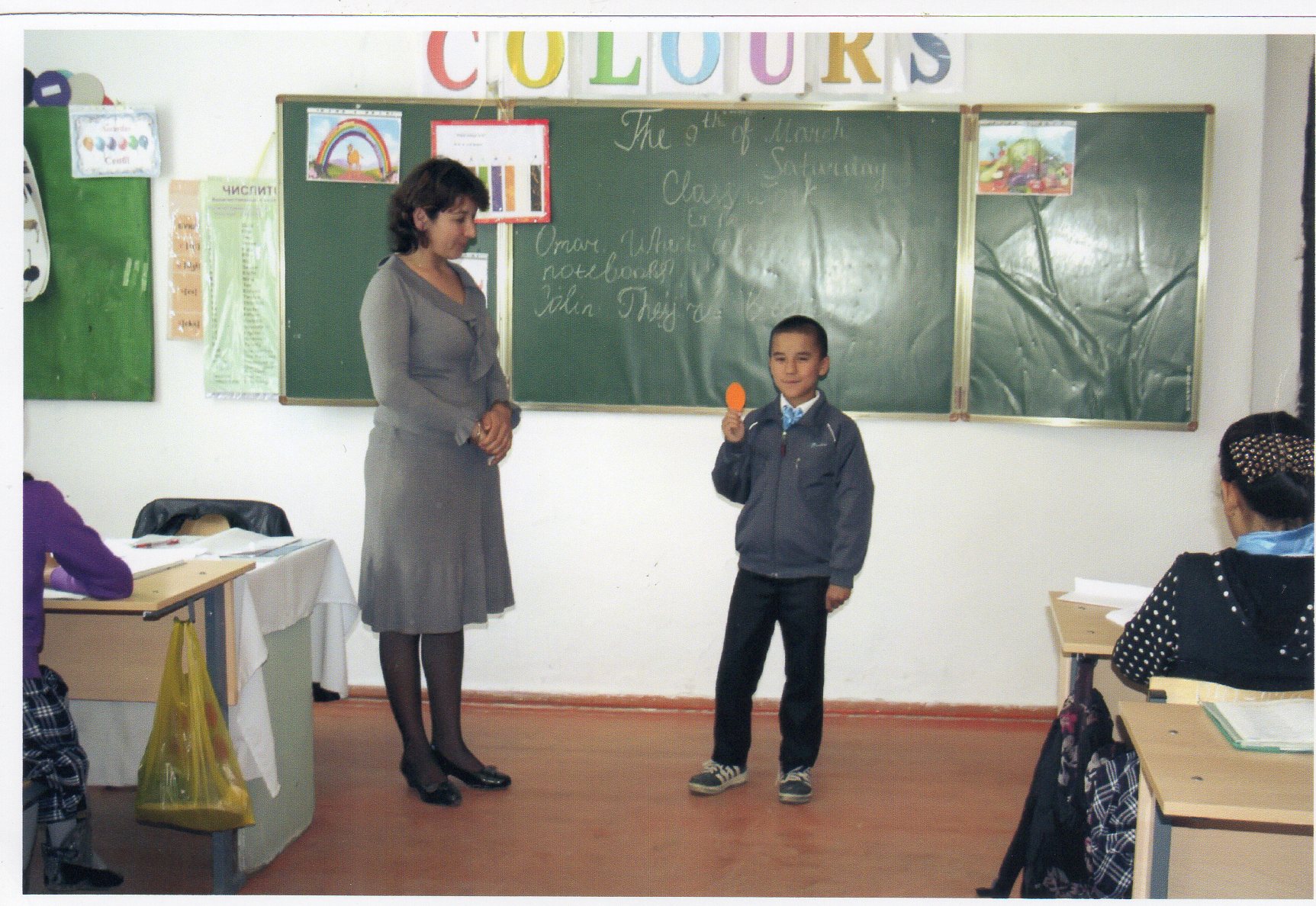
W) Ball toss game Teacher and learners stand in a circle. Teacher asks a question or gives Russian equivalent of the learned word and toss the ball to the learner who wants to answer. The learner throws the ball to the teacher so as to know if his/her answer is right or wrong. W) Teacher walks along and says "I spy with my little eye something that begins with the sound d [daddy]," or "... something that begins with letter a [apple]." I) Learners are given a piece of paper. They are asked to draw their favourite things and colour them as project work. I) Learners demonstrate their project before class. This is my favourite colour. This ball. . It is blue. I) Gallery strategy: After presentation of posters learners fix them on the walls. Each learner gives his or her score to the best group, going around the classroom. Learners give reflection. |
o picture dictionaries, games, phonics cards, grammar charts, worsheet, colourful pencils |
|||||
|
End (of the lesson) |
Reflection Self-assessment: Traffic lights Learners in groups assess one another using smiles Teacher asks learners to look at lesson objectives they set at the beginning of the lesson and think and say what they did well in the lesson and what needs improvement. |
|
|||||
|
Additional information: |
|||||||
|
Differentiation - how do you plan to give more support? How do you plan to challenge the more able learners? |
Assessment - how are you planning to check learners’ learning? |
Cross – curricular links health and safety check ICT links Values links |
|||||
|
|
|
|
|||||
|
Reflection Were the lesson objectives / learning objectives realistic? What did the learners learn today? What was the learning atmosphere like? Did my planned differentiation work well? Did I stick to timings? What changes did I make from my plan and why? |
Use the space below to reflect on your lesson. Answer the most relevant questions from the books on the left about your lesson. |
||||||
|
Summary evaluation What two things went really well (consider both teaching and learning)? 1. 2. What two things would have improved the lessons (consider both teachings and learning)? 1. 2. What have learned from his lesson about this lesson about the class or individuals that will inform my next lesson? |
|||||||






|
Сынып:
|
10А |
|||
|
Пәні |
Ағылшын тілі |
|||
|
Пән мұғалімі |
Жумаева Н.У |
|||
|
Сабақтың тақырыбы |
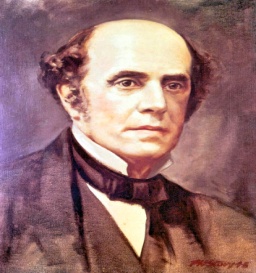
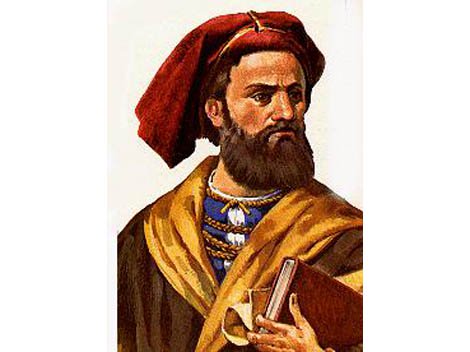
Famous English travellers and writers Thomas Cook and Marco Polo |
|||
|
Сабақтың мақсаты |
1Ұлы ағылшын ақыны және саяхатші Thomas Cook and Marco Polo туралы ағылшын тілінде білім беру 2Сөйлеу ,жазу,оқу,дағдысын дамыту.Топта шығармашылық қабілетті қалыптастыру. 3Мәдени мұрасына қызығушылық тудыру. |
|||
|
Сабақтың түрі |
аралас сабақ |
|||
|
Ресурстар |
Маркерлер, плакаттар,таратпалар,стикелер |
|||
|
|
|
|||
|
Сабақ кезендері |
Мұғалім іс-әрекеті |
Оқушы іс-әрекеті |
Керекті жабдықтар |
|
|
Кіріспе 3 минут |
Сәлемдесу,көңіл күйлерін сұрау Good afternoon, boys and girls. Who is on duty today? –I m on duty today. Who is absent? –all are present. What season is it now? What month is it now? Топқа бөлу Сабақтың мақсатымен таныстыру We’ve got unusual lesson.It is devoted to the greates and famous English travellers and writers Thomas Cook and Marco Polo.The lesson will be held between two teams. |
Сәлемдеседі Кезекші жауап береді Психологиялық сәт Топқа бөлінеді “Thomas Cook” and “Marco Polo” Эмблема тандау арқылы топтарға бөлінеді.
|
|
|
|
Жаңа сөздік 5минут Негізгі бөлім 15минут |
Venice-Венеция Far east-Қиыр шығыс Palestine- Палестина Persia-Персия Pamirs-Памир Peking-Пекин Tibet -Тибет Ceylon- Цейлон Genoa-Генуя Read the text and discuss it On page 40 Ex 2 Thomas Cook On page 43 Ex 2 Marco Polo |
Сөздік жұмыс Listening, speaking and reading Listening, speaking and reading Мәтінді оқиды,аударады Мәтін бойынша сұрақтарға жауап береді Екі топ арасында әңгімелесу |
Плакаттар, маркерлер оқулық,таратпа қағаздар оқулық оқулық |
|
|
Сергіту сәті 2минут |
Сергіту сәті |
|
|
|
|
Қорытынды бөлім 10 минут |
Презентация көрсету Постер құрастыру Thomas Cook тобы Marco Polo туралы Marco Polo тобы Thomas Cook туралы |
Постер қорғайды |
Плакаттар, маркерлер |
|
|
Бағалау 3минут Рефлексия |
Бағалау парақшасы әдісін қолдану Смайлик арқылы бағалау Топта бағалау |
Бағалау парақшасы арқылы өз-өзін бағалайды. Стикерге өз пікірлерін жазаді |
Бағалау парақшасы Стикер |
|
|
Үйге тапсырма 2 минут |
Үйге тапсырма Реферат Marco Polo және Thomas Cook туралы The lesson is over .Good bye |
Good bye |
|
|









 Бұл курс Қазақстан Республикасы Оқу-ағарту министрлігімен келісілген










