|
Тақырыбы
|
мерзімі
|
Атқарылатын
жұмыс
|
1
|
Regular
verbs
(ed) ending
|
1
апта
|
Қайталау,
түсіндіру, тест алу жұмыстарын жүргізу
|
2
|
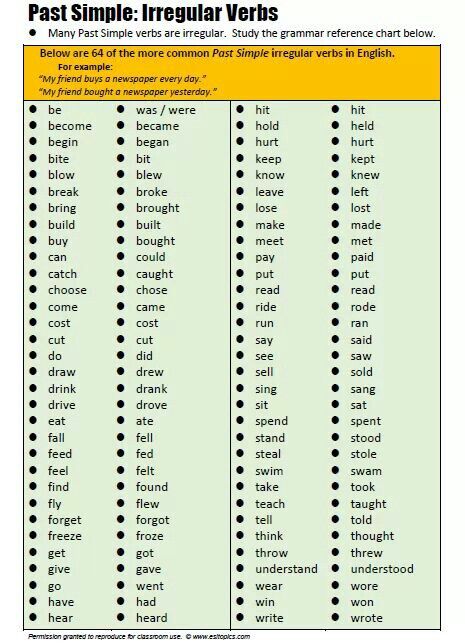
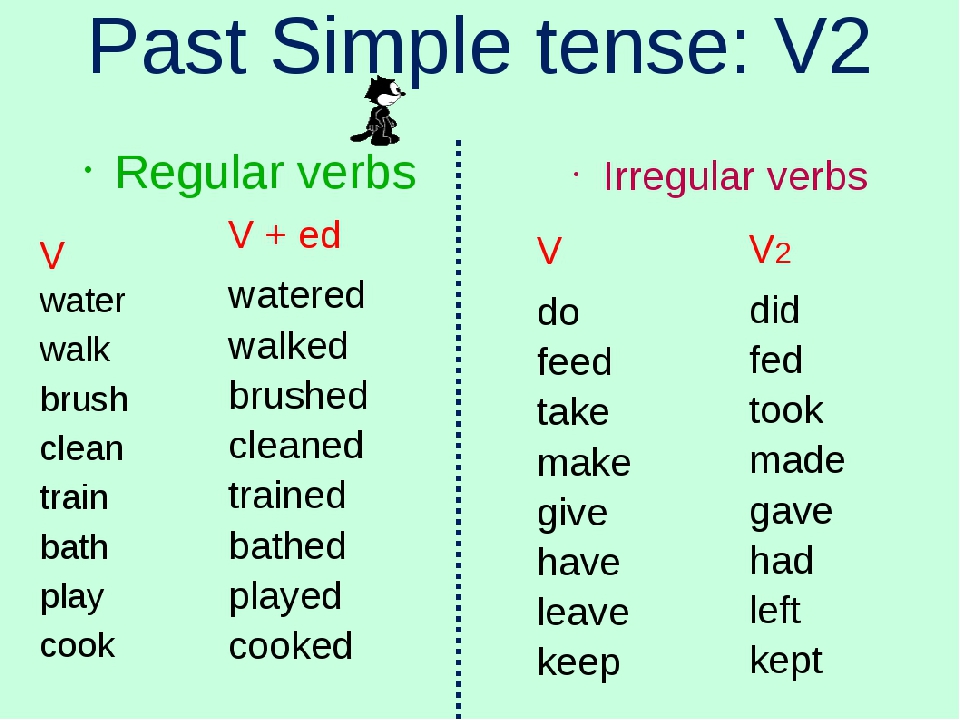
Irregular
verbs
|
2
апта
|
Қайталау,
түсіндірме жұмыс жүргізу, бұрыс
етістіктің тізімін беру, сәйкестендіру
тапсырмасын беру
|
3
|
Past
pimple. Affirmative form
|
3апта
|
Түсіндіру,
жаттығулар беру арқылы тексеру
|
4
|
Past
simple. Negative form
|
4
апта
|
Өткен
шақ болымсыз сөйлемдер жасалуын
түсіндіру, жаттығулар беру арқылы
тексеру
|
5
|
Past
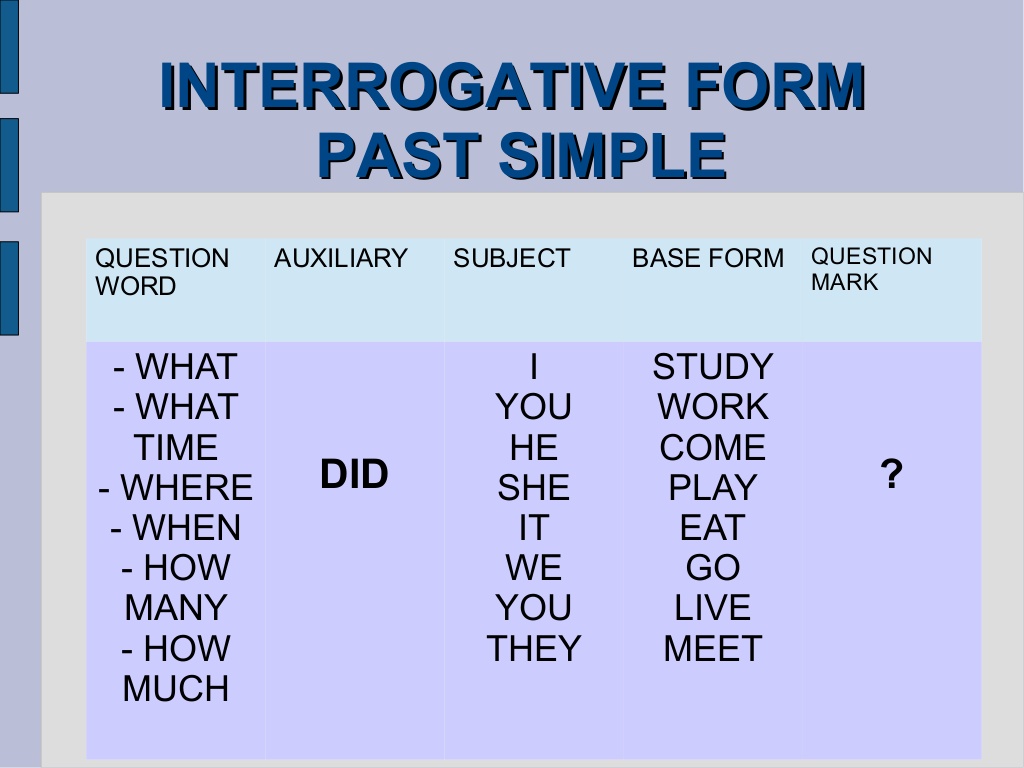
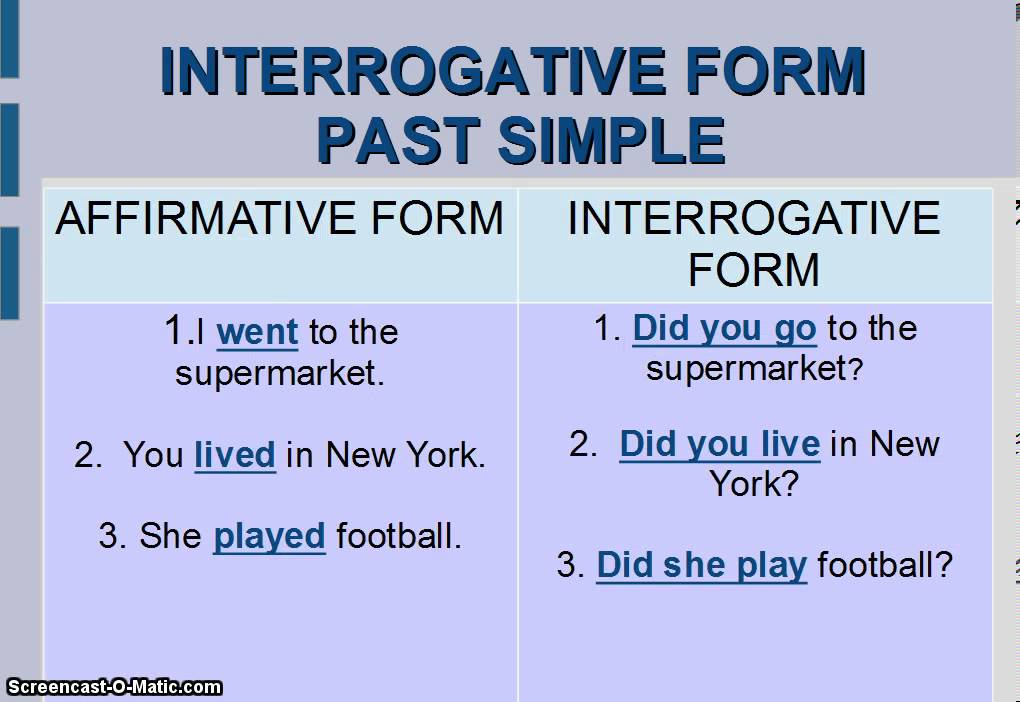
Simple. Interrogative form
|
5
апта
|
Өткен
шақ сұраулы сөйлемдер жасалуын қайта
түсіндіру, жаттығу арқылы бекіту
|
6
|
What/When/Where
/Who questions in Past Simple
|
6
апта
|
Арнайы
сұрақ жасалу жолдарын түсіндіру
жұмыстарын жүргізу, жаттығулар арқылы
бекіту
|
7
|
Өткен
тақырыптарды қайталау
|
7
апта
|
Тест
жұмыстарын алу, әр –түрлі бекітуге
арналған тапсырмалар жүргізу
|
Қосымша
сабаққа қолданатын материалдар:
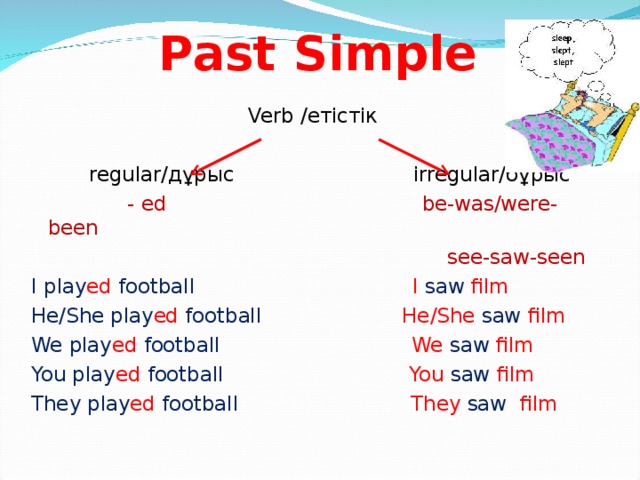
The simple
past is
a verb tense that is used to talk about things that happened or
existed before now. Imagine someone asks what your brother Wolfgang
did while he was in town last weekend.
Wolfgang entered a
hula hoop contest.
He won the
silver medal.
Here’s
a tip: Want
to make sure your writing always looks great? Grammarly can save you
from misspellings, grammatical and punctuation mistakes, and other
writing issues on all your favorite websites.
Your
writing, at its best.
Be
the best writer in the office.
GET
GRAMMARLY
The
simple past tense shows that you are talking about something that has
already happened. Unlike the past continuous tense, which is used to
talk about past events that happened over a period of time, the
simple past tense emphasizes that the action is finished.
Wolfgang admired the
way the light glinted off
his silver medal.
You
can also use the simple past to talk about a past state of being,
such as the way someone felt about something. This is often expressed
with the simple past tense of the verb to
be and
an adjective, noun, or prepositional phrase.
Wolfgang was proud
of his hula hoop victory.
The
contest was the
highlight of his week.
How
to Formulate the Simple Past
For
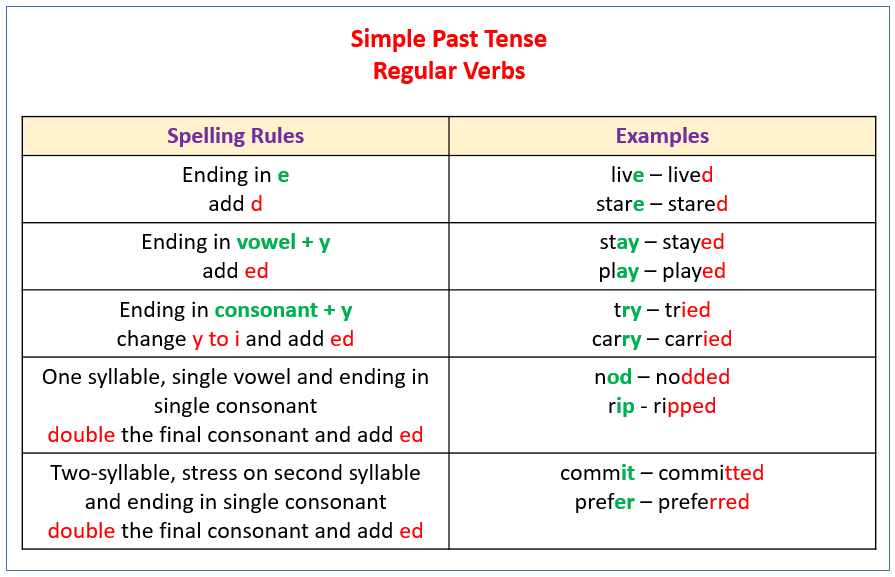
regular verbs, add -ed to
the root form of the verb (or just -d if
the root form already ends in an e):
Play→Played
Type→Typed Listen→Listened Push→Pushed Love→Loved
For
irregular verbs, things get more complicated. The simple past tense
of some irregular verbs looks exactly like the root form:
Put→Put
Cut→Cut Set→Set Cost→Cost Hit→Hit
For
other irregular verbs, including the verb to
be,
the simple past forms are more erratic:
See→Saw
Build→Built Go→Went Do→Did Rise→Rose Am/Is/Are→Was/Were
The
good news is that verbs in the simple past tense (except for the
verb to
be)
don’t need to agree in number with their subjects.
Wolfgang polished his
medal. The other winners polished their
medals too.
How
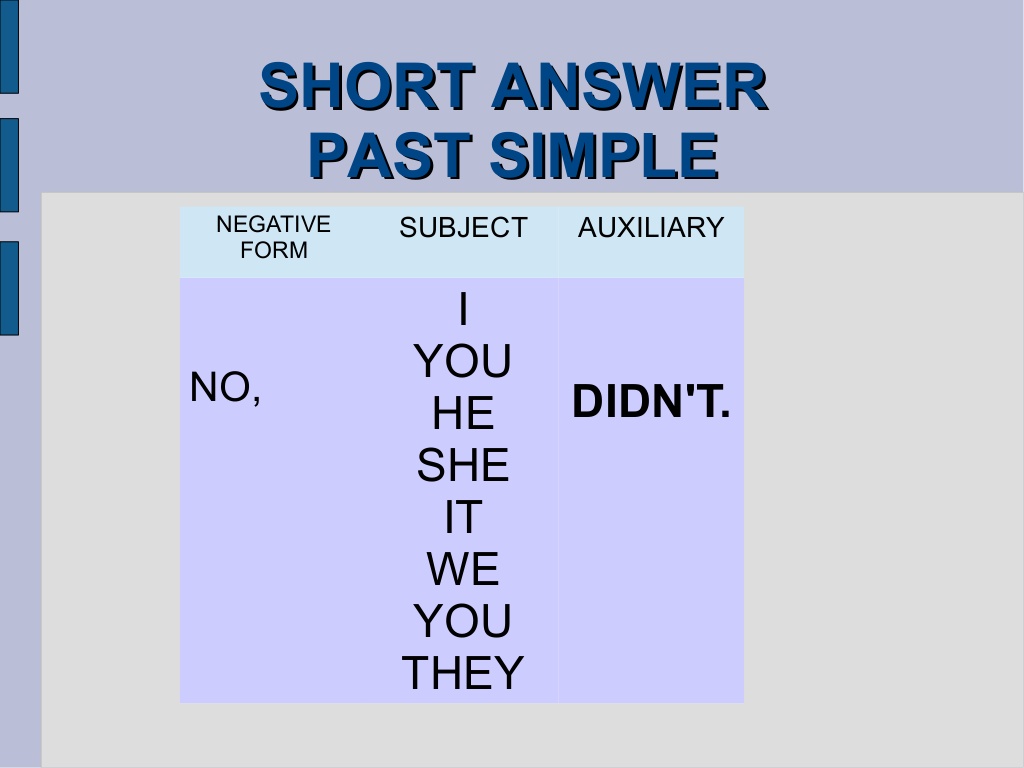
to Make the Simple Past Negative
Fortunately,
there is a formula for making simple past verbs negative, and it’s
the same for both regular and irregular verbs (except for the verb to
be).
The formula is did
not + [root form of verb].
You can also use the contraction didn’t instead
of did
not.
Wolfgang did
not brag too
much about his hula hoop skills. Wolfgang’s girlfriend didn’t
see the
contest.
For
the verb to
be,
you don’t need the auxiliary did.
When the subject of the sentence is singular, use was
not or wasn’t.
When the subject is plural, use were
not or weren’t.
The
third-place winner was
not as
happy as Wolfgang. The fourth-place winner wasn’t happy
at all. The onlookers were
not ready
to leave after the contest ended. The contestants weren’t ready
to leave either.
How
to Ask a QuestionThe
formula for asking a question in the simple past tense is did
+ [subject] + [root form of verb].
Did
Wolfgang win the
gold medal or the silver medal? Where did
Wolfgang go to
celebrate? Did
the judges decide fairly,
in your opinion?
When
asking a question with the verb to be, you don’t need the
auxiliary did.
The formula is was/were
+ [subject].Was Wolfgang
in a good mood after the contest? Were people
taking lots of pictures?

 ЖИ көмекші


 Қауіпсіз төлем













 Бұл курс Қазақстан Республикасы Оқу-ағарту министрлігімен келісілген










