|
Stages/
Time
|
Teachers
actions
|
Students
actions
|
Assessment
|
Resources
|
|
Beginning
5 min
|
Greeting.
Asking dates and
weather
Warm
up:
Teacher
asks Ss
write the word food waste on the board. Ask students what they
understand by the expression.
Elicit ideas about food waste issues, for
example, food mountains, sell-by dates on food. Ask students to
express their opinions on these
Teacher tells
values of this month.
The value of
creativity and innovation.
Understanding the
importance of health:
- Understanding the need for
a healthy lifestyle (sports, proper nutrition,
rest);
- Avoid harmful habits
(smoking, alcohol, drugs);
|
Learners read the given
sentences on the board and guess the topic and share with their
ideas.
|
The teacher to assess learners for
their ability.
“Good job!
Well done!”
Formative
Assessment
|
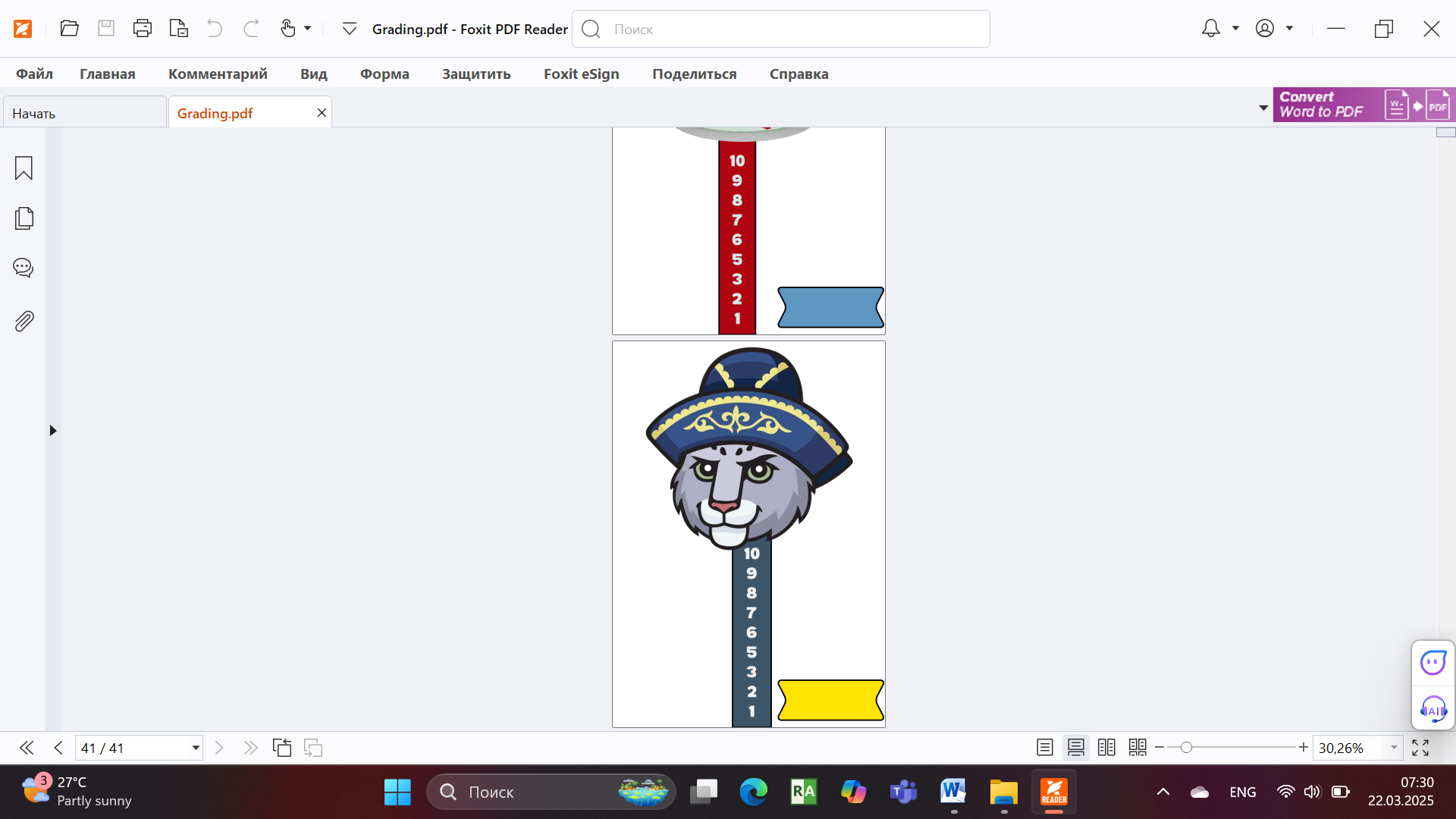
Assessment sheet Kazakh’s legend
animal
|
|
Middle
10
min
|
Ex: 1 P:
88
Teacher asks Ss to look at the
pictures and guess which festival each food is related
to.
Play the recording. Ss listen
and read the text and find
out.
Differentiation:
Pre-teach or
explain key vocabulary
from the text
|
Students
look at the pictures. Which
festival is each food related
to?
Listen and read to find
out.
Answers:
haggis – Burns Night
minestrone – Sagra delle Virtú smoked fish –
Midsummer
hotdogs, corn on the cob –
Independence Day jerk chicken – Notting Hill
Carnival
parkin – Bonfire Night Dundee
cake – Hogmanay
|
Descriptor:
A
learner
- discuss the
photo
- answer the
questions.
Point-3

Well
done
|
Pictures
|
|
7
min
|
Ex: 2 P:
89
Teacher explain the
task.
Allow Ss time to read the
headings and then read text again and complete the
task.
Check Ss’
answers
Differentiation:
Learners will be
supported by teacher and by helpers from his
class.
|
Students read the texts again and match
the paragraphs to the
headings. One heading is
extra.
Answers:
A
7
B
5
C
2
D
6
E
8
F
1
G
3
|
Descriptor:
A
learner
-
read the text
- match the
paragraphs
Point
-2
Excellent
|
|
|
10
min
|
Ex: 3 P:
89
Teacher sks Ss
read out the example question
and answer and then ask Ss to ask and answer questions based on the
text in closed pairs.
Monitor the activity around
the class and then ask some Ss to ask and answer in front of the
class.
Differentiation:
Provide question prompts or sentence
starters on the board.
|
Students work in pairs, ask and answer
comprehension questions based on the
text.
Answers:
A: What do the Swedish and
Finnish celebrate between
20th and 26th
June?
B:
Midsummer.
A: What do people do on 4th
July in the USA?
B: They watch fireworks, and
have barbecues and
picnics.
A: What dish do people eat at
the Notting Hill Carnival?
B: They eat jerk
chicken.
A: When is Guy Fawkes’
Night?
B: It is on 5th
November.
A: What is the New Year’s Eve
celebration called in
Scotland?
B: It’s called
Hogmanay
|
Descriptor:
A
learner
- read the example
question
- answer the
questions
Point -3
Excellent
|
|
|
8
min
|
Ex: 4
P:89
Teacher explain the task and give Ss
time to complete it referring to the text as
necessary
Differentiation:
Allow students to
refer back to the
text and work in
pairs to complete the
task
|
Students complete the collocations.
Use the
words below
Answers:
1
dinner
2
thick
3
vegetables
4
fireworks
5
street
6
colourful
|
Descriptor:
A
leaarner
- complete the
collocations
- use
the words
Point -2
Total points
10
|
|
|
End
5
min
|
Learners provide feedback on what they have
learned at the lesson and draw it on the face of students
prototype.
Ex:
Home task:
|
Ss evaluate each other and encourage
classmate with phrases like:
Well done! Brilliant! Good job! I like
it!
|
Poster
|

 ЖИ көмекші


 Қауіпсіз төлем













 Бұл курс Қазақстан Республикасы Оқу-ағарту министрлігімен келісілген










