
 ЖИ көмекші


 Қауіпсіз төлем

жүктеу мүмкіндігіне ие боласыз
Бұл материал сайт қолданушысы жариялаған. Материалдың ішінде жазылған барлық ақпаратқа жауапкершілікті жариялаған қолданушы жауап береді. Ұстаз тілегі тек ақпаратты таратуға қолдау көрсетеді. Егер материал сіздің авторлық құқығыңызды бұзған болса немесе басқа да себептермен сайттан өшіру керек деп ойласаңыз осында жазыңыз
 24 Қаңтар 2020
 770

1 жыл бойы шексіз жүктеңіз
Сабақ жоспары 5 сынып Home and garden
Short term plan
Long term plan unit: |
Secondary School No.39 named after L.Zholdassov |
||||
Date:
|
Teacher name: Tursynbai Madina |
||||
Grade:5 |
Number present: |
Absent: |
|||
Theme of the lesson: Home and garden |
|||||
Learning objectives (s) that this lesson is contributing to
|
5.C4 evaluate and respond constructively to feedback from others 5.R1 understand the main points in a limited range of short simple texts on general and curricular topics 5.L1understand a sequence of supported classroom instructions 5.S6 communicate meaning clearly at sentence level during, pair, group and whole class exchanges 5.S7 use appropriate subject-specific vocabulary and syntax to talk about a limited range of general topics
|
||||
Lesson objectives |
All learners will be able to: identify the main point of the text “Home and garden” and interact using the topical vocabulary concerning home and gardening with lots of support; Most learners will be able to: identify the main point of the text “Home and garden” and interact using the topical vocabulary concerning home and gardening with some support; Some learners will be able to: identify the main point of the text “Home and garden” and interact using the topical vocabulary concerning home and gardening without support; |
||||
Assessment criteria
|
Provide constructive feedback from others Identify the main points in a limited range of short simple texts on familiar topics Follow a sequence of supported classroom instructions Interact meaning clearly at sentence level during, pair, group and whole class exchanges Apply appropriate subject-specific vocabulary and syntax to talk about familiar topics
|
||||
Value links |
Mangilik Yel Patriotic Act: 6th value: Common history, culture, and language |
||||
Cross curricular links |
Kazakh, Russian |
||||
ICT skills |
Whiteboard |
||||
Previous learning |
Grade 3:Around the house |
||||
Plan |
|||||
Time |
Planned activities |
Resources |
|||
5 min
8 min
8 min
5 min
6 min
8 min
|
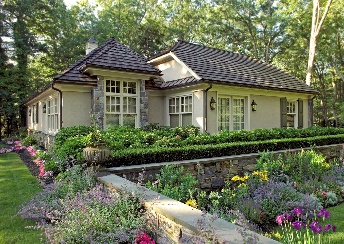
Organisation (Whole class activity) Start of the lesson -Good day, dear students? -How are you? There are several pictures on the board and ask the learners, talk about your home.
Phone a friend (Group work) I elicit new words and check learners understand the meaning. - in the suburbs - ordinary houses - to be surrounded by - patches of land - leisure time - a competitive gardener
Cut out paragraphs (Group work) Groups read the text and answer the questions.
1 st group The most popular hobby of the British is gardening. Most English people love gardens, their own above all, and this is probably one reason why so many people prefer to live in houses rather than flats. In the suburbs you can see row after row of ordinary small houses. And each house is surrounded by lots of flowers.
Formative assessment: Descriptor: A learner:
2 nd group Many people who have no gardens of their own have patches of land. They spend much leisure time working among their flowers, trees and vegetables. The British take part in numerous flower-shows and vegetable shows with very good prizes. Such shows are very popular in Britain.
Formative assessment: Descriptor: A learner:
3rd group To many gardeners the process of growing the plants and taking care of them seems more important than the pleasure of looking at the flowers or the prospect of eating vegetables. In many places a competitive gardener's desire is to grow the biggest cabbages or leeks or carrots. So this is the most favourite hobby of the British people.
Differentiation by task: I will give different text parts to 3 groups.
Formative assessment: Descriptor: A learner:
Post-reading questions (Group work) I prepared several questions to ask after reading the text: 1 What about topic? 2 What we grow in the garden? 3 How the garden works for us?
Formative assessment: I will assess using thumb method Differentiation by learning style: I will involve visual learners, they will read the text and answer.
5WS (Group work) 5 volunteers will come to the board and ask questions and learners use sentences about home or garden Who regulates the garden? What kind of plants are grown in the garden? Where do we sleep? When we plant in the garden? Why are the houses different? Differentiation by peers: I will give questions, the learners who can not answer can help his peers. Formative assessment: I say Good job, Well done, etc.
Display (Group work) Every member of the group will draw and prepare one part of the house. I will give two places for my learners to hang their works. They will display their works and assess each other. Formative assessment: groups will assess each other.
|
https://gardnerfoxremodeling.files.wordpress.com/2010/02/poolhouse_landscape.jpg
https://www.native-english.ru/topics/gardening
https://www.native-english.ru/topics/gardening
https://www.native-english.ru/topics/gardening
|
|||
Additional information |
|||||
Differentiation – how do you plan to give more support? How do you plan to challenge the more able learners? |
Assessment – how are you planning to check learners’ learning? |
Health
and safety check |
|||
Cut out paragraphs (Group work)Groups read the text and answer the questions.Differentiation by task: I will give different text parts to 3 groups. Post-reading questions (Group work)I prepared several questions to ask after reading the text: Differentiation by learning style: I will involve visual learners, they will read the text and answer. 5WS (Group work)Differentiation by peers: I will give questions, the learners who can not answer can help his peers.
|
Cut out paragraphs (Group work) Groups read the text and answer the questions. Descriptor: A learner: - reads the text; - answers the questions;
Post-reading questions (Group work) Formative assessment: I will assess using thumb method
5WS (Group work) Formative assessment: I say Good job, Well done, etc. Display (Group work) Formative assessment: groups will assess each other.
|
|
|||
Reflection Were the lesson objectives/learning objectives realistic? Did the learners achieve the LO? If not, why? Did my planned differentiation work well? Did I stick to timings? What changes did I make from my plan and why?
|
|
||||
Summary evaluation What two things went really well (consider both teaching and learning)?
1:
2: What two things would have improved the lesson (consider both teaching and learning)?
1:
2:
What have I learned from this lesson about the class or achievements/ difficulties of individuals that will inform my next lesson?
|
|||||










 Бұл курс Қазақстан Республикасы Оқу-ағарту министрлігімен келісілген










