ЖИ көмекші


жүктеу мүмкіндігіне ие боласыз
Бұл материал сайт қолданушысы жариялаған. Материалдың ішінде жазылған барлық ақпаратқа жауапкершілікті жариялаған қолданушы жауап береді. Ұстаз тілегі тек ақпаратты таратуға қолдау көрсетеді. Егер материал сіздің авторлық құқығыңызды бұзған болса немесе басқа да себептермен сайттан өшіру керек деп ойласаңыз осында жазыңыз
 13 Қараша 2018
 476
476
Size and shape
Short term plan
|
Unit of a long term plan : Communication |
School: №6 with boarding school |
|||||||||||||||||||||||||||||||||||
|
Date:23.06.2017 |
Teacher name: Murumbayeva Aliya |
|||||||||||||||||||||||||||||||||||
|
CLASS: 5 |
Number present: |
absent: |
||||||||||||||||||||||||||||||||||
|
Lesson title |
Communicating around the world |
|||||||||||||||||||||||||||||||||||
|
Learning objectives(s) that this lesson is contributing to |
5.S1 make basic statements which provide personal information on a limited range of general topics 5.R5 understand the main points of short, simple texts on a limited range of familiar general and some curricular topics using contextual clues |
|||||||||||||||||||||||||||||||||||
|
Lesson objectives |
All learners will be able to: - identify specific topic vocabulary studied in class with some support; - speak on the theme including 3-4 sentences with peers` some support. Most learners will be able to: - identify specific topic vocabulary studied in class without any support; - speak on the theme including 5-6 sentences with peers` some support. Some learners will be able to: - analyze specific topic vocabulary studied in class; - speak on the theme and justify their answers without any support. |
|||||||||||||||||||||||||||||||||||
|
Assessment criteria |
-Talk about a target topic giving personal information -Define the main ideas of the reading paragraph by using key words |
|||||||||||||||||||||||||||||||||||
|
Language objective |
Vocabulary related to the topic |
|||||||||||||||||||||||||||||||||||
|
Values links |
Respect for their own and others` culture and languages, working cooperatively |
|||||||||||||||||||||||||||||||||||
|
Cross-curricular links |
Geography, Kazakh, Russian |
|||||||||||||||||||||||||||||||||||
|
Previous learning |
Body language |
|||||||||||||||||||||||||||||||||||
|
Plan |
||||||||||||||||||||||||||||||||||||
|
Planned timings |
Planned activities |
Resources |
||||||||||||||||||||||||||||||||||
|
Start 5 min-s |
Warm up Translator game (W) Teacher finds out learners who can speak very well and say some words in Kazakh, Russian and English language(trilingual policy). Given prompts: I speak well…/ I say some words… (P) In pairs learners say which language they want to learn next. Teacher writes sentence starter on the board: I want to learn __________. Teacher encourages learners to give a reason and put support on the board, for example: I want to learn ____ because I want to go to _________/because I like _____/ because I can______/because I have got_____. Then learners are divided into two groups by means of joining cut pictures of Kazakh yurt and English houses. Teacher identifies lesson objectives and the topic of the lesson with the learners. Differentiation by teacher`s support Less able learners can be given starter sentences. |
Pictures of houses (puzzles)
|
||||||||||||||||||||||||||||||||||
|
Middle 30-35 min s |
Pre - reading : (I) Learners do predictions using true or false statements. The task is evaluated by assessment criteria. While – reading stage: (W,I) They read the text and check their answers and correct false ones. Post –reading stage: (G) Learners identify the best title for the text by multiple choice elimination (Answer: Japanese)
Differentiation by outcome Learners work in mixed-ability group and their answers can be different according to their abilities. Speaking (W,I) Would you like to learn Japanese/ Chinese/ French etc.? Why/Why not? (G) “Reciprocal Questioning” strategy The instructor provides question stems, such as the following: Comprehension Question Stems Describe...in your own words. What does...mean? Why is...important? How could...be used to...? Connector Question Stems Explain why...and how... How are...and...similar? How are...and...different? How does...tie in with...that we learned before? Learners then develop specific questions from the given stems and provide answers. They can work individually, with a partner, or in a small group. Differentiation by task Learners are given A and B level tasks Differentiation by peer`s support More able learners assist weaker learners. Plenary Break class into small groups. Each group discusses the topic or question on their own for a few minutes to generate arguments, answers, or ideas. Once time is up, have each small group share one idea, answer, or argument with the class. Record ideas on the board.es foll Formative assessment: 3-2-1 format 3 key words 2 main ideas 1 thiought to think after owing class. (e.g. concDiffer |
Handout 1
Handout 2
Slide Handout 3 Japanese is the language spoken by people from Japan. English is taught in all secondary schools and is often used in business. The first page of a Japanese book is what Americans consider the last page. In other words, Japanese books are read from “back” to “front.” Japanese is written in a line from right to left and from the top of the page to the bottom. The Japanese also use several alphabets. Japanese people place great worth on nonverbal language or communication—much can be said with a bow.
Handout 4 Criteria –based assessment
Handout 5 Comprehension Question Stems Describe...in your own words. What does...mean? Why is...important? How could...be used to...? Connector Question Stems Explain why...and how... How are...and...similar? How are...and...different? How does...tie in with...that we learned before?
|
||||||||||||||||||||||||||||||||||
|
End
|
Reflection “1-minute paper”
2.How do you think will you use what we learned today in your everyday life? |
Stickers |
||||||||||||||||||||||||||||||||||
|
Additional information |
||||||||||||||||||||||||||||||||||||
|
Differentiation – how do you plan to give more support? How do you plan to challenge the more able learners? |
Assessment – how are you planning to check learners’ learning? |
Health and safety
check |
||||||||||||||||||||||||||||||||||
|
More support
More able learners:
Pair work, group work |
|
Social net working Health promoting techniques Respecting diversity of opinion Breaks and physical activities used. |
||||||||||||||||||||||||||||||||||
|
Reflection
Were the lesson objectives/learning objectives realistic? Did all the learners achieve the lesson objectives/ learning objectives? If not, why? Did my planned differentiation work well? Did I stick to timings? What changes did I make from my plan and why?
|
Use the space below to reflect on your lesson. Answer the most relevant questions from the box on the left about your lesson. |
|||||||||||||||||||||||||||||||||||
|
|
||||||||||||||||||||||||||||||||||||
|
Summary evaluation
What two things went really well (consider both teaching and learning)?
1:
2:
What two things would have improved the lesson (consider both teaching and learning)?
1:
2:
What have I learned from this lesson about the class or individuals that will inform my next lesson?
|
||||||||||||||||||||||||||||||||||||


Handout 1
Find out true and false statements.
-
.Japanese speak mainly English.
-
The Japanese also use several alphabets.
-
English is used at home.
-
Japanese books are read from “back” to “front.”
-
The first page of a Japanese book is what Americans consider the last page.
Handout 2
|
Assessment criteria |
Task |
Descriptor |
Mark |
|
A learner |
|||
|
Recognise detailed information in a short text with some support |
5 |
1) writes “F” |
1 1 1 1 |
|
|
|
2) writes “T” |
1 |
|
|
|
3) writes “F” |
1 |
|
|
|
4) writes “T” |
1 |
|
|
|
5) writes “F” |
1 |
|
Total marks |
5 |
||
Slide
Handout 3
Read the text and check your answers and correct false ones.
Japanese is the language spoken by people from Japan. English is taught in all secondary schools and is often used in business.
The first page of a Japanese book is what Americans consider the last page. In other words, Japanese books are read from “back” to “front.” Japanese is written in a line from right to left and from the top of the page to the bottom.
The Japanese also use several alphabets. Japanese people place great worth on nonverbal language or communication—much can be said with a bow.
Handout 4
Criteria –based assessment
-
asks an appropriate question;
-
answers a question;
-
uses appropriate topical vocabulary;
-
pronounces words, phrases and sentences intelligibly;
-
talks coherently;
-
talks with grammar accuracy.
Handout 5`(a)
Use these question stems for preparing your answers.
Comprehension Question Stems
Describe...in your own words.
What does...mean?
Why is...important?
How could...be used to...?
Handout 5(b)
Use these question stems for preparing your answers.
Connector Question Stems
Explain why...and how...
How are...and...similar?
How are...and...different?
How does...tie in with...that we learned before?

 Жүктеу


 Жүктеу
шағым қалдыра аласыз
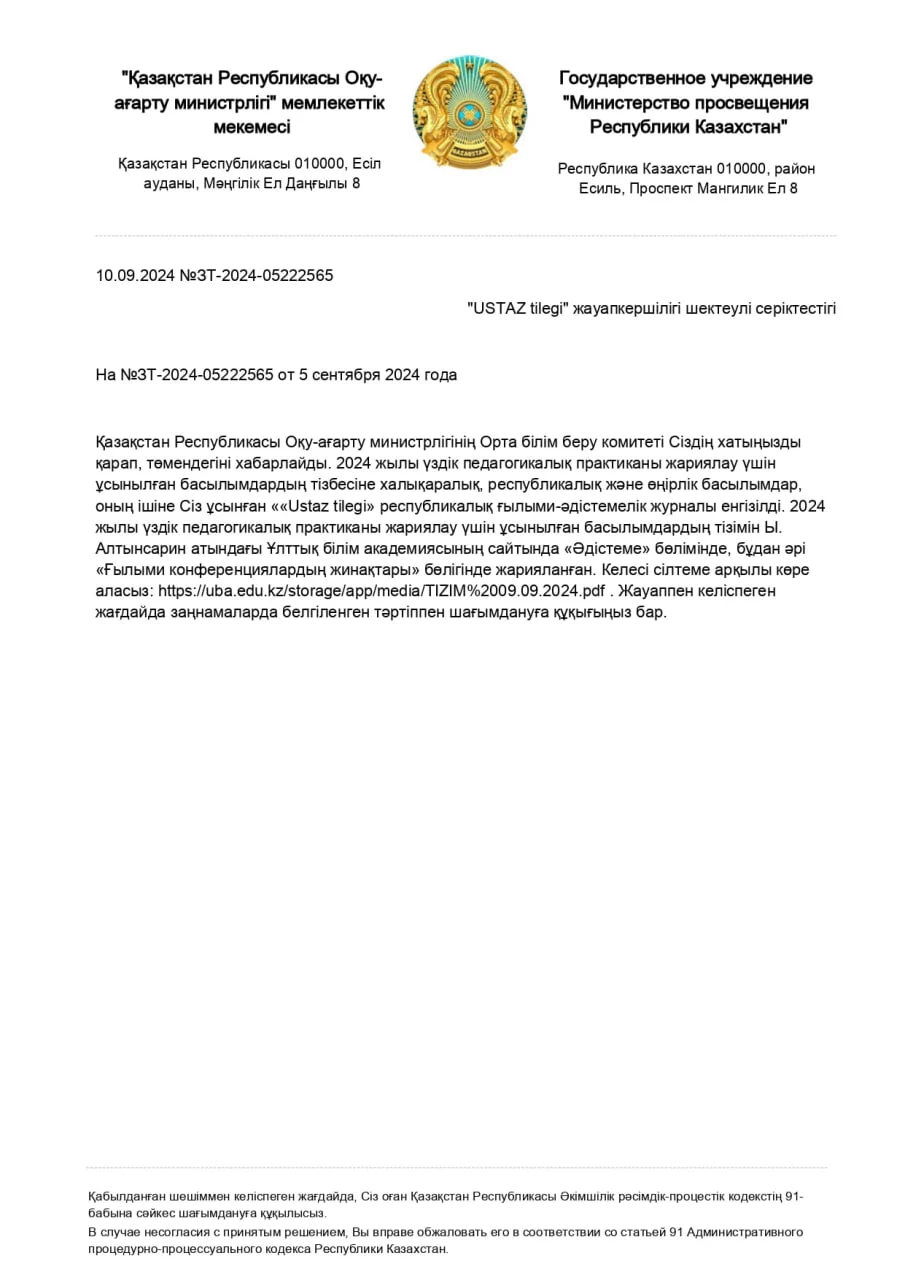

 Бұл курс Қазақстан Республикасы Оқу-ағарту министрлігімен келісілген