
 ЖИ көмекші


 Қауіпсіз төлем

жүктеу мүмкіндігіне ие боласыз
Бұл материал сайт қолданушысы жариялаған. Материалдың ішінде жазылған барлық ақпаратқа жауапкершілікті жариялаған қолданушы жауап береді. Ұстаз тілегі тек ақпаратты таратуға қолдау көрсетеді. Егер материал сіздің авторлық құқығыңызды бұзған болса немесе басқа да себептермен сайттан өшіру керек деп ойласаңыз осында жазыңыз
 10 Мамыр 2020
 417

1 жыл бойы шексіз жүктеңіз
Sports for all
Long term plan unit: 8 Sports
|
Secondary School named after A.Suleimenov |
||||
Date: 3.04.19
|
Teacher name: Khalida Abdusalyamova |
||||
Grade: 5Ә |
Number present: |
Absent: |
|||
Theme of the lesson: Sports for all |
|||||
Learning objectives (s) that this lesson is contributing to |
5.C2 use speaking and listening skills to provide sensitive feedback to peers 5.L2 understand an increasing range of unsupported basic questions which ask for personal information 5.S4 respond with limited flexibility at sentence level to unexpected comments on an increasing range of general and curricular topics 5.S6 communicate meaning clearly at sentence level during, pair, group and whole class exchanges |
||||
Lesson objectives |
All learners will be able to: answer questions asked about favorite kind of sport and apply the topical vocabulary about sport during pair, group works with lots of support; Most learners will be able to: answer questions asked about favorite kind of sport and apply the topical vocabulary about sport during pair, group works with some support; Some learners will be able to: answer questions asked about favorite kind of sport and apply the topical vocabulary about sport during pair, group works without any support; |
||||
Assessment criteria
|
- Apply speaking and listening skills to provide sensitive feedback to peers - Identify an increasing range of unsupported basic questions which ask for personal information - Answer with limited flexibility at sentence level to unexpected comments on an increasing range of general and curricular topics - Interact meaning clearly at sentence level during, pair, group and whole class exchanges |
||||
Value links |
“Mangilik Yel” Patriotic Act: 3rd value: A secular society with high spirituality |
||||
Cross curricular links |
Physical Education |
||||
ICT skills |
Active board |
||||
Previous learning |
words about sports |
||||
Plan |
|||||
Time |
Planned activities |
Resources |
|||
4 min
8 min
6 min
8 min
7 min
7 min
|
Greeting I greet with the learners:
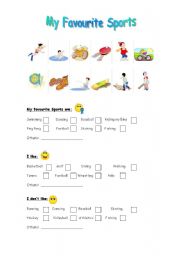
Brainstorming The teacher uses the following worksheet to elicit the new words about the favorite sport of learners.
Differentiation by support: the teacher will help C level learners by showing pictures of sports. Formative assessment: the teacher sticks smiling faces on learner’s hands.
Pre-teaching the new vocabulary
Jigsaw reading (Group work)
My favorite sport I like sport. I like to play basketball. I am the best player and often take part in different sport competitions. Sometimes we win them but sometimes we lose. Basketball is a team game. It is played in any season because it is an indoor game. It is played in a gym. But sometimes you can see street ball - basketball in the open air. There are two baskets in this exciting game and only one orange ball. Players must throw the ball to the basket and get to it to score a goal. There are two teams with only five players. Many people are keen on sport because it makes us healthy and help us to be fit. Basketball is an active game. It makes people be strong, healthy and energetic. I like playing basketball most of all. And I am a basketball fan too.
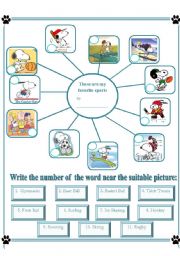
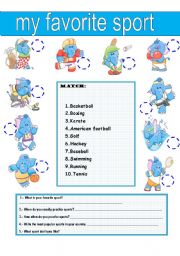
Differentiated task: My favorite sport (Group work) 1st group: will match the words with the pictures.
Descriptor: A learner:
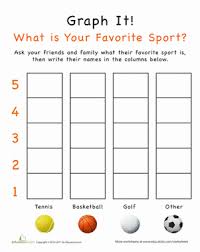
2nd group: will find the suitable kind of sport in the suitable section
Descriptor: A learner:
Interview your partner! (Pair work)
Learners will interview each other using this sheet.
Formative assessment: Learners assess each other with
|
https://znanija.com/task/3080282
|
|||
Additional information |
|||||
Differentiation – how do you plan to give more support? How do you plan to challenge the more able learners? |
Assessment – how are you planning to check learners’ learning?
|
Health
and safety check
|
|||
Brainstorming: Differentiation by support: the teacher will help C level learners by showing pictures of sports.
Differentiated task: My favourite sport (Group work) 1st group: will match the words with the pictures.
2nd group: will find the suitable kind of sport in the suitable section
|
Brainstorming: Formative assessment: the teacher sticks smiling faces on learner’s hands.
Interview your partner!: Formative assessment: Learners assess each other with
|
Be careful while you work in pairs |
|||
Reflection Were the lesson objectives/learning objectives realistic? Did the learners achieve the LO? If not, why? Did my planned differentiation work well? Did I stick to timings? What changes did I make from my plan and why?
|
|
||||
Summary evaluation What two things went really well (consider both teaching and learning)?
1:
2: What two things would have improved the lesson (consider both teaching and learning)?
1:
2:
What have I learned from this lesson about the class or achievements/ difficulties of individuals that will inform my next lesson?
|
|||||


Date: 19.02.19 Step № 43 |
Subject: English
|
Class: 9Ә |
||
Theme of the subject |
What’s your strongest intelligence ? Ex 1-3 |
|||
Aims |
Educational: Pupils learn the modals : must/mustn’t/ don’t have to and use them in the sentences and answer the questions thinking critically Developing : Pupils develop their oral skills by the help of dialogic teaching Disciplinary: The pupils learn to respect each other |
|||
Resources |
English in Mind, 9 Grade (Herbert Puchta & Jeff Stranks),Handbook for Teachers (HFT) -7 modules |
|||
Results of teaching |
Pupils learn to communicate with each other in this theme by the dialogic method , they learn to work in groups and in pairs / individually |
|||
The main idea of the subject |
Pupils learn the new words of the theme , answer the questions, speak about human intelligence |
|||
Equipments |
Books, stickers, dictionary, cards / ICT, posters |
|||
Methods of teaching |
Dialogic method, Jigsaw strategy, warm-ups ,cards , Collecting str. |
|||
Assessment |
Self assessment sheets with criteria/ formative assessment |
|||
Tasks |
Exercises 1-3, 70-71 pages |
|||
Acts between the teacher and pupils |
Teacher gives the tasks and ask, organizes the lesson Pupils work in pairs/ group / individually |
|||
1.Creating a collaborative environment (organizational moment) |
Pupils create the “Happy circle” and say the best wishes to each other: I wish you good luck… They are divided into 3 groups by the words : verbal, musical, visual |
|||
Knowledge: 2.Checking up the home- work /to revise the last theme |
What was your homework given for today? to write ex 3a p-69 |
|||
3.Brainstorming(questions) |
What do you see in the title? What do you see in the picture? What is it? |
|||
Comprehension: 4. Working with a group |
Ex 5a/b p-70 The types of intelligence : Collecting strategy Logical- mathematical intelligence Verbal Musical Visual Interpersonal Intrapersonal Body Naturalistic |
|||
Application: |
Ex6p-70 . What’s your strongest intelligence ? Speak about it Use these words in your poster (Making a poster on the theme) |
|||
Analysis: |
Ex7a/b/c p-71 Grammar : Modals (must/ mustn’t / don’t have to ) Rule :Use … (n’t ) to give someone strong advice or for expressing strong obligation Use … to say that something is not necessary |
|||
Synthesis: |
Ex 7d Problem page Dear Jamilya , I get bad grades at school, especially in Maths . … |
|||
Evaluation: |
Do you like our lesson? Have you got any questions? |
|||
5.Assessment |
Pupils give each other marks with the help of assessment criteria sheets |
|||
6.Conclusion |
Children , what do you learn at the lesson? Do you like it or not? Is it clear for you? |
|||
7 and 1 wish |
What have I planned? |
What have I learnt at the lesson? |
What do I have to change?
|
|
8.Giving homework |
Ex7d p-71 Complete the sentences
|
|||









 Бұл курс Қазақстан Республикасы Оқу-ағарту министрлігімен келісілген










