
 ЖИ көмекші


 Қауіпсіз төлем

жүктеу мүмкіндігіне ие боласыз
Бұл материал сайт қолданушысы жариялаған. Материалдың ішінде жазылған барлық ақпаратқа жауапкершілікті жариялаған қолданушы жауап береді. Ұстаз тілегі тек ақпаратты таратуға қолдау көрсетеді. Егер материал сіздің авторлық құқығыңызды бұзған болса немесе басқа да себептермен сайттан өшіру керек деп ойласаңыз осында жазыңыз
 06 Мамыр 2020
 709

1 жыл бойы шексіз жүктеңіз
Тақырыбы : COUNTRY STUDY
There is only one private university in Britain
The
comprehensive school
3 types: The
grammar School
The
secondary modern
the Technical
school
The General
Certificate of Education, "Advanced" level
Colleges
Universities
Secondary
Schools
Eleven-Plus
Examination
The
Primary School
The
Junior school
The
infant school
The
Nursery
school
The Junior school is
for children aged seven to eleven. Towards
the end of their fourth year in the junior school, a certain
percentage of English schoolchildren still have to write their “11+”
Examinations
The
Junior school
The first school is
the infant school, for children between five and seven. At this
stage the children become acquainted with the Reading, Writing and
Arithmetic in the form of games.
The
infant school
A nursery school is
a school for children between the ages of three and five, staffed by
qualified teachers and other professionals who encourage and
supervise educational play rather than simply providing childcare.
The
Nursery schools
The
university of Oxford located
in the city of Oxford is one of the oldest and most highly revered
Universities in Europe. It grew out of efforts begun by King Alfred
the Great in 872 to encourage education and establish schools
throughout his territory.
Today
Oxford University is comprised of thirty-nine colleges. and six
permanent private halls, together with that of the University's
libraries and museums, gives the city its unique character More than
130 nationalities are represented among a student population of over
18,000.
There
have been many famous people who have studied at Oxford University
and they include John Locke, Adam Smith, Lewis Carroll, Oscar Wilde,
J. R. Tolkien, Indira Gandhi, Baroness Margaret Thatcher, Bill
Clinton, All in all, Oxford has produced four British and at least
eight foreign kings, 47 Nobel prize-winners, 25 British Prime
Ministers, 28 foreign presidents and prime ministers.
www.ox.ac.uk
THe
university of Oxford
The
start of the University is generally taken as 1209, when some
masters and students arrived in Cambridge after fleeing from rioting
in Oxford.
The
University at present has more than 16,500 full-time students.
There
have been many famous people who have studied at Oxford Univeristy
and they include Lord Byron, Charles Darwin, Vladimir Nabokov. The
great Russian scientist Pavlov came to Cambridge to receive the
degree of the Honorary Doctor of Cambridge. All in all, Cambridge
has produced 80 Nobel-prize winners (33 more than Oxford and the
highest number of any university worldwide), 13 British Prime
Ministers.
www.cam.ac.uk
University
of Cambridge
The
University of Edinburgh
The
University was established by a Royal Charter granted by James VI in
1582. This was an unusual move at the time, as the most universities
were established through Papal Charters There
have been many famous people who have studied at the Univeristy and
they include Winston
Churchill, Sir Arthur Connan Doyle, Walter Scott..

COUNTRY STUDY
Done by : Alimpiyaeva Z.S
The United Kingdom of Great Britain and Northern Ireland (The UK)……………...5
England………………………………………………………………………………..7
Scotland……………………………………………………………………………….8
Wales……………………………………………………………………………….....9
Northern Ireland……………………………………………………………………..10
National Emblems of the United Kingdom………………………………………….13
Economy of the United Kingdom……………………………………………………14
London - the Capital of the UK……………………………………………………...19
The System of Education and the Oldest Universities of Great Britain……………..20
States and Political System of the UK……………………………………………….39
THE UNITED KINGDOM OF GREAT BRITAIN AND NORTHERN IRELAND (UK)
GEOGRAPHY OF THE UK
UK is an abbreviation of “the United Kingdom of Great Britain and Northern Ireland” (which is the political name of the country). The country is made up of four constituent parts – England, Scotland, Wales (Cymru in Welsh) and Northern Ireland (sometimes known as Ulster).
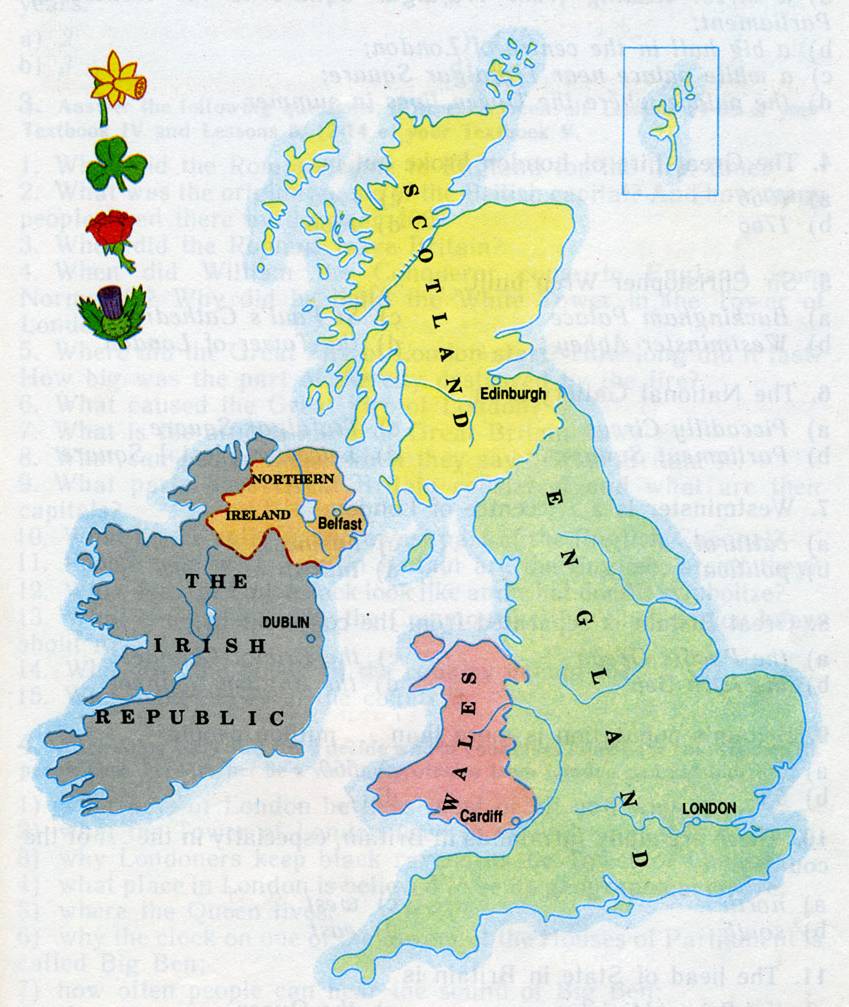


 When
we speak of the United Kingdom of Great Britain
and Northern Ireland we actually speak about four countries united
into one state:
England – London
Scotland – Edinburgh
Wales – Cardiff
Northern Ireland - Belfast.
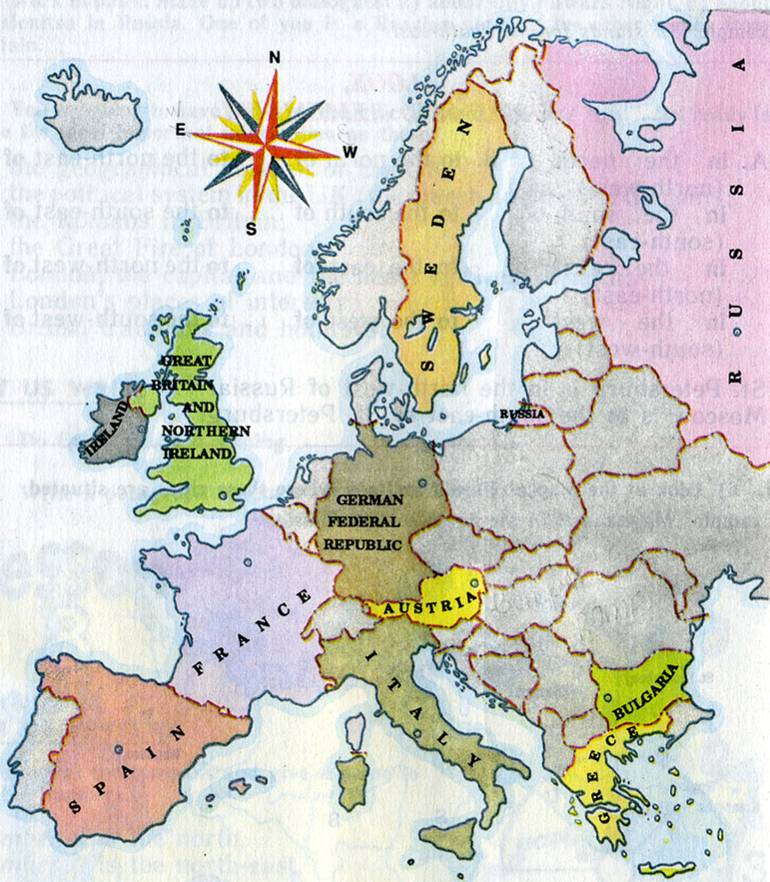
The United Kingdom of Great Britain and Northern Ireland is situated on the British Isles – a large group of islands lying off the north-western coast of Europe and separated from the continent by the English Channel and the Strait of Dover (32 km wide)in the south and the North Sea in the east.
The British Isles consist of two large islands – Great Britain and Ireland – separated by the Irish Sea, and more than 5000 smaller islands, the main of which are the Isle of Wight in the English Channel, Anglesea and the Isle of Man in the Irish Sea, the Hebrides – a group of islands off the north-western coast of Scotland, and two groups of islands lying to the north of Scotland: the Orkney Islands and the Shetland Islands****.
 The
total area
of the United Kingdom is 244
square kilometres.
The
Channel Tunnel



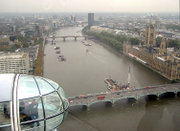

the
deepest
the
longest

The UK has many beautiful lakes in Scotland and north-west England. Amny Scottish valleys between the hills are filled with lakes, called lochs. The best known is Loch Ness where as some people think a large monster lives.
There are no great forests in Great Britain now. Historically, the most famous forest is Sherwood Forest, the home of Robin Hood. It is to the north of London.
1.2. Check your comprehension.
1. What states does the UK consist of? 2. What is the capital of Scotland (Wales, Northern Ireland, England, and the UK)? 3. Where is the UK situated? 4. What islands does the UK occupy? 5. What is the country washed by? 6. What is the longest (the busiest) river in Great Britain? 7. Where are the most beautiful lakes in Britain?
2. ENGLAND
2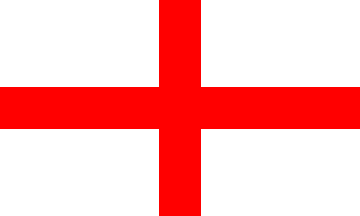 .1.
Flag:
the St
George’s cross
A red cross acted as a symbol for many Crusaders in the 12th and 13th centuries. It became associated with St George who’s claimed to be the patron saint of England (the saint’s day – 23 April). The red cross remained in national use until 1707, when the Union Flag was adopted for all purposes to unite the whole of Great Britain under a common flag.
Plant: rose
T he
rose
as the national
flower
of England is used in a variety of contexts. Predominantly, this is a
red rose
(which also symbolises Lancashire),
such as the badge of the English
Rugby Union team.
However, a white rose
(which also symbolises Yorkshire)
or a “tudor rose”
(symbolising the end of the Wars
of the Roses*)
may also be used on different occasions.
England is the largest and most populated part of the United Kingdom. Over 46 million people of the population of the UK live in England. England is a highly developed industrialized country, about eighty per cent of the population living in urban areas. It is a major trading nation through the main ports of London, Liverpool and Southampton. In the north England is separated from Scotland by the Cheviot Hills, running from east to west; in the west the country borders on Wales. The coasts of England are washed by the North Sea and the Irish Sea. The English Channel and the Strait of Dover separate England from France in the south. No part of England is more than 120 km from the sea. The sea played an important role in the history of England. It was a good protection against attacks of outside enemies. Due to the seas and the ocean surrounding England, the country has mild climate, beautiful greenery, and highly developed fishing industry.
England mostly a lowland country. There are upland regions in the north — the Pennine Chain, extending southward from the Cheviot Hills into the Midlands. The Lake District in Northern England with its beautiful long lakes, mountains and valleys is a favourite holiday resort.
There are many rivers in England: the Severn, the Ouse, the Trent, the Tyne, the Werf, the Avon. They are not very long and most of them flow into the North Sea. But the busiest and most important river is the Thames. The rivers are of great significance for communication and especially for carrying goods. The Midlands is the main industrial area in England. The industries of the Midlands, with Birmingham as its chief city, produce all kinds of goods, from motor cars and railway engines to pins and buttons. Manchester is the commercial hub of the textile industry and one of the chief centres of electrical and heavy engineering, machine tools and dye-stuffs in Britain. Sheffield is famous for its high-quality steels, cutlery and tools.
It may snow any time from November to March. But in England in winter it rains more often than it snows. That's why some English people do not wear heavy overcoats but only warm raincoats. The most typical feature of the climate in England is the thick fog that they often have in autumn and in winter. It comes often and stays for weeks together. It may be of different colours. It may be white, yellow and sometimes black because of the smoke of thousands of chimneys. When it is white it is not so bad, though it's more dangerous to cross the street in a white fog than in a black one. But worst of all is the yellow suffocating fog, called smog (smoke + fog). It enters all the houses, all the rooms so that the lamps in the rooms look quite dim. In a thick smog cars and buses move very slowly. People do not see each other at arm's length. They walk along groping through the streets because they are afraid to lose their way in the fog.
2.2. Check your comprehension.
1. What is the climate in Britain? 2. What influences the climate in Britain? 3. What is the favourite topic of conversation of all British? 4. What is the best season in Britain? 5. What is more pleasant: the cold weather or the wet weather? 6. Do rivers freeze in Britain in winter? 7. What is the most typical feature of the climate in England? 8. What is the most dangerous fog? 9. How do people walk in the yellow smog?
3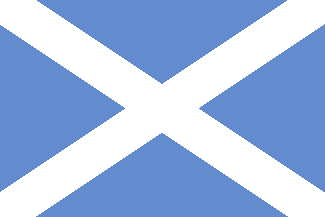 .1.
Flag:
St
Andrew’s cross
– also known as the Saltire
( St
Andrew is the patron
saint
of Scotland (the
saint’s day –
30
November))
Scotland is the most northern of the four countries constituting Great Britain. It occupies the territory of about 80 thousand square kilometers and is not so densely populated as England. The capital of Scotland is Edinburgh, situated in the eastern part of the Central Lowlands.
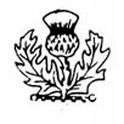
Plant: thistle
The national flower of Scotland features in many Scottish symbols and logos, and UK currency. It is also used as the emblem of the Scottish Rugby team.
Scotland is the land of mountains lost In clouds, wild moorlands. narrow valleys and plains, famous lakes, called lochs, and no end of large and small islands off the coast. In its climate and vegetation, its mountain and valley structure, Scotland resembles other regions of north-west Europe that look out towards the Atlantic. The country can be roughly divided into three main regions: the Border (i. e the frontier with England), the central Lowlands, and the Highlands.
The Borders most typical landmarks are the ancient peel- single towers that kept watch over the safety of the Borders. They lie mostly in ruins now. In the middle ages the Border was the scene of many bloody conflicts between the feudal lords of the two nations. Nowadays the Border is undefined because since 1707 England and Scotland have been united under one government.
The Lowlands are the cradle of the Scottish nation. It was the people of the Lowlands with their great leaders who in the 13th and 14lh centuries won the struggle for Scotland's independence, against the attempts of England's Kings to make Scotland a province of England. The Lowlands contain three-quarters of the whole population and all the towns of considerable size are situated in it. The largest of them are Glasgow and Edinburgh. Three very famous rivers, the Tay, the Forth and the Tweed flow peacefully through broad valleys into the sea on the east; a fourth, the Clyde runs into the Atlantic Ocean.
The Highlands of Scotland are among the oldest mountains in the world. Here the Grampian mountains, extending from north-east to south-west across Scotland, form a boundary between Highlands and Lowlands. They reach their highest point in Ben Nevis — 4406 feet. Many of the deep valleys between the hills are filled with lakes, called by their Gaelic names of lochs. The beautiful Loch Lomond with its 30 islands is the largest. Out of a total Scottish population of over five million, only about one tenth part of it live beyond the Highland Line.
Scotland is probably best-known to the world through its national costume, the kilt, its colourful cloth called tartan, its special musical instrument, the bagpipe, and its national beverage, whisky.
3.2. Check your comprehension.
1. Where is Scotland situated? 2. What territory does it occupy? 3. What is the capital of Scotland and where is it situated? 4. Describe the land of Scotland. 5. What are the three main regions of Scotland? 6. What are the typical landmarks of the Border? 7. What can you say about the history of the Lowlands? 8. What are the main cities and rivers in the Lowlands? 9. What are the Highlands? 10. What special do people know about Scotland?
4.1. Flag: the Red Dragon
Patron saint: St David (the saint’s day – 1 March; it has been celebrated as such since the 12th century)
Plant: leek and daffodil (they share the Welsh name Ceninen)
I t
is believed that the leek,
if eaten, encourages good health and happiness. This plant, which was
worn by the Welsh in the Battle of Crecy**
and, by 1536, when Henry VIII gave a leek to his daughter on 1 March,
was already associated with St David’s Day. It is possible that the
green and white family colours adopted by the Tudors were taken from
their liking for the leek.
The daffodil has only recently assumed a position of national importance. An increasingly popular flower during the 19th century, especially among women, its status was elevated by the Welsh-born prime minister David Lloyd George, who wore it on St David’s Day and used it in ceremonies in 1911 to mark the investiture of the Prince of Wales at Caernarfon.
Another constituent part of the United Kingdom is Wales. It became part of England in 1536 by the Act of Union. Until then it had been regarded as a separate principality but a dependency of England. This small country is situated along the western side of the island that juts out into the sea in the form of a rectangle about 120 miles long and 60 miles wide. It occupies the territory of about 17. 000 sq. miles. About three million people live in it. Wales is a highland country of old, hard rocks. North Wales is a country of mountains and deep valleys; South Wales is a land of high hills and wide valleys stretching into downland and plains. The pride of Wales is Snowdonia, the national park in a picturesque mountain region in the north of Wales. Snowdon is the highest mountain in Wales. The vegetation of Wales reflects the mountainous nature of the country and its moist climate. Moisture-loving species such as ferns are found almost throughout all Wales. The whole area of Wales may be subdivided into three regions — the Welsh Mountainous area, Industrial South Wales and the Welsh Borderland. When the Romans came to Wales nearly two thousand years ago they found a strange religion called Druidism, whose priests were called Druids. Little is known about Druids, but there are many legends about them.
Who are the Welsh and how did they come to live in Wales? About 2500 years ago the Welsh came to England from Europe but were driven westwards to this mountainous country of Wales. Until the 14th century Wales had a tribal society. It developed its own language and culture.
The English crown sent armies to conquer Wales but met great resistance to English occupation. In 1536 an "Act of Union" placed Wales under the authority of the English crown. The Act of Union denied Wales its national rights, abolished its laws and prohibited the use of the Welsh language. Although it is now about seven hundred years since Wales became subject to the English Crown, the Welsh people have retained, to this day, their own individuality and their own language, an ancient Celtic tongue whose literature goes back 1. 400 уеагs.
The capital of Wales is Cardiff, the largest city in Wales. The second largest city in Wales is Swansea where mainly metal industries are developed?
4.2. Check your comprehension.
1. When did Wales become part of England? 2. Where is Wales situated? 3. How many people live in Wales? 4. What is the surface of North and South Wales? 5. What is Snowdonia? 6. What can you say about the vegetation of Wales? 7. What regions can the territory of Wales be divided into? 8. What were Druids? 9. Where did the Welsh come to the British Isles from? 10. What did the "Act of Union" bring to the Welsh?
NORTHERN IRELAND
5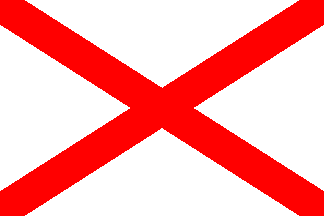 .1.
Flag:
St
Patrick’s cross (see above) – also known as the Red
Hand Flag
 (St
Patrick is the patron
saint
of Northern Ireland (the
saint’s day
– 17
March)
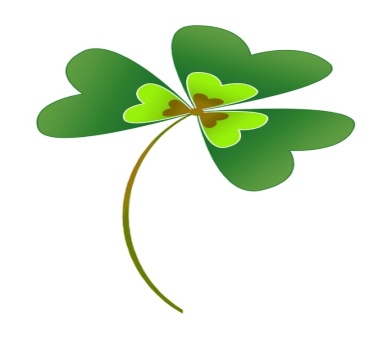
Plant: shamrock (a three-leafed clover)
The shamrock is often confused with the four-leaf clover. While the four-leaf clover is a symbol of good luck, the three-leafed shamrock is mainly an Irish Christian symbol of the Holy Trinity and has a different significance.
Ireland is divided into Northern Ireland or Ulster and the Irish Free State or Eire. Ulster is Protestant and Eire is Catholic. Eire (independent since 1922, capital — Dublin) settled boundary with Northern Ireland in 1925.
Ireland has been the object of British expansion from the early middle Ages. In 1171 English invaders landed in Ireland and since that time the everyday struggle of the Irish people against the colonizers has actually never stopped.
Irishmen have risen in arms; ruthlessly each rising has been pressed. As a result of the hard struggle of the Irish people independence the largest part of Ireland gained the status of British dominion in 1921. Later, in 1949 it was officially Pr claimed an independent state. But the industrial northeast (Northern Ireland with its 6 counties) was retained by Great Britain according to the Anglo-Irish treaty signed in June 1921. But people of both the Irish Republic and Northern Ireland are for the reunification of the country. They believe that British withdrawal from Ireland is the only way to achieve peace. Northern Ireland is the smallest component of the United Kingdom. It occupies the northeast of the island of Ireland, only one sixth of its territory. There are low hills and peaks of rocks in the northwest, while the northeast sector of the island is a plateau. Ireland is sometimes called the Emerald Isle due to its beautiful greenness. The fact is that the winds usually blow in from the Atlantic Ocean and make the air and soil warm and damp. Grass grows well in such a climate and it makes the island so beautiful.)
Though Northern Ireland is not rich in minerals, industrialization has grown in and around Belfast, which is the capital. More than two-thirds of the population of Northern Ireland is concentrated in Belfast and in the neighbouring counties.'
Northern Ireland has a Governor and a Parliament consisting of a Senate (26 members) and a House of Commons (52 members) which legislates for its own area except for mattes of imperial concern. It has a population of about a million and a half. The whole economy of Northern Ireland is closely integrated with that of Great Britain. Three basic industries are developed here — agriculture, textiles and shipbuilding.
5.2. Check your comprehension.
1. What do you know about Ireland? 2. When did the English invaders occupy Ireland? 3. How long have Irish people been struggling against British colonizers? 4. When did Ireland become an independent state? 5. When were the Anglo-Irish Treaty signed and what was its essence? 6. What are the hopes of the people of Ulster? 7. How many counties does Northern Ireland consist of nowadays? 8. Where is industrialization mainly developed in Northern Ireland? 9. Why is Ireland sometimes called the Emerald Isle? 10. What is the capital of Northern Ireland?
TESTS
1. Choose the proper words and fill in the blanks.
The longest river in the United Kingdom is .
a) the Thames; b) the Severn; c) the Clyde.
is known to be the capital of Wales.
a) Cardiff; b) Belfast; c) London.
separate England from Scotland.
a) the Pennine Chain; b) the Cheviot Hills; c) the Appenines.
A lot of islands are situated near England, are among them.
a) the Shetlands; b) the Hebrides; c) the Fames.
5.According to the legend the devil, using an arch of rock, wanted to drag away to the sea.
a) the Isle of Man; b) the Isle of Lewis; c) the Isle of Wight.
6. ____________ greatly influence the climate of Britain.
a) warm waters; b) high mountains; c) long rivers.
7. The most typical feature of the climate oh the British Isles is__________.
a) severe frosts; b) frequent rains; c) thick fogs.
8. Scotland occupies the part of the British Isles.
a) western; b) northern; c) eastern.
9. On the territory of ancient Wales the Romans discovered strange religion, called .
a) Druidism; b) Induism; c) Christianity.
10. Ireland is sometimes called the Isle.
a) Empire; b) endless; c) Emerald.
Enjoy yourself
1. Quiz-game "What do you know about the United Kingdom of Great Britain and Northern Ireland?" (Divide into two groups and give answers to even (1st gr.) and odd (2nd gr.) question numbers).
What states does the United Kingdom consist of?
What seas is the UK washed by?
What is the capital of Scotland?
What is the main city of Wales?
Where are the most beautiful lakes in Britain?
What are the main hills in Britain and where are they situated?
Why is the British climate mild and temperate?
Name three-four islands, surrounding Britain.
What island is a self-governing kingdom?
What influences the climate in Great Britain?
What is the most typical feature of the climate in Britain?
What is the population in England?
What is the population of Scotland?
What water separates England from France?
What sea separates England from Ireland?
What are the largest industrial cities in England?
What are the largest ports in Great Britain?
18. Name four things Scotland is famous for throughout the world.
19. What strange religion did the Romans discover on the territory of Wales?
20. When and where did the Welsh come to the British Isles?
What is Snowdonia and where is it situated?
What is Ulster and where is it situated?
How long have Irishmen been struggling?
How is Ireland often called due to its beautiful greenness?
What houses does the Irish Parliament consist of?
What Act placed Wales under the authority of the Crown?
What language do most of the Welsh speak?
What is the main industrial area in England?
What mountains form a boundary between Highlands and Lowlands in Scotland?
NATIONAL EMBLEMS OF THE UK
As it is well known the United Kingdom is the country consisting of some parts. So one of the main symbols of the country, the flag of the UK, known as the Union Jack, is made up of three crosses. The upright red cross on a white background is the cross of St. George, the patron saint of England. The white diagonal cross on a blue background is the cross of St. Andrew, the patron saint of Scotland. The red diagonal cross on a white background is the cross of St. Patrick, the patron saint of Ireland. Wales has its own flag, called the Welsh dragon, which represents a red dragon on a white and green background.
Each constituent part of the United Kingdom has its own national emblem. The red rose was the emblem of the Lancastrians, the white rose — that of the Yorkists, the two contending Houses for the English throne in the Wars of the Roses (1455 — 1485). All rivalry between the Roses ended by the marriage of Henry VII, the Lancastrian with Princess Elizabeth, daughter of Edward IY, the Yorkist. The red rose has since become the national emblem of England.
In November 30, the Scots celebrate their national holiday — St. Andrew's Day and wear a thistle in their buttonhole. A thistle, a symbol of defence, is the national emblem of Scotland. The Order of Thistle is one of the highest orders of knighthood.
Welshmen all over the world celebrate St: David's Day by wearing either leeks or yellow daffodils. The link between the leek and St. David is the belief that he is supposed to have lived for several years on bread and wild leeks. The daffodil is also closely associated with St. David's Day, due to the belief that it . flowers on that day. Thus the leek and the daffodil are both traditionally regarded as national emblems of Wales. The Welsh like to pin these plants to their jackets on St. David's Day (March, 1), the national holiday of Wales.
What the red rose is to Englishmen and the leek and daffodil to the Welsh, the little shamrock is to the Irish, who wear this national emblem on St. Patrick's Day, March 17. It is worn in memory of Ireland's patron saint, whose cross is embodied in the Union Jack by the thin red one under the cross of St. George. So the shamrock is the national emblem of Ireland. A popular legend is that when preaching the doctrine of the Trinity to the pagan, Irish St. Patrick used the shamrock, a small white clover bearing three leaves on one stem as an illustration of the mystery.
In the Royal Army three lions symbolize England, a lion rampant — Scotland, and a harp — Ireland. The whole is encircled and is supported by a lion and a unicorn. The lion has been used as a symbol of national strength and of the British monarchy for many centuries. A unicorn, a mythical animal with a long straight horn, is represented on the Scottish and British royal coats of arms as a symbol of purity.
6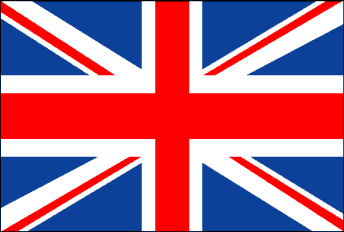 .1.
The flag of the UK
The flag of the United Kingdom, known as the Union Jack****** is made up of three crosses.
The upright red cross is the cross of St George, the patron saint of England.
The white diagonal cross (with the arms going into the corners) is the cross of St Andrew, the patron saint of Scotland.
The
red diagonal cross is the cross of St Patrick, the patron saint of
Ireland
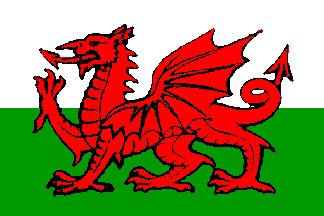
The national flag of Wales is a red dragon on a background of white and green. Wales is not represented in the Union Jack because when the first version of the flag appeared Wales was already united with England*, but the Welsh flag is in widespread usage throughout that country.
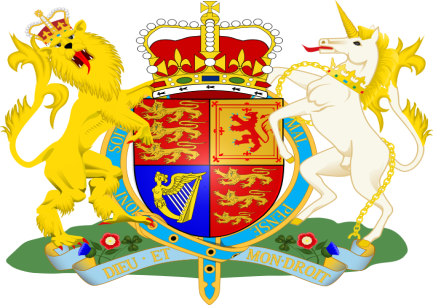
The Royal Coat of Arms is the official coat of arms of the British monarch. The Coat of Arms depicts the shield supported by a crowned lion (on the left) and a unicorn (on the right).
The shield is quartered: the top left and the bottom right quarters depict the three lions passant guardant which is the symbol for England; the top right quarter – the rampant lion and double tressure fleury-counter-fleury for Scotland; the bottom left quarter – a harp for Ireland. Above the shield there is the crown – the symbol of the monarch. The crest above the crown is a lion stating guardant wearing the imperial crown. The supporters of the shield – the crowned lion and the unicorn symbolize England and Scotland respectively. According to legend a free unicorn was considered a very dangerous beast; therefore the heraldic unicorn is chained. The coat features both the motto of English monarchs, Dieu et mon droit (God and my right), and the motto of the Order of the Garter, Honi soit qui mal y pense (Shamed be he who thinks ill of it) on a representation of the Garter behind the shield. The mottoes are old French and date back to the days when French was the court language. The Queen has a separate version of her arms for use in Scotland, giving the Scottish elements pride of place. The Coat of Arms depicts the shield supported by a crowned lion (on the right) symbolizing England and a crowned and chained unicorn (on the left) symbolizing Scotland. Between each supporter and the shield is a lance displaying the flag of their respective kingdom. The shield is quartered: the top left and the bottom right quarters depict the lion rampant of Scotland; the top right – the three lions passant guardant of England; the bottom left – the harp of Ireland.
The crest atop Crown of Scotland is a red lion, seated and forward facing, it wearing the Crown of Scotland and holding the two remaining elements of the Honours of Scotland – namely the Sword of State and the Sceptre of Scotland. Above the crest appears the motto, which is an abbreviated form of the full motto: In My Defens God Me Defend. The coat also features both the motto Nemo me impune lacessit (No-one wounds (touches) me with impunity) and, surrounding the shield, the collar of the Order of the Thistle.
The National Anthem of the United Kingdom is “God Save The King”. It was a patriotic song that dates back to the 18th century. The words and tunes are anonymous. In September 1745 the “Young Pretender” to the British Throne, Prince Charles Edward Stuart, defeated the army of King George II at Prestonpans, near Edinburgh. When the news reached London the leader of the band at the Theatre Royal, Drury Lane, arranged “God Save the King” for performance after a play. It was a tremendous success and was repeated nightly. Other theatres later started to practice singing the song after a play. Thus the custom of greeting monarchs with “God Save The King” as he or she entered a place of public entertainment was established. The words used today are those sung in 1745, substituting “Queen” for “King” where appropriate. The words of the National Anthem are as follows:
God
save our gracious Queen!
Long live our noble Queen!
God
save the Queen!
Send her victorious,
Happy and glorious,
Long to reign over us,
God save
the Queen.
Thy choicest gifts in store
On her be pleased to pour,
Long may she reign.
May she defend our laws,
And ever give us cause,
To sing with heart and voice,
God save the Queen.
On official occasions, only the first verse is usually sung.

Check your comprehension.
1. What is the Union Jack? 2. How many crosses is the Union flag made of? 3. What do the crosses on the flag mean? 4. What nation has its own flag? 5. How does it look like? 6. What is the national emblem of England? Why? 7. What is one of the highest orders in Scotland? Why? 8. Why are leeks and daffodils the national emblems of Wales? 9. What is the national emblem of Northern Ireland? 10. What do such animals as lions and unicorns mean for the people of Britain?
7.THE UK DEMOGRAPHICS
The UK has a population of about 59 million people (according to the 2001 census). It is the third-largest country in the European Union (behind Germany and metropolitan France) and the 21st-largest in the world. Its overall population density is one of the highest in the world, due to the particularly high population density in England. Almost one-third of the population lives in England’s southeast and is predominantly urban and suburban, with about 8,2 million in the capital of London.
The UK’s population is predominantly white (92%). Other ethnic groups in the UK include: mixed – 1 %; Asian or British Asian – 4 %; Black or Black British – 2 %; Chinese – 0,5 %; other – 0,5 %*.
English is the main language spoken in UK, although with many regional variations in terms of accents and phraseology. About one fifth of the population of Wales speak the Welsh language. Gaelic is spoken by some 70 000 people in Scotland. People in the central lowland of Scotland have for centuries spoken Scots. Many other languages are spoken by the minority ethnic communities of the UK.
8.CLIMATE IN BRITAIN
The climate in Britain is milder than that of other countries. The Atlantic Ocean and the warm waters of Gulf Stream influence the climate of Great Britain, making it temperate and mild. The winters are warmer and the summers are cooler than those on the continent. It is never too hot or too cold there. But the weather in Britain is very changeable and it is the favourite topic of conversation. The best seasons in England are spring and summer. The air is fresh, the sky is often blue and cloudless, the sun shines brightly. The trees are full of blossoms, the ground is covered with emerald-green grass as a carpet.
I
Britain
doesn’t have a climate, it only has weather
It may snow any time from November to March. But in England in winter it rains more often than it snows. That's why some English people do not wear heavy overcoats but only warm raincoats. The most typical feature of the climate in England is the thick fog that they often have in autumn and in winter. It comes often and stays for weeks together. It may be of different colours. It may be white, yellow and sometimes black because of the smoke of thousands of chimneys. When it is white it is not so bad, though it's more dangerous to cross the street in a white fog than in a black one. But worst of all is the yellow suffocating fog, called smog (smoke + fog). It enters all the houses, all the rooms so that the lamps in the rooms look quite dim. In a thick smog cars and buses move very slowly. People do not see each other at arm's length. They walk along groping through the streets because they are afraid to lose their way in the fog. The prevailing winds are southwesterly, from the North Atlantic Current. More than 50% of the days are overcast. There are few natural hazards, although there can be strong winds and floods, especially in winter Average annual rainfall varies from over 3,000 mm in the Scottish Highlands down to 553 mm in Cambridge. The driest period in the UK is late winter/spring, the wettest periods are autumn and winter. The county of Essex is one of the driest in the UK, the Lake District is the wettest region. July and August are normally the warmest month in throughout the UK. Around the coasts, February is normally the coldest month; but inland January and February as the coldest months. The highest temperature recorded in the UK was 38,5 °C at Brogdale, near Faversham, in the county of Kent, on 10 August 2003. The lowest was – 27,2 °C recorded at Braemar in the Grampian Mountains, Scotland, on 11 February 1895 and 10 January 1982 and Altnaharra, also in Scotland, on 30 December 1995.
8.1.Check your comprehension.
1. What is the climate in Britain? 2. What influences the climate in Britain? 3. What is the favourite topic of conversation of all British? 4. What is the best season in Britain? 5. What is more pleasant: the cold weather or the wet weather? 6. Do rivers freeze in Britain in winter? 7. What is the most typical feature of the climate in England? 8. What is the most dangerous fog? 9. How do people walk in the yellow smog?
ECONOMY OF THE UNITED KINGDOM
9.1.The UK natural resources.
The UK has a variety of natural resources including:
Geological: coal, petroleum, natural gas (the major ones), limestone, chalk, gypsum, silica, rock salt, china clay, iron ore, tin, silver, gold, lead (produced in small quantities). Coal mining is concentrated in Yorkshire, Northumberland-Darem and Southern-Welsh basins. Oil and gas was discovered under the North Sea during the 1960s and new supplies are still being found today.
Agricultural: arable land, wheat, barley, hill farms, sheep.
9.2. The UK manufacturing
The top concerns of heavy manufacturing in the UK are:
oil and gas production: UK is the world’s ninth largest oil producer and the fifth largest gas producer;
power generation: UK has the largest energy resources of any EC country (oil, natural gas, coal, nuclear power);
mineral and metal products: UK is a one of the major steel producers; in addition to its large output of aluminum and copper, UK also produces specialized alloys for the aerospace, electronic, petrochemical, nuclear and other fuel industries. The ceramics industry manufactures domestic pottery, sanitary ware and tiles;
chemical industry: the most rapid growth in recent years has been in pharmaceuticals, pesticides and cosmetics;
mechanical engineering: major products include plant and machinery for industries such as chemicals, power and water, as well as fabricated steel for bridges, buildings and industrial installations;
electrical, electronic and instrument engineering;
motor vehicles production: car output is dominated by Rover (which is British), Ford, Peugeot Talbot and Nissan;
shipbuilding and marine engineering.
light industry includes textiles, clothing and footwear manufacturing. UK’s wool textile industry is one of the largest in the world and is centered in northern England. The linen industry is based in Northern Ireland.
Besides, among ten largest manufacturing concerns in UK are BAT Industries (tobacco products, food, drinks, etc.). Scotch whisky is one of UK’s top five export earners. Other major industries include timber and furniture, paper, printing and publishing, rubber tyres and tubes, toys, sports equipment and jewellery.
9.3.The UK agriculture.
Most UK agriculture is intensive and highly mechanized, with the use of chemical fertilizers and insecticides routine. By European standards it is very efficient, although that does not necessarily make it profitable.
East Anglia and South East England have been centers for grain production, with some areas of South East England also specializing in market gardening. The county of Kent was so well-known for this that it is often referred to as the Garden of England and was particularly noted for hop growing. Over half of full-time farmers in the UK are devoted mainly to dairying or beef cattle and sheep. Dairy farming is prevalent in South West England.
9.4.The UK fishing industry.
The UK is one of the world’s leading fishing nations. The fishing industry provides 59% by quantity of British fish supplies. A lot of coastal towns have large fishing industries.
9.5. The UK service sector
The UK service sector is the dominant sector of the UK economy accounting for 65% of UK’s gross domestic product. It includes:
retailing: UK has a mixture of large shopping facilities with both large “out of town” stores and in-town shopping centers;
financial services: (stock exchange, now concentrated overwhelmingly in the City of London and Canary Wharf);
tourism: the 6th largest industry in the UK and employs nearly 1,5 million people;
insurance: UK has the world’s biggest insurance industry – with about 20% of the international market.
9.6.The UK creative industries
The UK creative industries include advertising, film and television production, product design, book and music publishing, fine art and antiques markets.
9.7.The UK transport
The UK transport is well developed with an integrated system of airports (471 including international ones (Heathrow, Birmingham, Glasgow)), seaports (Felixstowe, Tilbury, Southampton – three major ones that handle most freight traffic), railways (National Rail network) and roads.
Comprehension
Exercise 1. Fill in the gaps in the following text with proper names.
The archipelago off the West coast of Northern Europe, comprising more than 5,500 islands is called ________. _________ is the largest island of this archipelago, the second largest is called _________. the country which occupies the largest part of these islands is called the UK, which stands for ___________ . Thus the UK consists of four distinct political divisions - ________, ________ , ________ and _______. Unofficially the country is also known as __________.
Exercise 2. Answer the following questions about the state symbols of the UK:
What is the flag of the UK usually called?
What does the flag consist of?
Why is the flag of Wales not represented in the state flag?
What is depicted on the shield of the coat of arms?
Who are the supporters of the shield? What do they symbolise?
What are the mottoes inscribed on the coat of arms? What is their history?
How is the Scottish variant of the coat of arms different from the main one?
What is the anthem of the UK called?
Exercise 3. Match the parts of the country with their capitals:
-
1. Scotland
a. London
2. Wales
b. Belfast
3. England
c. Edinburgh
4. Northern Ireland
d. Cardiff
Exercise 4. Which parts of the UK do these plants symbolise?
-
A
B
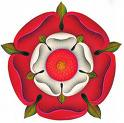
C
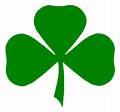
D
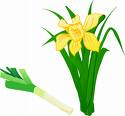
Exercise 5. Match the part of the country with its patron saint and its national day:
-
England
St Patrick
23rd April
Wales
St George
30th November
Scotland
St Andrew
17th March
Northern Ireland
St David
1st March
Exercise 6. Show on the map:
The Atlantic Ocean; the North Sea; the Irish Sea; the English Channel; the Straights of Dover; St George's Channel; the North Channel;
Rivers in England;
Rivers in Scotland;
Rivers in Wales;
Rivers in Northern Ireland.
Exercise 7. Fill in the table:
-
England
Scotland
Wales
Northern Ireland
The longest river
The largest lake
The highest mountain
Exercise 8. Show on the map:
The mountain ranges in England, Scotland, Wales and Northern Ireland;
The biggest cities in all the four parts of the country;
The islands belonging to the UK.
Exercise. 9. Fill in the missing information about climate in the UK:
The current climate of the United Kingdom is classified as ______. One of the principle factors which influence the climate is the warming of the waters around the British Isles by the ______.The average annual amount of sunshine for the United Kingdom is relatively low and around 50% of days are ______. Average annual rainfall exceeds 3 000 mm. The mountains of Wales, Scotland, the Pennines and the Lake District are particularly _____, with rainfall reaching 3 000 mm a year. In contrast, the south, south east, east and the southern midlands receive less than 600 mm of _____ per year. The wettest seasons are ______ and _______. Generally the UK has mild to cool _____ and warm to hot _____ with moderate variation in temperature throughout the year. In England the average annual temperature is about 10 °C, but over the higher ground this can be several degrees lower. _______ and _______ are often the coldest months, with mean winter temperature of 0°C and the recorded minimum _______ °C. ______ tends to be the warmest month and the highest temperature recorded was ______ °C. However, the average for this month is 15-20 °C.
Exercise 10. Answer the following questions:
What mineral resources does the UK have?
What is the population of the UK?
What are the major national groups leaving in the country?
What languages are spoken in the UK? Is there a state language?
What is the population of London?
Exercise 11. Characterize the branches of the country’s economy:
agriculture
fishing
manufacturing
services
creative industries
transport
10. LONDON – THE CAPITAL CITY OF THE UK
London, the capital of England and the UK, is the world’s ninth-largest city with the population of over 8 million people. It originated nearly 2 000 years ago with the arrival of the Romans soon after their invasion of Britain in AD 43. London is situated on the banks of the river Thames, in southeast England.
London is made up of two ancient cities which are now joined together. They are:
the City of London, known simply as “the City” which is the business and financial heart of the United Kingdom. It is also known as the Square Mile (2.59 km2/1 mi2). It was the original settlement (ancient Londinium).
the City of Westminster, where Parliament and most of the government offices are located. Buckingham Palace, the official London residence of the Queen and the Royal family are located there too.
Together they all make up a region known as Greater London.
Each London district has places of interest that are of historical and cultural significance.
10.1.The City
The City of London is the principal financial district not only of London, but of the UK and Europe and one can find banks of many nations in the famous Threadneedle Street and the surrounding areas. Here, too, the Bank of England is situated. Nearby is the Stock Exchange. A little further along in Leadenhall Street is Lloyds, the most famous insurance company in the world.Fleet Street is famous as the home of the nation’s newspapers but, in fact, only two of them – The Daily Express and The Daily Telegraph – are still in Fleet Street. However, people still say “Fleet Street” when they mean “the press”.
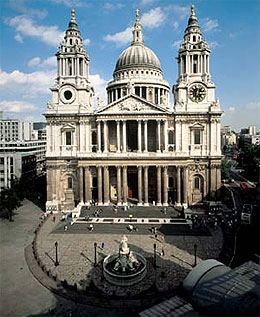
Historic buildings in the City:
St Paul’s Cathedral – an Anglican cathedral and the seat of the Bishop of London. The present St Paul’s Cathedral was designed by the famous architect Sir Christopher Wren, after the Great Fire of London in 1666. Prince Charles and Lady Diana Spencer were married there in July 1981.
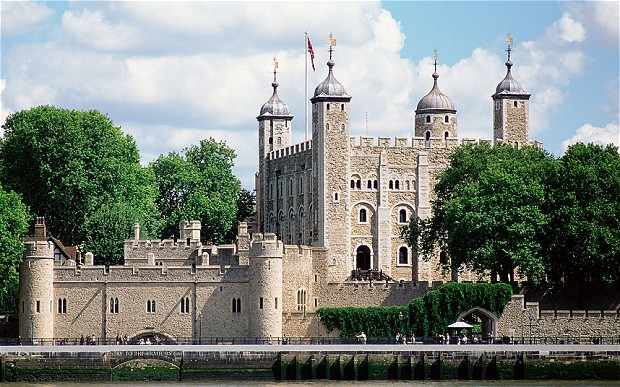
The Tower of London, first built by William the Conqueror more than 900 years ago. The tower’s primary function was a fortress, a royal palace, and a prison (particularly for high status and royal prisoners, such as the Princes in the Tower and the future Queen Elizabeth I). This last use has led to the phrase “sent to the Tower” (meaning “imprisoned”). It has also served as a place of execution and torture, an armoury, a treasury, a zoo, the Royal Mint, a public records office, an observatory, and since 1303, the home of the Crown Jewels of the United Kingdom.
The West End
The West End occupies the area of central London north from The Mall to Oxford Street. It includes Trafalgar Square, the main shopping areas of Oxford Street and Bond Street, and the entertainment centers of Soho, Piccadilly Circus, Leicester Square and Shaftesbury.
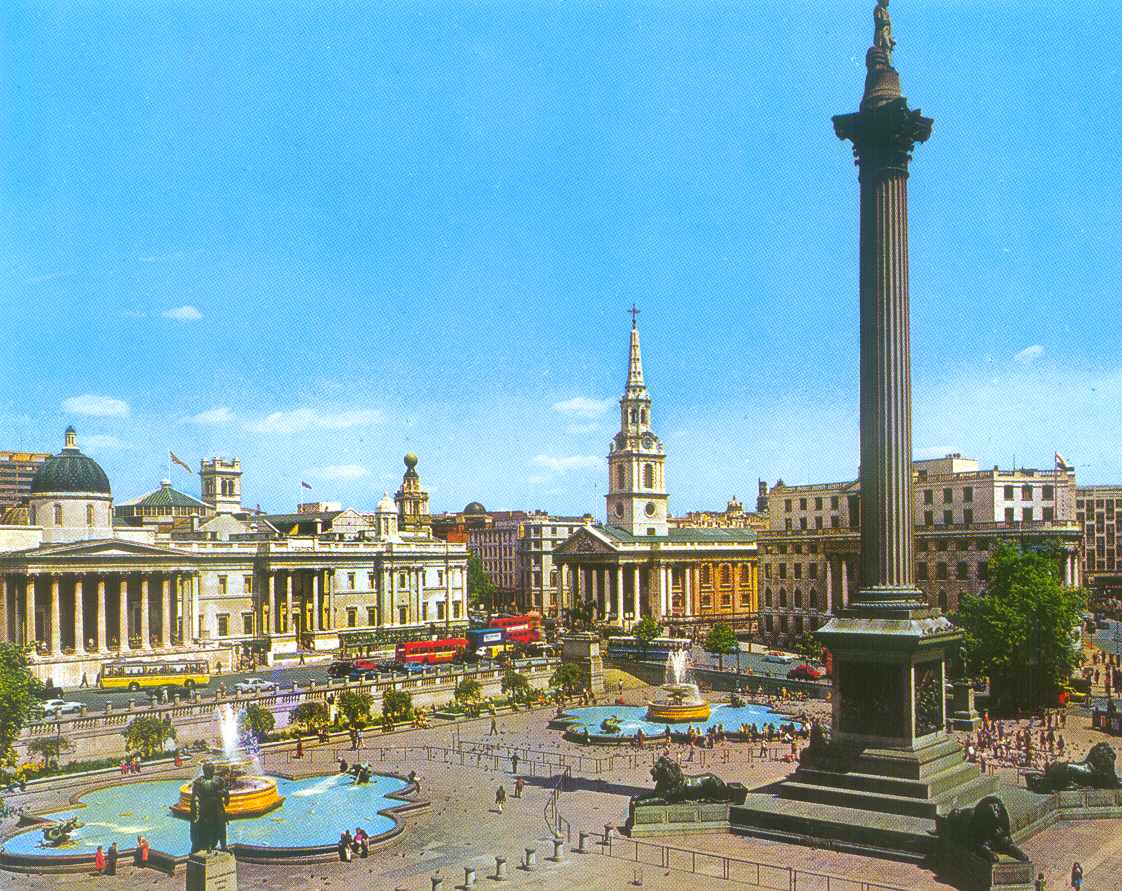
Trafalgar Square, built in the early 20th century to commemorate the Battle of Trafalgar. There is a statue of Admiral Lord Nelson standing on top of a column in the middle of Trafalgar Square. It is a famous meeting place in London
Soho is an entertainment district which for much of the later part of the 20th century had a reputation for its night life and film industry. Since the early 1980s the area has undergone considerable transformation and is now a fashionable district of upmarket restaurants and media offices.
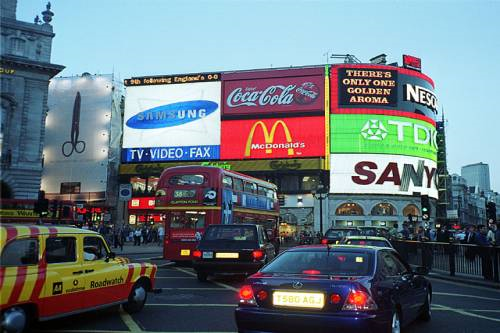 Piccadilly
Circus
– at the junction of five busy streets – is a famous London
landmark. It is full of colorful electric displays. At its heart is a
bronze fountain topped by a figure of a winged archer. The statue is
popularly called EROS, the pagan god of love, but it was in fact
designed in the 19th
century as a symbol of Christian charity – a monument to Lord
Shaftesbury, a philanthropist.
The East End
The East End has many places of interest including many of London’s markets (for example Columbia Road Flower Market, Spitalfields Market, Brick Lane Market, Petticoat Lane Market).
Docklands in the East End is a thriving and vibrant area with a wide range of shops, restaurants, pubs and wine bars.
Westminster
Westminster is an area of Central London, within the City of Westminster. It has a large concentration of London’s historic and prestigious landmarks and visitor attractions, including Palace of Westminster, Buckingham Palace, Westminster Abbey and much of the West End of London.
It is also the area of royal parks – St James’s Park, Hyde Park with its Speaker’s Corner, Regent’s Park – present home of London Zoo.
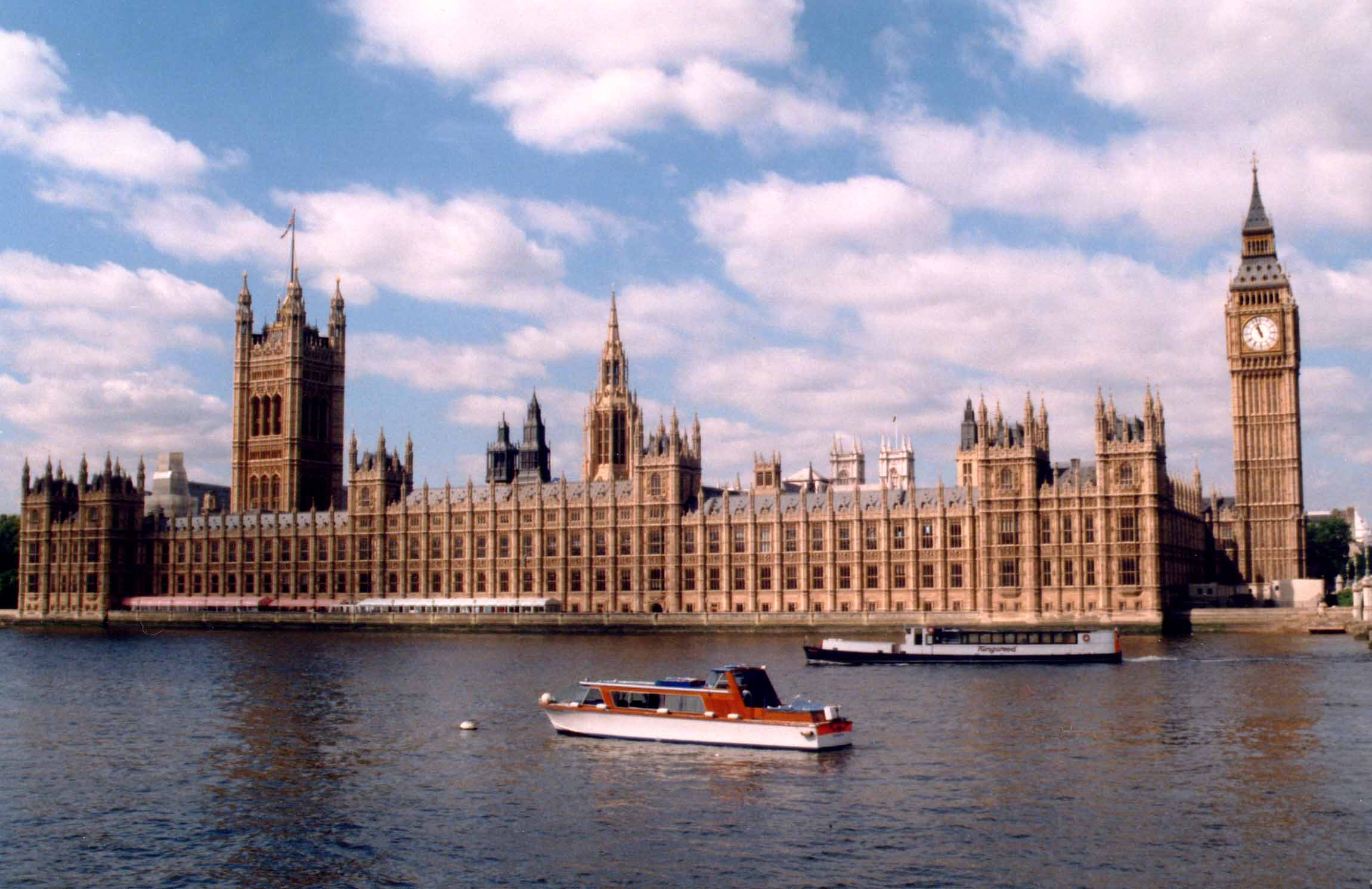 The
Palace
of Westminster,
also known as the
Houses
of Parliament
or Westminster
Palace
is where the two Houses of the Parliament
of the United Kingdom
(the House
of Lords
and the House
of Commons)
meet.
At the north-eastern end of the Palace of Westminster is the great bell of the clock in London. This is the world’s largest, four-faced, chiming clock and the third largest, free-standing clock tower in the world.
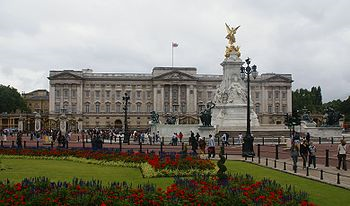
Buckingham Palace is the official London residence of the British monarch.
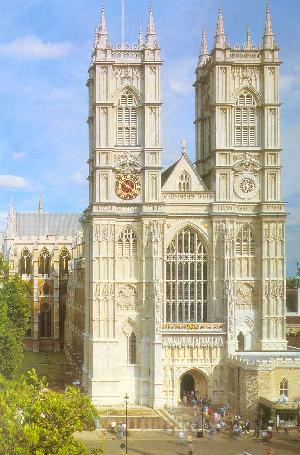
Westminster Abbey (whose formal name is the Collegiate Church of St Peter, Westminster) is a Gothic monastery church that is the traditional place of coronation and burial site for English monarchs.
10.2. Check your comprehension.
I. What is London? 2. Where is it situated? 3. How many people live in London? 4. What are the main parts of London? 5. What is Westminster? 6. What is the City? Name the main business centres of the City? 7. What is the West End known for? 8. Describe Piccadilly Circus. 9. What do you know about Trafalgar Square? 10. What parks are there in London? 11. What is the East End? 12. Who are the Cockneys?
Exercise 1. What do you know about these places in London?
Buckingham palace; Hyde Park; Houses of Parliament; Trafalgar Square; Tower of London; the City; Oxford Street; Fleet Street; the West End; the East End; Kensington Gardens; Piccadilly Circus; the British Museum; St Paul's Cathedral; the Globe Theatre; Wimbledon; Tower Bridge.
What other places of interest in London do you know?
Exercise 13. Revision. What do the following words, phrases and figures refer to?
Heathrow |
EROS |
Union Jack |
Eire |
The Square Mile |
Cymru |
Channel Tunnel |
388 km2 |
23rd April |
Great Britain |
Severn |
346 km |
Slieve Donard |
Sir Christopher Wren |
St. Andrews |
1 344 m |
Loch Lomond |
38,5 °C |
rose |
harp |
Hebrides |
sheep |
Speaker’s Corner |
354 km |
the Isle of Man |
about 59 million |
Dieu et mot droit |
Big Ben |
Glasgow |
William the Conqueror |
11. THE SYSTEM OF EDUCATION AND THE OLDEST UNIVERSITIES OF GREAT BRITAIN
11.1. Education system in the UK is divided into four main parts:
I.compulsory education:
primary education (Years 1-6);
secondary education (Years 7-11);
II.elective education
further education (Sixth Form College);
higher education (college or university).

Schooling for children is compulsory from age 5 to 16, though children under 5 may attend nursery schools or day nurseries. Education within the maintained school system usually comprises two stages – primary and secondary education. Once a student finishes secondary education he/she has the option to extend into further education. UK students planning to go to college or university must complete further education. To ensure that all schools could be standardized so all children went from Year 1 to Year 11 in the same way and at the same time, with the same curriculum the National Curriculum was designed. The curriculum consists of a range of subjects. There is a minimum mandatory core of English, mathematics, combined science, physical education, religious education, and sex education, with short courses in technology (including Information Technology) and a modern foreign language. This gives schools the freedom to teach a greater range of academic or vocational subjects, such as Greek and Latin, additional modern languages (French, German, Spanish, etc.), performing or creative arts, history and geography, the three separate sciences, etc. Schools are also expected to teach Personal and Social Education (PSE), which includes Citizenship. Religious education is available in all schools although parents have the right to withdraw their children from such classes.
11.2.Primary education
Primary schools consist mainly of infant schools for children aged 5 to 7, junior schools for those aged 7 to 11, and sometimes combined junior and infant schools for both age groups. Primary students pass from years one to six without examinations, though their abilities are tested at age seven. The emphasis is on learning by discovery rather than memorization. Students learn core subjects such as English, math and science, as well as foundation subjects such as history, geography, music, art and physical education. Infant schools are largely informal; there is an emphasis on children sharing and enjoying stories, communication through role play and other games and activities, and emergent writing e.g. making shopping lists, writing prescriptions etc. In junior schools, teaching is often more formal; children there usually have set periods of statutory subjects. In their last year of primary education, till recently, most schoolchildren had to sit for the eleven-plus examination*. Today it is generally used as an entrance test to a specific group of secondary schools, rather than a blanket exam for all pupils, and is taken voluntarily.

11.3. Secondary education
According to the National Curriculum, the statutory subjects that all pupils must study at this stage are art and design, citizenship, design and technology, English, geography, history, information and communication technology, mathematics, modern foreign languages, music, physical education and science. The teaching of careers education, sex education and religious education is also statutory.
11.4.Types of secondary schools
In UK two types of secondary education can be distinguished – selective and non-selective (comprehensive). Within the non-selective (comprehensive) system, at the age of 11 children may go directly to a secondary comprehensive school. Secondary comprehensive schools are state schools for children from the age of 11 to at least 16 that do not select children on the basis of academic achievement or aptitude. In the United Kingdom comprehensive schools were introduced in the late 1940s to the early 1970s. Some 90% of British pupils are educated at comprehensive schools. Since this school teaches a comprehensive range of subjects across the academic and vocational spectrum it is commonly understood that the school will need to be of a large size and to take children from a wide ability range.
Within the selective system pupils may choose between grammar schools, technical schools and secondary modern schools.
Grammar schools are secondary schools attended by pupils aged 11 to 18 to which entry is controlled by means of an academically selective process which sometimes consists of a written examination (the eleven plus). Grammar schools give pupils a very high level of academic instruction. After leaving a grammar school, as with any other secondary school, a student may go into further education.
Secondary technical schools. These were a type of secondary schools in the United Kingdom that existed in the mid-20th century. Their aim was to teach mechanical, scientific and engineering skills to serve industry and science. For various reasons few were ever built, and their main interest is on a theoretical level.
Technical schools were a modest success, given their limited resources and lack of government attention. Their curriculum was well shaped for dealing with real world employment, and had a solid practical edge. The schools had good links with industry and commerce. Nowadays there are just a few technical schools in England and Wales.
Secondary modern schools were formed in the UK after World War II and are intended for children who would be going into a trade and thus concentrate on the basics plus practical skills (cooking, woodwork, metalwork, etc.)*.
11.5.The main school examination
At the end of Year 11, pupils aged 16 (in England, Wales and Northern Ireland) take a public examination called the General Certificate of Secondary Education (GCSE) (at Ordinary level (“O” level)) in a number of subjects, usually between 8 and 10. These consist of a mixture of internally assessed coursework and end-of-year examinations set and marked by independent examination boards. The results appear as grades A-G, where A is the top grade (a starred A* was introduced in 1994 for the best of the A grades). A, B or C grades are normally regarded as equivalent to the “pass” grades. After sitting the exams, secondary students may leave school to enter the workforce, pursue training programmes at technical or vocational schools****, or continue studying for two more years at Sixth Form Colleges.
11.6.Further education (Sixth Form)
After GCSE (“O” level), more able pupils (usually university-bound ones) enter the “Sixth Form” (Years 12, 13). The curriculum of the sixth form is narrowed to about 5 subjects, of which the pupils will specialize in 2 or 3. The two-year course at Sixth Form College leads to the Advanced Level (“A” level) GCSE examination. The examination is usually taken after Year 13 (at the age of 17-18). Candidates may take as many subjects as they like. Three “A” levels are usually enough to gain entry to most universities*.
11.7.Higher education
The UK has a vast variety of higher education opportunities to offer students with over 100 universities providing various degree programs for students from the UK and around the world. In the UK about one-third of all students go on to some form of higher education and this number is well over 50% for students from Scotland. This makes competition for places very fierce and so it is advised to apply early for courses.
All UK universities enjoy academic freedom.


Comprehension
Exercise 1. Look at the diagram of the UK school system and answer the questions about the levels of school education.
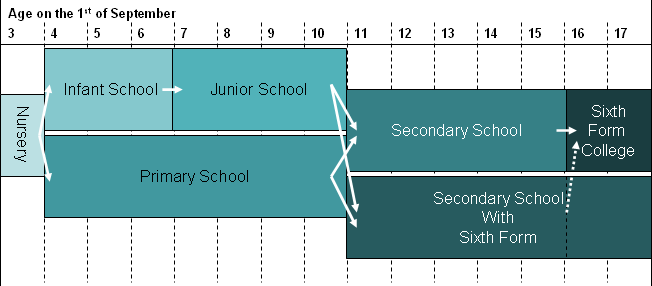
1.What is the age of compulsory education in the UK? 2.What kind of educational establishments is available for children below the compulsory age of schooling? 3.What are the four key stages of school education in the UK? 4.What is the age of primary education in Britain? 5.What are the two systems of primary schools? 6.What is the compulsory age of secondary education? 7.What can a person do after the age of compulsory education?
Exercise 2. Read the text and fit the sentences below into their correct places in it. There is one extra sentence you will not need.
Generally, all publicly-funded primary schools must provide the National Curriculum to their students. National Curriculum core subjects for primary schools are: English, mathematics and science. [1] Foundation subjects are design and technology; information and communication technology; history; geography; modern foreign languages; music; art and design; physical education; religious education; and citizenship. Although learning a modern foreign language in England does not become compulsory until the beginning of key stage 3 (students aged 11+), the Government encourages the optional learning of a foreign language prior to this stage. All maintained schools in England are required to provide religious education and a daily act of collective worship. [2] The school year consists of 380 (half-day) sessions. The actual dates of terms and holidays are determined annually by the local education authority (LEA). In general, the school year runs from about the first week of September to the third week of July. [3] The school week normally runs from Monday to Friday. The school day is divided into two sessions, one in the morning (usually between 9am and 12 noon) and one in the afternoon (usually between around 1 pm and 3.30pm).
In general, all children in their final year of key stage 2 (normally in Year 6 and aged 11 by the end of the school year) are assessed by teacher assessment in all compulsory National Curriculum subjects and by national tests in English, mathematics and science. [4] All students continue to secondary education, regardless of the outcome of the end of key stage 2 assessment.
A Unlike the key stage 1 tests, the National Curriculum key stage 2 tests are externally marked.
B At the request of a parent, any child in a publicly-funded primary school in England may, however, be excused from these activities.
C Welsh is a core subject in Welsh-speaking schools.
D Many of these are boarding schools, where children live and sleep during the term.
E It is divided into three terms, with a long summer break of about six weeks in July and August, shorter breaks of two to three weeks at Christmas and Easter, and one week in the middle of each term.
Exercise 3. Match the kinds of secondary school that exist in Britain with their descriptions.
1. comprehensive schools 2. grammar schools 3. secondary modern schools 4. technical schools 5. public schools 6. sixth form colleges |
a. Some of the more traditional independent (privately run) schools in England and Wales. Many of these are boarding schools, where children live and sleep during the term. Eton and Harrow are the most famous schools of this kind. b. Schools that admit children of all abilities and provide a wide range of secondary education for all or most of the children in a district. They are usually mixed. c. Schools that provide mainly academic course for selected pupils from the age of 11 to 18, usually leading to a university. d. These schools were formed to provide non-academic education up to the minimum school-leaving age for students of lesser attainment. The curriculum includes such practical subjects as cooking, gardening, typing, shorthand, woodwork, metalwork. e. These schools provide a general academic education, but place particular emphasis on technical subjects. They admit children with lower marks than grammar schools. There are very few schools of this type in England and Wales. f. Offer opportunity for specialised study (the curriculum is narrowed to about 5 subjects) after the compulsory schooling age, often aimed at university entry. |
Exercise 4. Fill in the missing information in the table.
Certificate |
Country |
Age |
Number of subjects |
notes |
GCSE ('O' level) |
|
15-16 |
6-7 |
|
SCE |
Scotland |
|
|
|
'A' level |
|
|
|
|
SCE 'Highers' |
|
|
|
|
Exercise 5. Read the text and match the bodies responsible for school education with their functions.
The Department of Education and Science
Local education authorities
Boards of governors
Three partners are responsible for the education service: central government – the Department of Education and Science (DES), local education authorities (LEAs), and schools themselves. Every state school has its own governing body (a board of governors), consisting of teachers, parents, local politicians, businessmen and members of the local community. ____________________ is concerned with the formation of national policies for education. It is responsible for the maintenance of minimum national standard of education. _____________________ are charged with the provision and day-to-day running of the schools and colleges in their areas and the recruitment and payment of the teachers who work in them. They are responsible for the provision of buildings, materials and equipment. However, the choice of textbooks and timetable are usually left to the headmaster. The content and methods of teaching are decided by the individual teacher. ____________________ are responsible for their school’s main policies, including the recruitment of the staff. A great role is played by the Parent Teacher Association (PTA). Practically all parents are automatically members of the PTA and are invited to take part in its many activities.
Exercise. 6 Describe the peculiarities of the following types of universities and colleges in the UK.
The two old English universities of Oxford and Cambridge and old Scottish universities
London Universities
The Red Brick universities.
The Plate Glass universities.
The new Universities.
The Open University
The privately financed University of Buckingham
Exercise 7. For the following statements indicate one or several names or types of universities and colleges.
The first university to admit women was_________________________________.
The universities that appeared in the end of the nineteenth century and the beginning of the twentieth are called ______________________________________.
Universities famous for their personal tuition system are_____________________.
The Colleges of Advanced Technology which became universities after 1963 are now called _________________________________.
The most famous institution of distance learning in Great Britain is ____________.
The term “red-brick” is used to refer to this type of universities: __________________.
Glasgow University belongs to ________________________________________.
The privately financed university is _____________________________________.
Exercise 8. Answer the following questions about the admission procedure used in Britain.
Where should school leavers in Britain apply to if they want to go to university? 2.What information does a candidate include in the UCAS form? 3. When should one apply to UCAS? 4. What does the UCAS do with the applications? 5. What university groups consider the applications for admission? 6. What decision may be sent to the applicant? 7. When is a definite offer sent to the applicant?
Exercise 9. Fill in the missing information in the table about types of degrees awarded by British Universities.
Type of degree |
Number of years |
|||
|
|
|
||
|
|
|||
PhD |
|
|||
MA,MSc |
research |
|
||
|
||||
First degrees BA, BSc |
honours |
First class |
|
|
|
||||
|
||||
ordinary |
||||
Exercise 10. Read the text and fit the sentences below into their proper places.
DISTANCE LEARNING
The defining feature of distance learning is that you do not need to attend the awarding university/institution in person. This allows you to study from home with course materials provided by the institution. (1) Institutions provide special systems of support to help you through the course. This style of study is not new. The University of London established its External Programme in 1858 to make the degree accessible to students who, for one reason or another, could not come to London to study, and it now offers a range of undergraduate and postgraduate qualifications, to almost 24,500 students in over 157 countries around the world. Many professional bodies were also aware of the conflict that people face between the need to work full time and the need to acquire and keep up to date a professional qualification. (2) Provision for students unable to attend university increased in 1969 when the Open University was established. (3) It offers its 150.000 students the opportunity of studying for undergraduate and postgraduate qualifications or a range of professional diplomas. Now a growing number of other UK institutions are developing distance learning programmes to offer students the chance of studying without leaving home. The academic support given to a distance learning student varies from programme to programme and from institution to institution. (4) In its simplest form, students may receive basic academic guidance through specially written study guides and past examination papers and reports. However, many programmes provide an extensive range of materials including videos, computer disks, audio tapes and annotated texts. Some institutions have introduced programmes of study which can be delivered to a student’s home by Internet. Direct tutor support may not always be available, but, if it is, it may be given through seminars given by visiting academics and email/fax responses to assignments returned to the home institution, residential summer schools and/or revision weekends. (5) The choice of qualifications available to students is wide, from ‘A’ levels to undergraduate diploma and degrees, master’s programmes and PhD by research.
A Since the turn of the century, such bodies have offered their members the opportunity to gain qualifications through correspondence courses.
B However, the focus is on self-study.
C These can be paper-based, on CD-Rom or provided through the Internet.
D Some universities and colleges have local partners who provide on the spot advice and support.
E The OU differs from most other British universities in that it is open to any adult living in the UK/EU irrespective of previous educational qualifications.
Exercise 11. Answer the following questions about various aspects of university educarion in Britain.
1.What is the dominant teaching style in British universities? 2. What is the difference between a workshop and a seminar? 3. What is a tutorial? 4. What role does a tutor play in a student's academic life? 5. In what ways can an academic year be structured? 6. What are the main costs for university students in Britain? 7. What governmental support can a student receive towards his/ her tuition fees? What does it depend on? 8. In what form is the help towards living expenses provided by the government? On what conditions?
9.What are the two main types of scholarships?
Exercise 12. Explain how the following is connected with the system of teacher training in the UK.
Training and Development Agency for Schools (TDA)
Qualified Teacher Status (QTS)
initial teacher training
in-service training
Postgraduate certificate of Education
Bachelor of Education
Graduate Teacher Program (GTP)
Overseas Trained Teacher Program
12. STATE AND POLITICAL SYSTEM OF THE UK
United Kingdom is a constitutional monarchy. This means that it has a hereditary monarch (a king/queen) as its Head of State, but essentially the powers of the monarch are ceremonial and he/she can only reign with the support of Parliament****. Among the official functions of the King/Queen are the following:
to appoint the Prime Minister at the end of the election (normally the leader of the party that has the majority in the House of Commons);
to summon, prorogue and dissolve the Parliament;
to enact legislation; to give his/her Royal Assent to bills when they’ve been passed by both Houses;
to declare war/make peace;
to recognize foreign states and governments;
to conclude treaties;
to annex/cede territories;
to be the head of judiciary (all the courts of the land are the King’s/Queen’s courts; all the trials are carried out in the King’s/Queen’s name);
to be the Commander-in-chief of the Armed Forces;
to be the “supreme governor” of the established Church of England;
to make formal appointments to the most important offices of the state in the Armed Forces and churches;
to confer peerages, knighthoods and other honours;
to make formal approvals to decisions of the Government at the meetings of the Privy Council;
to be the King/Queen of 16 former colonies, including Australia, Canada, New Zealand, represented by the governor; to be the Head of the Commonwealth.
Important symbolic roles of the King/Queen are to preserve the unity of the nation, historical traditions and continuity; to be the Defender of the Faith (only Anglicans can succeed to the throne******); to be the Spiritual head of state.
UK Constitution is uncodified (unwritten) consisting of historic documents such as the Magna Carta********, the Petition of Right, and the Bill of Rights (1689); statutes, judicial precedents (common law), and custom. The constitution is flexible and may be changed by an act of Parliament.
There are three branches of power in UK:
the executive power (exercised by the government);
the legislative power (vested in both the government and the parliament);
the judicial power (exercised by the system of courts).
There is no strict separation of powers of these three arms of government (in contrast to the United States). So, for example:
1) all Ministers in the government are members of the legislature;
2) some very senior judges sit in the upper house of the parliament.
12.1.The UK Parliament
The Parliament of the United Kingdom and Northern Ireland is the supreme legislative body in the UK and British overseas territories. It alone has parliamentary sovereignty, conferring its ultimate power over all other political bodies in the UK and its territories. At its head is the Sovereign.
The British Parliament is often called Westminster because it is housed in a distinguished building in central London called the Palace of Westminster.
The functions of Parliament are:
to pass laws;
to provide, by voting for taxation, the means of carrying on the work of government;
to scrutinize government policy and administration, including proposals for expenditure;
to debate the major issues of the day.
The British Parliament like most in the world is bicameral, that is there are two houses or chambers – the House of Commons (HC) and the House of Lords (HL). The Sovereign is the third component of Parliament. In theory, supreme legislative power is vested in the King/Queen-in-Parliament; in practice in modern times, real power is vested in the HC; the Sovereign generally acts on the advice of the Prime Minister and the powers of the HL are limited.
The two Houses meet in separate chambers in the Palace of Westminster.
The House of Commons is the lower chamber.
The House of Commons is chaired by the Speaker who is elected by Members of Parliament (MPs). The post is non-political and indeed, by convention, the political parties do not contest the Parliamentary constituency held by the Speaker. He helps to keep order in the House.
The House of Commons currently has 646 seats (the number varies slightly from time to time to reflect population change). This is a large legislature by international standards. For instance, the House of Representatives in the USA has 435 seats.
Each seat in the House of Commons represents a geographical constituency. Typically a constituency would have around 60,000-80,000 voters, depending mainly on whether it is an urban or rural constituency.
The House of Commons is a democratically elected chamber with elections to it held at least every 5 years (a General Election, that is, a nationwide election for all 646 seats is held when the Prime Minister calls it, but the election cannot be more than five years after the last one and it is usually around four years after the last one).
T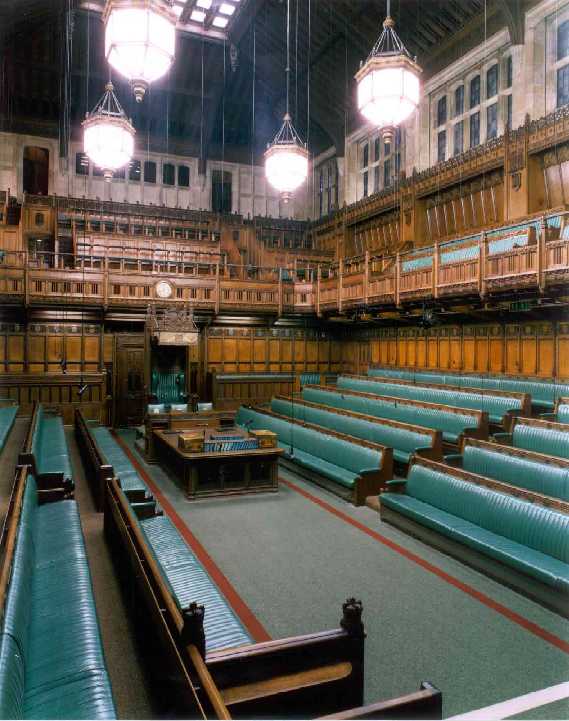 he
House
of Commons Chamber
was rebuilt to a design by Sir Giles Gilbert Scott after it was
damaged during the Second World War. The new Chamber was built in a
style that was in keeping with the Chamber that had been destroyed.
The layout of the Chamber consists of two sets of green benches that
are opposite to each other. There is a table in the middle and the
Speaker’s Chair at one end. This arrangement means that the
Government and Opposition MPs sit facing each other. Government
ministers sit on the front bench on the Government side. They are
therefore known as Government frontbenchers. Members of the House who
belong to the same party as the Government but who do not hold a
Government post are known as Government back-benchers. The Official
Opposition is divided in the same way.
The Public Gallery is open whenever the House of Commons is sitting. Members of Parliament can obtain a small number of tickets for their constituents to visit the Public Gallery. Non-ticket holders may form a queue behind the notice for the House of Commons at St Stephen’s Entrance but a wait of several hours may be necessary at times.
The House of Lords is the upper chamber.
The
House of Lords is presided over by Lord
Speaker.
The
office is analogous to the Speaker
of the House of Commons:
the Lord Speaker is "appointed" by the members of the House
of Lords and is expected to be politically impartial. Until July
2006, the role of presiding officer in the House of Lords was
undertaken by the Lord
Chancellor.
Under the Constitutional
Reform Act 2005,
the position of the Speaker of the House of Lords (as it is termed in
the Act) became a separate office, allowing the position to be held
by someone other than the Lord Chancellor. Nowadays Lord Speaker of
the House of Lords (2009) is Baroness Hayman. T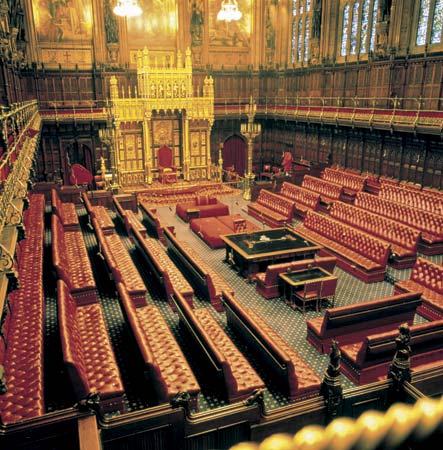 here
is no fixed number of members in the House of Lords, but currently
there are 740 members (July 2009). Historically most members of the
House of Lords have been what are called hereditary
peers.
This means that years ago a king or queen nominated a member of the
aristocracy to be a member of the House and, since then, the right to
sit in the House has passed through the family from generation to
generation*.
Clearly this is totally undemocratic and the current Labour
Government has now abolished the right of all but 92 of these
hereditary peers to sit in the House. Almost all the other members of
today’s House of Lords are what are called life
peers.
This means that they have been chosen by the Queen, on the advice of
the Government, to sit in the House for as long as they live, but
afterwards no member of their family has the right to sit in the
House. There is no fixed number of life peers, but the current number
is 608
(July 2009).
Many are former senior politicians. Others are very distinguished
figures in fields such as education, health and social policy. A
small number of other members – 26 – are Lords Spirituals–
Archbishops
and Bishops
of
the Church of England.
The House of Lords Chamber is arranged in the following way: it has a throne (instead of the Speaker’s chair in the HC) with a canopy and woolsack (sources of Britain’s prosperity) where the Lord Speaker sits. The Chamber is divided into two sides separated by a green line – the right side (the governmental one) and the left side (the opposition’s one). It contains the cross benches as well. The benches are red leather. If the Lord Speaker decides to address the Chamber as an ordinary he leaves the woolsack.
12.2.The passage of legislation
In the British political system, almost all legislation is proposed by the Government and much of it comes from promises made in the manifesto of the relevant political party at the last election. At the beginning of each annual session of the Parliament, the main Bills to be considered are announced by the monarch in a speech opening that year’s session of Parliament. The other type of bills, known as a Private Member’s Bill, is often less successful. A Private Member’s Bill is sponsored by an individual MP rather than by the Government. He or she will promote the Bill as an individual and will therefore not be able to rely on the assistance of the party Whips in gaining a majority in the House of Commons.
All legislation has to be approved by both Houses of Parliament.
In the Houses of Parliament, a proposed piece of legislation called a Bill goes through the following stages:
1) the House of Commons stage:
First reading (the Bill is introduced with simply a reading by a Minister of the long title of the Bill);
Second Reading (the general principles of the Bill are debated by all the members of the House);
Committee Stage (each clause of the Bill is examined in detail by a small specially chosen group of members of the House);
Report Stage (the changes made to the Bill in the Committee are reported to and debated by the whole House which is invited to approve the changes);
Third Reading (the final version of the Bill is approved by the whole House);
2) the House of Lords stage:
The House of Lords passes the Bill. The House of Lords has much more limited legislative powers than the House of Commons. Money Bills can only be initiated in the Commons and the Lords can only reject legislation from the Commons for one year;
3) the Royal Assent:
Once both Houses of Parliament have passed a Bill, then it goes to the monarch for the Royal Assent. No monarchs since 16th century have signed Bills themselves. Queen Anne, in 1707, became the last monarch to reject a Bill, while Queen Victoria was the last to give the Royal Assent in person in 1854.
Some distinguishing features of the British Parliamentary system
Much of the work of Parliament is done in Committees rather than on the floor of the chamber. The House of Commons has two types of committee: Select Committees which are appointed for the lifetime of a Parliament and “shadow” the work of a Government Department, conduct investigations, and issue reports; General Committees (previously known as Standing Committees) which are temporary bodies formed to examine the detail of a particular piece of legislation and consider amendments to the Bill. The House of Lords only has Select Committees (it does not need Standing Committees because the details of Bills are considered on the floor of the chamber). Finally there are some Joint Committees of the Commons and the Lords.
Discussion and debate involves quite a confrontational approach. This is reflected in the physical shape of the chambers. Whereas most legislatures are semi-circular, both the House of Commons and the House of Lords are rectangular with the Government party sitting on one side and the Opposition parties sitting on the other side. The House of Lords alone has cross-benches for independent peers.
There is a Prime Minister’s Question Time for 30 minutes every Wednesday. Questions can be asked on any subject.
The press is present all the time and live audio and visual broadcasting can take place at any time.
Most of the parties, large and small, have important officials, chosen from among their MPs, known as Whips. Within each of the main parties there is a Chief Whip, together with 10-12 Whips. They have a variety of functions, the most important of which is maintaining discipline. Although MPs in the House of Commons can theoretically vote as they wish, they are generally expected to vote with their party.Every week a Whip sends the MPs a notice, also known as The Whip, giving the order of business for the following week. Each matter to be discussed will be underlined once, twice or three times according to its importance. If it is underlined once then it is not a particularly important issue and attendance is merely requested. A rather more important matter will be underlined twice meaning that attendance is particularly requested. When the two largest parties have roughly similar numbers of MPs then a Member who wishes to be absent from a ‘two line whip’ will ‘pair’ with an MP from the opposing side. This ‘pairing’ is recorded by the Whips and as both sides would be losing a vote then neither would gain an advantage. Attendance is essential when an item is underlined three times (a ‘three-line whip’).In the case of a three-line whip, a Member will normally be expected to attend unless he or she is either seriously ill or has to attend to some extremely urgent business elsewhere and has permission from the Whips’ office to be absent.
A clear and independent record of all the proceedings in the Chamber of the House of Commons and its Standing Committees can be found in Hansard — the Official Report. (A separate Hansard covers the House of Lords). Hansard is named after the family who used to publish the reports in the 19th century. Regular programmes featuring Parliament can be heard on Radio 4. Continuous and unedited coverage of proceedings can be found on the BBC Parliament channel.
Debates in the House of Commons are conducted by certain rules. Speakers address all their comments to the chairman (the Speaker), not to each other. If tempers become heated, it is the chairman who will step in to control the debate, saying “Order, Order”. Whenever a Member finishes speaking it is the Speaker who decides who should speak next. At the end of each speech, a number of hopeful MPs who want to speak next will rise to their feet to try to ‘catch the Speaker’s eye’. In fact, this is often unnecessary, as the Speaker will usually know in advance who particularly wants to speak. MPs speak from wherever they have been sitting and not from a rostrum, although front-bench members usually stand at one of the despatch boxes on the Table of the House. MPs may not read their speeches, although they may refresh their memories by referring to notes. If one Member, in the course of a speech, wishes to refer to another Member, he or she must not mention their name, but should instead refer to “The Honourable Member for...” followed by the name of the constituency.
At the end of the debate the occupant of the Chair 'puts the question' whether to agree with the motion or not. Votes may be taken by acclamation - the norm for uncontroversial business (this is referred to as “voice vote” and means MPs shouting “Aye” if they agree or “No” if they disagree). However, if MPs or Peers wish to 'divide the House', which generally happens on more controversial votes, then a division is held. Members have to file through one of two division lobbies, one for the Ayes to vote yes, one for the Noes to vote no. The numbers going through each lobby are counted and the result given (in the Commons) to the Speaker by the 'tellers' (MPs appointed to supervise the vote). The Speaker formally announces the result and adds “So the ‘Ayes’ (or ‘Noes’) have it”.In a tied vote the Speaker gives a casting vote, according to defined principles rather than on the merits of the question. The House of Lords uses a similar system; instead of ‘Ayes’ and ‘Noes’, however, the Lords will be divided into ‘Contents’ (those voting ‘Yes’) and ‘Not-Contents’ (those voting ‘No’), Lord Speaker does not have a casting vote.
The life of a Parliament is divided into sessions. Each usually lasts for one year - normally ending in October or November when Parliament is 'prorogued', followed shortly by the State Opening of Parliament, marking the beginning of the new session. The two Houses do not normally sit at weekends, at Christmas, Easter and the late Spring Bank Holiday. In the Commons there is also a 'half-term' break of a week in February. The traditional long summer break ('recess'), starts in late July and finishes in October.
12.3.Political parties
The party system is an essential element of the constitution. The present system depends upon the existence of organized political parties, each of which presents its policies to the electorate for approval. The parties are not registered or recognized in law, but in practice most candidates in elections belong to one of the major parties.
There are three major political parties in the British system of politics:
 The
Labour Party
(often called New Labour) – the centre-Left party currently led by
Gordon Brown. The party emerged in the last decade of the 19th
century.
The Labour Party traditionally was in favour of socialist policies such as public ownership of key industries, government intervention in the economy, redistribution of wealth, increased rights for workers and trade unions, and a belief in the welfare state and publicly funded healthcare and education. Since the mid-1980s party has moved away from its traditional socialists position towards what is often described as “Third way” adopting some Thatcherite and free market policies after losing in four consecutive general elections. The current national Labour government won a landslide 179 seat majority in the 1997 general election under the leadership of Tony Blair, its first general election victory since October 1974 and the first general election since 1970 in which it had exceeded 40% of the popular vote. In their foreign policy Labourists try to balance the European and Atlantic vectors – to put Britain "at the heart of Europe" whilst attempting to maintain military and diplomatic links to the United States. While in power the party supported the US in their war in Iraq and other conflicts; although presently British involvement in Iraq and Afghanistan is widely criticised inside the party as well as outside. Labour government under Tony Blair introduced substantial market-based reforms in the education and health sectors; introduced student tuition fees; sought to reduce certain categories of welfare payments, and introduced tough anti-terrorism and identity card legislation. It also carried out a constitutional reform which involved devolution in Scotland and Wales. Tony Blair's contribution towards assisting the Northern Ireland Peace Process by helping to negotiate the Good Friday Agreement (after 30 years of conflict) was widely recognised. Both Blair's and Brown's governments advocated green policies: reduction of carbon dioxide emissions and an increase in renewable energy use.
 The
Conservative Party
(frequently called the Tories) – the centre-Right party currently
led by David Cameron. The origins of the Conservative Party go back
to the 18th
century.
Since the election of David Cameron as leader, party policy has increasingly focused on “social” and “quality of life” issues such as the environment, the simplifying and improvement of government services (most prominently the National Health Service and the Home Office), and schools. The party has taken a stance on fixing what Cameron has called the “broken” British society. Conservatives opposed devolution to Wales and Scotland in the 1997 referendums, whilst supporting it for Northern Ireland. However, with a Scottish parliament and Welsh assembly now in existence, the Conservatives have pledged not to reverse these reforms. Conservatives are the most Eurosceptic of the three main parties, favouring close ties with the United States and similarly aligned nations such as Canada, Australia and Japan. One concrete economic policy of recent years has been opposition to the European single currency. The Conservative Party have suggested an expansion of the British Army, believing that it is too small for current operations.
 The
Liberal Democratic Party
(known as the Lib Dems) – the centrist, libertarian party currently
led by Menzies Campbell. The Lib Dems was formed in 1988 when the
Liberal Party which traced its origins to the 18th
century, merged with Social Democratic Party (formed in 1981).
Promoting social
liberalism,
Lib Dems seek to minimize state intervention in personal affairs,
criticizing it as that of a “nanny
state”.
Instead the Lib Dems supports the welfare state.
The
party supports multilateral
foreign policy; they opposed British participation in the War
in Iraq
and support withdrawal of troops from the country, and are the most
pro-EU
of the three main parties in the UK. The party has strong
environmentalist
values – favouring renewable
energy
and commitments to deeper cuts in greenhouse
gas emissions.
Since their foundation, Lib Dems have advocated electoral
reform
to use proportional
representation
(a system which would increase their number of seats dramatically),
replacing the House
of Lords
with an elected chamber, and cutting government departments.
In addition to these three main parties, there are some smaller UK parties (Democratic Unionist (9), Respect – The Unity Coalition (1), Social Democratic & Labour Party (3), Health Concern (1), and some parties which operate specifically in Scotland (the Scottish National Party founded in 1934), Wales (Plaid Cymru founded in 1925) and Northern Ireland (the Ulster Unionist Party formed in the early part of the 20th century; the Democratic Unionist Party founded in 1971; the Social Democratic and Labour Party founded in 1970; Sinn Fein).
Each political party chooses its leader in a different way, but all involve all the Members of Parliament of the party and all the individual members of that party. The leader of the political party with the largest number of members in the House of Commons becomes the Prime Minster (formally at the invitation of the monarch).
In the British political system, there is a broad consensus between the major parties on:
the rule of law;
the free market economy;
the national health service;
UK membership of European Union and NATO.
The main differences between the political parties concern:
how to tackle poverty and inequality;
the levels and forms of taxation;
the extent of state intervention in the economy;
the balance between collective rights and individual rights.
devolution of power
12.4.The UK Government
The Prime Minister
Constitutionally the Head of State is the monarch who is a hereditary member of the Royal Family. However, the monarch has very few formal powers and stays above party politics.
So, in practice, the most important person in the British political system is the Prime Minister*. The Prime Minister chooses the ministers who run Government departments and chairs the Cabinet – the collection of the most senior of those Ministers. The Prime Minister is, by tradition, First Lord of the Treasury and Minister for the Civil Service. The PM’s unique position of authority derives from majority support in the HC and from the power to appoint and dismiss ministers. By modern convention, the Prime Minister always sits in the House of Commons. The PM presides over the Cabinet, is responsible for the allocation of functions among ministers and informs the Queen at regular meetings of the general business of the Government.
The Prime Minister’s other responsibilities include recommending a number of appointments to the Queen. These include:
- Church of England archbishops, bishops and deans and other Church appointments;
- senior judges, such as the Lord Chief Justice;
- Privy Counselors;
- Lord-Lieutenants.
12.5.Government Departments
Government departments are staffed by politically neutral civil servants and are headed by ministers. They are the main instruments for implementing government policy when Parliament has passed the necessary legislation, and for advising ministers.
The most important departments are called:
The Treasury (in most countries, this would be called the Ministry of Finance; it is responsible for the raising of all taxes and the control of all government expenditure plus the general management of the economy; the Head of the Treasury is called the Chancellor of the Exchequer).
The Home Office (in most countries, this would be called the Ministry of the Interior; it is responsible for criminal matters, policing, and immigration; the Head of the Home Office is called the Home Secretary).
The Foreign and Commonwealth Office (in most countries, this would be called the Ministry of Foreign Affairs; it is responsible for all international relationships, especially the membership of the European Union; the Head of the Foreign Office is called the Foreign Secretary).
Many other UK Government Departments cover subjects such as education, health, transport, industry, and justice. However, in UK there are also departments for Scotland, Wales and Northern Ireland.
12.6.Government Ministers
All Government Departments are run by Ministers who are either Members of the House of Commons or Members of the House of Lords. There are three classes of Ministers:
Secretary of State (this is usually the head of a Department).
Minister of State (this is a middle-ranking minister).
Under-Secretary of State (this is the most junior class of minister).
The Prime Minster and all the Secretaries of State together comprise an executive body of government called the Cabinet. The numbers often fluctuate between 21 and 24. The Cabinet meets usually once a week. Cabinet meetings are confidential and all members are bound by any decision that it takes in a practice called collective responsibility. An extensive system of Cabinet Committees considers matters either before they go to Cabinet or (more usually) instead of them going to Cabinet.
Although all Ministers are appointed by the Prime Minster and report to him, ultimately all Ministers are accountable to Parliament:
About once a month, they have to face questions in the House of Commons about the work of the Department.
Each government department has a special committee of the House of Commons which watches the work of that Department.
Any government initiative or important statement concerning a Department must be the subject of an appearance in the House of Commons by a minister from that Department.
12.7.The civil service
Each Secretary of State is able to appoint a couple of political advisers formally known as Special Advisers to serve him or her. They have no line management responsibilities in respect of the staff of the Department. Besides this tiny number of Special Advisers, Government Departments are run by civil servants who are recruited in a totally open manner and serve governments of any political parties. The independence and professionalism of the British civil service is a fundamental feature of the British political system.
The UK has a devolved system of government, but this is categorically not a system of federal government such as in the United State or Australia, partly because less than a fifth of the citizens of the UK are covered by the three bodies in question and partly because the three bodies themselves have different powers from one another.
The three devolved administrations are:
The Scottish Parliament (came into operation in May 1999 and covers the 5 million citizens of Scotland. It has 129 members elected for four-year terms. It has legislative powers over those matters not reserved to the UK Parliament and it has limited tax-raising powers).
The Welsh Assembly (came into operation in May 1999 and covers the 3 million citizens of Wales. It has 60 members elected for four-year terms. Since 2006, the Assembly has powers to legislate in some areas, though still subject to the veto of the Westminster Parliament. The Assembly has no tax-varying powers. The Welsh Assembly, therefore, has less power than either the Scottish Parliament or the Northern Ireland Assembly because unlike Scotland and Northern Ireland Wales does not have a separate legal system from England).
The Northern Ireland Assembly (came into operation in May 2007 and covers the 1,5 million citizens of Northern Ireland. It has 108 members. It has legislative powers over those matters not reserved to the UK Parliament, but it has no tax-raising powers).
12.9.The UK Judiciary
The British judicial branch is extremely complex. Unlike most countries which operate a single system of law, the UK operates three separate legal systems: one for England and Wales, one for Scotland, and one for Northern Ireland. Although bound by similar principles, these systems differ in form and the manner of operation.
12.10.The Court System of England and Wales
Her Majesty’s Courts of Justice of England and Wales are the civil and criminal courts responsible for the administration of justice in England and Wales; they are constituted and governed by the Law of England and Wales and are subordinate to the Parliament of the United Kingdom.
12.11.Supreme Court of the United Kingdom
The Constitutional Reform Act 2005 created a new Supreme Court of the United Kingdom to take over the judicial functions of the House of Lords and devolution cases from the Judicial Committee of the Privy Council. It started work on 1 October 2009. The court is the supreme court (court of last resort, highest appellate court) in all matters under English law, Welsh law (to the extent that the National Assembly for Wales makes laws for Wales that differ from those in England) and Northern Irish law. It does not have authority over criminal cases in Scotland. The Court's focus is on cases which raise points of law of general public importance. Like the former Appellate Committee of the House of Lords, appeals from many fields of law are likely to be selected for hearing — including commercial disputes, family matters, judicial review claims against public authorities and issues under the Human Rights Act 1998. The Lords of Appeal in Ordinary (Law Lords) who held office on 1 October 2009 were the first justices of the 12-member Supreme Court.
Senior Courts of England and Wales
Court of Appeal
High Court of Justice
Crown Court
12.12.Court of Appeal
The Court of Appeal of England and Wales is the second most senior court in the English legal system, with only the Appellate Committee of the House of Lords above it.
The Court is divided into two Divisions: the Civil Division and the Criminal Division. The Master of the Rolls presides over the Civil Division, while the Lord Chief Justice does the same in the Criminal Division. The other permanent judges of the Court of Appeal are known as Lords Justices of Appeal. The Civil Division hears appeals from the High Court and County Court and certain superior tribunals, while the Criminal Division may only hear appeals from the Crown Court connected with a trial on indictment (i.e. trial by judge and jury; the jury is only present if the defendant pleads “not guilty”).
12.13.High Court
The High Court of Justice functions as a civil court of first instance, dealing with all cases of high value and importance, and also has a supervisory jurisdiction over all subordinate courts and tribunals.
The High Court consists of three main divisions: the Queen’s Bench Division, the Chancery Division and the Family Division. These divisions of the High Court are not separate courts. Although particular kinds of cases will be assigned to each division depending on their subject matter, each division may exercise the jurisdiction of the High Court.
Queen’s Bench Division
The Queen’s Bench Division – or King’s Bench Division when the monarch is a King – has two roles. It hears a wide range of contract law and personal injury/general negligence cases, but also has special responsibility as a supervisory court. Queen’s Bench Division judges also sit in the Crown Court, hearing criminal cases (as do Circuit judges and Recorders).
Chancery Division
The Chancery Division deals with business law, trusts law, probate law, and land law in relation to issues of equity. In addition it has specialist courts within it which deal with intellectual property and company law. All tax appeals are assigned to the Chancery Division.
Family Division
The Family Division deals with matters such as divorce, children, probate and medical treatment.
12.14.Crown Court
The Crown Court of England and Wales is a criminal court of both original and appellate jurisdiction which in addition handles a limited amount of civil business both at first instance and on appeal. The Crown Court is the only court in England and Wales that has the jurisdiction to try cases on indictment (i.e. trial by judge and jury) and when exercising such a role it is a superior court in that its judgments cannot be reviewed by the Queen’s Bench Division of the High Court. It also hears appeals against decisions made in the magistrates’ courts and deals with cases sent from magistrates’ courts for sentence. The Judges who normally sit in the Crown Court are High Court Judges, Circuit Judges and Recorders. Circuit Judges are the same Judges as sit in the County Court. Recorders are Barristers or Solicitors in private practice, who sit part time as Judges. The most serious cases (treason, murder, rape etc.) are allocated to High Court Judges and Senior Circuit Judges. The remainder are dealt with by Circuit Judges and Recorders, although Recorders will normally handle less serious work than Circuit Judges. The allocation is conducted according to directions given by the Lord Chief Justice of England and Wales.
12.15.Subordinate courts
County Courts
County Courts are statutory courts with a purely civil jurisdiction. They are presided over by either a District or Circuit Judge and, except in a small minority of cases such as civil actions against the Police, the judge sits alone as trier of fact and law without assistance from a jury. County Courts are local courts in the sense that each one has an area over which certain kinds of jurisdiction – mostly actions concerning land – are exercised. The County Court is the workhorse of the civil justice system in England and Wales. There are 218 county courts which deal with the majority of civil cases, as well as some family and bankruptcy hearings. A large number of cases come before the county courts and it is here that all but the most complicated civil law proceedings are handled. The County Courts generally hear matters with a financial value of £50,000 or under.
12.16.Magistrates’ Courts
A Magistrates’ Court, or court of petty sessions, is the lowest level of court in England and Wales and many other common law jurisdictions. Magistrates’ Courts are presided over by a tribunal consisting of two or more (most commonly three) lay magistrates or Justices of the Peace, or a legally-trained District Judge, sitting in each local justice area, and dispensing summary justice, under powers usually limited by statute. The tribunal that presides over the Court is often referred to simply as the Bench. The magistrates' courts are a key part of the criminal justice system – virtually all criminal cases start in a magistrates' court and over 95% of cases are also completed here. In addition, magistrates’ courts deal with many civil cases, mostly family matters plus liquor licensing, betting and gaming work.
12.17.The Court System of Scotland and Northern Ireland
In Northern Ireland and Scotland there are autonomous judiciary systems. In Northern Ireland the judiciary comprises courts analogous to England and Wales’s ones (Court of Appeal, High Court, Crown Court, County Courts and Magistrates’ Courts). The system of courts in Scotland is rather different (the superior courts are High Court of Justiciary and Court of Session; the lower courts are Sheriff Courts and District Courts).
12.18.General elections in the UK
When Parliament is dissolved every seat in the House of Commons becomes vacant and a general election is held. Each constituency in the UK elects one MP to a seat in the House of Commons. The political party that wins a majority of seats in the House of Commons usually forms the Government.
General elections are held at least every five years although not all Parliaments run for the whole five year period. MPs are elected from a choice of candidates by a simple majority system in which each person casts one vote. The candidate with the most votes then becomes the MP for that constituency.
Candidates may be from a political party registered with the Electoral Commission (an independent body, accountable directly to the UK Parliament, that regulates elections in the UK, promotes voter awareness and works to build confidence in the electoral process) or they may stand as an “Independent” rather than represent a registered party. Any eligible person can become a candidate in a British general election whether they are a member of a political party or not. Although any eligible person can stand, in order to have a realistic chance of success a candidate needs to represent one of the 3 main British political parties or a nationalist or unionist party in Scotland, Wales or Northern Ireland. The elections are preceded by election campaigning which lasts for about 3 weeks with large-scale press, radio and TV coverage. Most voting takes place in polling stations (usually on a Thursday). Each person over 18 has the right to vote, except prisoners, lords and the mentally ill. Anyone eligible to vote can apply for a postal vote. British citizens living abroad are also entitled to a postal vote as long as they have been living abroad for less than 15 years.
Candidates eligibility: people wishing to stand as an MP must be over 18 years of age, and a British citizen, or citizen of a Commonwealth country or the Republic of Ireland.
12.19.By-elections
A by-election takes place when a seat in the House of Commons becomes vacant between general elections. If there are several vacant seats then a number of by-elections can take place on the same day. A seat becomes vacant during the lifetime of a Parliament either when an MP resigns from Parliament, for example to take up a job which by law cannot be done by an MP, or because an MP has died. The law also allows a seat to be declared vacant because of a Member’s bankruptcy, mental illness or conviction for a serious criminal offence. Until a new MP is elected, constituency matters are usually handled by an MP of the same party in a neighbouring constituency. Traditionally the Chief Whip of the political party whose MP held the vacant seat will begin the procedure for a by-election. This is known as “moving the Writ” and takes the form of a motion in the House of Commons. A new Writ is usually moved within three months of the vacancy
Comprehension
Exercise 1. Fill in the gaps with the words and phrases from the box.
Monarch government legislative political conventions constitutional monarchy Parliament judiciary Prime Minister uncodified
Politics of the United Kingdom of Great Britain and Northern Ireland take place in the framework of a ___________ in which the ______ is head of state and the _______ of the United Kingdom is the head of government. Executive power is exercised by the _______. ______ power is vested in both the government and the two chambers of ________, the House of Commons and the House of Lords. The _________ is independent of the executive and the legislature. The Constitution of the UK is _______, its sources being ___________ (accepted practices or unwritten rules), laws, statutes and Acts of Parliament.
Exercise 2. Enumerate at least 7 official functions of the Queen.
Exercise 3. Fill in the table about the Parliament, its structure and functions.
|
House of Commons |
House of Lords |
composition (number of members and what the members are called) |
|
(kinds of Lords) |
presided over by (position and name currently) |
|
|
main functions |
|
|
Exercise 4. Comment on each of the stages in the process of law-making.
Introduction of the bill
First Reading
Second Reading
Committee Stage
Report Stage
Third Reading
House of Lords
Royal Assent
Exercise 5. Decide whether the following statements are true or false?
The work of the Parliament is divided into two sessions.
The maximum duration of the parliament is 4 years.
The House of Lords may not veto money bills.
The House of Lords may suspend a bill for 1 year.
The Queen may refuse to sign a bill.
A bill may be introduced by one MP.
Peers receive salary for their work in the House of Lords.
The Queen is the head of the Parliament.
There is an electronic voting system in the British Parliament.
The sitting of the House of Commons are open for the general public.
There are special people who control the attendance and voting of party members.
A “whip” is a document notifying MPs of the weekly agenda.
In some cases an MP can miss a vote if he finds a member of the Opposition who also intends to be absent from the division.
The Speaker never votes.
Exercise 6. Match the questions 1-10 with the answers A-J
What is the Government? 2. What is the Cabinet? 3. Who chooses the Cabinet? 4. Which positions are included in the Cabinet? 5. When and where does the Cabinet meet? 6. Can Governments include members of more than one party? 7. What are Government Departments? 8. What is the relationship between Parliament and the Government? 9. Who are the Opposition? 10. What role does the Opposition play?
A The Opposition consists of all those parties which, as a result of the last general election, are not part of the Government. It is made up of the Official Opposition, the Opposition party with the largest number of members, and a number of smaller parties. |
B The Prime Minister decides which positions will be included in his or her Cabinet. Heads of Government Departments will usually all be Cabinet ministers. A Cabinet must be large enough to include senior ministers whilst small enough to allow for constructive discussion, usually about 20 people. |
C The Government is like the management of the country. It makes the important decisions, e.g. about foreign policy, education, or health, but many of these decisions have to be approved by Parliament. Over 1,000 people are entitled to sit in the two Houses of Parliament, but only about 100 of these belong to the Government. |
D Before 1945 there were several Governments whose members were drawn from a variety of different parties. This is known as coalition government. Coalitions have, in the past, usually been formed in times of national crisis, for example during war time, in periods of economic difficulty or if no party has a majority. |
E The Opposition can challenge the Government, during Question Time, in committee and by debate. In addition the Opposition may oppose the Government’s attempts to make new laws. Senior members of the Opposition are known as the Shadow Cabinet. |
F Cabinet meetings are usually held on a Thursday morning in the Cabinet room at 10 Downing Street. The Prime Minister can summon the Cabinet to meet at any time and meetings will be more frequent when the political situation requires. |
G The most senior members of the Government are known as the Cabinet. |
H Members of both Houses can challenge the Government in committees, in debates and by questioning it about its work. Parliament has to ensure that the Government is working properly and that its decisions are in the public interest. |
I Most of the ministers of the Cabinet are heads of Government Departments. The work of Government is divided among Departments which each specialise in a particular subject, e.g. defence, education, trade and industry. The number and responsibilities of Government Departments can be changed by the Prime Minister according to the needs of the country. |
J Members of the Cabinet are chosen by the Prime Minister. The majority of the members of are drawn from the House of Commons. Nevertheless there are always a few members from the House of Lords. |
Exercise 7. Fill in the names of the current members of Her Majesty’s Cabinet and the Leader of her Majesty's opposition.
Prime Minister, First Lord of the Treasury and Minister for the Civil Service |
|
Chancellor of the Exchequer |
|
Secretary of State for Foreign and Commonwealth Affairs |
|
Secretary of State for Justice and Lord Chancellor |
|
Secretary of State for the Home Department |
|
Secretary of State for Defense and Secretary of State for Scotland |
|
Leader of her Majesty’s Official Opposition & Leader of the Conservative Party |
|
Exercise 8. Answer the following questions about the parliamentary elections in the UK.
Which electoral system is used? 2. What is a general election? 3. Who can stand as a candidate in a general election? 4. Who is able to vote in parliamentary elections? 5. What is a constituency? 6. How many constituencies are there in the UK? 7. How often are general elections held? 8. What happens during the election campaign? 9. What happens on polling day? 10. What is a by-election?
Exercise 9. Fill in the table with information about major parties in the UK.
|
Labour Party |
Conservative Party |
Liberal Democratic Party |
also known as |
|
|
|
symbol and colour |
|
|
|
current leader |
|
|
|
place in the political spectrum (left-right) |
|
|
|
number of MPs currently in Parliament |
|
|
|
views |
|
|
|
**** The Isle of Wight, the Orkneys, Hebrides and Shetlands are part of the United Kingdom, although the Isle of Man is not.
** The Wars of the Roses were a series of civil wars fought in medieval England from 1455 to 1485 between the House of Lancaster and the House of York. The name Wars of the Roses is based on the badges used by the two sides, the red rose for the Lancastrians and the white rose for the Yorkists.
*** The battle of Crecy (1346) was fought during the Hundred Years War between the English and the French. The English won a decisive victory in this battle thanks to the value of Welsh longbows used.
****** The flag is normally called the Union Jack because it represents a union of countries – England, Scotland, Wales and Northern Ireland.
** Wales was united with England in 1536.
** For centuries people from overseas have settled in Britain, either to escape political or religious persecution or in search of better economic opportunities. Jewish refugees who came to Britain towards the end of the 19th century and in the 1930s were followed by other European refuges after 1945. Substantial immigration from the former colonies in the Caribbean and South Asian sub-continent dated principally from the 1950s and 1960s. There are also sizable groups from the United States and Canada, as well as Australians, Chinese, Greek and Turkish Cypriots, Italians and Spaniards.
** The name derives from the student age group: 11-12 years.
** The types of secondary schools described above within the selective and non-selective system are government-maintained schools where instruction is provided free of charge. Besides these government-maintained schools (or state schools) there are privately run schools in the UK called public schools or independent schools.
A public school, in common English and Welsh usage, is a (usually) prestigious school, for children usually between the ages of 11 or 13 and 18, which charges fees and is not financed by the state.
It is traditionally a single-sex boarding school (which provides accommodation), although many now accept day pupils and are coeducational. Public schools are free to select their pupils, subject only to the general legislation against discrimination. The principal forms of selection are financial and academic, although credit may be given for musical, sporting or other promise. The majority date back to the 18th or 19th centuries, and several are over 400 years old. Among the most famous ones are Eton, Harrow and Winchester.
The English usage of the term “public school” is in direct opposition to what any foreign English speaker would expect. In countries such as Australia, New Zealand, Scotland, the United States and Canada, a “public school” is the equivalent of an English “state school”, while an independent, fee-charging school is called a “private school”. This is also the generic name for all fee-paying schools for children in England and Wales, although rarely used for those which categorise themselves as public schools. Preparatory schools (historically also known as “private schools”, as they were usually privately owned by the headmaster) take children from the age of eight (or younger) and prepare them for their entrance exams to public schools.
The term “public” (first adopted by Eton College) refers to the fact that the school is open to the paying public, as opposed to a religious school, which was open only to members of a certain church. It also distinguished it from a private education at home (usually only practical for the very wealthy who could afford tutors).
*** * Many non-advanced courses are provided in further education colleges for people aged over 16.
** The system described is the educational system of England, Wales and Northern Ireland. The Scottish educational system is different:
In Scotland, pupils between the ages of 5 and 16 years receive full-time education. After 7 years of primary education pupils are transferred to secondary education, usually around the age of 12 years. There are no entry restrictions to secondary education in Scotland. Further education in Scotland is available through Higher and Advanced Higher education courses.
There is no statutory curriculum in Scotland, thus local authorities and headteachers have responsibility for the delivery and management of the curriculum, however guidelines are provided.
Scotland also has a separate exam system. After seven years of primary education and four years of compulsory secondary education, students aged 15 to 16 take the Scottish Certificate of Education (SCE) which appears in two levels: SCE (“O” level) or simply a Standard Grade (taken by pupils aged 14-16 over their 3rd and 4th years of secondary schooling); SCE “Highers” or simply “Highers” (one of the national school-leaving certificate exams and university entrance qualifications usually taken in the 5th Year of secondary school at the age 15 or 16).
*** * This is a result of a long process of evolution, during which the monarchy’s absolute power has been progressively reduced. William of Orange became the first King-in-Parliament after the Glorious Revolution as a result of which Parliament became more powerful than the king. Its power over the monarch was written into the Bill of Rights in 1689.
**** ** This is enacted under the Act of Settlement (1701). According to it only a Protestant could inherit a crown. The Act of Settlement was very important and it has remained in force ever since. Even today, if a son or a daughter of the monarch becomes a Catholic, he or she cannot inherit the throne.
***** *** Signed in 1215 by King John, Magna Carta (or the Great Charter) was a very important symbol of political freedom: the King promised all “freemen” protection from his officers and the right to a fair and legal trial. Hundreds of years later, Magna Carta was used by Parliament to protect itself from a powerful king.
** Hereditary peers are aged 21 years and over. Anyone succeeding to peerage may, within 12 months of succession, disclaim that peerage for his or her lifetime. Disclaimants lose their right to sit in the House but gain the right to vote and stand as candidates at parliamentary elections.
** The official residence of the Prime Minister is at 10 Downing Street, London.







 Бұл курс Қазақстан Республикасы Оқу-ағарту министрлігімен келісілген










