|
Beginning
of the lesson
Warming-up

3 min.
Pre-learning
«Brainstorming»
method
7
min.
|
Organization moment
:
1.Greeting.
Ask about the weather.
The teacher sets the
lesson objectives, letting students know what to anticipate from
the lesson.
Warming up
Where are you from?
How old are you?
What color is it?
How many students are there in
class?
What day of the week today?
Lead –
In
|
The
aim: To develop
pupils speaking skills and create friendly
atmosphere
Efficiency: By wishing each other they feel better and
feel the support of others
Students of the class are
listed.
Students' attention is drawn to the
lesson.
Students say different words from the
picture
•Learners remember
previous lesson vocabulary
•Learners answer the
questions
|
The teacher
to assess learners for their ability.
“Good
job!
Well
done!”
Formative
Assessment

Good job!
Assessment
criteria
make basic statements related to personal information,
people and objects on familiar
topics
|
Pictures
worksheet
Picture
|
|
Middle of
the lesson
Presentation part.
30 min
|
Ex:1
P:
112
•
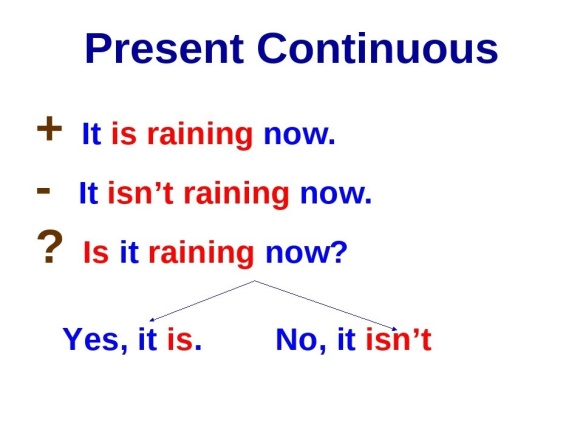
Ss close their books. Say: I am reading
now. Write it on the board. Underline I am reading. Explain that
this is the present continuous tense. Explain that we use the verb
to be and the main verb + ing to form the affirmative. Explain that
we use this tense to
talk about actions which are happening now. Ss open their books.
Ask Ss to read the table and say how we form the present
continuous.
Draw Ss' attention to the spelling rules
and elicit further examples.
Ex:
2 P:
112
•
Explain the task and read the example
aloud.
Allow Ss time to complete the task and
then check Ss' answers.
Elicit which season the sentences best
describe (summer).
Ex:3
P:
112
•Ss close their books. Say, then write on
the board:
I
am not sleeping now. Explain that this is the negative form of the present continuous.
Give examples for all
persons and explain that we form the negative form of the present
continuous with subject pronoun/noun + am/is/are + not + main verb
+ -ing.
Ss
open their books. Ask them to read the table and then elicit the L1
equivalents for the examples.
Ex:4
P:
112
Explain the task and
read the example aloud.
Ss complete the task.
Check Ss' answers around the class.
Ex:5
P:
112
Explain the task and
elicit answers from Ss around the class.
Conclusion during the lesson some tasks differentiated by
outcomes of the students and by their abilities.
|
• Learners read the
table. How do we form the present
continuous?
ANSWERS
We form the present continuous with: subject pronoun/ noun
+ am/is/are + main verb + -ing
•
Learners form complete
sentences. Use the present continuous.
ANSWERS
2 They're
sunbathing.
3 Erbol's reading a
book.
4 Nurgul's taking
photographs.
5 Mum's eating an ice
cream.
6 Aida and Azat are
playing football.
7 Nurlan's shopping for
souvenirs.
8 I'm making a
sandcastle
•
Learners read the table. Say the
examples in your language.
ANSWERS
Student’s own
answer
•
Learners write sentences, as in
the example
ANSWERS
2 Nurgazy isn't eating. He's
sunbathing.
3 Kanat and Saule aren't sleeping. They're
swimming.
4 Mum isn't watching TV. She's making a
cake.
5 Dad isn't reading his newspaper. He's
cooking.
•
Learners look at the picture.
Write as in the example. Use the present continuous
affirmative/negative.
ANSWERS
2 isn't running. She's
reading.
3 aren't swimming. They're making
sandcastles.
4 isn't reading a book. He's
sleeping/sunbathing.
5 aren't making a sandcastle. They're
eating sandwiches
|
Descriptor:
-
read the
table
-answer the
question.
Total: 2
point
Descriptor:
- complete
sentences
- use the present
continuous
Total: 1
poin
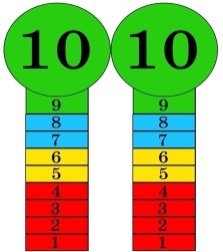
Descriptor:
- read the table
- say the examples in
your language
Total: 2
point
Descriptor:
- write
sentences,
- complete the
task
Total: 2
point
-Make CCQ questions Yes /
No
Descriptor:
- look at the
picture.
- write as in the
example
Total: 2
point
|

Card
Worksheet
Students book
|

 ЖИ көмекші


 Қауіпсіз төлем














 Бұл курс Қазақстан Республикасы Оқу-ағарту министрлігімен келісілген










