Short term plan: term 2
|
Unit 3: Our Countryside |
Lesson 28 |
||
|
Teacher name: |
Kenzhegulova A |
||
|
Date: |
12.11.2025 |
||
|
Grade: 6 |
Number present: |
absent: |
|
|
Lesson title |
Use of English: Present perfect |
||
|
Learning objectives |
6. 3. 7. 1 use subject-specific vocabulary and syntax within a range of general and academic topics 6. 5. 2. 1 to write down past experiences or real events, actions on some familiar general and educational topics with the support of the teacher; |
||
|
Lesson objectives |
Learners will be able to: - present the present perfect affirmative & negative - practise past participles - present the present perfect interrogative and short answers - the value based on the integrated educational program is to educate students for justice and responsibility |
||
|
Plan |
|||
|
Stages / Time |
Teachers actions |
Students actions |
Assessment criteria |
Resources |
|
Beginning of the lesson Warming-up
3 min
Pre-learning «Brainstorming» method 7 min. |
Organization moment : 1.Greeting. Ask about the weather. The teacher sets the lesson objectives, letting students know what to anticipate from the lesson. Warming up Where are you from? How old are you? What color is it? How many students are there in class? What day of the week today? revise the language from the previous lesson Dividing into groups: 1-group 2-group 3- group Lead – In
|
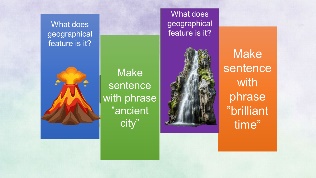
The aim: To develop pupils speaking skills and create friendly atmosphere Efficiency: By wishing each other they feel better and feel the support of others Students of the class are listed. Students' attention is drawn to the lesson. • Learners talk about daily routines previous lesson vocabulary Determines the topic and purpose of the lesson Students say different words from the picture |
The teacher to assess learners for their ability. “Good job! Well done!” Formative Assessment
Good job! Descriptor: - talk about daily routines Point 1 Assessment criteria - Learners have met the learning objectives if they can talk about natural features |
Pictures worksheet Student’s book |
|
Middle of the lesson Presentation part. 30 min |
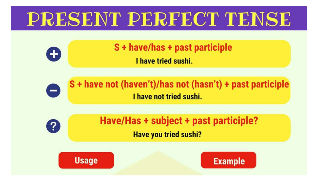
Task 1 https://www.educaplay.com/learning-resources/15539768-warm_up_activity.html • Explain that this verb is in the present perfect and elicit the form (affirmative subject personal pronoun + have/has + past participle, negative - subject personal pronoun + haven't/hasn't + past participle). • Explain that the past participles of regular verbs are formed by adding -ed to the end of the verb and that irregular verbs have their own forms. Text
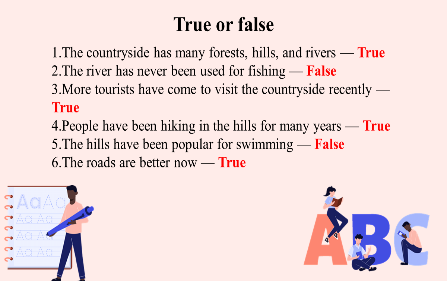
Pair Work TRUE or FALSE
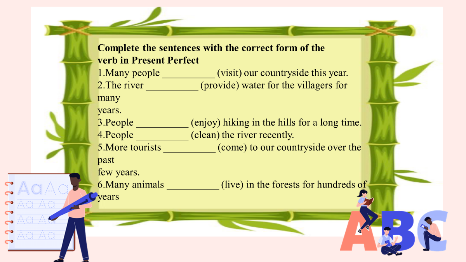
• Explain the task and go through the example. Pupils determine the correctness of the following sentences based on the text: Group Work • Explain the task and read out the example. Give Ss time to complete the sentences, then check Ss' answers
Warm-up Question for the text
1.Have you ever been to the countryside? Where did you go? 2.How many times have you visited a river or lake? 3.What changes have you noticed in the countryside in the last few years? 4.Have you ever seen any wild animals in the forest? Which ones? 5.Do you prefer live in countryside or in a city? |
•Pupils copy and complete the table. Use the words. ANSWERS 1 have been 2 has cooked 3 has travelled 4 has taken 5 have bought 6 have washed 7 haven’t watched 8 has printed 9 has sent 10 has arrived Pupils write the past participles of the verbs below. ANSWERS 1.The countryside has many forests, hills, and rivers — True 2.The river has never been used for fishing — False 3.More tourists have come to visit the countryside recently — True 4.People have been hiking in the hills for many years — True 5.The hills have been popular for swimming — False 6.The roads are better now — True ANSWERS 1 have visited 2 has provided 3 have enjoyed 4 have cleaned 5 have come 6 have lived •Pupils read the table. ANSWERS Students own answer. ANSWERS Students own answer. |
Descriptor: - copy and complete the table. - Use the words Total: 2 point
Descriptor: - write the past participles of the verbs below. Total: 2 point pupils are evaluated by collecting colour pencils Descriptor: - use the verbs in Ex 2 to complete sentences Total: 3 point
Descriptor: - read the table Total: 3 point Total: 10 point The teacher to assess learners for their ability. “Good job! Well done!” Formative Assessment
Good job! |
Students book |
|
End of the lesson 5 min |
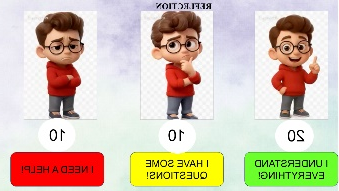
FEEDBACK Learners provide feedback on what they have learned at the lesson. Home task: Ex: 5 p 32 |
What worked well for you in today’s class? What could we have done differently to make today’s class better for you? What are you wondering about after today’s lesson? What did you find difficult about today’s lesson? |
|
|
жүктеу мүмкіндігіне ие боласыз
Бұл материал сайт қолданушысы жариялаған. Материалдың ішінде жазылған барлық ақпаратқа жауапкершілікті жариялаған қолданушы жауап береді. Ұстаз тілегі тек ақпаратты таратуға қолдау көрсетеді. Егер материал сіздің авторлық құқығыңызды бұзған болса немесе басқа да себептермен сайттан өшіру керек деп ойласаңыз осында жазыңыз
Use of English: Present perfect
Short term plan: term 2
|
Unit 3: Our Countryside |
Lesson 28 |
||
|
Teacher name: |
Kenzhegulova A |
||
|
Date: |
12.11.2025 |
||
|
Grade: 6 |
Number present: |
absent: |
|
|
Lesson title |
Use of English: Present perfect |
||
|
Learning objectives |
6. 3. 7. 1 use subject-specific vocabulary and syntax within a range of general and academic topics 6. 5. 2. 1 to write down past experiences or real events, actions on some familiar general and educational topics with the support of the teacher; |
||
|
Lesson objectives |
Learners will be able to: - present the present perfect affirmative & negative - practise past participles - present the present perfect interrogative and short answers - the value based on the integrated educational program is to educate students for justice and responsibility |
||
|
Plan |
|||
|
Stages / Time |
Teachers actions |
Students actions |
Assessment criteria |
Resources |
|
Beginning of the lesson Warming-up
3 min
Pre-learning «Brainstorming» method 7 min. |
Organization moment : 1.Greeting. Ask about the weather. The teacher sets the lesson objectives, letting students know what to anticipate from the lesson. Warming up Where are you from? How old are you? What color is it? How many students are there in class? What day of the week today? revise the language from the previous lesson Dividing into groups: 1-group 2-group 3- group Lead – In
|
The aim: To develop pupils speaking skills and create friendly atmosphere Efficiency: By wishing each other they feel better and feel the support of others Students of the class are listed. Students' attention is drawn to the lesson. • Learners talk about daily routines previous lesson vocabulary Determines the topic and purpose of the lesson Students say different words from the picture |
The teacher to assess learners for their ability. “Good job! Well done!” Formative Assessment
Good job! Descriptor: - talk about daily routines Point 1 Assessment criteria - Learners have met the learning objectives if they can talk about natural features |
Pictures worksheet Student’s book |
|
Middle of the lesson Presentation part. 30 min |
Task 1 https://www.educaplay.com/learning-resources/15539768-warm_up_activity.html • Explain that this verb is in the present perfect and elicit the form (affirmative subject personal pronoun + have/has + past participle, negative - subject personal pronoun + haven't/hasn't + past participle). • Explain that the past participles of regular verbs are formed by adding -ed to the end of the verb and that irregular verbs have their own forms. Text
Pair Work TRUE or FALSE
• Explain the task and go through the example. Pupils determine the correctness of the following sentences based on the text: Group Work • Explain the task and read out the example. Give Ss time to complete the sentences, then check Ss' answers
Warm-up Question for the text
1.Have you ever been to the countryside? Where did you go? 2.How many times have you visited a river or lake? 3.What changes have you noticed in the countryside in the last few years? 4.Have you ever seen any wild animals in the forest? Which ones? 5.Do you prefer live in countryside or in a city? |
•Pupils copy and complete the table. Use the words. ANSWERS 1 have been 2 has cooked 3 has travelled 4 has taken 5 have bought 6 have washed 7 haven’t watched 8 has printed 9 has sent 10 has arrived Pupils write the past participles of the verbs below. ANSWERS 1.The countryside has many forests, hills, and rivers — True 2.The river has never been used for fishing — False 3.More tourists have come to visit the countryside recently — True 4.People have been hiking in the hills for many years — True 5.The hills have been popular for swimming — False 6.The roads are better now — True ANSWERS 1 have visited 2 has provided 3 have enjoyed 4 have cleaned 5 have come 6 have lived •Pupils read the table. ANSWERS Students own answer. ANSWERS Students own answer. |
Descriptor: - copy and complete the table. - Use the words Total: 2 point
Descriptor: - write the past participles of the verbs below. Total: 2 point pupils are evaluated by collecting colour pencils Descriptor: - use the verbs in Ex 2 to complete sentences Total: 3 point
Descriptor: - read the table Total: 3 point Total: 10 point The teacher to assess learners for their ability. “Good job! Well done!” Formative Assessment
Good job! |
Students book |
|
End of the lesson 5 min |
FEEDBACK Learners provide feedback on what they have learned at the lesson. Home task: Ex: 5 p 32 |
What worked well for you in today’s class? What could we have done differently to make today’s class better for you? What are you wondering about after today’s lesson? What did you find difficult about today’s lesson? |
|
|
шағым қалдыра аласыз