
 ЖИ көмекші


 Қауіпсіз төлем

жүктеу мүмкіндігіне ие боласыз
Бұл материал сайт қолданушысы жариялаған. Материалдың ішінде жазылған барлық ақпаратқа жауапкершілікті жариялаған қолданушы жауап береді. Ұстаз тілегі тек ақпаратты таратуға қолдау көрсетеді. Егер материал сіздің авторлық құқығыңызды бұзған болса немесе басқа да себептермен сайттан өшіру керек деп ойласаңыз осында жазыңыз
 18 Қараша 2018
 573

1 жыл бойы шексіз жүктеңіз
Valence. Chemical formula
CLIL-LESSON PLAN
|
Communication Vocabulary |
Examples of communication |
|
Revisited: atoms and molecule, chemical; element. New: Chemical formula, compound, Constant valence Valence Valence electron Variable valence Structures: What do you think… … might/ may/ could/ can be … How/what about … …. сontains…. …. is important because …. Functions: exchanging ideas |
Sharing ideas about valence and chemical formula; Reporting why some chemicals have formula. |
|
Cognition Findying the valence of elements; Predicting and reasoning; |
Examples of cognition Guessing a constant and variable valence of some elements; Ending the chemical reaction and making the chemical formula of compounds. |
|
Culture Be aware of the role of some chemical substances in human life |
Examples of culture Ss explain the using some chemicals and their properties. |
|
Subject: |
Cognitive Chemistry |
|||||||||||||||||
|
Theme: |
Valence. Chemical formula |
|||||||||||||||||
|
Grade: |
8 “A” |
|||||||||||||||||
|
Date: |
The 3rd of October. |
Time: |
40 min |
|||||||||||||||
|
Location: |
21 |
Number |
Present: |
|
||||||||||||||
|
Absent: |
|
|||||||||||||||||
|
Lesson objectives: |
-to be able to explain the valence by using Periodic table - to be able to identify constant and variable valence of elements - to be able to use Lewis diagram to represent paired and unpaired electrons in an atom. - to be able to find chemical formula of compounds - to be able to find the formula of ionic compounds |
|||||||||||||||||
|
Achievement criteria: |
Students should be able to: - explain the valence by using Periodic table - identify constant and variable valence of elements - find chemical formula of compounds - find the formula of ionic compounds |
|||||||||||||||||
|
CLIL focus/Language objectives: |
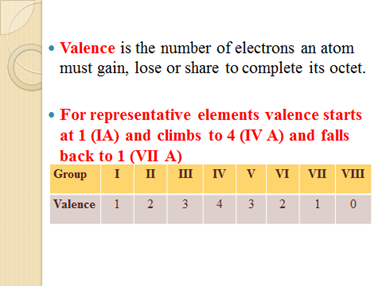
Subject-specific vocabulary & terminology: Valence, chemical formula, index, coefficient, Lewis diagrams, valence electrons, compound. Useful sets of phrases for dialogue and writing: We can determine the formula of a compound by completing Lewis diagrams and ‘valence’. Valence is the number of electrons an atom must gain, lose or share to complete its octet. For representative elements valence starts at 1 (IA) and climbs to 4 (IV A) and falls back to 1 (VII A). |
|||||||||||||||||
|
Values instilled at the lesson: |
Collaboration when working in groups, respect each other’s answers. |
|||||||||||||||||
|
Any Cross-curricular links? |
Math |
|||||||||||||||||
|
Previous learning: |
Atoms and molecule |
|||||||||||||||||
|
Resources: |
Cards. Presentation. |
|||||||||||||||||
|
|
||||||||||||||||||
|
Lesson procedure |
||||||||||||||||||
|
Lesson stage |
Tasks and Exercises |
Notes |
||||||||||||||||
|
(Beginning) Greeting / warm-up:
|
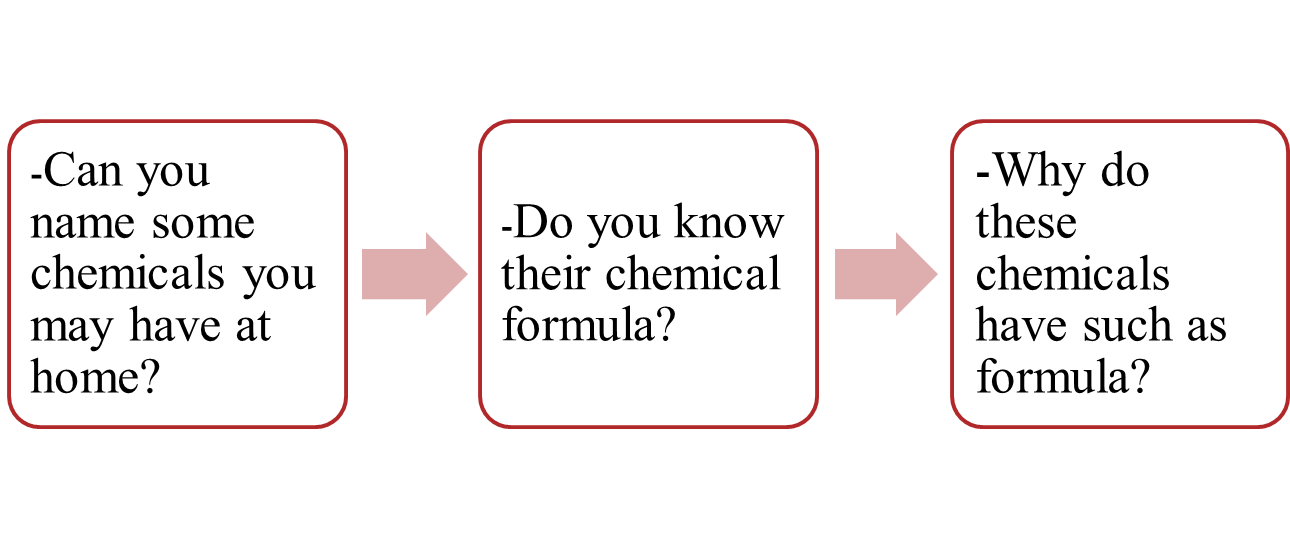
Welcome to my lesson. Today it is chemistry. Let’s start our lesson. At the beginning my lesson I’ll divide students into three groups by using coloured cards (green, blue and red). Brainstorming (S-S) Then I’ll ask them:
(T-S): But now the question to you. What do you think our lesson today? What is the topic? (T): I’ll tell theme of the lesson. Today we are going to study valence and chemical formula. Teacher says the lesson objectives |
|
||||||||||||||||
|
Pre-reading (To activate prior knowledge ) |
(S-S)Let’s revise our previous topic ‘Atoms and molecule’ QUIZ 1. Which of these is the smallest particle? A) An atom B) A molecule C) A speck of dust 2. Which of these is the correct symbol for magnesium? A) MG B) mg C) Mg 3. Approximately how many elements are there? A) 100 B) 4 C) 1,000,000 4. Which one is a compound? A) Water B) Hydrogen C) Helium 5. Which of these contains two carbon atoms and six hydrogen atoms? A) CH4 B) C2H6 C) C2H4 6. How many atoms are there in total in a molecule of sulfur trioxide, SO3? A) Two B) Three C)Four Students work individually. Then they check each other. Answer: 1. A 2. C 3. A 4. A 5. B 6. C |
|||||||||||||||||
|
(Middle) Presentation of the new topic: |
(T): explains the new topic.
To check students understanding: (Communication) (T-S):Students need to match halves of sentences by using English grammar.
Students discuss topic in groups. Then I explain how to find the chemical formula of compounds and valence. |
|
||||||||||||||||
|
Description of the tasks and exercises:
|
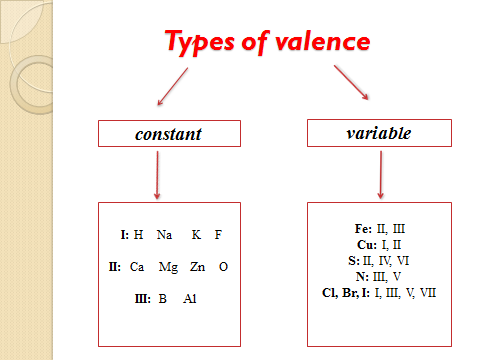
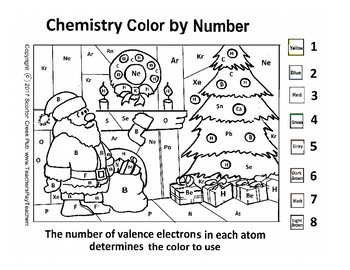
Task №1 (LOTS) (S) Find the valence electrons of elements and color them. (Cognition)
Discriptor: -student can find the valence electrons -student can determine constant and variable valence And now we have a short break. Stand up. Move your fingers. At the same time you’re moving your fingers, move your arms. Now move your shoulders and arms. Stop moving yours arms. Move one leg and then the other leg. Sit down again. Let’s continue. Now, you will do task №2 (T-S-SS): Does everyone love pie? (Communication. Cognition) If you love pie, you need to help me to make chemical pie. End the chemical reaction by using valence and find the ingredients (reactants) and product. Students need to end the chemical reaction and complete the pie. 1-group: 2-group: 3-group: 1.Al + O2 = 3.H2 + O2= 5.Fe + Cl2 = 2.H2 + Cl2 = 4.Cu + S = 6.Ca + S =
Discriptor: -student can finish the reaction -student can find the chemical formula of compounds -student can balance the reaction |
|
||||||||||||||||
|
End |
(SS) Students check each other. (Communication) They ask questions each other (every group need to prepare 2 questions) to summarise the lesson. |
|
||||||||||||||||
|
Reflection (Feedback) |
(T-S)Students complete feedback (coloured cards), what objectives they have achieved from this lesson:
|
|
||||||||||||||||
|
Praising students: |
|
|
||||||||||||||||











 Бұл курс Қазақстан Республикасы Оқу-ағарту министрлігімен келісілген










