1.Warm-up activities
My favourite
things
Everyone loves talking about things they love. Choose 1-3
categories connected to the topic of the lesson and elicit some
ideas.
For example, the topic is Travelling.
My favourite summer destination
is…
My favourite place to stay
is…
My favourite activity when I’m on holiday
is….
If you have more time, students can ask/give more details.
Chain
Fairytale
This is a fun writing warm-up. Everyone has a piece of paper and
writes the first sentence or two to start a fairytale (not one that
already exists).
Example:
Once upon a time there was a frog that had no legs. He wanted to
get married, but there were no female legless frogs in the
land.
After one minute the leader will say "SWITCH". At this time the
writers have to put down their pens and pass the papers. They
cannot finish their sentences. Then, the next writers will continue
the story. After about ten minutes you will have as many silly
stories to read as you have club members. The leader should warn
the writers that they will soon have to wrap-up the story during
the last two minutes so that each story has a conclusion. Read all
of the stories out loud for a good laugh. You can extend this
activity by trying to edit each other's writing and spelling
errors.
Can't Say Yes or
No
In this game everyone is given a certain number of coins or squares
of paper (about 10). Everyone moves around the room starting
conversations and asking each other questions. The only rule is
that you cannot say the words YES or NO. If you accidentally say
one of these words, you have to give a coin or square to the person
who you said it to. Try to trick each other by asking questions
that you would almost always answer with a yes or no. Think of
other ways to trick your friends. Sometimes asking two quick
questions in a row works well. (Especially tag questions: Are you
new here? This is your first time in America, isn't it?). This game
is a great way to practise using small talk and to add variety to
your vocabulary. It also makes everyone laugh.
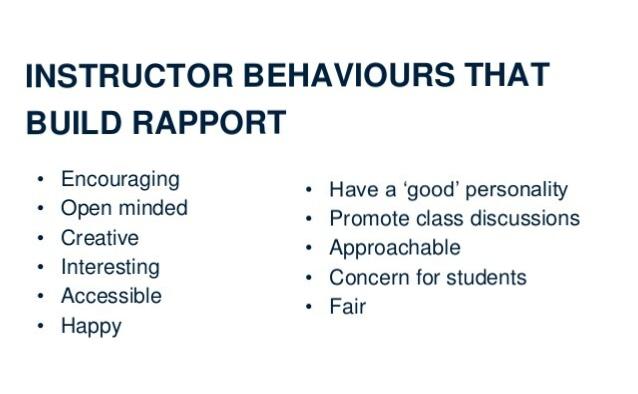
2.Rapport in
language learning refers to the relationship between the teacher
and the learners. Teachers try to build good rapport with the
learners in order to produce an environment that will help
learning.
Building rapport
■ Making eye contact with the students
■ Using students’ names
■ Letting students know it’s OK to make mistakes
■ encouraging and giving praise

 ЖИ көмекші


 Қауіпсіз төлем













 Бұл курс Қазақстан Республикасы Оқу-ағарту министрлігімен келісілген










