|
Long-term plan
unit:
1 All about
me
|
School:
№49
|
|
Date:
|
Teacher name:
Bectenova S.E
|
|
Grades: 2
|
Number
present:
|
absent:
|
|
Theme of the
lesson: What can you
do?
|
|
Learning
objectives(s) that this lesson is contributing
to
|
2.L1 understand a
range of short basic supported classroom
instructions
2.S8 give simple
instructions for others to
follow
2.UE13 use can to
talk about ability and to make requests and offers; use can / can’t
to talk about permission
|
|
Lesson
objectives
|
All learners will
be able to:
Greet each other, ask question
and reply
|
|
Most learners
will be able to:
Ask
Question and reply
|
|
Some learners
will be able to:
Make up a
dialogue
|
|
Previous
learning
|
I can... I cant… He/ She
can… He/
She cant…
|
|
Plan
|
|
Planned
timings
|
Planned activities (replace
the notes below with your planned
activities)
|
Resources
|
|
Beginning the
lesson
|
-
Greeting:
-Hello
- How are
you?
- I'm fine, thanks! And
you?
|
Procedural
questions:
Who is on duty
today?
Is anybody here? Who
is absent?
|
|
- Positive
atmosphere:
I wish you were happy,
healthy, wealthy and lucky!
|
Make a big circle
and wish your best wishes!
|
|
-
Dividing into subgroups:
|
Smart
beiges
|
|
- Revising the
previous lesson:
Good morning , good afternoon,
good evening, good night, good bye, good day, hello,
hi!
|
Concept
Questions:
What did we learn at
the previous lesson? Who can tell me about the previous
lesson? What was your homework for
today?
|
|
Middle
|
What can you
do?
REVISION
Pupils recognize
simple action verbs.
Pupils watch a
video. Teacher uses different groups of learners at front of class
and give them different Can you do
this?
challenges
DEMONSTRATION
Pupils respond to
basic questions.
Teacher: Watch and
listen to a video presentation and tick on the worksheet what you
can do it and put a cross what you can’t do it. Answer the
questions:
What can you
do?
What can’t you
do?
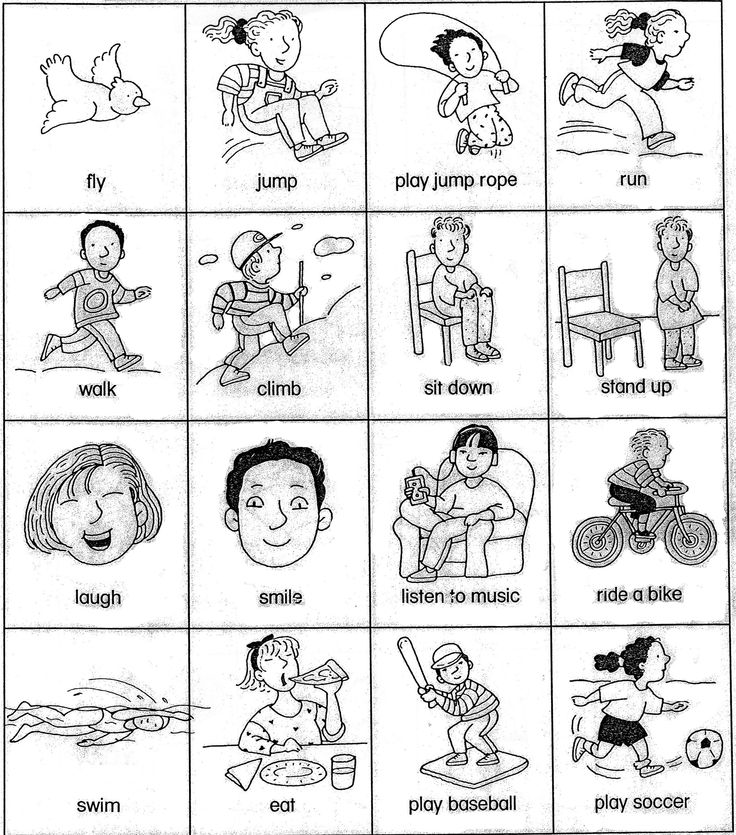
SPEAKING
Pupils ask and
respond to questions.
-
Learners ask each other in
pairs about what they can do
e.g.
Can you swim? -
Yes, I can.
Can you climb a
tree? - No, I can’t
2.Teacher then asks questions
around the class about what learners’ partners can do
e.g.
Leila, can Oljas
ride a bike? - No, Oljas can’t ride a
bike.
Teacher varies
questions by asking confirming questions e.g.
Is that true Oljas? Can you
ride a bike? - No, I
can’t.
PHYSICAL
ACTION
Children sing a song
and mime actions.
FORMAIVE
ASSESSMENT
Teacher: Listen and
colour. Blue- He can jump. Yellow – she can stand. Orange – she can
crawl. Green – He can walk. Purple – She can sleep. Black- He can
run. Red – They can sing. White - He can read. Pink – They can sit.
Brown – He can write. Grey – It can swim.
Beige – He can’t
fly.
|
https://www.youtube.com/watch?v=qI7nYvVXudo
Song I
can
http://learnenglishkids.britishcouncil.org/ru/songs/i-can-run
|
|
End
|
RELAXATION
Children sing a
song
Can An Elephant
Jump?
FEEDBACK
Well, what did we do in our
lesson?
-
Evaluation of the
lesson
-
Give the home
task
|
Song Can An Elephant
Jump?
https://www.youtube.com/watch?v=GA6dKNsl6zk
|
|
Additional
information
|
|
Differentiation –
how do you plan to give more support? How do you plan to challenge
the more able learners?
|
Differentiation –
how do you plan to give more support? How do you plan to challenge
the more able learners?
|
Differentiation –
how do you plan to give more support? How do you plan to challenge
the more able learners?
|
|
More support will be
given to weaker learners by giving them a modified worksheets in
some tasks with greater
support
|
Through formative
assessment
|
Use video 5-10
min
|

 ЖИ көмекші


 Қауіпсіз төлем













 Бұл курс Қазақстан Республикасы Оқу-ағарту министрлігімен келісілген










