ЖИ көмекші





Презентация

 Жүктеу
#1 слайд
Z H U N U S OVA AY D I N A 9 B 0 8 . 1 2 . 2 0Our planet Earth
Earth and our place in
it
1 слайд
Z H U N U S OVA AY D I N A 9 B 0 8 . 1 2 . 2 0Our planet Earth Earth and our place in it
#2 слайд
Today, our planet is in serious danger. Acid rains, global warming, air and water
pollution, overpopulation are the problems that threaten human life on Earth.
Who is to blame for the disaster? The answer is simple: all of us. Our forests are
disappearing because they are cut down or burnt. If this trend continues, one day
we won't have enough oxygen to breathe.
The seas are in danger. They are filled with poison: industrial and nuclear waste,
chemical fertilisers and pesticides. The Mediterranean is already nearly dead; the
North Sea is following. The Aral Sea is on the brink of extinction. If nothing is
done about it, one day nothing will be able to live in the seas.
Every ten minutes one kind of animal, plant or insect dies out for ever. If nothing
is done about it, one million species that are alive today may soon become
extinct.
Air pollution is another serious problem. In Cairo just breathing the air is
dangerous — equivalent to smoking two packs of cigarettes a day. The same
holds true for many Russian cities. Factories emit tons of harmful chemicals.
These emissions have disastrous consequences for our planet. They are the main
reason for the greenhouse effect and acid rains. An even greater threat are
nuclear power stations. We all know how tragic the consequences of the
Chernobyl disaster are.
Fortunately, it's not too late to solve these problems. We have the time, the
money and even the technology to make our planet a better, cleaner and safer
place. We can plant trees and create parks for endangered species. We can
recycle litter. We can support green parties and put pressure on those in power.
Together we can save the planet and all of us with it.The planet Earth is only a tiny part of the
universe, but it's the only place where human
beings can live.
2 слайд
Today, our planet is in serious danger. Acid rains, global warming, air and water pollution, overpopulation are the problems that threaten human life on Earth. Who is to blame for the disaster? The answer is simple: all of us. Our forests are disappearing because they are cut down or burnt. If this trend continues, one day we won't have enough oxygen to breathe. The seas are in danger. They are filled with poison: industrial and nuclear waste, chemical fertilisers and pesticides. The Mediterranean is already nearly dead; the North Sea is following. The Aral Sea is on the brink of extinction. If nothing is done about it, one day nothing will be able to live in the seas. Every ten minutes one kind of animal, plant or insect dies out for ever. If nothing is done about it, one million species that are alive today may soon become extinct. Air pollution is another serious problem. In Cairo just breathing the air is dangerous — equivalent to smoking two packs of cigarettes a day. The same holds true for many Russian cities. Factories emit tons of harmful chemicals. These emissions have disastrous consequences for our planet. They are the main reason for the greenhouse effect and acid rains. An even greater threat are nuclear power stations. We all know how tragic the consequences of the Chernobyl disaster are. Fortunately, it's not too late to solve these problems. We have the time, the money and even the technology to make our planet a better, cleaner and safer place. We can plant trees and create parks for endangered species. We can recycle litter. We can support green parties and put pressure on those in power. Together we can save the planet and all of us with it.The planet Earth is only a tiny part of the universe, but it's the only place where human beings can live.
#3 слайд
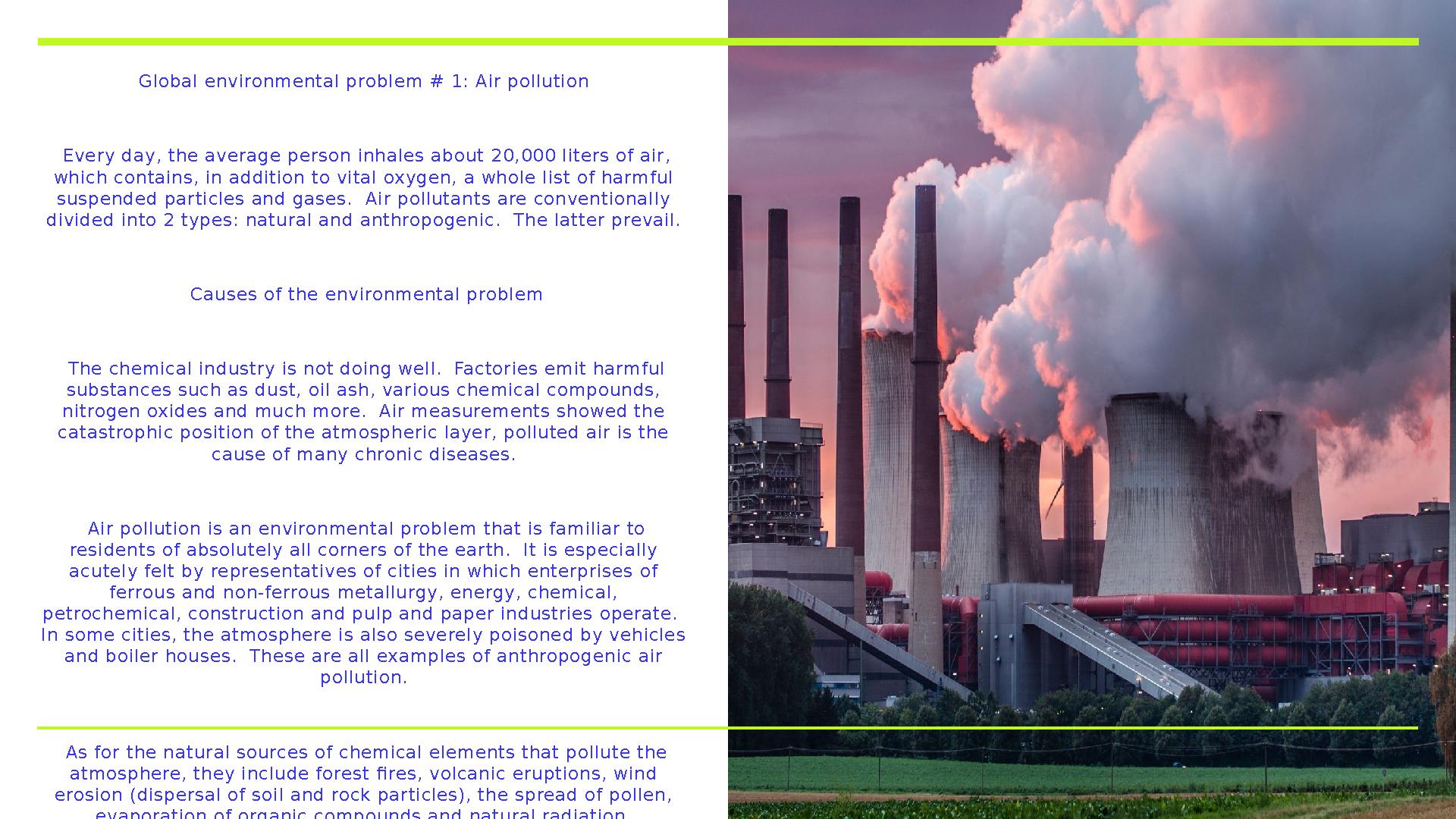
Global environmental problem # 1: Air pollution
Every day, the average person inhales about 20,000 liters of air,
which contains, in addition to vital oxygen, a whole list of harmful
suspended particles and gases. Air pollutants are conventionally
divided into 2 types: natural and anthropogenic. The latter prevail.
Causes of the environmental problem
The chemical industry is not doing well. Factories emit harmful
substances such as dust, oil ash, various chemical compounds,
nitrogen oxides and much more. Air measurements showed the
catastrophic position of the atmospheric layer, polluted air is the
cause of many chronic diseases.
Air pollution is an environmental problem that is familiar to
residents of absolutely all corners of the earth. It is especially
acutely felt by representatives of cities in which enterprises of
ferrous and non-ferrous metallurgy, energy, chemical,
petrochemical, construction and pulp and paper industries operate.
In some cities, the atmosphere is also severely poisoned by vehicles
and boiler houses. These are all examples of anthropogenic air
pollution.
As for the natural sources of chemical elements that pollute the
atmosphere, they include forest fi res, volcanic eruptions, wind
erosion (dispersal of soil and rock particles), the spread of pollen,
evaporation of organic compounds and natural radiation.
3 слайд
Global environmental problem # 1: Air pollution Every day, the average person inhales about 20,000 liters of air, which contains, in addition to vital oxygen, a whole list of harmful suspended particles and gases. Air pollutants are conventionally divided into 2 types: natural and anthropogenic. The latter prevail. Causes of the environmental problem The chemical industry is not doing well. Factories emit harmful substances such as dust, oil ash, various chemical compounds, nitrogen oxides and much more. Air measurements showed the catastrophic position of the atmospheric layer, polluted air is the cause of many chronic diseases. Air pollution is an environmental problem that is familiar to residents of absolutely all corners of the earth. It is especially acutely felt by representatives of cities in which enterprises of ferrous and non-ferrous metallurgy, energy, chemical, petrochemical, construction and pulp and paper industries operate. In some cities, the atmosphere is also severely poisoned by vehicles and boiler houses. These are all examples of anthropogenic air pollution. As for the natural sources of chemical elements that pollute the atmosphere, they include forest fi res, volcanic eruptions, wind erosion (dispersal of soil and rock particles), the spread of pollen, evaporation of organic compounds and natural radiation.
#4 слайд
To date, 107 species of mammals and 160 species of birds
have irrevocably disappeared; 53 of them are victims of
natural changes, and 214 are human victims. It would be
appropriate to recall that over 600 species of vertebrates are
currently under the threat of extinction on our planet. Due to
the expansion of human economic activity and a number of
other factors, zebra-quagga, blue antelope, giant llama, Atlas
bear, cave lion, tur (primitive bull), tarpan, sea cow, wild
donkey, giant deer, wingless loon, crested sheath, epiornis,
more than 20 subspecies of moa, dodos, Labrador eider,
Caroline parrot and 10 species of other parrots, 25 species of
the passerine family, 4 species of starlings, hundreds of other
mammals, amphibians, reptiles ...
4 слайд
To date, 107 species of mammals and 160 species of birds have irrevocably disappeared; 53 of them are victims of natural changes, and 214 are human victims. It would be appropriate to recall that over 600 species of vertebrates are currently under the threat of extinction on our planet. Due to the expansion of human economic activity and a number of other factors, zebra-quagga, blue antelope, giant llama, Atlas bear, cave lion, tur (primitive bull), tarpan, sea cow, wild donkey, giant deer, wingless loon, crested sheath, epiornis, more than 20 subspecies of moa, dodos, Labrador eider, Caroline parrot and 10 species of other parrots, 25 species of the passerine family, 4 species of starlings, hundreds of other mammals, amphibians, reptiles ...
#5 слайд
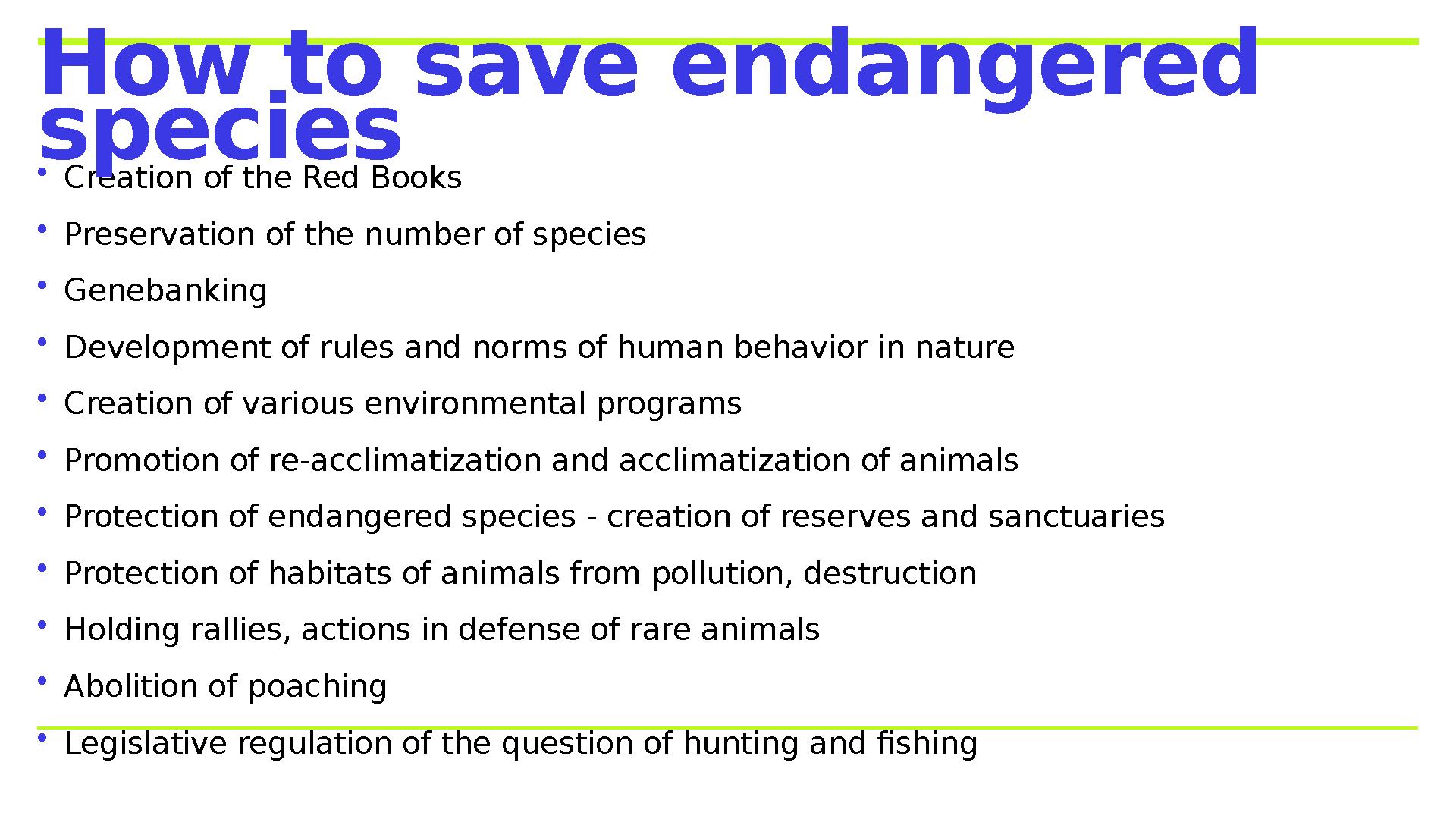
•
Creation of the Red Books
•
Preservation of the number of species
•
Genebanking
•
Development of rules and norms of human behavior in nature
•
Creation of various environmental programs
•
Promotion of re-acclimatization and acclimatization of animals
•
Protection of endangered species - creation of reserves and sanctuaries
•
Protection of habitats of animals from pollution, destruction
•
Holding rallies, actions in defense of rare animals
•
Abolition of poaching
•
Legislative regulation of the question of hunting and fishingHow to save endangered
species
5 слайд
• Creation of the Red Books • Preservation of the number of species • Genebanking • Development of rules and norms of human behavior in nature • Creation of various environmental programs • Promotion of re-acclimatization and acclimatization of animals • Protection of endangered species - creation of reserves and sanctuaries • Protection of habitats of animals from pollution, destruction • Holding rallies, actions in defense of rare animals • Abolition of poaching • Legislative regulation of the question of hunting and fishingHow to save endangered species


 Жүктеу
шағым қалдыра аласыз
 Бұл курс Қазақстан Республикасы Оқу-ағарту министрлігімен келісілген