|
Beginning of the
lesson
Warming-up

3
min
Pre-learning
«Brainstorming»
method
7 min.
|
Organization moment
:
1.Greeting.
Ask about the weather.
The teacher sets the lesson objectives, letting students
know what to anticipate from the
lesson.
Warming
up
Where are you
from?
How old are
you?
What color is
it?
How many students
are there in class?
What day of the week
today?
Revise the language of the previous
lesson.
Lead –
In
|
The aim:
To develop pupils speaking skills and create
friendly atmosphere
Efficiency:
By wishing each other they feel better and feel
the support of others
Students of the class are
listed.
Students' attention is drawn to the
lesson.
• Learners write the numbers from previous
lesson
Determines the topic and purpose of the
lesson
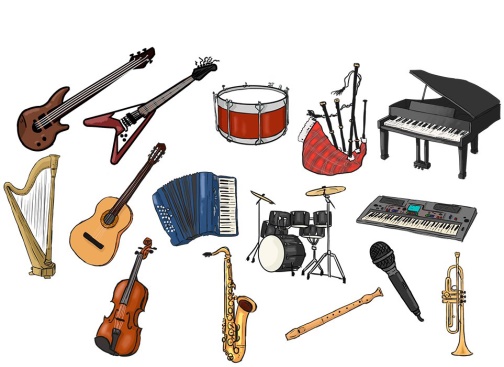
Students say different words from the
picture
|
The teacher to assess learners for
their ability.
“Good
job!
Well
done!”
Formative
Assessment

Good
job!
Descriptor:
-know key
phrases
- know
vocabulary of previous lesson
Total: 1
point
Assessment
criteria
-
Learners
have met the learning objectives if they can: To talk about musical
instruments
|
Pictures
worksheet
Student’s
book
|
|
Middle of the
lesson
Presentation
part.
30
min
|
Ex: 1 P:
71
• Play the recording. Ss listen and
number the ethnic music extracts in the order they hear
them.
Check Ss
answers.
Ex:2a
P:71
• Explain the
task and write the headings on the board. Explain/Elicit what the
headings mean.
• Brainstorm
with the class for as many musical instruments as you can think of
and write them on the board under the headings. Ss copy the lists
into their notebooks,
Ex: 2b P:
71
• Direct Ss'
attention to the pictures and elicit Ss guesses in answer to the
questions in the rubric.
• Play the
recording. Ss listen and follow the texts in their books and find
out.
Ex: 3 P:
71
•Explain the
task and read the example aloud and elicit answers from Ss around
the class.
Ex: 4 P:
71
• Explain the
task. Ss work in pairs.
• Elicit a
variety of answers from various pairs around the class and then
choose two Ss to describe the two
instruments.
Conclusion
during the lesson some tasks differentiated by
outcomes of the students and by their
abilities.
|
Pupils
listen to the music extract. Match them to their
origins.
ANSWERS
a 6 b 3 c 7 d 4 e 8 f 1 g 5 h 2 i
9
Pupils name
some musical instruments. List them under the
headings.
ANSWERS
wind: trumpet, trombone, recorder,
oboe, clarinet,
bassoon
string: violin, cello, viola, double
bass, guitar
percussion: piano, drums, cymbals,
tambourine, bells,
triangle
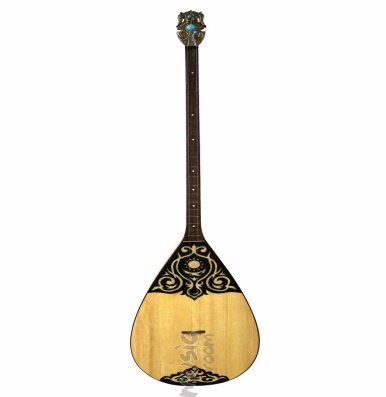
.Pupils look at the musical instruments in
the pictures. Answer the question.
ANSWERS
The
dombra is a string instrument and the tin whistle is a wind
instrument. The dombra is from Kazakhstan and the tin whistle is
from Ireland. They are still played
nowadays
Pupils find
all the passive sentences in the text. Rewrite them as
active
ANSWERS
It
is called... (passive) - People/They call it... (active) the
strings were made... (passive) - people made the strings...
(active)
nylon ones are used... (passive) - people use
nylon ones ... (active)
Pupils say
four things you have learnt from the text.
ANSWERS
1
The dombra is a string instrument from
Kazakhstan.
2
The tin whistle is a wind instrument from
Ireland.
3
Some bands use electric
dombras.
4
The theme tune from the film 'Titanic' had a tin whistle in
it.
|
Descriptor:
- listen to the music
extract
- match them to their
origins
Total: 2
point
Descriptor:
- name some musical
instruments
- list them under the
headings.
Total: 2
point
Descriptor:
- look at the musical
instruments
- answer the
question.
Total: 2
point
Descriptor:
- find all the passive
sentences
- rewrite
them as active
Total: 2
point
Descriptor:
- say four things you have
learnt
- describe
the two instruments.
Total: 2
point
-Make CCQ questions Yes /
No
|

Card
Worksheet
Students
book
|

 ЖИ көмекші


 Қауіпсіз төлем
















 Бұл курс Қазақстан Республикасы Оқу-ағарту министрлігімен келісілген