
 ЖИ көмекші


жүктеу мүмкіндігіне ие боласыз
Бұл материал сайт қолданушысы жариялаған. Материалдың ішінде жазылған барлық ақпаратқа жауапкершілікті жариялаған қолданушы жауап береді. Ұстаз тілегі тек ақпаратты таратуға қолдау көрсетеді. Егер материал сіздің авторлық құқығыңызды бұзған болса немесе басқа да себептермен сайттан өшіру керек деп ойласаңыз осында жазыңыз
 16 Ақпан 2025
 112
112
Ағылшын тілін үйренейік
Short term plan
|
Unit of a long term plan: Space and earth |
|
|
|
Teacher name: |
|
|
|
Date: |
|
|
|
Grade: 7 |
Number present: |
absent: |
|
Lesson title |
Geographical features |
|
|
Learning objectives |
7.2.4.1 understand with limited support the main points of extended talk on a range of general and curricular topics 7.2.5.1 understand most specific information and detail of supported, extended talk on a range general and curricular topics 7.5.6.1 link, with minimal support, sentences into coherent paragraphs using basic connectors on a growing range of familiar general topics |
|
|
Lesson objectives |
Learners will be able to: • Learn words for geographical features. • Listen to a conversation about a dangerous journey. • Listen for general meaning and specific details. |
|
|
Value links |
Open-Mindedness – An open-minded person is someone who is always willing to hear new points of view and even change their own point of view if new arguments are highly convincing. It’s the opposite of stubbornness. |
|
|
Plan |
||
|
Stages / Time |
Teachers actions |
Students actions |
Assessment criteria |
Resources |
|
Beginning of the lesson Warming-up 3 min
|
Organization moment : 1.Greeting. Ask about the weather. Warm-up • With books closed, ask students if there are any famous mountains, lakes or rivers in their country Lead - In
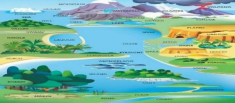
Natural geographic features include landforms and ecosystems.Landforms are types of terrain and bodies of water. Different types of terrain include hills, valleys, cliffs, beaches, rivers and canyons. These can be further divided into major landforms and minor landforms. The four major types are mountains, hills, plateaus and plains. |
“The wish flower” method helps to start the lesson with good wishes to each other. The aim: To develop Ss speaking skills and create fndly atmosphere Efficiency: By wishing each other they feel better and feel the support of others
Students say different words from the picture |
At the organization moment T tries to award active Ss. «The praise» method is used to evaluate Ss with phrases like: “Good job! Well done!”
Formative Assessment
Good job! |
Pictures
PPT
worksheets
Student’s book |
|
Middle of the lesson Presentation part. 37 min
|
Ex:1 P:54 • Students check the meaning of the words in the box if necessary, then use them to complete the place names. • Play the CD for students to check their answers. • Model and drill the pronunciation of any words that are new to students.
Differentiation: «Verbal support» method is used to help Students use new words in the text.
Ex: 2 P: 54 •Do the first sentence with the class as an example. • Students work in pairs to complete the sentences. In a weaker class, you could offer support by giving the first letter of the answer each time. In a stronger class, if there are any questions they do not know, refer them to reference material or the internet to find out the answers.
Ex: 3 P: 54 • Explain to students that they are going to listen to a conversation between two girls about a daring adventure. • Tell students to read all the options before they listen.
Ex: 4 P: 54 • Explain to students that they are now going to listen again more carefully for more specific details. • Allow students time to read through the questions and all the options. In a stronger class, encourage students to choose answers from memory before you play the CD. |
Students complete the names of places with the words in the box. ANSWERS : 2 Lake 7 Desert 3 Pole 8 Falls 4 Mountains 9 Sea 5 Forest 10 Ocean 6 River
Students work in pairs. Complete the sentences with the words in exercise 1 ANSWERS : 1 mountains 4 Ocean 2 Desert 5 Sea 3 Pole 6 river / forest
Students listen to Laura and Emily’s story. Which trip did they make? ANSWERS: C
Students choose the correct answers. ANSWERS: 1 c. 2 b 3 b 4 c 5 a |
Assessment criteria - Learn words for geographical features.
Descriptor: - complete the names of places
Assessment criteria: - Listen to a conversation about a dangerous journey.
Descriptor: - listen to Laura and Emily’s story
-Make CCQ questions Yes / No |
CD 1
Cards
Worksheet
Students book
|
|
End of the lesson 5 min
|
Home task: Ex: 2 P: 40 WB |
|
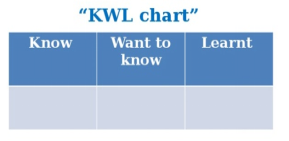
Poster Success KWL chart
|
|





Short term plan
|
Unit of a long term plan: Space and Earth |
|
|
|
Teacher name: |
|
|
|
Date: |
|
|
|
Grade: 7 |
Number present: |
absent: |
|
Lesson title |
Past Continuous: questions |
|
|
Learning objectives |
7.6.10.1 use present continuous forms with present and future meaning and past continuous forms for background and interrupted past actions on a limited range of familiar general and curricular topics |
|
|
Lesson objectives |
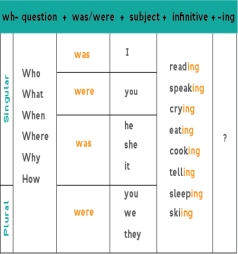
Learners will be able to: • Learn the question forms of the past continuous. • Write questions using the past continuous. • Learn the rules for using the past simple and past continuous.. • Practise using the past simple and past continuous |
|
|
Value links |
Open-Mindedness – An open-minded person is someone who is always willing to hear new points of view and even change their own point of view if new arguments are highly convincing. It’s the opposite of stubbornness. |
|
|
Plan |
||
|
Stages / Time |
Teachers actions |
Students actions |
Assessment criteria |
Resources |
|
Beginning of the lesson Warming-up 3 min
|
Organization moment : 1.Greeting. Ask about the weather. Warm-up • Refer students back to exercise 4 on page 42. • Focus on the verb forms and elicit that some use the past continuous form. Tell students they are going to practise forming questions in the past continuous. Lead - In
|
“The wish flower” method helps to start the lesson with good wishes to each other. The aim: To develop Ss speaking skills and create fndly atmosphere Efficiency: By wishing each other they feel better and feel the support of others
Students say different words from the past |
At the organization moment T tries to award active Ss. «The praise» method is used to evaluate Ss with phrases like: “Good job! Well done!”
Formative Assessment
Good job! |
Grammar table
PPT
Student’s book |
|
Middle of the lesson Presentation part. 37 min
|
Ex:1 P:55 • Remind students to read through all the options before they start to match the questions and answers.
Differentiation: «Verbal support» method is used to help Students use new words in the text.
Ex: 2 P: 55 • Students complete the questions using the past continuous, then write answers based on the information provided in the recording in the previous lesson.
Ex: 3 P: 55 • Students write the questions and answers individually, then ask and answer giving true information with a partner |
Students match questions with answers. ANSWERS 1 e 2 f 3 c 4 b 5 d 6 a Students write questions and answers about Laura and Emily’s trip using the past continuous. ANSWERS 1 Were, skiing; Yes, they were. 2 Was, swimming; No, she wasn’t. 3 were, cycling; They were cycling across the United States and into Central America. 4 were, sailing; They were sailing to Ecuador. 5 was waiting; Their families were waiting for them Students write questions using past continuous. Then ask and answer the questions with a partner. ANSWERS 1 What were you doing at 6.30 yesterday evening? 2 Were you and your family having breakfast at 7.30 a.m.? 3 What were your parents doing at 8.30 a.m. yesterday? 4 Were you walking to school at 8 o’clock? 5 Where were you sitting at 9.30 yesterday morning? 6 Who was sitting next to you in your English lesson last week? Students’ own answers. |
Assessment criteria - Learn the question forms of the past continuous.
Descriptor: - match questions with answers
Assessment criteria: - Write questions using the past continuous
Descriptor: - write questions and answers about Laura and Emily’s trip using the past continuous
-Make CCQ questions Yes / No |
Worksheet
Students book
|
|
End of the lesson 5 min
|
Home task: Ex: 2 P: 41 WB |
|
Poster Success KWL chart
|
|
Short term plan
|
Unit of a long term plan: Space and Earth |
|
|
|
Teacher name: |
|
|
|
Date: |
|
|
|
Grade: 7 |
Number present: |
absent: |
|
Lesson title |
Expressing interest |
|
|
Learning objectives |
7.2.5.1 understand most specific information and detail of supported, extended talk on a range general and curricular topics 7.3.5.1 keep interaction going in longer exchanges on a range of general and curricular topics 6.3.7.1 use appropriate subject-specific vocabulary and syntax to talk about a range of general topics, and some curricular topics |
|
|
Lesson objectives |
Learners will be able to: • Listen to a conversation about an interesting event. • Learn key phrases for expressing interest. • Practise expressing interest. |
|
|
Value links |
Thoughtfulness – You may highly value people who are thoughtful. If this is you, then you might find yourself rolling your eyes at people who are full of bluster and never stop to reflect on their own actions. |
|
|
Plan |
||
|
Stages / Time |
Teachers actions |
Students actions |
Assessment criteria |
Resources |
|
Beginning of the lesson Warming-up 3 min
|
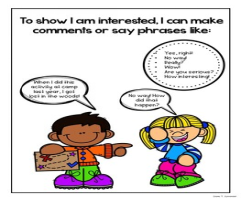
Organization moment : 1.Greeting. Ask about the weather. Warm-up • Ask students to tell you something interesting that they did last summer. • Respond with interest, for example, by saying Really? or You’re kidding! Ask the class what you are doing and elicit that you are showing you are interested Lead - In
|
“The wish flower” method helps to start the lesson with good wishes to each other. The aim: To develop Ss speaking skills and create fndly atmosphere Efficiency: By wishing each other they feel better and feel the support of others
Students say different words from the picture |
At the organization moment T tries to award active Ss. «The praise» method is used to evaluate Ss with phrases like: “Good job! Well done!”
Formative Assessment
Good job! |
Pictures
PPT
worksheets
|
|
Middle of the lesson Presentation part. 37 min
|
Ex:1 P:56 • Look at the photo and ask students for their ideas
Differentiation: «Verbal support» method is used to help Students use new words in the text.
Ex: 2 P: 56 • For this activity, the aim is for students to just listen before they read the dialogue. Ask them to cover it with a piece of paper or a book. They can still look at the photo. • Tell them to listen carefully to the speakers’ intonation.
Ex: 4 P: 56 • Keep the dialogue covered, and ask students to read through the key phrases and try to complete them from memory. • Play the CD and tell students to check their answers. Ask students how intonation is used to express surprise. • Students practise the key phrases, using the correct intonation. In a stronger class, tell individual students something for them to react to, for example, I won a prize. Did you run the marathon last year? You worked very well |
Students what are Shaun and Leah looking at? What do you think they are saying? ANSWERS They are looking at a photo of a skateboarder doing tricks. Students’ own answers.
Students cover the dialogue and listen. Did Shaun try skateboarding? ANSWERS No, he didn’t.
Students cover the dialogue and complete the key phrases. ANSWERS 1 amazing 2 kidding 3 Well 4 very kind We stress words to show interest. |
Assessment criteria - Learn the affirmative and negative forms of the past continuous.
Descriptor: - complete the sentences with the words in the box. Assessment criteria: - Practise using reference material.
Descriptor: - complete the text using past continuous form.
-Make CCQ questions Yes / No |
CD 1
Cards
Worksheets
Students book |
|
End of the lesson 5 min
|
Home task: Ex: 4 P: 41 WB |
|
Poster Success KWL chart
|
|

 Жүктеу


 Жүктеу
шағым қалдыра аласыз


 Бұл курс Қазақстан Республикасы Оқу-ағарту министрлігімен келісілген










